
Descriptive Versus Prescriptive Non Hierarchy


Welcome to a deep dive into a hot topic for anyone exploring non hierarchical polyamory. Think of this as a practical map for conversations, decisions, and daily life in relationships that refuse to be boxed into a single ladder. We are breaking down two gentle mischief makers in the ENM world. ENM stands for Ethical Non Monogamy a framework that puts consent honesty and ongoing communication at the center. Non hierarchical polyamory is a way to describe relationships that do not rank partners as primary or secondary. Now let us ask a simple question. Do we describe how the dynamic actually looks in real life or do we prescribe rules in an effort to keep it fair and balanced for everyone involved? This is the heart of descriptive versus prescriptive non hierarchy. In this guide we are going to unpack what each approach means when you are living in a non hierarchical polyamory dynamic share practical tips and walk through real world scenarios. You will also get clear terms explained so you can talk about this stuff without getting tangled in jargon.
Quick Links to Useful Sections
- What is non hierarchical polyamory
- Descriptive Non Hierarchy and Prescriptive Non Hierarchy
- Descriptive Non Hierarchy
- Prescriptive Non Hierarchy
- Key differences between descriptive and prescriptive non hierarchy
- Why people choose descriptive or prescriptive approaches
- Real world scenarios to illuminate the difference
- Scenario one the flexible weekly rhythm
- Scenario two the rule heavy but fair framework
- Scenario three the kitchen table versus parallel structures
- Communication strategies that support either approach
- Regular check ins
- Clarity about needs and boundaries
- Negotiation language
- Documentation and renegotiation
- Dealing with jealousy
- Time management and energy budgeting
- Conflict resolution
- Boundaries and safety considerations
- Practical tools to support either approach
- Common myths and realities about descriptive versus prescriptive non hierarchy
- Glossary of useful terms and acronyms
- Frequently asked questions about Descriptive versus Prescriptive Non Hierarchy
- Putting it into practice
- Checklist for getting started
- Conclusion for this guide
What is non hierarchical polyamory
Non hierarchical polyamory is a way of loving more than one person without creating a hierarchy among partners. There is no single relationship that gets to call all the shots and no ranking of who matters most. In practice people may have different levels of closeness with different partners. The important thing is that choices about time energy and emotional investment are negotiated together rather than dictated by a single dominant partner. You might hear people talk about parallel poly amory where partners mostly live separate lives and kitchen table poly where everyone sits around the table and knows each other. The key is consent open communication and a willingness to renegotiate as life changes.
Descriptive Non Hierarchy and Prescriptive Non Hierarchy
Descriptive Non Hierarchy
Descriptive non hierarchy describes how the dynamic actually unfolds in everyday life. It is a lens that welcomes observation of what works and what does not. The emphasis is on the lived experience of people involved rather than on a fixed set of rules. When couples or groups adopt a descriptive approach they share information about schedules emotional needs and boundaries as they evolve. Decisions emerge from ongoing dialogue rather than from a prewritten rulebook. In a descriptive approach the reality of time spent with each partner may shift from week to week and that is accepted as part of the living system. There is a belief that relationships reveal their needs through practice not through a static plan. People who favor descriptive non hierarchy often value adaptability transparency and honesty about what is happening day to day.
Prescriptive Non Hierarchy
Prescriptive non hierarchy of course sounds like a contradiction in terms yet it exists. This approach keeps the non ranking promise but adds a structured set of guidelines aimed at fairness and predictability. Think of it as a rule book designed to prevent drift into unhealthy patterns while still avoiding one central partner who calls all the shots. Rules might cover how time is allocated how affection is communicated or how decisions are made when conflicts arise. The intent is to reduce uncertainty while preserving equal respect for all connections. People who lean toward prescriptive non hierarchy usually want clear boundaries predictable routines and a shared sense that everyone is heard even when feelings are messy.
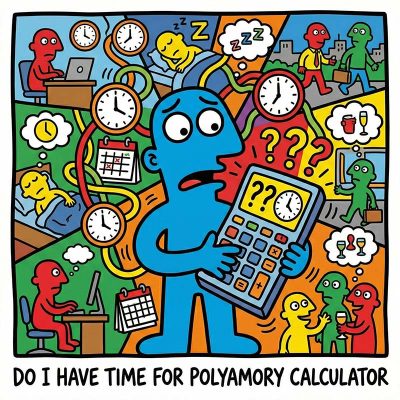
Love is infinite, but your calendar is brutally finite. The fantasy is deep connection; the reality is often just exhausted "calendar tetris." Promising time you don't actually have isn't romantic, it’s a recipe for burnout and broken trust. That sinking feeling when you have to cancel again? That’s the sound of overextension destroying your relationships.
This calculator forces you to confront the math of your life. Do you actually have space for another heart, or are you just setting everyone up for disappointment?

The fantasy is total autonomy and connection. The reality? It can feel like drowning in scheduling chaos and misunderstood expectations. That anxiety you feel isn’t just stress; it’s the wobble of living without a default "anchor." Without a solid architecture, Solo Polyamory stops being a life design and starts being a recipe for burnout and confusion.
The Essential Guide replaces the drift with a concrete anchor. We provide the "Solo Ethic," boundary scripts, and burnout protocols needed to protect your peace. Don't just date around—build a life that actually works for you.

Hierarchy sounds like a corporate org chart until someone gets their feelings hurt. That stomach-turning fear that you are just a "secondary" who can be fired at any time is real. If your relationship feels like a secret ranking system, you are doing it wrong.
Ambiguity is where resentment grows. The Essential Guide replaces the "who matters more" panic with a concrete charter. We provide the scripts and equity guardrails needed to protect every heart in the polycule. Stop guessing and start building.

The ideal is pure equality. The reality? It often slides into hidden rankings where someone gets hurt. That sinking feeling that you are secretly a "secondary" despite the label? That is your intuition detecting couple privilege. Ambiguity is where resentment thrives.
The Essential Guide replaces vague promises with concrete governance. We provide the charters, equity tools, and jealousy protocols needed to ensure "non-hierarchical" isn't just a fantasy. Stop guessing who matters most. Build a network that is actually fair.
The fantasy is total autonomy and connection. The reality? It can feel like drowning in scheduling chaos and misunderstood expectations. That anxiety you feel isn’t just stress; it’s the wobble of living without a default "anchor." Without a solid architecture, Solo Polyamory stops being a life design and starts being a recipe for burnout and confusion.
The Essential Guide replaces the drift with a concrete anchor. We provide the "Solo Ethic," boundary scripts, and burnout protocols needed to protect your peace. Don't just date around—build a life that actually works for you.
Hierarchy sounds like a corporate org chart until someone gets their feelings hurt. That stomach-turning fear that you are just a "secondary" who can be fired at any time is real. If your relationship feels like a secret ranking system, you are doing it wrong.
Ambiguity is where resentment grows. The Essential Guide replaces the "who matters more" panic with a concrete charter. We provide the scripts and equity guardrails needed to protect every heart in the polycule. Stop guessing and start building.
Key differences between descriptive and prescriptive non hierarchy
- Foundation descriptive non hierarchy rests on watching and adapting to real life as it unfolds while prescriptive non hierarchy adds explicit rules to shape the dynamic.
- Flexibility descriptive is more flexible by default while prescriptive offers more structure which can ease anxiety for some but feel constraining to others.
- Communication style descriptive relies on ongoing open conversations about present needs while prescriptive uses negotiated agreements that anticipate future situations.
- Stability descriptive may weather changes by renegotiating on the fly while prescriptive seeks stability through predictable routines and agreed thresholds.
- Accountability descriptive accountability happens through transparency over time whereas prescriptive accountability often relies on written or agreed rules that are revisited regularly.
Why people choose descriptive or prescriptive approaches
The choice is rarely about right or wrong it is about fit with personalities life stages and emotional needs. Some people enjoy the freedom that comes with a descriptive approach the ability to adapt to what feels right in the moment. Others crave the clarity of a prescriptive structure the sense that everyone is treated equally and that rules exist to prevent drift into unhealthy patterns. Cultural beliefs about romance and family also play a role. Some communities value fluid experiments while others value consistency and predictability. It is important to remember that neither approach guarantees happiness or prevents trouble you still need ongoing honest dialogue and self awareness.
Real world scenarios to illuminate the difference
Scenario one the flexible weekly rhythm
A couple in a non hierarchical trio uses a descriptive approach. They meet weekly check in on a shared calendar and discuss what each person needs for the coming week. One partner might be busier at work and needs more solo time while another feels drawn to spend evenings with a third partner. They talk about it in person decide how to allocate energy and decide if any adjustments are needed for next week. The key is that nothing is assumed and everything is open to renegotiation as circumstances shift.
Scenario two the rule heavy but fair framework
In another group a non hierarchical dynamic uses a prescriptive framework. They have explicit rules about how much time each person can spend with others how to handle dating outside the group and how to handle potential triggers or jealousy. They hold regular renegotiation sessions to reassess rules but the core is a living document that guides behavior. Some people feel grounded by the clarity others feel constrained by the sense of surveillance. Both sides can function well if the agreements are truly co created and revisited with care.
Scenario three the kitchen table versus parallel structures
One relationship circle prefers kitchen table poly where all partners meet and know each other and discuss shared concerns. The descriptive approach works well here because it invites co creation of norms in a visible setting. The prescriptive approach can also work if the group uses a strong set of guidelines that protect emotional safety during conversations and interactions. A parallel poly setup where partners operate more independently can also benefit from descriptive practices that emphasize personal responsibility and regular check ins while a prescriptive frame might help coordinate joint activities and support.
Communication strategies that support either approach
Communication is the lifeblood of any ENM dynamic especially in non hierarchical setups. Whether you lean descriptive or prescriptive certain practices help keep relationships healthy and vibrant.
Regular check ins
Schedule structured check ins with all involved parties. Use a calm setting a predictable time and a shared agenda. Focus on what is working what is not and what needs to change. Check ins can be weekly monthly or whatever rhythm the group agrees on. The goal is not to punish but to align and grow together.
Clarity about needs and boundaries
Be explicit about needs both emotional and practical. People often assume others can read their minds. The more concrete you are the easier it is to adjust the arrangement in a way that respects everyone. Boundaries are not about limiting joy they are about protecting it and preventing avoidable hurt.
Negotiation language
Practice using I statements and non blaming language. For example I feel anxious when plans change at the last minute and I would love to have a heads up next time. This keeps conversations constructive and reduces defensiveness. Avoid words that shame or attack other people in the group.
Documentation and renegotiation
Keep notes from renegotiations whether you use a written document a shared digital note or a voice memo. Review notes at agreed milestones. This helps you observe what actually changes over time and what stays constant.
Dealing with jealousy
Jealousy is a normal part of complex relationships. Name it early and describe what you need to feel secure. It could be more transparency more time with a partner or a new ritual that reaffirms your own value in the group. Avoid throwing blame into the mix and focus on actions that reduce insecurity.
Time management and energy budgeting
Non hierarchical polyamory often involves balancing multiple arcs of time energy and attention. Create a simple budget for each person and for the group. Reassess as schedules shift so that no one feels overwhelmed or neglected.
Conflict resolution
Disagreements happen. Address them quickly with a calm approach. Seek to understand before trying to persuade. If needed bring in a neutral mediator a trusted friend or a relationship coach who understands ENM and non hierarchical dynamics.
Boundaries and safety considerations
Boundaries are the guardrails that help you stay safe while exploring multiple connections. They differ from rules in that they reflect personal limits rather than external policing. In a descriptive approach boundaries can be highly individualized and renegotiated as needs evolve. In a prescriptive approach boundaries are documented and revisited to ensure fairness and equal regard for all partners.
- Consent is ongoing. Check ins are not one and done. People can change their minds and you should listen when they do.
- Sexual health include regular STI testing make use of barrier methods and communicate about safety practices with all partners.
- Emotional safety protect the vulnerable places in your life. Share feelings in a respectful way and avoid shaming language.
- Privacy discuss what information is shared with others inside and outside the group and how to handle third party disclosures.
- Time boundaries address how much time is spent with each partner and how plans may change due to life events.
Practical tools to support either approach
- Shared calendars keep track of who is spending time with whom and when.
- Daily or weekly checklists help articulate needs and progress on agreements.
- Renegotiation prompts prepared questions that help you revisit core agreements after major life changes.
- Jealousy journals quick notes about triggers and how you responded to them.
- Relationship agreements a living document co authored by all involved that can be updated together.
Common myths and realities about descriptive versus prescriptive non hierarchy
- Myth descriptive means there are no rules. Reality is there are always agreements shaped by trust open communication and ongoing consent.
- Myth prescriptive means there is no chaos. Reality is a structured set of guidelines can create stability but may feel constraining to some people especially if the agreements are not flexible.
- Myth either approach can fix jealousy overnight. Reality is jealousy usually needs time empathy and intentional work from everyone involved.
- Myth non hierarchical equals no accountability. Reality is accountability is built into both approaches through transparent actions and clear communication.
Glossary of useful terms and acronyms
- ENM Eth ical Non Monogamy a practice that centers consent honesty and communication in multiple relationships.
- DNH Descriptive Non Hierarchy a living approach that emphasizes real life dynamics over fixed rules.
- PNH Prescriptive Non Hierarchy a non ranking approach that uses negotiated guidelines to shape behavior.
- NRE New Relationship Energy the excitement and focus that often accompanies a new relationship.
- Kitchen table poly a scenario where all partners are comfortable meeting and interacting together.
- Parallel poly a scenario where partners maintain separate circles and interactions often with less overlap.
- Compersion feeling happy for a partner's happiness with someone else rather than feeling jealous.
- renegotiation the process of revisiting and updating agreements as life changes.
Frequently asked questions about Descriptive versus Prescriptive Non Hierarchy
How do I know if descriptive non hierarchy is right for me
If you value flexibility you respond well to shifting needs and you enjoy ongoing conversations about feelings and schedules descriptive non hierarchy may be a natural fit. It works best when everyone is committed to open honest dialogue and to renegotiation as life changes.
How do I know if prescriptive non hierarchy is right for me
If you crave predictability rules and a clear framework that guides decisions prescriptive non hierarchy might feel more comfortable. It helps when people want a shared baseline and when they benefit from written agreements that everyone can reference.
Can a group switch from descriptive to prescriptive or vice versa
Yes. Dynamics shift with people life stages and experiences. The switch should be a collaborative conversation with careful renegotiation and clear documentation of the new approach.
What should a renegotiation look like
Choose a calm time set a specific goal for the session and invite all involved parties. Start by naming what is working and what needs change then propose concrete adjustments. End with a shared recap and a plan to test the changes for a defined period.
How do we handle jealousy in a non hierarchical dynamic
Acknowledge the feeling and name the trigger. Then discuss practical steps such as more time with the partner involved more transparency or a ritual that reaffirms your value in the group. The goal is not to suppress jealousy but to address the underlying needs that feed it.
What are common pitfalls to avoid
Don t assume you know what others feel avoid trying to fix someone else s emotions without listening create rules that invalidate legitimate needs and forget to renegotiate after major life events.
Is there a best practice for documenting agreements
Yes. Use a living document that is accessible to all involved keep language simple and specific and set regular review dates. Update the document as needs shift and record the changes so everyone can reference past decisions if needed.
How do we keep equity in a non hierarchical dynamic
Equity comes from clear conversations transparency and fair access to time and emotional energy. Regularly check that everyone feels heard and adjust plans to prevent persistent imbalances.
Putting it into practice
Whether you lean descriptive or prescriptive the core is ongoing consent honest communication and mutual respect. Start with a small practical test. Pick one area like how you spend a specific evening every week or how you handle a new partner. Create a simple agreement and live with it for a month. Then look back together and decide what stays what goes and what shifts. The goal is to build a rhythm that honors everyone s needs while keeping you connected as a group. If you can master that dynamic you will have a solid foundation for many relationships to come.
Checklist for getting started
- Clarify what non hierarchical means for your group and define what descriptive and prescriptive mean to you.
- Have an open conversation about needs boundaries and expectations without blaming or shaming.
- Choose a renegotiation cadence that feels comfortable to everyone involved.
- Document your agreements in a simple concise format and store it where everyone can access it.
- Plan for a trial period to test the approach and use the renegotiation point to revisit the guidelines.
- Practice healthy communication with I statements and a focus on behaviors not personalities.
Conclusion for this guide
We promised not to give you a single boring conclusion and we kept it real in that spirit. Descriptive and prescriptive non hierarchy are two lenses through which people build ethical non monogamy with care and courage. There is no one right answer. The best approach is the one that helps your group communicate clearly show respect for all partners and adapt to life as it changes. Use the ideas in this guide to kickstart conversations to map your dynamic and to grow together in a way that feels fair and exciting. And if you want more help you know where to find us for practical friendly coaching on all things ENM and non hierarchical dynamics.
Love is infinite, but your calendar is brutally finite. The fantasy is deep connection; the reality is often just exhausted "calendar tetris." Promising time you don't actually have isn't romantic, it’s a recipe for burnout and broken trust. That sinking feeling when you have to cancel again? That’s the sound of overextension destroying your relationships.
This calculator forces you to confront the math of your life. Do you actually have space for another heart, or are you just setting everyone up for disappointment?
The fantasy is total autonomy and connection. The reality? It can feel like drowning in scheduling chaos and misunderstood expectations. That anxiety you feel isn’t just stress; it’s the wobble of living without a default "anchor." Without a solid architecture, Solo Polyamory stops being a life design and starts being a recipe for burnout and confusion.
The Essential Guide replaces the drift with a concrete anchor. We provide the "Solo Ethic," boundary scripts, and burnout protocols needed to protect your peace. Don't just date around—build a life that actually works for you.
Hierarchy sounds like a corporate org chart until someone gets their feelings hurt. That stomach-turning fear that you are just a "secondary" who can be fired at any time is real. If your relationship feels like a secret ranking system, you are doing it wrong.
Ambiguity is where resentment grows. The Essential Guide replaces the "who matters more" panic with a concrete charter. We provide the scripts and equity guardrails needed to protect every heart in the polycule. Stop guessing and start building.
The ideal is pure equality. The reality? It often slides into hidden rankings where someone gets hurt. That sinking feeling that you are secretly a "secondary" despite the label? That is your intuition detecting couple privilege. Ambiguity is where resentment thrives.
The Essential Guide replaces vague promises with concrete governance. We provide the charters, equity tools, and jealousy protocols needed to ensure "non-hierarchical" isn't just a fantasy. Stop guessing who matters most. Build a network that is actually fair.
The fantasy is total autonomy and connection. The reality? It can feel like drowning in scheduling chaos and misunderstood expectations. That anxiety you feel isn’t just stress; it’s the wobble of living without a default "anchor." Without a solid architecture, Solo Polyamory stops being a life design and starts being a recipe for burnout and confusion.
The Essential Guide replaces the drift with a concrete anchor. We provide the "Solo Ethic," boundary scripts, and burnout protocols needed to protect your peace. Don't just date around—build a life that actually works for you.
Hierarchy sounds like a corporate org chart until someone gets their feelings hurt. That stomach-turning fear that you are just a "secondary" who can be fired at any time is real. If your relationship feels like a secret ranking system, you are doing it wrong.
Ambiguity is where resentment grows. The Essential Guide replaces the "who matters more" panic with a concrete charter. We provide the scripts and equity guardrails needed to protect every heart in the polycule. Stop guessing and start building.
