
Designing a Relationship Menu Without Ranking


Welcome to the kind of guide that makes you sit up and say finally a clear path forward. We are talking about designing a relationship menu that does not rank people or connections. We are talking about a non hierarchical polyamory approach within ethically non monogamous ENM dynamics. ENM stands for ethically non monogamous and it means respecting boundaries honesty and consent while building connections with more than one person. This article is a practical deep dive that explains how to craft a living menu of relationship options that fits you and fits your partners. It is designed to be funny friendly and useful so you can try ideas in real life rather than just thinking about them in theory. We will cover terms acronyms must no s tips realistic scenarios and more. If you have ever felt that the fear of jealousy or the pressure to choose are holding you back this guide is for you.
Quick Links to Useful Sections
- What is a relationship menu and why avoid ranking
- Terms you might see
- The case for a non hierarchical structure
- Building your non hierarchical relationship menu
- Start with values and needs inventory
- Identify essential versus desirable elements
- Map your menu with categories not rankings
- Draft a sample menu you can adapt
- How to present the menu to partners
- Conversation scripts you can adapt
- Realistic scenarios you can relate to
- New partner entering a non hierarchical menu
- Existing partners with evolving needs
- Managing time and energy across multiple connections
- Handling jealousy within a non hierarchical menu
- Boundaries vs limits vs agreements
- Boundaries
- Limits
- Agreements
- Tools and formats for menu design
- Digital versus physical menu boards
- Easy adaptable formats
- Popular tools and platforms
- Language and tone in the menu
- Common challenges and how to navigate them
- Jealousy and insecurity
- Time management and life changes
- External pressure and stigma
- Navigating new partners into the menu
- Maintaining a living menu
- Practical tips for ongoing clarity
- Glossary of useful terms and acronyms
- Frequently asked questions
- Final thoughts and next steps
What is a relationship menu and why avoid ranking
A relationship menu is a map of the different relationship forms you are open to exploring with different people. It is not a fixed ladder of who is best and who comes last. It is a set of invitations and boundaries that describe what is on the table. The goal of a menu is clarity and choice. Rather than ranking people or connections you list roles and possibilities and you agree on what each role means in practice. A non hierarchical menu avoids the common trap of ranking partners based on proximity intensity or time. Instead it treats all connections as equally real while acknowledging that each relationship may look different in terms of intimacy boundaries and needs. This approach aligns with non hierarchical polyamory which means you do not create a hierarchy of your partners. You honor each person and each relationship on its own terms. ENM communities often embrace menus and agreements because they help people align values and expectations while remaining flexible and kind.
Terms you might see
- ENM Ethically non monogamous a framework for relationships that prioritizes consent honesty and communication when more than one romantic or sexual relationship is involved.
- Non hierarchical polyamory A form of polyamory where no relationship is positioned above another in a strict ladder. Each connection is valued on its own terms.
- Relationship menu A living list of relationship roles activities boundaries and levels of commitment that people agree to explore together.
- Agreement A negotiated understanding about what is allowed what is not and how decisions are made. Agreements are revisited and can change over time.
- Boundary A limit you set to protect your well being often about what you are not willing to do or tolerate.
- Consent An ongoing enthusiastic yes that is freely given and can be withdrawn at any time.
- Compersion The feeling of joy when a partner experiences happiness or love with someone else. The opposite of jealousy in many situations.
- Check in A scheduled moment to discuss how things are going and to adjust the menu or agreements if needed.
The case for a non hierarchical structure
Why would you choose a menu that avoids ranking. Here is the straight talk. A non hierarchical structure helps reduce comparisons that can inflame insecurity or scarcity thinking. When you do not rank people you can focus on what each connection provides in terms of companionship intimacy sexual energy friendship or practical support. The benefits include better communication clearer expectations and more space to grow without feeling like you have to choose a favorite or risk losing something important. Some people worry that not ranking leads to chaos. The reality is that a well designed menu with explicit agreements can create structure without rigidity. It invites curiosity not constraints and respects the autonomy of each person involved. A non hierarchical approach can also be more honest because it acknowledges that you might love someone for different reasons and at different paces rather than trying to compare them as if they all fit into one mold.
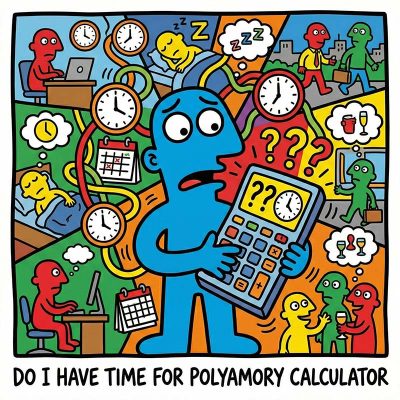
Love is infinite, but your calendar is brutally finite. The fantasy is deep connection; the reality is often just exhausted "calendar tetris." Promising time you don't actually have isn't romantic, it’s a recipe for burnout and broken trust. That sinking feeling when you have to cancel again? That’s the sound of overextension destroying your relationships.
This calculator forces you to confront the math of your life. Do you actually have space for another heart, or are you just setting everyone up for disappointment?

The fantasy is total autonomy and connection. The reality? It can feel like drowning in scheduling chaos and misunderstood expectations. That anxiety you feel isn’t just stress; it’s the wobble of living without a default "anchor." Without a solid architecture, Solo Polyamory stops being a life design and starts being a recipe for burnout and confusion.
The Essential Guide replaces the drift with a concrete anchor. We provide the "Solo Ethic," boundary scripts, and burnout protocols needed to protect your peace. Don't just date around—build a life that actually works for you.
Hierarchy sounds like a corporate org chart until someone gets their feelings hurt. That stomach-turning fear that you are just a "secondary" who can be fired at any time is real. If your relationship feels like a secret ranking system, you are doing it wrong.
Ambiguity is where resentment grows. The Essential Guide replaces the "who matters more" panic with a concrete charter. We provide the scripts and equity guardrails needed to protect every heart in the polycule. Stop guessing and start building.
The ideal is pure equality. The reality? It often slides into hidden rankings where someone gets hurt. That sinking feeling that you are secretly a "secondary" despite the label? That is your intuition detecting couple privilege. Ambiguity is where resentment thrives.
The Essential Guide replaces vague promises with concrete governance. We provide the charters, equity tools, and jealousy protocols needed to ensure "non-hierarchical" isn't just a fantasy. Stop guessing who matters most. Build a network that is actually fair.
The fantasy is total autonomy and connection. The reality? It can feel like drowning in scheduling chaos and misunderstood expectations. That anxiety you feel isn’t just stress; it’s the wobble of living without a default "anchor." Without a solid architecture, Solo Polyamory stops being a life design and starts being a recipe for burnout and confusion.
The Essential Guide replaces the drift with a concrete anchor. We provide the "Solo Ethic," boundary scripts, and burnout protocols needed to protect your peace. Don't just date around—build a life that actually works for you.
Hierarchy sounds like a corporate org chart until someone gets their feelings hurt. That stomach-turning fear that you are just a "secondary" who can be fired at any time is real. If your relationship feels like a secret ranking system, you are doing it wrong.
Ambiguity is where resentment grows. The Essential Guide replaces the "who matters more" panic with a concrete charter. We provide the scripts and equity guardrails needed to protect every heart in the polycule. Stop guessing and start building.
Building your non hierarchical relationship menu
Start with values and needs inventory
The first step is a personal inventory. What matters most to you in relationships. What are your core values. Common values in ENM include honesty openness empathy consent and reliability. List a few core values and then translate them into needs. For example a value of autonomy might translate into a need to have time to pursue personal goals without guilt. A value of connection might translate into a need for regular check ins with certain people. Another practice is to separate needs into categories like emotional connection physical affection time together intellectual stimulation and practical support. When you understand your needs you can design menu options that meet them and you can explain those options to partners clearly.
Identify essential versus desirable elements
Not every option on your menu needs to be a hard requirement. Create two lists. The essential list includes things you must have for a relationship to work. The desirable list includes things that would be nice but are not deal breakers if they do not happen. This separation helps in conversations because it makes clear what you cannot compromise and what you are willing to explore. It also protects you from feeling pressured to accept a setup that does not fit your core needs.
Map your menu with categories not rankings
Think in categories rather than levels. Categories could include romantic partnership sexual partnership deep friendship creative collaboration or practical support. It helps to name each category with a short description of what it means in practice so that you have a shared mental model. For each category list the types of involvement you are open to and note any boundaries or conditions. For example a romantic partnership might include regular date nights clear communication routines and consent to pause or adjust if life changes. A sexual partnership might include consent to explore new kinks within agreed boundaries and a check in after every new boundary is tested. Focus on what is feasible and what supports your well being rather than trying to force everything into a one size fits all model.
Draft a sample menu you can adapt
Here is a simple starter framework you can customize. Remember this is a living document. You will revise it as you learn more about yourself and your relationships.
- Romantic potential open to exploring a romantic connection with one or more partners without implying a hierarchy. Boundaries include clear communication about time and energy and consent to re evaluate as needed.
- Sexual connections open to casual or more serious sexual partnerships on terms that are clearly defined and mutually respectful.
- Deep friendship and companionship opportunities for meaningful friendship that may include shared activities emotional support and care during difficult times.
- Shared life and practical support possibilities for co creating living arrangements or sharing responsibilities when alignment exists and boundaries are respected.
- Casual partnership spectrum a range from occasional dating to ongoing casual involvement where expectations are transparent and renegotiable.
- Time and energy boundaries explicit limits on how much time is available for each connection and how to handle travel or life events.
How to present the menu to partners
Presenting a menu without ranking is an act of collaboration not negotiation. Use inclusive language and invitations rather than directives. Start with a values focused opening that explains why you want a menu and what you hope to achieve. Emphasize consent openness and the willingness to adjust. Use concrete examples so your partner can imagine what the menu means in daily life. Offer time to discuss and ask questions. Keep in mind that this is a starting point not a final rule book. The goal is alignment and ongoing communication.
Conversation scripts you can adapt
Script A open invitation style
Hey I have been thinking about how we relate to other people and how we show up for each other. I am exploring a non hierarchical approach to polyamory where we design a menu of relationship options rather than ranking people. I would love to hear what you think and what feels true for you. Here is where I am starting and I am happy to adjust with you.
Script B clear boundary oriented
I want to be honest about what I can offer and what I cannot. I am open to romantic connections with others as long as we keep weekly check ins and time for us. If any part of this feels off we can pause and revisit. How would you describe your needs and what would make this feel safe and exciting for you.
Script C collaborative decision making
Let us design a shared menu together. We can map what each category means to us and fill in the essential and desirable items. We will review this every quarter and adjust as life evolves. If one of us grows in a new direction we will talk it through with care and patience.
Realistic scenarios you can relate to
New partner entering a non hierarchical menu
When a new person enters a non hierarchical relationship dynamic you start with listening. You explain the menu approach and invite them to contribute their own needs. The goal is to find common ground and to clearly define which categories they resonate with. Give them time to reflect and encourage questions. You will likely need to adjust your existing menu to accommodate new energy and rhythms. The key is to keep communication open and ongoing checks in place.
Existing partners with evolving needs
Relationships evolve and menus should as well. You may discover that what felt right six months ago no longer fits. In this case run a structured check in where you review each category you currently have and ask if it still feels true. If not allow yourself to adapt. This is not a failure it is an honest turn toward a healthier more authentic setup.
Managing time and energy across multiple connections
Balance is a moving target. Build a calendar system that helps you see where time is allocated. Some people use shared calendars some use weekly planning sessions. The aim is to prevent overwhelmed feelings and to ensure equitable attention across partners while honoring each person’s boundaries. Clear communication about changes in availability is essential.
Handling jealousy within a non hierarchical menu
Jealousy can show up even when no one is ranking anyone. The antidote is transparency and reassurance. Talk about triggers and signals that help you cope. Have a plan for after care which might include extra check in time or a small gesture that reinforces care. Remember compersion is a real feeling and it grows with practice.
Boundaries vs limits vs agreements
These three terms are the backbone of a healthy non hierarchical menu. They sound simple but they carry real weight. Know the difference and spell them out in plain language.
Boundaries
Boundaries are personal lines you will not cross. They protect your emotional health and physical safety. Examples include no overnight stays without clear consent or no involvement in certain sexual activities. Boundaries can be adjusted but they require clear communication when they shift.
Limits
Limits are strong preferences you consider non negotiable. These are the things you are unwilling to do under any circumstances. For example you might have a limit around sharing private information or about dating someone with conflicting political values. Be explicit about what falls into this category.
Agreements
Agreements are negotiated norms about how you will act within the relationships. They cover communication frequency how decisions are made how check ins occur and how you handle conflict. Agreements are living documents and you should revisit them regularly as life changes.
Tools and formats for menu design
Digital versus physical menu boards
Choose a format that fits your style. A digital tool can be convenient for rapid edits and collaborative input. A physical board creates a tangible visual for ongoing conversations. You can combine both by printing a core menu and keeping an editable digital copy for updates.
Easy adaptable formats
A simple table can work well. Create columns for category description essential needs and desirable items. Add a column for notes or examples. Keep it readable and update when you gather new information. A one page handout that you bring to conversations can be very effective.
Popular tools and platforms
Note taking apps like Notion or Evernote can be useful for capturing thoughts and sharing them with partners. Project management tools like Trello or Airtable allow you to arrange items with tags and check boxes. The goal is to keep things accessible and editable so you can revisit them without friction.
Language and tone in the menu
Use neutral language that invites collaboration. Avoid asserting superiority or implying that one partner is central. Language that emphasizes consent and mutual growth tends to keep conversations constructive.
Common challenges and how to navigate them
Jealousy and insecurity
Jealousy often signals unmet needs or miscommunication. When it shows up pause and listen. Validate the emotion and shift to problem solving with your partner. A check in after a difficult moment can prevent resentment from building up.
Time management and life changes
Life events like a new job or a move can change how you distribute energy. Revisit the menu and adjust accordingly. Do not wait for a crisis to prompt a conversation. Regular check ins make transitions smoother.
External pressure and stigma
Societal expectations can push you toward unhealthy choices. Stand firm in your own agreements and explain them with calm clarity. When you model open communication you give others permission to do the same.
Navigating new partners into the menu
New partners deserve a respectful onboarding. Present the menu and invite them to share their own needs. Explain that this is a living document and that adjustments are common. Historically many people find that early conversations set expectations for a healthier long term pattern.
Maintaining a living menu
A menu is not a one time edit. It is an evolving tool. Schedule periodic reviews such as quarterly check ins. Use them to celebrate successes and to adjust items that no longer fit. Keep the language fresh and reflective of how you actually feel in real life. If you notice recurring friction ask what underlying needs are not being met and adjust the menu thoughtfully rather than reacting with frustration. A menu that ages gracefully tends to build more trust and resilience in your relationships.
Practical tips for ongoing clarity
- Document decisions Write down what you agree to and share with partners. A simple written record helps prevent memory drift during busy seasons.
- Make space for silence Not every conversation needs to be solved in a single session. Some topics benefit from quiet reflection time between talks.
- Use time boxed discussions Set a timer and focus on a single category at a time. This keeps conversations clear and reduces overwhelm.
- Practice compassionate directness Say what you feel and what you need without blaming others. Courage is easier with kindness.
- Check in after changes After you test a new boundary or adjustment take notes about what worked and what did not. Share those notes with your partners.
Glossary of useful terms and acronyms
- ENM Ethically non monogamous a relationship approach where all participants consent to more than one romantic or sexual relationship.
- Non hierarchical polyamory A form of polyamory where no partner has a superior position in a relationship ladder.
- Relationship menu A structured list of possible relationship forms boundaries and expectations that is reviewed and updated over time.
- Agreement A negotiated understanding about how you will relate to each other and to other people in your lives.
- Boundary A personal limit that protects your emotional or physical safety and wellness.
- Compersion Feeling happy when your partner experiences love or joy with someone else.
- Check in A scheduled moment to review how things are going and to adjust the menu if needed.
Frequently asked questions
How is a relationship menu different from traditional dating rules
A relationship menu is a living document that describes ways you want to relate to others and what you are willing to offer or receive. It avoids a single hierarchy and emphasizes consent open communication and ongoing negotiation. Traditional dating rules often imply a normative order or a prescriptive path. A menu frees you from that and invites tailored agreements instead.
What if my partner wants a ranking system anyway
Explain that you are exploring a non hierarchical approach because it aligns with your values around autonomy and equality. Offer to try a pilot period where you test a menu style structure and then revisit together. If your partner remains resistant you may need to renegotiate terms or assess compatibility.
Can a menu really prevent jealousy
Jealousy is a natural human emotion. A menu helps by creating transparency and reducing assumptions which is a major cause of jealousy. It does not erase feelings but it gives you tools to address them quickly through check ins and renegotiation.
How often should we revise the menu
Many couples find quarterly reviews helpful. Others prefer six month intervals. The key is not to let it go for too long without revisiting. Life changes and energy shifts so regular updates keep the menu relevant and fair.
What if someone breaks an agreement
Address it calmly and directly. Update your understanding of what happened and why. Decide together whether to pause or adjust the agreement and how to prevent recurrence. A strong agreement framework supports accountability without shaming.
Is a menu appropriate for new to polyamory people
Yes. A menu can guide beginners by offering clear options and boundaries while reducing fear and uncertainty. Start with simple categories and shorter time frames and build the menu as confidence grows.
Should the menu include sexual boundaries
Sexual boundaries belong on the menu if they matter to you. Include what is allowed with whom what is comfortable and what requires additional consent. Keep this section clear and specific so there is less room for misinterpretation.
How do we introduce the menu to someone else we are dating
Lead with your values and what you hope to achieve. Explain that you are using a menu to support open honest collaboration and mutual care. Invite them to share their needs and to propose items they would like to add.
Final thoughts and next steps
As you experiment with a non hierarchical relationship menu the most important thing is to stay curious and kind. This is a tool to help you connect more deeply not to restrict growth. You will learn what works for you and what does not through real world conversations with real people. Keep the tone practical keep the energy honest and keep checking in. If you can master the art of inviting speaking clearly and listening deeply you will be well on your way to a healthy and joyful ENM life.
Love is infinite, but your calendar is brutally finite. The fantasy is deep connection; the reality is often just exhausted "calendar tetris." Promising time you don't actually have isn't romantic, it’s a recipe for burnout and broken trust. That sinking feeling when you have to cancel again? That’s the sound of overextension destroying your relationships.
This calculator forces you to confront the math of your life. Do you actually have space for another heart, or are you just setting everyone up for disappointment?
The fantasy is total autonomy and connection. The reality? It can feel like drowning in scheduling chaos and misunderstood expectations. That anxiety you feel isn’t just stress; it’s the wobble of living without a default "anchor." Without a solid architecture, Solo Polyamory stops being a life design and starts being a recipe for burnout and confusion.
The Essential Guide replaces the drift with a concrete anchor. We provide the "Solo Ethic," boundary scripts, and burnout protocols needed to protect your peace. Don't just date around—build a life that actually works for you.
Hierarchy sounds like a corporate org chart until someone gets their feelings hurt. That stomach-turning fear that you are just a "secondary" who can be fired at any time is real. If your relationship feels like a secret ranking system, you are doing it wrong.
Ambiguity is where resentment grows. The Essential Guide replaces the "who matters more" panic with a concrete charter. We provide the scripts and equity guardrails needed to protect every heart in the polycule. Stop guessing and start building.
The ideal is pure equality. The reality? It often slides into hidden rankings where someone gets hurt. That sinking feeling that you are secretly a "secondary" despite the label? That is your intuition detecting couple privilege. Ambiguity is where resentment thrives.
The Essential Guide replaces vague promises with concrete governance. We provide the charters, equity tools, and jealousy protocols needed to ensure "non-hierarchical" isn't just a fantasy. Stop guessing who matters most. Build a network that is actually fair.
The fantasy is total autonomy and connection. The reality? It can feel like drowning in scheduling chaos and misunderstood expectations. That anxiety you feel isn’t just stress; it’s the wobble of living without a default "anchor." Without a solid architecture, Solo Polyamory stops being a life design and starts being a recipe for burnout and confusion.
The Essential Guide replaces the drift with a concrete anchor. We provide the "Solo Ethic," boundary scripts, and burnout protocols needed to protect your peace. Don't just date around—build a life that actually works for you.
Hierarchy sounds like a corporate org chart until someone gets their feelings hurt. That stomach-turning fear that you are just a "secondary" who can be fired at any time is real. If your relationship feels like a secret ranking system, you are doing it wrong.
Ambiguity is where resentment grows. The Essential Guide replaces the "who matters more" panic with a concrete charter. We provide the scripts and equity guardrails needed to protect every heart in the polycule. Stop guessing and start building.
