
Disability and Accessibility Considerations

Welcome to a down to earth guide that treats disability and accessibility not as afterthoughts but as core parts of how we build ethical non monogamy. If you are navigating a non hierarchical polyamory ENM dynamic you probably already know that every relationship triangle or quad comes with unique needs. Add disability or diverse accessibility needs into the mix and you get a powerful opportunity to practice radical inclusion. This guide is written with a casual, practical tone because frankly the best relationship work happens when you can talk openly and make space for everyone. We will explain terms as we go, share realistic scenarios, and give you actionable tips you can lift straight into your polycule conversations and plans.
Quick Links to Useful Sections
- What this guide covers
- What non hierarchical polyamory means in plain terms
- Why disability and accessibility matter in ENM dynamics
- Key concepts and inclusive language
- Disclosures and consent across a diverse polycule
- Practical accessibility in in person dating and social spaces
- Accessible virtual and online spaces
- Disability identities and neurodiversity within ENM
- Disability and sexual health in ENM contexts
- Boundaries boundaries boundaries
- Realistic scenarios and how to handle them
- Scenario 1. A partner develops a new mobility limitation
- Scenario 2. An in person date requires a quiet space due to sensory sensitivity
- Scenario 3. A polycule weekly planning meeting runs long for a neurodivergent member
- Practical tips for planning and supporting a disability inclusive ENM life
- Glossary of useful terms and acronyms
- Frequently asked questions
What this guide covers
This page focuses on disability and accessibility considerations specifically for non hierarchical polyamory ENM dynamics. It blends practical strategies with thoughtful language to help you create space where all participants feel seen, safe and respected. Expect clear definitions, real world examples, checklists, and inclusive approaches to communication, space design, events and online interaction. If you are new to ENM or new to disability awareness this guide will help you start strong and stay flexible as relationships evolve.
What non hierarchical polyamory means in plain terms
Non hierarchical polyamory describes a way of arranging intimate connections where there is no automatic ranking of partners as primary, secondary or tertiary. Everyone is treated as having equal value in terms of time attention and respect. That does not mean everyone gets the same amount of energy every week. It means the relationship order is not predefined by a ladder. When disability or accessibility needs are involved the non hierarchical structure can adapt. The goal is to keep consent honest, boundaries clear and care reciprocal even as needs shift over time.
Important terms you may hear and what they mean in this context
- ENM Ethical non monogamy. A broad term for relationship styles that involve consensual romantic or sexual connections with more than one partner.
- Non hierarchical An arrangement where there is no fixed ranking of partners. Relationships are valued on their own terms rather than on a ladder system.
- Polycule A network of people who are connected through intimate or romantic relationships. The size and shape of a polycule vary and expand as needs change.
- Communication consent Ongoing agreements about what each person is comfortable with and how to adjust those agreements as situations change.
- Accessibility The design of spaces products and practices so that people with diverse abilities can participate with minimal barriers.
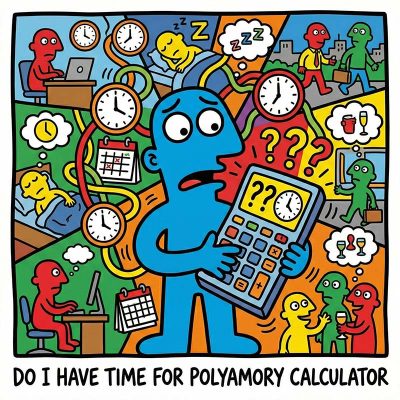
Love is infinite, but your calendar is brutally finite. The fantasy is deep connection; the reality is often just exhausted "calendar tetris." Promising time you don't actually have isn't romantic, it’s a recipe for burnout and broken trust. That sinking feeling when you have to cancel again? That’s the sound of overextension destroying your relationships.
This calculator forces you to confront the math of your life. Do you actually have space for another heart, or are you just setting everyone up for disappointment?
The fantasy is total autonomy and connection. The reality? It can feel like drowning in scheduling chaos and misunderstood expectations. That anxiety you feel isn’t just stress; it’s the wobble of living without a default "anchor." Without a solid architecture, Solo Polyamory stops being a life design and starts being a recipe for burnout and confusion.
The Essential Guide replaces the drift with a concrete anchor. We provide the "Solo Ethic," boundary scripts, and burnout protocols needed to protect your peace. Don't just date around—build a life that actually works for you.
Hierarchy sounds like a corporate org chart until someone gets their feelings hurt. That stomach-turning fear that you are just a "secondary" who can be fired at any time is real. If your relationship feels like a secret ranking system, you are doing it wrong.
Ambiguity is where resentment grows. The Essential Guide replaces the "who matters more" panic with a concrete charter. We provide the scripts and equity guardrails needed to protect every heart in the polycule. Stop guessing and start building.
The ideal is pure equality. The reality? It often slides into hidden rankings where someone gets hurt. That sinking feeling that you are secretly a "secondary" despite the label? That is your intuition detecting couple privilege. Ambiguity is where resentment thrives.
The Essential Guide replaces vague promises with concrete governance. We provide the charters, equity tools, and jealousy protocols needed to ensure "non-hierarchical" isn't just a fantasy. Stop guessing who matters most. Build a network that is actually fair.
The fantasy is total autonomy and connection. The reality? It can feel like drowning in scheduling chaos and misunderstood expectations. That anxiety you feel isn’t just stress; it’s the wobble of living without a default "anchor." Without a solid architecture, Solo Polyamory stops being a life design and starts being a recipe for burnout and confusion.
The Essential Guide replaces the drift with a concrete anchor. We provide the "Solo Ethic," boundary scripts, and burnout protocols needed to protect your peace. Don't just date around—build a life that actually works for you.
Hierarchy sounds like a corporate org chart until someone gets their feelings hurt. That stomach-turning fear that you are just a "secondary" who can be fired at any time is real. If your relationship feels like a secret ranking system, you are doing it wrong.
Ambiguity is where resentment grows. The Essential Guide replaces the "who matters more" panic with a concrete charter. We provide the scripts and equity guardrails needed to protect every heart in the polycule. Stop guessing and start building.
Why disability and accessibility matter in ENM dynamics
Disability is part of human diversity and so are the many ways people experience love and connection. When you bring disability into a non hierarchical polyamory arrangement you invite a wider range of strengths and perspectives. Accessibility is not just about ramps and captions though those are essential. It is also about communication styles embodied in how you plan dates share decisions and create a social space that respects different energy levels sensory needs and access to information.
In a non hierarchical polyamory dynamic it is especially important to recognize that needs can shift. A person may acquire a new disability or experience changing mobility energy or sensory processing. The best practice is to preempt friction by building a culture of openness flexibility and shared responsibility. This approach reduces miscommunication helps prevent burnout and keeps relationships thriving rather than becoming strained by avoidable obstacles.
Key concepts and inclusive language
Language matters. The way you talk about disability in the context of ENM shapes how comfortable people feel to disclose needs and to participate fully. Use person first language with sensitivity and avoid turning disability into a label that defines someone. People may prefer identity first language in some communities and that is okay when it is respectful to the individual.
Practical language guidance
- Ask how a person would like to be described rather than assuming. For example some people prefer identity terms while others prefer descriptive phrases about capabilities.
- Avoid framing a disability as a problem to be solved or a deficit that needs fixing. Instead focus on access and empowerment.
- Use concrete terms for needs. Instead of saying you are enabling someone to be happier say you are creating an environment where everyone can participate fully.
- Describe accessibility needs in specific terms such as available quiet space a sign language interpreter or a step free entrance rather than vague statements about being able to cope.
Accessibility is not a one time fix. It is a continuous practice of asking questions listening and adapting. In a non hierarchical polyamory setup this practice supports autonomy for every person and builds trust across the group.
Disclosures and consent across a diverse polycule
Consent in ENM is ongoing and dynamic. When disability or accessibility needs are part of the picture you want explicit consent to cover how decisions are made kept up to date and implemented. Create a living document that outlines current preferences and update it whenever a change occurs. Encourage all partners to contribute their thoughts. Make space for concerns without fear of retaliation or judgment.
Consent practices worth adopting
- Check in regularly about capacity energy and interest levels. Do not assume that prior agreements still hold.
- Document changes and keep a shared copy accessible to all partners. This can be in a private wiki a shared document or a dedicated channel in a messaging app with adjustable access.
- Respect privacy. Some people may not want to disclose specific disabilities outside the group. Honor PR and privacy preferences just as you would for any sensitive information.
- Make consent practical. Translate high level statements into actionable steps that partners can actually follow in daily life and during events.
Flexibility is a core strength in non hierarchical ENM dynamics. When accessibility needs are part of the picture you grow as a community by learning to adapt rather than retreating from difficult conversations. This approach protects everyone and helps the group maintain the trust that keeps relationships healthy and evolving.
Practical accessibility in in person dating and social spaces
In person interactions offer warmth and nuance but they also introduce physical and logistical barriers. The good news is that with small adjustments you can create more inclusive experiences for everyone in a non hierarchical polyamory arrangement.
Key physical accessibility considerations
- Venue selection that includes step free entrances ramps elevators accessible restrooms and seating with space for mobility devices
- Quiet corners for neurodivergent participants who may need less sensory input and space to regroup
- Clear signage and staff awareness to help attendees navigate spaces
- Availability of assistive listening devices captioning services and ASL interpretation if needed
Social events and dates can be planned with accessibility in mind. Offer a mix of high energy activities and low stimulus options and always provide an option to opt out of activities that may be overwhelming. Ask participants for their preferred formats for invitations and notifications such as email text messages or a private chat channel then honor those preferences.
Accessible virtual and online spaces
Online interactions are a cornerstone of many ENM dynamics. They widen the pool of potential partners but they also demand thoughtful accessibility. A few practical steps can make a big difference.
- Use platforms with captioning options and ensure live streams are accessible both on desktop and mobile
- Offer transcripts for any audio content including podcasts webinars and recordings
- Provide keyboard navigable interfaces and avoid content that relies solely on color to convey information
- Offer multiple formats for events such as live chat Q and A text transcripts and downloadable resources
- Be explicit about how to access support during online events for participants who may require real time assistance
Remember that accessibility is not simply about compliance. It is about welcoming diverse ways of being together and making room for different energy levels voices and modes of connection. Non hierarchical ENM dynamics thrive when everyone can participate with dignity and ease.
Disability identities and neurodiversity within ENM
Disability and neurodiversity cover a wide spectrum. You may have partners who navigate physical mobility challenges sensory processing differences cognitive differences chronic illness or mental health needs. Each person brings a unique set of preferences and limitations. The non hierarchical approach works best when you treat each person as a whole person not a sum of diagnoses. Ask open questions about what helps each person show up as their best self in the context of the polycule.
Neurodiversity friendly practices
- Provide written summaries of conversations after meetings to support memory and reduce anxiety about what was decided
- Offer flexible meeting formats such as asynchronous discussions alongside live talks
- Keep expectations reasonable and avoid overload by breaking long conversations into smaller chunks
- Normalize the use of personal noise reducing headphones during large gatherings
These practices reduce the cognitive load for people who experience sensory processing differences or who require extra time to process information. They create space for thoughtful input from all voices which in turn strengthens the health and resilience of the polycule.
Disability and sexual health in ENM contexts
Sexual health and safety take on additional layers when disability and accessibility needs are in play. You should adapt conversations about consent boundaries and safer sex with the same care you bring to any other aspect of your relationships. Some participants may require accessible information materials or adaptive equipment, while others may need more time to communicate boundaries. The goal is to remove obstacles and ensure everyone can participate safely and confidently.
Practical sexual health considerations
- Discuss consent in clear specific terms rather than broad generalizations
- Share information about needs for adaptive equipment or positioning in advance
- Provide access to safe sex supplies in accessible formats and locations
- Arrange for medical or disability related accommodations during intimate activities where appropriate and desired
Open conversations about sexual health should happen early and be revisited as needs evolve. A non hierarchical polyamory structure benefits from ongoing education about consent and safety that reflects the realities of all participants.
Boundaries boundaries boundaries
Healthy boundaries are the backbone of any ENM dynamic. Disability and accessibility considerations can influence boundaries in practical ways such as how much time is spent with a partner the type of activities that feel comfortable and how information is shared. Boundaries should be explicit revisitable and respected by everyone in the polycule. Your goal is to create a climate where it is safe to say I need a break or I cannot participate in this event right now without fear of judgement.
Boundary setting tips for a non hierarchical polyamory group
- Draft a living boundary document that is accessible to all members and easy to update
- Use plain language and offer examples to illustrate what different boundaries look like in practice
- Encourage check ins after important conversations or events to confirm that boundaries were honored
- Respect privacy while also honoring the collective need for shared information when safety or well being is at stake
Realistic scenarios and how to handle them
Seeing how ideas play out helps translate theory into practice. Here are some common situations in which disability and accessibility considerations shape decisions in a non hierarchical polyamory dynamic.
Scenario 1. A partner develops a new mobility limitation
What to do
- Hold a check in with the partner to understand updated needs and preferences
- Discuss how the polycule can adapt plans to include the partner at the new comfort level
- Review scheduling and communication channels to prevent missed connections or misunderstandings
- Offer to share travel options and coordinate accommodations for events
Outcome to aim for
- Everyone in the group feels valued and kept in the loop while the partner maintains agency over their own boundaries
Scenario 2. An in person date requires a quiet space due to sensory sensitivity
What to do
- Agree in advance on multiple venue options including a quiet area in the same venue
- Provide a heads up to other participants and supervisors about the need for low stimulus environments
- Set up a signaling system so the person can excuse themselves without drama or embarrassment
Outcome to aim for
- The person can participate with dignity and the rest of the group respects the boundaries without drawing unnecessary attention
Scenario 3. A polycule weekly planning meeting runs long for a neurodivergent member
What to do
- Offer an agenda in advance and provide a written recap after the meeting
- Break the meeting into shorter focused blocks with built in breaks
- Switch to asynchronous updates for parts of the discussion if needed
Outcome to aim for
- All voices are heard while minimizing overwhelm and fatigue for neurodivergent participants
Practical tips for planning and supporting a disability inclusive ENM life
Below is a practical toolkit you can copy into your group rituals and planning docs. The ideas are simple to implement and widely effective across many disability and accessibility scenarios in a non hierarchical polyamory setup.
- Adopt a living accessibility policy that names commitments and who is responsible for tasks
- Ask new partners about accessibility needs within the first few conversations and update as needed
- Provide multiple formats for information: written summaries audio recordings captions and transcripts
- Offer flexible response times during conversations to accommodate varying cognitive processing styles
- Appoint a facilitator who can help with inclusive communication during group discussions
- Share resources and templates for accommodation requests with the group to demystify the process
- Foster a culture of gratitude where people acknowledge each other efforts to be accessible
Glossary of useful terms and acronyms
- ENM Ethical non monogamy a broad umbrella for consensual multiple relationship structures
- Non hierarchical polyamory A framework where there is no fixed ranking of partners by priority or importance
- Accessibility The design of spaces products and practices so that people with diverse abilities can participate
- Disability A broad term for conditions that affect physical mental cognitive or sensory functioning
- Neurodiversity The idea that neurological differences such as autism ADHD dyslexia and sensory processing variations are part of human diversity
- Accommodation Adjustments to environments practices or policies that enable participation
- Disclosures The act of sharing personal information about disability health or access needs with others in a respectful context
- Polycule A network of people who are connected romantically or sexually within a non hierarchical layout
Frequently asked questions
What is non hierarchical polyamory in simple terms
Non hierarchical polyamory means there is no fixed ladder structure where one partner is always the most important. Everyone's relationships are valued on their own terms and by consent and communication within the group. Accessibility may influence how energy and time are allocated but fairness and respect remain the core principles.
How can disability affect ENM relationships
Disabilities can influence communication style energy levels and the way dates are planned. In a non hierarchical framework the priority is to adapt your practices to ensure every person can participate meaningfully. This often means flexible scheduling accessible venues and clear ongoing consent discussions.
How do we discuss accessibility without making anyone feel singled out
Frame accessibility as a group practice rather than a personal demand. Use inclusive language emphasize shared responsibility and invite suggestions. Ensure no one is made to feel pressured to disclose more than they want. Make it clear that adjustment is a normal part of relationship health.
What about meeting accessibility needs at social events
Choose venues with accessibility features offer quiet areas and provide options for different sensory experiences. Share event details in multiple formats and ask attendees what they need in advance rather than assuming. Maintain a relaxed policy that allows participants to step out if they need to.
How can we handle disclosure of disabilities in a respectful way
Encourage disclosure when it improves participation or safety but do not insist. Create a safe space and remind everyone that disclosures are optional. When someone does share a disability provide practical support and keep information confidential unless the person says it is okay to share more widely.
What role does accessibility play in consent within ENM
Accessibility and consent are ongoing. Accessibility helps people participate with less stress which supports clear consent. Regularly revisit agreements as needs shift and make it easy for partners to adjust boundaries as circumstances change.
How do we support neurodivergent partners in ENM dynamics
Offer multiple modes of communication including written updates live conversations and recorded summaries. Be mindful of sensory input and provide options to participate in quieter environments. Patience and clarity help neurodivergent partners feel included and respected.
Are there common mistakes to avoid
Don t assume needs are fixed or equal for everyone. Avoid tokenizing disability or putting pressure on individuals to explain their needs. Don t overlook the impact of accessibility on boundaries or communication. And never stigmatize asking for accommodations as a burden.
How can we implement these ideas in our daily ENM life
Start with a shared accessibility policy and invite input from all partners. Create practical templates for requests and updates. Normalize discussing energy levels planning options for different events and adjusting boundaries as things evolve. Treat accessibility as a continuous practice not a one time checkbox.
Love is infinite, but your calendar is brutally finite. The fantasy is deep connection; the reality is often just exhausted "calendar tetris." Promising time you don't actually have isn't romantic, it’s a recipe for burnout and broken trust. That sinking feeling when you have to cancel again? That’s the sound of overextension destroying your relationships.
This calculator forces you to confront the math of your life. Do you actually have space for another heart, or are you just setting everyone up for disappointment?
The fantasy is total autonomy and connection. The reality? It can feel like drowning in scheduling chaos and misunderstood expectations. That anxiety you feel isn’t just stress; it’s the wobble of living without a default "anchor." Without a solid architecture, Solo Polyamory stops being a life design and starts being a recipe for burnout and confusion.
The Essential Guide replaces the drift with a concrete anchor. We provide the "Solo Ethic," boundary scripts, and burnout protocols needed to protect your peace. Don't just date around—build a life that actually works for you.
Hierarchy sounds like a corporate org chart until someone gets their feelings hurt. That stomach-turning fear that you are just a "secondary" who can be fired at any time is real. If your relationship feels like a secret ranking system, you are doing it wrong.
Ambiguity is where resentment grows. The Essential Guide replaces the "who matters more" panic with a concrete charter. We provide the scripts and equity guardrails needed to protect every heart in the polycule. Stop guessing and start building.
The ideal is pure equality. The reality? It often slides into hidden rankings where someone gets hurt. That sinking feeling that you are secretly a "secondary" despite the label? That is your intuition detecting couple privilege. Ambiguity is where resentment thrives.
The Essential Guide replaces vague promises with concrete governance. We provide the charters, equity tools, and jealousy protocols needed to ensure "non-hierarchical" isn't just a fantasy. Stop guessing who matters most. Build a network that is actually fair.
The fantasy is total autonomy and connection. The reality? It can feel like drowning in scheduling chaos and misunderstood expectations. That anxiety you feel isn’t just stress; it’s the wobble of living without a default "anchor." Without a solid architecture, Solo Polyamory stops being a life design and starts being a recipe for burnout and confusion.
The Essential Guide replaces the drift with a concrete anchor. We provide the "Solo Ethic," boundary scripts, and burnout protocols needed to protect your peace. Don't just date around—build a life that actually works for you.
Hierarchy sounds like a corporate org chart until someone gets their feelings hurt. That stomach-turning fear that you are just a "secondary" who can be fired at any time is real. If your relationship feels like a secret ranking system, you are doing it wrong.
Ambiguity is where resentment grows. The Essential Guide replaces the "who matters more" panic with a concrete charter. We provide the scripts and equity guardrails needed to protect every heart in the polycule. Stop guessing and start building.
