
Emotional Regulation in Complex Networks


Welcome to a practical and down to earth guide on how to stay emotionally steady when you are navigating a complex ENM network. ENM stands for ethically non monogamous and it is a broad umbrella that covers many relationship styles. Non hierarchical polyamory is a specific dynamic within ENM where there is no fixed rank order among relationships. Everyone is valued and time and energy are shared with fairness and intention. This guide is written in a friendly voice but it dives deep into real life strategies for keeping emotions in balance when love multiples and complexity grows. If you are new to ENM you will find clear explanations for terms and acronyms so you can follow along easily. If you are already in the space you will gain practical tools you can apply today. We keep the language plain and useful and we share concrete scenarios you can relate to.
Quick Links to Useful Sections
- What this guide covers
- Key terms explained
- Why emotional regulation matters in complex ENM networks
- Foundations of emotional regulation in non hierarchical polyamory
- Practical tools for regulating emotions in ENM networks
- Emotion labeling and map making
- Pause and breathe intervals
- External processing with trusted allies
- Cognitive reframing
- Journaling and reflective practice
- Boundaries and renegotiation as regular practice
- Energy budgeting across relationships
- Communication rituals that support regulation
- Real life scenarios in non hierarchical polyamory
- Scenario one resizing a calendar after a new connection
- Scenario two dealing with jealousy and practicing compersion
- Scenario three renegotiating boundaries after a life event
- Scenario four handling conflicts in a non hierarchical poly space
- Common mistakes and how to avoid them
- Checklist for ongoing emotional regulation in ENM networks
- Glossary of useful terms and acronyms
- Frequently asked questions
What this guide covers
This article explores emotional regulation in a complex ENM network with a focus on non hierarchical polyamory. You will learn what non hierarchical polyamory means and how it differs from other polyamory setups. You will discover practical tools to manage emotional responses and maintain healthy connections. The guide uses plain language and real world examples. It also includes a glossary of terms so you can translate jargon into everyday understanding. The goal is to help you feel more confident and less overwhelmed when your network grows or shifts.
Key terms explained
Understanding the vocabulary makes everything easier. Here are the core terms you will see in this guide. If you want a deeper dive later you can bookmark this glossary and come back when you need a quick reminder.
- ENM Ethically non monogamous a relationship approach that emphasizes honesty consent and transparency among all people involved.
- Polyamory The practice of having intimate relationships with more than one person at the same time with consent and awareness of everyone involved.
- Non hierarchical polyamory A form of polyamory in which no one relationship is considered primary over another. All connections are treated as equally important.
- Polycule A network map of all current relationships and how they connect to one another.
- Compersion The feeling of joy when a partner experiences happiness with another person rather than jealousy.
- Jealousy management The set of strategies used to reduce distress when insecurities arise in relation to a partner or partners.
- Boundaries Boundaries are agreed limits about what is acceptable or comfortable in a relationship or network.
- Renegotiation The process of revisiting and adjusting boundaries and agreements as life changes.
- Emotional regulation The ability to monitor and modulate emotional responses to stay balanced and present.
- Time zoning A planning approach in which people allocate focused time with different partners to prevent overload.
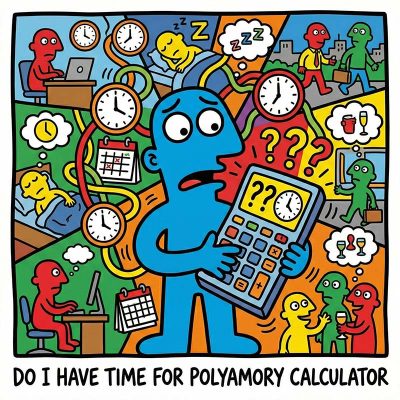
Love is infinite, but your calendar is brutally finite. The fantasy is deep connection; the reality is often just exhausted "calendar tetris." Promising time you don't actually have isn't romantic, it’s a recipe for burnout and broken trust. That sinking feeling when you have to cancel again? That’s the sound of overextension destroying your relationships.
This calculator forces you to confront the math of your life. Do you actually have space for another heart, or are you just setting everyone up for disappointment?

The fantasy is total autonomy and connection. The reality? It can feel like drowning in scheduling chaos and misunderstood expectations. That anxiety you feel isn’t just stress; it’s the wobble of living without a default "anchor." Without a solid architecture, Solo Polyamory stops being a life design and starts being a recipe for burnout and confusion.
The Essential Guide replaces the drift with a concrete anchor. We provide the "Solo Ethic," boundary scripts, and burnout protocols needed to protect your peace. Don't just date around—build a life that actually works for you.

Hierarchy sounds like a corporate org chart until someone gets their feelings hurt. That stomach-turning fear that you are just a "secondary" who can be fired at any time is real. If your relationship feels like a secret ranking system, you are doing it wrong.
Ambiguity is where resentment grows. The Essential Guide replaces the "who matters more" panic with a concrete charter. We provide the scripts and equity guardrails needed to protect every heart in the polycule. Stop guessing and start building.

The ideal is pure equality. The reality? It often slides into hidden rankings where someone gets hurt. That sinking feeling that you are secretly a "secondary" despite the label? That is your intuition detecting couple privilege. Ambiguity is where resentment thrives.
The Essential Guide replaces vague promises with concrete governance. We provide the charters, equity tools, and jealousy protocols needed to ensure "non-hierarchical" isn't just a fantasy. Stop guessing who matters most. Build a network that is actually fair.
The fantasy is total autonomy and connection. The reality? It can feel like drowning in scheduling chaos and misunderstood expectations. That anxiety you feel isn’t just stress; it’s the wobble of living without a default "anchor." Without a solid architecture, Solo Polyamory stops being a life design and starts being a recipe for burnout and confusion.
The Essential Guide replaces the drift with a concrete anchor. We provide the "Solo Ethic," boundary scripts, and burnout protocols needed to protect your peace. Don't just date around—build a life that actually works for you.
Hierarchy sounds like a corporate org chart until someone gets their feelings hurt. That stomach-turning fear that you are just a "secondary" who can be fired at any time is real. If your relationship feels like a secret ranking system, you are doing it wrong.
Ambiguity is where resentment grows. The Essential Guide replaces the "who matters more" panic with a concrete charter. We provide the scripts and equity guardrails needed to protect every heart in the polycule. Stop guessing and start building.
Why emotional regulation matters in complex ENM networks
Foundations of emotional regulation in non hierarchical polyamory
There are several foundational ideas that guide effective regulation in a non hierarchical poly network. Understanding these ideas helps you create habits that stick in daily life.
- Clarity equals security Clear expectations about time and energy reduce ambiguity which is a common source of stress.
- Open communication Honest conversations about needs fears and boundaries are essential for healthy connection.
- Mutual responsibility Everyone in the network shares responsibility for the emotional climate including how conflicts are handled.
- Flexibility Life changes and relationships shift. A good regulator adapts with grace and renegotiates when necessary.
- Self care as a baseline Looking after your own well being creates a strong platform for supporting others.
Practical tools for regulating emotions in ENM networks
Here are actionable tools you can adopt. Use what fits your life and stay open to adjusting as your network grows or shrinks.
Emotion labeling and map making
Take a moment to name what you feel and why you think you feel it. Words matter. Labeling reduces the intensity of emotion and creates a path to address the underlying need. You can sketch a quick map that links each emotion to a specific trigger you identify in your day or week. For example you might note a rising sense of anxiety when the calendar fills with back to back dates and conversations where you sense missed connections. Naming it together with a partner can also deepen trust and awareness.
Pause and breathe intervals
Short pauses help your nervous system reset. Try to create built in breath pauses after a trigger event or after a big information dump from a partner. A simple 4 4 4 4 breath where you inhale for four counts hold for four exhale for four and hold again for four can reduce the rise in heart rate and give you moment to respond rather than react.
External processing with trusted allies
In ENM networks it helps to have trusted friends or a therapist who understand the dynamic. External processing means talking through your feelings with someone who can reflect back an outside perspective. This reduces the likelihood of negative spirals and helps you see options you may not have noticed from inside your own head.
Cognitive reframing
Reframing is a technique that helps you reinterpret a situation in a kinder way. For instance if a partner spends an evening with another partner you can reframe it as an opportunity for growth for everyone involved rather than a threat to your own connection. You can also remind yourself that the network is designed to spread care widely not to deny you of tenderness.
Journaling and reflective practice
Regular writing about your experiences creates a record you can learn from. Use a simple format describe what happened what you felt what you did well and what you might do differently next time. Over time this practice makes patterns visible and helps you grow as a regulator.
Boundaries and renegotiation as regular practice
Boundaries are not set in stone. They are open to renegotiation as your life changes. When you notice stress rising consider a quick check in about boundaries with the involved partners. It can be as simple as a three sentence note that says I need more space for the next two weeks and I would like to adjust our weekly check in to maintain connection. The goal is to maintain safety not to escalate tension.
Energy budgeting across relationships
Energy budgeting means planning where you invest your emotional and time energy during a given period. It is a practical tool that helps you avoid burnout. You can plan blocks of time for deep conversations with a partner and lighter days for solo rest or casual contact with others. A simple weekly plan helps you keep a balance that serves you and your partners.
Communication rituals that support regulation
Communication in a complex network is a skill that improves with practice. Here are rituals that have shown real value in non hierarchical setups.
- Regular check ins Short conversations scheduled at predictable times to share needs and concerns.
- Transparent calendars Sharing a calendar or a color coded system helps everyone see where energy is allocated.
- Clear consent conversations Ongoing consent is essential when plans change or new connections form.
- Structured conflict conversations Agree on a process to address conflicts including who mediates and how decisions are made.
Real life scenarios in non hierarchical polyamory
Real life scenarios help you see how these tools play out in daily situations. Below are three common situations and practical ways to respond in ways that protect emotional regulation for all involved.
Scenario one resizing a calendar after a new connection
A new partner expresses interest and you feel a wave of excitement and a pinch of uncertainty. The practical move is to acknowledge the emotion label it and then translate it into action. You take time to map the calendar and propose a plan that gives your existing partners time with you while also making space for the new connection. You propose a trial period with regular check ins to adjust as needed. The aim is to maintain fairness and keep your commitments clear while honoring the new relationship.
Scenario two dealing with jealousy and practicing compersion
Jealousy arrives as a signal that a need is not being met. You can respond by naming the need to your partner and exploring together how to meet it the best you can. Practicing compersion means intentionally celebrating a partner's happiness with another person while staying connected to your own sense of security. You can schedule dedicated time with each partner and use a joint conversation to hear what each person needs. If jealousy intensifies you can pause and do a brief breath exercise before continuing the discussion with a calmer mind.
Scenario three renegotiating boundaries after a life event
A life event like a career shift or health change can shift energy and time. You can approach renegotiation as a collaborative process. Start with a clear statement of what has changed in your life followed by a desire to keep the network healthy. Then invite others to share their needs and propose adjustments for the next phase. The outcome should feel fair and sustainable for all.
Scenario four handling conflicts in a non hierarchical poly space
Conflicts happen and in a non hierarchical space the goal is to solve them without letting power dynamics derail the conversation. Use a neutral framing for the issue and invite a trusted third party to help if needed. Focus on the impact of the behavior not the character of the person. Agree on a path forward and schedule a follow up to review how the solution is working.
Common mistakes and how to avoid them
Even the best planners can stumble. Here are frequent pitfalls and concrete ways to steer clear of them.
- Overloading the schedule If the calendar grows too full you lose energy and connection quality. Build in rest days and leave space for spontaneous interactions.
- Hidden expectations When you assume others share the same needs you invite miscommunication. Make expectations explicit through regular check ins and written notes where helpful.
- Withholding information Secrets create mistrust. Practice radical honesty with discretion as needed for safety and consent.
- Lack of boundaries Without boundaries people can overextend themselves. Keep boundaries clear and revisit them when life changes.
- Unspoken jealousy Jealousy that is not named grows into resentment. Name it early and seek support before it compounds.
Checklist for ongoing emotional regulation in ENM networks
- Keep a short regular practice for labeling feelings each day
- Maintain a shared calendar with time blocks for different relationships
- Have a trusted friend or therapist who understands ENM to talk with
- Schedule check ins after major life events or relationship changes
- Document boundaries and renegotiations and review them periodically
- Practice breathing and mindfulness exercises to stay grounded
- Develop a plan for dealing with jealousy before it rises to a crisis level
- Foster compersion by celebrating partners successes and joys with others
Glossary of useful terms and acronyms
- ENM Ethically non monogamous a framework for intimate relationships that values honesty consent and clear communication among all involved.
- Non hierarchical polyamory A form of polyamory where no single relationship is prioritized over others and all are treated as equally important.
- Compersion The sense of joy when a partner experiences happiness with someone else rather than envy or pain.
- Jealousy A normal feeling of insecurity or fear about losing a connection which can be managed with healthy strategies.
- Boundaries Limits set by individuals and groups to protect safety comfort and well being within the network.
- Renegotiation The process of revisiting and adjusting boundaries agreements roles and expectations as life changes.
- Polycule A map of all current relationships in a network showing how each person is connected.
- Time zoning Planning time blocks to ensure fair distribution of attention and energy across partners.
- Emotional regulation The skill of recognizing emotions and choosing responses that support well being rather than reacting impulsively.
- Trauma informed approach An approach that recognizes the impact of past trauma on current feelings and interactions and prioritizes safety and consent.
Frequently asked questions
What is non hierarchical polyamory and how does it differ from other forms of polyamory
Non hierarchical polyamory means there is no primary relationship or hierarchy among partners. All relationships are treated as important and coherent. In other forms of polyamory a person may allocate more time energy or priority to one relationship which can create a different emotional dynamic.
What does ENM stand for and what does it involve
ENM stands for ethically non monogamous. It means that partners choose to have multiple intimate connections with consent open communication and ongoing agreement about boundaries and expectations.
How can I manage jealousy in a non hierarchical network
Label your feelings and identify the need behind them. Communicate honestly with the partner involved and with the rest of the network. Use planning for time and energy to reduce stress. Practice compersion where possible and seek support from friends or a therapist who understands the dynamic.
What is compersion and how do I cultivate it
Compersion is the joy you feel when a partner experiences love or happiness with someone else. It grows with trust clear communication and positive shared experiences. Start with small steps celebrate small wins and invite more connection between partners where it feels safe.
How do I renegotiate boundaries after a major life event
Begin with a calm conversation about what has changed and what you need to feel secure. Invite input from your partners and work toward a plan that can be revisited as needed. Document the changes and commit to check in after a reasonable period to review how things are going.
What is a polycule and why is it useful
A polycule is a map of all current relationships and connections in the network. It helps you visualize links between people and plan for time and energy distribution. It also makes it easier to identify potential gaps in communication or support.
How should I handle conflicts in a non hierarchical setting
Approach conflicts with a neutral mindset and focus on the behavior and impact rather than personal traits. Use a neutral facilitator if needed and agree on a path forward with clear responsibilities and follow up actions.
Is it possible to maintain emotional regulation without weekly check ins
Regular check ins help but some networks use a mix of scheduled discussions and as needed conversations. The key is to keep lines of communication open and ensure that people feel heard and safe to speak up when concerns arise.
What tends to cause burnout in ENM networks and how can I prevent it
Over scheduling lack of personal time and unmet boundaries are common causes. Prevention comes from honest planning honest conversations about capacity and a commitment to rest and self care. Build in space for solitude and reflect on what truly nourishes you in the network.
How can I start a difficult conversation about boundaries
Choose a calm moment and start with a clear statement of intention. For example say I want us both to feel safe and supported and I would like to discuss boundaries around time and communication. Invite the other person to share their view and listen actively before proposing a plan.
Love is infinite, but your calendar is brutally finite. The fantasy is deep connection; the reality is often just exhausted "calendar tetris." Promising time you don't actually have isn't romantic, it’s a recipe for burnout and broken trust. That sinking feeling when you have to cancel again? That’s the sound of overextension destroying your relationships.
This calculator forces you to confront the math of your life. Do you actually have space for another heart, or are you just setting everyone up for disappointment?
The fantasy is total autonomy and connection. The reality? It can feel like drowning in scheduling chaos and misunderstood expectations. That anxiety you feel isn’t just stress; it’s the wobble of living without a default "anchor." Without a solid architecture, Solo Polyamory stops being a life design and starts being a recipe for burnout and confusion.
The Essential Guide replaces the drift with a concrete anchor. We provide the "Solo Ethic," boundary scripts, and burnout protocols needed to protect your peace. Don't just date around—build a life that actually works for you.
Hierarchy sounds like a corporate org chart until someone gets their feelings hurt. That stomach-turning fear that you are just a "secondary" who can be fired at any time is real. If your relationship feels like a secret ranking system, you are doing it wrong.
Ambiguity is where resentment grows. The Essential Guide replaces the "who matters more" panic with a concrete charter. We provide the scripts and equity guardrails needed to protect every heart in the polycule. Stop guessing and start building.
The ideal is pure equality. The reality? It often slides into hidden rankings where someone gets hurt. That sinking feeling that you are secretly a "secondary" despite the label? That is your intuition detecting couple privilege. Ambiguity is where resentment thrives.
The Essential Guide replaces vague promises with concrete governance. We provide the charters, equity tools, and jealousy protocols needed to ensure "non-hierarchical" isn't just a fantasy. Stop guessing who matters most. Build a network that is actually fair.
The fantasy is total autonomy and connection. The reality? It can feel like drowning in scheduling chaos and misunderstood expectations. That anxiety you feel isn’t just stress; it’s the wobble of living without a default "anchor." Without a solid architecture, Solo Polyamory stops being a life design and starts being a recipe for burnout and confusion.
The Essential Guide replaces the drift with a concrete anchor. We provide the "Solo Ethic," boundary scripts, and burnout protocols needed to protect your peace. Don't just date around—build a life that actually works for you.
Hierarchy sounds like a corporate org chart until someone gets their feelings hurt. That stomach-turning fear that you are just a "secondary" who can be fired at any time is real. If your relationship feels like a secret ranking system, you are doing it wrong.
Ambiguity is where resentment grows. The Essential Guide replaces the "who matters more" panic with a concrete charter. We provide the scripts and equity guardrails needed to protect every heart in the polycule. Stop guessing and start building.
