
End of Life Planning Without Legal Spouse Privilege


Let us be real for a moment. End of life planning is not the easiest topic to tackle. It brings up fears, a pile of emotions, and a muddle of what ifs. Now mix in a non hierarchical polyamory setup where you have several partners who all count as important people in your life. You might be dealing with a lack of legal spouse privilege which can complicate who has access to information or who can make decisions when you cannot speak for yourself. This guide is designed to be practical, down to earth, and a little bit cheeky while staying respectful of the seriousness of the topic. We will walk you through terms, steps, and real world scenarios so you can build a robust end of life plan that reflects your life as an ENM person in a non hierarchical polyamory dynamic.
Quick Links to Useful Sections
- What does non hierarchical polyamory mean and why does it matter here
- Key terms and acronyms you should know
- Why end of life planning matters for a non hierarchical ENM setup
- Common pitfalls to avoid in ENM end of life planning
- Step by step guide to end of life planning without spouse privilege
- Step 1: Inventory your network and map roles
- Step 2: Choose primary and alternate agents for healthcare and finances
- Step 3: Prepare advance directives and a living will
- Step 4: Create or update your will and appoint an executor
- Step 5: Address digital assets and online accounts
- Step 6: Draft a letter of instruction and a clear communication plan
- Step 7: Consider guardianship and dependents if applicable
- Step 8: Talk about the plan with your partners and family
- Step 9: Keep documents accessible and up to date
- Step 10: Do not delay the legal and practical steps that matter
- Real life scenarios for a non hierarchical ENM setup
- Scenario A: Three partners sharing life and caregiving duties
- Scenario B: A partner wants medical authority but only for specific situations
- Scenario C: End of life planning while living in different states or countries
- Tools and templates you can adapt
- Template checklist for documents
- Sample language you can adapt
- Sample letter of instruction
- Sample will language for non hierarchical polyamory families
- Practical tips for staying organized
- Resources and further reading
- Frequently asked questions
What does non hierarchical polyamory mean and why does it matter here
Non hierarchical polyamory, sometimes shortened to non hi poly, is a relationship model in which no single partner is ranked as primary or more important than another. Each relationship is valued on its own terms, and love or commitment is not automatically tied to a legal status or a traditional nuclear family. In practical terms for end of life planning this means there may be several partners who would want to be involved in decisions, who should have access to information, and who should be considered in matters of care and support. It also means you need explicit, written agreements so the right people are empowered to act when you cannot speak for yourself. The goal is to honor your relationships and protect those you care about without forcing any partner into conflict with the law or with social expectations.
Key terms and acronyms you should know
- ENM Ethical non monogamy. A broad umbrella term for relationship styles that involve ethical agreements about multiple romantic or sexual relationships.
- Non hierarchical polyamory A form of ENM where no one relationship is privileged above others by default. All partners may have equal status depending on agreed dynamics.
- End of life planning A collection of documents and conversations that outline your wishes for medical care, finances, and disposition of assets when you cannot advocate for yourself.
- Spouse privilege Legal and sometimes medical rights that come with being a legally recognized spouse. In many places that privilege does not automatically extend to non spouses or partners in polyamorous arrangements.
- Durable power of attorney for healthcare The person you name to make medical decisions for you if you are unable to do so yourself.
- Durable power of attorney for finances The person who can handle financial matters on your behalf during illness or incapacity.
- Healthcare proxy Another term for the person who can speak on your medical preferences when you cannot.
- Advance directive A document that outlines your medical preferences such as treatment choices and end of life care.
- Living will A specific form of advance directive that states which kinds of treatments you do or do not want if you are near death or unable to express your wishes.
- Will A legal document that directs how your assets should be distributed after death and who should be responsible for carrying out your wishes.
- Executor The person named in a will to handle probate and ensure your instructions are followed.
- Probate The legal process through which a will is validated and an estate is administered; if there is no will, intestacy laws apply.
- Digital assets Online accounts, digital currencies, social media, and other electronic property that may require access after death.
- Guardianship or guardians People who will take care of minor children or dependents if you are not able to do so.
- Letter of instruction A non legal document that can accompany a will to provide guidance to executors or family members about wishes not covered in legal documents.
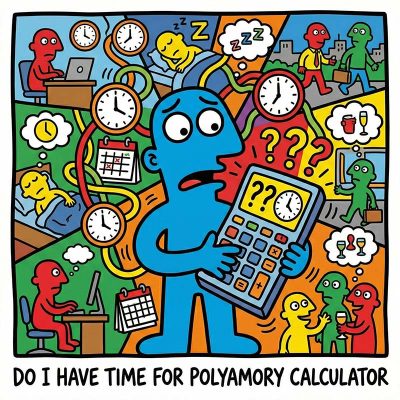
Love is infinite, but your calendar is brutally finite. The fantasy is deep connection; the reality is often just exhausted "calendar tetris." Promising time you don't actually have isn't romantic, it’s a recipe for burnout and broken trust. That sinking feeling when you have to cancel again? That’s the sound of overextension destroying your relationships.
This calculator forces you to confront the math of your life. Do you actually have space for another heart, or are you just setting everyone up for disappointment?

The fantasy is total autonomy and connection. The reality? It can feel like drowning in scheduling chaos and misunderstood expectations. That anxiety you feel isn’t just stress; it’s the wobble of living without a default "anchor." Without a solid architecture, Solo Polyamory stops being a life design and starts being a recipe for burnout and confusion.
The Essential Guide replaces the drift with a concrete anchor. We provide the "Solo Ethic," boundary scripts, and burnout protocols needed to protect your peace. Don't just date around—build a life that actually works for you.

Hierarchy sounds like a corporate org chart until someone gets their feelings hurt. That stomach-turning fear that you are just a "secondary" who can be fired at any time is real. If your relationship feels like a secret ranking system, you are doing it wrong.
Ambiguity is where resentment grows. The Essential Guide replaces the "who matters more" panic with a concrete charter. We provide the scripts and equity guardrails needed to protect every heart in the polycule. Stop guessing and start building.

The ideal is pure equality. The reality? It often slides into hidden rankings where someone gets hurt. That sinking feeling that you are secretly a "secondary" despite the label? That is your intuition detecting couple privilege. Ambiguity is where resentment thrives.
The Essential Guide replaces vague promises with concrete governance. We provide the charters, equity tools, and jealousy protocols needed to ensure "non-hierarchical" isn't just a fantasy. Stop guessing who matters most. Build a network that is actually fair.
The fantasy is total autonomy and connection. The reality? It can feel like drowning in scheduling chaos and misunderstood expectations. That anxiety you feel isn’t just stress; it’s the wobble of living without a default "anchor." Without a solid architecture, Solo Polyamory stops being a life design and starts being a recipe for burnout and confusion.
The Essential Guide replaces the drift with a concrete anchor. We provide the "Solo Ethic," boundary scripts, and burnout protocols needed to protect your peace. Don't just date around—build a life that actually works for you.
Hierarchy sounds like a corporate org chart until someone gets their feelings hurt. That stomach-turning fear that you are just a "secondary" who can be fired at any time is real. If your relationship feels like a secret ranking system, you are doing it wrong.
Ambiguity is where resentment grows. The Essential Guide replaces the "who matters more" panic with a concrete charter. We provide the scripts and equity guardrails needed to protect every heart in the polycule. Stop guessing and start building.
Why end of life planning matters for a non hierarchical ENM setup
When you are in a non hierarchical polyamory arrangement the usual line up of a legal spouse as the default decision maker and information holder is not automatic. You may have multiple partners who deserve to know what is happening as your health changes or as you approach end of life. Without a clear plan you risk delays, conflicts, or the wrong people being contacted at the worst possible time. A solid end of life plan helps ensure that your values are honored, that your different partners have access to information and support as you want, and that your assets and responsibilities are managed in a way that aligns with your arrangements and your laws.
Common pitfalls to avoid in ENM end of life planning
- Assuming a partner will automatically be able to access medical information or make decisions without a formal document.
- Relying on verbal agreements only rather than writing things down that can be used by doctors, the court, or family members.
- Failing to designate backups or alternates for both healthcare and finances.
- Not addressing digital assets and online accounts which are a growing part of everyone s lives.
- Overlooking the needs of dependents or family members who may not be part of the romantic network.
- Entering into plan changes without notifying key people and updating documents accordingly.
Step by step guide to end of life planning without spouse privilege
Step 1: Inventory your network and map roles
Start with a clear map of who matters to you and what role you want them to play. In a non hierarchical polyamory setup you may have several partners who are close allies in daily life and in care. Create a simple list that names each partner, their relationship to you, and the kind of authority you would be comfortable granting them. For each person decide if they should have access to medical information, decision making power, financial authority, or a combination of these. Be realistic about who can handle these responsibilities and how much time or stress they can bear in a crisis. The plan should reflect your actual life and not a fantasy version of it.
Step 2: Choose primary and alternate agents for healthcare and finances
Do not assume you only need one person to act. In many ENM situations it makes sense to appoint a primary agent and one or more alternates for both healthcare and finances. A healthcare agent is the person who will speak for you if you cannot speak for yourself. A financial power of attorney handles bills, assets, and day to day monetary decisions. Designate at least one backup for each role in case your first choice is unavailable or unwilling to act. If any of your partners live in a different state or country, check whether the authority will be recognized in the appropriate jurisdiction. If you want medical team access to your information you will also need a HIPAA release or privacy authorization that covers all your key partners.
Step 3: Prepare advance directives and a living will
An advance directive is a collection of your medical wishes that doctors can follow when you cannot communicate. A living will typically specifies which interventions you want or do not want, such as resuscitation, mechanical ventilation, and life sustaining treatment. It is helpful to be specific yet flexible. If you want to avoid prolonged treatment in crises, outline your priorities clearly while leaving room for your doctors and loved ones to interpret the situation in real time. Many ENM folks also add a clause about who should be involved in medical discussions. This can include all significant partners who want to be part of conversations with doctors and hospital staff. Remember to share a copy of the advance directive with your healthcare agents and your medical providers.
Step 4: Create or update your will and appoint an executor
A will is a legal document that directs how your assets should be distributed after death. In a non hierarchical polyamory setup this is particularly important because there may be several partners who would expect a share or a role in handling your estate. Name an executor who can manage probate and ensure your instructions are followed. If you have minor children or dependents, you will need to designate guardians as well. It is wise to discuss guardianship choices with your partners and potential guardians beforehand to avoid confusion later. If you have digital assets or business interests, name someone who can manage those as well.
Step 5: Address digital assets and online accounts
Digital life matters. Calendars, photo libraries, social media accounts, cloud storage, recurring subscriptions, and digital currencies all require attention. Document access instructions and designate a trusted person to manage digital assets after your death or incapacity. Consider a digital asset plan that covers privacy settings, account access, and how to preserve or memorialize digital footprints in a way that respects the wishes of your partners and other beneficiaries.
Step 6: Draft a letter of instruction and a clear communication plan
A letter of instruction is not a legal document, but it carries important guidance for executors, family members, and medical teams. Use it to explain your reasons for certain choices, describe your relationships with each partner, and share preferences about funeral arrangements, memorials, or how you want your belongings distributed. Pair the letter with a communication plan that outlines who should be contacted, in what order, and what information should be shared with whom. A well written letter helps prevent misunderstandings and reduces the emotional load on your partners during a crisis.
Step 7: Consider guardianship and dependents if applicable
If you have children or other dependents, guardianship is crucial. In ENM circles it is common to designate guardians who will not only take care of the children but also respect the guardianship network you have built with your partners. Discuss options with potential guardians, obtain their consent, and ensure your plans align with the laws of your state or country. A guardianship document should be kept with your will and your other end of life papers so there is no confusion about who will step in when the time comes.
Step 8: Talk about the plan with your partners and family
Communication is the glue that keeps these plans from breaking when stress levels spike. Host a calm conversation with all key people. Explain what you want and why, answer questions, and listen to concerns. You do not need to reveal every intimate detail of your relationships, but you do need to communicate enough to ensure your wishes are understood and respected. It is better for people to hear your plans from you rather than to discover them in a crisis or through someone else. Consider family dynamics and be prepared for tough questions. Your goal is clarity, empathy, and practical steps that protect your wishes and your loved ones.
Step 9: Keep documents accessible and up to date
End of life planning is not a one and done task. It is a living process. Review your documents at least annually or whenever major life changes happen such as new partnerships, a move to a different state, or a change in health status. Ensure that copies are stored in a known secure location. Provide copies to your healthcare agents, executor, and a trusted friend who can act as a point person in a crisis. Consider providing a trusted professional such as an attorney or a financial advisor with a copy so they can help you maintain coherence across documents.
Step 10: Do not delay the legal and practical steps that matter
Procrastination can bite you later. If you want a fair and orderly plan that respects your relationships and your autonomy, take these steps seriously and do them now. It can be hard to face mortality, but the real gift you give your partners is protection from chaos during a crisis. This is not about control it is about care for the people you love and the life you want to continue to live in their memories even after you are not there to tell your story in person.
Real life scenarios for a non hierarchical ENM setup
Scenario A: Three partners sharing life and caregiving duties
Imagine you have three romantic partners you deeply care about. You have decided that none of them is the default primary partner. Each person contributes to your life in different ways. In a crisis one partner handles medical conversations with doctors, another coordinates financial matters, and the third helps with day to day care and coordinating with family. Your advance directive is clear that any major decision requires at least two of the three partners if you cannot decide for yourself. You have named a healthcare proxy who is comfortable speaking on your behalf, with alternates ready in case the first choice is unavailable. Your will distributes assets according to the values you hold and recognizes each partner’s role, while a letter of instruction accompanies the documents to prevent confusion. This setup reduces the risk of gatekeeping and ensures your wishes are honored even when your family dynamics are complex.
Scenario B: A partner wants medical authority but only for specific situations
In some ENM arrangements a partner may want to be involved in medical decisions but only for certain kinds of situations. The plan can accommodate this by creating targeted directives. For example you might authorize a healthcare agent to discuss routine appointments and day to day care decisions but require a second opinion or consent from a different partner for life sustaining treatments. The key is to document these limits clearly in the durable power of attorney for healthcare and to share them with your medical team. This reduces ambiguity and respects the boundaries that your relationships have negotiated.
Scenario C: End of life planning while living in different states or countries
When partners live in different jurisdictions you face the challenge of cross border or cross state recognition. Some documents are universally recognized, but certain powers may be limited by local laws. In this situation you should work with an attorney who understands both jurisdictions. Use a durable power of attorney for healthcare and a separate one for finances that are valid in each location. Include a comprehensive HIPAA release that covers each participating partner. Maintain a central set of documents and provide linked digital copies so medical teams can access your wishes even when you cannot be physically present with all your partners.
Tools and templates you can adapt
Template checklist for documents
- Advance directive or living will signed and dated
- Durable power of attorney for healthcare with successors
- Durable power of attorney for finances with successors
- HIPAA authorization allowing access to medical information for listed partners
- Will or trust with executor named
- Guardianship designation if dependents exist
- Letter of instruction accompanying the legal documents
- List of digital assets and access instructions
Sample language you can adapt
Power of attorney for healthcare sample language
I, [Your Name], residing at [Address], designate [First Agent Name], residing at [Address], as my healthcare agent to make medical decisions on my behalf when I am unable to participate in the decision making process. If [First Agent Name] is unavailable or unwilling to act, I designate [Second Agent Name] to act in my stead. This authorization includes access to my medical records under HIPAA and any other applicable privacy laws. This power of attorney shall become effective immediately upon my incapacity and shall remain in effect until I recover or until revoked in writing.
Sample letter of instruction
To all who may be affected by my end of life plans I want you to know that I value the relationships I maintain with all of my partners. My intent is to honor the bonds I share with each person who has supported me. Please refer to my advance directive for medical decisions and to my will for asset distribution. If there is any difference between the legal language and my personal wishes you should follow the legal documents but exercise compassion and respect the spirit of these relationships as I have described them here.
Sample will language for non hierarchical polyamory families
To my executor I leave all my worldly possessions and I request that you distribute my assets in a manner that reflects the equal value I place on my partners and their families. I direct that items be divided with fairness and consideration for the unique role each partner has played in my life. If any asset cannot be divided equally I ask that it be sold and proceeds distributed in a manner that aligns with my expressed wishes in the letter of instruction and advance directive.
Practical tips for staying organized
- Keep copies of all documents in both digital and physical form in a secure location
- Distribute copies to your healthcare agents and to your executor
- Review and update documents after major life events such as new partnerships, relocation, or changes in health
- Share a simple one page overview as a quick reference for medical staff and family members
- Check state or national laws with a professional to ensure your documents will be recognized when needed
Resources and further reading
End of life planning is an ongoing conversation that benefits from a mix of legal guidance and practical planning. Look for resources on estate planning and healthcare decision making that are inclusive of non traditional family structures. If you have access to a family law attorney or an attorney who specializes in estate planning for non traditional families, a consultation can clarify state specific requirements and help you tailor documents to your situation. Community legal clinics or organizations focused on LGBTQIA plus or polyamory communities may also offer templates or guided checklists that recognize non hierarchical arrangements. In addition to legal counsel you can work with a financial planner who understands how to coordinate multiple partners and assets in a way that protects everyone involved.
Frequently asked questions
What happens if I have several partners but no will
Without a will your assets will be distributed according to intestacy laws which vary by location. Often this means assets go to spouses, children, or closest relatives rather than partners. Creating a will is especially important in ENM setups to ensure your partners and dependents are cared for as you intend.
How can I ensure all my partners get notice in a crisis
Use a central contact list that includes every partner and trusted ally. In your healthcare directive specify who should be contacted and consider giving a copy of the documents to the hospital social worker for triage in an emergency. A letter of instruction can also provide guidance on who should be told and when.
Can a non spouse be the executor of my will
Yes. An executor does not have to be a spouse. You can appoint any trusted person or professional as long as they are willing and capable of carrying out the duties. In ENM relationships you may choose a trusted partner or a professional fiduciary who can manage complex family dynamics with sensitivity and impartiality.
Do I need two witnesses or a notary for these documents
Most places require witnesses or a notary for wills and powers of attorney. Check local rules. Having the documents notarized and witnessed helps ensure they are valid and not challenged later on.
How often should I review these documents
At minimum every year or after any major life change such as the addition of a new partner, relocation, or a change in health status. Regular reviews help you keep everything up to date and aligned with your current wishes and relationships.
What about digital assets and social media
Make a plan for access to digital assets, social media accounts, and online valuables. Provide login information where appropriate and appoint a digital executor who can manage or memorialize these assets in line with your wishes.
What if someone disagrees with my plan
Disagreements happen in every family. A well prepared plan with clear writing and conversations ahead of time can prevent many conflicts. If disputes arise consider mediation or involve your attorney to help interpret the documents in a manner consistent with your wishes.
Is there a difference between a living will and an advance directive
Practically they refer to the same concept though some places distinguish them slightly. Both are about your medical preferences when you cannot communicate. Check the wording in your jurisdiction to ensure the terms you use are recognized and enforceable.
Can I include my non romantic close friends or chosen family in these plans
Absolutely. The term chosen family covers people who are important to you but may not be related by blood or romance. Include them in your advance directives and designate them as needed in your will or letter of instruction to reflect your social network accurately.
How do I start if I feel overwhelmed
Start small. Pick one document to create first such as a healthcare power of attorney or a living will. Gather the information you need, and set a date to complete the next step. You can do this a little at a time and still end up with a solid plan rather than letting fear stall you for months or years.
Love is infinite, but your calendar is brutally finite. The fantasy is deep connection; the reality is often just exhausted "calendar tetris." Promising time you don't actually have isn't romantic, it’s a recipe for burnout and broken trust. That sinking feeling when you have to cancel again? That’s the sound of overextension destroying your relationships.
This calculator forces you to confront the math of your life. Do you actually have space for another heart, or are you just setting everyone up for disappointment?
The fantasy is total autonomy and connection. The reality? It can feel like drowning in scheduling chaos and misunderstood expectations. That anxiety you feel isn’t just stress; it’s the wobble of living without a default "anchor." Without a solid architecture, Solo Polyamory stops being a life design and starts being a recipe for burnout and confusion.
The Essential Guide replaces the drift with a concrete anchor. We provide the "Solo Ethic," boundary scripts, and burnout protocols needed to protect your peace. Don't just date around—build a life that actually works for you.
Hierarchy sounds like a corporate org chart until someone gets their feelings hurt. That stomach-turning fear that you are just a "secondary" who can be fired at any time is real. If your relationship feels like a secret ranking system, you are doing it wrong.
Ambiguity is where resentment grows. The Essential Guide replaces the "who matters more" panic with a concrete charter. We provide the scripts and equity guardrails needed to protect every heart in the polycule. Stop guessing and start building.
The ideal is pure equality. The reality? It often slides into hidden rankings where someone gets hurt. That sinking feeling that you are secretly a "secondary" despite the label? That is your intuition detecting couple privilege. Ambiguity is where resentment thrives.
The Essential Guide replaces vague promises with concrete governance. We provide the charters, equity tools, and jealousy protocols needed to ensure "non-hierarchical" isn't just a fantasy. Stop guessing who matters most. Build a network that is actually fair.
The fantasy is total autonomy and connection. The reality? It can feel like drowning in scheduling chaos and misunderstood expectations. That anxiety you feel isn’t just stress; it’s the wobble of living without a default "anchor." Without a solid architecture, Solo Polyamory stops being a life design and starts being a recipe for burnout and confusion.
The Essential Guide replaces the drift with a concrete anchor. We provide the "Solo Ethic," boundary scripts, and burnout protocols needed to protect your peace. Don't just date around—build a life that actually works for you.
Hierarchy sounds like a corporate org chart until someone gets their feelings hurt. That stomach-turning fear that you are just a "secondary" who can be fired at any time is real. If your relationship feels like a secret ranking system, you are doing it wrong.
Ambiguity is where resentment grows. The Essential Guide replaces the "who matters more" panic with a concrete charter. We provide the scripts and equity guardrails needed to protect every heart in the polycule. Stop guessing and start building.
