
Fear of Replacement Without Primary Labels

If you are navigating ethical non monogamy in a non hierarchical setup you might catch yourself worrying about being replaced or losing your place in the heart chart. This guide explains what that fear is how it shows up and practical steps to manage it without naming anyone as a primary. We keep things straightforward funny and helpful because relationships deserve clarity not drama cloaked in mystery.
Quick Links to Useful Sections
- What we mean by non hierarchical polyamory and ENM
- The fear of replacement without primary labels
- Why fear tends to show up in non hierarchical dynamics
- Realistic vs reactive fears
- Common scenarios you might recognize
- Scenario 1 the new connection and the fear of losing closeness
- Scenario 2 scheduling shifts and feeling overlooked
- Scenario 3 feeling excluded from events
- How to talk about fears without turning the talk into a fight
- Practical tools to ease the fear of replacement
- Transparent scheduling and energy accounting
- Metamour respect and boundaries
- Jealousy management practices
- Boundaries that survive change
- Language that reduces fear
- Navigating the social story around primary labels
- Practical steps you can take this week
- Choosing whether to keep non hierarchical labels or introduce a form of priority
- Ethical considerations and safety
- Self reflection exercises to understand your fear
- Case study style quick read
- Maintaining trust when fears arise
- Glossary of useful terms and acronyms
- Frequently asked questions
What we mean by non hierarchical polyamory and ENM
First things first. ENM stands for Ethical Non Monogamy. It is a broad family of relationship styles where people consent to intimate and romantic connections with more than one person. Non hierarchical polyamory is a specific flavor of ENM. In this dynamic there are no designated primary partners who take priority over others. Everyone is on the same level with regard to time energy and emotional importance. People in this setup may still have long term partnerships or important relationships but those labels are not used to claim a higher status. The goal is openness consent and fairness rather than rank or control.
In simple terms think of a non hierarchical polyamory dynamic as a group project with many equally valued players. There is cooperation not domination and the map changes as people grow. If you have experience with monogamy you might be used to a single main relationship. In a non hierarchical setup you might still care deeply for multiple partners but you avoid the idea that one person has final say or a higher priority over others.
The fear of replacement without primary labels
When you hear the phrase fear of replacement you likely imagine someone walking in the door with a bigger house a better job and somehow more time for your partner. In a non hierarchical polyamory world the fear tends to come from a few common sources. You might worry about losing emotional closeness you might worry about time being pulled away or you might fear that your partner will drift into a new connection and your own place will shrink. This fear is not a sign that you are broken it is a signal that you want a specific kind of care and presence from your partners. The absence of a primary label can trigger a scramble for security and a suspicion that you will be forgotten or undervalued. The good news is that fear can be explored and managed with clear communication honest agreements and practical routines.
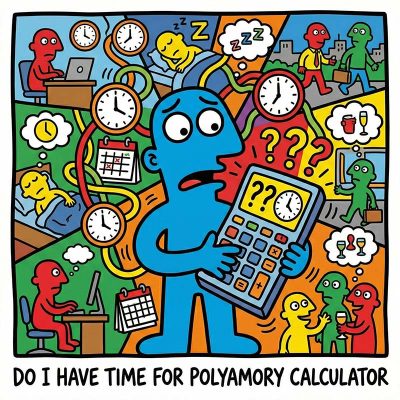
Love is infinite, but your calendar is brutally finite. The fantasy is deep connection; the reality is often just exhausted "calendar tetris." Promising time you don't actually have isn't romantic, it’s a recipe for burnout and broken trust. That sinking feeling when you have to cancel again? That’s the sound of overextension destroying your relationships.
This calculator forces you to confront the math of your life. Do you actually have space for another heart, or are you just setting everyone up for disappointment?

The fantasy is total autonomy and connection. The reality? It can feel like drowning in scheduling chaos and misunderstood expectations. That anxiety you feel isn’t just stress; it’s the wobble of living without a default "anchor." Without a solid architecture, Solo Polyamory stops being a life design and starts being a recipe for burnout and confusion.
The Essential Guide replaces the drift with a concrete anchor. We provide the "Solo Ethic," boundary scripts, and burnout protocols needed to protect your peace. Don't just date around—build a life that actually works for you.

Hierarchy sounds like a corporate org chart until someone gets their feelings hurt. That stomach-turning fear that you are just a "secondary" who can be fired at any time is real. If your relationship feels like a secret ranking system, you are doing it wrong.
Ambiguity is where resentment grows. The Essential Guide replaces the "who matters more" panic with a concrete charter. We provide the scripts and equity guardrails needed to protect every heart in the polycule. Stop guessing and start building.

The ideal is pure equality. The reality? It often slides into hidden rankings where someone gets hurt. That sinking feeling that you are secretly a "secondary" despite the label? That is your intuition detecting couple privilege. Ambiguity is where resentment thrives.
The Essential Guide replaces vague promises with concrete governance. We provide the charters, equity tools, and jealousy protocols needed to ensure "non-hierarchical" isn't just a fantasy. Stop guessing who matters most. Build a network that is actually fair.
The fantasy is total autonomy and connection. The reality? It can feel like drowning in scheduling chaos and misunderstood expectations. That anxiety you feel isn’t just stress; it’s the wobble of living without a default "anchor." Without a solid architecture, Solo Polyamory stops being a life design and starts being a recipe for burnout and confusion.
The Essential Guide replaces the drift with a concrete anchor. We provide the "Solo Ethic," boundary scripts, and burnout protocols needed to protect your peace. Don't just date around—build a life that actually works for you.
Hierarchy sounds like a corporate org chart until someone gets their feelings hurt. That stomach-turning fear that you are just a "secondary" who can be fired at any time is real. If your relationship feels like a secret ranking system, you are doing it wrong.
Ambiguity is where resentment grows. The Essential Guide replaces the "who matters more" panic with a concrete charter. We provide the scripts and equity guardrails needed to protect every heart in the polycule. Stop guessing and start building.
Why fear tends to show up in non hierarchical dynamics
In a non hierarchical dynamic there is equality in theory but in practice people still have emotional needs time constraints and comfort levels. A lack of primary labels means no one has a formal guarantee of first dibs on a partner’s calendar or energy. That can feel unsettling especially if you have a history of prioritizing a single relationship or if you have experienced a power imbalance in the past. Here are common reasons this fear shows up:
- Time allocation feels unstable as new people come into the picture
- Emotional closeness can shift when new bonds form
- Conflicting needs appear as different partners require attention
- Societal expectations push people toward the myth of the one true partner
- Unspoken assumptions create silent pressure to perform or prove worth
Realistic vs reactive fears
Not every fear is a red flag for danger. Some fears are helpful signals that indicate a boundary or a need. Others are rooted in insecurity may be fueled by past experiences or by miscommunication. A practical approach is to separate realistic concerns from reactive worries. Realistic concerns include schedule strain clear boundaries on time and honest communication about energy levels. Reactive worries include catastrophizing about being replaced jumping to conclusions about a partner’s motives or letting jealousy turn into a blame game. The goal is to convert reactive fears into constructive conversations that build trust rather than erode it.
Common scenarios you might recognize
Scenario one a new connection arises and you start to feel anxiety about your place. Scenario two a partner becomes deeply involved with someone else and your weekly meet up time is cut short. Scenario three you notice you are not being invited to certain events or conversations that used to include you. In each case the fear of replacement can show up as rumination sarcasm or withdrawal. The good news is these moments become opportunities to practice clear communication and healthy boundaries rather than fuel a fight.
Scenario 1 the new connection and the fear of losing closeness
A partner shares a new relationship and you notice your daily check ins decrease. You might worry that your partner will prefer the new person and you will be left behind. The fix is not to pretend the change did not happen but to name the feeling and negotiate a plan. You could say I am excited for you about this new connection and I also want to preserve our daily check ins. Can we set a specific time each day for our short talk and a longer weekly date just for us?
Scenario 2 scheduling shifts and feeling overlooked
A partner spends Saturdays with someone new and you feel you lost your regular long talk time. Your instinct might be to demand time back or to accuse the other partner. A healthier reaction is to discuss explicitly how time is spread and to propose a predictable rhythm. For example I would love a couple of hours every Saturday for us. If that does not work we can adjust but I need to know the plan a week in advance so I can arrange my own time as well.
Scenario 3 feeling excluded from events
You hear about events where you were not invited or included in plans your mind starts to think I am being replaced. The answer is to communicate your need for inclusion without making the other person wrong. You might say I would love to be part of these kinds of events even if I cannot always attend. Can we rotate invites or share some general plans that include all the important people in our lives?
How to talk about fears without turning the talk into a fight
Communication is the heart of any healthy non hierarchical dynamic. When you address fears try to use non violent communication. This approach keeps the focus on your experience the impact on you and your request rather than accusing your partner of wrongdoing. Here is a simple framework you can use:
- State the observation without blame
- Share the feeling you have formed
- Explain the impact this has on you
- Make a clear request for a specific action
For example you could say I notice you have spent more time with your new partner this month. I am feeling anxious and a bit left out. This affects my sense of safety in our connection. Could we schedule at least two dedicated time blocks each week to focus on us and our relationship?
Practical tools to ease the fear of replacement
These tools are designed to be used by people in a non hierarchical polyamory setup. They help you feel seen and ensure that you can thrive without a formal primary label.
Transparent scheduling and energy accounting
Using a shared calendar or a simple planning tool helps everyone see where time goes. It is not about micromanaging lovers it is about transparency. A weekly planning session can help you adjust expectations in real time. You can track energy too. If one partner is running at full capacity you can rearrange responsibilities or offer mutual support. The goal is fairness not rigidity.
Metamour respect and boundaries
In non hierarchical polyamory a metamour is a partner of a partner. Treat metamours with courtesy and curiosity. Set boundaries that protect emotional health while allowing for growth. A practical boundary might be I do not want to be dragged into personal disputes but I am happy to talk about schedules or shared events that involve all of us.
Jealousy management practices
Jealousy is a natural signal not a sin. Acknowledge it label it and explore what it is trying to tell you. Is the fear about time is it about emotional closeness or something else entirely? A few constructive steps include journaling naming the emotion talking to a trusted friend or a therapist and negotiating a small change that makes your life safer without restricting your partners freedom.
Boundaries that survive change
Boundaries are not walls they are rails. Boundaries around time space and privacy should be reviewed periodically as relationships evolve. Check in every few months with your partners about what feels fair and what feels unfair. The moment a boundary becomes a weapon is the moment it stops serving everyone involved.
Language that reduces fear
Words shape reality. Replace statements like I am being replaced with I am exploring new connections alongside all the other connections in my life. This small shift reminds you and your partners that you all grow together not that someone is stealing a place you deserve.
Love is infinite, but your calendar is brutally finite. The fantasy is deep connection; the reality is often just exhausted "calendar tetris." Promising time you don't actually have isn't romantic, it’s a recipe for burnout and broken trust. That sinking feeling when you have to cancel again? That’s the sound of overextension destroying your relationships.
This calculator forces you to confront the math of your life. Do you actually have space for another heart, or are you just setting everyone up for disappointment?
The fantasy is total autonomy and connection. The reality? It can feel like drowning in scheduling chaos and misunderstood expectations. That anxiety you feel isn’t just stress; it’s the wobble of living without a default "anchor." Without a solid architecture, Solo Polyamory stops being a life design and starts being a recipe for burnout and confusion.
The Essential Guide replaces the drift with a concrete anchor. We provide the "Solo Ethic," boundary scripts, and burnout protocols needed to protect your peace. Don't just date around—build a life that actually works for you.
Hierarchy sounds like a corporate org chart until someone gets their feelings hurt. That stomach-turning fear that you are just a "secondary" who can be fired at any time is real. If your relationship feels like a secret ranking system, you are doing it wrong.
Ambiguity is where resentment grows. The Essential Guide replaces the "who matters more" panic with a concrete charter. We provide the scripts and equity guardrails needed to protect every heart in the polycule. Stop guessing and start building.
The ideal is pure equality. The reality? It often slides into hidden rankings where someone gets hurt. That sinking feeling that you are secretly a "secondary" despite the label? That is your intuition detecting couple privilege. Ambiguity is where resentment thrives.
The Essential Guide replaces vague promises with concrete governance. We provide the charters, equity tools, and jealousy protocols needed to ensure "non-hierarchical" isn't just a fantasy. Stop guessing who matters most. Build a network that is actually fair.
The fantasy is total autonomy and connection. The reality? It can feel like drowning in scheduling chaos and misunderstood expectations. That anxiety you feel isn’t just stress; it’s the wobble of living without a default "anchor." Without a solid architecture, Solo Polyamory stops being a life design and starts being a recipe for burnout and confusion.
The Essential Guide replaces the drift with a concrete anchor. We provide the "Solo Ethic," boundary scripts, and burnout protocols needed to protect your peace. Don't just date around—build a life that actually works for you.
Hierarchy sounds like a corporate org chart until someone gets their feelings hurt. That stomach-turning fear that you are just a "secondary" who can be fired at any time is real. If your relationship feels like a secret ranking system, you are doing it wrong.
Ambiguity is where resentment grows. The Essential Guide replaces the "who matters more" panic with a concrete charter. We provide the scripts and equity guardrails needed to protect every heart in the polycule. Stop guessing and start building.
Navigating the social story around primary labels
In broader culture the idea of a single primary partner is common. In a non hierarchical setup you can choose to reject that story and write your own. You may borrow elements from the primary model if they help you feel secure but do not feel obligated to adopt a ranking system. Some people use the term priority to describe different needs while keeping all relationships on equal ground. Others avoid labels altogether. The key is finding a language that you and your partners understand and agree on. Language is the map not the territory. Use it to keep things clear and compassionate.
Practical steps you can take this week
If you want some actionable steps here is a simple three week plan you can adapt to your life. Week one focus on naming fears. Talk to a partner about your concerns in a non accusatory way and ask for one concrete adjustment. Week two set a sustainable schedule that respects all involved. Week three review how things feel and adjust boundaries or time commitments as needed. Small deliberate steps can reduce fear and increase trust far faster than silence.
Choosing whether to keep non hierarchical labels or introduce a form of priority
Some couples eventually decide to experiment with a light form of priority without locking in a rigid hierarchy. For example you might designate certain times as reserved for your primary time while preserving the overall equality across all partners. The important thing is to have a shared understanding and explicit consent for any change. Do not adopt a label merely to silence fear. Only choose a structure that you find respectful and empowering for everyone involved.
Ethical considerations and safety
Safety in ethical non monogamy covers physical safety emotional well being and informed consent. In non hierarchical polyamory this means clear conversations about sexual health safe sex practices and honest disclosure with all partners. It also means giving yourself permission to pause or slow down if you ever feel overwhelmed. There is no rush to prove you can handle everything. Your well being comes first and your relationships will grow stronger when you protect your own mental health.
Self reflection exercises to understand your fear
Use these quick exercises to uncover where your fear comes from and how to address it constructively. Exercise one write a short list of moments you felt left out in the last six months. Exercise two describe the kind of time you want with each partner in a typical week. Exercise three imagine a future where your fear is resolved and describe what changes you notice in your daily life. These exercises bring clarity and a sense of control without demanding perfection from yourself or your partners.
Case study style quick read
A fictional couple named Rowan and Sage practice non hierarchical polyamory. They do not label one person as primary. They learned to talk about time they learned to share plans and they built a small ritual they call check in time. Each Friday they discuss the following week in a calm two hour window. They name fears early and check in about energy levels. When a new partner joined the circle they separately asked how much time they needed a week to feel balanced. They found a rhythm that kept everyone valued and connected. They still have days when fear shows up but they now handle it with clear language kindness and a plan. Their story is not unique it is an example of how non hierarchical life can work when communication is honest and consistent.
Maintaining trust when fears arise
Trust is built step by step not declared in a single moment. When fears arise act quickly to address the concern show up with empathy and follow through on the agreements you set. Trust grows when each person feels heard and when the group protects emotional boundaries with care. If you notice a pattern of fear repeated or a sense of unfairness discuss a formal check in the group to review the agreements. A small group conversation can prevent a big drift later on.
Glossary of useful terms and acronyms
- ENM Ethical non monogamy a framework that supports consensual multiple relationships.
- Non hierarchical polyamory A style where there is no official primary partner and all relationships are treated as equal.
- Metamour A partner of someone in your relationship who is not your own partner.
- Primary In many setups this label designates the relationship that has priority for time resources or decisions. In non hierarchical models this label is not used by default.
- Compersion The feeling of joy from seeing a partner happy with someone else.
- Jealousy A natural emotional response to perceived threat or insecurity in a relationship.
Frequently asked questions
Love is infinite, but your calendar is brutally finite. The fantasy is deep connection; the reality is often just exhausted "calendar tetris." Promising time you don't actually have isn't romantic, it’s a recipe for burnout and broken trust. That sinking feeling when you have to cancel again? That’s the sound of overextension destroying your relationships.
This calculator forces you to confront the math of your life. Do you actually have space for another heart, or are you just setting everyone up for disappointment?
The fantasy is total autonomy and connection. The reality? It can feel like drowning in scheduling chaos and misunderstood expectations. That anxiety you feel isn’t just stress; it’s the wobble of living without a default "anchor." Without a solid architecture, Solo Polyamory stops being a life design and starts being a recipe for burnout and confusion.
The Essential Guide replaces the drift with a concrete anchor. We provide the "Solo Ethic," boundary scripts, and burnout protocols needed to protect your peace. Don't just date around—build a life that actually works for you.
Hierarchy sounds like a corporate org chart until someone gets their feelings hurt. That stomach-turning fear that you are just a "secondary" who can be fired at any time is real. If your relationship feels like a secret ranking system, you are doing it wrong.
Ambiguity is where resentment grows. The Essential Guide replaces the "who matters more" panic with a concrete charter. We provide the scripts and equity guardrails needed to protect every heart in the polycule. Stop guessing and start building.
The ideal is pure equality. The reality? It often slides into hidden rankings where someone gets hurt. That sinking feeling that you are secretly a "secondary" despite the label? That is your intuition detecting couple privilege. Ambiguity is where resentment thrives.
The Essential Guide replaces vague promises with concrete governance. We provide the charters, equity tools, and jealousy protocols needed to ensure "non-hierarchical" isn't just a fantasy. Stop guessing who matters most. Build a network that is actually fair.
The fantasy is total autonomy and connection. The reality? It can feel like drowning in scheduling chaos and misunderstood expectations. That anxiety you feel isn’t just stress; it’s the wobble of living without a default "anchor." Without a solid architecture, Solo Polyamory stops being a life design and starts being a recipe for burnout and confusion.
The Essential Guide replaces the drift with a concrete anchor. We provide the "Solo Ethic," boundary scripts, and burnout protocols needed to protect your peace. Don't just date around—build a life that actually works for you.
Hierarchy sounds like a corporate org chart until someone gets their feelings hurt. That stomach-turning fear that you are just a "secondary" who can be fired at any time is real. If your relationship feels like a secret ranking system, you are doing it wrong.
Ambiguity is where resentment grows. The Essential Guide replaces the "who matters more" panic with a concrete charter. We provide the scripts and equity guardrails needed to protect every heart in the polycule. Stop guessing and start building.
