
How Non Hierarchical Polyamory Differs From Hierarchical Polyamory


Welcome to a clear eyed look at two common Ethical Non Monogamy dynamics. We speak plainly and without jargon so you can understand what each setup actually feels like in day to day life. If you want a quick summary here it is: non hierarchical polyamory treats all loving relationships as needing care and attention on their own terms while hierarchical polyamory uses a ranking system with a primary relationship or relationships that often take priority in time energy and resources. Now we dive deeper in a way that helps you decide what might fit your personality and your life stage.
Quick Links to Useful Sections
- What non hierarchical polyamory means
- What hierarchical polyamory means
- Core differences at a glance
- Real world scenarios and what they feel like
- Scenario one a busy professional with several partners
- Scenario two a blended family and the holiday season
- Scenario three the talk about finances and living arrangements
- Scenario four the metamour dynamic
- The communication toolkit that makes either structure work
- Navigating boundaries and emotions
- Practical pros and cons to consider
- Non hierarchical polyamory pros
- Non hierarchical polyamory cons
- Hierarchical polyamory pros
- Hierarchical polyamory cons
- How to decide what works for you
- How to start a conversation about choosing a structure
- Common myths about non hierarchical and hierarchical polyamory
- Glossary of useful terms and acronyms
- Frequently asked questions
What non hierarchical polyamory means
In non hierarchical polyamory there is no built in ladder of relationships where one is always the main focus. All relationships exist with equal seriousness and with the understanding that each connection has its own shape boundaries and needs. People who practice this approach often emphasize the idea that love is not a finite resource and that emotional energy can be distributed in flexible ways. The key idea is consent rotation and respect rather than a fixed order of priority.
Let us break that down a bit more. In a non hierarchical setup there might be multiple ongoing relationships with different people. Each relationship might have its own pace its own levels of closeness and its own boundaries. There is no universal rule that a person must be the primary partner to deserve time and attention. Instead decisions about time affection and energy are negotiated among all involved. This approach tends to feel more symmetric and can reduce the weight of a single relationship becoming a focal point of a person s life.
Terms you might see in this space include non hierarchical polyamory ethical non monogamy and polyamory as a general umbrella. Ethical non monogamy means all parties have given informed consent and understand boundaries and expectations. Polyamory means having romantic and or sexual connections with more than one person with the knowledge and consent of everyone involved. In non hierarchical versions of this dynamic there is no ranking that puts one relationship above another by default. Metamours a term you may hear refers to partners who are not in a relationship with each other but who share the same partner. The presence of metamours is a normal reality in many polyamorous circles and it is a topic that often needs careful navigation.
What hierarchical polyamory means
Hierarchical polyamory is structured around a hierarchy where one relationship is considered the primary relationship and other relationships are secondary. The primary relationship usually receives a larger portion of emotional time energy and sometimes even financial resources. The secondary relationships may have limits on how much time they can demand or how they are included in major life decisions such as living arrangements family planning or family holidays. The hierarchy is a deliberate choice that aims to protect the main relationship from destabilizing shifts and conflicts that can come with multiple deep connections.
In practice this might look like a person prioritizing the needs of their primary partner above everyone else when there is a conflict of schedules or when major life events coincide. Secondary partners might be kept at a comfortable distance or asked to accept certain boundaries or restrictions. Some people thrive with this kind of arrangement because it allows a clear sense of security and predictable planning. Others find the dynamic stressful or unfulfilling because it can feel like the main relationship is treated as more real or more important than other connections.
When we talk about hierarchy in this context we are not judging the people who choose it. It is a legitimate lifestyle choice with its own advantages. It is simply a different way of organizing love and time and it requires a high level of communication and explicit agreements to work well. In hierarchical polyamory the term primary is often used to denote the main partner or partners while secondary denotes other ongoing relationships. The exact definitions can vary widely from one group to another and even within a single relationship depending on circumstances.
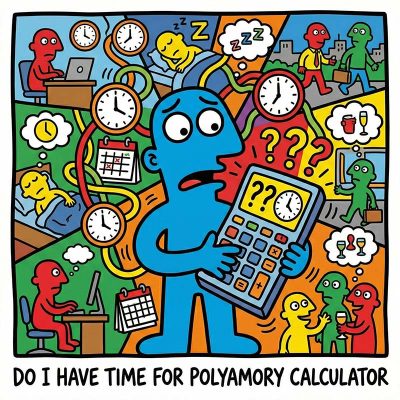
Love is infinite, but your calendar is brutally finite. The fantasy is deep connection; the reality is often just exhausted "calendar tetris." Promising time you don't actually have isn't romantic, it’s a recipe for burnout and broken trust. That sinking feeling when you have to cancel again? That’s the sound of overextension destroying your relationships.
This calculator forces you to confront the math of your life. Do you actually have space for another heart, or are you just setting everyone up for disappointment?

The fantasy is total autonomy and connection. The reality? It can feel like drowning in scheduling chaos and misunderstood expectations. That anxiety you feel isn’t just stress; it’s the wobble of living without a default "anchor." Without a solid architecture, Solo Polyamory stops being a life design and starts being a recipe for burnout and confusion.
The Essential Guide replaces the drift with a concrete anchor. We provide the "Solo Ethic," boundary scripts, and burnout protocols needed to protect your peace. Don't just date around—build a life that actually works for you.

Hierarchy sounds like a corporate org chart until someone gets their feelings hurt. That stomach-turning fear that you are just a "secondary" who can be fired at any time is real. If your relationship feels like a secret ranking system, you are doing it wrong.
Ambiguity is where resentment grows. The Essential Guide replaces the "who matters more" panic with a concrete charter. We provide the scripts and equity guardrails needed to protect every heart in the polycule. Stop guessing and start building.

The ideal is pure equality. The reality? It often slides into hidden rankings where someone gets hurt. That sinking feeling that you are secretly a "secondary" despite the label? That is your intuition detecting couple privilege. Ambiguity is where resentment thrives.
The Essential Guide replaces vague promises with concrete governance. We provide the charters, equity tools, and jealousy protocols needed to ensure "non-hierarchical" isn't just a fantasy. Stop guessing who matters most. Build a network that is actually fair.
The fantasy is total autonomy and connection. The reality? It can feel like drowning in scheduling chaos and misunderstood expectations. That anxiety you feel isn’t just stress; it’s the wobble of living without a default "anchor." Without a solid architecture, Solo Polyamory stops being a life design and starts being a recipe for burnout and confusion.
The Essential Guide replaces the drift with a concrete anchor. We provide the "Solo Ethic," boundary scripts, and burnout protocols needed to protect your peace. Don't just date around—build a life that actually works for you.
Hierarchy sounds like a corporate org chart until someone gets their feelings hurt. That stomach-turning fear that you are just a "secondary" who can be fired at any time is real. If your relationship feels like a secret ranking system, you are doing it wrong.
Ambiguity is where resentment grows. The Essential Guide replaces the "who matters more" panic with a concrete charter. We provide the scripts and equity guardrails needed to protect every heart in the polycule. Stop guessing and start building.
Core differences at a glance
Below we lay out the core differences in plain language. If you want a quick mental model this side by side comparison helps you spot what to expect in each structure.
- Relationship ranking Non hierarchical polyamory has no built in ranking. Hierarchical polyamory intentionally ranks relationships with a primary connection usually given priority.
- Time and energy In non hierarchical setups time and emotional energy are discussed openly and distributed according to what each pair or trio agrees. In hierarchical setups the primary relationship often consumes a larger portion of time energy and emotional focus.
- Decision making Non hierarchical relationships rely on ongoing consent and mutual negotiation among all involved. Hierarchical structures often center decisions around the primary relationship with secondary relationships having limited input or veto power.
- Security and predictability Hierarchical dynamics can offer predictability through defined roles. Non hierarchical dynamics offer flexibility and balance but can feel less predictable as needs shift.
- Jealousy and boundary risk In non hierarchical models jealousy is addressed as a normal part of complex relationships and is managed through honest communication. In hierarchical models jealousy can be more pronounced around issues of priority and time allocation especially if primary relationships feel distant or threatened.
- Public disclosure People in non hierarchical polyamory may share their relationships more openly with family and friends if they feel safe doing so. In hierarchical setups there is often more caution around disclosure because of the potential impact on the primary relationship.
- Metamours The presence of metamours is common in both structures but how they interact can differ. In non hierarchical contexts metamour terms are used to describe the relationship between partners and they may be encouraged to build their own rapport. In hierarchical contexts the metamour relationship might be influenced by the needs of the primary partner and the overall structure of the arrangement.
Real world scenarios and what they feel like
Let us walk through a few scenarios with concrete people and everyday situations. These are not one size fits all but they illustrate how non hierarchical and hierarchical dynamics play out in real life.
Scenario one a busy professional with several partners
Alex works long hours and has three ongoing connections. In a non hierarchical setup Alex negotiates a weekly schedule that tries to balance time with each partner. There is no single person who dictates the calendar. Every partner is treated with equal respect and there is a shared commitment to sunlit windows of time when each relationship can flourish. If one connection needs more emotional energy due to a stressful week the others simply adjust through open discussion. In a hierarchical arrangement Alex might designate a primary partner who gets first dibs on evenings and weekends while the other relationships are scheduled around that priority. The sense of security in the primary relationship can be strong but the other connections may feel secondary or less certain especially during crunch times at work.
Scenario two a blended family and the holiday season
During the holidays a non hierarchical polyamory setup allows a group to coordinate without ranking the family members. People arrange their time and obligations in a way that avoids placing one relationship above others. This can feel liberating because decisions are explained and consent is ongoing. In a hierarchical structure the primary partner might have the final say about which family the group visits first or how gifts are shared. The secondary partners could feel left out or pressured to adapt even if they are emotionally invested in the family holiday experiences.
Scenario three the talk about finances and living arrangements
In a non hierarchical arrangement budgets might be discussed openly so that each relationship contributes what it can and the overall household goals stay aligned. There is no single household fund that dominates every decision. In a hierarchical arrangement the primary relationship often shapes major choices such as housing location and how expenses are split. If a secondary relationship contributes to the household the terms of that contribution are clarified with the goal of preserving the primary relationship and its priorities while still honoring the other connections.
Scenario four the metamour dynamic
In a non hierarchical dynamic metamours are encouraged to interact in a respectful way and to develop their own rapport independent of the main relationship. The vibe is collaborative rather than competitive. In a hierarchical dynamic metamours may be more cautious because of the potential impact on the primary relationship. The priority is often to protect the primary bond which can limit open cross relationship socializing though this is not universal and depends on the agreements in place.
The communication toolkit that makes either structure work
Great communication is not a luxury it is a requirement in both non hierarchical and hierarchical polyamory. The good news is you can build a practical toolkit that fits your life. Here are some actionable ideas you can start using today.
- Open agreements Establish clear and current agreements about what is allowed what is not allowed and what will be revisited if circumstances change. Revisit these agreements regularly as relationships evolve.
- Regular check ins Set aside dedicated time to talk about emotional energy time needs and any distress or concerns. Check ins help catch issues before they become big problems.
- Metamour conversations Create space for their feelings and concerns even if you do not share the same relationship. A little empathy goes a long way.
- Boundary clarity Boundaries should be specific measurable and revisable. Vague boundaries create confusion and friction.
- Jealousy navigation Expect jealousy as a natural signal and respond with curiosity. Ask questions about what would make the situation feel safer and more fair for all involved.
- Time management Use calendars shared notes and reminders to coordinate visits dates and important moments. Transparent planning reduces tension.
- Privacy and disclosure Decide what you will share with whom and when. Some people want to keep details private while others prefer open sharing. Align expectations early.
Navigating boundaries and emotions
Boundaries in non hierarchical polyamory tend to be flexible and revisited. The emphasis is on consent and mutual respect rather than a fixed order of priority. In hierarchical polyamory boundaries often focus on time availability access and the impact on the primary relationship. You may encounter situations that test boundaries such as travel schedules new partners or shifts in emotional intensity. The best approach is to frame boundaries as living agreements they can shift as people grow and as life changes.
Emotional energy is a real concept here. People in both structures should feel supported and not drained. If you find yourself exhausted consider rebalancing the time you devote to different relationships. Your goal is sustainable connection not overhanded commitment that becomes a strain over time.
Practical pros and cons to consider
A balanced view helps you make informed choices. Here are the practical pros and cons of each structure from a real world perspective.
Non hierarchical polyamory pros
- Flexible scheduling and less pressure from a fixed order of priority
- Greater potential for equality across relationships
- More opportunities for different kinds of intimacy strengths can vary across partners
- Opportunity to explore different relationship styles without feeling tied to one template
Non hierarchical polyamory cons
- Less predictability in how energy is allocated
- More ongoing negotiation required which can feel heavy
- Potential for miscommunication if boundaries shift and people do not adjust
Hierarchical polyamory pros
- Clear sense of security around the primary relationship
- Often easier to coordinate holidays and family life due to defined structure
- Less ambiguity about who is expected to be available for major life events
Hierarchical polyamory cons
- Secondary relationships can feel secondary or less valued
- Power dynamics can become a source of tension
- Jealousy may be harder to address when priority creates an imbalance
How to decide what works for you
Deciding between a non hierarchical and a hierarchical approach is a personal choice. It helps to look at a few practical questions. Do you value equality and flexibility more than predictability and clear structure It is also useful to think about what emotional energy you have to invest in relationships and how you handle change. If you want consistent routines and you value a strong central bond a hierarchical setup might feel safer. If you want freedom to form many kinds of connections and you enjoy solving puzzles with consent and negotiation non hierarchical polyamory could be a better fit.
Another factor to consider is your current relationship history. If you have had difficult experiences with possessiveness or with keeping multiple connections balanced you may be drawn to a structure that emphasizes mutual negotiation and explicit consent. If you are someone who loves predictable schedules and clear agreements a hierarchical structure could suit you better. The important thing is to be honest with yourself and with your partners about what you need and what you can realistically give.
How to start a conversation about choosing a structure
If you realize you want to explore a different structure the best approach is a calm thoughtful conversation. Choose a time when you are not overwhelmed by jealousy or stress. Be clear about your needs and your boundaries. Encourage your partner to share their perspective without fear of judgment. Propose a trial period with check ins to see how the arrangement is working. Remember that this is not a verdict it is a process of finding a shared path that feels responsible and joyful for everyone involved.
Common myths about non hierarchical and hierarchical polyamory
- Myth Non hierarchical polyamory means no commitment or no seriousness. Reality is that commitment comes from consent and ongoing negotiation rather than from a title or a rank.
- Myth Hierarchical polyamory is cold and unloving. Reality is that many people value primary relationships because they provide security while still enjoying meaningful secondary relationships.
- Myth If you are in a non hierarchical setup you must be ready to love everyone equally. Reality is that care can be distributed differently at different times and that is a natural part of life and consent.
- Myth It s impossible to have long lasting relationships in non hierarchical models. Reality is that many people build deep connections and long lasting partnerships with a focus on healthy boundaries and respect.
Glossary of useful terms and acronyms
- ENM Ethical Non Monogamy a framework where people pursue multiple romantic or sexual relationships with the knowledge and consent of everyone involved.
- Polyamory A practice or lifestyle that involves forming intimate romantic relationships with more than one partner at the same time with honesty and consent.
- Non hierarchical polyamory A form of polyamory where there is no built in ranking of relationships and all connections are treated with equal care.
- Hierarchical polyamory A form of polyamory where a primary relationship is given priority over other ongoing relationships.
- Primary partner The partner who holds a central role in the relationship structure often with more time energy and decision making influence.
- Secondary partner A partner who is not the primary and may have different expectations and boundaries.
- Metamour A partner of your partner with whom you do not share a romantic or sexual relationship but who is connected through your shared partner.
- Compersion The feeling of joy one experiences from seeing a partner happy with another person rather than jealousy.
- Boundary A clearly defined limit or guideline that helps protect emotional safety and comfort for everyone involved.
- Consent An informed voluntary agreement to participate in a relationship activity or arrangement.
Frequently asked questions
Love is infinite, but your calendar is brutally finite. The fantasy is deep connection; the reality is often just exhausted "calendar tetris." Promising time you don't actually have isn't romantic, it’s a recipe for burnout and broken trust. That sinking feeling when you have to cancel again? That’s the sound of overextension destroying your relationships.
This calculator forces you to confront the math of your life. Do you actually have space for another heart, or are you just setting everyone up for disappointment?
The fantasy is total autonomy and connection. The reality? It can feel like drowning in scheduling chaos and misunderstood expectations. That anxiety you feel isn’t just stress; it’s the wobble of living without a default "anchor." Without a solid architecture, Solo Polyamory stops being a life design and starts being a recipe for burnout and confusion.
The Essential Guide replaces the drift with a concrete anchor. We provide the "Solo Ethic," boundary scripts, and burnout protocols needed to protect your peace. Don't just date around—build a life that actually works for you.
Hierarchy sounds like a corporate org chart until someone gets their feelings hurt. That stomach-turning fear that you are just a "secondary" who can be fired at any time is real. If your relationship feels like a secret ranking system, you are doing it wrong.
Ambiguity is where resentment grows. The Essential Guide replaces the "who matters more" panic with a concrete charter. We provide the scripts and equity guardrails needed to protect every heart in the polycule. Stop guessing and start building.
The ideal is pure equality. The reality? It often slides into hidden rankings where someone gets hurt. That sinking feeling that you are secretly a "secondary" despite the label? That is your intuition detecting couple privilege. Ambiguity is where resentment thrives.
The Essential Guide replaces vague promises with concrete governance. We provide the charters, equity tools, and jealousy protocols needed to ensure "non-hierarchical" isn't just a fantasy. Stop guessing who matters most. Build a network that is actually fair.
The fantasy is total autonomy and connection. The reality? It can feel like drowning in scheduling chaos and misunderstood expectations. That anxiety you feel isn’t just stress; it’s the wobble of living without a default "anchor." Without a solid architecture, Solo Polyamory stops being a life design and starts being a recipe for burnout and confusion.
The Essential Guide replaces the drift with a concrete anchor. We provide the "Solo Ethic," boundary scripts, and burnout protocols needed to protect your peace. Don't just date around—build a life that actually works for you.
Hierarchy sounds like a corporate org chart until someone gets their feelings hurt. That stomach-turning fear that you are just a "secondary" who can be fired at any time is real. If your relationship feels like a secret ranking system, you are doing it wrong.
Ambiguity is where resentment grows. The Essential Guide replaces the "who matters more" panic with a concrete charter. We provide the scripts and equity guardrails needed to protect every heart in the polycule. Stop guessing and start building.
