
How to Talk About Needs Without Ranking People

Welcome to a straight talking guide from The Monogamy Experiment. If you are in a non hierarchical polyamory dynamic you already know the ground you stand on is a little different. No one wins a gold medal for being the most important partner. No ladder with a top rung where one person sits above everyone else. In a world like this you still have needs. Every person you care about has needs. The goal is to talk through those needs in a way that respects everyone. That means communicating clearly not ranking people. This guide is going to give you a simple framework you can use in real life to make conversations easier and more effective. It will also explain terms so you are never talking in code behind someone s back. Let us dive in and keep it practical friendly and a little bit funny because real life is rarely dramatic in the best possible way.
Quick Links to Useful Sections
- What non hierarchical polyamory means and why it matters
- Key terms and acronyms you should know
- Common pitfalls to avoid when you talk about needs
- How to prepare for a needs focused conversation
- Framing the conversation using a non violent communication style
- Conversation frameworks you can use in NH poly dynamics
- The three step I statements approach
- The needs to actions method
- Round robin check in
- Realistic scenarios and how to navigate them without ranking people
- Scenario 1: You want more quality time but you have multiple partners
- Scenario 2: One partner has stronger sexual needs while others want more emotional closeness
- Scenario 3: A new relationship is starting and you want to maintain existing commitments
- Scenario 4: NRE is making priorities blurry
- Practical tools and templates you can use today
- Conversation starter template
- Need inventory template
- Check in checklist
- How to maintain fairness and prevent resentment in NH poly
- Common challenges and how to handle them
- Self reflection exercises to stay aligned with NH poly values
- Glossary of useful terms and acronyms
- Frequently asked questions
What non hierarchical polyamory means and why it matters
Non hierarchical polyamory is a relationship style where there is no default ranking of partners by importance or priority. In other words there is no primary partner with more control and more access to your time than your other partners. Everyone is treated as an equal in terms of value and the relationship is organized around consent communication and negotiated agreements rather than ownership or competition.
In this setup needs are real and they can change day to day. The important thing is to create a system where changes can be made without shaming or shoving someone into a lesser position. It is about balancing needs with respect and consent while keeping promises you actually want to keep. When you talk about needs without ranking people you are practicing a culture of care a practice where every partner feels heard and included.
Ethical non monogamy ENM is the umbrella term. It covers any relationship style that intentionally prioritizes consent honesty and transparency in more than one romantic or intimate connection. Non hierarchical polyamory is a specific approach within ENM that rejects the idea that one person can be the ultimate decider of your time or your love. This approach values fairness not equality. Fairness means listening to each person s needs and working out a plan that respects everyone s boundaries and desires.
Key terms and acronyms you should know
Understanding the language helps you talk clearly and avoid misunderstandings. Here are the terms you are most likely to encounter in non hierarchical polyamory discussions.
- ENM Ethical non monogamy a framework that centers consent openness and honesty in multiple romantic or sexual relationships.
- NH poly Non hierarchical polyamory an approach where no partner holds a rank over others and all relationships are treated as equal in importance.
- I statements A communication technique that starts with I to express feelings and needs without blaming others.
- Non violent communication A method that organizes conversations into observations feelings needs and requests to reduce defensiveness.
- NRE New relationship energy the excitement a person feels when a new relationship begins which can blur priorities and needs.
- Compersion The positive feeling you get when a partner finds happiness with someone else the opposite of jealousy in many ways.
- Boundary A personal limit that helps you protect your well being and aligns with your values.
- Soft limit A boundary you are not ready to cross but are open to revisiting under the right circumstances.
- Check in A scheduled time to review how everyone is feeling what is working what needs adjustment.
- Negotiated agreement A plan that all involved parties consent to which describes how they will meet each other s needs.
- Time equity A practical approach to distributing time across partners so no one is effectively sidelined.
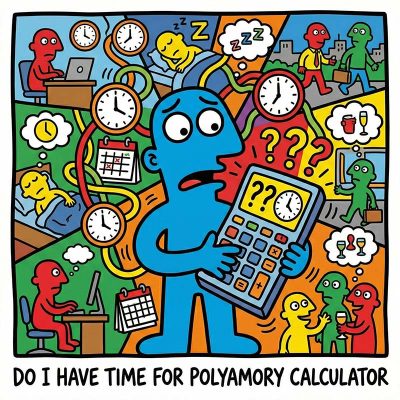
Love is infinite, but your calendar is brutally finite. The fantasy is deep connection; the reality is often just exhausted "calendar tetris." Promising time you don't actually have isn't romantic, it’s a recipe for burnout and broken trust. That sinking feeling when you have to cancel again? That’s the sound of overextension destroying your relationships.
This calculator forces you to confront the math of your life. Do you actually have space for another heart, or are you just setting everyone up for disappointment?

The fantasy is total autonomy and connection. The reality? It can feel like drowning in scheduling chaos and misunderstood expectations. That anxiety you feel isn’t just stress; it’s the wobble of living without a default "anchor." Without a solid architecture, Solo Polyamory stops being a life design and starts being a recipe for burnout and confusion.
The Essential Guide replaces the drift with a concrete anchor. We provide the "Solo Ethic," boundary scripts, and burnout protocols needed to protect your peace. Don't just date around—build a life that actually works for you.

Hierarchy sounds like a corporate org chart until someone gets their feelings hurt. That stomach-turning fear that you are just a "secondary" who can be fired at any time is real. If your relationship feels like a secret ranking system, you are doing it wrong.
Ambiguity is where resentment grows. The Essential Guide replaces the "who matters more" panic with a concrete charter. We provide the scripts and equity guardrails needed to protect every heart in the polycule. Stop guessing and start building.

The ideal is pure equality. The reality? It often slides into hidden rankings where someone gets hurt. That sinking feeling that you are secretly a "secondary" despite the label? That is your intuition detecting couple privilege. Ambiguity is where resentment thrives.
The Essential Guide replaces vague promises with concrete governance. We provide the charters, equity tools, and jealousy protocols needed to ensure "non-hierarchical" isn't just a fantasy. Stop guessing who matters most. Build a network that is actually fair.
The fantasy is total autonomy and connection. The reality? It can feel like drowning in scheduling chaos and misunderstood expectations. That anxiety you feel isn’t just stress; it’s the wobble of living without a default "anchor." Without a solid architecture, Solo Polyamory stops being a life design and starts being a recipe for burnout and confusion.
The Essential Guide replaces the drift with a concrete anchor. We provide the "Solo Ethic," boundary scripts, and burnout protocols needed to protect your peace. Don't just date around—build a life that actually works for you.
Hierarchy sounds like a corporate org chart until someone gets their feelings hurt. That stomach-turning fear that you are just a "secondary" who can be fired at any time is real. If your relationship feels like a secret ranking system, you are doing it wrong.
Ambiguity is where resentment grows. The Essential Guide replaces the "who matters more" panic with a concrete charter. We provide the scripts and equity guardrails needed to protect every heart in the polycule. Stop guessing and start building.
Common pitfalls to avoid when you talk about needs
Talking about needs in a non hierarchical setting can go sideways fast if you slip into old habits. Here are some traps to avoid so you stay on track.
- Ranking people It can feel natural to compare but it undermines NH poly and creates resentment. If you notice yourself ranking someone s importance stop and reframe the conversation around needs and agreements instead.
- Blaming language Statements like you never listen or you always ignore me put people on the defensive. Swap to I statements and neutral observations.
- Assuming intent Don t assume someone is ignoring you on purpose. Check in with a neutral question open ended and curious.
- Moving the goalposts Changing the rules without talking about it often signals a lack of safety. Ground changes in a real check in and an updated negotiated agreement.
- Withholding information Hiding what you need or what you fear creates covert agreements that break trust when they come out in a real way. Be proactive about sharing feelings and needs.
- Inflexible demands Demands feel like ultimatums and they shut down conversation. Present needs as requests and invite collaboration on solutions.
- Public shaming Avoid airing private needs in public spaces or making people feel judged by others. Keep conversations respectful and private unless everyone agrees otherwise.
How to prepare for a needs focused conversation
Preparation is the secret sauce. When you come to the talk with clarity about your own needs and a basic plan for how to talk about them you increase the odds of a positive outcome. Here is a simple prep checklist you can use before you have a big talk with one or more partners.
- Do a needs inventory List what you need in your relationships right now. Consider time attention emotional support physical intimacy autonomy safety and any other category that matters to you.
- Separate needs from preferences Needs are things you must have to feel okay. Preferences are things that would be nice but you could live without. Distinguish clearly between the two.
- Identify core values Write down the values that guide your choices in relationships such as respect honesty safety consent and empathy. Values act as a compass when negotiating.
- Draft a few I statements Prepare sentences that start with I feel and I need to keep the talk focused on you rather than accusing others.
- Come up with a few requests Convert your needs into concrete requests that can be negotiated rather than vague wishes.
- Consider potential objections Try to anticipate what concerns your partners might raise and think about possible compromises in advance.
- Plan for check ins Decide how you will follow up and how soon you will revisit the conversation if needed.
Framing the conversation using a non violent communication style
Non violent communication or NVC is a practical method to keep your talk respectful and productive. It helps you move from complaints to collaborative problem solving. The basic structure is four parts: observations feelings needs and requests. Let us break that down with a quick example.
- Observation I noticed that this month we have spent less time together than last month.
- Feeling I feel a little lonely and I miss our check in talks.
- Need I need more consistent connection and clear expectations so I can feel secure in our arrangement.
- Request Could we schedule a regular 30 minute check in on a weekly basis and try one new shared activity together each week?
When you use this structure you reduce defensiveness and invite your partners to contribute ideas that work for everyone. The goal is not to win an argument but to align on a plan that respects all the needs involved.
Conversation frameworks you can use in NH poly dynamics
Not every conversation will be the same. The following frameworks give you practical templates to choose from depending on the situation. Use them as a starting point and tailor them to your people and context.
The three step I statements approach
Step one start with I feel. Step two describe what happened without judgment. Step three state the need or desire and finish with a question that invites a response.
Example
I feel overlooked when our plan changes without checking in. I would like us to agree on a weekly planning time so we both know what to expect. What would work as a regular planning slot for you?
The needs to actions method
List your top needs and then translate each into a concrete action you can request. This makes space for negotiation and practical outcomes rather than vague promises.
Example
Need 1 a reliable weekly date with you a protected space for connection. Action ask for a standing 90 minute block every Friday evening reserved for us only. Need 2 emotional support when stress hits. Action could you be available for a 20 minute check in after work on days you know I am stressed?
Round robin check in
Involve all partners in a structured check in. This is especially useful in NH poly where many people are involved and time management matters. Each person speaks briefly about what is going well and what they need more of or differently.
Example
Partner A says I feel connected when we have a shared activity and I need more time together. Partner B says I appreciate the check ins and I would also like more predictability around scheduling. Partner C shares I am enjoying the openness but I need clarity about expectations when dating someone new. The facilitator summarizes and suggests a plan for the week.
Realistic scenarios and how to navigate them without ranking people
Scenarios help you see how the talking points translate into real life. Here are four common situations and practical scripts you can adapt to your relationships.
Scenario 1: You want more quality time but you have multiple partners
In NH poly you never imply a partner is less important. The goal is to share your needs and invite collaborative scheduling that respects everyone s life.
Conversation script
I have been feeling a bit stretched lately and I want to talk about how I allocate time. I value the connections I have with all of you and I want to make sure I am showing up well for each of you. I would like to propose a rotating weekly plan where I spend a dedicated evening with each of you and a couple s night once a month for all of us. I want to hear how this sounds to you and if you have any constraints or preferences I should know about.
Possible responses and how to respond
Partner 1 might say I am worried about losing our alone time. I could respond I hear you and I am not proposing to replace our time together. We will keep a special night just for us and we will add one our night into the rotation.
Partner 2 might say I am happy with the plan but I need a two week heads up for scheduling changes. I could respond that makes sense and we will implement a two week notice policy. This approach keeps all partners informed and avoids last minute chaos.
Scenario 2: One partner has stronger sexual needs while others want more emotional closeness
The aim is to separate needs rather than rank people. You can arrange a plan that respects boundaries and keeps the romance alive across all connections.
Conversation script
I notice that my sexual appetite has shifted and I would like to explore more sexual connection with you while maintaining emotional closeness with our other partners. I need to ensure that emotional safety and consent remain central to all interactions. Could we create a two part plan that allows time for emotional check ins after every sexual encounter with you and a separate schedule for continuing other intimate connections as they fit with consent?
Possible responses
Partner might say I would rather not mix sexual and emotional energy with others. I could reply I respect that and we can keep the sexual dynamic between us limited to what feels safe for us while we continue to work on emotional closeness with everyone else.
Scenario 3: A new relationship is starting and you want to maintain existing commitments
New relationships can create tension in any dynamic. The NH approach helps you negotiate honestly without devaluing existing connections.
Conversation script
I am excited about a new relationship and I want to be fair to you and to my other connections. I would like us to create a short term plan for the first few weeks that includes regular check ins and a clear understanding of how much time I will spend with the new partner and how that time affects the other relationships. What would you need from me to feel secure while I am exploring this new connection?
Possible responses
Partner might say I want to see more of you before the new relationship progresses. I can respond I am happy to share more time upfront and we will schedule a temporary limit for overnight visits or weekend time until the new connection is established and we all feel secure.
Scenario 4: NRE is making priorities blurry
New relationship energy can cloud judgment. The key is to acknowledge it while maintaining a practical plan for needs across all partners.
Conversation script
I am noticing that NRE is making it harder to stay connected with you all. I want to acknowledge that and I want to preserve the quality of each relationship. Let us agree on a short term check in schedule for the next two weeks and a plan that ensures essential emotional and logistical needs are met for everyone while I process these strong feelings.
Possible responses
Partner might say we need to slow down. I could reply I understand and I am willing to slow down and focus on communication making space for the emergence of consistent patterns that support all of us.
Practical tools and templates you can use today
Having concrete tools makes it easier to implement the conversations you want to have. Here are ready to use templates you can copy paste and customize for your own relationships.
Conversation starter template
I want to talk about needs without ranking anyone. Here are the core needs I want to discuss today: [list your needs here]. I would like us to plan a way to meet these needs together and I am open to your ideas on how we can do that in a way that feels fair to all of us. When would be a good time to talk and for how long?
Need inventory template
Fill in the blanks with your current needs. Then use these notes to guide your conversation. You can duplicate this for each partner or use it in a round robin style.
Need 1 description
Need 2 description
Need 3 description
Notes on how you plan to meet needs for each one and a suggested action or check in.
Check in checklist
- Time and place agreed for the check in
- Each person shares how they feel about the current arrangement
- Discuss any changes to needs or agreements
- Agree on next steps and who is responsible for what
How to maintain fairness and prevent resentment in NH poly
Fairness in non hierarchical polyamory means ensuring all partners feel heard valued and respected. It is not a math problem where you divide attention equally by some rule. It is a dynamic process where fairness means responsiveness to needs and the willingness to adjust as life changes. Here are some practical ideas to keep fairness in your relationships.
- Regular check ins Build a habit of scheduled conversations about how things are going. Consistency beats drama.
- Transparent planning Use shared calendars or planning tools so everyone can see upcoming events and commitments.
- Clear agreements Write down what you have agreed to and revisit these agreements at check ins. Boundaries and preferences can evolve and that is fine as long as everyone is informed.
- Consent driven decisions Ensure that any significant change goes through consent based negotiation. People should feel empowered to say yes or no without pressure.
- Emotional safety Create space for feelings criticism and fears. Validation matters even when you disagree.
- Self care Maintain your own personal health and energy. You cannot meet others needs if you are burnt out.
Common challenges and how to handle them
Every relationship style has its bumps. Here is how to handle some of the most common hurdles in non hierarchical polyamory with grace and practicality.
- Jealousy It is normal. Address it with time bound conversations and re centering on needs rather than attacks. Sometimes jealousy signals a need for more security more information or more closeness with a specific partner.
- Imbalance in time If one partner is getting a lot more time you can respond with a structured plan that increases time with others and creates a more predictable rhythm.
- Boundary drift When agreements drift ask for a reset check in. Revisit the core values and update the negotiated agreements accordingly.
- Communication fatigue Take a break if conversations get heated. Schedule a shorter follow up with a neutral mood and keep the goal in sight a fair resolution that respects all needs.
Self reflection exercises to stay aligned with NH poly values
Your personal growth matters in a dynamic that involves many people. Use these simple exercises to stay aligned with your values and your negotiated agreements.
- Weekly reflection End each week with a short reflection on what went well what was hard and what you want to improve next week.
- Values check Revisit your core values every few weeks. Ask yourself does this plan align with those values and if not what needs to change?
- Fear mapping Write down fears about losing connections or about changing needs and then map a small safe action you can take to address each fear.
Glossary of useful terms and acronyms
- Enm Ethical non monogamy a framework that emphasizes consent honesty and communication in multiple relationships.
- Nh poly Non hierarchical polyamory a practice of managing multiple relationships without ranking anyone above others.
- I statements A communication technique that starts with I to express thoughts feelings and needs without blaming.
- Non violent communication A structured approach to talking that focuses on observations feelings needs and requests without judgment.
- Nre New relationship energy the excitement that comes with a new romantic connection.
- Compersion The joy you feel when your partner experiences happiness with someone else.
- Boundary Personal limits designed to protect your well being and align with your values.
- Soft limit A boundary you are cautious about crossing but are open to revisiting with consent.
- Check in A scheduled moment to review feelings needs and the state of agreements.
- Negotiated agreement An explicit plan that all involved parties consent to and commit to upholding.
- Time equity A practical approach to distributing time so that no partner feels neglected.
Frequently asked questions
Here are some common questions people ask about talking about needs without ranking in non hierarchical polyamory. The answers are practical and designed to help you take action today.
Love is infinite, but your calendar is brutally finite. The fantasy is deep connection; the reality is often just exhausted "calendar tetris." Promising time you don't actually have isn't romantic, it’s a recipe for burnout and broken trust. That sinking feeling when you have to cancel again? That’s the sound of overextension destroying your relationships.
This calculator forces you to confront the math of your life. Do you actually have space for another heart, or are you just setting everyone up for disappointment?
The fantasy is total autonomy and connection. The reality? It can feel like drowning in scheduling chaos and misunderstood expectations. That anxiety you feel isn’t just stress; it’s the wobble of living without a default "anchor." Without a solid architecture, Solo Polyamory stops being a life design and starts being a recipe for burnout and confusion.
The Essential Guide replaces the drift with a concrete anchor. We provide the "Solo Ethic," boundary scripts, and burnout protocols needed to protect your peace. Don't just date around—build a life that actually works for you.
Hierarchy sounds like a corporate org chart until someone gets their feelings hurt. That stomach-turning fear that you are just a "secondary" who can be fired at any time is real. If your relationship feels like a secret ranking system, you are doing it wrong.
Ambiguity is where resentment grows. The Essential Guide replaces the "who matters more" panic with a concrete charter. We provide the scripts and equity guardrails needed to protect every heart in the polycule. Stop guessing and start building.
The ideal is pure equality. The reality? It often slides into hidden rankings where someone gets hurt. That sinking feeling that you are secretly a "secondary" despite the label? That is your intuition detecting couple privilege. Ambiguity is where resentment thrives.
The Essential Guide replaces vague promises with concrete governance. We provide the charters, equity tools, and jealousy protocols needed to ensure "non-hierarchical" isn't just a fantasy. Stop guessing who matters most. Build a network that is actually fair.
The fantasy is total autonomy and connection. The reality? It can feel like drowning in scheduling chaos and misunderstood expectations. That anxiety you feel isn’t just stress; it’s the wobble of living without a default "anchor." Without a solid architecture, Solo Polyamory stops being a life design and starts being a recipe for burnout and confusion.
The Essential Guide replaces the drift with a concrete anchor. We provide the "Solo Ethic," boundary scripts, and burnout protocols needed to protect your peace. Don't just date around—build a life that actually works for you.
Hierarchy sounds like a corporate org chart until someone gets their feelings hurt. That stomach-turning fear that you are just a "secondary" who can be fired at any time is real. If your relationship feels like a secret ranking system, you are doing it wrong.
Ambiguity is where resentment grows. The Essential Guide replaces the "who matters more" panic with a concrete charter. We provide the scripts and equity guardrails needed to protect every heart in the polycule. Stop guessing and start building.
