
Illness Injury and Emergency Planning


If you are in a non hierarchical polyamory or ENM network you already know that care looks different from traditional setups. When there is no single primary partner to rally around, planning for illness injuries and emergencies becomes a team sport. This guide gives you practical steps to build a care plan that respects every person involved protects privacy and keeps everyone safe. We speak plainly explain terms and give you real world scenarios you can adapt to your own network.
Quick Links to Useful Sections
- What this guide covers and why it matters in ENM
- Core concepts you should know before you start
- Key roles and how to distribute them in a non hierarchical network
- Medical information sharing and consent in ENM networks
- Legal tools and practical documents you should consider
- Building an emergency plan you can actually use
- Step 1: Create a care network map
- Step 2: Decide who speaks for whom
- Step 3: Gather and store critical information
- Step 4: Choose and document roles
- Step 5: Prepare consent boundaries
- Step 6: Plan for privacy and disclosure
- Step 7: Prepare for travel and remote scenarios
- Step 8: Practice and drill
- Real world scenarios and how to respond
- Scenario A: You are traveling and a sudden illness hits
- Scenario B: You require urgent medical care during surgery or procedures
- Scenario C: A partner becomes temporarily incapacitated
- Scenario D: Mental health crisis within the ENM network
- Scenario E: Long term illness or disability requiring ongoing support
- Delivery of care and daily life in a ENM setting
- Privacy boundaries and new partners
- Templates and checklists you can adapt today
- Emergency information sheet template
- Medical information consent sheet
- Advance directive and care planning notes
- Disaster and travel planning card
- Glossary of useful terms and acronyms
- Frequently asked questions
What this guide covers and why it matters in ENM
Core concepts you should know before you start
- Non hierarchical polyamory a relationship approach where many people may be involved without a designated hierarchy at the top. Each connection is meaningful but there is no single primary partner responsible for all decisions.
- ENM Ethical non monogamy a framework that values consent honesty and transparency and seeks relationships that work for all involved rather than sticking to rigid norms.
- Care network the group of partners friends and chosen family who provide support during health emergencies. Everyone in the network should know their role and consent to it in advance.
- Medical information sharing a balance between privacy and access to important health details. The aim is to ensure fast safe care while respecting boundaries and legal rights.
- Medical decision making who can speak for you what limits exist and how decisions are made if you cannot speak for yourself. This is often addressed with advance directives powers of attorney and designated surrogates.
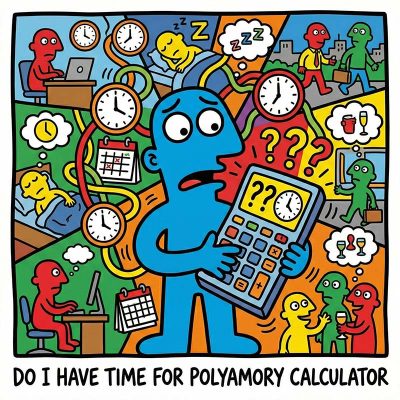
Love is infinite, but your calendar is brutally finite. The fantasy is deep connection; the reality is often just exhausted "calendar tetris." Promising time you don't actually have isn't romantic, it’s a recipe for burnout and broken trust. That sinking feeling when you have to cancel again? That’s the sound of overextension destroying your relationships.
This calculator forces you to confront the math of your life. Do you actually have space for another heart, or are you just setting everyone up for disappointment?

The fantasy is total autonomy and connection. The reality? It can feel like drowning in scheduling chaos and misunderstood expectations. That anxiety you feel isn’t just stress; it’s the wobble of living without a default "anchor." Without a solid architecture, Solo Polyamory stops being a life design and starts being a recipe for burnout and confusion.
The Essential Guide replaces the drift with a concrete anchor. We provide the "Solo Ethic," boundary scripts, and burnout protocols needed to protect your peace. Don't just date around—build a life that actually works for you.

Hierarchy sounds like a corporate org chart until someone gets their feelings hurt. That stomach-turning fear that you are just a "secondary" who can be fired at any time is real. If your relationship feels like a secret ranking system, you are doing it wrong.
Ambiguity is where resentment grows. The Essential Guide replaces the "who matters more" panic with a concrete charter. We provide the scripts and equity guardrails needed to protect every heart in the polycule. Stop guessing and start building.

The ideal is pure equality. The reality? It often slides into hidden rankings where someone gets hurt. That sinking feeling that you are secretly a "secondary" despite the label? That is your intuition detecting couple privilege. Ambiguity is where resentment thrives.
The Essential Guide replaces vague promises with concrete governance. We provide the charters, equity tools, and jealousy protocols needed to ensure "non-hierarchical" isn't just a fantasy. Stop guessing who matters most. Build a network that is actually fair.
The fantasy is total autonomy and connection. The reality? It can feel like drowning in scheduling chaos and misunderstood expectations. That anxiety you feel isn’t just stress; it’s the wobble of living without a default "anchor." Without a solid architecture, Solo Polyamory stops being a life design and starts being a recipe for burnout and confusion.
The Essential Guide replaces the drift with a concrete anchor. We provide the "Solo Ethic," boundary scripts, and burnout protocols needed to protect your peace. Don't just date around—build a life that actually works for you.
Hierarchy sounds like a corporate org chart until someone gets their feelings hurt. That stomach-turning fear that you are just a "secondary" who can be fired at any time is real. If your relationship feels like a secret ranking system, you are doing it wrong.
Ambiguity is where resentment grows. The Essential Guide replaces the "who matters more" panic with a concrete charter. We provide the scripts and equity guardrails needed to protect every heart in the polycule. Stop guessing and start building.
Key roles and how to distribute them in a non hierarchical network
- Emergency lead one person who coordinates the immediate response in an emergency. They contact medical services organize transport and keep others informed when appropriate.
- Health information liaison the person who has access to medical details you want shared and who communicates with healthcare providers as allowed by you and by law.
- Care coordinators a small group that helps manage daily needs if a partner is ill or injured. This can include meal planning transportation childcare and household tasks.
- Privacy steward someone who protects private information and ensures consent rules are followed before any information is shared beyond the people named in your plan.
- Medical decision proxy in places where it is legally possible a designated person who can help make medical decisions if you are unable to express your wishes. This often takes the form of a medical power of attorney or a health care proxy but legal options vary by jurisdiction.
Medical information sharing and consent in ENM networks
- Agree in advance who needs to know what information and for what purpose. You can customize access so different people see different levels of detail.
- Use clear consent boundaries. For example you might approve emergency access to your medical records but restrict sharing non urgent updates to certain people only.
- Be mindful of privacy laws. In many places medical information is protected by law and sharing requires your explicit consent or a legal surrogate. Check the rules that apply where you live.
- Coordinate with your healthcare providers. Let them know you are in an ENM network and confirm how they can communicate with your care circle while honoring privacy and laws.
- Keep a simple information sheet. A centralized document listing critical medical details and a few personal preferences can simplify care without exposing every detail to everyone.
Legal tools and practical documents you should consider
- Medical power of attorney a document naming who can make medical decisions for you when you cannot speak for yourself. In ENM contexts this is often a designated partner or a trusted ally within your care network. Clarify the scope and any limits in advance.
- Health care proxy another common designation that allows a person to make healthcare choices on your behalf. Some regions use this term interchangeably with medical power of attorney while others differentiate the two.
- Durable power of attorney for finances if you want someone to manage financial matters related to health care such as paying bills or handling insurance. This is separate from medical decision making and is important for long term illness scenarios.
- POLST or patient wishes forms forms that record specific treatment preferences for scenarios where you cannot express them. These forms can guide medical teams quickly and reduce confusion.
- Do not resuscitate DNR orders a directive that indicates whether CPR should be performed. Talk through this with the people in your care network and a medical professional to ensure alignment with your values.
- HIPAA awareness and consent in the United States HIPAA protects medical information but there are ways to share information with a designated caregiver while maintaining privacy. Other countries have similar protections with different names.
Building an emergency plan you can actually use
Step 1: Create a care network map
Step 2: Decide who speaks for whom
Not every partner needs to be involved in every decision. Define who has permission to speak with medical teams for specific situations. You can create different tiers such as medical decisions consent updates daily care planning or logistical support.
Step 3: Gather and store critical information
- Your full legal name date of birth and contact information
- All active health conditions allergies medications and any relevant recent tests
- All current treatment plans and upcoming appointments
- Designated medical decision maker and contact information for the hospital or clinic
- Insurance details and primary care physician contact
Step 4: Choose and document roles
Step 5: Prepare consent boundaries
Step 6: Plan for privacy and disclosure
Step 7: Prepare for travel and remote scenarios
Step 8: Practice and drill
Real world scenarios and how to respond
Scenario A: You are traveling and a sudden illness hits
Scenario B: You require urgent medical care during surgery or procedures
Scenario C: A partner becomes temporarily incapacitated
Scenario D: Mental health crisis within the ENM network
Scenario E: Long term illness or disability requiring ongoing support
Delivery of care and daily life in a ENM setting
- Rotate tasks among care coordinators so no one person is overwhelmed
- Establish predictable routines for meals transportation and household chores
- Set up a shared calendar for appointments and medication reminders
- Keep a simple contact directory for all medical providers in the care network
- Agree on how to handle intimate boundaries during illness and recovery
Privacy boundaries and new partners
- Introduce new partners to the care network only with clear consent from all involved
- Share essential health information on a need to know basis and only with those who have explicit permission
- Provide new partners with a concise summary of the plan and their expected role
- Reassess and update documents periodically or after major health events
Templates and checklists you can adapt today
Emergency information sheet template
Full name: [Your Name]
Date of birth: [MM/DD/YYYY]
Primary contact: [Name] [Phone] [Email]
Emergency lead: [Name] [Phone]
Care circle members and roles: [Names and roles]
Medical conditions list: [Conditions]
Medications: [Medications]
Allergies: [Allergies]
Current physicians: [Doctor names and contacts]
Insurance details: [Insurance company policy numbers]
Medical decision maker: [Name] [Phone]
Privacy preferences: [Limits on sharing information]
Special instructions: [Any limitations or preferences]
Medical information consent sheet
I authorize the following people to receive medical information and to participate in decisions as described below:
- Emergency lead: [Name] allowed to receive information about emergencies
- Health information liaison: [Name] allowed to obtain medical updates from providers
- Care coordinators: [Names] allowed to assist with daily needs while respecting privacy
- Other permitted individuals: [Names with specific limits]
Purpose of sharing information: to ensure timely and appropriate medical care and support during emergencies.
Advance directive and care planning notes
My goals and preferences regarding medical care in situations where I cannot speak for myself are described below. If I regain capacity I would like to revisit these preferences with my care circle.
- Do you want life sustaining treatment considered in emergencies? [Yes / No / Limited set]
- Preferred hospital or medical facility: [Facility name]
- Preferred treatments or restrictions: [Details]
- Ongoing care priorities after recovery: [Details]
Disaster and travel planning card
A compact card that your emergency lead can carry or keep in a wallet. It lists the names of key care circle members and quick instructions for medical teams in emergencies when you are away from home.
Front side
Name Date of birth Emergency contact phone Emergency lead contact and authorization details
Back side
Care network members and roles Key medical facts Allergies Current medications
Glossary of useful terms and acronyms
- ENM Ethical non monogamy the practice of forming intimate relationships with the consent of all involved beyond a single monogamous framework.
- Non hierarchical polyamory a polyamory approach without a formal top level partner; multiple relationships are held in parallel with equal regard.
- Medical power of attorney a legal document naming someone to make medical decisions on your behalf if you cannot.
- Health care proxy another term for a person authorized to make medical decisions for you when you are incapable of doing so yourself.
- POLST a form that records specific medical treatment preferences for seriously ill patients.
- DNR do not resuscitate a directive that indicates whether CPR should be performed if your heart stops.
- HIPAA a privacy law protecting medical information in the United States; other countries have similar protections with different names.
- Care circle the group of partners friends and chosen family who participate in your health care and daily support during illness or injury.
- Advance directive a document that spells out your wishes for medical care in situations where you cannot communicate your decisions.
- Consent boundary agreed limits on what information can be shared and who can participate in decisions.
Frequently asked questions
Below are some common questions people have when building illness injury and emergency plans in a non hierarchical polyamory ENM network. If you have more questions add them to your plan and discuss with your care circle.
- How do I start planning for emergencies in an ENM network? Begin with a candid group conversation about values what kinds of emergencies you want to plan for and who should be involved in decision making. Then create basic documents and assign roles.
- What is the difference between a medical power of attorney and a health care proxy? In many places the two terms describe similar ideas. The important part is choosing someone you trust to make medical decisions if you cannot communicate your wishes and documenting that choice clearly.
- How do I protect privacy while sharing essential information with caregivers? Set clear consent boundaries and use role based access to information. Share only what is necessary for care and rely on legal documents to guide what can be shared and with whom.
- Who should be in the care circle if new partners join the network? New partners can be integrated after a discussion about privacy boundaries and consent. Update your information sheets and documents accordingly.
- What should I do if someone in the network disagrees with decisions? Return to the agreed care plan and values. Use a neutral facilitator to help mediate while keeping the patient’s preferences at the center.
- Do we need POLST or DNR forms for everyone? It depends on medical risk and personal preferences. Talk with a clinician about what is right for you and ensure forms are properly completed and stored with copies accessible to trusted caregivers.
- How do we handle emergencies when partners are traveling separately? Pre arrange emergency leads and share travel friendly copies of critical information. Use digital tools and offline cards so information remains accessible even without internet.
- How often should we review or update our plan? Check in at least annually and after any major health event or change in relationship structure. Update names roles and documents as needed.
- What if a partner refuses to participate in the care plan? Respect autonomy. Have an open discussion about why planning matters and how their involvement can protect the group. If necessary restructure roles to honor their boundaries while still protecting your health.
- Is written planning enough or should we see a lawyer? A written plan is a great start. If you have complex legal needs or unique jurisdictional requirements consult a lawyer who understands ENM family dynamics and durable powers of attorney.
Love is infinite, but your calendar is brutally finite. The fantasy is deep connection; the reality is often just exhausted "calendar tetris." Promising time you don't actually have isn't romantic, it’s a recipe for burnout and broken trust. That sinking feeling when you have to cancel again? That’s the sound of overextension destroying your relationships.
This calculator forces you to confront the math of your life. Do you actually have space for another heart, or are you just setting everyone up for disappointment?
The fantasy is total autonomy and connection. The reality? It can feel like drowning in scheduling chaos and misunderstood expectations. That anxiety you feel isn’t just stress; it’s the wobble of living without a default "anchor." Without a solid architecture, Solo Polyamory stops being a life design and starts being a recipe for burnout and confusion.
The Essential Guide replaces the drift with a concrete anchor. We provide the "Solo Ethic," boundary scripts, and burnout protocols needed to protect your peace. Don't just date around—build a life that actually works for you.
Hierarchy sounds like a corporate org chart until someone gets their feelings hurt. That stomach-turning fear that you are just a "secondary" who can be fired at any time is real. If your relationship feels like a secret ranking system, you are doing it wrong.
Ambiguity is where resentment grows. The Essential Guide replaces the "who matters more" panic with a concrete charter. We provide the scripts and equity guardrails needed to protect every heart in the polycule. Stop guessing and start building.
The ideal is pure equality. The reality? It often slides into hidden rankings where someone gets hurt. That sinking feeling that you are secretly a "secondary" despite the label? That is your intuition detecting couple privilege. Ambiguity is where resentment thrives.
The Essential Guide replaces vague promises with concrete governance. We provide the charters, equity tools, and jealousy protocols needed to ensure "non-hierarchical" isn't just a fantasy. Stop guessing who matters most. Build a network that is actually fair.
The fantasy is total autonomy and connection. The reality? It can feel like drowning in scheduling chaos and misunderstood expectations. That anxiety you feel isn’t just stress; it’s the wobble of living without a default "anchor." Without a solid architecture, Solo Polyamory stops being a life design and starts being a recipe for burnout and confusion.
The Essential Guide replaces the drift with a concrete anchor. We provide the "Solo Ethic," boundary scripts, and burnout protocols needed to protect your peace. Don't just date around—build a life that actually works for you.
Hierarchy sounds like a corporate org chart until someone gets their feelings hurt. That stomach-turning fear that you are just a "secondary" who can be fired at any time is real. If your relationship feels like a secret ranking system, you are doing it wrong.
Ambiguity is where resentment grows. The Essential Guide replaces the "who matters more" panic with a concrete charter. We provide the scripts and equity guardrails needed to protect every heart in the polycule. Stop guessing and start building.
