
Intimacy Diversity Across Partners


If you are curious about how intimacy can exist in many forms across multiple people without a fixed ladder of importance you are in the right place. This guide dives into intimacy diversity across partners in a dynamic that places equality at the center. We will keep things practical funny and grounded while explaining terms and sharing realistic scenarios. We will talk about consent communication boundaries and how to make sure everyone feels seen and cared for. This is not about denying desire it is about choosing a structure that honors everyone involved and keeps the door open for healthy growth.
Quick Links to Useful Sections
- What this guide covers
- What is non hierarchical polyamory
- Key terms you will meet
- How intimacy diversity shows up across partners
- Communication strategies that keep all voices in the room
- Boundaries and agreements that support equality across partners
- Real world scenarios and how to handle them
- Managing jealousy and emotional weather
- Safety health and consent in a multi partner life
- Practical tips for daily life in a non hierarchical ENM setup
- Common myths about non hierarchical polyamory
- Benefits of intimacy diversity across partners
- Risks and how to mitigate them
- Glossary of useful terms and acronyms
- Frequently asked questions
What this guide covers
- A clear explanation of non hierarchical polyamory and ethically non monogamous dynamics
- Key terms and acronyms with plain language explanations
- Ways intimacy can vary across partners without creating a hierarchy
- Communication strategies that work when there are many relationships at play
- Boundaries agreements and practical routines that support fairness and care
- Real world scenarios and how to handle them with empathy and humor
- Jealousy management risk reduction and emotional maintenance
- Safety health and consent considerations in multi partner life
What is non hierarchical polyamory
Non hierarchical polyamory is a form of ethically non monogamous relationship where there is no built in ranking of partners. In practice this means no partner is deemed more important than another. People who practice this approach often describe relationships as a web instead of a ladder. Each connection has its own shape pace and depth and the value is measured by the care and compatibility it brings rather than a position on a hierarchy chart.
In this setup you might have a core romantic tie with one person a strong friendship with another and a casual dating arrangement with someone else. The key is that all these connections are valid and worthy of respect. There is no assumption that a single partner will always take priority in every moment. Instead the group negotiates together to ensure needs are met across the board. This can feel liberating but it can also take practice because it requires ongoing communication clarity and intentional boundaries.
Ethically non monogamous or ENM is the umbrella term used for relationships that involve more than two people with consent and open communication as the foundation. ENM is not a single method it is a broad category that can include many patterns and styles. Non hierarchical polyamory is one of those styles. It emphasizes equality fairness and flexibility over rigid roles or rankings.
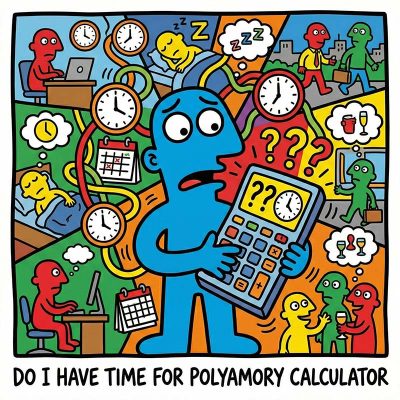
Love is infinite, but your calendar is brutally finite. The fantasy is deep connection; the reality is often just exhausted "calendar tetris." Promising time you don't actually have isn't romantic, it’s a recipe for burnout and broken trust. That sinking feeling when you have to cancel again? That’s the sound of overextension destroying your relationships.
This calculator forces you to confront the math of your life. Do you actually have space for another heart, or are you just setting everyone up for disappointment?

The fantasy is total autonomy and connection. The reality? It can feel like drowning in scheduling chaos and misunderstood expectations. That anxiety you feel isn’t just stress; it’s the wobble of living without a default "anchor." Without a solid architecture, Solo Polyamory stops being a life design and starts being a recipe for burnout and confusion.
The Essential Guide replaces the drift with a concrete anchor. We provide the "Solo Ethic," boundary scripts, and burnout protocols needed to protect your peace. Don't just date around—build a life that actually works for you.
Hierarchy sounds like a corporate org chart until someone gets their feelings hurt. That stomach-turning fear that you are just a "secondary" who can be fired at any time is real. If your relationship feels like a secret ranking system, you are doing it wrong.
Ambiguity is where resentment grows. The Essential Guide replaces the "who matters more" panic with a concrete charter. We provide the scripts and equity guardrails needed to protect every heart in the polycule. Stop guessing and start building.
The ideal is pure equality. The reality? It often slides into hidden rankings where someone gets hurt. That sinking feeling that you are secretly a "secondary" despite the label? That is your intuition detecting couple privilege. Ambiguity is where resentment thrives.
The Essential Guide replaces vague promises with concrete governance. We provide the charters, equity tools, and jealousy protocols needed to ensure "non-hierarchical" isn't just a fantasy. Stop guessing who matters most. Build a network that is actually fair.
The fantasy is total autonomy and connection. The reality? It can feel like drowning in scheduling chaos and misunderstood expectations. That anxiety you feel isn’t just stress; it’s the wobble of living without a default "anchor." Without a solid architecture, Solo Polyamory stops being a life design and starts being a recipe for burnout and confusion.
The Essential Guide replaces the drift with a concrete anchor. We provide the "Solo Ethic," boundary scripts, and burnout protocols needed to protect your peace. Don't just date around—build a life that actually works for you.
Hierarchy sounds like a corporate org chart until someone gets their feelings hurt. That stomach-turning fear that you are just a "secondary" who can be fired at any time is real. If your relationship feels like a secret ranking system, you are doing it wrong.
Ambiguity is where resentment grows. The Essential Guide replaces the "who matters more" panic with a concrete charter. We provide the scripts and equity guardrails needed to protect every heart in the polycule. Stop guessing and start building.
Key terms you will meet
Understanding the language makes the conversation easier. Here are terms you might encounter and what they mean in plain language.
- ENM ethically non monogamous. An umbrella term for relationships that involve more than two people with consent and honest communication.
- Non hierarchical polyamory a form of polyamory where there is no fixed ranking of relationships. All partners are considered equal in value and priority.
- Metamour a partner of your partner. This is someone you are not dating but who is connected to your partner.
- Primary partner used in some systems to describe a person viewed as the main or longest standing partner. In non hierarchical setups the label may be avoided or used loosely to prevent ranking.
- Secondary partner another partner who is not the primary but who is still a meaningful relationship. In non hierarchical forms this label is often avoided in favor of specific role descriptions.
- Boundary a stated limit about what is acceptable or not in a relationship. Boundaries are about safety comfort and respect.
- Agreement an explicit understanding about how partners relate to each other what is allowed and what is not. Agreements are negotiated and can evolve.
- Compersion the positive feeling you experience when you see someone you care about thriving in a relationship with others.
- Jealousy a natural emotion that can arise when you feel threatened by potential loss or insecurity. Jealousy can be managed with communication and care.
- Rupture healing repairing trust after a misunderstanding or conflict within the polyamorous network.
- Consent informed voluntary agreement to participate in an activity or relationship. Consent must be ongoing and can be withdrawn at any time.
- Stigma negative judgments from others about polyamory which can affect how you feel about your own relationships.
- Safe sex practices steps taken to reduce risk of sexually transmitted infections and unintended pregnancies. Regular testing and open conversations are important.
How intimacy diversity shows up across partners
Intimacy diversity means each relationship can offer something different. One connection might center on daily closeness emotional support and shared life goals while another might focus on casual dates or sexual exploration. The important idea is not that every relationship must be the same but that each connection is healthy and valued in its own right. You do not need to compare apples to oranges. You can celebrate the unique flavor each partner brings while ensuring everyone feels seen loved and respected.
Here are some realistic patterns you might see in a non hierarchical polyamory setup.
- A long term loving connection with one partner and a separate fulfilling connection with a second partner who shares different interests and schedules.
- A partner who is focused on a strong friendship and emotional companionship while also building a physical intimacy relationship with another partner.
- Three or more people who each contribute different aspects to your life such as a shared hobby partner a family oriented partner and a partner for weekend adventures.
- A pattern where intimacy intensity shifts over time for different reasons including life circumstances health and emotional needs.
In non hierarchical setups the focus tends to be on consent clarity and flexibility. Because there is no fixed ranking there is less pressure to assign meaning to every interaction. This can be liberating because it invites people to meet their needs as they arise rather than fitting everything into a prescribed order. The challenge is maintaining fairness and inclusion. That means paying attention to how time energy and emotional labor are distributed and ensuring voices from all partners are heard.
Communication strategies that keep all voices in the room
Communication is the backbone of any ENM dynamic but in non hierarchical polyamory it becomes even more essential. Here are practical approaches that help keep conversations honest and constructive.
- Regular check ins schedule brief conversations to discuss needs boundaries and any shifts in feelings. Short frequent check ins can prevent drift and resentment.
- Explicit consent conversations before starting a new relationship or changing an arrangement. Ask for clear yes or no rather than assume openness.
- Clear expectations about time talk about how much time each relationship needs and how you manage calendar overlaps without making anyone feel less valued.
- Metamour respect treat metamours with courtesy even if you are not personally close. They are partners of someone you care about and deserve respect.
- Emotional language name emotions rather than labeling people. Say I feel anxious about our schedule rather than you never care about my needs.
- Written agreements put agreements in writing and revisit them regularly. This helps reduce miscommunication and memory drift.
- Transparency about boundaries tell others what you are comfortable sharing and what you prefer to keep private. Privacy is a form of respect too.
- Time zone for growth allow relationships to evolve at their own pace and be flexible when a partner wants to slow down or speed up a connection.
Boundaries and agreements that support equality across partners
Boundaries are not rules meant to trap people they are guard rails that protect emotional safety. In a non hierarchical structure the aim is to ensure everyone gets fair access to care and attention while recognizing that needs will differ across relationships.
- Equitable time sharing develop a system that helps everyone feel their need for time and closeness is respected. This could involve rotating date nights or agreed time blocks.
- Sexual consent and safety discuss what sexual activities are on the table with each partner. Agree on contraception protection and STI testing frequency where appropriate.
- Emotional labor sharing acknowledge the mental energy required to coordinate schedules plan dates and support partners. Distribute this workload in a way that feels fair to all involved.
- Privacy and disclosure decide how much information about relationships is shared with others outside the group. Be mindful of boundaries around privacy for each person.
- Conflict resolution agree on a method for resolving disagreements that respects all voices including those who are not the central couple.
- Disclosure of new relationships set expectations about when to tell all partners about new connections and how those conversations will happen.
Real world scenarios and how to handle them
Scenario one is a classic starting point. You have a couple who are exploring non hierarchical polyamory and they want to add a new partner who shares a hobby with them. The couple is worried about time and emotional balance. They sit down together and map out a weekly schedule that includes time for each partner and a shared time for all three of them to cultivate mutual connection. They establish a rule that if one partner feels stretched thin they can pause the new connection without stigma and revisit the arrangement in a few weeks. They agree on open dialogue and check ins at key moments but they also recognize the need for personal space. The outcome is a dynamic yet fair arrangement that honors the original couple and the new connection while avoiding a fixed hierarchy.
Scenario two involves a metamour who feels left out when the primary couple spends a lot of time together. The first step is to acknowledge the feeling without blame. The participants identify a weekly slot that formats time for the metamour to spend one on one with each member of the couple as well as some joint time. The metamour also receives direct invitations to join group activities with mutual consent. The result is a sense of inclusion and a decrease in jealousy because the metamour is now integrated into the emotional ecosystem rather than kept at a distance.
Scenario three focuses on a partner who wants to slow down a current connection because life events have altered their capacity for emotional energy. The group revisits boundaries and agreements and decides that the pace of that relationship will slow in the short term. The other partners maintain their connections and the overall group remains supportive. This demonstrates that non hierarchical does not demand rigid commitment when personal energy and needs shift. It rewards honesty and flexibility instead.
Scenario four shows how to handle a moment of jealousy. A partner notices a new spark in a metamour and feels a twinge of worry about being replaced. The response is calm communication focusing on specific fears and needs. The partner explains the feeling without accusing and the other partner reassures and clarifies how the relationship will continue to be nurtured. They agree on a small adjustment to time together and plan a future check in. Jealousy is not eliminated in a perfect world but it can be understood and transformed into more understanding and stronger connection.
Love is infinite, but your calendar is brutally finite. The fantasy is deep connection; the reality is often just exhausted "calendar tetris." Promising time you don't actually have isn't romantic, it’s a recipe for burnout and broken trust. That sinking feeling when you have to cancel again? That’s the sound of overextension destroying your relationships.
This calculator forces you to confront the math of your life. Do you actually have space for another heart, or are you just setting everyone up for disappointment?
The fantasy is total autonomy and connection. The reality? It can feel like drowning in scheduling chaos and misunderstood expectations. That anxiety you feel isn’t just stress; it’s the wobble of living without a default "anchor." Without a solid architecture, Solo Polyamory stops being a life design and starts being a recipe for burnout and confusion.
The Essential Guide replaces the drift with a concrete anchor. We provide the "Solo Ethic," boundary scripts, and burnout protocols needed to protect your peace. Don't just date around—build a life that actually works for you.
Hierarchy sounds like a corporate org chart until someone gets their feelings hurt. That stomach-turning fear that you are just a "secondary" who can be fired at any time is real. If your relationship feels like a secret ranking system, you are doing it wrong.
Ambiguity is where resentment grows. The Essential Guide replaces the "who matters more" panic with a concrete charter. We provide the scripts and equity guardrails needed to protect every heart in the polycule. Stop guessing and start building.
The ideal is pure equality. The reality? It often slides into hidden rankings where someone gets hurt. That sinking feeling that you are secretly a "secondary" despite the label? That is your intuition detecting couple privilege. Ambiguity is where resentment thrives.
The Essential Guide replaces vague promises with concrete governance. We provide the charters, equity tools, and jealousy protocols needed to ensure "non-hierarchical" isn't just a fantasy. Stop guessing who matters most. Build a network that is actually fair.
The fantasy is total autonomy and connection. The reality? It can feel like drowning in scheduling chaos and misunderstood expectations. That anxiety you feel isn’t just stress; it’s the wobble of living without a default "anchor." Without a solid architecture, Solo Polyamory stops being a life design and starts being a recipe for burnout and confusion.
The Essential Guide replaces the drift with a concrete anchor. We provide the "Solo Ethic," boundary scripts, and burnout protocols needed to protect your peace. Don't just date around—build a life that actually works for you.
Hierarchy sounds like a corporate org chart until someone gets their feelings hurt. That stomach-turning fear that you are just a "secondary" who can be fired at any time is real. If your relationship feels like a secret ranking system, you are doing it wrong.
Ambiguity is where resentment grows. The Essential Guide replaces the "who matters more" panic with a concrete charter. We provide the scripts and equity guardrails needed to protect every heart in the polycule. Stop guessing and start building.
Managing jealousy and emotional weather
Jealousy arrives like weather you cannot predict but you can prepare for. In a non hierarchical setup the goal is to acknowledge feelings accept them as valid and take action that maintains care for everyone involved. Some practical steps include naming the emotion identifying the need behind the feeling and taking small concrete actions to address the need. That might mean scheduling more time with a partner setting a new boundary around one on one time or re balancing emotional labor so a partner who has felt overwhelmed can breathe again.
Compersion is the opposite what it feels like when you take genuine pleasure in seeing someone you care about enjoy a different relationship. Cultivating compersion grows with open communication shared joy and sincere celebration of others successes in love. It is not a magic trick it is a practice that becomes easier when the group builds trust and keeps promises.
Safety health and consent in a multi partner life
Safety is a non negotiable in any intimate space. This includes physical safety consent transparency and honest communication about health and boundaries. Regular STI testing is part of responsible practice for many people in ENM relationships. Sharing health information in a respectful non coercive way helps protect everyone. Establish boundaries about what kinds of sexual activities are shared with whom and define how to handle risk reduction. Always obtain consent before changing intimate patterns and respect anyone who withdraws consent at any time.
In addition to medical safety discussions it is important to discuss emotional safety. Boundaries around privacy what experiences can be shared outside the relationship and how personal information is handled are all part of healthy practice. Finally be mindful that consent is ongoing not a one time checkbox. People evolve and agreements should evolve with them.
Practical tips for daily life in a non hierarchical ENM setup
- Document agreements write down what you decide and review it periodically. This reduces memory drift and miscommunication.
- Use check in rituals short regular conversations help you stay aligned and reduce tension before it builds.
- Plan time with intention calendar time not just for dates but for shared activities personal conversations and solo time. Everyone needs a mix of all three.
- Develop a language you trust have agreed words for consent boundaries and hard lines as well as softer signals when someone needs a pause.
- Learn to listen listen not to respond but to understand the other person the context and the feeling behind their words.
- Celebrate differences each relationship offers something unique and valuable. Take time to acknowledge what each partner brings into your life.
Common myths about non hierarchical polyamory
- Myth you can only love one person at a time. Reality love and connection can be multiple and evolving as long as all parties consent and feel respected.
- Myth there must be absolute equality. Reality equality is about fair access to care time and consideration not identical experiences for everyone all the time.
- Myth you cannot be honest if you do not tell all the details to every person. Reality balance means sharing what is appropriate for each relationship while protecting privacy and trust.
- Myth jealousy signals a failure. Reality jealousy is a signal to slow down and communicate needs more clearly.
- Myth non hierarchical equals chaos. Reality order comes from thoughtful agreements regular communication and care for all involved.
Benefits of intimacy diversity across partners
There are tangible benefits when the dynamics are managed with care. People often experience increased emotional resilience more opportunities for mutual care and a broader sense of community. People report more personal growth because they navigate a wider range of relationship patterns. There is often a stronger sense of autonomy because decisions about time and energy belong to those involved rather than being handed down by a single gatekeeper. When approached with consent and ongoing communication non hierarchical polyamory can feel empowering and deeply fulfilling for many people.
Risks and how to mitigate them
As with any relationship style there are potential risks. These include burnout miscommunication misaligned expectations and hidden agendas. The best mitigation is proactive communication written agreements a willingness to adjust and the courage to address concerns early. Another risk is stereotyping or pressuring partners to conform to a particular style. Resist that pressure and honor each person’s boundaries and comfort levels. Remember that a successful non hierarchical polyamory arrangement works because everyone chooses to participate and feels respected.
Glossary of useful terms and acronyms
- ENM ethically non monogamous a broad category of relationships that involve more than two people with consent and honesty.
- Non hierarchical polyamory a polyamory style that avoids ranking relationships in importance and prioritizes equal value for all partners.
- Metamour a partner of your partner with whom you do not have a romantic connection.
- Compersion feeling joy when your partner experiences happiness with someone else.
- Jealousy a normal emotion that can be managed with healthy communication and boundaries.
- Boundary a limit or guideline about what is acceptable in a relationship.
- Agreement a negotiated understanding about how relationships will operate.
- Consent informed voluntary agreement to participate in a sexual or intimate activity.
- Disclosure sharing information about relationships with others in a respectful way with consent.
- Sexual health practices strategies including safe sex and regular testing to protect everyone involved.
Frequently asked questions
These questions come up a lot when people start exploring non hierarchical polyamory. If you have a different question feel free to ask and we will tailor the answer to your situation.
What does non hierarchical polyamory mean
Non hierarchical polyamory means there is no built in ranking of relationships in terms of importance or priority. Each connection is valued on its own merits and needs are negotiated collectively.
How can I handle intimacy diversity across partners
Focus on clear communication and written agreements. Check in often with all partners and address any shifts in needs promptly. Build time for every relationship while avoiding one point of stress becoming a bottleneck for the whole system.
How do we avoid hierarchy confusion
Use explicit language about roles and expectations instead of labels like primary or secondary. Regularly revisit agreements and check in on whether the labeling still fits as people grow and change.
How to manage time across partners fairly
Create a shared calendar or schedule that allocates time for each relationship including solo time and group activities. Be prepared to adjust when life changes occur and talk about what fairness means to everyone involved.
How to communicate boundaries effectively
Be direct about what you need what you can offer and what would be a deal breaker. Use specific examples rather than general statements. Revisit boundaries when feelings shift and celebrate when they hold strong.
How do I handle jealousy
Identify what is driving the jealousy then discuss practical steps to address it. This might mean increasing transparency tweaking schedules or sharing more emotional support. Seek compersion by celebrating others happiness whenever possible.
Is there a difference between non hierarchical polyamory and relationship anarchy
Relationship anarchy is a related philosophy that emphasizes freedom from preset rules and structures while prioritizing consent and care. Non hierarchical polyamory is a concrete relationship pattern within ENM that promotes equal value across partners. The two overlap but one is more of a mindset and the other is a practical arrangement.
Are there safety concerns in a multi partner life
Safety includes both physical health and emotional safety. Practice safe sex stay informed about sexual health and ensure all partners consent to the activities. Keep communication open and check in on emotional needs as well as physical ones.
What if I want to pause a relationship
Pausing a relationship is a valid option if someone needs space for personal reasons. Revisit the pause after a set period and use clear language about what changes will occur during the pause and how all partners will stay connected respectfully.
Love is infinite, but your calendar is brutally finite. The fantasy is deep connection; the reality is often just exhausted "calendar tetris." Promising time you don't actually have isn't romantic, it’s a recipe for burnout and broken trust. That sinking feeling when you have to cancel again? That’s the sound of overextension destroying your relationships.
This calculator forces you to confront the math of your life. Do you actually have space for another heart, or are you just setting everyone up for disappointment?
The fantasy is total autonomy and connection. The reality? It can feel like drowning in scheduling chaos and misunderstood expectations. That anxiety you feel isn’t just stress; it’s the wobble of living without a default "anchor." Without a solid architecture, Solo Polyamory stops being a life design and starts being a recipe for burnout and confusion.
The Essential Guide replaces the drift with a concrete anchor. We provide the "Solo Ethic," boundary scripts, and burnout protocols needed to protect your peace. Don't just date around—build a life that actually works for you.
Hierarchy sounds like a corporate org chart until someone gets their feelings hurt. That stomach-turning fear that you are just a "secondary" who can be fired at any time is real. If your relationship feels like a secret ranking system, you are doing it wrong.
Ambiguity is where resentment grows. The Essential Guide replaces the "who matters more" panic with a concrete charter. We provide the scripts and equity guardrails needed to protect every heart in the polycule. Stop guessing and start building.
The ideal is pure equality. The reality? It often slides into hidden rankings where someone gets hurt. That sinking feeling that you are secretly a "secondary" despite the label? That is your intuition detecting couple privilege. Ambiguity is where resentment thrives.
The Essential Guide replaces vague promises with concrete governance. We provide the charters, equity tools, and jealousy protocols needed to ensure "non-hierarchical" isn't just a fantasy. Stop guessing who matters most. Build a network that is actually fair.
The fantasy is total autonomy and connection. The reality? It can feel like drowning in scheduling chaos and misunderstood expectations. That anxiety you feel isn’t just stress; it’s the wobble of living without a default "anchor." Without a solid architecture, Solo Polyamory stops being a life design and starts being a recipe for burnout and confusion.
The Essential Guide replaces the drift with a concrete anchor. We provide the "Solo Ethic," boundary scripts, and burnout protocols needed to protect your peace. Don't just date around—build a life that actually works for you.
Hierarchy sounds like a corporate org chart until someone gets their feelings hurt. That stomach-turning fear that you are just a "secondary" who can be fired at any time is real. If your relationship feels like a secret ranking system, you are doing it wrong.
Ambiguity is where resentment grows. The Essential Guide replaces the "who matters more" panic with a concrete charter. We provide the scripts and equity guardrails needed to protect every heart in the polycule. Stop guessing and start building.
