
Managing Insecurity Without Reassurance Seeking as Control

You are living in a relationship world where consent and communication rule the day and yet insecurity still sneaks in. In non hierarchical polyamory ENM dynamics that means there is no single partner who holds default priority over all others. It also means that insecurity can feel louder because there is no explicit hierarchy to lean on for reassurance. The good news is you can learn to manage those feelings without turning reassurance seeking into a form of control. This guide gives you practical tools, real world language you can actually use, and clear steps to build emotional muscle while staying respectful to everyone involved.
Quick Links to Useful Sections
- What this guide covers
- Key terms you should know
- Why reassurance seeking can turn into control in a Non Hierarchical Polyamory set up
- How reassurance shows up in everyday life
- Understanding the psychology behind insecurity in ENM
- Healthy versus unhealthy reassurance seeking
- Tools and techniques to manage insecurity without turning reassurance seeking into control
- 1. Breathe and ground when anxiety spikes
- 2. Name the feeling and identify the trigger
- 3. Distinguish between needs and reassurance requests
- 4. Reframe your thoughts with cognitive strategies
- 5. Create a personal plan for coping with triggers
- 6. Build a language that invites collaboration not coercion
- 7. Schedule healthy check ins not constant micro updates
- 8. Use compersion and shared joy as a buffer
- 9. Build emotional autonomy
- 10. Seek external support when needed
- Communication frameworks that reduce reassurance seeking as control
- Non hierarchical communication patterns
- Using I statements and specific requests
- Escalation paths and safety valves
- Practical real world scenarios with sample dialogues
- Scenario 1 A new date with a partner triggers insecurity
- Scenario 2 You notice rising insecurity through social media cues
- Scenario 3 A scheduling conflict strains a multi partner calendar
- Scenario 4 A partner cancels a date unexpectedly
- Boundaries and agreements in the non hierarchical ENM space
- Self reflection exercises you can do alone or with a trusted ally
- Dealing with jealousy in a non hierarchical ENM setup
- The role of compersion and mutual care
- Red flags that require attention or professional support
- Glossary of useful terms and acronyms
- Practical tips for ongoing growth in this dynamic
- Putting it all together a roadmap you can start today
- Frequently asked questions
- Glossary of terms and acronyms for quick reference
What this guide covers
In this deep dive you will learn what non hierarchical polyamory is and how reassurance seeking can turn into subtle control. You will discover practical techniques to regulate your nervous system, reframe your thoughts, and communicate needs without over relying on partners for emotional safety. We will share real world examples and scripts you can adapt. We will also outline boundaries that support autonomy and mutual respect in a non hierarchical ENM dynamic. By the end you will have a toolkit you can start using today to feel more secure while maintaining healthy relationships with multiple partners.
Key terms you should know
Because this topic uses a lot of acronyms and terms that can feel confusing when you are first getting into ENM territory here is a quick glossary to keep handy.
- ENM Ethical Non Monogamy a relationship style where people choose to have intimate or romantic connections with more than one person with informed consent from everyone involved.
- Non Hierarchical Polyamory A form of polyamory where there is no agreed ranking of relationships in terms of priority or significance. All partners are treated as having equal value.
- Insecurity A feeling of uncertainty or fear about the status of a relationship or a partner's affection or commitment.
- Reassurance seeking A behavior where a person looks for constant verbal confirmation that their partner cares or will stay involved with them.
- Reassurance seeking as control When seeking reassurance becomes a way to manage others behavior or limit freedom rather than a way to cope with personal anxiety.
- Attachment style A framework from psychology describing how people form and regulate close relationships. Common categories include anxious and secure attachment.
- Compersion Feeling happiness for a partner's happiness with someone else. The opposite of jealousy in some ENM circles.
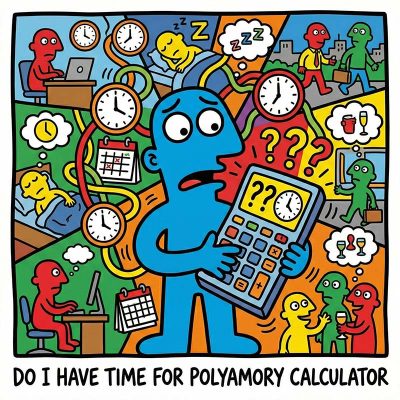
Love is infinite, but your calendar is brutally finite. The fantasy is deep connection; the reality is often just exhausted "calendar tetris." Promising time you don't actually have isn't romantic, it’s a recipe for burnout and broken trust. That sinking feeling when you have to cancel again? That’s the sound of overextension destroying your relationships.
This calculator forces you to confront the math of your life. Do you actually have space for another heart, or are you just setting everyone up for disappointment?

The fantasy is total autonomy and connection. The reality? It can feel like drowning in scheduling chaos and misunderstood expectations. That anxiety you feel isn’t just stress; it’s the wobble of living without a default "anchor." Without a solid architecture, Solo Polyamory stops being a life design and starts being a recipe for burnout and confusion.
The Essential Guide replaces the drift with a concrete anchor. We provide the "Solo Ethic," boundary scripts, and burnout protocols needed to protect your peace. Don't just date around—build a life that actually works for you.

Hierarchy sounds like a corporate org chart until someone gets their feelings hurt. That stomach-turning fear that you are just a "secondary" who can be fired at any time is real. If your relationship feels like a secret ranking system, you are doing it wrong.
Ambiguity is where resentment grows. The Essential Guide replaces the "who matters more" panic with a concrete charter. We provide the scripts and equity guardrails needed to protect every heart in the polycule. Stop guessing and start building.

The ideal is pure equality. The reality? It often slides into hidden rankings where someone gets hurt. That sinking feeling that you are secretly a "secondary" despite the label? That is your intuition detecting couple privilege. Ambiguity is where resentment thrives.
The Essential Guide replaces vague promises with concrete governance. We provide the charters, equity tools, and jealousy protocols needed to ensure "non-hierarchical" isn't just a fantasy. Stop guessing who matters most. Build a network that is actually fair.
The fantasy is total autonomy and connection. The reality? It can feel like drowning in scheduling chaos and misunderstood expectations. That anxiety you feel isn’t just stress; it’s the wobble of living without a default "anchor." Without a solid architecture, Solo Polyamory stops being a life design and starts being a recipe for burnout and confusion.
The Essential Guide replaces the drift with a concrete anchor. We provide the "Solo Ethic," boundary scripts, and burnout protocols needed to protect your peace. Don't just date around—build a life that actually works for you.
Hierarchy sounds like a corporate org chart until someone gets their feelings hurt. That stomach-turning fear that you are just a "secondary" who can be fired at any time is real. If your relationship feels like a secret ranking system, you are doing it wrong.
Ambiguity is where resentment grows. The Essential Guide replaces the "who matters more" panic with a concrete charter. We provide the scripts and equity guardrails needed to protect every heart in the polycule. Stop guessing and start building.
Why reassurance seeking can turn into control in a Non Hierarchical Polyamory set up
How reassurance shows up in everyday life
- Asking for constant confirmation like Are you going to see them again tomorrow Trust me I am not asking for proof of love I am asking for a promise.
- Interrupting plans or vetoing activities because you feel anxious about a new date
- Demanding equal time or transparency that goes beyond mutual consent and boundaries
- Checking partners social media or messages for signs of romance to calm insecurity
These behaviors come from a place of wanting safety but they often create more strain. They can mask deeper issues such as fear of abandonment or a past pattern of being left out. The purpose of this guide is not to blame you but to offer concrete strategies to move through insecurity with maturity and care for all involved.
Understanding the psychology behind insecurity in ENM
In non hierarchical polyamory the emotional landscape is more expansive but that can also bring amplified emotions. Here are a few ideas that help explain why insecurity arises and how to work with it rather than against it.
- Attachment styles People with anxious attachment may seek constant reassurance as a way to dampen fear of abandonment. People with secure attachment often feel more comfortable taking space and trusting their partner to manage multiple connections. Both styles can exist together in different parts of a single relationship network.
- Boundaries versus fences Boundaries are healthy guardrails they protect you and others. When boundaries turn into fences that restrict others autonomy they can escalate anxiety and lead to control driven behavior.
- Communication habits In ENM clear communication about needs is essential. Without explicit dialogue it is easy for misinterpretations to grow into insecurities and then into attempts to control the situation.
- Past experiences Previous relationships can leave emotional scars that show up as triggers in new ENM dynamics a pattern that needs new coping strategies rather than old reactions.
Healthy versus unhealthy reassurance seeking
Reassurance seeking is not inherently bad. It becomes a problem when it happens without consent or when it attempts to influence others behavior. Here is a simple way to tell the difference.
Is about sharing feelings asking for emotional support and requesting practical help to cope with a moment or a plan. It respects the other person's autonomy and their ability to make decisions. - Unhealthy reassurance seeking as control Involves demanding constant updates setting ultimatums or trying to persuade a partner to change their schedule or restrict interactions in order to manage your anxiety.
Tools and techniques to manage insecurity without turning reassurance seeking into control
1. Breathe and ground when anxiety spikes
When you feel a surge of insecurity pause and use a quick grounding exercise. Try four counts of inhaling two counts holding four counts exhaling and two counts pausing before exhaling. Focus on a physical sensation like your feet on the floor or the feel of the chair beneath you. This momentary reset helps you choose a response instead of reacting from fear.
2. Name the feeling and identify the trigger
Pause to label the emotion you are feeling is it fear envy worry or jealousy Then ask Yourself what triggered it Was it a specific date a post on social media a conversation you overheard or something your partner said The goal is to move from a vague sense of bad to a specific cue you can address constructively.
3. Distinguish between needs and reassurance requests
Needs are about your internal state and how you want to feel in a relationship. Reassurance requests try to manage another person or their behavior. When you notice yourself seeking reassurance ask a simple question Could I meet this need in a way that does not involve asking my partner to change something about their life or our schedule The answer often leads to self care actions or a conversation about mutual solutions.
4. Reframe your thoughts with cognitive strategies
Practice a quick reframing exercise replace catastrophic thoughts with more balanced ones. If you think They are going to replace me with someone else reframe to I cannot predict the future but I can focus on what I control today which is how I handle my feelings and how I communicate with my partner. This shift weakens the grip of fear and opens space for collaborative problem solving.
5. Create a personal plan for coping with triggers
Before a potential trigger occur create a personal plan that includes self care routines side projects and social supports. This plan acts like a toolbox you can reach for instead of reaching for reassurance from a partner. Include activities like journaling a workout a creative project or talking with a close friend who is not involved in the ENM network.
6. Build a language that invites collaboration not coercion
Use language that expresses your needs without pressuring your partner to change their behavior. For example you can say I feel anxious when I hear about a new date I would like to talk about how we can stay connected during that time or I would appreciate a check in after your date so I know we are on the same page. This frames the issue as a joint challenge rather than a demand.
7. Schedule healthy check ins not constant micro updates
Agree on regular but not obsessive check ins. This creates predictable rhythm without turning into a surveillance system. For instance a weekly five minute conversation about feelings and boundaries can be enough to maintain trust without feeling controlling.
8. Use compersion and shared joy as a buffer
Practice compersion which means feeling happy for your partner when they find connection with others. Focusing on shared joy can reduce competition and boost resilience when relationships expand. It is a strong antidote to insecurity when combined with honest communication.
9. Build emotional autonomy
Develop activities and friendships outside your romantic network. When you cultivate your own sources of joy energy and support your sense of self your emotional safety is less dependent on a single relationship or on constant reassurance from others.
10. Seek external support when needed
Sometimes the best path is to work with a therapist especially one who understands ethical non monogamy. A poly friendly therapist can help you unpack deep seated fears and develop new coping skills that fit your dynamic. If access is limited look for support groups or coaches who specifically work with ENM communities.
Communication frameworks that reduce reassurance seeking as control
Non hierarchical communication patterns
In non hierarchical polyamory the aim is to treat all relationships with respect and care. When you bring up concerns use a two part approach. Start with your experience then invite collaboration. For example I feel anxious about how much time I am getting and I would like to explore a plan that helps me feel steadier without asking you to bound your other relationships and activities. This approach reduces defensiveness and keeps the conversation open to renegotiation rather than confrontation.
Using I statements and specific requests
I statements focus on your internal experience rather than making statements about the other person. Specific requests reduce ambiguity and give your partner a clear path to help without feeling blamed. For instance Instead of You never text me back during dates try I feel disconnected when I do not hear from you during a date and I would find a short text reassuring when you are with another partner. This makes it about your experience and offers a concrete way forward.
Escalation paths and safety valves
Agree on a safe word or a non verbal cue that signals a need for space or a pause in a conversation. This is not about hiding feelings it is about preserving safety and ensuring all parties can participate in a balanced way. A pause helps you collect yourself and prevents impulsive expressions that you may regret later.
Love is infinite, but your calendar is brutally finite. The fantasy is deep connection; the reality is often just exhausted "calendar tetris." Promising time you don't actually have isn't romantic, it’s a recipe for burnout and broken trust. That sinking feeling when you have to cancel again? That’s the sound of overextension destroying your relationships.
This calculator forces you to confront the math of your life. Do you actually have space for another heart, or are you just setting everyone up for disappointment?
The fantasy is total autonomy and connection. The reality? It can feel like drowning in scheduling chaos and misunderstood expectations. That anxiety you feel isn’t just stress; it’s the wobble of living without a default "anchor." Without a solid architecture, Solo Polyamory stops being a life design and starts being a recipe for burnout and confusion.
The Essential Guide replaces the drift with a concrete anchor. We provide the "Solo Ethic," boundary scripts, and burnout protocols needed to protect your peace. Don't just date around—build a life that actually works for you.
Hierarchy sounds like a corporate org chart until someone gets their feelings hurt. That stomach-turning fear that you are just a "secondary" who can be fired at any time is real. If your relationship feels like a secret ranking system, you are doing it wrong.
Ambiguity is where resentment grows. The Essential Guide replaces the "who matters more" panic with a concrete charter. We provide the scripts and equity guardrails needed to protect every heart in the polycule. Stop guessing and start building.
The ideal is pure equality. The reality? It often slides into hidden rankings where someone gets hurt. That sinking feeling that you are secretly a "secondary" despite the label? That is your intuition detecting couple privilege. Ambiguity is where resentment thrives.
The Essential Guide replaces vague promises with concrete governance. We provide the charters, equity tools, and jealousy protocols needed to ensure "non-hierarchical" isn't just a fantasy. Stop guessing who matters most. Build a network that is actually fair.
The fantasy is total autonomy and connection. The reality? It can feel like drowning in scheduling chaos and misunderstood expectations. That anxiety you feel isn’t just stress; it’s the wobble of living without a default "anchor." Without a solid architecture, Solo Polyamory stops being a life design and starts being a recipe for burnout and confusion.
The Essential Guide replaces the drift with a concrete anchor. We provide the "Solo Ethic," boundary scripts, and burnout protocols needed to protect your peace. Don't just date around—build a life that actually works for you.
Hierarchy sounds like a corporate org chart until someone gets their feelings hurt. That stomach-turning fear that you are just a "secondary" who can be fired at any time is real. If your relationship feels like a secret ranking system, you are doing it wrong.
Ambiguity is where resentment grows. The Essential Guide replaces the "who matters more" panic with a concrete charter. We provide the scripts and equity guardrails needed to protect every heart in the polycule. Stop guessing and start building.
Practical real world scenarios with sample dialogues
Scenario 1 A new date with a partner triggers insecurity
Situation After a partner announces a date with someone new you feel shaky and worry you will be pushed aside. What you might have done in the past You might have texted for constant updates or demanded a schedule or even tried to rearrange your partner’s plans.
Healthy approach You take a moment to breathe and use a I statement. Then you open a dialogue that respects autonomy while sharing your experience.
Dialogue Example
You I feel anxious when I hear about a new date because I am worried about our connection. I would like to talk about how we stay connected during that time and how we can communicate openly about this new person. Can we schedule a short check in after your date and also plan a weekly time to review how we feel about our connections This keeps space for your partner while addressing your emotional needs.
Scenario 2 You notice rising insecurity through social media cues
Situation A partner posts a story about a date or a new partner and you feel a surge of fear or jealousy. What you might have done in the past You might have lurked on partners pages or demanded access to private messages. That kind of behavior creates friction and reduces trust.
Healthy approach You acknowledge the feeling and ask for a small non intrusive check in while keeping social media boundaries.
Dialogue Example
You I am feeling a bit insecure after seeing your post about a new date. I would like to talk about what I need to feel secure without infringing on your privacy. Could we agree on a brief post date text check in and be mindful about how we share information with each other online
Scenario 3 A scheduling conflict strains a multi partner calendar
Situation You have back to back commitments with another partner and worry about time together with your primary network. What you might have done in the past You might have demanded more time or tried to coerce changes which leads to resentment on all sides.
Healthy approach You propose a calendar review that respects everyone s needs while acknowledging your own limits.
Dialogue Example
You I feel stretched thin this week and I want to make sure I am present for all my connections. Can we review the calendar together and adjust plans so I can spend quality time with each partner without overloading myself This helps me show up better for everyone.
Scenario 4 A partner cancels a date unexpectedly
Situation A partner has to cancel which can trigger a fear of abandonment. What you might have done in the past You might have spiraled into rumors or accusations.
Healthy approach Acknowledge the disappointment but avoid blaming and propose a constructive response.
Dialogue Example
You I am disappointed we cannot date today but I understand life happens. I would like to talk about how we keep communication clear when plans change and what backup options we can use next time
Boundaries and agreements in the non hierarchical ENM space
Boundaries are not about limiting happiness They are about creating a shared space where people feel safe to explore. In non hierarchical polyamory there is no default primacy but there are clearly defined boundaries and agreements. These help reduce the need for reassurance by removing ambiguity.
- Time boundaries Ensure there is enough attention and energy for each connection while honoring personal capacity.
- Disclosure boundaries Agree how much information you will share about other partners and what constitutes private information that stays between you and your partner.
- Social media boundaries Decide what is appropriate to post describe and discuss about dating life with others outside your network.
- Emotional boundaries Know what type of emotional support you will offer and what needs to be kept private until you are ready to share.
Self reflection exercises you can do alone or with a trusted ally
- Attachment audit Write down your current attachment style and how it shows up in your ENM relationships. Note where insecurity crops up most often and what tends to calm you down.
- Trigger diary Every time you feel insecure write down what happened what you felt what you feared how you responded and what would have helped. Review weekly to identify patterns.
- Boundary mapping List current boundaries and reflect on whether they are protective or restrictive. Update as you grow within the dynamic.
Dealing with jealousy in a non hierarchical ENM setup
Jealousy is a common signal not a fatal flaw. The trick is to acknowledge it without letting it drive controlling behavior. When jealousy appears try to identify the underlying need what would help you feel secure that does not require changing the other person s behavior or restricting their freedom. It could be more time with a partner it could be more validation of your value or more solo time to recharge.
The role of compersion and mutual care
Compersion is the positive counterpart to jealousy. It is the felt joy when your partner experiences happiness with someone else. Cultivating compersion can soften insecurity by reframing the narrative from competition to collaboration. You can practice compersion by highlighting the strengths you admire in your partner s other connections and by celebrating their growth together with you should you choose to participate in some capacity.
Red flags that require attention or professional support
- Persistent attempts to control partner time or access to others
- Repeated breakdowns in trust without willingness to address them
- Chronic compulsive checking on partners or a pattern of secrecy about your own behavior
- Fear driven refusal to engage in open dialogue about needs
If you notice these patterns seeking support from a poly friendly therapist or engaging with a support group can be a wise step. You deserve relationships that honor your needs and the freedom of others to be themselves.
Glossary of useful terms and acronyms
- ENM Ethical Non Monogamy a relationship approach where people consent to multiple romantic or sexual connections.
- Non Hierarchical Polyamory A polyamory style without a ranking of relationships in terms of priority or importance.
- Reassurance seeking Asking for repeated confirmation that someone cares or will stay involved in your life.
- Reassurance seeking as control When reassurance becomes a tool to shape others actions rather than a way to cope with feelings.
- Compersion Feeling joy when your partner experiences happiness with someone else.
- Attachment style A framework for understanding how people relate in relationships including anxious or secure patterns.
Practical tips for ongoing growth in this dynamic
- Keep a weekly check in about emotional climate with your partners that focuses on feelings not plans.
- Practice self care rituals that are not dependent on partner responses such as exercise creative hobbies and social activities with friends outside your ENM network.
- Use language that invites collaboration not coercion and be open to renegotiation when needs change.
- Seek professional guidance from a therapist who is familiar with ENM dynamics to tailor strategies to your situation.
Putting it all together a roadmap you can start today
Step 1 identify your insecurity triggers and distinguish between needs and reassurance seeking. Step 2 practice grounding breathing and naming the feeling when triggers occur. Step 3 initiate a calm honest conversation with your partners using I statements and explicit requests. Step 4 implement a short term plan including boundary adjustments or a schedule for check ins. Step 5 build emotional autonomy through external supports and personal growth activities. Step 6 review and adjust agreements as your relationships evolve. Follow this roadmap and you will gradually reduce reassurance seeking as a mechanism for control while increasing trust and satisfaction across your ENM network.
Frequently asked questions
How do I know if I am engaging in reassurance seeking as control
If you notice you are repeatedly seeking confirmation about a partner s feelings or plans and the pattern feels more about managing their behavior than sharing your own feelings this can be a sign of reassurance seeking as control. A practical test is to pause reflect and ask yourself am I asking for reassurance to reduce my own anxiety or am I asking for my partner to change how they live their life
What is the difference between compersion and reassurance seeking
Compersion is about feeling happy for your partner s joy and freedom without needing constant proof that the relationship is stable. Reassurance seeking is about needing constant validation to feel safe. Cultivating compersion helps reduce the urge to seek reassurance because your focus shifts to shared positive experiences rather than potential loss.
How can I talk to partners about changing reassurance seeking habits
Start by naming your intention to grow and your belief that healthier patterns will help everyone. Use I statements and give concrete examples of what you want to try. For example I want to work on not needing daily updates and instead we can use a weekly check in. I would appreciate your support in trying this for the next month. This approach invites collaboration and reduces defensiveness.
Can non Hierarchical Polyamory work long term if one person struggles with insecurity
Yes but it requires honesty and a willingness to renegotiate boundaries and practices. It may involve targeted therapy or support groups and a structure for check ins that protects boundaries while allowing growth. The goal is not to eliminate insecurity but to reduce its impact on the relationship network and to keep everyone safe and respected.
What boundaries are most important in this context
Time boundaries honest disclosure boundaries social media boundaries and emotional boundaries are particularly important in non hierarchical ENM. Time boundaries protect personal energy and prevent burnout. Honest disclosure boundaries ensure everyone is on the same page. Social media boundaries prevent misinterpretation and emotional boundaries ensure you protect what should stay private until you are ready to share.
When should I consider therapy or coaching
If insecurity is affecting your daily life causing distress in multiple relationships or leading to controlling behaviors therapy or coaching can be very helpful. A poly aware therapist can offer strategies tailored to ENM dynamics and help you build healthier patterns that suit your unique network.
What is a good daily practice to reduce reliance on reassurance
Daily journaling about your emotions a short mindfulness practice and a plan for two non immediate coping strategies such as exercise or creative activity can reduce the urge to seek reassurance. Over time these habits build emotional resilience and improve how you communicate with your partners.
Glossary of terms and acronyms for quick reference
A polyamory style with no strict ranking of relationships in terms of priority. Repeated requests for confirmation about affection or commitment. When reassurance becomes a method to coerce or limit a partner s behavior. A framework for how people emotionally attach to others in close relationships.
Love is infinite, but your calendar is brutally finite. The fantasy is deep connection; the reality is often just exhausted "calendar tetris." Promising time you don't actually have isn't romantic, it’s a recipe for burnout and broken trust. That sinking feeling when you have to cancel again? That’s the sound of overextension destroying your relationships.
This calculator forces you to confront the math of your life. Do you actually have space for another heart, or are you just setting everyone up for disappointment?
The fantasy is total autonomy and connection. The reality? It can feel like drowning in scheduling chaos and misunderstood expectations. That anxiety you feel isn’t just stress; it’s the wobble of living without a default "anchor." Without a solid architecture, Solo Polyamory stops being a life design and starts being a recipe for burnout and confusion.
The Essential Guide replaces the drift with a concrete anchor. We provide the "Solo Ethic," boundary scripts, and burnout protocols needed to protect your peace. Don't just date around—build a life that actually works for you.
Hierarchy sounds like a corporate org chart until someone gets their feelings hurt. That stomach-turning fear that you are just a "secondary" who can be fired at any time is real. If your relationship feels like a secret ranking system, you are doing it wrong.
Ambiguity is where resentment grows. The Essential Guide replaces the "who matters more" panic with a concrete charter. We provide the scripts and equity guardrails needed to protect every heart in the polycule. Stop guessing and start building.
The ideal is pure equality. The reality? It often slides into hidden rankings where someone gets hurt. That sinking feeling that you are secretly a "secondary" despite the label? That is your intuition detecting couple privilege. Ambiguity is where resentment thrives.
The Essential Guide replaces vague promises with concrete governance. We provide the charters, equity tools, and jealousy protocols needed to ensure "non-hierarchical" isn't just a fantasy. Stop guessing who matters most. Build a network that is actually fair.
The fantasy is total autonomy and connection. The reality? It can feel like drowning in scheduling chaos and misunderstood expectations. That anxiety you feel isn’t just stress; it’s the wobble of living without a default "anchor." Without a solid architecture, Solo Polyamory stops being a life design and starts being a recipe for burnout and confusion.
The Essential Guide replaces the drift with a concrete anchor. We provide the "Solo Ethic," boundary scripts, and burnout protocols needed to protect your peace. Don't just date around—build a life that actually works for you.
Hierarchy sounds like a corporate org chart until someone gets their feelings hurt. That stomach-turning fear that you are just a "secondary" who can be fired at any time is real. If your relationship feels like a secret ranking system, you are doing it wrong.
Ambiguity is where resentment grows. The Essential Guide replaces the "who matters more" panic with a concrete charter. We provide the scripts and equity guardrails needed to protect every heart in the polycule. Stop guessing and start building.
