
Marriage Legal Status and Structural Power


If you live in a non hierarchical polyamory world you know relationships come in many flavors. ENM or Ethical Non Monogamy is a big umbrella that covers how people decide to love and connect without turning exclusive means into the rule book. A non hierarchical setup means there is no single top tier relationship that rules all others. People in this setup build their own maps instead of following a preset ladder. This article dives into marriage legal status and structural power within that dynamic. It aims to explain terms clearly and offer practical steps so you can protect yourselves and your kids if needed while staying true to your values and the reality of the law. We keep the tone real and practical and we explain jargon as we go because legal topics should be understandable not mystified.
Quick Links to Useful Sections
- What this guide covers
- Key terms you will hear in this space
- How marriage legal status differs by jurisdiction
- Marriage
- Civil union
- Domestic partnership
- Structural power in non hierarchical polyamory
- What power looks like in a non hierarchical system
- Strategies to balance power without placing anyone in a hierarchy
- Legal tools and practical steps you can take
- Cohabitation and relationship agreements
- Parenting plans and custody considerations
- Financial planning and debt management
- Medical decision making and proxies
- Estate planning and wills
- Property ownership and housing rights
- Privacy and consent
- Realistic scenarios and how to handle them
- Two partners consider moving in with a new partner
- One partner faces job loss and needs financial support
- Parenting across multiple households
- One partner changes immigration status or residence
- Challenges and limitations you should know about
- Recognition gaps
- Tax treatment and benefits
- Parental rights and adoption
- Practical steps for building structural power without a hierarchy
- Glossary of useful terms and acronyms
- Frequently asked questions
What this guide covers
This guide will walk you through the legal realities of marriage and relationships in a non hierarchical polyamory setting. You will find plain language explanations of common terms and acronyms you will hear in this space. You will learn how legal status can affect rights like custody medical decisions taxes and property. You will also get practical strategies for building structural power without creating a pecking order. The aim is to help you design a life that respects everyone involved and still lines up with local law.
Key terms you will hear in this space
Let us start with a quick glossary so you have shared language as you read. If a term is new to you we will explain it and give examples of how it can show up in real life.
- ENM Ethical Non Monogamy. A relationship framework where all parties consent to more than one romantic or sexual relationship at the same time.
- Non hierarchical polyamory A polyamory style in which there is no default ranking of relationships as primary secondary or tertiary. All partners have equal standing in the structure by design.
- Structural power The influence or control that comes from social and legal arrangements such as housing finances and parental rights rather than a formal hierarchy among partners.
- Legal status The official recognition by a state or country of a relationship such as marriage civil union or domestic partnership and the rights and duties that come with that recognition.
- Civil union A legally recognized commitment similar to marriage in some places with varying rights and responsibilities depending on the jurisdiction.
- Domestic partnership A legal arrangement that grants some rights to couples including same sex or opposite sex couples in places where marriage is not chosen or available.
- Public policy and precedent The way courts and lawmakers interpret family structures and relationships over time which might impact poly families in subtle and direct ways.
- Joint property Property owned by two or more people. In non hierarchical poly affairs the question is who owns what how it is titled and how it is managed.
- Custody and parenting plan Legal arrangements about who has the right to make decisions for a child and how parenting time is allocated in shared parenting scenarios.
- Medical decision making The legal rights to make medical choices for a partner or child when the person cannot speak for themselves.
- Estate planning Wills trusts and powers of attorney created to manage assets and care for loved ones after death or incapacity.
- Primaries and secondaries Terms often used in polyamory to describe varying degrees of commitment or time spent with partners. In non hierarchical models these labels are avoided in favor of mutual consent and clear agreements.
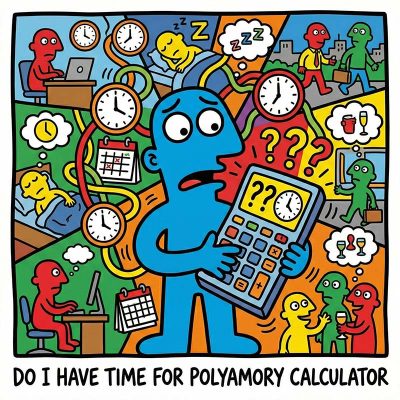
Love is infinite, but your calendar is brutally finite. The fantasy is deep connection; the reality is often just exhausted "calendar tetris." Promising time you don't actually have isn't romantic, it’s a recipe for burnout and broken trust. That sinking feeling when you have to cancel again? That’s the sound of overextension destroying your relationships.
This calculator forces you to confront the math of your life. Do you actually have space for another heart, or are you just setting everyone up for disappointment?

The fantasy is total autonomy and connection. The reality? It can feel like drowning in scheduling chaos and misunderstood expectations. That anxiety you feel isn’t just stress; it’s the wobble of living without a default "anchor." Without a solid architecture, Solo Polyamory stops being a life design and starts being a recipe for burnout and confusion.
The Essential Guide replaces the drift with a concrete anchor. We provide the "Solo Ethic," boundary scripts, and burnout protocols needed to protect your peace. Don't just date around—build a life that actually works for you.

Hierarchy sounds like a corporate org chart until someone gets their feelings hurt. That stomach-turning fear that you are just a "secondary" who can be fired at any time is real. If your relationship feels like a secret ranking system, you are doing it wrong.
Ambiguity is where resentment grows. The Essential Guide replaces the "who matters more" panic with a concrete charter. We provide the scripts and equity guardrails needed to protect every heart in the polycule. Stop guessing and start building.

The ideal is pure equality. The reality? It often slides into hidden rankings where someone gets hurt. That sinking feeling that you are secretly a "secondary" despite the label? That is your intuition detecting couple privilege. Ambiguity is where resentment thrives.
The Essential Guide replaces vague promises with concrete governance. We provide the charters, equity tools, and jealousy protocols needed to ensure "non-hierarchical" isn't just a fantasy. Stop guessing who matters most. Build a network that is actually fair.
The fantasy is total autonomy and connection. The reality? It can feel like drowning in scheduling chaos and misunderstood expectations. That anxiety you feel isn’t just stress; it’s the wobble of living without a default "anchor." Without a solid architecture, Solo Polyamory stops being a life design and starts being a recipe for burnout and confusion.
The Essential Guide replaces the drift with a concrete anchor. We provide the "Solo Ethic," boundary scripts, and burnout protocols needed to protect your peace. Don't just date around—build a life that actually works for you.
Hierarchy sounds like a corporate org chart until someone gets their feelings hurt. That stomach-turning fear that you are just a "secondary" who can be fired at any time is real. If your relationship feels like a secret ranking system, you are doing it wrong.
Ambiguity is where resentment grows. The Essential Guide replaces the "who matters more" panic with a concrete charter. We provide the scripts and equity guardrails needed to protect every heart in the polycule. Stop guessing and start building.
How marriage legal status differs by jurisdiction
Legal systems around the world vary widely when it comes to recognizing multiple partner relationships. In many places you will find three common tracks you can consider as you plan for a non hierarchical polyamorous life.
Marriage
Marriage is the strongest form of legal recognition in most countries. It typically grants a wide set of rights and responsibilities including tax benefits inheritance rules social security access hospital visitation and decision making authority in emergencies. In a non hierarchical polyamory context marriage often does not capture all relationships equally. If one or more partners are married to different people it can create complex legal landscapes such as incomplete recognition of each bond or conflicting spousal rights. It is important to map out exactly which relationships you want to be legally recognized and to discuss how those choices affect everyone involved.
Civil union
Civil union is a form of legal recognition that may be more flexible in some regions. It can provide a framework for shared rights while avoiding the full implications of marriage in other areas. Civil unions can be attractive for polyamorous groups who want formal recognition for at least a portion of their collective relationships. Rights granted and obligations imposed vary by jurisdiction so it is essential to consult local law to understand what is included and what is not.
Domestic partnership
Domestic partnerships are often designed for couples who are not married. They can extend specific protections such as hospital access and certain financial or medical decision making rights. In a non hierarchical polyamory setup you may consider multi partner domestic partnerships or a networked approach where a core subset has formal status while others operate under separate agreements. The legality and availability of domestic partnerships depend heavily on the country and even the city or state you live in.
Structural power in non hierarchical polyamory
Structural power is not about a boss and workers. It is about who has leverage based on documents assets access to doctors or the right to live together legally. In a non hierarchical setup you want to reduce the risk that one person becomes the de facto decision maker simply because they hold a paper title or a legal contract. Here is how structural power tends to show up and how to address it in healthy ways.
What power looks like in a non hierarchical system
Power in this model is distributed through agreements plans and shared responsibilities rather than through a central top tier. However real life power dynamics may creep in through the following channels:
- Legal documentation such as who is recognized as a partner or spouse and the rights that come with that recognition
- Financial control including who holds accounts and who makes major purchases or debt decisions
- Housing and living arrangements such as who signs the lease or mortgage and who has access to shared spaces
- Parenting and caregiving duties including who has final say in medical and educational matters for children
- Social and cultural power including family expectations community norms and the influence of long standing relationship history
Strategies to balance power without placing anyone in a hierarchy
- Use formal and informal agreements to spell out who makes what decisions for which areas and under what conditions
- Rotate leadership on different issues so no single person concentrates all control over time
- Define a process for conflict resolution that includes mediation and timeouts rather than unilateral moves
- Create a comprehensive estate plan that explains who inherits what regardless of relationship labels
- Develop transparent financial practices including budgets joint expenses and debt management
- Institute regular check ins to reassess needs boundaries and consent as life changes
Legal tools and practical steps you can take
Non hierarchical polyamory does not mean you give up on protection or foresight. It means you design structures that honor consent clarity and fairness. The following tools can help you create a robust framework that stands up to real life pressure while respecting everyone involved.
Cohabitation and relationship agreements
A well crafted written agreement can cover living arrangements financial responsibilities parental roles and expectations around safety and consent. It is important to include all current members who will be affected by the decisions. Agreements should be revisited regularly to reflect changes in life such as new partners moving into the fold or shifts in employment or residency.
Parenting plans and custody considerations
If children are part of the picture you will want to outline who has decision making authority how parenting time is shared and how holidays and education are coordinated. These plans are not just about daily routines but also about how the family presents itself legally in schools clinics and with authorities.
Financial planning and debt management
Open books reduce tension. Create a shared budget and decide how to handle joint expenses properties and future purchases. Discuss how debt incurred by one person will be shared and who has obligation to support a partner in hardship scenarios. Consider setting up separate accounts for privacy alongside a joint account for shared obligations to avoid micromanaging every dollar.
Medical decision making and proxies
Life may bring medical emergencies. It is crucial to designate who can make medical decisions when a partner cannot speak for themselves. A medical proxy or durable power of attorney helps ensure that loved ones receive timely care while honoring the stated wishes of the person involved.
Estate planning and wills
Everyone should have a will and a health care directive. In a multi partner network these documents should specify who inherits assets and how guardianship duties would be allocated if there are children. Wills reduce the chances of disputes and provide a clear path for service providers and family members to follow.
Property ownership and housing rights
How property is titled matters for ownership and control. If several partners contribute to a home or a business you may consider forms of tenancy in common or joint ownership with explicit agreed scents of right of survivorship and exit strategies. Address how equity is calculated and how splits occur if the relationships shift or end.
Privacy and consent
Consent is not a one time thing. It is a process that evolves as partnerships grow. Build privacy protections into your structures and respect the right of each person to withdraw or adjust consent as needed. Clear consent protocols prevent misunderstandings and protect everyone involved.
Realistic scenarios and how to handle them
Scenario planning helps you test your current structures. Here are some common situations and practical approaches that keep non hierarchical polyamory fair and sane.
Two partners consider moving in with a new partner
Before the move begin with a candid conversation about space needs finances and how to divide shared responsibilities. Update agreements to reflect the new living arrangement and ensure everyone has access to medical information and safety services if needed. Create a trial period with check in points to assess comfort levels and adjust as necessary.
One partner faces job loss and needs financial support
Discuss a fair plan that preserves dignity for all involved. That plan might include temporary adjustments to budgets reallocation of shared resources and a clear path to return to prior arrangements when finances improve. The emphasis should stay on mutual care and transparent communication.
Parenting across multiple households
Coordinate school choices medical care and weekly routines to reduce confusion for children. Use a shared calendar and regular family meetings. Keep the focus on the child s best interests and avoid letting adult disputes spill into kid spaces.
One partner changes immigration status or residence
Legal risk rises when residency status changes. Seek legal counsel about visa options and how to document ongoing support and care. Ensure that the chosen status does not accidentally undermine other relationships within the network or create gaps in protection for children or adults.
Challenges and limitations you should know about
Non hierarchical polyamory sounds empowering but you will run into real world friction. The legal world often favors binary and monogamous structures and public policy may lag behind social reality. The key is to anticipate gaps and plan around them rather than pretending they do not exist.
Recognition gaps
Even in places where marriage exists polyamorists may not receive automatic recognition for all relationships. You may find that only one partnership is legally acknowledged or that certain rights do not extend beyond the traditional marriage framework. This is a reason to rely on robust private agreements that are designed to fill gaps where state recognition falls short.
Tax treatment and benefits
Tax codes typically assume two people filing together or single individuals. Additional partners often lack clear status which can complicate filing or eligibility for benefits. It is wise to consult a tax professional who understands polyamory friendly planning to avoid surprises during tax season.
Parental rights and adoption
Child custody and parental rights for non biological or non legitimized parents can be challenging if the law does not recognize all relationships. A strong parenting plan combined with a legally drafted will and guardianship provisions can help but you may still face complex court decisions in disputes. Plan early and document intentions clearly.
Practical steps for building structural power without a hierarchy
We want balance not domination. Here are concrete steps you can take to strengthen your position as a network while preserving the non hierarchical ethos.
- Draft an integrated legal plan that covers all partners with clear titles of rights and responsibilities
- Set up regular legal reviews to update wills agreements and proxies as life changes
- Create transparent financial governance with budgets shared accounts and explicit rules for debt and major purchases
- Establish inclusive decision making processes that rotate focus areas and rely on consensus seeking mechanisms
- Build a robust medical and educational plan for children including who has final say in urgent situations
- Engage a lawyer who understands ENM and polyamory to tailor documents to your reality
- Communicate openly with friends and family while protecting the privacy of partners who prefer less visibility
Glossary of useful terms and acronyms
- ENM Ethical Non Monogamy a relationship style that accepts multiple loving relationships with consent
- Non hierarchical A structure where no partner holds primacy over others by default
- Legal status Official recognition for relationships such as marriage civil union or domestic partnership
- Joint property Property owned by more than one person with shared rights
- Custody Decision making authority and time sharing arrangements for children
- Healthcare proxy Someone designated to make medical decisions when a person cannot
- Durable power of attorney A document that gives someone authority to act on behalf of another in financial matters
- Estate planning Wills trusts and related documents that determine the distribution of assets
- Primaries In traditional poly systems a term sometimes used to describe main partners but in non hierarchical models it is avoided
- Secondaries A term used to describe other partners in some models but avoided in non hierarchical setups
- Guardianship Legal authority to care for a child if the parent cannot
- Visitation rights Legal access to a partner for medical or parental purposes
- Consent protocol A process for obtaining and updating consent across the network
Frequently asked questions
What is the biggest legal obstacle for non hierarchical polyamory families?
The biggest obstacle is often recognition. Many legal systems are built around two adults and a couple centered model. This can create gaps in rights and protections for multiple partner families. You can mitigate this with comprehensive private agreements and careful estate and parenting planning.
Can we get universal rights for all partners?
No single document guarantees universal rights in every jurisdiction. However you can pack a suite of tools together. Wills medical proxies and durable powers of attorney can cover medical intent and financial decisions. A well drafted joint property agreement can handle ownership and transfers when relationships shift.
Should all partners marry someone else in order to gain rights
Not necessarily. Marriage can complicate things if not everyone wants the same legal path. Civil unions or domestic partnerships paired with strong private agreements can provide substantial protections without forcing all partners into marriage if that is not aligned with your values.
How do we protect children in a non hierarchical poly family?
Put the child s needs first and document a clear parenting plan. Ensure that at least one trusted adult is legally recognized to make decisions for the child if needed. Consider school and healthcare communications that reflect the network of caregivers so the child s life does not hinge on the presence of a single parent.
What if a partner moves away or changes residency
Revisit legal tools and the housing arrangement. Update wills and healthcare proxies and confirm that financial arrangements still serve everyone involved. Consider long distance planning including remote guardianship and access to records.
Do courts understand non hierarchical polyamory
Judges and courts interpret law cases based on existing statutes and precedents. Custom contracts and explicit documentation can help but outcomes vary by jurisdiction. It is wise to work with a lawyer who understands both family law and ENM dynamics to anticipate possible angles a case might take.
What is the best first step if we want to start legal planning
Pick an initial priority. Do you want legal recognition for a subset of relationships or complete private planning across the network? From there gather all partners for a conversation about goals and comfort levels and then consult a lawyer who can draft documents that reflect your shared plan.
What about immigration and visas for poly families
Immigration systems commonly recognize only marriage or a single partnership for sponsorship. If you are in a poly network you will likely face limitations. It is essential to seek specialized legal guidance and to plan around visa options and residency rules that fit your situation including potential family based petitions where allowed.
Love is infinite, but your calendar is brutally finite. The fantasy is deep connection; the reality is often just exhausted "calendar tetris." Promising time you don't actually have isn't romantic, it’s a recipe for burnout and broken trust. That sinking feeling when you have to cancel again? That’s the sound of overextension destroying your relationships.
This calculator forces you to confront the math of your life. Do you actually have space for another heart, or are you just setting everyone up for disappointment?
The fantasy is total autonomy and connection. The reality? It can feel like drowning in scheduling chaos and misunderstood expectations. That anxiety you feel isn’t just stress; it’s the wobble of living without a default "anchor." Without a solid architecture, Solo Polyamory stops being a life design and starts being a recipe for burnout and confusion.
The Essential Guide replaces the drift with a concrete anchor. We provide the "Solo Ethic," boundary scripts, and burnout protocols needed to protect your peace. Don't just date around—build a life that actually works for you.
Hierarchy sounds like a corporate org chart until someone gets their feelings hurt. That stomach-turning fear that you are just a "secondary" who can be fired at any time is real. If your relationship feels like a secret ranking system, you are doing it wrong.
Ambiguity is where resentment grows. The Essential Guide replaces the "who matters more" panic with a concrete charter. We provide the scripts and equity guardrails needed to protect every heart in the polycule. Stop guessing and start building.
The ideal is pure equality. The reality? It often slides into hidden rankings where someone gets hurt. That sinking feeling that you are secretly a "secondary" despite the label? That is your intuition detecting couple privilege. Ambiguity is where resentment thrives.
The Essential Guide replaces vague promises with concrete governance. We provide the charters, equity tools, and jealousy protocols needed to ensure "non-hierarchical" isn't just a fantasy. Stop guessing who matters most. Build a network that is actually fair.
The fantasy is total autonomy and connection. The reality? It can feel like drowning in scheduling chaos and misunderstood expectations. That anxiety you feel isn’t just stress; it’s the wobble of living without a default "anchor." Without a solid architecture, Solo Polyamory stops being a life design and starts being a recipe for burnout and confusion.
The Essential Guide replaces the drift with a concrete anchor. We provide the "Solo Ethic," boundary scripts, and burnout protocols needed to protect your peace. Don't just date around—build a life that actually works for you.
Hierarchy sounds like a corporate org chart until someone gets their feelings hurt. That stomach-turning fear that you are just a "secondary" who can be fired at any time is real. If your relationship feels like a secret ranking system, you are doing it wrong.
Ambiguity is where resentment grows. The Essential Guide replaces the "who matters more" panic with a concrete charter. We provide the scripts and equity guardrails needed to protect every heart in the polycule. Stop guessing and start building.
