
Navigating Holidays Without Default Priorities

Holidays are wonderful and chaotic all at once. Add in a non hierarchical polyamory setup and you get a calendar full of different needs, big questions, and a lot of love to juggle. If you are here you probably want to keep the peace while honoring every connection in your life. This guide breaks down how to plan holidays when there is no default priority among partners. It will help you communicate clearly, set healthy boundaries, and create traditions that work for your whole polycule without making anyone feel left out.
Quick Links to Useful Sections
- Quick definitions you will see in this guide
- Why holidays are tricky when there is no hierarchy
- What it means to plan without default priorities
- Practical steps to plan holidays without default priorities
- Step 1: Start early and gather calendars
- Step 2: Create a holiday plan with input from everyone
- Step 3: Build a calendar that honors multiple households
- Step 4: Boundaries that protect energy and health
- Step 5: Gift giving without pressure
- Step 6: Kids and family dynamics in ENM spaces
- Step 7: Health, safety and consent around intimacy during the holidays
- Step 8: Emotional wellbeing and resilience during a busy season
- Realistic scenarios and how to handle them
- Scenario 1: Two families in one holiday window
- Scenario 2: A big family event that excludes a partner
- Scenario 3: A new partner joining a holiday plan
- Scenario 4: Budget constraints during a busy season
- Communication strategies that keep conversations constructive
- Ethical non monogamy and the family circle
- Tools that can help you stay organized
- Self reflection for long term harmony
- Glossary of useful terms and acronyms
- Frequently asked questions
- Meta reflection
Quick definitions you will see in this guide
We are going to drop a few acronyms and terms that pop up a lot in ethically non monogamous spaces. If any term is new to you or feels confusing we will explain it right away so you can keep following along without flicking back to a glossary.
- ENM stands for Ethical Non Monogamy. This is an approach to relationships that openly allows connections with more than one person with consent and clear communication.
- Non Hierarchical Polyamory means there is no built in ranking of partners. People are not labeled as primary or secondary by default. Connections are valued on their own terms.
- Polycule is the network of people who are connected through polyamorous relationships. Think of it as a family tree with many branches that overlap in different ways.
- Primary and secondary are common terms in many setups but in non hierarchical models they may still appear in conversations. This guide emphasizes that there is no automatic default priority unless all involved agree to a plan.
- Compersion is feeling positive about someone else’s happiness. In holidays it can help you celebrate your partners joy even when it means sharing time and space differently.
Why holidays are tricky when there is no hierarchy
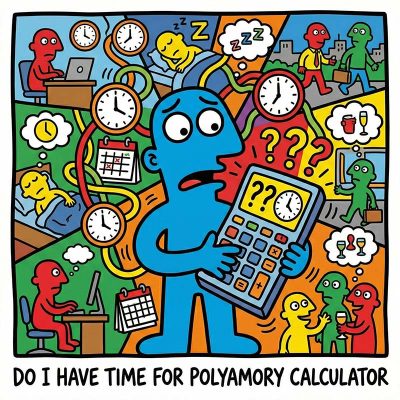
Love is infinite, but your calendar is brutally finite. The fantasy is deep connection; the reality is often just exhausted "calendar tetris." Promising time you don't actually have isn't romantic, it’s a recipe for burnout and broken trust. That sinking feeling when you have to cancel again? That’s the sound of overextension destroying your relationships.
This calculator forces you to confront the math of your life. Do you actually have space for another heart, or are you just setting everyone up for disappointment?

The fantasy is total autonomy and connection. The reality? It can feel like drowning in scheduling chaos and misunderstood expectations. That anxiety you feel isn’t just stress; it’s the wobble of living without a default "anchor." Without a solid architecture, Solo Polyamory stops being a life design and starts being a recipe for burnout and confusion.
The Essential Guide replaces the drift with a concrete anchor. We provide the "Solo Ethic," boundary scripts, and burnout protocols needed to protect your peace. Don't just date around—build a life that actually works for you.
Hierarchy sounds like a corporate org chart until someone gets their feelings hurt. That stomach-turning fear that you are just a "secondary" who can be fired at any time is real. If your relationship feels like a secret ranking system, you are doing it wrong.
Ambiguity is where resentment grows. The Essential Guide replaces the "who matters more" panic with a concrete charter. We provide the scripts and equity guardrails needed to protect every heart in the polycule. Stop guessing and start building.
The ideal is pure equality. The reality? It often slides into hidden rankings where someone gets hurt. That sinking feeling that you are secretly a "secondary" despite the label? That is your intuition detecting couple privilege. Ambiguity is where resentment thrives.
The Essential Guide replaces vague promises with concrete governance. We provide the charters, equity tools, and jealousy protocols needed to ensure "non-hierarchical" isn't just a fantasy. Stop guessing who matters most. Build a network that is actually fair.
The fantasy is total autonomy and connection. The reality? It can feel like drowning in scheduling chaos and misunderstood expectations. That anxiety you feel isn’t just stress; it’s the wobble of living without a default "anchor." Without a solid architecture, Solo Polyamory stops being a life design and starts being a recipe for burnout and confusion.
The Essential Guide replaces the drift with a concrete anchor. We provide the "Solo Ethic," boundary scripts, and burnout protocols needed to protect your peace. Don't just date around—build a life that actually works for you.
Hierarchy sounds like a corporate org chart until someone gets their feelings hurt. That stomach-turning fear that you are just a "secondary" who can be fired at any time is real. If your relationship feels like a secret ranking system, you are doing it wrong.
Ambiguity is where resentment grows. The Essential Guide replaces the "who matters more" panic with a concrete charter. We provide the scripts and equity guardrails needed to protect every heart in the polycule. Stop guessing and start building.
What it means to plan without default priorities
In a non hierarchical dynamic there is no universal rule that one partnership gets the best seat at the table every year. Instead you choose together how to distribute time and energy. That means you might alternate between households from year to year, share events, or create new rituals that involve multiple partners at once. Here are the core ideas you want to keep in mind as you plan:
- Consent is ongoing before and during the holiday season. Check in with each person about comfort, expectations, and any changes from last year.
- Communication is explicit not presuming. Talk about calendars, travel, budget, and what counts as a meaningful holiday for each person.
- Autonomy is respected every party retains the right to decline or modify plans without guilt.
- Flexibility is built in with backup plans and contingency options in case someone cannot attend due to illness or family obligations.
- Equality is the goal you want equal respect and consideration for every partner. That does not always mean equal time but it does mean equal courtesy and involvement in decision making.
Practical steps to plan holidays without default priorities
Step 1: Start early and gather calendars
Holidays sing a chorus of overlapping commitments. The earlier you start the easier it is to slot in time for everyone. Create a shared planning document or a calendar invite that all partners can access. Here is what to include:
- Key holiday dates and family events each person wants to attend
- Travel plans and distance considerations
- Important dates like anniversaries, birthdays, or family milestones
- Health and safety considerations such as exposure to illnesses or travel fatigue
Set a general deadline for final confirmations. A good target is six to eight weeks before major holidays. If you are juggling multiple families and travel distances you may need to start even earlier. The point is to cover all bases before the pressure builds up and emotions run high.
Step 2: Create a holiday plan with input from everyone
In a non hierarchical setup you will not decide in a vacuum. You want a plan that reflects the needs and wants of the whole polycule. A simple way to do this is by using a planning conversation that follows an agenda:
- What are the must attend events for each person this year?
- Which events would be nice to attend if possible but are not essential?
- Are there events that would require travel that might strain budgets or time?
- What is a reasonable maximum number of events a person can attend in a single holiday season?
- Are there rituals or new traditions you want to try that include all partners?
Document the decisions and share the plan with everyone. When a choice appears difficult, there is value in a pause to talk it through before rushing to a decision. The goal is not to force one plan on everyone but to co create a schedule that respects all contributors.
Step 3: Build a calendar that honors multiple households
One common approach in non hierarchical arrangements is to rotate focus between families. For example you might alternate which partner hosts a big holiday gathering or you may design a hybrid plan that alternates years or includes mixed events in a shared space. A few ideas to consider:
- Rotating hosting duties so no single home bears the burden every year
- Co hosting large events where all partners and families participate together
- Staggering family visits so each household receives dedicated attention
- Creating a multi location tradition such as a morning brunch with one family and an evening gathering with another
Remember that this is not about keeping score. It is about fairness of experience and ensuring that every relationship feels seen and valued across the season.
Step 4: Boundaries that protect energy and health
Boundaries are not barriers they are maps of what makes sense for each person. In holidays you may want to define boundaries around topics that spark conflict, length of stay, or who speaks for whom.
- Time boundaries
- Topic boundaries such as avoiding certain political or family dynamics
- Energy boundaries like the maximum number of social commitments per day
- Physical boundaries including space sharing and consent for hugs or closeness
Be explicit about boundaries and revisit them if needed. If a boundary is crossed talk it through as soon as possible to repair trust rather than letting resentment build.
Step 5: Gift giving without pressure
Gift giving can become a hair point during holidays in polyamorous spaces. The key is to set expectations early and discuss how gifts will be handled across households. Some ideas:
- Agree on a no gift policy between partners and instead donate to a charity together as a gesture of shared values
- Set a budget for gifts shared among partners and separate budgets for individual families
- Offer experiences instead of things such as a cooking class or a day trip as a group
Clear communication about gifts reduces pressure and keeps the focus on connection rather than consumption.
Step 6: Kids and family dynamics in ENM spaces
When children are in the picture the planning becomes more layered. You want to model healthy relationships and boundaries while keeping routines predictable for kids. Consider:
- Explain in age appropriate terms that families can look different but love is the common thread
- Maintain consistent routines around meals and bedtimes as much as possible
- Coordinate with co parents or guardians to avoid conflicting schedules
- Guard privacy when talking about relationships with children and avoid exposing them to adult dynamics beyond what is necessary for safety and wellbeing
Step 7: Health, safety and consent around intimacy during the holidays
Intimacy boundaries deserve careful handling especially when you are moving between households. Keep consent explicit and discuss expectations in advance. A few practical tips:
- Communicate clearly about sexual health, testing, and birth control where relevant
- Agree on where intimacy is appropriate and with whom in a given setting
- Respect limits if someone needs a pause from physical closeness during holiday events
- Have a plan for safe travel and safe sex resources if you are away from home
Step 8: Emotional wellbeing and resilience during a busy season
It is easy to burn out during holidays. Plan for down time and check in on each other’s energy levels. Simple practices can help:
- Schedule short check ins with each partner to ask how they are feeling
- Offer solo time blocks where someone can recharge away from social obligations
- Have a go to boundary rescue phrase to gently pause conversations that feel over stretched
- Practice gratitude rituals that acknowledge every relationship you hold dear
Realistic scenarios and how to handle them
Scenario 1: Two families in one holiday window
Let us say you have a partner A who wants to spend Christmas at their family home and partner B who wants to visit their relatives on the same day. A straightforward approach is to split the day with activities that can reasonably be attended by both families. If travel times make that impossible consider alternating years or creating a shared event that brings both households together as a single multi family gathering. The goal is to avoid a single overbooked day while ensuring every relationship has meaningful moments.
Scenario 2: A big family event that excludes a partner
If a particular family event does not feel safe or comfortable for a partner there are options. Evaluate whether attending separate events with each partner makes more sense or whether you can propose a joint smaller gathering that reduces risk. The important piece is to communicate early and invite input from the person affected. Do not assume someone will be happy with a schedule you designed without their feedback.
Scenario 3: A new partner joining a holiday plan
New partners require time and space to integrate. Start with one low stakes gathering such as a casual meal and then build to larger events as comfort grows. Always check in with established partners about their feelings and invite them to share concerns or boundaries. This phased approach helps everyone feel included rather than overwhelmed.
Scenario 4: Budget constraints during a busy season
Holidays can be expensive. If money is tight you can opt for low cost or no cost traditions that still create meaningful moments. For example a potluck style dinner with a shared playlist and games, a scavenger hunt in a local park, or a movie night at home with everyone contributing snacks. The point is to retain the sense of togetherness without straining wallets.
Communication strategies that keep conversations constructive
Conversations about holidays in ENM spaces should be proactive and practical. Here are some techniques that keep things moving in a positive direction.
- Use structured check ins set a regular time to discuss the plan and adjust as needed rather than waiting for a crisis to hit.
- Validate feelings even when you disagree. Acknowledge someone’s perspective before offering your own plan.
- Be specific avoid vague statements like I want more fun and instead say I would love to participate in the family dinner at X time and Y place.
- Document decisions keep a shared record of commitments so there is no confusion later.
- Practice empathetic boundaries respect someone’s need for space while staying committed to the group plan
Ethical non monogamy and the family circle
Families can be curious or guarded about ENM. How you talk about your polyamorous life depends on your relationships with family members and how much privacy you want to maintain. Some people share a high level of information about their relationships, other people keep details minimal to protect privacy. Here are some guidelines:
- Share what you are comfortable with and respect others desire for privacy
- When introducing partners to family keep it simple and respectful
- Avoid pressuring relatives to understand or approve your choices
- Offer resources or conversations that can ease curiosity without overwhelming family members
Tools that can help you stay organized
Technology can be your friend when it comes to coordinating a complex holiday plan. Consider the following tools and practices:
- Shared calendars with color coding by person or couple
- A central document for boundaries, commitments and travel details
- Reminders for important dates and events
- Simple check in prompts you can send via text or chat
Self reflection for long term harmony
Holidays are not only about logistics. They are about relationships and how you want to show up for the people who matter. Take time after each major holiday to reflect on what worked and what did not. Ask yourself:
- Which events brought joy to all members?
- Where did energy drain disproportionately on one person?
- What changes would make next year easier without sacrificing connection?
Use these reflections to refine your plan for future holidays. Over time you will find a rhythm that feels fair and sustainable for everyone involved.
Glossary of useful terms and acronyms
- ENM Ethical Non Monogamy a relationship philosophy that values consent communication and honesty with multiple partners.
- Non Hierarchical Polyamory a form of polyamory that rejects a built in ranking of partners every relationship holds equal respect without automatic primacy.
- Polyamory the practice of engaging in multiple romantic or sexual relationships with the consent of all involved.
- Polycule a network of connected partners in a polyamorous community
- Compersion the joy you feel when your partner finds happiness with someone else
- Time jealousy a feeling that you want more time with a partner or prefer them to be available and present for you than for others
Frequently asked questions
How do you explain non hierarchical polyamory to family during the holidays?
Start with simple terms that emphasize consent and respect. You might say we do not rank our partners we care about people equally in different ways. If someone asks for more detail you can offer a brief description of how you coordinate calendars and boundaries to keep everyone comfortable.
What if a partner wants to attend an event that conflicts with another partner’s plans?
Use your calendar to identify overlap opportunities. Consider a split plan where one partner attends a smaller portion of the event while the other attends the main gathering. In some cases it may work to attend separate events and come together later in the day if possible.
How can we avoid jealousy during the holidays?
Jealousy often signals a boundary that needs adjustment. Have open conversations about what triggers jealousy and why. Create rituals that reaffirm each person’s importance in your life and consider adding a time dedicated just for one on one moments with different partners during the season.
What if one family member does not understand ENM?
Approach the conversation with patience and boundaries. Offer to answer questions and share resources at a pace that feels comfortable for everyone. It is okay to keep some details private while still being kind and respectful.
Is it okay to cancel or change plans last minute?
Yes and it happens. The important thing is to communicate as early as possible and explain the reason with honesty. Offer alternatives if possible and respect the emotions of the people involved.
How do we handle gifts in a non hierarchical polyamory setup?
Discuss in advance whether gifts will be given within the group or between individual families. You can agree on a shared activity instead of gifts or set a clear budget that covers all relationships to minimize stress.
How can we keep traditions that feel meaningful for everyone?
Experiment with multi family traditions that bring everyone together. Create rituals that include all partners and their families in ways that feel inclusive and authentic. Traditions thrive on repetition and shared meaning so start small and build up over time.
What about kids and holidays in ENM spaces?
Prioritize stability and routine for children while modeling healthy relationship ethics. Be clear with kids about love and boundaries in age appropriate ways and involve them in projects that celebrate family in inclusive ways.
How long should the holiday planning process take in a non hierarchical setup?
Give yourself several weeks to map out the plan. Start early to accommodate travel and family commitments. Revisiting the plan in weekly check ins can prevent last minute stress and drama.
Meta reflection
The holiday season in a non hierarchical polyamory arrangement is less about a perfect plan and more about a culture of care. By prioritizing consent open communication and equal respect for every partner you create a season that honors multiple relationships and keeps the joy at the center. Remember there is no one right way to do this. There is your way the way your polycule agrees on and the way that makes sense for your families. Stay curious stay compassionate and keep the conversation alive long after the calendar flips to the new year.
Love is infinite, but your calendar is brutally finite. The fantasy is deep connection; the reality is often just exhausted "calendar tetris." Promising time you don't actually have isn't romantic, it’s a recipe for burnout and broken trust. That sinking feeling when you have to cancel again? That’s the sound of overextension destroying your relationships.
This calculator forces you to confront the math of your life. Do you actually have space for another heart, or are you just setting everyone up for disappointment?
The fantasy is total autonomy and connection. The reality? It can feel like drowning in scheduling chaos and misunderstood expectations. That anxiety you feel isn’t just stress; it’s the wobble of living without a default "anchor." Without a solid architecture, Solo Polyamory stops being a life design and starts being a recipe for burnout and confusion.
The Essential Guide replaces the drift with a concrete anchor. We provide the "Solo Ethic," boundary scripts, and burnout protocols needed to protect your peace. Don't just date around—build a life that actually works for you.
Hierarchy sounds like a corporate org chart until someone gets their feelings hurt. That stomach-turning fear that you are just a "secondary" who can be fired at any time is real. If your relationship feels like a secret ranking system, you are doing it wrong.
Ambiguity is where resentment grows. The Essential Guide replaces the "who matters more" panic with a concrete charter. We provide the scripts and equity guardrails needed to protect every heart in the polycule. Stop guessing and start building.
The ideal is pure equality. The reality? It often slides into hidden rankings where someone gets hurt. That sinking feeling that you are secretly a "secondary" despite the label? That is your intuition detecting couple privilege. Ambiguity is where resentment thrives.
The Essential Guide replaces vague promises with concrete governance. We provide the charters, equity tools, and jealousy protocols needed to ensure "non-hierarchical" isn't just a fantasy. Stop guessing who matters most. Build a network that is actually fair.
The fantasy is total autonomy and connection. The reality? It can feel like drowning in scheduling chaos and misunderstood expectations. That anxiety you feel isn’t just stress; it’s the wobble of living without a default "anchor." Without a solid architecture, Solo Polyamory stops being a life design and starts being a recipe for burnout and confusion.
The Essential Guide replaces the drift with a concrete anchor. We provide the "Solo Ethic," boundary scripts, and burnout protocols needed to protect your peace. Don't just date around—build a life that actually works for you.
Hierarchy sounds like a corporate org chart until someone gets their feelings hurt. That stomach-turning fear that you are just a "secondary" who can be fired at any time is real. If your relationship feels like a secret ranking system, you are doing it wrong.
Ambiguity is where resentment grows. The Essential Guide replaces the "who matters more" panic with a concrete charter. We provide the scripts and equity guardrails needed to protect every heart in the polycule. Stop guessing and start building.
