
Navigating Partners Who Prefer Hierarchy


Welcome friend. If you are exploring non hierarchical polyamory or ethical non monogamy in general you have probably run into people who like to stack relationships like a ladder. The idea of a primary partner a secondary partner and others can feel at odds with a style of connection that prizes equality flexibility and consent based growth. This guide is designed to give you practical tactics clear language and real world scenarios so you can navigate these conversations without losing your nerve or your boundaries. We will spell out terms we will share concrete strategies and we will offer templates you can customize for your own life. Let us break down how to approach a partner who prefers hierarchy when you practice a non hierarchical polyamory dynamic.
Quick Links to Useful Sections
- Key terms you should know
- What is the core idea behind non hierarchical polyamory
- Why some partners may prefer a hierarchy
- Why this conversation matters for non hierarchical polyamory
- How to talk about hierarchy without triggering defensiveness
- Concrete strategies for navigating hierarchy preferences
- 1. Create a flexible relationship agreement
- 2. Build a shared calendar that values all connections
- 3. Establish light weight boundaries that can be renegotiated
- 4. Use meta communication to talk about how you talk
- 5. Develop jealousy management and emotional regulation skills
- 6. Practice transparent information sharing
- 7. Plan for the long game and the short term
- Realistic scenarios and how to handle them
- Scenario A say you are dating someone who wants to make their other partner a primary partner
- Scenario B a partner requests that you only see another partner in designated blocks
- Scenario C you feel your energy budget is being strained by a non hierarchical network
- Scenario D you want to explore a connection with someone but a partner who prefers hierarchy seems hesitant
- Practical tools and templates you can steal
- When things get hard how to hold onto your values
- Red flags and when to walk away
- Why honesty and ongoing consent matter most
- Self care and support while navigating complex dynamics
- Putting it all together
- Takeaways
- Glossary of useful terms and acronyms
- Frequently asked questions
Before we dive in here is a quick glossary of terms you will see a lot in this guide. If you already know these terms feel free to skim to the parts you want. If not read on and you will be fluent by the end.
Key terms you should know
- Ethical non monogamy ENM A relationship style in which all parties consent to more than one romantic or sexual relationship at the same time. It centers on honesty consent and transparent communication.
- Polyamory A form of ENM where people have intimate emotional and romantic connections with more than one partner simultaneously.
- Non hierarchical polyamory A relationship approach that rejects fixed ranks among partners and seeks flexible arrangements based on consent and ongoing negotiation rather than a ladder like structure.
- Hierarchy A system that places some relationships above others in terms of priority time energy resources or decision making.
- Primaries and secondaries Terms used to describe levels of priority inside a relationship. In non hierarchical setups these terms are not treated as fixed rules and can be renegotiated or not used at all.
- Metamor pairs A term some people use to describe the relationship between two partners who are not lovers but who share a partner in common. This is not a universal term and language varies widely.
- Ambiguity management A practice of clarifying how decisions planning and time will be handled when there is no clear hierarchy.
- Consent based boundaries Agreements that reflect what is okay and what is not with the explicit consent of everyone involved.
- Jealousy and compersion Jealousy is a natural feeling that can arise in polyamory. Compersion is feeling happiness for a partner s happiness with another partner. Both are normal and can be cultivated.
- Boundaries and renegotiation Boundaries are the limits you set in a relationship. Renegotiation means adjusting those limits as life changes and feelings evolve.
What is the core idea behind non hierarchical polyamory
Non hierarchical polyamory centers on consent honesty and ongoing communication rather than ranking partners. The aim is to create space for multiple meaningful connections and to distribute time energy and emotional labor in ways that respect every person involved. In practice this can mean a lot of open conversations about how to share days weeks and important life events. It also means acknowledging that desires for structure may exist and choosing to discuss them openly rather than pretending they do not matter. You do not have to accept or reject hierarchy in one single decision. You can experiment with different models you can renegotiate as relationships grow or shrink and you can decide what works best for you as individuals and as a group.
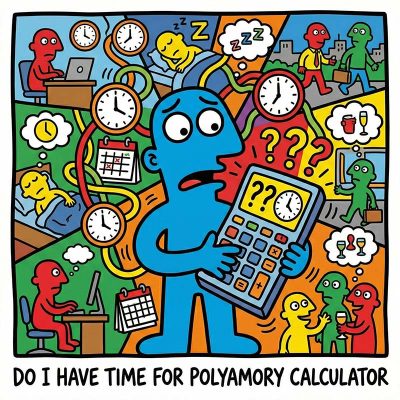
Love is infinite, but your calendar is brutally finite. The fantasy is deep connection; the reality is often just exhausted "calendar tetris." Promising time you don't actually have isn't romantic, it’s a recipe for burnout and broken trust. That sinking feeling when you have to cancel again? That’s the sound of overextension destroying your relationships.
This calculator forces you to confront the math of your life. Do you actually have space for another heart, or are you just setting everyone up for disappointment?

The fantasy is total autonomy and connection. The reality? It can feel like drowning in scheduling chaos and misunderstood expectations. That anxiety you feel isn’t just stress; it’s the wobble of living without a default "anchor." Without a solid architecture, Solo Polyamory stops being a life design and starts being a recipe for burnout and confusion.
The Essential Guide replaces the drift with a concrete anchor. We provide the "Solo Ethic," boundary scripts, and burnout protocols needed to protect your peace. Don't just date around—build a life that actually works for you.

Hierarchy sounds like a corporate org chart until someone gets their feelings hurt. That stomach-turning fear that you are just a "secondary" who can be fired at any time is real. If your relationship feels like a secret ranking system, you are doing it wrong.
Ambiguity is where resentment grows. The Essential Guide replaces the "who matters more" panic with a concrete charter. We provide the scripts and equity guardrails needed to protect every heart in the polycule. Stop guessing and start building.

The ideal is pure equality. The reality? It often slides into hidden rankings where someone gets hurt. That sinking feeling that you are secretly a "secondary" despite the label? That is your intuition detecting couple privilege. Ambiguity is where resentment thrives.
The Essential Guide replaces vague promises with concrete governance. We provide the charters, equity tools, and jealousy protocols needed to ensure "non-hierarchical" isn't just a fantasy. Stop guessing who matters most. Build a network that is actually fair.
The fantasy is total autonomy and connection. The reality? It can feel like drowning in scheduling chaos and misunderstood expectations. That anxiety you feel isn’t just stress; it’s the wobble of living without a default "anchor." Without a solid architecture, Solo Polyamory stops being a life design and starts being a recipe for burnout and confusion.
The Essential Guide replaces the drift with a concrete anchor. We provide the "Solo Ethic," boundary scripts, and burnout protocols needed to protect your peace. Don't just date around—build a life that actually works for you.
Hierarchy sounds like a corporate org chart until someone gets their feelings hurt. That stomach-turning fear that you are just a "secondary" who can be fired at any time is real. If your relationship feels like a secret ranking system, you are doing it wrong.
Ambiguity is where resentment grows. The Essential Guide replaces the "who matters more" panic with a concrete charter. We provide the scripts and equity guardrails needed to protect every heart in the polycule. Stop guessing and start building.
Why some partners may prefer a hierarchy
People are human and relationships come with emotional needs energy budgets and life logistics. A partner who leans toward hierarchy often feels that a clear ordering helps them manage time safety and emotional security. Some common reasons include:
- Clear expectations around time and scheduling which reduces miscommunication and reduces the risk of someone feeling neglected.
- Potentially easier decisions about boundaries and consent when there is a clear understanding of who has priority in a given moment.
- Past experiences where a lack of structure created hurt or insecurity and the person wants predictable patterns going forward.
- The belief that a stable primary relationship provides a backbone for other connections and reduces anxiety about loneliness or abandonment.
It is important to notice that a preference for hierarchy does not automatically mean a person does not care about others or that they are trying to harm anyone. It can be a real worry about timing energy and emotional health. The challenge is to separate what your partner wants from what you need and to find a path that respects everyone s autonomy while keeping communication honest and ongoing.
Why this conversation matters for non hierarchical polyamory
If you are committed to a non hierarchical approach the idea of someone wanting a hierarchy can feel like a threat to your sense of fairness and consent. The good news is that you can negotiate a model that feels fair to all sides or you can decide that the arrangement is not right for you. The key is to approach the conversation with curiosity not accusation. Do not assume that a person who wants hierarchy is trying to control you. Instead approach the dialogue as a joint problem solving exercise where you explore what each person needs and what you can mutually agree to. You deserve to feel safe and respected as you explore multiple relationships and your partner deserves to feel heard and supported in their own needs as well.
How to talk about hierarchy without triggering defensiveness
Communication is the engine that keeps non hierarchical polyamory healthy. Here are some practical steps to keep conversations constructive:
- Use I statements Focus on your experience and your needs rather than making universal claims about what the other person should do. For example say I feel overwhelmed when I don t have advance notice rather than You never tell me anything.
- Ask open questions Invite your partner to share their perspective. Questions like What would feel fair to you in a schedule for this month or How do you imagine time being allocated feel safer than statements that impose a rule.
- Separate values from tactics Talk about what matters first values such as honesty security and autonomy. Then negotiate on how to achieve those values in practice.
- Make space for time to think Do not try to solve everything in one sitting. Agree to revisit after a cooling off or after everyone has reflected on what they want.
- Document agreements Put agreements in writing even if it is a simple text message or a shared note. This is not about policing it is about memory and clarity for both sides.
Concrete strategies for navigating hierarchy preferences
Below are practical tools you can adapt to your life. Pick and mix the ones that fit your dynamic best. The goal is not to erase differences it is to acknowledge them and craft a lived plan that respects consent and comfort for all involved.
1. Create a flexible relationship agreement
A relationship agreement is a living document that outlines how you handle time communication boundaries privacy and emotional support. In a non hierarchical setup the agreement should explicitly state that there is no fixed ranking among partners and that decisions are made through ongoing dialogue and consent. It can include sections on scheduling how you handle holidays family events and how to address emergencies. The document should be revisited regularly when life changes or when someone feels uneasy.
2. Build a shared calendar that values all connections
Time is a scarce resource and a clear calendar helps. Use a shared calendar where you can block out important dates events and time with each partner. Make space for spontaneous requests but preserve core commitments. The calendar should be a tool not a weapon. It should help you honor commitments to all people you care about while also protecting your own energy reserves.
3. Establish light weight boundaries that can be renegotiated
Boundaries should be clear but flexible. Examples include how much emotional labor you can handle in a week how much planning you want in advance or what types of activities you prefer to do with different partners. Be ready to adapt as feelings shift or new life events occur. Boundaries are not rules carved in stone they are living guidelines that you and your partners revisit together.
4. Use meta communication to talk about how you talk
Meta communication means discussing how you communicate the message and how you feel about the process. For example you might say I feel heard when we pause before we decide and then we come back with a plan. You can also discuss communication styles with your partners so you can tailor your conversations to each person while keeping the overall group dynamic healthy.
5. Develop jealousy management and emotional regulation skills
Jealousy is normal in polyamory. The key is to acknowledge it and to practice skills that reduce its intensity. Techniques include naming the feeling what caused it and choosing a constructive action such as asking for reassurance setting a boundary or scheduling more time with the partner who triggers it. Compersion is a useful concept too which means feeling happiness for your partner s joy even when that joy involves someone else.
6. Practice transparent information sharing
Honesty about your desires fears hopes and disappointments builds trust. Share your inner world while also respecting your partner s privacy. The aim is not to spill every thought it is to ensure that important information that affects the relationship remains accessible to all involved.
7. Plan for the long game and the short term
Life changes life events such as moving a job or starting a family will affect how much time and energy you can allocate. Build a plan that accommodates short term adjustments and long term goals. Revisit this plan on a regular basis so everyone feels included and heard.
Realistic scenarios and how to handle them
Stories help make theory concrete. Here are a few realistic situations you may encounter and a practical approach to each. Remember these are templates you can adapt to your life.
Scenario A say you are dating someone who wants to make their other partner a primary partner
In a non hierarchical setup this move should trigger a careful discussion. You might respond with I hear you are considering making our shared partner more central. I want to understand what this means for our time and our emotional energy. Then ask questions What does primary look like for you what changes would you want in our schedule what would be fair to all of us. Share your own needs and propose a renegotiation of the relationship agreement with a focus on transparency and consent for everyone. If the other person cannot accommodate your needs you may decide to step back. You deserve relationships that respect your boundaries as well as your partner s.
Scenario B a partner requests that you only see another partner in designated blocks
Approach with curiosity and a clear boundary. You could say I am willing to consider structured scheduling but I want to ensure we do not feel controlled and that there is room for spontaneity. Let s discuss what happens if someone wants more time together outside the blocks. Perhaps we can set a review date and adjust rather than lock in a single plan. The aim is to create safety and predictability without erasing the flexibility you both value.
Scenario C you feel your energy budget is being strained by a non hierarchical network
Energy management is real. A practical move is to pause new configurations and assess current commitments. You can propose a one to two week pause on adding new partners while you and your primary partners discuss energy boundaries. During this pause you might schedule more recovery time self care and boundary reinforcement. Then decide together if you want to continue with more connections or slow things down further. You do not have to solve everything at once. Small steady steps help keep your emotional health intact.
Scenario D you want to explore a connection with someone but a partner who prefers hierarchy seems hesitant
Use a joint conversation that centers consent and fairness. You could say I respect your position and I want to honor our agreements while also exploring this new connection. What would be a fair path that protects our current commitments and also allows growth for all of us? Offer to involve everyone in the discussion so there are no hidden agendas and so all voices are heard equally. If a fair path cannot be found you may choose to pause the exploration or walk away with respect for everyone involved.
Love is infinite, but your calendar is brutally finite. The fantasy is deep connection; the reality is often just exhausted "calendar tetris." Promising time you don't actually have isn't romantic, it’s a recipe for burnout and broken trust. That sinking feeling when you have to cancel again? That’s the sound of overextension destroying your relationships.
This calculator forces you to confront the math of your life. Do you actually have space for another heart, or are you just setting everyone up for disappointment?
The fantasy is total autonomy and connection. The reality? It can feel like drowning in scheduling chaos and misunderstood expectations. That anxiety you feel isn’t just stress; it’s the wobble of living without a default "anchor." Without a solid architecture, Solo Polyamory stops being a life design and starts being a recipe for burnout and confusion.
The Essential Guide replaces the drift with a concrete anchor. We provide the "Solo Ethic," boundary scripts, and burnout protocols needed to protect your peace. Don't just date around—build a life that actually works for you.
Hierarchy sounds like a corporate org chart until someone gets their feelings hurt. That stomach-turning fear that you are just a "secondary" who can be fired at any time is real. If your relationship feels like a secret ranking system, you are doing it wrong.
Ambiguity is where resentment grows. The Essential Guide replaces the "who matters more" panic with a concrete charter. We provide the scripts and equity guardrails needed to protect every heart in the polycule. Stop guessing and start building.
The ideal is pure equality. The reality? It often slides into hidden rankings where someone gets hurt. That sinking feeling that you are secretly a "secondary" despite the label? That is your intuition detecting couple privilege. Ambiguity is where resentment thrives.
The Essential Guide replaces vague promises with concrete governance. We provide the charters, equity tools, and jealousy protocols needed to ensure "non-hierarchical" isn't just a fantasy. Stop guessing who matters most. Build a network that is actually fair.
The fantasy is total autonomy and connection. The reality? It can feel like drowning in scheduling chaos and misunderstood expectations. That anxiety you feel isn’t just stress; it’s the wobble of living without a default "anchor." Without a solid architecture, Solo Polyamory stops being a life design and starts being a recipe for burnout and confusion.
The Essential Guide replaces the drift with a concrete anchor. We provide the "Solo Ethic," boundary scripts, and burnout protocols needed to protect your peace. Don't just date around—build a life that actually works for you.
Hierarchy sounds like a corporate org chart until someone gets their feelings hurt. That stomach-turning fear that you are just a "secondary" who can be fired at any time is real. If your relationship feels like a secret ranking system, you are doing it wrong.
Ambiguity is where resentment grows. The Essential Guide replaces the "who matters more" panic with a concrete charter. We provide the scripts and equity guardrails needed to protect every heart in the polycule. Stop guessing and start building.
Practical tools and templates you can steal
We love practical tools that can be customized. Here are ideas you can implement in your life today:
- Conversation starter templates Use simple phrases that invite dialogue not defensiveness. For example say I want to understand how you see our schedule evolving over the next month. What feels fair to you and how can we make that work for everyone involved.
- Check in rituals Schedule a weekly or bi weekly check in with everyone involved. It does not have to be long but it should be focused on listening and adapting as needed.
- Energy ledger Track your own energy levels and major life events. Share this with your partners so they understand when you might need more space or more time with someone else.
- Boundary renegotiation log When a boundary is tested or shifted write it down with date and reasons and the new agreed behavior. This keeps everyone aligned and reduces miscommunication.
- Jealousy journal Note triggers what happened how you felt what helped you manage it. Review to improve future responses and prevent resentment building up.
When things get hard how to hold onto your values
Every relationship style has hard days. In a non hierarchical setup the toughest moments often come when someone wants to shift toward a hierarchy or when energy feels stretched thin. The best anchor points are values. Revisit the core values you and your partners share. These might include honesty growth consent autonomy kindness and consideration. Use those as a north star during tense moments. If a compromise cannot be found it is healthy to step back and reassess whether the relationship structure supports your well being. You deserve relationships that nourish you not ones that drain you.
Red flags and when to walk away
Healthy non hierarchical polyamory is built on consent open communication and mutual respect. Watch for these warning signs:
- Chronic secrecy or manipulation about other partners or activities
- Pressure that有人 believes is not negotiable or that erodes your boundaries
- Repeated attempts to push you into accepting a hierarchy despite your clear discomfort
- Escalating jealousy that reduces to a tactic to control your time and energy
If you notice these patterns it is important to pause and reassess. You deserve relationships in which your voice is heard and your boundaries are respected.
Why honesty and ongoing consent matter most
Consent is not a one time event it is a continuous practice. That means every new situation a shift in feelings or a change in life circumstances should be followed by open dialogue. The moment you start assuming you can read someone s mind or that a decision is final without discussion you risk misalignment and harm. In a non hierarchical model the most powerful tool is regular candid conversations that invite every person to express their needs and their fears without fear of judgment.
Self care and support while navigating complex dynamics
Working through tight conversations and difficult feelings takes energy. Do not neglect your own health. Build routines that support you such as exercising getting enough sleep practicing mindfulness or talking to a therapist or coach who understands polyamory. It is okay to seek outside support when you feel overwhelmed. A strong support network helps you stay grounded and make decisions that fit your values and boundaries.
Putting it all together
Navigating partners who prefer hierarchy within a non hierarchical polyamory dynamic is not about choosing one path and forcing everyone onto it. It is about building a flexible framework that honors consent and personal autonomy while allowing multiple meaningful connections. It is a process shaped by honest conversations careful planning and a willingness to renegotiate as life changes. You can create a life where connections live side by side with clear communication and compassionate boundaries. The goal is not to prove you are right or to win a power struggle. The goal is to maintain safety trust and care for all who are part of your relationships.
Takeaways
- Start with a clear understanding of what non hierarchical means in your life and how it is different from a hierarchy model.
- Use a living relationship agreement to outline how you will handle time energy and decisions.
- Schedule regular check ins and use simple tools to keep communication open and honest.
- Respect each person s autonomy while staying curious about how your needs intertwine.
- Know when to pause renegotiate or walk away if a dynamic no longer serves your well being.
Glossary of useful terms and acronyms
- ENM Short for ethical non monogamy a practice where all parties consent to more than one romantic or sexual relationship.
- Polyamory A form of ENM that emphasizes emotional and romantic connections with multiple people.
- Non hierarchical polyamory A model that rejects fixed ranks among partners and favors flexible arrangements.
- Consent A clear voluntary agreement to participate in a specific activity with awareness of potential risks and consequences.
- Boundaries Personal limits that protect emotional safety and autonomy. They can be renegotiated as circumstances change.
- Primaries secondarys metamors Terms used by some to describe relationship roles. In non hierarchical contexts these labels may be minimized or redefined to reduce ranking but language varies widely.
- Jealousy An emotion that can arise when sharing a partner. It can be managed through communication and boundary setting.
- Compersion The feeling of joy for a partner s happiness with someone else.
Frequently asked questions
How do I start a conversation about hierarchy in non hierarchical polyamory
Begin with a calm check in and a clear statement of your intention. For example say I want to understand how our relationship structure can respect both our needs. I value honesty and I want to find a path that feels fair for all of us. What are your thoughts and how would you like to handle this going forward.
What if my partner wants to impose a hierarchy and I do not agree
Ask for explicit reasons and provide your own needs back. Propose a trial period with a documented plan and a clear decision making process. If after a reasonable trial the two of you cannot align you may need to revisit the arrangement or consider parting ways with respect for everyone involved.
How can we manage time fairly when we have many connections
Create a shared calendar set core commitments add flexible blocks and build in a buffer zone for rest and spontaneous plans. Make space for each relationship while protecting your energy. Check in regularly to adjust the schedule as life changes.
Is it possible to avoid jealousy altogether
Jealousy is natural. It becomes manageable through awareness open dialogue and practiced coping strategies. Building compersion and fostering secure attachments can help reduce jealousy over time but there is no guarantee you will never feel it again.
Can a non hierarchical approach work with a partner who wants to be a primary
Yes but it requires ongoing negotiation. You may agree to a flexible model where you do not assign fixed primaries but instead agree on a set of commitments and check ins that apply to everyone. If the dynamic consistently fails to meet your needs you may decide that another arrangement suits you better.
How do I renegotiate boundaries without causing a fight
Approach with curiosity and empathy. Share how the current boundaries feel to you and invite your partner to do the same. Use concrete examples and propose small changes to test together. Keep the tone collaborative not punitive and agree to revisit the topic after a short period.
Love is infinite, but your calendar is brutally finite. The fantasy is deep connection; the reality is often just exhausted "calendar tetris." Promising time you don't actually have isn't romantic, it’s a recipe for burnout and broken trust. That sinking feeling when you have to cancel again? That’s the sound of overextension destroying your relationships.
This calculator forces you to confront the math of your life. Do you actually have space for another heart, or are you just setting everyone up for disappointment?
The fantasy is total autonomy and connection. The reality? It can feel like drowning in scheduling chaos and misunderstood expectations. That anxiety you feel isn’t just stress; it’s the wobble of living without a default "anchor." Without a solid architecture, Solo Polyamory stops being a life design and starts being a recipe for burnout and confusion.
The Essential Guide replaces the drift with a concrete anchor. We provide the "Solo Ethic," boundary scripts, and burnout protocols needed to protect your peace. Don't just date around—build a life that actually works for you.
Hierarchy sounds like a corporate org chart until someone gets their feelings hurt. That stomach-turning fear that you are just a "secondary" who can be fired at any time is real. If your relationship feels like a secret ranking system, you are doing it wrong.
Ambiguity is where resentment grows. The Essential Guide replaces the "who matters more" panic with a concrete charter. We provide the scripts and equity guardrails needed to protect every heart in the polycule. Stop guessing and start building.
The ideal is pure equality. The reality? It often slides into hidden rankings where someone gets hurt. That sinking feeling that you are secretly a "secondary" despite the label? That is your intuition detecting couple privilege. Ambiguity is where resentment thrives.
The Essential Guide replaces vague promises with concrete governance. We provide the charters, equity tools, and jealousy protocols needed to ensure "non-hierarchical" isn't just a fantasy. Stop guessing who matters most. Build a network that is actually fair.
The fantasy is total autonomy and connection. The reality? It can feel like drowning in scheduling chaos and misunderstood expectations. That anxiety you feel isn’t just stress; it’s the wobble of living without a default "anchor." Without a solid architecture, Solo Polyamory stops being a life design and starts being a recipe for burnout and confusion.
The Essential Guide replaces the drift with a concrete anchor. We provide the "Solo Ethic," boundary scripts, and burnout protocols needed to protect your peace. Don't just date around—build a life that actually works for you.
Hierarchy sounds like a corporate org chart until someone gets their feelings hurt. That stomach-turning fear that you are just a "secondary" who can be fired at any time is real. If your relationship feels like a secret ranking system, you are doing it wrong.
Ambiguity is where resentment grows. The Essential Guide replaces the "who matters more" panic with a concrete charter. We provide the scripts and equity guardrails needed to protect every heart in the polycule. Stop guessing and start building.
