
Non Hierarchical Polyamory Versus Relationship Anarchy


Welcome to the practical guide you were waiting for. If you want to understand how the idea of not ranking relationships stacks up against a philosophy that says no rules are the only rules, you are in the right place. We will break down two popular ethical non monogamy approaches in a clear, relatable way. We will explain terms you might hear at meetups and online forums and we will give you real life scenarios that show how these dynamics play out in day to day life. We speak plainly and we do not pretend there is a one size fits all answer. This is about consent communication respect and finding a path that works for you and your partners.
Quick Links to Useful Sections
- What we will cover
- Key terms you need to know
- Ethical non monogamy ENM
- Relationship Anarchy RA
- Non Hierarchical Polyamory
- Important clarifications
- Foundational differences in philosophy
- How hierarchy is treated
- Time and energy management
- Rules versus agreements
- The practical toolkit for both dynamics
- Clear communication is non negotiable
- Consent is ongoing and explicit
- Boundaries and negotiable agreements
- Emotional labor and support
- Jealousy and difficult feelings are normal
- Conflict resolution strategies
- Realistic scenarios and how you might handle them
- Scenario one a new partner joins a circle
- Scenario two time needs shift after a job change
- Scenario three a boundary disagreement arises
- Scenario four dealing with past agreements that no longer fit
- Myths and realities to watch for
- Choosing between non hierarchical polyamory and relationship anarchy
- Practical tips for success
- Glossary of useful terms and acronyms
- Frequently asked questions
- Inspiration and practical next steps
- Further reading and resources
- Checklist for your next steps
- Final notes on style and approach
What we will cover
We will lay out the essentials of non hierarchical polyamory and relationship anarchy. We will compare how each approach views hierarchy boundaries time and emotional labor. We will look at the common myths that float around these dynamics and we will offer practical tips to navigate conversations agreements and conflict. You will find simple explanations for terms and you will see realistic examples of conversations that could happen in your life. This guide respects the idea that every relationship is unique and that what works for one group may not work for another. Our aim is to help you think clearly and act with care.
Key terms you need to know
Ethical non monogamy ENM
Ethical non monogamy is a broad term for relationship styles that involve intimacy or romantic connections outside a primary or sole couple. The ethical part means that all involved give consent talk openly about boundaries and communicate with honesty. ENM is about adults making agreements that work for them rather than following traditional norms that assume only one romantic or sexual relationship at a time.
Relationship Anarchy RA
Relationship Anarchy is a philosophy that rejects predefined hierarchies and rules about how relationships should look. It emphasizes autonomy consent and the idea that relationships should be built on what makes sense for the people involved rather than on social scripts. RA encourages flexible agreements and values the quality of connection over the status of the relationship in the social ladder.
Non Hierarchical Polyamory
Non hierarchical polyamory is a form of ethical non monogamy in which there is no fixed ranking of relationships. People practicing this approach avoid declaring a single relationship as the most important or as a priority over all others. The goal is to treat multiple connections with equal care while recognizing that different relationships can fulfill different needs at different times. It is possible to have one partner who is very important emotionally and another who fulfills different needs like companionship or shared hobbies without saying one is the top relationship.
Important clarifications
Many people use the terms non hierarchical polyamory and relationship anarchy together or in overlapping ways. They are not the same idea but they can influence how someone experiences their own multi partner life. Non hierarchical polyamory is often described as a practical approach to polyamory without strict top level priorities. Relationship Anarchy is a broader worldview that can inform how a person negotiates all of their relationships including friendships and family connections. In everyday life you may see people blend elements of both approaches. The key is open conversation honesty respect and consent for everyone involved.
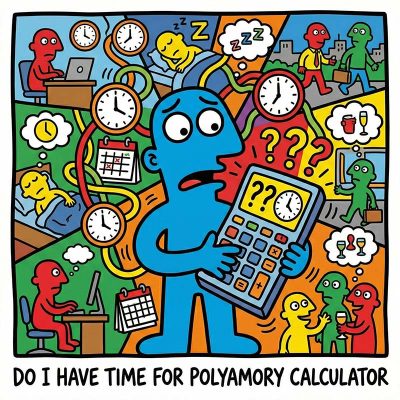
Love is infinite, but your calendar is brutally finite. The fantasy is deep connection; the reality is often just exhausted "calendar tetris." Promising time you don't actually have isn't romantic, it’s a recipe for burnout and broken trust. That sinking feeling when you have to cancel again? That’s the sound of overextension destroying your relationships.
This calculator forces you to confront the math of your life. Do you actually have space for another heart, or are you just setting everyone up for disappointment?

The fantasy is total autonomy and connection. The reality? It can feel like drowning in scheduling chaos and misunderstood expectations. That anxiety you feel isn’t just stress; it’s the wobble of living without a default "anchor." Without a solid architecture, Solo Polyamory stops being a life design and starts being a recipe for burnout and confusion.
The Essential Guide replaces the drift with a concrete anchor. We provide the "Solo Ethic," boundary scripts, and burnout protocols needed to protect your peace. Don't just date around—build a life that actually works for you.
Hierarchy sounds like a corporate org chart until someone gets their feelings hurt. That stomach-turning fear that you are just a "secondary" who can be fired at any time is real. If your relationship feels like a secret ranking system, you are doing it wrong.
Ambiguity is where resentment grows. The Essential Guide replaces the "who matters more" panic with a concrete charter. We provide the scripts and equity guardrails needed to protect every heart in the polycule. Stop guessing and start building.
The ideal is pure equality. The reality? It often slides into hidden rankings where someone gets hurt. That sinking feeling that you are secretly a "secondary" despite the label? That is your intuition detecting couple privilege. Ambiguity is where resentment thrives.
The Essential Guide replaces vague promises with concrete governance. We provide the charters, equity tools, and jealousy protocols needed to ensure "non-hierarchical" isn't just a fantasy. Stop guessing who matters most. Build a network that is actually fair.
The fantasy is total autonomy and connection. The reality? It can feel like drowning in scheduling chaos and misunderstood expectations. That anxiety you feel isn’t just stress; it’s the wobble of living without a default "anchor." Without a solid architecture, Solo Polyamory stops being a life design and starts being a recipe for burnout and confusion.
The Essential Guide replaces the drift with a concrete anchor. We provide the "Solo Ethic," boundary scripts, and burnout protocols needed to protect your peace. Don't just date around—build a life that actually works for you.
Hierarchy sounds like a corporate org chart until someone gets their feelings hurt. That stomach-turning fear that you are just a "secondary" who can be fired at any time is real. If your relationship feels like a secret ranking system, you are doing it wrong.
Ambiguity is where resentment grows. The Essential Guide replaces the "who matters more" panic with a concrete charter. We provide the scripts and equity guardrails needed to protect every heart in the polycule. Stop guessing and start building.
Foundational differences in philosophy
How hierarchy is treated
In traditional monogamy most people assume a one to one arrangement. In many polyamory circles it is common to have a primary partner and one or more secondary partners. The primary relationship is often given priority in time planning living arrangements or decisions about major life events. Non hierarchical polyamory challenges this setup by removing the default priority from any one relationship. Partners are free to define their own levels of closeness and commitment without an automatic ladder of importance.
Relationship Anarchy takes a broader stance. It rejects even the idea that any relationship should be governed by a social hierarchy or a preconceived ladder. RA writers and practitioners focus on what makes sense for the people involved not on how society says relationships should be arranged. In RA it is common to make agreements that fit the situation rather than to follow established templates. The emphasis is on autonomy respect and negotiated consent rather than on status or rank.
Time and energy management
Non hierarchical polyamory invites flexibility. There is attention to emotional labor and time budgets but there is no rigid requirement that one partner always takes priority. You can redeploy your time as needs shift with clear communication. In RA the core idea is that no one person or couple carries extra social weight just because of labels or expectations. People choose how to spend time together based on mutual interest and consent rather than on scripts about who should be seen first and who should be prioritized.
Rules versus agreements
Non hierarchical polyamory often works with agreements rather than rules. Agreements are negotiated boundaries that help everyone feel safe and understood. They are revisited and adjusted as life changes. Relationship Anarchy uses agreements too but RA tends to discourage fixed rules about who can love who or how time should be allocated. RA supports ongoing dialogue and the possibility that relationships can shift in importance without creating friction or guilt.
The practical toolkit for both dynamics
Clear communication is non negotiable
Whether you practice non hierarchical polyamory or relationship anarchy you will benefit from honest direct communication. This means talking about needs desires and concerns openly with all involved. It also means listening with curiosity and assuming good intent even when emotions run hot. Practice active listening pause before replying and reflect back what you heard to confirm understanding. Clear communication reduces misreading intentions and lowers the risk of resentment building up over time.
Consent is ongoing and explicit
Consent is not a one time checkbox. It is an ongoing practice. People may revise their boundaries or decide to pause a relationship if life changes or if pain or jealousy grows. In non hierarchical polyamory and in RA everyone has the right to say no at any time and that decision should be respected without argument or pressure. This is how trust is built and maintained over time.
Boundaries and negotiable agreements
Boundaries define what is acceptable to you at this moment in life. They can be about time physical intimacy emotional disclosure or involvement with other people. Agreements are the expressed understandings that help people align their behavior with their values. Regular check ins are essential. Boundaries can change and agreements should be revisited to stay relevant to life changes such as new jobs shifts in location or the arrival of new partners.
Emotional labor and support
Emotional labor is the effort of maintaining relationships including managing calendars sharing feelings and coordinating plans. In any multi partner setup you want to distribute this labor fairly and voluntarily. If someone feels overwhelmed it is okay to re allocate tasks or slow things down. The goal is to foster connection without burning anyone out.
Jealousy and difficult feelings are normal
Jealousy is a signal not a sentence. When jealousy arises in either approach take it as information about your needs that are not being met. Discuss what would help you feel valued and safe. Solutions can include more quality time with a partner more transparent communication or adjusting boundaries. Do not try to suppress jealousy with blame or shaming. Acknowledge the feeling validate your own needs and explore a path forward together.
Conflict resolution strategies
Disagreements happen and they can be productive when handled with care. Take time to cool down if needed and then revisit the topic with a plan. Use aiming language such as I feel or I need rather than you always or you never. Focus on specific behaviors and impacts rather than making global judgments about a person. When complex issues arise you can involve a mediator friend or a professional therapist who respects ethical non monogamy practices.
Realistic scenarios and how you might handle them
Scenario one a new partner joins a circle
A new partner starts dating one of your partners. In a non hierarchical setup you would discuss boundaries and how this new relationship will fit into the existing web of connections. The conversation starts with clarifying what each person wants from the new connection. You talk about time scheduling visits family events and how to balance together time with time apart. You might decide to gradually widen your circle while ensuring that someone is always there to support the long standing relationships. The emphasis is on consent mutual respect and shared decision making.
Scenario two time needs shift after a job change
A partner takes a demanding job that reduces their available time. In non hierarchical polyamory you review expectations together and adjust agreements. You may agree to slower pace or schedule more dedicated date nights with specific partners while maintaining openness about what each person needs. In RA the emphasis remains on flexible arrangements that reflect current life realities. You would discuss what each person values most about the relationships and re work plans accordingly.
Scenario three a boundary disagreement arises
Two partners disagree about how much information to share with a third party about the dating life. In a non hierarchical framework you discuss privacy boundaries and decide what both sides are comfortable with while preserving trust. In RA you would examine underlying values and consider whether privacy boundaries need to be re defined for everyone involved. The goal in both approaches is a respectful resolution that protects consent and avoids forcing anyone into a corner.
Scenario four dealing with past agreements that no longer fit
Old agreements were created when everyone had fewer outside commitments. Now someone wants more independence. The group sits down to re negotiate. They review what is currently working what is not and what each person needs moving forward. They may decide to preserve some aspects while letting others slide. The important part is that everyone is part of the conversation and nobody is pressured to accept a change they do not want.
Myths and realities to watch for
- Myth you can avoid jealousy entirely by choosing a non hierarchical approach. Reality jealousy can arise in any relationship. The key is to address it openly and build coping strategies that work for everyone involved.
- Myth RA means there are no rules at all. Reality RA means there are negotiated agreements. It is about consent clarity and mutual respect not chaotic freedom alone.
- Myth non hierarchical polyamory eliminates the possibility of a primary bond. Reality there is no formal ranking but people can still form strong primary style connections if they align with the group agreements and personal needs.
- Myth you can only be in one style at a time. Reality many people blend elements from both approaches or shift their approach as life changes.
Choosing between non hierarchical polyamory and relationship anarchy
Choosing between these two paths is about understanding your personal needs and the needs of your partners. If you value a clear fast moving social view that centers on flexible agreements and pragmatic balancing you may lean toward non hierarchical polyamory. If you value total autonomy and the idea that relationships should be built around the people involved rather than social scripts you may lean toward relationship anarchy. In many groups people blend elements from both paths creating a unique approach that feels right for them. The most important thing is that all participants consent feel heard and are empowered to renegotiate whenever life changes.
Practical tips for success
- Start with a group check in and invite everyone to share what matters most to them in this phase of life.
- Document your agreements in plain language so there is no confusion about what was decided.
- Establish a simple way to revisit agreements on a regular cadence such as every six months or after a major life change.
- Be ready to listen more than you talk at first when a partner expresses a need or concern.
- Expect that the path will evolve and prepare for change with openness and patience.
Glossary of useful terms and acronyms
- Ethical non monogamy ENM A broad term for relationship styles that involve intimacy or romance with more than one person with consent and communication at the core.
- Relationship Anarchy RA A philosophy that rejects fixed rules about how relationships should look and emphasizes autonomy consent and flexible agreements.
- Non Hierarchical Polyamory A form of polyamory that avoids a formal ranking of relationships and treats connections as equally important where appropriate.
- Consent Clear voluntary agreement to participate in an activity with full awareness of what is involved.
- Boundaries Personal limits about what is acceptable in terms of time space emotional sharing and involvement with others.
- Agreement An explicit plan that outlines how partners will handle a shared aspect of their relationships.
- Jealousy An emotional signal that can point to un met needs or insecurities that deserve attention and care.
- Compersion The positive feeling you experience when your partner derives joy from another relationship.
- Negotiation A process of discussing needs and finding a middle ground that works for everyone involved.
Frequently asked questions
What is non hierarchical polyamory exactly
Non hierarchical polyamory is a way of having multiple relationships without assigning a fixed top rank to any one relationship. People focus on honest communication clear agreements and mutual respect rather than labeling some relationships as more important than others. This approach allows for flexibility as life changes and needs shift.
What is relationship anarchy in simple terms
Relationship anarchy is a philosophy that rejects the idea of fixed relationship rules. It emphasizes choosing what makes sense for the people involved rather than following social scripts about who should be with whom and how much time should be spent together. It values autonomy and consent above all.
Are non hierarchical polyamory and relationship anarchy always the same
No they are not the same. Non hierarchical polyamory is a practical approach to having multiple relationships without ranking. Relationship anarchy is a broader worldview about how relationships should be organized and negotiated. People can blend elements of both but they are distinct ideas with different emphases.
How do I know which path suits me
Start with your core values. If you prioritize equality of connection and practical adaptability you may resonate with non hierarchical polyamory. If you want maximum personal freedom and want to avoid fixed scripts about how relationships should look you may be drawn to relationship anarchy. A good way to discover this is to experiment with small agreements and then check in with partners about what feels right.
What about jealousy in these dynamics
Jealousy can show up in any relationship structure. The key is to acknowledge it talk about it honestly and seek solutions that address underlying needs. This might involve more time with a partner more transparency about boundaries or adjusting how new connections are introduced into the circle.
What if a partner wants to revert to a more hierarchical arrangement
That is a sign you need to renegotiate. Have a calm open conversation about why the shift feels important to them and what it would look like in practice. Re confirm consent and revisit your agreements. It is normal for dynamics to evolve as relationships mature.
Can RA and non hierarchical polyamory coexist in the same group
Yes they can. Some groups choose a mixed approach where some agreements feel like RA and others reflect practical non hierarchical structures. The important thing is that everyone agrees to the arrangement and that consent is ongoing. Clear communication keeps everyone on the same page.
How do I start a conversation about these topics with new partners
Lead with curiosity and a stance of learning. You can say I am exploring how we might approach relationships here and I want to understand what matters to you. Share a brief overview of what non hierarchical polyamory and relationship anarchy mean to you and invite the other person to share their definitions and boundaries. Agree to take the conversation slow and to revisit it as needed.
Inspiration and practical next steps
If you are exploring these dynamics for the first time consider forming a small learning group with friends who are curious about ENM. Read accessible resources talk through real life examples and practice clear communication. Role playing a hypothetical conversation can be a helpful warm up before you try real life discussions. Remember that the goal is to build connections that are healthy sustainable and enjoyable for everyone involved.
Further reading and resources
Look for community led resources written by people who practice ENM in a respectful and transparent way. Seek out guides that emphasize consent direct communication and ongoing renegotiation. If you can consult with a therapist who respects ethical non monogamy that can be a strong support as you navigate your unique path. The most helpful resource you can have is honesty with yourself and with your partners along with a willingness to adjust when life changes.
Checklist for your next steps
- Clarify what you personally want from your relationships and what you want to avoid.
- Have an open conversation with all involved about the idea of avoiding hierarchy or embracing flexible agreements.
- Draft simple agreements that cover boundaries time and consent and set a date to review them.
- Agree on a communication plan that helps everyone stay informed and engaged with minimal drama.
- Practice compassion and patient listening as you test new approaches and refine them.
Final notes on style and approach
In this guide we have kept things practical and grounded. The aim is to help you think through what you want and how to build relationships that honor the people you care about. There is no universal blueprint. The best path is one that centers consent respect and ongoing dialogue. If you are ready to experiment with non hierarchical polyamory or relationship anarchy you are in good company. The journey is about learning and growing together in a way that feels healthy for everyone involved.
Love is infinite, but your calendar is brutally finite. The fantasy is deep connection; the reality is often just exhausted "calendar tetris." Promising time you don't actually have isn't romantic, it’s a recipe for burnout and broken trust. That sinking feeling when you have to cancel again? That’s the sound of overextension destroying your relationships.
This calculator forces you to confront the math of your life. Do you actually have space for another heart, or are you just setting everyone up for disappointment?
The fantasy is total autonomy and connection. The reality? It can feel like drowning in scheduling chaos and misunderstood expectations. That anxiety you feel isn’t just stress; it’s the wobble of living without a default "anchor." Without a solid architecture, Solo Polyamory stops being a life design and starts being a recipe for burnout and confusion.
The Essential Guide replaces the drift with a concrete anchor. We provide the "Solo Ethic," boundary scripts, and burnout protocols needed to protect your peace. Don't just date around—build a life that actually works for you.
Hierarchy sounds like a corporate org chart until someone gets their feelings hurt. That stomach-turning fear that you are just a "secondary" who can be fired at any time is real. If your relationship feels like a secret ranking system, you are doing it wrong.
Ambiguity is where resentment grows. The Essential Guide replaces the "who matters more" panic with a concrete charter. We provide the scripts and equity guardrails needed to protect every heart in the polycule. Stop guessing and start building.
The ideal is pure equality. The reality? It often slides into hidden rankings where someone gets hurt. That sinking feeling that you are secretly a "secondary" despite the label? That is your intuition detecting couple privilege. Ambiguity is where resentment thrives.
The Essential Guide replaces vague promises with concrete governance. We provide the charters, equity tools, and jealousy protocols needed to ensure "non-hierarchical" isn't just a fantasy. Stop guessing who matters most. Build a network that is actually fair.
The fantasy is total autonomy and connection. The reality? It can feel like drowning in scheduling chaos and misunderstood expectations. That anxiety you feel isn’t just stress; it’s the wobble of living without a default "anchor." Without a solid architecture, Solo Polyamory stops being a life design and starts being a recipe for burnout and confusion.
The Essential Guide replaces the drift with a concrete anchor. We provide the "Solo Ethic," boundary scripts, and burnout protocols needed to protect your peace. Don't just date around—build a life that actually works for you.
Hierarchy sounds like a corporate org chart until someone gets their feelings hurt. That stomach-turning fear that you are just a "secondary" who can be fired at any time is real. If your relationship feels like a secret ranking system, you are doing it wrong.
Ambiguity is where resentment grows. The Essential Guide replaces the "who matters more" panic with a concrete charter. We provide the scripts and equity guardrails needed to protect every heart in the polycule. Stop guessing and start building.
