
Parallel Polyamory Within Non Hierarchy


Welcome to a down to earth exploration of parallel polyamory inside a non hierarchical layout. Think of this as the friend who tells it straight and keeps the vibe friendly and hopeful. If you are curious about dating more than one person without defaulting to a single main relationship this guide is for you. We will break down terms, talk through real life scenarios and share practical tips to make this dynamic feel doable rather than overwhelming.
Quick Links to Useful Sections
- What this guide covers
- What is parallel polyamory and what does non hierarchy mean
- Key terms and acronyms you should know
- How parallel polyamory works in a non hierarchical frame
- Independent boundaries and negotiated agreements
- Communication patterns that support harmony
- Managing time and energy across multiple connections
- Transparency and disclosures
- Boundaries and must no s
- Common scenarios you might encounter
- Scenario 1: You have two ongoing connections with different people
- Scenario 2: A new connection arises and you want to explore
- Scenario 3: Jealousy or insecurity surfaces
- Scenario 4: A conflict between two partners becomes intense
- Communication frameworks that support this dynamic
- The check in method
- The transparency ladder
- Managing expectations with no hierarchy
- Practical tips to make this dynamic sustainable
- Myths and common concerns debunked
- Case studies from the field A few realistic snapshots
- Case study A solo poly and parallel connections
- Case study B the friction of overlapping social circles
- Case study C growth through renegotiation
- Is parallel polyamory with non hierarchy right for you
- Glossary of useful terms and acronyms
- Practical terms you might hear in conversations
- Frequently asked questions
- Takeaways and next steps
What this guide covers
We will explain what parallel polyamory means in a non hierarchical setup. You will learn common terms and acronyms so you can move through conversations with confidence. You will see realistic scenarios and practical strategies for communication boundaries and emotional care. You will also get a solid sense of the potential benefits and the common potholes. Our goal is to give you tools you can use in your own relationships today.
What is parallel polyamory and what does non hierarchy mean
Parallel polyamory is a style of ethical non monogamy in which people pursue multiple romantic and sexual connections at the same time without merging all of those connections into a single shared life. In a parallel setup each relationship is tended separately. People in parallel poly may have little to no responsibility for the intimate life of their partners beyond what is negotiated and consented to. The word parallel emphasizes that couples or partners can be lived in parallel lanes with limited overlap unless all parties agree to cross lanes.
Non hierarchy means there is no declared primary relationship or ladder of importance. There is no ranking of partners by status or priority. Instead each relationship is valued on its own terms. There can be mutual respect and care across all connections without arranging them into a pecking order. When you combine parallel poly with non hierarchy you get a web of connections that can be emotionally rich and flexible but also demanding in terms of communication and self awareness.
Let us break down the core ideas in plain language:
- Autonomy Everyone has space to live their own life and pursue their own priorities while maintaining the agreements they have with each partner.
- Boundaries Boundaries are negotiated and revisited rather than mandated from a single central source of authority.
- Transparency You decide what to share and when. Honesty is about trust not control.
- Consent All parties consent to the arrangement and can revisit consent as feelings or life situations change.
In practice this dynamic can feel liberating. It can also feel complicated especially when emotions grow or when schedules collide. The upside is growth, expanded support networks and more opportunities for honest connection. The challenge is staying organized and emotionally present without losing your own sense of self. We will address both sides as we go.
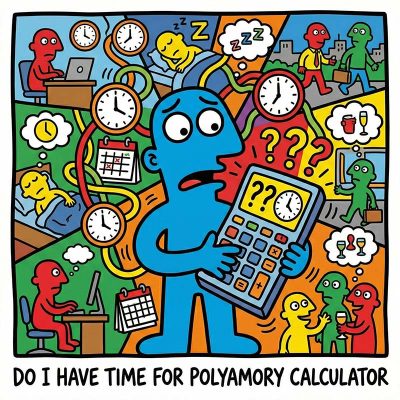
Love is infinite, but your calendar is brutally finite. The fantasy is deep connection; the reality is often just exhausted "calendar tetris." Promising time you don't actually have isn't romantic, it’s a recipe for burnout and broken trust. That sinking feeling when you have to cancel again? That’s the sound of overextension destroying your relationships.
This calculator forces you to confront the math of your life. Do you actually have space for another heart, or are you just setting everyone up for disappointment?

The fantasy is total autonomy and connection. The reality? It can feel like drowning in scheduling chaos and misunderstood expectations. That anxiety you feel isn’t just stress; it’s the wobble of living without a default "anchor." Without a solid architecture, Solo Polyamory stops being a life design and starts being a recipe for burnout and confusion.
The Essential Guide replaces the drift with a concrete anchor. We provide the "Solo Ethic," boundary scripts, and burnout protocols needed to protect your peace. Don't just date around—build a life that actually works for you.

Hierarchy sounds like a corporate org chart until someone gets their feelings hurt. That stomach-turning fear that you are just a "secondary" who can be fired at any time is real. If your relationship feels like a secret ranking system, you are doing it wrong.
Ambiguity is where resentment grows. The Essential Guide replaces the "who matters more" panic with a concrete charter. We provide the scripts and equity guardrails needed to protect every heart in the polycule. Stop guessing and start building.

The ideal is pure equality. The reality? It often slides into hidden rankings where someone gets hurt. That sinking feeling that you are secretly a "secondary" despite the label? That is your intuition detecting couple privilege. Ambiguity is where resentment thrives.
The Essential Guide replaces vague promises with concrete governance. We provide the charters, equity tools, and jealousy protocols needed to ensure "non-hierarchical" isn't just a fantasy. Stop guessing who matters most. Build a network that is actually fair.
The fantasy is total autonomy and connection. The reality? It can feel like drowning in scheduling chaos and misunderstood expectations. That anxiety you feel isn’t just stress; it’s the wobble of living without a default "anchor." Without a solid architecture, Solo Polyamory stops being a life design and starts being a recipe for burnout and confusion.
The Essential Guide replaces the drift with a concrete anchor. We provide the "Solo Ethic," boundary scripts, and burnout protocols needed to protect your peace. Don't just date around—build a life that actually works for you.
Hierarchy sounds like a corporate org chart until someone gets their feelings hurt. That stomach-turning fear that you are just a "secondary" who can be fired at any time is real. If your relationship feels like a secret ranking system, you are doing it wrong.
Ambiguity is where resentment grows. The Essential Guide replaces the "who matters more" panic with a concrete charter. We provide the scripts and equity guardrails needed to protect every heart in the polycule. Stop guessing and start building.
Key terms and acronyms you should know
Learning the language helps you have clearer conversations. Here are the terms that usually come up in this dynamic.
- Ethical non monogamy An umbrella term for relationships that involve honesty and consent to more than one romantic or sexual connection.
- Non hierarchical polyamory A form of polyamory where no one relationship is treated as more important than the others.
- Parallel polyamory A style of polyamory where partners maintain separate relationships with limited overlap unless all parties agree to share more.
- Primary partner A term used in some setups to designate the most important relationship. In non hierarchical poly this label is avoided or rejected.
- Secondary partner A label used to describe other relationships that are not primary. In non hierarchy these labels are not meant to imply lesser value but to describe different connections.
- Compersion The feeling of joy when a partner experiences happiness with someone else. It is the opposite of jealousy in many situations.
- Jealousy An emotional response to perceived threat or insecurity in a relationship. It is common and manageable with good communication and support.
- Cruising the calendar A playful way to describe how people in parallel polyso manage their dating schedules without merging into a single calendar.
- Boundaries Agreements about what is okay and not okay in terms of time, intimacy, disclosure and contact with others.
- Consent An ongoing yes that can be withdrawn at any time. It is the backbone of all ethical non monogamous relationships.
How parallel polyamory works in a non hierarchical frame
In a non hierarchical non mono setup you usually avoid terms like the main partner or the primary partner. Instead you focus on mutual respect, clear agreements and open communication. The people involved decide together how they want to relate to others and how much overlap they want between their lives. Here are some practical features you may encounter.
Independent boundaries and negotiated agreements
In this dynamic each person helps set boundaries that apply to their own life. Agreements are not dictated from above. You and your partners may agree on things like how much information you share about other relationships and whether you see everyone at the same social events. You can negotiate safe sex practices and decide how often you want to check in about feelings and needs. The important part is regular honest conversations about what is working and what is not.
Communication patterns that support harmony
Clear and respectful communication is essential. Many people in this dynamic use a few steady practices:
- Regular checkins Short conversations that happen weekly or bi weekly to review what is working and what needs adjusting.
- Pre date discussions Quick conversations before a planned date to share boundaries and any emotional concerns.
- Guided disclosures A plan for what information is shared and with whom. This helps prevent oversharing or undersharing.
- Post date debriefs Short conversations after a date or intimate encounter to align on feelings and future steps.
Managing time and energy across multiple connections
One of the practical hurdles is balancing time and energy. Parallels require thoughtful scheduling and a willingness to accept that life changes. Some strategies include:
- Separate or semi separate calendars You may choose to keep calendars discreet with essential details only. Some people use a shared note for non time sensitive information like important dates rather than a full calendar view.
- Time blocks for intimate life If you want to be present for each connection you may arrange blocks of time dedicated to one person and skip between them with intention.
- Rituals of care Individual check ins, small gestures and personal routines help maintain closeness with each partner without blurring boundaries.
- Energy accounting Be realistic about how much emotional energy you have for dating. Protect your own well being by keeping some days open for rest.
Transparency and disclosures
Transparency is valuable but not a mandate to reveal every detail of all relationships. Many people agree on what to share and when. The aim is to foster trust without creating needless risk or drama. If a newer relationship starts kinking into a different emotional space you may choose to discuss it with your existing partners to a level that respects everyone involved.
Boundaries and must no s
Boundaries are the scaffolding that holds the whole structure together. In parallel poly within non hierarchy some common boundary themes include:
- Disclosure Decide what information should be shared with each partner and what remains private unless there is a reason to share more.
- Time boundaries Agree on how much time is spent with each partner and how to handle conflicts in scheduling.
- Sexual boundaries Clarify what kinds of sexual activity are okay with whom and what protective measures will be used.
- Emotional boundaries Consider how to navigate emotions like jealousy or longing and how to seek support when needed.
- Privacy boundaries Decide what aspects of your dating life stay private and what may be shared in general terms.
Keep in mind that boundaries are not walls to keep people out. They are flexible guidelines that evolve as people change. The best boundaries are shaped by listening to each other and revisiting them regularly.
Common scenarios you might encounter
Scenario 1: You have two ongoing connections with different people
You are dating Alex and Blair at the same time. Both relationships feel healthy and you want to keep them separate emotionally. You decide that you will not borrow emotional or personal information from one partner to the other without consent. You keep dates separate and you avoid merging social circles unless all parties agree. You communicate clearly about what you want from each connection and you leave space for new relationships to enter if you choose.
Scenario 2: A new connection arises and you want to explore
You meet Casey and feel a strong pull. You tell your existing partners that you are exploring the possibility of a new relationship. You discuss what information would be appropriate to share and how much time you want to invest in Casey at this stage. You and your partners agree to a gentle trial period where you check in after a few weeks to assess feelings and adjust boundaries if needed.
Scenario 3: Jealousy or insecurity surfaces
Jealousy is natural in any relationship style. In a non hierarchical parallel framework the aim is to acknowledge those feelings without letting them derail the agreements. You may practice compersion by celebrating your partner s joy with someone else while also validating your own feelings. A quick check in with the partner involved and a broader conversation with all parties if necessary can help reduce friction. You might also decide to time a date with a partner who helps soothe any lingering insecurity and to arrange some solo self care between dates.
Scenario 4: A conflict between two partners becomes intense
Conflicts can happen even in the healthiest setups. When two people who are dating the same person have a disagreement it is important to avoid triangulation. The best approach is to encourage direct communication between the partners involved while you maintain your own boundaries. A facilitated conversation with a neutral party such as a therapist or a trusted friend can help restore balance if needed.
Communication frameworks that support this dynamic
Effective communication is the backbone of parallel poly within non hierarchy. Here are some practical frameworks you can try.
The check in method
Schedule regular check ins with all partners. A quick weekly or bi weekly conversation helps people share how they felt about the past period and what they want for the next. The goal is to avoid letting resentments build up. You can structure a check in around three prompts: what is working well what would improve and what is one small thing you want to change.
The transparency ladder
Not every detail needs to be shared immediately. The transparency ladder is a concept where you decide what level of disclosure is appropriate for each relationship carrier. At the lowest rung you might share general activities and emotional space. At a higher rung you would share more about dating milestones and significant changes in your life. The ladder helps keep conversations honest without forcing oversharing.
Managing expectations with no hierarchy
Expectations should be discussed openly to prevent misunderstandings. If one partner expects more time or a higher level of commitment than others are willing to give that is a topic to discuss directly with everyone involved. The aim is to align expectations with the reality of a non hierarchical parallel setup rather than letting assumptions drive conflict.
Practical tips to make this dynamic sustainable
- Practice self awareness Understand your own needs energy levels and what you want from each connection. Keep a personal journal to track emotional patterns.
- Keep boundaries flexible Boundaries should bend as life changes. Check in regularly and be prepared to renegotiate.
- Respect each person s autonomy Do not try to micromanage other people s relationships. Trust that your partners can navigate connections in a way that works for them.
- Set up safe sex routines Use protection and have a plan for STI testing. Open communication about sexual health reduces risk and builds trust.
- Build a support network Seek out friends or communities who understand ethical non monogamy. A support network helps you stay grounded when emotions run high.
- Be compassionate with yourself This work is emotionally demanding at times. Give yourself grace and seek professional help if needed.
Myths and common concerns debunked
Myth one is that non hierarchical parallel setups are cold or transactional. In reality many people experience deep emotional connection and warmth across multiple relationships. The key is honest communication not mind reading. Myth two says jealousy means the system is broken. Jealousy is a signal that something needs attention not a sign to abandon the arrangement. Myth three suggests you must tell every detail about every relationship to every partner. In practice many people share information in a way that respects boundaries and fosters trust without overwhelming others with data they do not need or want.
Case studies from the field A few realistic snapshots
Case study A solo poly and parallel connections
Alex lives with two partners in separate apartments. None of the relationships are prioritized over another. They coordinate schedules in a respectful way and keep a line open for change. If Alex develops a strong connection with someone new they discuss it with both partners and decide how to handle overlap. It works because everyone has clear boundaries and a shared understanding about autonomy.
Case study B the friction of overlapping social circles
Sam dates two people who share a social circle. One partner feels uncomfortable at social events where both partners will be present. Sam negotiates a plan for events avoiding double dating anxiety while still including both relationships in a respectful manner. They also arrange private one on one time with each partner to avoid crowds and to honor individual needs.
Case study C growth through renegotiation
Jamie starts dating someone new and realizes the emotional energy required is higher than expected. They pause to renegotiate time boundaries and they share their feelings with all involved. The changes are accepted and life continues with more honesty and flexibility. The key is willingness to adjust rather than pretend nothing has changed.
Is parallel polyamory with non hierarchy right for you
If you value autonomy and equal regard across relationships you may find this dynamic very satisfying. It works best for people who enjoy ongoing communication and who want to expand their support networks without having to merge all aspects of life into one central relationship. It is not for everyone. Some people prefer more structure or want a more defined primary partner model. The best approach is to try it with clear boundaries and the willingness to adjust as you learn what you want and need.
Glossary of useful terms and acronyms
- ENM Short for ethical non monogamy the umbrella term for relationship styles that involve more than one romantic or sexual connection with consent.
- Non hierarchical polyamory A form of polyamory where there is no ranking of relationships by importance or priority.
- Parallel polyamory Multiple relationships pursued in parallel with limited overlap unless all parties agree to share more information.
- Compersion The feeling of joy for a partner s happiness with someone else.
- Jealousy A normal emotional reaction that can be transformed with communication appreciation and self reflection.
- Boundaries Agreed lines about what is okay and what is not okay in terms of time intimacy and information sharing.
- Consent An ongoing affirmative agreement that can be withdrawn at any time.
Practical terms you might hear in conversations
When people talk about this dynamic you may encounter phrases like private dating life private conversations separate calendars and intentional disclosure. If someone says something you don t know ask for a quick definition. We prefer to explain terms here so you can participate confidently rather than feeling left out.
Frequently asked questions
What exactly is parallel polyamory
Parallel polyamory means you have multiple ongoing relationships and you keep them distinct rather than merging them into a single shared life. This approach avoids a central hierarchy focusing on mutual respect and clear agreements instead.
How is this different from hierarchical polyamory
In hierarchical polyamory there can be a primary partner with more time and resources allocated to that relationship. In non hierarchical parallel polyamory there is no ranked order and each relationship is valued on its own terms.
How do you handle jealousy in this setup
Jealousy is addressed through honest conversation self reflection and supportive strategies. Acknowledge feelings label them and discuss what changes could lessen them. Compersion can also be practiced by celebrating a partner s happiness even when it involves someone else.
Should I tell all my partners about every other relationship
Not necessarily. The level of disclosure is decided by mutual consent and respect for boundaries. Some information is shared to maintain trust while other details may be kept private if everyone agrees it is not necessary for the relationship health.
How do you manage safe sex and sexually transmitted infections
Regular STI testing use of protection and open communication about sexual health are essential. Some people share health updates with all partners while others maintain privacy for personal health information. The key is informed consent and practical safety measures.
What if one person wants more time than others
That is a topic to discuss openly. It may require renegotiation of boundaries or a trial period to see if the arrangement can adapt. The goal is fairness not equality in every moment but mutual respect for each person s needs.
Can this work if I am new to polyamory
Yes but take it slowly. Start with good communication and small steps such as one new connection at a time and regular check ins. If you are unsure consider talking with a therapist who understands ethical non monogamy to build a solid foundation.
How do I start a conversation about non hierarchy with a potential partner
Be direct and kind. Explain what non hierarchy means to you and how you feel about parallel poly. Ask what they want from dating and be ready to listen. A simple question such as how do you feel about dating more than one person can open a productive dialogue.
Takeaways and next steps
Parallel polyamory within a non hierarchical frame offers a way to build meaningful connections with multiple people while maintaining personal autonomy. It rewards honest communication clear boundaries and ongoing self awareness. If you decide to give this dynamic a try start with clear conversations choose pace that feels safe for everyone involved and be prepared to adjust as life changes. The most important ingredient is consent and mutual respect throughout the journey.
Love is infinite, but your calendar is brutally finite. The fantasy is deep connection; the reality is often just exhausted "calendar tetris." Promising time you don't actually have isn't romantic, it’s a recipe for burnout and broken trust. That sinking feeling when you have to cancel again? That’s the sound of overextension destroying your relationships.
This calculator forces you to confront the math of your life. Do you actually have space for another heart, or are you just setting everyone up for disappointment?
The fantasy is total autonomy and connection. The reality? It can feel like drowning in scheduling chaos and misunderstood expectations. That anxiety you feel isn’t just stress; it’s the wobble of living without a default "anchor." Without a solid architecture, Solo Polyamory stops being a life design and starts being a recipe for burnout and confusion.
The Essential Guide replaces the drift with a concrete anchor. We provide the "Solo Ethic," boundary scripts, and burnout protocols needed to protect your peace. Don't just date around—build a life that actually works for you.
Hierarchy sounds like a corporate org chart until someone gets their feelings hurt. That stomach-turning fear that you are just a "secondary" who can be fired at any time is real. If your relationship feels like a secret ranking system, you are doing it wrong.
Ambiguity is where resentment grows. The Essential Guide replaces the "who matters more" panic with a concrete charter. We provide the scripts and equity guardrails needed to protect every heart in the polycule. Stop guessing and start building.
The ideal is pure equality. The reality? It often slides into hidden rankings where someone gets hurt. That sinking feeling that you are secretly a "secondary" despite the label? That is your intuition detecting couple privilege. Ambiguity is where resentment thrives.
The Essential Guide replaces vague promises with concrete governance. We provide the charters, equity tools, and jealousy protocols needed to ensure "non-hierarchical" isn't just a fantasy. Stop guessing who matters most. Build a network that is actually fair.
The fantasy is total autonomy and connection. The reality? It can feel like drowning in scheduling chaos and misunderstood expectations. That anxiety you feel isn’t just stress; it’s the wobble of living without a default "anchor." Without a solid architecture, Solo Polyamory stops being a life design and starts being a recipe for burnout and confusion.
The Essential Guide replaces the drift with a concrete anchor. We provide the "Solo Ethic," boundary scripts, and burnout protocols needed to protect your peace. Don't just date around—build a life that actually works for you.
Hierarchy sounds like a corporate org chart until someone gets their feelings hurt. That stomach-turning fear that you are just a "secondary" who can be fired at any time is real. If your relationship feels like a secret ranking system, you are doing it wrong.
Ambiguity is where resentment grows. The Essential Guide replaces the "who matters more" panic with a concrete charter. We provide the scripts and equity guardrails needed to protect every heart in the polycule. Stop guessing and start building.
