
Quality Time as Love Language and Logistics


Quality time is often called the love language because it is how some people feel most seen and cared for. In the world of ethical non monogamy ENM which stands for ethical non monogamy quality time becomes both a personal ritual and a logistical puzzle. The non hierarchical polyamory dynamic means there is no single primary relationship ranking and affection and attention flow across many connections. In this article we will dive deep into what quality time means in this setup and how to manage it without losing your mind or burning out your calendar.
Quick Links to Useful Sections
- What quality time means in ENM and in non hierarchical polyamory
- Key terms you should know
- Why non hierarchical polyamory changes how you think about quality time
- Practical logistics for scheduling quality time in non hierarchical ENM
- Use time boxing to create predictable slots
- Create a living calendar with shared access
- Balancing equity in time rather than chasing equality
- Establish safe boundaries and consent around time commitments
- Handling jealousy and insecurity with time as the topic
- Diverse time formats and their uses
- Quality time is more than entertainment
- Quality time formats that work in practice for ENM
- One on one time with each partner
- Group time with multiple partners
- Mix of planned and flexible time
- Solo time for each partner
- Communication tactics that support time based love in ENM
- Regular check ins that are actually useful
- Transparent needs and honest feelings
- Mapping love languages to time requests
- Handling miscommunication before it grows into a conflict
- Real world scenarios and playbooks
- Scenario 1 a couple and a partner who joins occasional group activities
- Scenario 2 four partners with diverse work weeks
- Scenario 3 long distance connections
- Rituals and tools that support quality time in ENM
- Weekly planning ritual
- Shared rituals that build connection
- Practical tools for time management
- Common pitfalls and how to avoid them
- Over scheduling and burnout
- Hidden or shifting expectations
- Feeling left out or deprioritized
- Unequal energy levels and pacing
- Glossary of useful terms and acronyms
- Frequently asked questions
- Final notes on making quality time work in a non hierarchical ENM context
We will explain key terms as we go so if you are new to ENM or to non hierarchical forms of polyamory you can follow along without missing meaning. We will share practical scheduling tactics useful for real life situations and we will give you realistic scenarios to show how this works in practice. Expect a blend of practical tools, candid conversations, and a bit of humor to keep things human because relationships are messy and wonderful all at once.
What quality time means in ENM and in non hierarchical polyamory
Quality time is not about counting hours it is about meaningful interactions. In a monogamous setting you might expect a single person to fulfill your need for attention. In ethical non monogamy you have multiple people who each contribute to your life in different ways. The non hierarchical setup means no one relationship is labeled as more important than another. This can free you up to invest in authentic moments with each partner while avoiding the trap of weight shifting and resentment that can pop up when someone feels deprioritized.
Quality time in this context often includes small but consistent moments rather than long sporadic bursts. It is about presence listening shared activities and emotional safety. It can involve one on one sessions with a partner as well as group experiences where several people come together to create memory and connection. It also includes the time you invest in your own self awareness which is essential because healthy time with others starts with healthy time with you.
In many ENM circles people talk about the term compersion which means feeling happy for someone else because they are getting love and joy from a relationship. Keeping that sense of joy alive while distributing time fairly across several people is part of the choreography of non hierarchical polyamory. The actual time you spend matters less than the quality of attention you bring to that time and the intent behind it.
Key terms you should know
- ENM Ethical Non Monogamy a framework that emphasizes consent transparency and ethical behavior when multiple romantic or sexual connections exist.
- Polyamory A relationship style where people have more than one intimate relationship at the same time with the knowledge and consent of everyone involved.
- Non hierarchical A structure in which there is no ranked or primary partner. All relationships are treated with equal importance.
- Quality time Moments spent with someone that reinforce connection and emotional closeness rather than just physical proximity or logistics.
- Boundaries Agreements about what is allowed what is not and how to handle sensitive topics such as time allocation and emotional needs.
- Check in A planned moment to talk about needs feelings and the state of the relationship or relationships.
- Compersion Feeling genuine happiness for a partner's joy love and connection with others.
- Time boxing A scheduling technique where you allocate fixed blocks of time for specific activities or people.
- Equity vs equality Equity means fair distribution based on need or context while equality means equal treatment regardless of context.
Why non hierarchical polyamory changes how you think about quality time
In a non hierarchical polyamory dynamic there is no single person who must bear the burden of all your emotional needs. This means you may need to design time in ways that respect multiple schedules and energy levels. It also means you have to be comfortable with the idea that sometimes a partner wants or needs time with others as a natural part of the system. The goal is not to force equal hours for every person but to cultivate meaningful moments that feel fair given what everyone wants and what the calendar allows.
Let us be practical. If you have two or more romantic connections you will need a method for ensuring you do not end up exhausted or neglected. A thoughtful approach to quality time includes transparent talk early in the relationship what you need and what you can offer. It also requires ongoing communication about changes in life such as a new job travel or a shift in priorities. The good news is that when you get a solid rhythm you can experience richer connections with several people without losing your own sense of self or your sense of time.
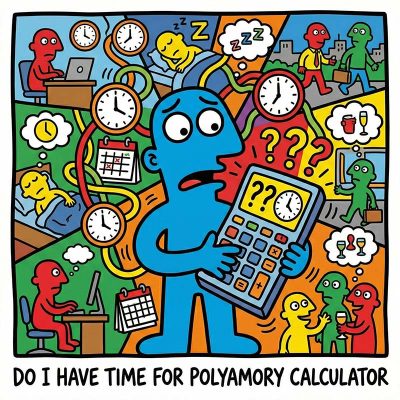
Love is infinite, but your calendar is brutally finite. The fantasy is deep connection; the reality is often just exhausted "calendar tetris." Promising time you don't actually have isn't romantic, it’s a recipe for burnout and broken trust. That sinking feeling when you have to cancel again? That’s the sound of overextension destroying your relationships.
This calculator forces you to confront the math of your life. Do you actually have space for another heart, or are you just setting everyone up for disappointment?

The fantasy is total autonomy and connection. The reality? It can feel like drowning in scheduling chaos and misunderstood expectations. That anxiety you feel isn’t just stress; it’s the wobble of living without a default "anchor." Without a solid architecture, Solo Polyamory stops being a life design and starts being a recipe for burnout and confusion.
The Essential Guide replaces the drift with a concrete anchor. We provide the "Solo Ethic," boundary scripts, and burnout protocols needed to protect your peace. Don't just date around—build a life that actually works for you.

Hierarchy sounds like a corporate org chart until someone gets their feelings hurt. That stomach-turning fear that you are just a "secondary" who can be fired at any time is real. If your relationship feels like a secret ranking system, you are doing it wrong.
Ambiguity is where resentment grows. The Essential Guide replaces the "who matters more" panic with a concrete charter. We provide the scripts and equity guardrails needed to protect every heart in the polycule. Stop guessing and start building.

The ideal is pure equality. The reality? It often slides into hidden rankings where someone gets hurt. That sinking feeling that you are secretly a "secondary" despite the label? That is your intuition detecting couple privilege. Ambiguity is where resentment thrives.
The Essential Guide replaces vague promises with concrete governance. We provide the charters, equity tools, and jealousy protocols needed to ensure "non-hierarchical" isn't just a fantasy. Stop guessing who matters most. Build a network that is actually fair.
The fantasy is total autonomy and connection. The reality? It can feel like drowning in scheduling chaos and misunderstood expectations. That anxiety you feel isn’t just stress; it’s the wobble of living without a default "anchor." Without a solid architecture, Solo Polyamory stops being a life design and starts being a recipe for burnout and confusion.
The Essential Guide replaces the drift with a concrete anchor. We provide the "Solo Ethic," boundary scripts, and burnout protocols needed to protect your peace. Don't just date around—build a life that actually works for you.
Hierarchy sounds like a corporate org chart until someone gets their feelings hurt. That stomach-turning fear that you are just a "secondary" who can be fired at any time is real. If your relationship feels like a secret ranking system, you are doing it wrong.
Ambiguity is where resentment grows. The Essential Guide replaces the "who matters more" panic with a concrete charter. We provide the scripts and equity guardrails needed to protect every heart in the polycule. Stop guessing and start building.
Practical logistics for scheduling quality time in non hierarchical ENM
Logistics are the unseen gears of any relationship system. In a multi partner setting you will be juggling the calendars of several people. The aim is not to become a scheduling robot but to implement reliable practices that reduce miscommunications and friction. Here are tactics that work in real life.
Use time boxing to create predictable slots
Time boxing means you allocate a fixed amount of time for a date meeting or activity with each partner. This helps avoid the feeling of being pulled in too many directions while still allowing for variety. For example you might plan a two hour time block with Partner A once a week and a separate two hour block with Partner B on a different day. The schedule can flex but the anchor times remain clear. Consistency builds trust and reduces the drama around last minute changes.
Tips for effective time boxing
- Set clear start and end times and stick to them unless there is a compelling reason to adjust.
- Put the blocks on a shared calendar if possible so everyone is aware of the plan.
- Include buffer periods between blocks to allow for transitions and self care rituals.
Create a living calendar with shared access
A shared calendar is a practical tool not a symbol of control. It helps everyone anticipate commitments and reduces scheduling conflicts. Use a calendar that supports color coding and can be accessed by all involved partners. Color code each relationship or each partner for quick visual cues. A calendar becomes a living document not a prison sentence. It evolves with you and your people.
What to include in the calendar
- Regular one on one dates
- Group gatherings where several partners are present
- Important personal events such as birthdays and anniversaries that involve more than one partner
- Time for self care and solitary pursuits which are part of healthy balance
Balancing equity in time rather than chasing equality
Equity is about giving attention where it helps most while acknowledging different needs energy levels and life circumstances. Some weeks one partner may need more time due to a stressful work period while another week a partner may crave more social time. The goal is to stay transparent about why time blocks tilt in a particular direction. Use open conversations to adjust plans rather than letting resentment grow in silence.
Practical note this is not about punishing or rewarding. It is about fair distribution aligned with your values and the current reality of life for everyone involved.
Establish safe boundaries and consent around time commitments
Boundaries are about creating space that feels safe and respectful. In the context of time this means agreements about how far in advance you book time with each partner what happens if plans need to shift and how you communicate about needs for alone time or for a pause. It is healthy to re visit boundaries as relationships evolve. The goal is to protect emotional safety for everyone involved including you.
- Agree on how far in advance bookings should be made
- Discuss what to do if a sequence of commitments becomes overwhelming
- Clarify how to handle cancellations and make up time
Handling jealousy and insecurity with time as the topic
Jealousy often shows up not as a personal failing but as a signal that needs attention. When a partner notices a lot of time being spent elsewhere they may feel uncertain or anxious. The antidote is open communication and predictable patterns rather than reactive behavior. Acknowledge feelings name them and discuss what would make the situation feel safer and more balanced. You can propose adjustments to schedules or propose a new shared activity that fosters closeness for everyone involved.
Diverse time formats and their uses
Different types of quality time serve different purposes. Some formats work better for connection while others sustain long term rapport. Here are a few you can adapt to a non hierarchical ENM context.
- One on one dates focused on a specific partner’s interests
- Deliberate partner only evenings that include deep conversations or shared hobbies
- Small group activities where several partners participate in a common interest
- Low pressure social time where the aim is presence and gentle connection rather than intense intimacy
- Solo time for each partner to maintain individuality which is healthy in any relationship system
Quality time is more than entertainment
Quality time is not a constant wave of fun activities it is a steady practice of showing up listening and validating a partner’s experience. It can involve shared meals a walk a quiet coffee chat a project together or simply sitting in the same room with presence. The point is not to check off a list but to deepen trust and feel seen by the people you care about. In a non hierarchical polyamory setup this depth is what sustains multiple meaningful relationships over time.
Quality time formats that work in practice for ENM
Here are some concrete formats you can experiment with to see what works best for your group. Remember the aim is to cultivate connection while maintaining personal balance and individual growth.
One on one time with each partner
One on one time remains a staple because it allows you to explore the particular dynamics you share with a partner. It offers space for intimate conversations and shared activities that might not fit into a larger gathering. The key is to not schedule all your time in this format at the expense of others. Rotate who gets one on one time and keep the sessions within a predictable rhythm.
Group time with multiple partners
Group time can foster a sense of community and shared experience among partners. You can plan group dinners weekend hangouts or collaborative activities. The energy of a group is different from a one on one date so it helps to set expectations ahead of time. After a group session follow up individually to check in on each person’s feelings and reflections.
Mix of planned and flexible time
Having a base schedule with fixed blocks and then leaving room for spontaneous connection can reduce pressure. For example you might have two fixed blocks per week and a flexible window on a weekend for ad hoc meetups or casual co working sessions. Flexibility avoids rigidity while preserving a reliable rhythm.
Solo time for each partner
Allow each partner to have their own time away from the group. Solo time supports individuality and helps maintain healthy boundaries. It also prevents the sense that someone is always performing or always on stage in front of others.
Communication tactics that support time based love in ENM
Communication is the engine for healthy time management in ENM. Without clear honest conversations time can become a source of friction instead of a source of connection. Here are practical approaches that keep dialogue healthy and productive.
Regular check ins that are actually useful
Schedule brief check ins at a safe moment when emotions are not running hot. Use these moments to verify what is working what feels painful and what needs adjustment. The goal is not to police behavior but to align expectations and keep everyone feeling valued.
Transparent needs and honest feelings
Be explicit about what you need in terms of time with each partner. For example I would appreciate a weekly two hour date with you and I would value a group dinner every other Sunday. Clear language helps others understand how to respond in a way that respects their own boundaries as well.
Mapping love languages to time requests
People have different ways they experience affection. If your primary love language is quality time you may place higher importance on shared moments and conversations than on gifts or physical touch. If your partner’s love language is acts of service you may show care through planning and coordinating time together rather than through direct expressions during the date. Understanding these differences helps you tailor time blocks to each person’s needs.
Handling miscommunication before it grows into a conflict
When a plan goes sideways or a partner feels left out the first step is to acknowledge the feeling and own your part. Then propose a practical adjustment rather than defending the original plan. This approach reduces drama and demonstrates that you value everyone’s experience equally.
Real world scenarios and playbooks
To make this tangible here are some common situations you might encounter in a non hierarchical ENM family of relationships. Each scenario includes practical steps you can adapt to your own group.
Scenario 1 a couple and a partner who joins occasional group activities
You have a couple who are deeply connected and a third partner who participates in some group events but not every time. Create a rotating one on one schedule and a consistent group time. If the third partner has limited availability rotate the group events to accommodate. Use a shared calendar and keep a weekly touch base to discuss if the balance feels fair or if adjustments are needed.
Scenario 2 four partners with diverse work weeks
In this scenario everyone has different working hours. Use a base weekly rhythm that includes two fixed time blocks for each person and a monthly group activity that includes all involved. When someone has a heavy work week offer lighter time plus a plan for a longer time window on the following week so no one feels neglected.
Scenario 3 long distance connections
Long distance relationships require extra planning. Use video dates plan asynchronous conversations and rely on shorter more frequent touch points. Emphasize shared activities such as watching the same show or reading the same book and then discussing it. Build a monthly in person visit if possible and coordinate travel logistics with other partners to maximize time and reduce costs.
Rituals and tools that support quality time in ENM
Rituals help make time together feel special and predictable. The right tools can reduce friction when coordinating multiple partners. Here are practical options you can adopt.
Weekly planning ritual
Dedicate a fixed time each week to review upcoming commitments with all involved partners. Use this time to voice needs adjust calendars and celebrate successes from the past week. Keep the session light and collaborative. It should feel like a planning meetup not a confrontation.
Shared rituals that build connection
Rituals might be a monthly potluck a weekly game night or a daily check in that lasts five minutes. The aim is not to force closeness but to create spaces where everyone can be themselves together or separately with a sense of belonging.
Practical tools for time management
Use calendar apps with sharing features a simple note system for updates and reminders. Consider a lightweight project management tool if your group is juggling plans for trips events or shared activities. The goal is to keep information accessible and avoid information silos that cause confusion.
Common pitfalls and how to avoid them
Even with the best intentions problems can arise. Here are frequent issues and practical fixes that help keep quality time positive in a non hierarchical ENM setup.
Over scheduling and burnout
When every partner wants time at the same moment you may end up exhausted and resentful. Learn to say no or propose a realistic alternative. Protect your energy and respect others signals that they need a slower pace at times.
Hidden or shifting expectations
Revisit expectations regularly and encourage open talk about how you are feeling. If a partner expects a level of closeness that is not realistic in the current life context address it with empathy and propose adjustments instead of letting resentment simmer.
Feeling left out or deprioritized
In a non hierarchical network it can feel risky to speak up. If you notice you feel left out talk to your partner early rather than letting it fester. A simple statement such as I feel a bit overlooked this week can trigger a constructive conversation about re balancing time.
Unequal energy levels and pacing
People have different rhythms and needs. It is not a failure but a reality. Respect each person pace share the load when appropriate and remember that equity grows over time not in a single week.
Glossary of useful terms and acronyms
- ENM Ethical Non Monogamy a framework that emphasizes consent transparency and ethical behavior when multiple romantic connections exist.
- Non hierarchical polyamory A form of polyamory where there is no ranking of partners and no single primary relationship toward which all attention is directed.
- Quality time Focused moments dedicated to building closeness and connection with a partner.
- Boundaries Agreed rules about what is acceptable and how to protect emotional safety in the relationship network.
- Check in A scheduled moment to discuss feelings needs and relationship health.
- Compersion Feeling happiness when your partner experiences happiness with someone else.
- Time boxing A scheduling approach that creates fixed blocks of time for specific activities or people.
- Equity A fairness principle that distributes time and emotional energy based on need and context rather than simply equal hours.
Frequently asked questions
Below are rapid fire questions many readers ask when they start applying quality time practices in non hierarchical ENM. If you want to see a structured FAQ block with schema just scroll to the end where a JSON schema is included. The questions here reflect practical concerns and common misgivings.
How do I know how much time to give to each partner
Start with a baseline that feels comfortable for you and your existing commitments. Then check in with each partner and adjust based on needs and life events. The goal is a fair and flexible rhythm not a rigid timetable.
What if I want more time with one partner than another
That is a natural flux in any dynamic. Communicate your needs clearly and listen to your partner. Consider alternating blocks or adding a temporary increase in time for a specific period while keeping overall balance in view.
How can we prevent jealousy from disrupting time plans
Open conversations about insecurity before it surfaces can prevent conflict. Normalize talking about needs and practice empathy. Reassess schedules when jealousy appears to see if changes can reduce pain points.
Is it okay to cancel plans if I am overwhelmed
Yes but communicate early and honestly. Propose a new time as soon as possible and offer a light alternative such as a quick video chat or a short walk to keep the connection alive while protecting your energy.
How do we handle long distance time with multiple partners
Use frequent shorter dates and robust asynchronous communication. Shared activities like watching the same show and comparing notes or reading the same book can create a sense of togetherness even from afar.
What if schedules do not align this week
Have a plan B that includes lighter contact or solo time with each partner. Flexibility paired with clear communication helps you stay connected even when calendars collide.
How do we involve new partners without overloading the schedule
Introduce new partners gradually and add them to the planning conversations with consent from all existing partners. Respect existing rhythms while allowing room for new bonds to grow.
Final notes on making quality time work in a non hierarchical ENM context
The heart of quality time in non hierarchical polyamory ENM is intention. It is about showing up with curiosity and care for the people in your life with whom you share this complex and beautiful bond. It is also about respecting your own needs and ensuring you protect your capacity for connection without burning out. This balance is not achieved by magic but by ongoing conversations practical scheduling and shared rituals that reinforce trust. When you practice time aware communication you create space for honest connection with multiple partners without sacrificing your own wellbeing.
Remember that every relationship is a learning experience. The more you practice adaptive planning and compassionate communication the better you will become at crafting meaningful moments with the people you choose to share your life with. Enjoy the process even when it gets messy because that is where the real connection lives and grows.
Love is infinite, but your calendar is brutally finite. The fantasy is deep connection; the reality is often just exhausted "calendar tetris." Promising time you don't actually have isn't romantic, it’s a recipe for burnout and broken trust. That sinking feeling when you have to cancel again? That’s the sound of overextension destroying your relationships.
This calculator forces you to confront the math of your life. Do you actually have space for another heart, or are you just setting everyone up for disappointment?
The fantasy is total autonomy and connection. The reality? It can feel like drowning in scheduling chaos and misunderstood expectations. That anxiety you feel isn’t just stress; it’s the wobble of living without a default "anchor." Without a solid architecture, Solo Polyamory stops being a life design and starts being a recipe for burnout and confusion.
The Essential Guide replaces the drift with a concrete anchor. We provide the "Solo Ethic," boundary scripts, and burnout protocols needed to protect your peace. Don't just date around—build a life that actually works for you.
Hierarchy sounds like a corporate org chart until someone gets their feelings hurt. That stomach-turning fear that you are just a "secondary" who can be fired at any time is real. If your relationship feels like a secret ranking system, you are doing it wrong.
Ambiguity is where resentment grows. The Essential Guide replaces the "who matters more" panic with a concrete charter. We provide the scripts and equity guardrails needed to protect every heart in the polycule. Stop guessing and start building.
The ideal is pure equality. The reality? It often slides into hidden rankings where someone gets hurt. That sinking feeling that you are secretly a "secondary" despite the label? That is your intuition detecting couple privilege. Ambiguity is where resentment thrives.
The Essential Guide replaces vague promises with concrete governance. We provide the charters, equity tools, and jealousy protocols needed to ensure "non-hierarchical" isn't just a fantasy. Stop guessing who matters most. Build a network that is actually fair.
The fantasy is total autonomy and connection. The reality? It can feel like drowning in scheduling chaos and misunderstood expectations. That anxiety you feel isn’t just stress; it’s the wobble of living without a default "anchor." Without a solid architecture, Solo Polyamory stops being a life design and starts being a recipe for burnout and confusion.
The Essential Guide replaces the drift with a concrete anchor. We provide the "Solo Ethic," boundary scripts, and burnout protocols needed to protect your peace. Don't just date around—build a life that actually works for you.
Hierarchy sounds like a corporate org chart until someone gets their feelings hurt. That stomach-turning fear that you are just a "secondary" who can be fired at any time is real. If your relationship feels like a secret ranking system, you are doing it wrong.
Ambiguity is where resentment grows. The Essential Guide replaces the "who matters more" panic with a concrete charter. We provide the scripts and equity guardrails needed to protect every heart in the polycule. Stop guessing and start building.
