
Repair After Rupture Without Rank

When you are in a non hierarchical polyamory dynamic you do not assign a top partner or a main relationship. Everyone is on equal footing. That sounds noble and simple until a rupture happens. Then the real work shows up. This guide breaks down how to repair ruptures without ranking people or relationships. You will get practical steps, clear language, real world examples and handy tools.
Quick Links to Useful Sections
- What non hierarchical polyamory means
- Why ruptures happen in no rank dynamics
- Ground rules for repairing without ranking
- A practical repair playbook step by step
- Step 1 Acknowledge the rupture and name what happened
- Step 2 Share your needs and invite others to share theirs
- Step 3 Explore the impact on each relationship without ranking
- Step 4 Create a repair plan with specific actions
- Step 5 Establish a check in cadence to monitor progress
- Step 6 Reinforce agreements and adjust boundaries as needed
- Step 7 Practice emotional labor and self care for all involved
- Step 8 Document lessons learned and celebrate progress
- Tools and techniques that help with no rank repair work
- Realistic scenarios and how to handle them without ranking
- Scenario A The time crunch trap
- Scenario B The NRE spill over
- Scenario C Boundaries drift and miscommunication
- Must no s and must do s for no rank repairs
- Common mistakes in no rank repair work
- The role of the Meta and the network in repair
- Self care and personal accountability in repair work
- Maintaining a healthy no rank ecosystem
- Glossary of useful terms and acronyms
- Frequently asked questions
What non hierarchical polyamory means
Non hierarchical polyamory is a form of ethical non monogamy where no partner is designated as primary. Each relationship holds its own value and needs. Time, energy and emotional labor are balanced through open negotiation rather than a ranking system. Some key terms you will hear in this space include polyamory or poly a broad umbrella term for multiple romantic or sexual connections. Ethically non monogamous or ENM is the broader category that covers polyamory open relationships swinging and other forms of relationship arrangements that involve more than two people.
Here are terms you should know so you can read this guide with ease. If you see an acronym you may not know we explain it so you can act with confidence.
- ENM Ethical Non Monogamy a relationship style that invites more than one romantic or sexual relationship with the knowledge and consent of everyone involved.
- Non hierarchical A structure where no partner is ranked as more important or prioritized over others. Each relationship stands on its own terms.
- NRH Non ranked harmony a concept we use to describe a healthy balance in a no rank system where all partners feel seen and valued.
- Meta The partner of a partner or the collective term for all the people involved in the poly network.
- Compersion The feeling of joy at your partner's happiness with someone else a kind of positive jealousy exchange that is the opposite of envy.
- Jealousy An emotional response that can happen when something you value feels threatened. In ENM it is managed through honest communication and reassurance rather than withdrawal or punishment.
- NRE New Relationship Energy the buzz of new connection. It can create imbalance if not handled with care in a no rank setting.
- Agreement A stated understanding about what is and is not allowed at the time the relationship is formed and anytime it evolves.
- Boundary A personal or shared line that helps people feel safe. Boundaries can be about time contact sexual activity or disclosure about relationships.
- Compassionate accountability A practice of owning one actions admitting missteps and making changes to reduce harm for everyone involved.
Why ruptures happen in no rank dynamics
- Time and energy imbalances where one relationship gets more attention than others
- Mis communication or hidden feelings that never get spoken
- Shifts in sexual or emotional energy especially when NRE hits a new partner
- Boundary drift where agreed limits drift away without a clear reset
- Gossip or misinterpretations within the Meta network
- Jealousy expressed as withdrawal or control rather than talk
Understanding these triggers helps you prepare for repair. The goal is not to assign blame but to restore safety fairness and trust for everyone involved.
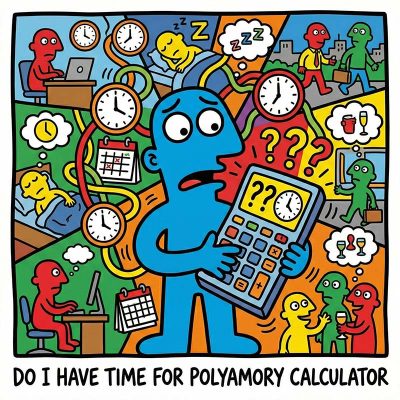
Love is infinite, but your calendar is brutally finite. The fantasy is deep connection; the reality is often just exhausted "calendar tetris." Promising time you don't actually have isn't romantic, it’s a recipe for burnout and broken trust. That sinking feeling when you have to cancel again? That’s the sound of overextension destroying your relationships.
This calculator forces you to confront the math of your life. Do you actually have space for another heart, or are you just setting everyone up for disappointment?

The fantasy is total autonomy and connection. The reality? It can feel like drowning in scheduling chaos and misunderstood expectations. That anxiety you feel isn’t just stress; it’s the wobble of living without a default "anchor." Without a solid architecture, Solo Polyamory stops being a life design and starts being a recipe for burnout and confusion.
The Essential Guide replaces the drift with a concrete anchor. We provide the "Solo Ethic," boundary scripts, and burnout protocols needed to protect your peace. Don't just date around—build a life that actually works for you.

Hierarchy sounds like a corporate org chart until someone gets their feelings hurt. That stomach-turning fear that you are just a "secondary" who can be fired at any time is real. If your relationship feels like a secret ranking system, you are doing it wrong.
Ambiguity is where resentment grows. The Essential Guide replaces the "who matters more" panic with a concrete charter. We provide the scripts and equity guardrails needed to protect every heart in the polycule. Stop guessing and start building.

The ideal is pure equality. The reality? It often slides into hidden rankings where someone gets hurt. That sinking feeling that you are secretly a "secondary" despite the label? That is your intuition detecting couple privilege. Ambiguity is where resentment thrives.
The Essential Guide replaces vague promises with concrete governance. We provide the charters, equity tools, and jealousy protocols needed to ensure "non-hierarchical" isn't just a fantasy. Stop guessing who matters most. Build a network that is actually fair.
The fantasy is total autonomy and connection. The reality? It can feel like drowning in scheduling chaos and misunderstood expectations. That anxiety you feel isn’t just stress; it’s the wobble of living without a default "anchor." Without a solid architecture, Solo Polyamory stops being a life design and starts being a recipe for burnout and confusion.
The Essential Guide replaces the drift with a concrete anchor. We provide the "Solo Ethic," boundary scripts, and burnout protocols needed to protect your peace. Don't just date around—build a life that actually works for you.
Hierarchy sounds like a corporate org chart until someone gets their feelings hurt. That stomach-turning fear that you are just a "secondary" who can be fired at any time is real. If your relationship feels like a secret ranking system, you are doing it wrong.
Ambiguity is where resentment grows. The Essential Guide replaces the "who matters more" panic with a concrete charter. We provide the scripts and equity guardrails needed to protect every heart in the polycule. Stop guessing and start building.
Ground rules for repairing without ranking
In a no rank world you repair from a place of shared humanity. These rules help set a productive tone and keep the process from devolving into a fight or a game of who is most hurt.
- Acknowledge that hurt is real and valid for all parties involved
- Speak from your experience using I statements avoid accusations
- Focus on specific behaviors not personal character judgments
- Pause the conversation if emotions run high and return when you can speak calmly
- Be curious about others needs and invite responses
- Document agreements so there is a shared reference point
- Choose a pace that feels safe for every partner including meta partners
A practical repair playbook step by step
Step 1 Acknowledge the rupture and name what happened
Start with a simple anchor a clear description of what happened. Avoid blaming language and focus on what you observed and how it affected you. For example I felt distant after our last meet up and I am worried that our boundaries were not respected. You may hear others share their own observations. The goal is to replace ambiguity with concrete facts that everyone can hear and respond to.
Step 2 Share your needs and invite others to share theirs
Each person in the network has needs. Express yours plainly and invite others to do the same. Use a calm tone and give space for responses. For example I need more predictable time blocks to see you plus a clearer note when plans change. Meta partners can also share what they need to feel secure about your relationship dynamics.
Step 3 Explore the impact on each relationship without ranking
Discuss how the rupture affected each relationship individually. Keep a record of what was harmed and what remains intact. Avoid implying that one relationship is the cause of all issues. Acknowledge that harm may have spread across multiple connections and that is okay to repair in stages.
Step 4 Create a repair plan with specific actions
Agree on concrete steps with timelines. This may include honest check in dates weekly or bi weekly and a list of topics to cover in each session. The plan should be doable for all partners and should provide room to adjust as needs evolve. The plan is not a punishment it is a map to restore trust and balance.
Step 5 Establish a check in cadence to monitor progress
Regular check ins are essential in non hierarchical setups. They prevent drift and keep everyone aligned. Decide who checks in when and what metrics count as progress. Metrics can be subjective such as how safe you feel or objective such as time allocated for each relationship.
Step 6 Reinforce agreements and adjust boundaries as needed
Ruptures can reveal that some agreements or boundaries are no longer working. It is not a personal failure to renegotiate. Approach renegotiation with the same respectful tone and focus on fairness. Update agreements then test them in practice for a period before evaluating again.
Step 7 Practice emotional labor and self care for all involved
Emotional labor is a real resource. In a no rank system everyone shares the load but you may still need personal time or professional support. Encourage journaling meditation or therapy for anyone who wants it. Self care ensures you can show up ready to repair rather than dragging through conversations exhausted and wary.
Step 8 Document lessons learned and celebrate progress
Documenting what you learned helps prevent similar ruptures in the future. It also helps the network to see progress. Celebrate small wins like restored trust improved communication or a more balanced schedule. Celebration reinforces positive change and keeps everyone motivated.
Tools and techniques that help with no rank repair work
- Communication scripts Pre prepared phrases to use in tough conversations keep tone calm and focused on needs not blame.
- Check in templates Simple forms or prompts to guide the weekly or bi weekly conversations.
- Time mapping An outline that shows who spends time with whom and when. This helps avoid hidden imbalances.
- Boundary renegotiation sheets A one page document that tracks what has changed and how it will be implemented.
- Jealousy management playbook A mini guide with steps to reduce triggers and offer reassurance without smothering autonomy.
- Meta communication rituals Regular group conversations so the whole network stays on the same page.
Realistic scenarios and how to handle them without ranking
Scenario A The time crunch trap
Alex is dating two partners in a no rank network. One relationship requires more weekly time due to a long distance schedule while the other is more flexible. A rupture forms when the flexible partner feels neglected while the long distance partner worries about fairness. The repair starts with each person stating how the current time allocation feels and what changes would help. They decide to set a rotating weekly plan where each relationship receives predictable time blocks and a midweek check in to adjust for life events. The Meta agrees to monitor group energy and adjust as needed. This approach preserves autonomy while reducing perceived unfairness.
Scenario B The NRE spill over
NRE with a new partner has intensified emotional energy across the network. The older relationships feel less valued and conversations become tense. The repair begins with each person describing how NRE is affecting them and what they need to feel secure. They agree to a short grace period during which the new partner is welcomed but not the sole focus of attention. They also create a policy for public disclosure of relationships and a rule that conversations with the new partner happen in shared spaces rather than behind closed doors. After a few weeks the energy shifts and the network finds a new equilibrium that honors all connections.
Scenario C Boundaries drift and miscommunication
A boundary about casual dating evenings was not revisited after a major life change. A rupture forms when one partner learns about several casual meetups and feels they were not in the loop. The repair calls for a renegotiation of boundaries with explicit examples of what is allowed who is informed and how. They establish a quarterly boundary review and adopt a simple reporting rule that any new relationship contact should be announced in the Meta group chat before any in person meetings occur. The outcome is a clearer rule set and less bad surprises.
Must no s and must do s for no rank repairs
- Must do Use I statements own your feelings and avoid accusations
- Must do Check in with every partner after a rupture not just the loudest voice
- Must do Schedule time blocks that ensure equal attention to relationships including the Meta
- Must do Renegotiate boundaries when needs change and document changes
- Must not Threaten withdraw affection as punishment
- Must not Push agreements that reduce someone autonomy or safety
- Must not Use a rupture to settle old scores or re open past wounds
- Must not Rush the repair process if people need time to reflect
Common mistakes in no rank repair work
- Expecting a quick fix and pressuring partners to agree when they are not ready
- Feeling compelled to pretend everything is okay to avoid discomfort
- Blaming one partner for the entire rupture instead of seeing it as a network issue
- Ignoring the role of the Meta and other partners in the healing process
- Skipping documented agreements and relying on memory which fades
The role of the Meta and the network in repair
In a no rank system the Meta relationship layer is essential. The Meta includes all partners who are connected to one or more others in the network. Meta concerns include sharing information about boundaries and ensuring fair distribution of time and emotional labor. The Meta is not a boss but a cooperative group that helps sustain health. The aim is to create a sense of safety for everyone involved and to prevent drift that could fracture multiple connections at once. Mutually agreed check ins are key. When you have a rupture the Meta helps surface needs provide perspective and keep the overall ecosystem intact.
Self care and personal accountability in repair work
Repair work is emotionally demanding. People in no rank communities must practice self care and accountability. Self care means giving yourself time to rest seek professional help if you need it and engage in activities that replenish your energy. Accountability means owning mistakes saying sorry clearly and making concrete changes to prevent the same issue from happening again. This is not a sign of weakness it is a sign of maturity and respect for everyone involved.
Maintaining a healthy no rank ecosystem
Preventing ruptures is easier than repairing after one. A healthy no rank system benefits from predictable routines and transparent communication. A couple of practical habits help keep the network strong. First run regular energy and time audits where you review how you allocate your time across relationships. If one relationship is consistently getting more attention you address it early. Second keep a shared vocabulary for emotions and needs so people can express themselves without fear. Third celebrate the network wins together small gatherings or group check ins can reinforce a sense of belonging. Finally keep renegotiation at regular intervals even if everything seems smooth. People change and that is a natural part of any dynamic.
Glossary of useful terms and acronyms
- ENM Ethical Non Monogamy a term for relationship styles that include more than two people in a consensual arrangement.
- Non hierarchical A structure where no partner is ranked as more important than others and all relationships are treated as equal in value.
- Meta The set of partners in the network the group as a whole or the partner of a partner.
- Compersion Feeling happy for a partner s happiness with someone else a positive form of joy in someone else s good fortune.
- Jealousy A natural emotion that arises when a person perceives a threat to a valued relationship or connection.
- NRE New Relationship Energy the excitement and rush that come with a new partner and new dynamics.
- Agreement A stated plan about how relationships will work including what is allowed and what is not.
- Boundary A limit that helps protect personal safety and comfort in relationships.
- Self care Actions that support your physical and emotional wellbeing including rest time and seeking support when needed.
- Accountability Owning actions and their impact and making changes to prevent harm in the future.
Frequently asked questions
Here are some quick clarifications that often come up in no rank dynamics. We answer plainly and with practical next steps.
Love is infinite, but your calendar is brutally finite. The fantasy is deep connection; the reality is often just exhausted "calendar tetris." Promising time you don't actually have isn't romantic, it’s a recipe for burnout and broken trust. That sinking feeling when you have to cancel again? That’s the sound of overextension destroying your relationships.
This calculator forces you to confront the math of your life. Do you actually have space for another heart, or are you just setting everyone up for disappointment?
The fantasy is total autonomy and connection. The reality? It can feel like drowning in scheduling chaos and misunderstood expectations. That anxiety you feel isn’t just stress; it’s the wobble of living without a default "anchor." Without a solid architecture, Solo Polyamory stops being a life design and starts being a recipe for burnout and confusion.
The Essential Guide replaces the drift with a concrete anchor. We provide the "Solo Ethic," boundary scripts, and burnout protocols needed to protect your peace. Don't just date around—build a life that actually works for you.
Hierarchy sounds like a corporate org chart until someone gets their feelings hurt. That stomach-turning fear that you are just a "secondary" who can be fired at any time is real. If your relationship feels like a secret ranking system, you are doing it wrong.
Ambiguity is where resentment grows. The Essential Guide replaces the "who matters more" panic with a concrete charter. We provide the scripts and equity guardrails needed to protect every heart in the polycule. Stop guessing and start building.
The ideal is pure equality. The reality? It often slides into hidden rankings where someone gets hurt. That sinking feeling that you are secretly a "secondary" despite the label? That is your intuition detecting couple privilege. Ambiguity is where resentment thrives.
The Essential Guide replaces vague promises with concrete governance. We provide the charters, equity tools, and jealousy protocols needed to ensure "non-hierarchical" isn't just a fantasy. Stop guessing who matters most. Build a network that is actually fair.
The fantasy is total autonomy and connection. The reality? It can feel like drowning in scheduling chaos and misunderstood expectations. That anxiety you feel isn’t just stress; it’s the wobble of living without a default "anchor." Without a solid architecture, Solo Polyamory stops being a life design and starts being a recipe for burnout and confusion.
The Essential Guide replaces the drift with a concrete anchor. We provide the "Solo Ethic," boundary scripts, and burnout protocols needed to protect your peace. Don't just date around—build a life that actually works for you.
Hierarchy sounds like a corporate org chart until someone gets their feelings hurt. That stomach-turning fear that you are just a "secondary" who can be fired at any time is real. If your relationship feels like a secret ranking system, you are doing it wrong.
Ambiguity is where resentment grows. The Essential Guide replaces the "who matters more" panic with a concrete charter. We provide the scripts and equity guardrails needed to protect every heart in the polycule. Stop guessing and start building.
