
Requests Versus Demands in Relationship Negotiation

Non hierarchical polyamory or ENM stands for ethically non monogamous relationships where there is no single top partner and all connections are treated as equals. This dynamic can be thrilling and challenging at the same time. One of the biggest skills you need is negotiation. Within this space you will hear terms like requests and demands. Getting clear on what these mean and how to use them can change how you navigate jealousy, time, boundaries, and closeness. This guide breaks down requests and demands in practical ways with real world examples. We will explain terms and acronyms as we go so you can understand every bit of the conversation experience.
Quick Links to Useful Sections
- What this guide covers
- Key terms explained
- Why this distinction matters in a non hierarchical setup
- Requests versus demands in practice
- Time together and scheduling
- Handling jealousy and insecurity
- Disclosing information about dating others
- Rules about disclosure and safety boundaries
- House rules and joint calendars
- How to tell if a request is well formed
- How to recognize when a demand slips in
- Rules of safe negotiation in ENM
- Practical negotiation scripts you can borrow
- Opening a conversation about scheduling
- Bringing up safety in dating new partners
- Discussing boundaries with a new partner
- Proposing a trial period for a boundary
- Negotiating after a misstep
- Handling pushback or boundary violations
- When a negotiation is not going anywhere
- Real world scenarios that illustrate the ideas
- Scenario one a partner wants more time with you but you have other commitments
- Scenario two concerns about safety with a new partner
- Scenario three a partner desires disclosure about all dating activity
- Scenario four introducing a new partner while maintaining balance
- Self reflection tips for negotiating in ENM
- Practical tips for conversations
- Takeaways for every day life in non hierarchical polyamory
- Glossary of useful terms and acronyms
- Frequently asked questions
- Final notes about negotiation in this ENM dynamic
Think of this as a map for talking with multiple partners in a way that respects every person who matters to you. You do not want to twist people into positions they do not want to take. The aim is to keep connection strong while keeping each relationship safe and joyful. In non hierarchical polyamory every partner is a person with needs and boundaries. Negotiation is the tool we use to make space for those needs and to ensure consent is ongoing and informed.
What this guide covers
- Definitions of basic terms and acronyms used in ENM and non hierarchical polyamory
- The difference between requests and demands and why this matters
- Practical guidelines for choosing the right approach in a given moment
- Concrete phrasing you can use to make requests or to set boundaries without pressuring anyone
- Common mistakes to avoid and signals that a boundary is not being respected
- Real world scenarios that show how to apply these ideas in daily life
- Sketched negotiation routines and self care tips to keep you balanced
Key terms explained
Before we dive into the deep end a short glossary helps. If you already know some of these terms feel free to skim and come back to the big ideas below.
- ENM ethically non monogamous. A relationship style where people date or connect with others with consent and transparency rather than a default single partner setup.
- Non hierarchical polyamory a form of ENM where there is no formal ranking of partners. All relationships are treated as equally important and there is no primary partner with outward decision making over others.
- Request a communication that invites a person to consider a change or action without insisting on it. Requests invite agreement but do not demand it.
- Demand a directive that pushes another person to act in a certain way or to accept a condition. Demands often imply consequences if not met and tend to reduce autonomy.
- Boundary a stated limit or rule about what is acceptable or not in a relationship. Boundaries protect safety and personal values.
- Consent ongoing, enthusiastic, informed agreement to participate in an activity. In ENM consent must be clear and revocable at any time.
- Coercion pressuring someone to do something by using force, threats or manipulation. Coercion is not acceptable in healthy negotiation.
- Communication ritual a structured moment for checking in, sharing needs and renewing agreements with partners.
- Check in a scheduled moment to revisit how things are going and adjust as needed.
- Transparency openness about desires, fears, boundaries, and calendar realities so that everyone can make informed choices.
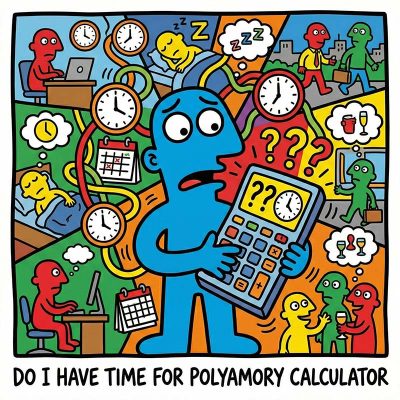
Love is infinite, but your calendar is brutally finite. The fantasy is deep connection; the reality is often just exhausted "calendar tetris." Promising time you don't actually have isn't romantic, it’s a recipe for burnout and broken trust. That sinking feeling when you have to cancel again? That’s the sound of overextension destroying your relationships.
This calculator forces you to confront the math of your life. Do you actually have space for another heart, or are you just setting everyone up for disappointment?

The fantasy is total autonomy and connection. The reality? It can feel like drowning in scheduling chaos and misunderstood expectations. That anxiety you feel isn’t just stress; it’s the wobble of living without a default "anchor." Without a solid architecture, Solo Polyamory stops being a life design and starts being a recipe for burnout and confusion.
The Essential Guide replaces the drift with a concrete anchor. We provide the "Solo Ethic," boundary scripts, and burnout protocols needed to protect your peace. Don't just date around—build a life that actually works for you.

Hierarchy sounds like a corporate org chart until someone gets their feelings hurt. That stomach-turning fear that you are just a "secondary" who can be fired at any time is real. If your relationship feels like a secret ranking system, you are doing it wrong.
Ambiguity is where resentment grows. The Essential Guide replaces the "who matters more" panic with a concrete charter. We provide the scripts and equity guardrails needed to protect every heart in the polycule. Stop guessing and start building.

The ideal is pure equality. The reality? It often slides into hidden rankings where someone gets hurt. That sinking feeling that you are secretly a "secondary" despite the label? That is your intuition detecting couple privilege. Ambiguity is where resentment thrives.
The Essential Guide replaces vague promises with concrete governance. We provide the charters, equity tools, and jealousy protocols needed to ensure "non-hierarchical" isn't just a fantasy. Stop guessing who matters most. Build a network that is actually fair.
The fantasy is total autonomy and connection. The reality? It can feel like drowning in scheduling chaos and misunderstood expectations. That anxiety you feel isn’t just stress; it’s the wobble of living without a default "anchor." Without a solid architecture, Solo Polyamory stops being a life design and starts being a recipe for burnout and confusion.
The Essential Guide replaces the drift with a concrete anchor. We provide the "Solo Ethic," boundary scripts, and burnout protocols needed to protect your peace. Don't just date around—build a life that actually works for you.
Hierarchy sounds like a corporate org chart until someone gets their feelings hurt. That stomach-turning fear that you are just a "secondary" who can be fired at any time is real. If your relationship feels like a secret ranking system, you are doing it wrong.
Ambiguity is where resentment grows. The Essential Guide replaces the "who matters more" panic with a concrete charter. We provide the scripts and equity guardrails needed to protect every heart in the polycule. Stop guessing and start building.
Why this distinction matters in a non hierarchical setup
In a non hierarchical polyamory scene there is no single boss and no obvious decider for every choice. Each relationship holds equal weight. You want to avoid a pattern where one person feels pressure pushed by others to concede. A request keeps space for dialogue. A demand narrows the field and can lead to resentment. When a person feels they have agency and can respond freely, you preserve trust. The goal is ongoing consent for every new activity, schedule, or boundary adjustment. That consent is not a one time moment. It is a process you revisit as relationships evolve.
Requests versus demands in practice
Let us break down practical differences using everyday things you might want in a non hierarchical polyamory setup. In each example we will show a typical phrasing and then a more respectful alternative that centers consent and collaboration.
Time together and scheduling
- Demands example: You must always be free for date nights with me on Friday evenings if we are together. If you are not free I will be unhappy and you will owe me an explanation.
- Requests example: Would you be open to Friday evenings for a date night with me this week or next week if your schedule allows? I would rather align with what works for you rather than insist on one fixed time.
Notes: The first approach feels like control because it asserts a need as a rule and mentions consequences. The second invites a conversation and respects the other person’s calendar and other relationships. In non hierarchical polyamory this keeps the door open for everyone to participate in a way that suits their own life.
Handling jealousy and insecurity
- Demands example: If you feel jealous you must stop talking to that person and focus only on our relationship. You have no right to feel jealous and you must resolve this before we can move forward.
- Requests example: I notice some jealousy coming up for me when you have new dates with others. Can we talk about what would help you feel more secure and what I can do to support you while still exploring connections with others?
Notes: The demand tries to police emotion and uses control language. The request frames the issue as a shared problem and invites cooperative problem solving. It preserves dignity for all parties and keeps the line of communication open.
Disclosing information about dating others
- Demands example: You must tell me everything about every date you go on and you must do it before the date ends. If you withhold anything I will be disappointed and you will hear about it.
- Requests example: When you are comfortable sharing, would you let me know a rough sense of how things went after a date? I would like to be kept in the loop but I understand if you need space.
Notes: This difference centers consent and autonomy. The first approach can feel invasive and may erode trust. The second approach respects privacy while inviting openness on a mutually agreed cadence.
Rules about disclosure and safety boundaries
- Demands example: You must disclose all sexual activity with others to me. If you do not disclose every detail I will end the relationship with you.
- Requests example: If and when you feel comfortable sharing, could you tell me about your safety practices and who you have been with recently? I want to know enough to stay safe without invading privacy.
Notes: Safety matters in any ENM dynamic. The difference is that a request frames safety as a shared concern and invites participation, whereas a demand makes disclosure a condition with potential consequences. In practice you can agree on a safety plan that includes boundaries about what you both want to share and what you may keep private for personal reasons.
House rules and joint calendars
- Demands example: Every potential partner must get a formal approval from me before dating anyone. If you do not follow this I will consider the relationship over.
- Requests example: Would you be willing to discuss a shared rule set for dating and what works for you about meeting new partners? I can share what matters to me and we can negotiate a calendar that respects everyone’s time.
Notes: In a non hierarchical setup the goal is to find patterns that reduce conflict not to impose a single rule set from one person. The calendar becomes a living document that reflects the needs of multiple people rather than a gatekeeping tool.
How to tell if a request is well formed
Great requests share several traits. They are clear, specific, time bound when needed, and invite collaboration. They use neutral language and focus on the action rather than labeling the other person. Here is a simple recipe you can use to craft a solid request.
- Start with a statement of your need. For example I would like more time together with you.
- State the proposed action or change. For example Could we schedule a weekly check in about our plans and feelings.
- Offer a way for the other person to respond. For example If that works for you we can decide a time that suits us both.
- End with a willingness to adjust. For example If this does not fit your week we can find an alternative that works for you.
By following this structure you keep negotiation constructive and fair. The key is to keep it a dialogue not a decree.
How to recognize when a demand slips in
Demands can hide in plain sight. Here are warning signs to watch for and what to do about them.
- Language cues your request has turned into a demand. Phrases like you must, you have to, you are not allowed, or there is no alternative often signal a demand.
- Threats or consequences that feel coercive. If someone makes vague threats or uses ultimatums this is not healthy negotiation.
- Assuming how others feel or what they will do. Demands often come with labels about how you should feel or act to avoid trouble.
If a demand shows up in your conversations you can respond with a clarifying question. For example I hear you say I must do this. Is that correct or would you be open to considering another approach that also protects our boundaries?
Rules of safe negotiation in ENM
Healthy negotiation in a non hierarchical polyamory context rests on several shared rules. Here are practical norms you can adopt to keep conversations productive and kind.
- Consent is ongoing. Always assume you can pause or stop an activity if someone is uncomfortable.
- Respect each person. Do not pressure someone to change a boundary or to share details that violate their privacy.
- Stay curious. Ask questions that help you understand the other person s perspective rather than trying to win a point.
- Use time outs when needed. If emotions run high you can take a short break and come back with fresh clarity.
- Document agreements. Write down what you have decided and check in later to confirm that everyone is still comfortable.
Love is infinite, but your calendar is brutally finite. The fantasy is deep connection; the reality is often just exhausted "calendar tetris." Promising time you don't actually have isn't romantic, it’s a recipe for burnout and broken trust. That sinking feeling when you have to cancel again? That’s the sound of overextension destroying your relationships.
This calculator forces you to confront the math of your life. Do you actually have space for another heart, or are you just setting everyone up for disappointment?
The fantasy is total autonomy and connection. The reality? It can feel like drowning in scheduling chaos and misunderstood expectations. That anxiety you feel isn’t just stress; it’s the wobble of living without a default "anchor." Without a solid architecture, Solo Polyamory stops being a life design and starts being a recipe for burnout and confusion.
The Essential Guide replaces the drift with a concrete anchor. We provide the "Solo Ethic," boundary scripts, and burnout protocols needed to protect your peace. Don't just date around—build a life that actually works for you.
Hierarchy sounds like a corporate org chart until someone gets their feelings hurt. That stomach-turning fear that you are just a "secondary" who can be fired at any time is real. If your relationship feels like a secret ranking system, you are doing it wrong.
Ambiguity is where resentment grows. The Essential Guide replaces the "who matters more" panic with a concrete charter. We provide the scripts and equity guardrails needed to protect every heart in the polycule. Stop guessing and start building.
The ideal is pure equality. The reality? It often slides into hidden rankings where someone gets hurt. That sinking feeling that you are secretly a "secondary" despite the label? That is your intuition detecting couple privilege. Ambiguity is where resentment thrives.
The Essential Guide replaces vague promises with concrete governance. We provide the charters, equity tools, and jealousy protocols needed to ensure "non-hierarchical" isn't just a fantasy. Stop guessing who matters most. Build a network that is actually fair.
The fantasy is total autonomy and connection. The reality? It can feel like drowning in scheduling chaos and misunderstood expectations. That anxiety you feel isn’t just stress; it’s the wobble of living without a default "anchor." Without a solid architecture, Solo Polyamory stops being a life design and starts being a recipe for burnout and confusion.
The Essential Guide replaces the drift with a concrete anchor. We provide the "Solo Ethic," boundary scripts, and burnout protocols needed to protect your peace. Don't just date around—build a life that actually works for you.
Hierarchy sounds like a corporate org chart until someone gets their feelings hurt. That stomach-turning fear that you are just a "secondary" who can be fired at any time is real. If your relationship feels like a secret ranking system, you are doing it wrong.
Ambiguity is where resentment grows. The Essential Guide replaces the "who matters more" panic with a concrete charter. We provide the scripts and equity guardrails needed to protect every heart in the polycule. Stop guessing and start building.
Practical negotiation scripts you can borrow
Sometimes you just need a few ready to use sentences. Below are sample phrases you can adapt. The goal is to make the interaction feel collaborative and respectful.
Opening a conversation about scheduling
Would you be open to us talking about our schedule this week and next? I want to make sure we have time that works for everyone involved and I am happy to adjust.
Bringing up safety in dating new partners
In light of safety concerns would you be willing to discuss how we handle disclosure and partner testing? I want to protect all of us while still keeping space for new connections.
Discussing boundaries with a new partner
When you meet someone new would you be comfortable sharing what matters to you about safety and transparency? I want to align with you and avoid surprises later.
Proposing a trial period for a boundary
Would you be willing to try a three month period where we focus on open communication and mutual consent about new relationships? If it does not work we can rethink the approach.
Negotiating after a misstep
If a boundary was crossed would you be open to a quick review with the group and adjust the rules to prevent this from happening again? I want to fix this together and keep trust intact.
Handling pushback or boundary violations
Pushback happens. The important thing is how you respond. Stay calm and stay focused on the core needs. You can repeat the core request and connect it to shared values such as fairness, respect, and safety. If someone violates a boundary belong to the group you may need to pause activities and revisit the agreement. If you are in immediate danger seek help from a trusted person or professional resource. In ENM conflict resolution is not about who wins. It is about preserving connection while protecting everyone s well being.
When a negotiation is not going anywhere
There are moments when a partner cannot meet a request. When that happens you can explore alternatives instead of insisting. For example you might switch to a related need that you can accept. You can adjust the timeline or reframe the request in a way that honors both sides. If you are stuck for a long time it may be time to take a pause and reflect on compatibility and shared values. This pause is not a failure. It is a chance to consider what matters most in your life and your relationships.
Real world scenarios that illustrate the ideas
Here are four realistic situations you may encounter in a non hierarchical polyamory dynamic. Each scenario shows how a request can become a constructive dialogue and when a boundary may require a firmer stance while still preserving dignity.
Scenario one a partner wants more time with you but you have other commitments
Alex wants more one on one time with Sam. Sam has two other partnerships and a job. Sam says I am happy to work on spending more time with you but my calendar is full this month. If we can find two or three evenings that work for both of us I am happy to schedule. Alex expresses a desire for more predictable time but is open to the idea of a rotating schedule. They decide to trial a regular bi weekly date while keeping space for ad hoc meetups if both partners are available. The result is a plan that respects all commitments and reduces pressure.
Scenario two concerns about safety with a new partner
Jordan starts dating someone new and brings a concern about safety practices. They say I want to know how we handle sexual health and consent with new partners but I do not want to feel like I am in charge of the conversation. They ask their partner Taylor for input and agree to a shared safety protocol that includes consent check in and mutual clarity about boundaries. They create a simple plan that keeps everyone comfortable and reduces guesswork. The focus stays on safety, respect and trust rather than control.
Scenario three a partner desires disclosure about all dating activity
Priya finds herself in a situation where a partner feels left out. They suggest you must disclose every detail of all dates. Priya explains that she understands the need for honesty but also values privacy. They agree to share a general outline of dates and important details while keeping some personal information private. They also set up a regular update once a week to discuss feelings and celebrate progress. The negotiation respects privacy while maintaining trust.
Scenario four introducing a new partner while maintaining balance
Lee plans to date a new person and wants to ensure the group remains balanced. They propose a trial period of open communication and scheduled check ins to evaluate how everyone feels about the new connection. The group agrees to a four week check in schedule. They discuss how to manage time and see if adjustments are needed. The result is a fluid arrangement that keeps all relationships included and valued.
Self reflection tips for negotiating in ENM
Negotiation is as much about you as it is about others. Here are some tips to keep your own mental health intact while you negotiate with multiple partners.
- Clarify your own needs first. Before you speak with others name the core things you want to protect or achieve.
- Write down your talking points. A short list keeps you calm and helps you stay on track when emotions run high.
- Practice active listening. Reflect back what you hear and ask clarifying questions to avoid misinterpretation.
- Be willing to pause. If a topic becomes heated you can step away for a moment and return when everyone is calmer.
- Seek outside support if needed. A therapist or a supportive friends group can provide perspective and strategies that fit ENM ethics.
Practical tips for conversations
To keep conversations constructive you can use several practical tactics. These tips reduce tension and improve results in normal life as well as stress filled moments.
- Use I statements to own your feelings. For example I feel unsettled when I do not know the plans ahead of time.
- Avoid labeling someone as selfish. Focus on the behavior and its impact and offer alternatives.
- Ask permission to propose a change. For example Are you open to trying a different approach to this plan?
- Offer choices rather than ultimatums. Offering two or more good options respects autonomy.
- Close with appreciation. Acknowledge the person s efforts and the shared goal of healthy connection.
Takeaways for every day life in non hierarchical polyamory
The core idea is to treat requests as invitations to collaborate rather than commands to obey. When you make a request you honor autonomy and invite the other person to participate in the solution. This approach makes it easier to adapt to life with multiple partners and changing circumstances. It reduces the risk of coercion while increasing the chances that everyone feels heard and valued. The moment you switch from demanding to inviting you open space for empathy and connection rather than resistance and defensiveness.
Glossary of useful terms and acronyms
- ENM ethically non monogamous relationships where multiple people have agreed to form intimate connections with consent and openness.
- Non hierarchical polyamory a structure in which there is no single primary partner and all partners are treated as equals.
- Request an invitation to change or adapt a behavior that requires consent from the other person.
- Demand a directive that tries to enforce a change with potential consequences if not met.
- Boundary clearly stated limits that protect safety and personal values.
- Consent ongoing enthusiastic agreement to participate in a relationship activity.
- Transparency openness about needs, feelings and plans that affect others.
- Check in scheduled moment to review how things are going and adjust as needed.
Frequently asked questions
What is the main difference between a request and a demand in ENM negotiation
A request invites collaboration and does not remove agency. A demand asserts a requirement and can feel coercive. In ENM the aim is to maintain consent and respect autonomy for every person involved.
Can a demand ever be appropriate in non hierarchical polyamory
Only in very limited circumstances where safety is at immediate risk and there is a clear established protocol. Even then the approach should prioritize de escalation and respect for all involved. The idea is to avoid using pressure or threats as a normal way to negotiate.
How do I know if I am the one making a demand
Look for language that forces a response or uses ultimatums or consequences. If you feel you are controlling the other person s choices you are probably making a demand. Reframe as a request focusing on how you feel and what you need while inviting consent.
What should I do if my partner refuses a request
Acknowledge the refusal with respect. Ask if there is another option that would work for them. If not you can propose a timeline or a different approach and check back later. If multiple attempts fail you may need to reassess compatibility with that relationship.
How do I maintain boundaries while staying flexible
S solid boundaries are clear and firm. They do not change simply because someone asks for flexibility. You can negotiate within those boundaries and adjust them only when all parties consent and feel safe. Mutual respect keeps the system healthy even when plans shift.
Is there a best time to have these conversations
Choose a time when all parties are relatively calm and have energy to listen. Avoid high stress moments such as after a fight or when someone is overwhelmed. Regular check ins in a low stakes moment often yield the best results.
Final notes about negotiation in this ENM dynamic
Negotiation in non hierarchical polyamory is a living practice. It is not a one off event but a recurring process. The goal is to sustain connection while protecting the freedom and safety of everyone involved. By focusing on requests rather than demands you create an atmosphere of mutual respect and ongoing consent. The more you practice this approach the more natural it becomes to talk about difficult topics with care and honesty. You can grow together through negotiation rather than apart through coercion or pressure.
Love is infinite, but your calendar is brutally finite. The fantasy is deep connection; the reality is often just exhausted "calendar tetris." Promising time you don't actually have isn't romantic, it’s a recipe for burnout and broken trust. That sinking feeling when you have to cancel again? That’s the sound of overextension destroying your relationships.
This calculator forces you to confront the math of your life. Do you actually have space for another heart, or are you just setting everyone up for disappointment?
The fantasy is total autonomy and connection. The reality? It can feel like drowning in scheduling chaos and misunderstood expectations. That anxiety you feel isn’t just stress; it’s the wobble of living without a default "anchor." Without a solid architecture, Solo Polyamory stops being a life design and starts being a recipe for burnout and confusion.
The Essential Guide replaces the drift with a concrete anchor. We provide the "Solo Ethic," boundary scripts, and burnout protocols needed to protect your peace. Don't just date around—build a life that actually works for you.
Hierarchy sounds like a corporate org chart until someone gets their feelings hurt. That stomach-turning fear that you are just a "secondary" who can be fired at any time is real. If your relationship feels like a secret ranking system, you are doing it wrong.
Ambiguity is where resentment grows. The Essential Guide replaces the "who matters more" panic with a concrete charter. We provide the scripts and equity guardrails needed to protect every heart in the polycule. Stop guessing and start building.
The ideal is pure equality. The reality? It often slides into hidden rankings where someone gets hurt. That sinking feeling that you are secretly a "secondary" despite the label? That is your intuition detecting couple privilege. Ambiguity is where resentment thrives.
The Essential Guide replaces vague promises with concrete governance. We provide the charters, equity tools, and jealousy protocols needed to ensure "non-hierarchical" isn't just a fantasy. Stop guessing who matters most. Build a network that is actually fair.
The fantasy is total autonomy and connection. The reality? It can feel like drowning in scheduling chaos and misunderstood expectations. That anxiety you feel isn’t just stress; it’s the wobble of living without a default "anchor." Without a solid architecture, Solo Polyamory stops being a life design and starts being a recipe for burnout and confusion.
The Essential Guide replaces the drift with a concrete anchor. We provide the "Solo Ethic," boundary scripts, and burnout protocols needed to protect your peace. Don't just date around—build a life that actually works for you.
Hierarchy sounds like a corporate org chart until someone gets their feelings hurt. That stomach-turning fear that you are just a "secondary" who can be fired at any time is real. If your relationship feels like a secret ranking system, you are doing it wrong.
Ambiguity is where resentment grows. The Essential Guide replaces the "who matters more" panic with a concrete charter. We provide the scripts and equity guardrails needed to protect every heart in the polycule. Stop guessing and start building.
