
Warning Signs of Hidden Hierarchy


Welcome to a practical guide that treats relationships like experiments with real people and real feelings. The Monogamy Experiment is here to help you see what might be hiding in plain sight and how to address it with honesty and humor. This piece dives into non hierarchical polyamory often shortened to non hierarchical poly or non hierarchical ENM. We will explain terms as we go so you know what people mean when they throw around acronyms. If you are new to this dynamic or you are trying to untangle a messy situation with someone you care about, you are in the right place. We will break down warning signs of hidden hierarchy and give you actionable steps to keep things fair for everyone involved.
Quick Links to Useful Sections
- What non hierarchical polyamory and ENM mean in plain language
- Terms and acronyms you might see and what they mean
- Why hidden hierarchy matters in a non hierarchical ENM dynamic
- Warning signs of hidden hierarchy
- 1. Unequal distribution of emotional labor
- 2. Time equity gaps
- 3. Gatekeeping behaviors
- 4. Unequal decision making
- 5. Privilege masquerading as preference
- 6. Access to resources favors one person
- 7. The public narrative does not match the private reality
- 8. Pressure to perform or behave in a specific way
- 9. Reputational policing
- 10. Boundary erosion without consent
- 11. Tone policing versus accountability
- 12. Coercive relationship patterns
- Real life scenarios that illustrate hidden hierarchy
- Scenario one A cautious couple with a gatekeeper
- Scenario two The favorite partner loop
- Scenario three The budget imbalance
- Scenario four The boundary drift
- How to address hidden hierarchy when you spot it
- 1. Name the pattern clearly and calmly
- 2. Normalize a renegotiation session
- 3. Rebalance time and resource allocation
- 4. Implement a rotating facilitation model
- 5. Create a transparent decision making process
- 6. Use inclusive communication norms
- 7. Prioritize consent and safety over harmony at any cost
- Practical tips for maintaining a genuinely non hierarchical ENM dynamic
- What to do if you are new to non hierarchical polyamory ENM
- Glossary of useful terms and acronyms
- Frequently asked questions
- Practical steps you can take today
- Closing thoughts from The Monogamy Experiment
- Appendix A practical checklist for ensuring non hierarchical fairness
Non hierarchical polyamory is a form of ethical non monogamy ENM where there is no formal or explicit ranking of partners. In theory this means all partners have equal standing in terms of emotional time, attention, and decision making. In practice a hidden hierarchy can creep in through subtle behaviors that feel normal at first. The big risk is that one person gets more emotional labor access more time or more influence than others. The result can be a drift toward inequality disguised as a vibe or a preference. We want this article to feel like a candid conversation with a friend who tells the truth with a smile. We will explain terms and acronyms as we go so you can follow along even if you are new to ENM language.
What non hierarchical polyamory and ENM mean in plain language
Non hierarchical polyamory is a relationship structure where multiple relationships exist concurrently without a formal ranking. People who practice ENM or ethical non monogamy aim to communicate clearly about boundaries honesty and consent. In a non hierarchical setup everyone should ideally have equal access to time energy and emotional support. The reality is that dynamics are complicated and human beings bring baggage past experiences and personal preferences to the table. Hidden hierarchy means some people end up with more influence or privileges without it being acknowledged or agreed upon by everyone involved. The goal of this article is to help you spot these patterns early and decide what to do if they show up in your life.
Terms and acronyms you might see and what they mean
We will define terms as we go so you can keep up without needing a glossary on the side. If you already know a term feel free to skim ahead to the sections that cover warning signs and practical steps.
- ENM Ethical Non Monogamy. A family of relationship practices where honesty consent and communication are used to navigate multiple romantic or sexual connections.
- Non hierarchical polyamory A polyamorous arrangement in which no partner is formally ranked above others. Time access and emotional energy are expected to be distributed equitably.
- Hidden hierarchy Subtle power imbalances that function like a ranking but are not openly acknowledged. These can show up in decisions time allocation and who gets listened to most.
- Emotional labor The ongoing work of managing feelings expectations and communication within a relationship. When one person bears most of this work it can create an unequal dynamic.
- Gatekeeping The act of controlling access to a relationship space or information. Gatekeepers influence who can date whom or how much someone is included.
- Time equity Proportional access to time with each partner. In non hierarchical setups time equity is a central goal but it can be tricky to balance in practice.
- Consent culture A culture where ongoing consent is discussed openly and where adjustments are expected as needs change.
- Agency The ability of each person to make meaningful decisions about their own boundaries and relationships.
- Fairness baseline An agreed starting point for how resources time and energy are shared among partners.
- Trauma informed practice Approaches that acknowledge past hurt and aim to avoid triggering or repeating harm when negotiating relationships.
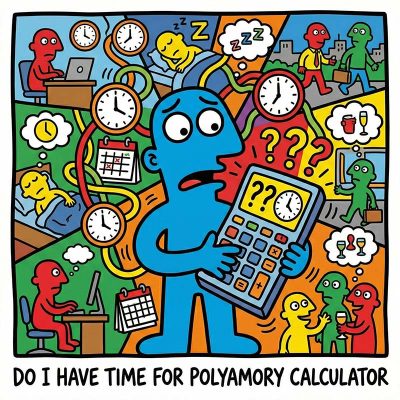
Love is infinite, but your calendar is brutally finite. The fantasy is deep connection; the reality is often just exhausted "calendar tetris." Promising time you don't actually have isn't romantic, it’s a recipe for burnout and broken trust. That sinking feeling when you have to cancel again? That’s the sound of overextension destroying your relationships.
This calculator forces you to confront the math of your life. Do you actually have space for another heart, or are you just setting everyone up for disappointment?

The fantasy is total autonomy and connection. The reality? It can feel like drowning in scheduling chaos and misunderstood expectations. That anxiety you feel isn’t just stress; it’s the wobble of living without a default "anchor." Without a solid architecture, Solo Polyamory stops being a life design and starts being a recipe for burnout and confusion.
The Essential Guide replaces the drift with a concrete anchor. We provide the "Solo Ethic," boundary scripts, and burnout protocols needed to protect your peace. Don't just date around—build a life that actually works for you.

Hierarchy sounds like a corporate org chart until someone gets their feelings hurt. That stomach-turning fear that you are just a "secondary" who can be fired at any time is real. If your relationship feels like a secret ranking system, you are doing it wrong.
Ambiguity is where resentment grows. The Essential Guide replaces the "who matters more" panic with a concrete charter. We provide the scripts and equity guardrails needed to protect every heart in the polycule. Stop guessing and start building.

The ideal is pure equality. The reality? It often slides into hidden rankings where someone gets hurt. That sinking feeling that you are secretly a "secondary" despite the label? That is your intuition detecting couple privilege. Ambiguity is where resentment thrives.
The Essential Guide replaces vague promises with concrete governance. We provide the charters, equity tools, and jealousy protocols needed to ensure "non-hierarchical" isn't just a fantasy. Stop guessing who matters most. Build a network that is actually fair.
The fantasy is total autonomy and connection. The reality? It can feel like drowning in scheduling chaos and misunderstood expectations. That anxiety you feel isn’t just stress; it’s the wobble of living without a default "anchor." Without a solid architecture, Solo Polyamory stops being a life design and starts being a recipe for burnout and confusion.
The Essential Guide replaces the drift with a concrete anchor. We provide the "Solo Ethic," boundary scripts, and burnout protocols needed to protect your peace. Don't just date around—build a life that actually works for you.
Hierarchy sounds like a corporate org chart until someone gets their feelings hurt. That stomach-turning fear that you are just a "secondary" who can be fired at any time is real. If your relationship feels like a secret ranking system, you are doing it wrong.
Ambiguity is where resentment grows. The Essential Guide replaces the "who matters more" panic with a concrete charter. We provide the scripts and equity guardrails needed to protect every heart in the polycule. Stop guessing and start building.
Why hidden hierarchy matters in a non hierarchical ENM dynamic
Hidden hierarchy is not just a theoretical concern. It affects how safe people feel in a relationship. It can lead to burnout emotional exhaustion and a sense of being talked over or unseen. In a non hierarchical setup the expectation is that everyone has a voice equal weight and agency. When some voices get more weight without clear open discussion the dynamic starts to tilt toward control and away from consent. The real world rarely looks perfectly fair but a healthy ENM dynamic involves regular check ins renegotiations and a willingness to adjust when someone feels flooded or neglected. The good news is you can spot warning signs early and intervene before dissatisfaction turns into resentment or drift apart.
Warning signs of hidden hierarchy
Below are common patterns that often signal a hidden hierarchy in a non hierarchical polyamory ENM arrangement. You may recognize some or all of these in different moments. The key is to notice a pattern that repeats over time rather than one off incidents. We will describe what to look for and then give practical examples to help you identify these signs in real life scenarios.
1. Unequal distribution of emotional labor
One partner consistently manages the emotional care in the group. They check in with everyone save maybe their own partners last and they feel exhausted while others drift through conversations without carrying any emotional load. This is a classic sign of hidden hierarchy in plain sight. If one person is expected to parent others or run more of the conflict resolution and you can feel the weight of that burden you are seeing an imbalance that deserves a conversation.
2. Time equity gaps
In a fair non hierarchical dynamic you would expect roughly equal time with each partner or at least a negotiated schedule that feels fair to everyone. When one person is always prioritized for dates planning and interaction while others are rarely included something is off. Look for patterns such as a consistent preference for certain days weeks or activities that exclude others by default.
3. Gatekeeping behaviors
Gatekeeping can take many forms. It might be someone who decides who is allowed to date who or who gets access to the shared calendar or group chat. It could involve vetoing new partners in a way that feels non transparent or making others justify every connection they pursue. Gatekeeping creates invisible fences that mimic hierarchy while pretending to be about safety or compatibility. If gatekeeping is happening it is a strong signal that the dynamics are not as open as they claim to be.
4. Unequal decision making
Decision making is a sticky area in any relationship. In a healthy ENM arrangement decisions should involve all those affected. When one person consistently makes major decisions for the group without seeking input or providing a rationale that others can follow you are looking at a hidden hierarchy. Decisions can involve finances scheduling living arrangements or major boundaries. If you notice that one voice is always the loudest and the others simply nod you are seeing a power imbalance in action.
5. Privilege masquerading as preference
Sometimes people use language like we just have different needs or we simply enjoy more time together to mask a real preference for control. If someone claims that a certain arrangement is simply what works best but in practice everyone else feels coerced or overlooked that is a red flag. The distinction between a genuine preference and a default power move can be subtle but it is important.
6. Access to resources favors one person
Resources include money time housing opportunities social energy and emotional support. If one partner receives greater access to these resources not because of consent and negotiated boundaries but because of a de facto privilege you are watching a hidden hierarchy emerge. This sign can appear in small ways such as prioritizing a date venue chosen by one partner without inviting others to contribute or in bigger ways like someone controlling shared finances in a way that limits others choices.
7. The public narrative does not match the private reality
In many dynamics the facts of how time and energy flow are not perfectly aligned with what is said in public. If the group talks about equality but privately the distribution of attention and time is clearly lopsided you have a discrepancy that signals a hidden hierarchy. Pay attention to what is said in group chats and moments when emotions are high because pressure can reveal true preferences and power dynamics.
8. Pressure to perform or behave in a specific way
When partners feel pushed to adopt a certain role or tone to preserve the harmony of the group that is a sign of covert control. This can appear as pressure to be the supportive listener while others are allowed more space to assert themselves or to take on more risk while others are discouraged from experimentation. A dynamic should invite growth not enforce a script that only serves some people.
9. Reputational policing
Sometimes hidden hierarchy shows up as the social management of reputations. If one person is rumored or publicly described as the anchor status or the person who keeps everyone calm while others are expected to be more flexible or invisible that is a sign. Normalizing one person as the central emotional hub while others must fit into a subordinate role is a form of subtle control.
10. Boundary erosion without consent
Healthy ENM practices require ongoing renegotiation of boundaries. When boundaries erode because someone feels they know what is best for the group without checking in with everyone it creates an unspoken hierarchy. If you feel your own boundaries are repeatedly overruled or dismissed you are not alone in that signal. Boundary work is essential and must be a shared responsibility not a privilege for a single person.
11. Tone policing versus accountability
Tone policing happens when one person is told to adjust their tone or style because it makes others uncomfortable while other voices are not given the same constraint. This becomes a tool to silence criticism and maintain a preferred status quo. True accountability means addressing what was said and what was done not policing how people express themselves in the moment.
12. Coercive relationship patterns
Coercive patterns are a higher level danger. They can include subtle manipulation pressure or guilt trips used to steer others toward a preferred outcome while pretending to be about care and consent. If you notice repeated cycles of coercion it is time to pause and reassess. Coercion undermines consent and creates a dangerous form of control that masquerades as a reduced risk or a comfort measure.
Real life scenarios that illustrate hidden hierarchy
Understanding the signs is easier when you see them in context. Here are some mini stories that capture common patterns. These aren't people you know or situations you have seen. They are composite vignettes designed to be relatable and actionable. Use them to reflect on your own dynamics and to spark conversations with your partners.
Scenario one A cautious couple with a gatekeeper
Alex and Jamie are in a non hierarchical triad with Sam. They both value equity but Sam acts as the gatekeeper of new connections. They say we want to stay open and experimental but Sam is the one who approves dates for new partners. Sam rarely discusses new connections with Alex or Jamie in a transparent way. When the group talks Sam speaks first and the others follow. The emotional energy all funnels toward Sam during group conversations and decisions often wait for Sam to weigh in. The imbalance starts with small decisions such as who invites new partners and grows into bigger choices like shared financial decisions and living arrangements. This pattern quietly erodes equal standing for Alex and Jamie.
Scenario two The favorite partner loop
In this story Maya and Theo are both dating a person named Riley. The group intends to treat everyone with fairness but Riley consistently schedules the most enjoyable dates with fewer constraints. When Maya asks for a preference Riley shifts the plan to align with what Riley wants. Theo is often left out of debriefs and devalued in group communication. The emotional labor of processing feelings lands mainly on Maya while Theo feels unseen and less important. This is a subtle but real example of how preference masquerades as harmony while actual equality slips away.
Scenario three The budget imbalance
Nova Vincent is a polyamorous pair that shares their apartment and both have other partners. Nova focuses on maintaining a stable home life and expects that the others will respect the shared space. Vincent often pays for housing and utilities while Nova handles most social planning. The group tells themselves this is a practical arrangement that works for everyone but the financial burden falls mostly on Vincent with little discussion about recalibrating expenses. If asked about money the answer is usually we will revisit it later rather than a concrete plan. The lack of a transparent budget creates a hidden hierarchy around resources.
Scenario four The boundary drift
Kai and Rae have a fluent open dynamic that works well on many days. They decide to add a new partner named Jules. Jules was excited but quickly their boundaries start to slip as the group negotiates schedules. Rae feels pressured to give up Wednesday nights to accommodate Jules while Kai keeps Sundays free for solo time. Jules does not feel heard about how the schedule affects their own needs. The boundary drift becomes normalized and the group stops checking in as a standard practice. Everyone still says we are all equal but the pattern shows that only some voices shape the calendar and the life pattern.
How to address hidden hierarchy when you spot it
Spotting red flags is only useful if you act on them in a constructive way. Here are practical steps you can take to address hidden hierarchy while preserving relationships and self respect.
1. Name the pattern clearly and calmly
Bring up the pattern as a mutual concern not as an accusation. Use specific examples with dates and outcomes. Focus on behavior rather than personality. For example say When we discussed new partners last week the final decision felt like it came from one person and not the group. I want to understand how we can approach this differently in the future.
2. Normalize a renegotiation session
Set up a dedicated time for renegotiation. This could be a monthly check in or a quarterly review. The goal is to have a structured space to discuss time resources boundaries and consent. A renegotiation session works best when everyone comes prepared with their needs and a willingness to listen.
3. Rebalance time and resource allocation
If needed redistribute time spent with different partners and adjust how resources are shared. The point is to make equitable changes visible to everyone. Document the changes in a shared note or calendar so all voices see the plan.
4. Implement a rotating facilitation model
Rotate the lead facilitator for conversations about boundaries and decisions. Rotate roles for events and check ins so no single person always holds the voice or the calendar. This small change can dramatically reduce the sense that one person is always steering the ship.
5. Create a transparent decision making process
Agree on a clear process for major decisions. This can include a standard agenda a minute taker a decision log and a defined way to resolve disagreements. The process should be visible to everyone and revisited during renegotiation moments.
6. Use inclusive communication norms
Agree on how to phrase concerns and how to respond when someone challenges the status quo. Norms could include reflecting what you heard restating your understanding and making space for silence to let others speak. The aim is to reduce defensiveness and lift everyone up.
7. Prioritize consent and safety over harmony at any cost
Harmony is lovely but not at the expense of consent and safe behavior. If a proposed arrangement makes someone feel unsafe or pressured that is not a minor issue to sweep under the rug. You might need to pause the arrangement until all partners feel secure and heard.
Practical tips for maintaining a genuinely non hierarchical ENM dynamic
- Make equity a standing item on agendas for group discussions and dates in the calendar. Regularly review fairness and adjust.
- Encourage every partner to lead a check in with a different partner or group member so voices rotate and nobody feels sidelined.
- Use a written consent log that records agreements changes and the reasons behind them. This helps keep everyone on the same page over time.
- Practice radical transparency without oversharing private information. People deserve privacy but not manipulation behind the scenes.
- Invest in emotional safety by acknowledging hurt and apologizing when harm occurs. Repair is a key part of healthy ENM culture.
- Seek external support if needed. A couples therapist or poly friendly facilitator can help you navigate complex dynamics and avoid resentment.
What to do if you are new to non hierarchical polyamory ENM
Starting out in a non hierarchical ENM dynamic can feel exciting and a little scary. Here are steps to set yourself up for success from day one.
- Clarify your own boundaries and what you want from the arrangement. Write it down and share it early in conversations.
- Ask about how the group handles conflicts and what a renegotiation would look like if needs change.
- Test the waters with small experiments rather than big changes. For example try a single new date with a partner rather than bringing in multiple new relationships at once.
- Keep a log of what feels fair and what does not. Bring it to renegotiation meetings to ground the discussion in concrete examples.
Glossary of useful terms and acronyms
- ENM Ethical Non Monogamy a family of relationship styles that prioritize consent and open communication when dating more than one person.
- Non hierarchical polyamory A polyamorous approach where there is no declared ranking of partners and time and resources are intended to be shared fairly.
- Hidden hierarchy Subtle power dynamics that resemble a ranking though not openly acknowledged.
- Emotional labor The ongoing work of caring for others feelings and the emotional climate of a group.
- Gatekeeping Controlling access to relationships activities or information within the group.
- Time equity A fair distribution of time across all partners and relationships involved.
- Consent culture An environment where consent is continually sought and respected.
- Agency The power and freedom for each person to make choices about their own life and relationships.
- Fairness baseline The minimum standard of equity everyone in the group agrees to.
- Trauma informed practice Approaches that consider past trauma and prioritize safety and healing.
Frequently asked questions
What is hidden hierarchy in non hierarchical polyamory
Hidden hierarchy is when one person or a subset of people hold more influence time or power in the group without openly acknowledging it. It looks like unfair time distribution decisions that feel forced and a tendency to hear certain voices more clearly than others. Recognizing it requires looking for patterns not one e positional moment.
How can I tell if my group has a hidden hierarchy
Watch for repeated patterns like unequal time with partners inconsistent boundary enforcement or one voice dominating discussions. If a group claims equality but the majority of decisions come from one person you are seeing a signal of hidden hierarchy.
What should I do if I feel trapped in a hidden hierarchy
Start with a calm honest conversation focusing on specific behaviors and their impact. Propose renegotiation and request a trial period with new norms. If needed involve a neutral third party such as a poly friendly mediator or therapist to guide the process.
Is hidden hierarchy always intentional
Not always. Sometimes it happens implicitly through habits or past experiences. The difference between a deliberate pattern and an unexamined habit matters. The key is to address it once you spot it and create a path toward equity.
How do I fix these dynamics without burning bridges
Communication is the bridge. Be specific about what you feel and what changes you want. Offer practical adjustments such as rotating decision making roles or creating a transparent shared calendar. Focus on collaborative repair rather than blame.
Can a non hierarchical polyamory relationship survive if a hidden hierarchy is revealed
Yes. Many groups recover from this challenge with honest dialogue and renegotiation. The outcome depends on the willingness of everyone involved to adapt and to rebuild trust and fairness over time.
Practical steps you can take today
- Ask for a group check in this week to review how time and energy are shared.
- Propose a rotating facilitator for the next few conversations so power is not centralized.
- Open a shared document that logs decisions boundaries and renegotiations.
- Invite a neutral third party to help with big decisions if needed.
- Commit to ongoing consent discussions and make space for concerns to be voiced without fear of judgment.
Closing thoughts from The Monogamy Experiment
Equity in non hierarchical polyamory ENM is not a destination it is a practice. It is about showing up honestly listening deeply and being willing to adjust when someone feels unheard or overwhelmed. You deserve relationships where your voice matters and your boundaries are respected. The aim is not to demonize anyone but to keep the space fair for everyone. We hope this guide helps you notice the invisible threads of hierarchy and gives you the confidence to reshape your dynamic into something that feels safe warm and exciting for all involved.
Appendix A practical checklist for ensuring non hierarchical fairness
- Hold regular renegotiation meetings with all parties present
- Use a shared calendar and a transparent decision log
- Rotate leadership roles for conversations and planning
- Document agreements and review them at least every few months
- Encourage all voices to be heard and intervene if someone is interrupted or dismissed
- Revisit boundaries whenever life changes or new partners enter the dynamics
Love is infinite, but your calendar is brutally finite. The fantasy is deep connection; the reality is often just exhausted "calendar tetris." Promising time you don't actually have isn't romantic, it’s a recipe for burnout and broken trust. That sinking feeling when you have to cancel again? That’s the sound of overextension destroying your relationships.
This calculator forces you to confront the math of your life. Do you actually have space for another heart, or are you just setting everyone up for disappointment?
The fantasy is total autonomy and connection. The reality? It can feel like drowning in scheduling chaos and misunderstood expectations. That anxiety you feel isn’t just stress; it’s the wobble of living without a default "anchor." Without a solid architecture, Solo Polyamory stops being a life design and starts being a recipe for burnout and confusion.
The Essential Guide replaces the drift with a concrete anchor. We provide the "Solo Ethic," boundary scripts, and burnout protocols needed to protect your peace. Don't just date around—build a life that actually works for you.
Hierarchy sounds like a corporate org chart until someone gets their feelings hurt. That stomach-turning fear that you are just a "secondary" who can be fired at any time is real. If your relationship feels like a secret ranking system, you are doing it wrong.
Ambiguity is where resentment grows. The Essential Guide replaces the "who matters more" panic with a concrete charter. We provide the scripts and equity guardrails needed to protect every heart in the polycule. Stop guessing and start building.
The ideal is pure equality. The reality? It often slides into hidden rankings where someone gets hurt. That sinking feeling that you are secretly a "secondary" despite the label? That is your intuition detecting couple privilege. Ambiguity is where resentment thrives.
The Essential Guide replaces vague promises with concrete governance. We provide the charters, equity tools, and jealousy protocols needed to ensure "non-hierarchical" isn't just a fantasy. Stop guessing who matters most. Build a network that is actually fair.
The fantasy is total autonomy and connection. The reality? It can feel like drowning in scheduling chaos and misunderstood expectations. That anxiety you feel isn’t just stress; it’s the wobble of living without a default "anchor." Without a solid architecture, Solo Polyamory stops being a life design and starts being a recipe for burnout and confusion.
The Essential Guide replaces the drift with a concrete anchor. We provide the "Solo Ethic," boundary scripts, and burnout protocols needed to protect your peace. Don't just date around—build a life that actually works for you.
Hierarchy sounds like a corporate org chart until someone gets their feelings hurt. That stomach-turning fear that you are just a "secondary" who can be fired at any time is real. If your relationship feels like a secret ranking system, you are doing it wrong.
Ambiguity is where resentment grows. The Essential Guide replaces the "who matters more" panic with a concrete charter. We provide the scripts and equity guardrails needed to protect every heart in the polycule. Stop guessing and start building.
