
What Equality Means and What It Does Not Mean

Let us cut to the chase. In the world of ethical non monogamy ENM there is a thing people talk about a lot but rarely define with real practicality. That thing is equality. Non hierarchical polyamory is built on a promise of equal value for every connection while still honoring the unique needs of each relationship. The truth is that equality does not mean sameness and it does not mean a rigid timetable where everyone gets the same amount of time or attention. It means fairness consent and transparency across the board. This guide is a down to earth, no fluff look at what equality means and what it does not mean in the non hierarchical polyamory space. We will explain terms and acronyms so you can follow along without a glossary in your head every five minutes. We will offer realistic scenarios practical tips and clear boundaries that help relationships thrive without turning into a competition.
Quick Links to Useful Sections
- What non hierarchical polyamory is
- Equality versus hierarchy
- Core principles of equality in ENM
- Consent and open communication
- Fairness not sameness
- Time and energy as resources
- Autonomy and boundaries
- Emotional labor and compersion
- What equality does not mean
- Practical scenarios in non hierarchical ENM
- Scenario 1: Scheduling and time
- Scenario 2: Emotional energy and labor
- Scenario 3: Jealousy management
- Scenario 4: Privacy versus transparency
- Scenario 5: When a partner enters a new relationship
- Must nos in equality practice
- Tools and practices to nurture equality
- Time banking and resource tracking
- Explicit agreements and boundary clarity
- Regular check ins
- Transparency with care
- Compersion practice
- Glossary of terms and acronyms
- Practical tips for building equality into everyday life
- Putting it into practice step by step
- Realistic expectations to avoid burnout
- Handling conflicts without collapsing the equity plan
- Common questions about equality in non hierarchical ENM
- Final thoughts you can carry into your ENM life
What non hierarchical polyamory is
Non hierarchical polyamory is a form of ENM ethical non monogamy in which there is no built in ranking among partners. There are no designated primary partners and no implied ladder of importance. Each connection is valued on its own terms. People choose this dynamic because it allows for freedom autonomy and honesty while still creating a supportive network of loving relationships. In contrast a hierarchical setup might designate a primary partner and one or more secondary partners with varying levels of priority or access to time or resources. In a non hierarchical arrangement the aim is to treat each connection with fairness and respect while recognizing that needs energy and boundaries will differ from person to person and from relationship to relationship.
Equality versus hierarchy
Equality in this context is not about making every date identical or giving every partner the exact same experience. It is about ensuring fair processes open communication and equitable access to resources like time energy and emotional labor while respecting individual boundaries. The core idea is that all connections are valuable and deserve consideration even when the support each person needs looks different at different times. A non hierarchical approach also recognizes that life happens. Some weeks one relationship may require more energy others may be more balanced. Equality means adjusting with integrity not forcing an arbitrary rule that ignores reality.
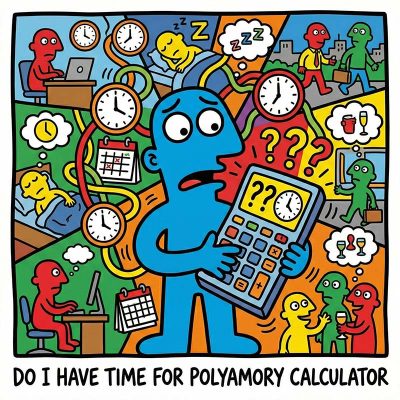
Love is infinite, but your calendar is brutally finite. The fantasy is deep connection; the reality is often just exhausted "calendar tetris." Promising time you don't actually have isn't romantic, it’s a recipe for burnout and broken trust. That sinking feeling when you have to cancel again? That’s the sound of overextension destroying your relationships.
This calculator forces you to confront the math of your life. Do you actually have space for another heart, or are you just setting everyone up for disappointment?

The fantasy is total autonomy and connection. The reality? It can feel like drowning in scheduling chaos and misunderstood expectations. That anxiety you feel isn’t just stress; it’s the wobble of living without a default "anchor." Without a solid architecture, Solo Polyamory stops being a life design and starts being a recipe for burnout and confusion.
The Essential Guide replaces the drift with a concrete anchor. We provide the "Solo Ethic," boundary scripts, and burnout protocols needed to protect your peace. Don't just date around—build a life that actually works for you.

Hierarchy sounds like a corporate org chart until someone gets their feelings hurt. That stomach-turning fear that you are just a "secondary" who can be fired at any time is real. If your relationship feels like a secret ranking system, you are doing it wrong.
Ambiguity is where resentment grows. The Essential Guide replaces the "who matters more" panic with a concrete charter. We provide the scripts and equity guardrails needed to protect every heart in the polycule. Stop guessing and start building.
The ideal is pure equality. The reality? It often slides into hidden rankings where someone gets hurt. That sinking feeling that you are secretly a "secondary" despite the label? That is your intuition detecting couple privilege. Ambiguity is where resentment thrives.
The Essential Guide replaces vague promises with concrete governance. We provide the charters, equity tools, and jealousy protocols needed to ensure "non-hierarchical" isn't just a fantasy. Stop guessing who matters most. Build a network that is actually fair.
The fantasy is total autonomy and connection. The reality? It can feel like drowning in scheduling chaos and misunderstood expectations. That anxiety you feel isn’t just stress; it’s the wobble of living without a default "anchor." Without a solid architecture, Solo Polyamory stops being a life design and starts being a recipe for burnout and confusion.
The Essential Guide replaces the drift with a concrete anchor. We provide the "Solo Ethic," boundary scripts, and burnout protocols needed to protect your peace. Don't just date around—build a life that actually works for you.
Hierarchy sounds like a corporate org chart until someone gets their feelings hurt. That stomach-turning fear that you are just a "secondary" who can be fired at any time is real. If your relationship feels like a secret ranking system, you are doing it wrong.
Ambiguity is where resentment grows. The Essential Guide replaces the "who matters more" panic with a concrete charter. We provide the scripts and equity guardrails needed to protect every heart in the polycule. Stop guessing and start building.
Core principles of equality in ENM
Consent and open communication
Consent is the foundation of any ethical non monogamy arrangement. Equality depends on ongoing transparent conversations about feelings needs boundaries and changes in situation. Everyone involved should have a clear sense of what is happening and why. This means checking in regularly sharing concerns and being willing to adjust agreements when necessary. It also means listening without judgment when someone expresses discomfort even if that discomfort is not about you directly. Communication is not a one time event it is a continuous practice.
Fairness not sameness
Equality means fairness not sameness. You do not owe the same experiences to every partner. You do owe respect fairness and honest effort. Fairness can look different depending on the person and the moment. It may involve more time with one partner during a difficult period or more emotional labor for another partner during a stressful time. The key is to stay attuned to needs and to negotiate changes in a principled way rather than letting demands or assumptions drive decisions.
Time and energy as resources
Time and energy are finite resources. In a non hierarchical setup the way those resources are allocated should be discussed and agreed upon. This does not mean everyone gets equal minutes on a clock. It means there is a shared understanding of how much time and emotional labor can be devoted to each relationship and how that may shift when life changes. When someone needs more of your time due to illness or life events you approach the situation with honesty and a plan that respects all connections.
Autonomy and boundaries
Equality honors autonomy for everyone. Each person has the right to set their own boundaries and to change them as needed. Boundaries can include how much information is shared who is involved in certain activities and the pace of developing new connections. The non hierarchical model supports boundaries that are explicit rather than assumed and conversations that normalize renegotiation rather than conflict.
Emotional labor and compersion
Equality also involves ideas about emotional labor and how joy kindness and support are distributed. Emotional labor includes planning coordinating check ins and supporting partners through tough times. When people share responsibilities fairly it reduces burnout and keeps relationships healthy. Compersion the feeling of joy from a partner s happiness with someone else is a real practice. It is not mandatory but it is a skill that grows with empathy and honest reflection.
What equality does not mean
- Equality does not mean every partner gets the same amount of time every week. It means fair access to attention and support based on current needs and agreements.
- Equality does not mean negating personal differences. Each relationship has its own rhythm and its own set of boundaries that suit the people involved.
- Equality does not mean ignoring jealousy. It means facing jealousy openly with strategies that work for the whole network rather than letting it sour a relationship in private.
- Equality does not mean all information is shared with everyone all the time. Privacy is important and boundaries around disclosure are part of a fair system.
- Equality does not require a rigid timetable. It requires predictable processes for decision making and conflict resolution so no one feels left out or steamrolled.
In a non hierarchical arrangement you may hear phrases like equal value a fair distribution of emotion and a transparent decision making process. These phrases are not about enforcing sameness. They are about ensuring that every person and every connection is treated with respect and that the rules you choose together reflect the realities of your lives.
Practical scenarios in non hierarchical ENM
Scenario 1: Scheduling and time
Two partners have different needs when it comes to time. One partner has a demanding job and appreciates longer dates spaced farther apart. The other partner thrives on shorter more frequent check ins and enjoys more casual time. Equality here means acknowledging both needs and negotiating a sane schedule that honors each person s pattern. It does not mean giving the same number of hours to each person every week. It means keeping an open calendar a willingness to adapt and clear communication about what is feasible.
Scenario 2: Emotional energy and labor
One relationship requires more emotional labor during a stressful period while another relationship goes through a calm phase. Equality means recognizing that emotional load is not always evenly distributed and stepping up where needed while keeping a plan for balance. It might mean one partner takes on more planning and outreach for a while while another partner takes a step back. Everyone agrees to recalibrate as feelings shift.
Scenario 3: Jealousy management
Jealousy happens in every kind of relationship. In a non hierarchical network jealousy is addressed as a collective issue rather than an individual failure. The group uses agreed upon scripts for discussing jealousy and a plan for supporting each other through uncomfortable moments. The goal is to reduce pain not to punish someone for feeling uneasy. The approach is to listen validate and adjust as a team rather than to blame a single person.
Scenario 4: Privacy versus transparency
In some networks a partner may want more privacy about specific aspects of their life. In others the preference is more openness. Equality means negotiating boundaries that respect individual privacy while maintaining trust across the network. It also means sharing enough information to prevent miscommunication and to avoid secrets that erode trust. The exact balance is a product of discussion and mutual consent not a rule handed down from above.
Scenario 5: When a partner enters a new relationship
New connections can change energy dynamics. Equality means discussing how a new relationship affects time attention and emotional labor for existing partners. It means updating agreements if needed and ensuring that no one feels squeezed out. It also means celebrating new connections and giving space for everyone to grow without forcing changes before they are ready.
Must nos in equality practice
- Do not assume you know what another partner needs without asking. Ask respectfully and listen.
- Do not punish someone for having honest feelings such as jealousy or discomfort. Name it and work through it as a group.
- Do not enforce a rigid one size fits all policy for time and resources. Flexibility is essential in a living network.
- Do not pretend issues are trivial. Respect every partner s concerns and work to address them with care.
- Do not hide decisions behind “because it is how we do things here.” Be explicit about why a choice was made and who was involved in the decision.
Tools and practices to nurture equality
Time banking and resource tracking
Set up a simple system to track time spent with each partner and the emotional labor you are contributing. A shared calendar a mutual log or a weekly check in note can help everyone see where time is going. The aim is transparency not judgment. If someone notices a growing imbalance you can address it early before frustration builds.
Explicit agreements and boundary clarity
Put agreements in writing even if they are informal. Clarify what each partner expects what is off limits and what to do if something changes. Revisit these agreements on a regular basis or when major life events occur. Writing things down makes it easier to refer back to them when feelings are high.
Regular check ins
Schedule regular conversations about how things are going. A routine check in reduces the chance of hidden tensions growing into bigger problems. In these talks use felt sense language describe your experience and avoid accusing others. Focus on needs intentions and possible solutions rather than blame.
Transparency with care
Sharing information is valuable but privacy remains important. Decide together what needs to be transparent and what can stay private. The goal is a foundation of trust not a scramble for a complete open book. When in doubt pause and discuss the best approach for your group.
Compersion practice
Compersion is the experience of feeling happy for a partner s joy with another person. It is easier to achieve when you have a culture of trust and honest celebration rather than competition. Practicing compersion can involve acknowledging another relationship s strengths acknowledging your own growth and expressing genuine happiness for your partner s satisfaction.
Glossary of terms and acronyms
- ENM Ethical Non Monogamy. A broad term for relationships that involve more than one consensual romantic or sexual connection with all parties involved aware and consenting.
- NHP Non Hierarchical Polyamory. A polyamory form without a formal ranking of partners where each relationship is valued for its own reasons.
- Polyamory The practice or desire for intimate relationships with more than one partner with the informed consent of everyone involved.
- Primary A term used in some dynamics to describe a partner who has a central role. In non hierarchical setups this label is avoided or de emphasized because it can create a sense of unequal status.
- Secondary A partner who is not in the same tier as a primary in some dynamics. In non hierarchical models this term is often replaced with more neutral language or avoided.
- Compersion A feeling of joy from your partner s happiness with someone else. It is the opposite of jealousy and a sign of healthy security.
- Jealousy script A prepared way to talk about jealousy that avoids blame and focuses on feelings and needs.
- Boundaries Personal lines that identify what is acceptable and what is off limits in a relationship.
- Consent An ongoing agreement given freely by all parties for activities that involve more than one person.
- Transparency Openness about expectations feelings and practical arrangements within the network.
Practical tips for building equality into everyday life
- Lead with shared values. Start every negotiation from what you all want most for your relationships and your lives.
- Practice active listening. Reflect back what you heard before adding your own perspective.
- Use neutral language. Avoid language that assigns blame when discussing conflicts or discomfort.
- Celebrate each other s growth. Create moments to acknowledge when a partner handles a tough situation well.
- Keep boundaries flexible. Update rules as life changes and as you learn what works best.
- Document agreements. Make it easy to reference what was decided without wading through memory.
- Be proactive about emotional labor. If you notice you are carrying a heavy load offer to share the tasks or rotate responsibilities.
- Encourage experimentation. Try new arrangements with consent and then assess what is working and what is not.
Putting it into practice step by step
Step one is to have a frank conversation with all involved about what equality means in your network. Step two is to draft a set of written agreements that cover time energy boundaries and disclosure. Step three is to establish a regular cadence for check ins and a simple system to track resources. Step four is to practice compersion and support each other s choices. Step five is to revisit the agreements periodically so they stay relevant as life evolves.
Realistic expectations to avoid burnout
Expect that not every week will feel perfectly fair. Sometimes one person will need more time and energy due to work or health issues. The key is transparency and a plan to rebalance when that week passes. Don t aim for perfection. Aim for integrity warmth and honesty. In a healthy network equality is a living practice not a trophy you win and then forget about.
Handling conflicts without collapsing the equity plan
Conflicts happen even in the best designed networks. When they do address them quickly and in a structured way. Start with describing your experience using I statements and avoid blaming language. Then name what you need and propose possible solutions. The group should work together to find a path forward that honors all involved. If a solution is not immediately clear schedule a follow up with a cooling off period in between. The aim is to move toward resolution not to magnify the problem.
Common questions about equality in non hierarchical ENM
Below you will find a glossary of terms and practical guidance that can help you keep equality at the center of your network. If you want more detail on any point you can refer back to the scenarios and check lists in this article.
- What does equality mean if two partners want different kinds of intimacy or connection? Equality means honoring both needs through fair negotiation and clear agreements rather than insisting on the same approach for everyone.
- If one partner begins a new relationship how does that affect the rest of the network? It should not automatically change the status of existing connections. Equality means discussing the impact and adjusting plans with everyone s input.
- Is there such a thing as too much openness in an ENM network? Openness is valuable but it must be accompanied by consent and respect for boundaries. Privacy remains important for some relationships and that is acceptable when discussed and agreed upon.
- How do we handle time when one person is navigating life events like work stress or family needs? Create a temporary plan that redistributes time and energy while maintaining the fairness and values of the network. Revisit when things settle down.
Final thoughts you can carry into your ENM life
Equality in non hierarchical polyamory is about shared respect consistent communication and practical fairness. It is not about forcing identical experiences or treating every connection the same. It is about creating a framework that allows diverse relationships to flourish while honoring individual boundaries needs and desires. Language matters and so does listening. Keep the dialogue open keep the agreements clear and keep the love alive across all connections. The journey is ongoing and the payoff is a network built on trust growth and genuine care for one another.
Love is infinite, but your calendar is brutally finite. The fantasy is deep connection; the reality is often just exhausted "calendar tetris." Promising time you don't actually have isn't romantic, it’s a recipe for burnout and broken trust. That sinking feeling when you have to cancel again? That’s the sound of overextension destroying your relationships.
This calculator forces you to confront the math of your life. Do you actually have space for another heart, or are you just setting everyone up for disappointment?
The fantasy is total autonomy and connection. The reality? It can feel like drowning in scheduling chaos and misunderstood expectations. That anxiety you feel isn’t just stress; it’s the wobble of living without a default "anchor." Without a solid architecture, Solo Polyamory stops being a life design and starts being a recipe for burnout and confusion.
The Essential Guide replaces the drift with a concrete anchor. We provide the "Solo Ethic," boundary scripts, and burnout protocols needed to protect your peace. Don't just date around—build a life that actually works for you.
Hierarchy sounds like a corporate org chart until someone gets their feelings hurt. That stomach-turning fear that you are just a "secondary" who can be fired at any time is real. If your relationship feels like a secret ranking system, you are doing it wrong.
Ambiguity is where resentment grows. The Essential Guide replaces the "who matters more" panic with a concrete charter. We provide the scripts and equity guardrails needed to protect every heart in the polycule. Stop guessing and start building.
The ideal is pure equality. The reality? It often slides into hidden rankings where someone gets hurt. That sinking feeling that you are secretly a "secondary" despite the label? That is your intuition detecting couple privilege. Ambiguity is where resentment thrives.
The Essential Guide replaces vague promises with concrete governance. We provide the charters, equity tools, and jealousy protocols needed to ensure "non-hierarchical" isn't just a fantasy. Stop guessing who matters most. Build a network that is actually fair.
The fantasy is total autonomy and connection. The reality? It can feel like drowning in scheduling chaos and misunderstood expectations. That anxiety you feel isn’t just stress; it’s the wobble of living without a default "anchor." Without a solid architecture, Solo Polyamory stops being a life design and starts being a recipe for burnout and confusion.
The Essential Guide replaces the drift with a concrete anchor. We provide the "Solo Ethic," boundary scripts, and burnout protocols needed to protect your peace. Don't just date around—build a life that actually works for you.
Hierarchy sounds like a corporate org chart until someone gets their feelings hurt. That stomach-turning fear that you are just a "secondary" who can be fired at any time is real. If your relationship feels like a secret ranking system, you are doing it wrong.
Ambiguity is where resentment grows. The Essential Guide replaces the "who matters more" panic with a concrete charter. We provide the scripts and equity guardrails needed to protect every heart in the polycule. Stop guessing and start building.
