
What People Wish They Knew Before Starting

Starting a life in ethical non monogamy can feel like stepping onto a roller coaster with no seat belt and no map. You can hear stories from friends, read a dozen articles, and still feel unprepared for the ordinary chaos and surprising joy that comes with loving more than one person. This guide is designed to give you the down to earth truths that people wish they had known before diving into non hierarchical polyamory inside the world of ethical non monogamy or ENM. We will break down terms, share realistic scenarios, and offer practical tools you can use from day one. No fluff. Just real talk from someone who has seen the patterns and wants you to have fewer surprises and more connection. If you are curious about relationship anarchy or the idea that there is no ladder when it comes to love relationships this guide is for you.
Quick Links to Useful Sections
- What non hierarchical polyamory means in ENM
- The big picture you wish you knew before starting
- 1. Communication is the foundation not a bonus
- 2. Expect change and practice flexibility
- 3. Jealousy is a signal not a verdict
- 4. Privacy is not secrecy
- 5. Time management is a skill not a luxury
- 6. Consent is ongoing not a one off event
- 7. Safety and health are non negotiable
- 8. There is no single template that fits all
- 9. The hard conversations are worth it
- 10. Self care is a foundation not a luxury
- What you should discuss before starting a non hierarchical ENM setup
- Practical approaches to starting with non hierarchical polyamory
- 1. Start with a small core and expand thoughtfully
- 2. Use transparent scheduling routines
- 3. Establish a practice of weekly or bi weekly check ins
- 4. Write down your agreements and revisit them
- 5. Build a culture of compersion and care
- 6. Create a privacy ladder that makes sense for you
- Common myths and realities about non hierarchical ENM
- Jealousy and dealing with uncomfortable feelings in a non hierarchical setup
- Sexual health and safe practices in ENM
- The relational toolkit you will wish you had from day one
- Realistic scenarios and how to handle them in a non hierarchical ENM world
- Scenario one a new partner introduces a change in your routine
- Scenario two jealousy around attention and affection
- Scenario three a partner wants to explore a new relationship while you are not ready
- Scenario four dealing with a partner who is non communicative
- Scenario five social circles and family opinions
- Use cases how a non hierarchical ENM dynamic can look in real life
- Relational alignment and personal growth within ENM
- Glossary of useful terms and acronyms
- Practical tips for sustaining a non hierarchical ENM life
- What people wish they knew about consent in ENM
- Is ENM right for you
- Final thoughts before you begin
- Frequently asked questions
What non hierarchical polyamory means in ENM
Ethical non monogamy or ENM describes a way of forming romantic or intimate connections with the knowledge and consent of everyone involved. It is not about breaking rules it is about creating agreements that respect each person s needs and autonomy. The term non hierarchical polyamory in particular signals a stance that there is no single ladder or master slave arrangement. In practice this means there are no default top tier relationships that trump others. People in ENM may have multiple partners and each relationship is valued in its own right. The key idea is consent honesty and ongoing communication.
Let us unpack some common terms you will hear in discussions about this topic.
- ENM Ethical non monogamy. A broad umbrella for relationships that involve more than two people with consent and clear communication.
- Non hierarchical A principle that rejects a pecking order where one relationship is superior to others. In this setup every connection is acknowledged as its own dynamic.
- Polyamory Love or sexual relationships with more than one person at the same time with the knowledge and consent of everyone involved.
- Relationship anarchy A philosophy often associated with non hierarchical polyamory where the focus is on individual autonomy and negotiated agreements rather than fixed roles.
- Compersion The feeling of happiness because your partner is happy with another partner. It is the opposite of jealousy and a skill to cultivate.
- Jealousy management The set of strategies used to recognize the emotion then respond in a way that honors all people involved.
- Boundaries The limits or guardrails that help people feel safe and respected. In non hierarchical setups boundaries are often negotiable and revisited.
- Agreements The explicit understandings reached between people about how they will navigate their relationships. Agreements can cover time some activities disclosure and safety.
The big picture you wish you knew before starting
Before you begin there are a few truths that show up again and again. Knowing them can save you from common pitfalls and shorten the learning curve. Here are the core ideas to carry with you from day one.
1. Communication is the foundation not a bonus
In a non hierarchical polyamory dynamic you will never have enough conversations. You will want more conversations not fewer. The goal is not to win a debate it is to understand each other s needs and to translate those needs into practical actions. Regular check ins about feelings schedules boundaries and evolving attractions are essential.
2. Expect change and practice flexibility
People change and relationships shift. Your agreements should be living documents. The ability to revisit and adjust without drama is a superpower in ENM. If you cling to a plan that no longer fits you will have friction fear and disappointment. Expect change and practice flexibility.
3. Jealousy is a signal not a verdict
Jealousy is information. It usually points to a need or a boundary that has not been fully acknowledged. The emotion itself is not an accusation against a partner it is a prompt to pause reflect and talk. If you can reframe jealousy as data you move closer to resolution rather than cracking under pressure.
4. Privacy is not secrecy
In ENM you may choose to share different levels of information with different people. Privacy means you protect sensitive feelings without hiding important realities from those who should know. It is possible to be honest while still holding some personal nuance for the right time and audience.
5. Time management is a skill not a luxury
Balancing multiple relationships takes planning. It involves coordinating schedules setting boundaries around your calendar and recognizing when you are spreading yourself too thin. A failure to manage time well can lead to fatigue resentment and burnout.
6. Consent is ongoing not a one off event
Consent in ENM is not a tick box it is a living agreement. People can change their minds about what they want or are comfortable with. Regularly asking for consent and confirming that everyone is still on board is essential.
7. Safety and health are non negotiable
Good sexual health practices protect everyone. Regular STI screening clear communication about sexual boundaries and contraception where relevant are essential elements of responsible ENM.
8. There is no single template that fits all
Non hierarchical polyamory is not a one size fits all model. You and your partner teams will create unique structures that reflect your values your circumstances and your aspirations.
9. The hard conversations are worth it
Early on there will be conversations that feel awkward or uncomfortable. Courage and honesty pay off in the long run. People who avoid tough talks often end up facing more pain later.
10. Self care is a foundation not a luxury
Your wellbeing matters. You cannot pour from an empty cup. Prioritize sleep nutrition exercise and mental health supports. Self care gives you the stamina to show up for your partners with presence and generosity.
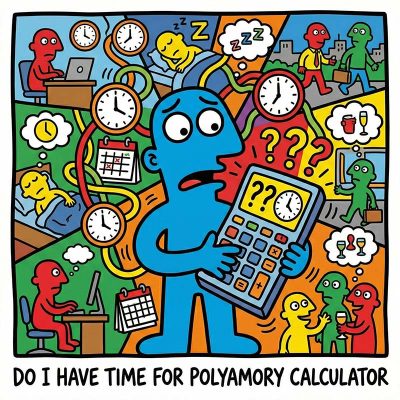
Love is infinite, but your calendar is brutally finite. The fantasy is deep connection; the reality is often just exhausted "calendar tetris." Promising time you don't actually have isn't romantic, it’s a recipe for burnout and broken trust. That sinking feeling when you have to cancel again? That’s the sound of overextension destroying your relationships.
This calculator forces you to confront the math of your life. Do you actually have space for another heart, or are you just setting everyone up for disappointment?

The fantasy is total autonomy and connection. The reality? It can feel like drowning in scheduling chaos and misunderstood expectations. That anxiety you feel isn’t just stress; it’s the wobble of living without a default "anchor." Without a solid architecture, Solo Polyamory stops being a life design and starts being a recipe for burnout and confusion.
The Essential Guide replaces the drift with a concrete anchor. We provide the "Solo Ethic," boundary scripts, and burnout protocols needed to protect your peace. Don't just date around—build a life that actually works for you.
Hierarchy sounds like a corporate org chart until someone gets their feelings hurt. That stomach-turning fear that you are just a "secondary" who can be fired at any time is real. If your relationship feels like a secret ranking system, you are doing it wrong.
Ambiguity is where resentment grows. The Essential Guide replaces the "who matters more" panic with a concrete charter. We provide the scripts and equity guardrails needed to protect every heart in the polycule. Stop guessing and start building.
The ideal is pure equality. The reality? It often slides into hidden rankings where someone gets hurt. That sinking feeling that you are secretly a "secondary" despite the label? That is your intuition detecting couple privilege. Ambiguity is where resentment thrives.
The Essential Guide replaces vague promises with concrete governance. We provide the charters, equity tools, and jealousy protocols needed to ensure "non-hierarchical" isn't just a fantasy. Stop guessing who matters most. Build a network that is actually fair.
The fantasy is total autonomy and connection. The reality? It can feel like drowning in scheduling chaos and misunderstood expectations. That anxiety you feel isn’t just stress; it’s the wobble of living without a default "anchor." Without a solid architecture, Solo Polyamory stops being a life design and starts being a recipe for burnout and confusion.
The Essential Guide replaces the drift with a concrete anchor. We provide the "Solo Ethic," boundary scripts, and burnout protocols needed to protect your peace. Don't just date around—build a life that actually works for you.
Hierarchy sounds like a corporate org chart until someone gets their feelings hurt. That stomach-turning fear that you are just a "secondary" who can be fired at any time is real. If your relationship feels like a secret ranking system, you are doing it wrong.
Ambiguity is where resentment grows. The Essential Guide replaces the "who matters more" panic with a concrete charter. We provide the scripts and equity guardrails needed to protect every heart in the polycule. Stop guessing and start building.
What you should discuss before starting a non hierarchical ENM setup
When you start a new dynamic with ENM you will want to cover a broad set of topics early. Here is a practical list you can bring to the first major conversation.
- Current relationship status and life stage Talk about where you are emotionally financially and in terms of time.
- Communication style How often will you check in what formats work best for you and how will you handle conflict when it arises.
- Boundaries and agreements What are the non negotiables what would you like to explore what would you consider a red line.
- Sexual health and safety STI testing frequency contraception boundaries with casual partners and how you will disclose new partners.
- Time management Will you block time for each partner how will you handle new commitments and surprises.
- disclosure and privacy What information will you share with close friends family or coworkers.
- Financial realities Are there shared expenses or gifts or travel costs that need to be discussed.
- Family and social circles How will you navigate friends and family who may not understand ENM.
- Relationship culture What kind of relationship atmosphere do you want to cultivate were there role expectations that feel important.
Practical approaches to starting with non hierarchical polyamory
Starting strong means building a structure that can adapt. Here are practical steps that many people find helpful when the goal is to grow without introducing a strict ladder of importance.
1. Start with a small core and expand thoughtfully
Many people begin with one additional meaningful connection rather than trying to juggle several at once. This approach makes it easier to build trust learn the ropes and develop a shared rhythm. As comfort grows you can consider welcome new connections with the same careful approach.
2. Use transparent scheduling routines
Create a shared calendar or a scheduling system that respects everyone s time. Regular planning sessions help prevent situations where someone feels neglected. It also makes it easier to notice when someone is overcommitted.
3. Establish a practice of weekly or bi weekly check ins
A short check in can cover what is going well what could be improved and what new needs have arisen. You can keep these conversations focused and non punitive by using a simple template and a timer.
4. Write down your agreements and revisit them
Having written agreements reduces miscommunication. Revisit these agreements every few months and adjust as needed.
5. Build a culture of compersion and care
Ask yourself what would help your partners feel seen heard and cherished. Practice listening without fixing immediately. Celebrate wins in each relationship and show appreciation across the board.
6. Create a privacy ladder that makes sense for you
Privacy is personal. Decide what you share with whom and why. A clear approach reduces the risk of accidental oversharing and helps everyone feel respected.
Common myths and realities about non hierarchical ENM
There are many misconceptions about ENM and non hierarchical polyamory. Here are some of the most common myths and what the realities tend to look like in daily life.
- Myth: You cannot be happy in ENM if you want monogamy at heart. Reality: Many people who choose ENM do so because they value honesty and freedom rather than because they lack commitment. Happiness comes from the depth of connection not the number of people involved.
- Myth: ENM leads to chaos and a lack of safety. Reality: Relationship anarchy does not mean reckless behavior. Clear boundaries consent and health practices create a safe framework that works for many people.
- Myth: You must love every partner equally. Reality: Love is not a metric you measure with a scale. You can care for each partner differently depending on context and history.
- Myth: ENM is only for the young and fearless. Reality: People of many ages and life stages explore ENM with different energy levels and different timing.
- Myth: Opening up means you do not know what you want from a relationship. Reality: ENM is often about clarifying what you want and negotiating it with care and consistency.
Jealousy and dealing with uncomfortable feelings in a non hierarchical setup
Jealousy shows up for most of us at some point. In ENM this feeling can be a signal to slow down not a reason to end a relationship. Here are some practical approaches to handling jealousy.
- Name the feeling Say I am feeling jealous right now and describe what is behind that feeling.
- Pause and breathe Take a few slow breaths to reduce agitation. Short silence can help you think clearly.
- Check the need behind the emotion Do you need more time more reassurance more space for your own interests.
- Ask for a specific adjustment Instead of saying stop seeing someone you might say I would like more time with you or a short weekly date night with me.
- Practice compersion Try to feel happiness for your partner s joy while you work with your own needs. This is a muscle that grows with practice.
Sexual health and safe practices in ENM
Open relationships can offer exciting discoveries but safety has to be a priority. Here is a practical framework for staying healthy and respectful.
- Regular STI testing Schedule routine tests for yourself and encourage partners who are open to it to do the same.
- Transparent disclosures Share relevant health information with all partners in a timely manner.
- Contraception and pregnancy planning Have honest conversations about contraception pregnancy plans and what to do if there is an unplanned pregnancy.
- Safe sex practices Use barrier methods when appropriate and discuss any drug or alcohol use that might affect decision making.
Love is infinite, but your calendar is brutally finite. The fantasy is deep connection; the reality is often just exhausted "calendar tetris." Promising time you don't actually have isn't romantic, it’s a recipe for burnout and broken trust. That sinking feeling when you have to cancel again? That’s the sound of overextension destroying your relationships.
This calculator forces you to confront the math of your life. Do you actually have space for another heart, or are you just setting everyone up for disappointment?
The fantasy is total autonomy and connection. The reality? It can feel like drowning in scheduling chaos and misunderstood expectations. That anxiety you feel isn’t just stress; it’s the wobble of living without a default "anchor." Without a solid architecture, Solo Polyamory stops being a life design and starts being a recipe for burnout and confusion.
The Essential Guide replaces the drift with a concrete anchor. We provide the "Solo Ethic," boundary scripts, and burnout protocols needed to protect your peace. Don't just date around—build a life that actually works for you.
Hierarchy sounds like a corporate org chart until someone gets their feelings hurt. That stomach-turning fear that you are just a "secondary" who can be fired at any time is real. If your relationship feels like a secret ranking system, you are doing it wrong.
Ambiguity is where resentment grows. The Essential Guide replaces the "who matters more" panic with a concrete charter. We provide the scripts and equity guardrails needed to protect every heart in the polycule. Stop guessing and start building.
The ideal is pure equality. The reality? It often slides into hidden rankings where someone gets hurt. That sinking feeling that you are secretly a "secondary" despite the label? That is your intuition detecting couple privilege. Ambiguity is where resentment thrives.
The Essential Guide replaces vague promises with concrete governance. We provide the charters, equity tools, and jealousy protocols needed to ensure "non-hierarchical" isn't just a fantasy. Stop guessing who matters most. Build a network that is actually fair.
The fantasy is total autonomy and connection. The reality? It can feel like drowning in scheduling chaos and misunderstood expectations. That anxiety you feel isn’t just stress; it’s the wobble of living without a default "anchor." Without a solid architecture, Solo Polyamory stops being a life design and starts being a recipe for burnout and confusion.
The Essential Guide replaces the drift with a concrete anchor. We provide the "Solo Ethic," boundary scripts, and burnout protocols needed to protect your peace. Don't just date around—build a life that actually works for you.
Hierarchy sounds like a corporate org chart until someone gets their feelings hurt. That stomach-turning fear that you are just a "secondary" who can be fired at any time is real. If your relationship feels like a secret ranking system, you are doing it wrong.
Ambiguity is where resentment grows. The Essential Guide replaces the "who matters more" panic with a concrete charter. We provide the scripts and equity guardrails needed to protect every heart in the polycule. Stop guessing and start building.
The relational toolkit you will wish you had from day one
Below is a compact toolkit of strategies that help you stay grounded when you are building a non hierarchical ENM dynamic.
- Shared rituals A weekly check in a monthly planning session a simple text that says I love you these small rituals create a sense of safety.
- Transparent calendars Visibility over each other s schedules reduces uncertainty and avoids accidental neglect.
- Written agreements A living document that can be updated as life changes.
- Health and safety routines Regular medical appointments inclusive of everyone who wishes to participate.
- Emotional labor support Acknowledge the extra planning that goes into ENM and offer practical support to partners who do more of it.
Realistic scenarios and how to handle them in a non hierarchical ENM world
Let us walk through a few common situations and show how people can navigate them with care and humor.
Scenario one a new partner introduces a change in your routine
You might have a schedule that revolves around one partner and now a new person wants more time. The instinct might be to push back but a better approach is to reevaluate the calendar and make space in a way that honors everyone. A practical move is to set a trial period with check ins.
Scenario two jealousy around attention and affection
Jealousy often mirrors a need for more reassurance or a different kind of connection. You can respond with a specific request such as I would like to have a weekly date with you and still enjoy time with your other partner. Avoid blaming language.
Scenario three a partner wants to explore a new relationship while you are not ready
Give yourself permission to slow down. You can acknowledge the interest their feelings while setting a clear boundary that you are not ready for a new relationship at this moment. You can offer alternatives such as continuing with the current arrangements while you assess your own readiness.
Scenario four dealing with a partner who is non communicative
Communication is central in ENM. If a partner does not respond to messages or check ins set a gentle boundary such as I need to know where things stand by Friday. If needed you can pause new activities until communication improves.
Scenario five social circles and family opinions
You may encounter questions or judgments from people who do not understand ENM. You can respond with a short calm explanation and then steer the conversation toward what matters to you your values and your chosen way of loving. It is perfectly acceptable to acknowledge that not everyone will understand and to protect your emotional bandwidth.
Use cases how a non hierarchical ENM dynamic can look in real life
Because every relationship is unique the most helpful pictures are often concrete scenes. Here are a few mini stories that illustrate how non hierarchical polyamory can feel in real life without becoming a verbose plan.
- Story one three partners and a day trip The trio plans a day trip to a nearby park. They coordinate time for each connection with care and they practice checking in during the day. By the end of the trip all three feel seen and valued.
- Story two solo poly and partner communication One partner prefers a lot of solo activities while another enjoys date nights. They establish a shared calendar and a rule about one to one time with each person every two weeks. They adjust as needs change.
- Story three long term friends entering a polyamorous dynamic A circle of friends expands into a small network. They discuss boundaries about what to share and with whom and how to celebrate together. Over time the group finds a rhythm that feels respectful and joyful.
Relational alignment and personal growth within ENM
Non hierarchical polyamory can be a powerful catalyst for personal growth and better relationship skills. The practice of honest negotiation and ongoing reflection often improves communication in all areas of life. It teaches you to name needs clearly to tolerate discomfort gracefully and to celebrate the successes of others while pursuing your own authentic path.
As you journey through this path keep in mind that relationship styles are a set of choices not a fixed destiny. You can adapt you can experiment and you can decide what success looks like for you at different life stages.
Glossary of useful terms and acronyms
- ENM Ethical non monogamy a broad term for relationship styles that involve multiple intimate connections with consent.
- Non hierarchical A design in which no relationship is formally ranked above others.
- RA Relationship anarchy a philosophy that emphasizes autonomy and negotiated agreements over fixed roles.
- Compersion The joy you feel when your partner is happy with another partner.
- Jealousy An emotion that signals a need or boundary that needs attention.
- Time management Planning around multiple relationships to avoid burnout and neglect.
- Boundaries Guardrails about what is acceptable and what is not.
- Agreement An explicit understanding about how relationships will operate.
- Stigma Social disapproval that can affect how you talk about ENM with others.
- Safety practices Health practices designed to protect everyone involved in physical intimacy.
Practical tips for sustaining a non hierarchical ENM life
These tips are the kinds of everyday moves that help you stay connected and hopeful over months and years.
- Keep a living document Agreements evolve as life changes. Revisit them on a regular cadence.
- Lean into routines Regular check ins and predictable communication reduce anxiety and friction.
- Practice radical honesty Share concerns even when they feel awkward. It is easier to adjust together than to pretend nothing is wrong.
- Celebrate the wins Acknowledge when a plan works well and give credit to your partners for their contributions.
- Protect your mental health Stop and reset when you feel overwhelmed. Your wellbeing matters for everyone.
What people wish they knew about consent in ENM
Consent in ENM is an ongoing dynamic not a one time checkbox. Here are some guiding ideas that often go unsaid.
- Consent is ongoing Each new development should get explicit affirmative consent from all involved or adjusted if needed.
- Consent can be withdrawn A partner can change their mind at any moment for any reason and that requires respectful responsiveness.
- Consent requires clarity People should understand exactly what they are agreeing to and what the limits are.
- Consent respects boundaries If a boundary is drawn it should be honored even if that is uncomfortable for someone.
Is ENM right for you
Only you can know the answer to that question. Here are a few reflective prompts you can use to gauge alignment.
- Do you enjoy honest open conversations about emotions and needs on a regular basis.
- Are you comfortable with the idea that love is not a scarce resource and that a relationship can exist with more than one important connection.
- Are you ready to manage schedules and practicalities with care rather than hoping everything will just work itself out.
- Do you want to cultivate compersion and celebrate your partner s happiness even when it involves someone else.
Final thoughts before you begin
This guide is a toolkit not a rule book. The aim is to help you approach non hierarchical ENM with curiosity courage and compassion. There will be missteps and there will certainly be moments of profound connection. The point is to keep showing up to do the work of loving more honestly and more thoughtfully. If you keep learning you will keep growing and your relationships have a better chance to flourish in ways you could not have imagined when you started.
Frequently asked questions
What does non hierarchical mean in practice
In practice it means there is no built in ranking of relationships. Every connection is valued on its own terms and agreements are crafted to meet the needs of the people involved.
How do you handle time with multiple partners
Use a transparent calendar a predictable check in routine and clear expectations about how time is divided. The goal is fairness not perfection and flexibility is essential.
What is the best way to talk about ENM with a partner who is new to this
Start with your own feelings share what you are hoping for and invite questions. Provide a safe space for them to share fears and concerns and reassure them that you are committed to open communication.
How do you approach disclosure to friends and family
Think about how much you want to share and who needs to know. You can provide a concise neutral explanation and offer to answer questions privately if people show interest. You do not have to reveal every detail if that would cause harm or distress.
Is compersion required or expected in ENM
No not required but it is a skill that many people cultivate. It involves feeling joy for a partner s happiness even if you do not experience the same feeling in that moment.
What about sexual health and safety
Regular STI testing honest disclosures and safe sex practices keep everyone safer. Make a clear health plan with all partners and revisit it as needs change.
How do I know if I am ready for ENM
If you consistently feel trapped in monogamy and you value honesty open conversation and shared growth you might be ready to explore. If the idea makes you feel unsafe unsettled or unhappy for reasons you cannot articulate you may want to pause and reflect.
Can ENM work with long term committed relationships
Yes it can. A lot of couples who adopt ENM keep a strong primary connection while welcoming other meaningful relationships. The key is clear communication agreed boundaries and ongoing care for all involved.
Is a relationship with a new partner considered a threat
Not inherently. A new connection can bring energy growth and new perspectives. It can be threatening if fears are not acknowledged or if there is a lack of communication. Pace openness and share feelings as they emerge.
Love is infinite, but your calendar is brutally finite. The fantasy is deep connection; the reality is often just exhausted "calendar tetris." Promising time you don't actually have isn't romantic, it’s a recipe for burnout and broken trust. That sinking feeling when you have to cancel again? That’s the sound of overextension destroying your relationships.
This calculator forces you to confront the math of your life. Do you actually have space for another heart, or are you just setting everyone up for disappointment?
The fantasy is total autonomy and connection. The reality? It can feel like drowning in scheduling chaos and misunderstood expectations. That anxiety you feel isn’t just stress; it’s the wobble of living without a default "anchor." Without a solid architecture, Solo Polyamory stops being a life design and starts being a recipe for burnout and confusion.
The Essential Guide replaces the drift with a concrete anchor. We provide the "Solo Ethic," boundary scripts, and burnout protocols needed to protect your peace. Don't just date around—build a life that actually works for you.
Hierarchy sounds like a corporate org chart until someone gets their feelings hurt. That stomach-turning fear that you are just a "secondary" who can be fired at any time is real. If your relationship feels like a secret ranking system, you are doing it wrong.
Ambiguity is where resentment grows. The Essential Guide replaces the "who matters more" panic with a concrete charter. We provide the scripts and equity guardrails needed to protect every heart in the polycule. Stop guessing and start building.
The ideal is pure equality. The reality? It often slides into hidden rankings where someone gets hurt. That sinking feeling that you are secretly a "secondary" despite the label? That is your intuition detecting couple privilege. Ambiguity is where resentment thrives.
The Essential Guide replaces vague promises with concrete governance. We provide the charters, equity tools, and jealousy protocols needed to ensure "non-hierarchical" isn't just a fantasy. Stop guessing who matters most. Build a network that is actually fair.
The fantasy is total autonomy and connection. The reality? It can feel like drowning in scheduling chaos and misunderstood expectations. That anxiety you feel isn’t just stress; it’s the wobble of living without a default "anchor." Without a solid architecture, Solo Polyamory stops being a life design and starts being a recipe for burnout and confusion.
The Essential Guide replaces the drift with a concrete anchor. We provide the "Solo Ethic," boundary scripts, and burnout protocols needed to protect your peace. Don't just date around—build a life that actually works for you.
Hierarchy sounds like a corporate org chart until someone gets their feelings hurt. That stomach-turning fear that you are just a "secondary" who can be fired at any time is real. If your relationship feels like a secret ranking system, you are doing it wrong.
Ambiguity is where resentment grows. The Essential Guide replaces the "who matters more" panic with a concrete charter. We provide the scripts and equity guardrails needed to protect every heart in the polycule. Stop guessing and start building.
