
When One Partner Has More Time Than Another


Let’s set the scene with a real life moment. You and your partner are navigating a busy life and then you notice one of you has more time to invest in your relationship than the other. In a Non Hierarchical Polyamory world also called Non Hierarchical Polyamory ENM which means there is no ranking among partners for who gets more access or affection time the imbalance can feel huge. The good news is time gaps can be managed with honest talk practical planning and a few creative scripts. This guide is here to help you turn a tricky situation into a workable rhythm with humor and humanity intact.
Quick Links to Useful Sections
- What is Non Hierarchical Polyamory and ENM
- Why time imbalance happens in practice
- Principles to guide time management in a non hierarchical dynamic
- Communication frameworks that help with time imbalances
- 1. The time audit conversation
- 2. The boundary negotiation script
- 3. The renegotiation script
- 4. The cadence check in
- Time management tools that actually work in real life
- Practical scenarios and how to navigate them
- Scenario 1 The high powered partner and the partner with more flexible hours
- Scenario 2 Long distance or frequent travel
- Scenario 3 Busy parenting or caregiving duties
- Scenario 4 When one partner is still exploring new relationships
- Maintaining emotional health while time is uneven
- Negotiating agreements that fit your life right now
- Common mistakes and how to avoid them
- Tools and templates you can steal for your dynamic
- Template 1 A weekly planning note
- Template 2 A boundary and time balance statement
- Template 3 A renegotiation note after a busy period
- Glossary of useful terms and acronyms
- Frequently asked questions
- Putting it all together a sustainable rhythm for the long haul
What is Non Hierarchical Polyamory and ENM
Non Hierarchical Polyamory also known as Non Hierarchical Polyamory ENM is a form of ethical non monogamy where all partners are treated as equal in terms of value and priority. The term ENM stands for Ethical Non Monogamy. In practice this approach aims to avoid a rigid ladder of superiority among partners. Instead time and energy are distributed based on consent boundaries and mutual needs. It is common for one partner to have more time one season or one life phase than another. That does not automatically equal a failure of the relationship. It simply means the mechanics of connection need to be renegotiated and recalibrated in real time.
Key terms you might see in this space
- ENM Short for Ethical Non Monogamy a practice where partners engage with honesty consent and communication about romantic or sexual connections outside the primary relationship.
- Non Hierarchical Polyamory A polyamorous setup without a ranking order among partners where no one partner holds a higher status or more control over others’ time or affection.
- Primary partner In some dynamics this term is used to describe the partner with whom one person has the longest standing or most integrated life together; in non hierarchical setups this term is less about rank and more about boundary clarity.
- Orbiting or nesting Terms used to describe how much time a person spends with a partner or within a shared community or space.
- Compersion The feeling of joy when a partner experiences happiness with another partner rather than jealousy.
In Non Hierarchical Polyamory the goal is to honor each person s needs without forcing a hierarchy that says one relationship must be more important than another. When time becomes your hot topic the challenge is to keep communication open and to make space for each person to feel seen heard and respected.
Why time imbalance happens in practice
Time is not a flat resource it is layered with energy boundaries daily obligations and personal rhythms. In many households one partner may be a night owl another an early bird. One partner might have a demanding job with long hours or unpredictable shifts while another has flexibility or remote work. There may be caregiving responsibilities child care elder care or creative projects that require large blocks of focus. In a Non Hierarchical Polyamory ENM setup these factors compound because every relationship expects some amount of time even if the amount differs between partners.
Common reasons for time imbalances include:
- Work schedules that clash significantly with a partner s availability
- Differences in personal energy levels or social needs
- Geographical distance or long commuting times
- Caregiving or family responsibilities that limit one s calendar
- Life transitions such as starting a new job moving city or starting a family
- Different levels of commitment to multiple partners or varying stages of relationship development
The reality is that time balancing is not a one and done fix. It is an ongoing process that shifts with seasons and circumstances. The aim is to create a flexible system that respects every partner s access needs while maintaining fairness and transparency.
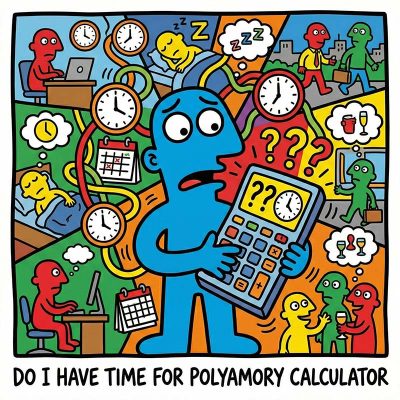
Love is infinite, but your calendar is brutally finite. The fantasy is deep connection; the reality is often just exhausted "calendar tetris." Promising time you don't actually have isn't romantic, it’s a recipe for burnout and broken trust. That sinking feeling when you have to cancel again? That’s the sound of overextension destroying your relationships.
This calculator forces you to confront the math of your life. Do you actually have space for another heart, or are you just setting everyone up for disappointment?

The fantasy is total autonomy and connection. The reality? It can feel like drowning in scheduling chaos and misunderstood expectations. That anxiety you feel isn’t just stress; it’s the wobble of living without a default "anchor." Without a solid architecture, Solo Polyamory stops being a life design and starts being a recipe for burnout and confusion.
The Essential Guide replaces the drift with a concrete anchor. We provide the "Solo Ethic," boundary scripts, and burnout protocols needed to protect your peace. Don't just date around—build a life that actually works for you.

Hierarchy sounds like a corporate org chart until someone gets their feelings hurt. That stomach-turning fear that you are just a "secondary" who can be fired at any time is real. If your relationship feels like a secret ranking system, you are doing it wrong.
Ambiguity is where resentment grows. The Essential Guide replaces the "who matters more" panic with a concrete charter. We provide the scripts and equity guardrails needed to protect every heart in the polycule. Stop guessing and start building.

The ideal is pure equality. The reality? It often slides into hidden rankings where someone gets hurt. That sinking feeling that you are secretly a "secondary" despite the label? That is your intuition detecting couple privilege. Ambiguity is where resentment thrives.
The Essential Guide replaces vague promises with concrete governance. We provide the charters, equity tools, and jealousy protocols needed to ensure "non-hierarchical" isn't just a fantasy. Stop guessing who matters most. Build a network that is actually fair.
The fantasy is total autonomy and connection. The reality? It can feel like drowning in scheduling chaos and misunderstood expectations. That anxiety you feel isn’t just stress; it’s the wobble of living without a default "anchor." Without a solid architecture, Solo Polyamory stops being a life design and starts being a recipe for burnout and confusion.
The Essential Guide replaces the drift with a concrete anchor. We provide the "Solo Ethic," boundary scripts, and burnout protocols needed to protect your peace. Don't just date around—build a life that actually works for you.
Hierarchy sounds like a corporate org chart until someone gets their feelings hurt. That stomach-turning fear that you are just a "secondary" who can be fired at any time is real. If your relationship feels like a secret ranking system, you are doing it wrong.
Ambiguity is where resentment grows. The Essential Guide replaces the "who matters more" panic with a concrete charter. We provide the scripts and equity guardrails needed to protect every heart in the polycule. Stop guessing and start building.
Principles to guide time management in a non hierarchical dynamic
Here are five principles that help many couples stay aligned when time is uneven. They are practical not theoretical and they set a sturdy framework for conversations and decisions.
- Consent culture Regularly revisit what everyone is comfortable with. Boundaries and boundaries around time should be re evaluated as life changes occur.
- Clarity over compunction When in doubt talk it out. Don t assume what someone else needs or wants. Name it and validate it.
- Equity not equality Equity means distributing attention and energy in a way that recognizes needs not necessarily in a 50 50 split every time. It s about fairness tailored to each relationship.
- Deliberate scheduling Build predictable time blocks that work for everyone involved. Short regular check ins beat long stressful conversations that only happen when a crisis hits.
- Compersion and care Focus on supporting each other s happiness even when that means a partner connects more deeply with someone else for a period of time.
These principles are not a license for neglect. They are the compass that helps the group stay aligned even when life gets noisy. You can still have fun and feel connected while respecting the realities of busy lives.
Communication frameworks that help with time imbalances
Effective communication is the backbone of any relationship especially when time is uneven. Below are practical frameworks you can adopt or adapt to your voice and your relationship map.
1. The time audit conversation
Before you speak decide what you want to achieve. Do you want more predictable date nights? Do you want a better understanding of your partner s boundaries around work travel or family time? Start with a neutral tone and use concrete examples.
- Ask open questions such as What does a typical week look like for you right now and where could you use more room to breathe?
- Share your own calendar realities without blaming. For example I have two early mornings on weekdays so my evenings are the best windows for us to connect but I feel like we could plan one longer later in the week if you re open to it.
- Agree on a plan with check ins set for a specific cadence such as weekly or bi weekly during a calm moment not in the heat of a scheduling crisis.
2. The boundary negotiation script
Boundaries are not walls they are gates. They allow you to protect what matters while staying open to connection with others. Use simple direct language that names both the boundary and the rationale.
- Boundary example for time limits I would like to have at least two evenings per week where I can focus on you and our relationship without interruptions from work or external demands.
- Rationale I feel more present and connected when we have that time together and I want to keep building our foundation.
- Companion question How can we structure those evenings so we both feel heard and not rushed?
3. The renegotiation script
Life changes and so do needs. When someone s schedule shifts the two of you might need to renegotiate. Start with acknowledgement and then propose a concrete adjustment.
- Opening I see your work is picking up and your evenings are tighter this month. I want to adjust our time plan so we both feel balanced.
- Proposal I can handle more solo time this month and we set a block the two of us every Thursday evening for a longer date night if you are free that s the plan.
- Question What would make this feel fair to you and sustainable long term?
4. The cadence check in
Consistency matters. Use a short recurring check in to calibrate schedules and emotional needs. Keep it brief but meaningful.
- Format One minute per person plus a shared minute for logistics and feelings
- Frequency Weekly or every other week depending on life pace
- Focus Topics What is working What is not What needs to shift
Time management tools that actually work in real life
Tools should reduce friction not create more friction. Here are practical options that many non hierarchical polyamory groups find helpful.
- Shared calendar Use a digital calendar that shows each partner s blocks of time for work social life and partner time. Color code by relationship or person to see at a glance where overlaps or gaps appear.
- Weekly planning ritual Sit down for 15 to 30 minutes every week to map out the upcoming week including shift changes travel time and personal commitments. Write down non negotiables first then fill in flexible slots.
- Time budget Create a monthly time budget for each relationship. It does not have to be a fixed number of hours but a rough range that accounts for energy and life events.
- Buffer zones Add buffer blocks between meetings and social events to avoid back to back commitments which can lead to burnout and resentment.
- Communication templates Keep ready to use messages for quick updates such as I have a late start tonight can we move our check in to tomorrow and I would love to hear how your day went when you have time.
Practical scenarios and how to navigate them
Let us walk through some common real world situations. The goal is not perfection but practical moves that keep connection strong and time fairness in sight.
Scenario 1 The high powered partner and the partner with more flexible hours
Situation A tall professional has a demanding schedule while partner B has more freedom to respond quickly to messages or plan social time. It is easy for Scenario A to feel invisible or for Scenario B to feel left waiting. Address this early by mapping a weekly plan that protects both flexibility and predictability.
- Define two non negotiable blocks for partner A such as evenings on two weekdays reserved for work and winding down with family. Respect these blocks as off limits for non urgent requests.
- Offer predictable windows for partner B to connect even if partner A is busy. For example a 30 minute call window on a fixed day either midweek or weekend.
- Use short messages to acknowledge each other s current loads. A simple I am deep in work today I may be slow to respond but I care about our chat this evening can make a big difference in feeling seen.
Scenario 2 Long distance or frequent travel
Long distance or travel schedules distort time availability. The trick is to anchor connection around the concrete rather than the ideal. Create a rhythm based on what slots remain reliable rather than hoping for the perfect window every time.
- Establish a cadence for check ins for example a 15 minute call once per week and a longer two hour video date every fortnight if both partners are available.
- Keep expectations clear about what counts as quality time around travel days. A check in call may be meaningful even if it s short.
- Use asynchronous connection when needed for example voice notes or short voice messages that carry tone and texture and feel intimate even when there is no live time.
Scenario 3 Busy parenting or caregiving duties
Time is often squeezed when there is child care or caregiving responsibilities. In these moments it helps to name the load and consider non time based intimacy connections as well.
- Coordinate with caregivers to protect a specific window for date nights or couple time. This could be a dinner after bed time or a weekend morning while a trusted caregiver is available.
- Explore non timed moments of closeness such as a shared morning coffee ritual or a bedtime wind down routine that still fosters intimacy even when you cannot go on a date.
- Be flexible around the definition of intimacy. A long thoughtful text or a mutual decision about a future plan can matter as much as a face to face date.
Scenario 4 When one partner is still exploring new relationships
In non hierarchical polyamory it is normal for partners to explore at different speeds. The key is to maintain open channels of communication and to protect emotional safety for everyone involved.
- Define what kind of information is comfortable to share about new relationships and what should stay private. Boundaries here should be clear and agreed upon by all involved.
- Agree on how resource sharing such as time and energy will be managed. For example it is okay to share enthusiasm about new connections but avoid overloading any one partner with questions that feel invasive.
- Make space for re balancing. If someone needs more time with their main partner you can recalibrate the schedule to honor that need without punitive judgments.
Maintaining emotional health while time is uneven
Time imbalances can stress your emotional landscape. You might feel brushed aside anxious about missing connections or worried about being replaced. The antidotes are practical and emotional in equal measure.
- Self check ins Regularly ask yourself how you feel about the current balance. Are you drifting toward resentment or do you feel hopeful about the path forward? Name it and share it with your partner in a calm moment.
- Compersion practice Make an effort to celebrate your partner s happiness with others. It takes practice but it strengthens trust and reduces fear based reactions.
- Professional help if needed If anxiety or jealousy becomes overwhelming consider talking to a therapist who has experience with ENM dynamics to help you navigate feelings and boundaries.
Negotiating agreements that fit your life right now
Negotiations happen best when they are anchored in reality rather than fantasy. Use the following structure to design agreements that work in practice.
- State the current reality Describe the weekly rhythms and obligations each partner faces. Be specific about times and activities.
- Define needs Each partner states what they require to feel connected and secure. This can include time blocks attention during conversations safety within the relationship or emotional support.
- Propose solutions Suggest concrete arrangements such as how often to share updates or how to schedule dates.
- Test and adjust Agree on a trial period and set a date to review results. Adjust as life changes.
Remember that no agreement is permanent. The goal is sustainable fairness not rigid control. And keep in mind that non hierarchical does not mean no responsibilities. It means there is no automatic privilege or priority granted simply by the existence of a relationship. Everyone deserves visibility and equitable care according to what the situation allows.
Common mistakes and how to avoid them
Even the best intentioned couples slip into old patterns. Here are mistakes that show up in time imbalance scenarios and how to avoid them.
- Assuming the other person understands your needs Do not rely on vibes alone. Be explicit about what you need and why you need it.
- Glossing over small hurts Small resentments accumulate. Address issues in a timely way with care and curiosity rather than letting them fester.
- Blaming without owning your part When things do not go as planned own your role in the misalignment and propose a path forward.
- Setting untested rules with no review process Create a built in review point so you can adjust boundaries and expectations as life shifts.
Tools and templates you can steal for your dynamic
To make the work practical here are ready to use templates you can personalize. Replace the brackets with your own details and read aloud to test the flow.
Template 1 A weekly planning note
Weekly planning note for [Partner A] and [Partner B]. This week we will protect two blocks of time for us and allow flexible daytime contact when possible. The goal is to stay emotionally connected while honoring work and personal commitments. If conflicts arise we commit to communicating within 24 hours and renegotiating as needed.
Template 2 A boundary and time balance statement
We acknowledge that [Partner A] has less free time this week due to [reason]. We commit to two meaningful check ins and one longer date if possible. If one of us needs more space we will communicate that openly and adjust the plan with empathy and respect.
Template 3 A renegotiation note after a busy period
We have entered a busy period. Here is what we will try for the next [time period]. Partner A will focus on work commitments and we will maintain one dedicated couple window per week. Partner B will plan a solo activity or time with other partners during this window to balance energy levels. We will revisit this arrangement in [date].
Glossary of useful terms and acronyms
- ENM Ethical Non Monogamy. A framework where honesty and consent enable multiple intimate relationships with the knowledge and agreement of all involved.
- Non Hierarchical Polyamory A structure without an official ranking of partners. All connections are valued with attention distributed according to needs.
- Time imprint The amount of time a partner is able to invest in the relationship at a given moment in life.
- Boundary A line or limit agreed upon by partners that defines what is acceptable or not in a relationship context.
- Consent A clear and enthusiastic yes from all involved before any relationship activity takes place.
- Compersion Feeling happiness for a partner s relationship with someone else rather than jealousy or insecurity.
- Check in A short conversation to assess emotional state needs and schedule alignment between partners.
Frequently asked questions
How do we begin a conversation about time imbalance?
Choose a calm moment to talk. Start with statements about your own experience rather than accusations. For example I have been feeling stretched this season and I want to find a fair rhythm for us. Then invite your partner to share their perspective.
What if one partner feels ignored even when schedules align?
That is a signal to look deeper than the calendar. It can be about emotional availability communication style or the need for small moments of presence. Explore what attentional acts would help such as a daily message a short ritual or a weekly date that feels meaningful to both people.
Is it possible to have an equal amount of time with every partner all the time?
Not usually. Life can be unpredictable and energy levels vary. The aim is fairness not sameness. Equality in time can be ideal but equity in attention and care is often more realistic and more sustainable in messy real life.
How do we handle jealousy when time is scarce?
Acknowledge the feeling and explore what triggers it. Jealousy often points to a need for reassurance safety or closure around a specific situation. Use open transparent communication and consider a brief ritual that re centers the bond between you two and can pave the way for more confident future interactions.
What role does distance play in time imbalance?
Distance shifts the equation. Time zones busy travel calendars and limited in person opportunities change how you connect. Build a structure that accommodates asynchronous connection and scheduled live interactions while preserving emotional intimacy at a distance.
How often should a couple revisit their time management plan?
Set a regular cadence for review such as every four to six weeks or after a major life change. Short reminders with flexible upgrades keep the system working rather than letting it stagnate.
Can we use humor when talking about tough scheduling issues?
Humor can diffuse tension provided it is kind and inclusive. Avoid jokes at the expense of someone else s feelings and focus on light touches that build rapport rather than undermine trust.
What if one partner wants to slow down or pause some connections?
Respect the wish and explore the reasons behind it. Slowing down can be a healthy choice during life transitions. Revisit agreements with care and ensure everyone feels heard and supported.
Putting it all together a sustainable rhythm for the long haul
Building a sustainable rhythm in a Non Hierarchical Polyamory ENM setup with time imbalances is not a one time fix. It is a living practice that grows with you. The core is honest dialogue that centers consent and care. Combine that with practical calendars clear boundaries and a willingness to renegotiate as life changes and you can preserve connection and reduce the stress that time gaps can bring. Remember the goal is to feel connected to your partners and to navigate realities with empathy and flexibility not rigidity.
With the right mindset the person who has less time does not become a footnote in the relationship story. The partner who has more time does not get to push others aside. By choosing clarity rhythm and compassion you can create a dynamic that feels fair and alive for everyone involved.
Love is infinite, but your calendar is brutally finite. The fantasy is deep connection; the reality is often just exhausted "calendar tetris." Promising time you don't actually have isn't romantic, it’s a recipe for burnout and broken trust. That sinking feeling when you have to cancel again? That’s the sound of overextension destroying your relationships.
This calculator forces you to confront the math of your life. Do you actually have space for another heart, or are you just setting everyone up for disappointment?
The fantasy is total autonomy and connection. The reality? It can feel like drowning in scheduling chaos and misunderstood expectations. That anxiety you feel isn’t just stress; it’s the wobble of living without a default "anchor." Without a solid architecture, Solo Polyamory stops being a life design and starts being a recipe for burnout and confusion.
The Essential Guide replaces the drift with a concrete anchor. We provide the "Solo Ethic," boundary scripts, and burnout protocols needed to protect your peace. Don't just date around—build a life that actually works for you.
Hierarchy sounds like a corporate org chart until someone gets their feelings hurt. That stomach-turning fear that you are just a "secondary" who can be fired at any time is real. If your relationship feels like a secret ranking system, you are doing it wrong.
Ambiguity is where resentment grows. The Essential Guide replaces the "who matters more" panic with a concrete charter. We provide the scripts and equity guardrails needed to protect every heart in the polycule. Stop guessing and start building.
The ideal is pure equality. The reality? It often slides into hidden rankings where someone gets hurt. That sinking feeling that you are secretly a "secondary" despite the label? That is your intuition detecting couple privilege. Ambiguity is where resentment thrives.
The Essential Guide replaces vague promises with concrete governance. We provide the charters, equity tools, and jealousy protocols needed to ensure "non-hierarchical" isn't just a fantasy. Stop guessing who matters most. Build a network that is actually fair.
The fantasy is total autonomy and connection. The reality? It can feel like drowning in scheduling chaos and misunderstood expectations. That anxiety you feel isn’t just stress; it’s the wobble of living without a default "anchor." Without a solid architecture, Solo Polyamory stops being a life design and starts being a recipe for burnout and confusion.
The Essential Guide replaces the drift with a concrete anchor. We provide the "Solo Ethic," boundary scripts, and burnout protocols needed to protect your peace. Don't just date around—build a life that actually works for you.
Hierarchy sounds like a corporate org chart until someone gets their feelings hurt. That stomach-turning fear that you are just a "secondary" who can be fired at any time is real. If your relationship feels like a secret ranking system, you are doing it wrong.
Ambiguity is where resentment grows. The Essential Guide replaces the "who matters more" panic with a concrete charter. We provide the scripts and equity guardrails needed to protect every heart in the polycule. Stop guessing and start building.
