
Assessing Readiness to Open a Relationship

Opening a relationship is not a magic switch. It is a careful conversation backed by honest self work and solid partner alignment. This guide dives into the open relationships ENM dynamic and gives you a practical playbook to assess readiness, plan conversations, and set up boundaries that actually work in real life. We talk plainly about terms, myths, and the mind games jealousy can bring so you can decide what fits your life and values. If you want to approach this with humor and realism you are in the right place.
Quick Links to Useful Sections
- What this guide covers
- Terms you might see and what they mean
- Are you and your partner ready to consider an open relationship
- Emotional readiness
- Communication readiness
- Relationship health
- Sexual health and safety
- Time and energy management
- Values and boundaries
- Personal history and safety nets
- Assessing your current relationship health before opening up
- How to begin the conversation about opening the relationship
- Preparation before you talk
- Conversation script you can adapt
- What to discuss in that first long talk
- Boundary and agreement templates you can customize
- Rules versus guidelines
- How to handle jealousy
- Common myths about open relationships and ENM debunked
- Realistic scenarios you might encounter
- Scenario 1 a couple exploring with clear consent
- Scenario 2 a couple struggling with uneven interest
- Scenario 3 solo poly with a primary relationship
- Practical steps to start the process in the real world
- Phase one the conversation and reflection
- Phase two testing the waters with safety in mind
- Phase three evaluation and adjustment
- Safety a health considerations for ENM openings
- Glossary of useful terms and acronyms
- Frequently asked questions
- Final thoughts
What this guide covers
In plain language we explain what ethically non monogamous means and how open relationships differ from other non monogamous setups. You will find a practical readiness checklist a framework for conversations and a set of templates you can adapt. Expect real life scenarios and clear steps you can take without running from your feelings. This guide keeps things grounded and practical while being respectful of every choice.
Terms you might see and what they mean
ENM stands for ethically non monogamous. That phrase describes relationships that allow sexual or romantic connections outside the primary partnership with the knowledge and consent of everyone involved. Open relationships are one form of ENM where one or both people allow partners to have other intimate experiences outside the couple. Polyamory is another path within ENM where people may form more than one ongoing romantic connection. Some people use the term non monogamy as a broad umbrella that includes many approaches. It is normal for people to have strong feelings about these terms. If you are new to the language we will explain terms and acronyms as we go so you can follow along.
Common acronyms and quick definitions you will hear
- ENM Ethically non monogamous a framework that allows multiple romantic or sexual connections with consent.
- Open relationship A relationship in which partners agree that dating or sexual encounters outside the couple are permitted.
- Polyamory Building or pursuing multiple emotional and romantic partnerships at the same time with the knowledge of all involved.
- Hierarchy A structure where one relationship is treated as primary while others are secondary. Not everyone uses hierarchy and many prefer equal status.
- Non hierarchical An approach where all relationships are treated with equal respect and no single relationship is elevated above others.
- Solo poly A style of poly where a person prioritizes independence and autonomy while dating multiple partners.
- Boundary A limit that keeps emotionally or practically safe space between people.
- Consent A clear and ongoing yes from all parties involved before any new dynamic starts.
The freedom of an open relationship sounds incredible, but the logistics can feel like holding a grenade. That spinning "what if" anxiety isn't paranoia, it’s your survival instinct warning you that your bond is exposed. "Just seeing what happens" is the fastest way to turn a fantasy into a breakup.
The Essential Guide replaces chaos with discipline. We give you the blueprints, jealousy protocols, and repair scripts needed to explore the edge without falling off. Don't guess. Secure your foundation first.
The world of non-monogamy is a maze of confusing labels. Trying to be "Polyamorous" when your heart actually needs "Swinging" isn't just a vocabulary error; it’s a recipe for misery.
You can't build a stable home on a foundation that doesn't fit your psychology. This tool analyzes your emotional bandwidth and jealousy triggers to design the exact structure you need. Stop trying to squeeze into a box that doesn't fit. Build a relationship that actually feels like home.
Opening up feels exciting, but if you aren't reading from the same script, you're writing a tragedy. The disconnect between "I want freedom" and "I want safety" is where hearts break. This isn't just a quiz; it’s a synchronization engine.
We identify the silent gaps in your desires—from sleepover rules to emotional bandwidth, before they become unbridgeable chasms. Don't wait until the damage is done to find out you were never on the same page. Align your compasses now.
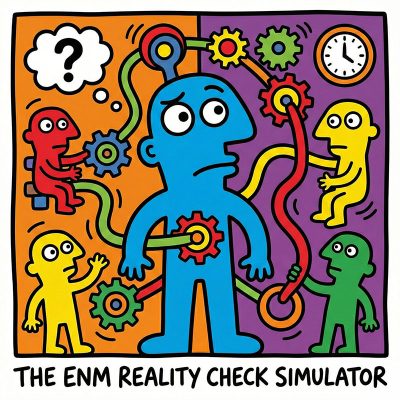
Theory is sexy. Reality is messy. You agreed you could date others, but how does your stomach drop when he takes her to your anniversary spot? Or when she comes home smelling like someone else?
This simulator drags your abstract rules into the harsh light of day. We force you to confront the visceral, gut-wrenching scenarios that actually destroy relationships, before they happen. Test your nervous system in the simulator so you don't crash the car in real life.
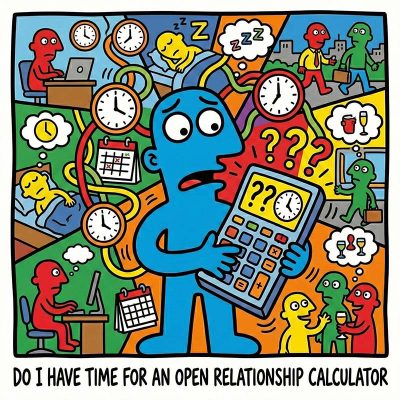
The fantasy is endless romance. The reality? It’s a logistical nightmare. Dating isn't just sex; it’s a second job of swiping, spending, and emotional processing that drains your sanity. Underestimating the "admin" of non-monogamy is the fastest way to turn your relationship into a burnout factory where resentment thrives.
This calculator forces you to confront the brutal math of your time, energy, and wallet. Can you actually afford this lifestyle, or are you just signing up for exhaustion?
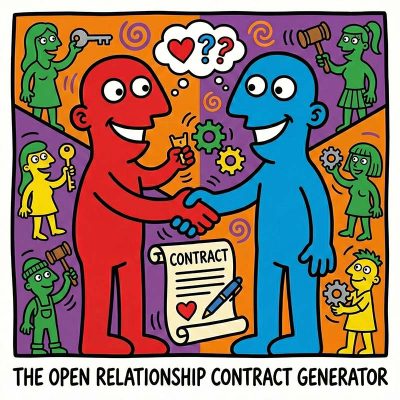
"I thought we agreed" is the sentence that destroys relationships & marriages. Relying on verbal promises when emotions run high is a gamble you cannot afford to lose. Your memory isn't just faulty; it's a liability. Ambiguity is the oxygen that jealousy breathes, turning "freedom" into a minefield of "did I mess up?"
This generator transforms vague permissions into a concrete, signed reality. Stop arguing about what you thought was said and lean on what is written. Secure your boundaries in ink, not hope.
Are you and your partner ready to consider an open relationship
Readiness is not a single moment. It is a mix of emotional health emotional intelligence and practical planning. Before you talk about opening a relationship you need to honestly assess a few core areas. The goal is not to push you into a decision but to help you understand where you stand and what you might need to work on.
Emotional readiness
- Do you handle stress well when you are apart from your partner or when you hear about other people dating them or dating you?
- Can you tolerate a range of feelings jealousy insecurity and fear without acting on impulse?
- Are you willing to do inner work such as journaling reflection or therapy if needed to untangle negative patterns?
- Do you have a healthy sense of self worth that does not rely on your partner for constant validation?
Communication readiness
- Are you able to have honest conversations about desires fantasies boundaries and limits?
- Can you listen actively without interrupting or judging your partner when they share something sensitive?
- Do you have a track record of resolving conflicts without escalating into fights or personal attacks?
- Are you comfortable with talking about sex consent and safe practices in a non shaming way?
Relationship health
- Is there a baseline of trust between you and your partner?
- Do you feel seen respected and cared for in the current arrangement?
- Do you both share core values about honesty kindness and responsibility?
- Are you both able to compromise and adjust when needed without giving up core needs?
Sexual health and safety
- Are you both committed to STI testing and honesty about sexual health status with new partners?
- Do you have a plan for safer sex including condoms testing and communication of boundaries?
- Are you comfortable discussing sexual history and risk tolerance with potential new partners?
Time and energy management
- Do you have the time to invest in new connections without neglecting the primary relationship or personal wellbeing?
- Can you handle the scheduling logistics of dating outside the relationship while still maintaining daily responsibilities?
- Are you prepared for the emotional energy that new connections bring including potential up cycles of excitement and fatigue?
Values and boundaries
- Are your core values aligned around consent respect and autonomy?
- Do you want rules that are explicit explicit or are you comfortable with flexible guidelines?
- Are you ready to revisit and revise boundaries as feelings evolve?
Personal history and safety nets
- Do past experiences including previous relationships or trauma influence your readiness in a helpful or harmful way?
- Do you have a trusted friend or therapist to talk through difficult moments?
- Is there a plan for stepping back if things become overwhelming or unsafe emotionally?
Assessing your current relationship health before opening up
Healthy foundations make a big difference when you explore ENM dynamics. Here is a practical lens to evaluate where your relationship sits today.
- Trust Do you generally trust your partner to act with good intent and honesty?
- Communication Do you talk openly about feelings and needs even when the topics are uncomfortable?
- Jealousy management How do you handle jealousy and what strategies help you recover quickly?
- Mutual care Do you both feel supported in personal growth and wellbeing?
- Consistency Is there consistency in actions that align with your stated boundaries?
If you answer yes to most items you are likely on a strong footing to discuss an open arrangement. If you have gaps you can still proceed but you will want to design a plan to address those gaps before opening the door to new connections.
How to begin the conversation about opening the relationship
Starting the conversation should feel like setting a map not declaring a verdict. You want to invite curiosity and safety rather than pressure your partner into a decision. Here is a practical framework you can adapt.
Preparation before you talk
- Write down what you want and why it matters. Be specific about what you hope to gain and what you want to avoid.
- Decide your non negotiables and your flexible goals. Know what you are willing to negotiate and what is a hard limit.
- Choose a good time and a private space free from interruptions or stressors.
- Practice listening as much as speaking. The aim is to be curious not defensive.
Conversation script you can adapt
Hi I have been thinking a lot about our relationship and what would make it livelier and more honest for both of us. I want to share my thoughts and hear yours. I am curious about whether you would ever consider opening our relationship in a way that respects our needs. I want to be clear about my boundaries and also listen to yours. If this feels risky I am glad we are talking about it now so we can decide together what to do next.
Tips for the talk
- Use I statements to own your feelings rather than making claims about your partner.
- Invite questions and reflect back what you hear to confirm understanding.
- Avoid ultimatums or coercive language. If things get heated take a break and resume later.
- Keep notes of what is discussed to help you track boundaries and agreements.
What to discuss in that first long talk
- Motivation for wanting an open relationship
- What kind of openness is acceptable including sexual dating versus emotional connections
- Boundaries around dating outside the primary relationship
- Communication norms how you will share experiences and with whom
- Safety boundaries including STI testing and sexual health disclosure
- Time management how you will prioritize time together and apart
- How you will handle jealousy and conflicts
- Plans for revisiting the arrangement and making changes if needed
Boundary and agreement templates you can customize
Boundaries are not walls rigidly set in stone. They are living guidelines designed to protect feelings and safety. Here are ready to adapt templates to get you started.
- Communication boundary We will share every date night plan and every significant interaction with our partner so there is transparency without oversharing.
- Disclosure boundary We will disclose any romantic or sexual connection that could affect our primary relationship within 24 hours unless there is a safety concern.
- Time boundary We will protect couple time on at least two evenings per week and will not schedule dates during family time or work commitments without discussion.
- Sexual health boundary We will obtain STI tests every four to six months and share results with the relevant partners with consent.
- Emotional boundary We will check in with each other about emotions that arise from dating others and will seek support when needed without blame.
- Dating boundary We will use dating apps with respect privacy and consent and will not bring home new partners without agreeing on boundaries.
- Privacy boundary We will respect each other privacy and avoid sharing personal details about new partners without consent unless asked.
Rules versus guidelines
- Rules are explicit limits that you both agree to follow no matter what. They can be revised over time.
- Guidelines are flexible understandings that help you navigate dating outside the primary relationship. They can be adjusted as situations evolve.
How to handle jealousy
- Accept that jealousy is a normal signal not a failure. It is information about needs or fears.
- Pause breathe and name the feeling. Then discuss what it is about and what would help.
- Use a time out to cool down before returning to the conversation with a plan.
- Switch to action by setting boundaries or adjusting the plan to address the fear.
Common myths about open relationships and ENM debunked
- Myth 1 It is easier for people who are free with sex. Reality ENM can be emotionally demanding and requires honest communication and deep self awareness.
- Myth 2 If you love someone you should always want to own them. Reality Love can be generous and still allow others in your life with consent and care.
- Myth 3 Jealousy means you should end the relationship. Reality Jealousy is a signal to examine needs and boundaries not a verdict on the relationship.
- Myth 4 Open relationships cannot be stable. Reality Stability comes from clear communication clear boundaries and mutual respect not from the arrangement itself.
- Myth 5 ENM is about chasing novelty. Reality It can be about growth connection and autonomy for all involved when done with care.
- Myth 6 You cannot be monogamous minded and explore ENM. Reality People move along a spectrum and can adapt their approach to fit their situation.
Realistic scenarios you might encounter
Scenario 1 a couple exploring with clear consent
Two partners discuss opening for dating others while maintaining regular weekly date nights together. They establish safety boundaries and share plans before meeting new people. They process emotions through weekly check ins. This approach maintains trust and open communication and reduces surprise.
Scenario 2 a couple struggling with uneven interest
One partner is excited and ready while the other has reservations. They slow the process and set a short trial period with agreed checkpoints. They agree on a single boundary such as no overnight dates for the time being and agree to pause if jealousy spikes beyond a threshold. The goal is to protect the relationship while exploring cautiously.
Scenario 3 solo poly with a primary relationship
The primary relationship remains the center while one partner maintains independent dating connections. They set boundaries about disclosure and safety and reserve time for the primary relationship. They also create a plan for managing time and emotional energy to prevent neglect or resentment. This arrangement can work well with ongoing honest dialogue.
Practical steps to start the process in the real world
Use a phased approach to reduce risk and increase the chance of a positive experience for everyone involved. Here is a simple plan you can adapt.
Phase one the conversation and reflection
- Set a date for a long conversation dedicated to this topic.
- Ask questions and listen more than you speak. Clarify what each person wants and fears.
- Agree on a trial period with clear check ins and a plan to pause if needed.
- Document the initial boundaries and the plan for revisiting the topic.
Phase two testing the waters with safety in mind
- Choose one or two low risk steps such as casual dating with strict disclosure sharing and no overlapping with sensitive moments together.
- Implement safer sex practices and get tested together or individually as agreed.
- Hold weekly conversations to adjust boundaries based on experiences and feelings.
Phase three evaluation and adjustment
- Review what worked well and what was challenging.
- Decide if the arrangement should continue or pause for a broader discussion with more planning.
- Respect each other when changes are necessary and maintain core values.
Safety a health considerations for ENM openings
That safety line is real. Negotiating safe sex and emotional safety is essential. Here is a practical approach to staying safe and sane.
- Get STI testing on a regular cadence and share results with partners when you are comfortable.
- Discuss safer sex practices and condom use with all partners especially for new sexual encounters.
- Be transparent about sexual health history and any new risks that come up.
- Respect boundaries about what information you share and with whom.
- Build a support plan with friends therapist or community groups so you have places to process strong emotions.
Glossary of useful terms and acronyms
- ENM Ethically non monogamous a framework that allows multiple romantic or sexual connections with consent.
- Open relationship A relationship in which dating or sexual encounters outside the couple are permitted with consent.
- Polyamory The practice of engaging in multiple romantic relationships with the knowledge and consent of everyone involved.
- Boundary A limit that protects emotional or physical safety and comfort for each person.
- Consent A clear ongoing yes from all parties before any new dynamic starts.
- Monogamy A relationship structure where two people commit exclusively to each other.
- Primary relationship The main relationship in a given arrangement sometimes considered the center or most important bond.
- Secondary relationship A relationship that exists alongside a primary relationship with its own boundaries.
- Jealousy management The practice of recognizing jealous feelings and using strategies to address them constructively.
- Safer sex Practices designed to reduce the risk of sexually transmitted infections and unwanted pregnancies.
- Time management Planning how to balance multiple relationships with daily responsibilities and self care.
Frequently asked questions
Is open relationship the same as polyamory
Not always. An open relationship often means freedom to date or have sexual experiences outside the partner. Polyamory emphasises forming multiple loving relationships that can be intimate and ongoing. In practice some people use the terms interchangeably while others keep them distinct based on how relationships are structured.
How do I know if I am ready to open up
Look at your emotional readiness the level of trust in your relationship and your capability to communicate clearly. If you can discuss boundaries with calm and curiosity and you can handle difficult emotions without acting rashly you are likely ready to explore with care.
What should I do first if my partner is interested
Begin with a detailed conversation about motivations fears and expectations. Establish boundaries a plan for testing the waters and a process for revisiting the arrangement. Consider seeking guidance from a therapist experienced with ENM dynamics.
How do we handle jealousy after opening
Jealousy is a signal that something matters to you. Acknowledge the feeling pause breathe and talk about what origin circumstances or insecurities triggered it. Adjust boundaries or the plan as needed and keep the focus on maintaining trust and safety.
Are there risks to a primary relationship
Yes there can be risks including emotional strain schedule pressure and potential shifts in trust. With strong communication honest check ins and agreed boundaries many couples manage these risks effectively and build stronger relationships as a result.
Can we pause or stop the process if it becomes too much
Absolutely. A pause is a legitimate option at any time. The important part is to agree how you will pause and how you will revisit the conversation when you are ready.
Final thoughts
This guide is about readiness not judgment. Open relationships can be fulfilling for people who prioritize honesty consent and ongoing communication. It is perfectly valid to decide that ENM is not for you. What matters is choosing what makes you and your partner feel safe respected and alive. If you decide to explore you will find a path that honors your values and brings growth and connection for everyone involved.
The freedom of an open relationship sounds incredible, but the logistics can feel like holding a grenade. That spinning "what if" anxiety isn't paranoia, it’s your survival instinct warning you that your bond is exposed. "Just seeing what happens" is the fastest way to turn a fantasy into a breakup.
The Essential Guide replaces chaos with discipline. We give you the blueprints, jealousy protocols, and repair scripts needed to explore the edge without falling off. Don't guess. Secure your foundation first.
The world of non-monogamy is a maze of confusing labels. Trying to be "Polyamorous" when your heart actually needs "Swinging" isn't just a vocabulary error; it’s a recipe for misery.
You can't build a stable home on a foundation that doesn't fit your psychology. This tool analyzes your emotional bandwidth and jealousy triggers to design the exact structure you need. Stop trying to squeeze into a box that doesn't fit. Build a relationship that actually feels like home.
Opening up feels exciting, but if you aren't reading from the same script, you're writing a tragedy. The disconnect between "I want freedom" and "I want safety" is where hearts break. This isn't just a quiz; it’s a synchronization engine.
We identify the silent gaps in your desires—from sleepover rules to emotional bandwidth, before they become unbridgeable chasms. Don't wait until the damage is done to find out you were never on the same page. Align your compasses now.
Theory is sexy. Reality is messy. You agreed you could date others, but how does your stomach drop when he takes her to your anniversary spot? Or when she comes home smelling like someone else?
This simulator drags your abstract rules into the harsh light of day. We force you to confront the visceral, gut-wrenching scenarios that actually destroy relationships, before they happen. Test your nervous system in the simulator so you don't crash the car in real life.
The fantasy is endless romance. The reality? It’s a logistical nightmare. Dating isn't just sex; it’s a second job of swiping, spending, and emotional processing that drains your sanity. Underestimating the "admin" of non-monogamy is the fastest way to turn your relationship into a burnout factory where resentment thrives.
This calculator forces you to confront the brutal math of your time, energy, and wallet. Can you actually afford this lifestyle, or are you just signing up for exhaustion?
"I thought we agreed" is the sentence that destroys relationships & marriages. Relying on verbal promises when emotions run high is a gamble you cannot afford to lose. Your memory isn't just faulty; it's a liability. Ambiguity is the oxygen that jealousy breathes, turning "freedom" into a minefield of "did I mess up?"
This generator transforms vague permissions into a concrete, signed reality. Stop arguing about what you thought was said and lean on what is written. Secure your boundaries in ink, not hope.
