
Attachment Styles and Openness


Open Relationships ENM stands for Ethical Non Monogamy. It is a relationship approach where partners agree that dating or forming romantic or sexual connections outside the primary bond is allowed with consent. This is not a free for all. It is a framework built on communication boundaries transparency and respect. If you are new to ENM or exploring new dynamics you will find that attachment styles play a big role in how you experience openness. Attachment styles describe how we relate to others when emotions come into play. They shape how we handle boundaries jealousy trust and time management. This guide will walk you through attachment styles in the context of Open Relationships ENM and give you practical steps to navigate openness with honesty and humor.
Quick Links to Useful Sections
- What is attachment style and why does it matter in ENM
- Common attachment styles you will likely encounter in ENM
- Secure attachment
- Anxious attachment
- Avoidant attachment
- Fearful avoidant attachment
- Disorganized attachment
- How attachment styles influence openness in ENM
- Communication patterns
- Handling jealousy
- Time and energy management
- Practical strategies to align attachment styles with openness
- Start with a core set of agreements
- Create predictable communication rhythms
- Practice emotional labeling and validation
- Use a triage approach to dating
- Leverage external supports
- Practice self care and body awareness
- Relationship scenarios in ENM by attachment style
- Scenario 1 secure and open within a long term bond
- Scenario 2 anxious seeking reassurance
- Scenario 3 avoidant needing space plus openness
- Scenario 4 fearful avoidant navigating uncertainty
- Communication tools and scripts that fit Open Relationships ENM
- Practical exercises to strengthen attachment in Open Relationships ENM
- Glossary of useful terms and acronyms
- Frequently asked questions
What is attachment style and why does it matter in ENM
Attachment style is a term from psychology that explains patterns in how we connect with other people. It starts in early life and continues to influence adult relationships. In ENM the stakes are a little higher because there are more moving parts. You might be dealing with multiple partners or evolving boundaries. Your attachment style will influence how you interpret signals how you communicate and how you recover from a bump in the road. Understanding your own style and that of others helps reduce miscommunication and makes space for healthier connections.
Common attachment styles you will likely encounter in ENM
Secure attachment
People with a secure attachment tend to trust their partners feel confident in themselves and manage emotions well. They tend to communicate clearly set healthy boundaries and handle jealousy with curiosity rather than accusation. In Open Relationships ENM secure types usually navigate multiple connections with a sense of security and flexibility. They often view openness as an opportunity to grow together rather than a threat to the relationship.
Anxious attachment
Anxiously attached people may seek reassurance worry about abandonment and crave frequent communication. They might interpret a lack of updates as a sign of disinterest or drift. In ENM this can turn into constant check ins or possessiveness if not managed. The good news is that anxious attachment can be managed with explicit agreements clear communication and predictable patterns that ease fears without stifling freedom.
Avoidant attachment
Avoidantly attached individuals often value independence and may withdraw when relationships get emotionally charged. In ENM this can translate into slow engagement limited sharing or fear of vulnerability. The trick here is to create safety around emotional disclosure and ensure reasonable boundaries so both partners feel seen without feeling smothered.
Fearful avoidant attachment
This style combines a desire for closeness with a fear of vulnerability. It can surface as high sensitivity to rejection mixed with a reluctance to commit to ongoing connections. In Open Relationships ENM this can show up as mixed signals or inconsistent communication. The path forward is steady communication paired with gentle boundary setting that honors both closeness and independence.
Disorganized attachment
Disorganized attachment tends to show up when someone has experienced trauma or inconsistent caregiving. In ENM this can manifest as unpredictable responses to partner needs or chaotic boundary management. If you recognize this pattern it is a strong cue to seek support from a therapist or trusted coach. Stabilizing routines can dramatically improve relationship health.
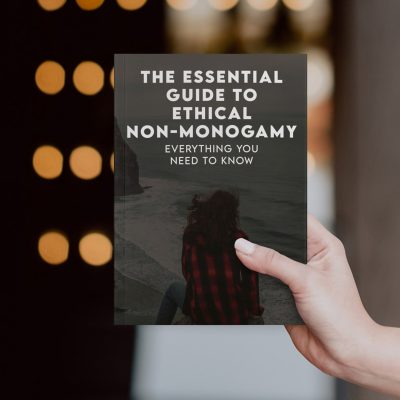
The freedom of an open relationship sounds incredible, but the logistics can feel like holding a grenade. That spinning "what if" anxiety isn't paranoia, it’s your survival instinct warning you that your bond is exposed. "Just seeing what happens" is the fastest way to turn a fantasy into a breakup.
The Essential Guide replaces chaos with discipline. We give you the blueprints, jealousy protocols, and repair scripts needed to explore the edge without falling off. Don't guess. Secure your foundation first.
The world of non-monogamy is a maze of confusing labels. Trying to be "Polyamorous" when your heart actually needs "Swinging" isn't just a vocabulary error; it’s a recipe for misery.
You can't build a stable home on a foundation that doesn't fit your psychology. This tool analyzes your emotional bandwidth and jealousy triggers to design the exact structure you need. Stop trying to squeeze into a box that doesn't fit. Build a relationship that actually feels like home.
Opening up feels exciting, but if you aren't reading from the same script, you're writing a tragedy. The disconnect between "I want freedom" and "I want safety" is where hearts break. This isn't just a quiz; it’s a synchronization engine.
We identify the silent gaps in your desires—from sleepover rules to emotional bandwidth, before they become unbridgeable chasms. Don't wait until the damage is done to find out you were never on the same page. Align your compasses now.
Theory is sexy. Reality is messy. You agreed you could date others, but how does your stomach drop when he takes her to your anniversary spot? Or when she comes home smelling like someone else?
This simulator drags your abstract rules into the harsh light of day. We force you to confront the visceral, gut-wrenching scenarios that actually destroy relationships, before they happen. Test your nervous system in the simulator so you don't crash the car in real life.
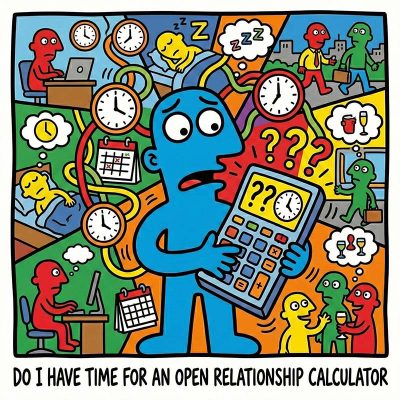
The fantasy is endless romance. The reality? It’s a logistical nightmare. Dating isn't just sex; it’s a second job of swiping, spending, and emotional processing that drains your sanity. Underestimating the "admin" of non-monogamy is the fastest way to turn your relationship into a burnout factory where resentment thrives.
This calculator forces you to confront the brutal math of your time, energy, and wallet. Can you actually afford this lifestyle, or are you just signing up for exhaustion?
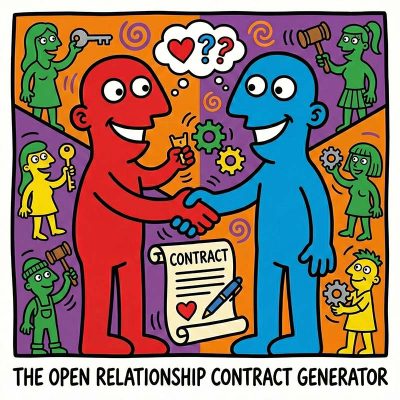
"I thought we agreed" is the sentence that destroys relationships & marriages. Relying on verbal promises when emotions run high is a gamble you cannot afford to lose. Your memory isn't just faulty; it's a liability. Ambiguity is the oxygen that jealousy breathes, turning "freedom" into a minefield of "did I mess up?"
This generator transforms vague permissions into a concrete, signed reality. Stop arguing about what you thought was said and lean on what is written. Secure your boundaries in ink, not hope.
How attachment styles influence openness in ENM
Attachment styles shape three big areas in ENM: communication patterns how you handle jealousy and how you cope with time and energy demands. Here is how each area plays out.
Communication patterns
Secure types tend to articulate needs directly and listen actively. They ask for what they want and respond with empathy when a boundary is challenged. Anxious types may need more frequent check ins and explicit reassurance. Avoidant types might under communicate their needs preferring to handle things alone. Fearful avoidant folks often oscillate between reaching out and withdrawing. The key is to tailor your communication to your style while practicing the core ENM practice of transparency and consent.
Handling jealousy
Jealousy is natural in ENM. Secure individuals often spot jealousy without letting it derail a connection. They label the feeling and address it with their partner and possibly their other partners. Anxious types may experience intense waves of jealousy and benefit from structured reassurance rituals. Avoidant types often push away when jealousy arises and benefit from predictable routines that keep relationships stable. If jealousy shows up regularly it is a signal to pause slow down and revisit the agreements with your partner or lovers.
Time and energy management
Open Relationships ENM requires good pacing. Secure people pace themselves with clear boundaries and balanced energy across relationships. Anxious types may over invest in ensuring others are available and feel left out if reminders are not constant. Avoidant individuals may under invest skipping important conversations about needs. The goal is to design a rhythm that respects all people involved and keeps people from feeling overwhelmed or neglected.
Practical strategies to align attachment styles with openness
Start with a core set of agreements
Agree on essential things such as boundaries boundaries being flexible and communication expectations. Write these down in a simple open relationship plan. Include who you are comfortable dating what kinds of activities are allowed and how you will handle changes. Revisit these agreements regularly as needs evolve. A well documented plan reduces ambiguity which helps all attachment styles stay balanced.
Create predictable communication rhythms
Establish a routine that works for everyone involved. This might mean daily check ins weekly debrief sessions or a rotating system for shared updates with a focus on non judgemental language. Predictable communication reduces anxiety for anxious types while providing structure that avoidant folks can work within.
Practice emotional labeling and validation
Describe your emotions clearly and invite others to share theirs. For example you might say I am feeling anxious about a new date and I would love a quick check in to calm my nerves. Then invite a partner to reflect back what they heard. This practice builds safety and fosters trust across all styles.
Use a triage approach to dating
When exploring new connections think in terms of priority levels. High priority connections get more time and attention while casual connections are kept within agreed boundaries. This approach helps avoid energy depletion and prevents neglect of your primary relationship. It is especially helpful for anxious and avoidant types who can drift when overwhelmed or isolated.
Leverage external supports
Therapy coaching and peer groups can help you process attachment related challenges. A therapist who understands ENM can provide tools that fit your dynamic. A coach can help you practice communication scripts. Peer groups offer shared experiences which reduce the sense of isolation that can accompany non traditional relationship structures.
Practice self care and body awareness
Attachment work can be emotionally demanding. Build routines that restore balance such as mindfulness journaling exercise sleep and healthy boundaries around social media. When you feel grounded you make better decisions about who you spend time with and how you engage with others.
Relationship scenarios in ENM by attachment style
Scenario 1 secure and open within a long term bond
Alex has a primary partner Jamie and also dates two others with explicit consent from Jamie. Alex communicates openly about emotional needs weekly and checks in after each date. If a boundary is crossed they address it calmly and adjust the agreements. The relationship feels expansive rather than fragmented and both people feel seen and supported.
Scenario 2 anxious seeking reassurance
Taylor notices a late reply from a partner and immediately worries about abandonment. Taylor uses a pre agreed check in routine and asks a specific question Do you still want to see us this week or should we pause and reschedule It helps Taylor regain perspective and reduces spiraling thoughts. Both partners discuss what reassurance looks like and create a sustainable pattern that respects everyone s time and emotions.
Scenario 3 avoidant needing space plus openness
Jordan values independence and wants to avoid emotional closeness but continues to enjoy the freedom of ENM. Jordan and their partners create a plan that allows for autonomous dating schedules with a shared calendar and clear rules about communication. When emotional moments arise they practice naming feelings and choose a calm path to address them without pressuring anyone into closeness they are not ready for.
Scenario 4 fearful avoidant navigating uncertainty
Riley wants closeness but fears loss. They set up a safety net that includes a trusted friend who can check in and a structured dating plan that includes gradual disclosures about new connections. Riley practices small steps toward vulnerability while partners practice patience and consistent reassurance. Over time Riley learns to trust the process and that safety can coexist with closeness.
Communication tools and scripts that fit Open Relationships ENM
Speaking clearly is essential in ENM. Here are practical scripts you can customize to your dynamic. Remember to keep your tone curious not accusing and to invite discussion rather than insisting on agreement.
- Opening a date conversation
- "Hey I am excited about this date and a little nervous. I want to share my boundaries up front and hear yours too. Can we talk for a few minutes now or would you prefer we schedule a time"
- Discussing jealousy
- "I feel a little jealous about what happened with date X. It is not about you. It is about my fear of losing you and my need for reassurance. Could we set up a quick check in after the date"
- Re reviewing agreements
- "Our boundary about solo dating days works for now but I want to adjust to include some shared time. How do you feel about adding one joint date per week"
- Handling a boundary breach
- "I want to talk about a boundary I felt was not respected. I felt [emotion] when [event] happened. How can we fix this together and prevent it in the future"
Practical exercises to strengthen attachment in Open Relationships ENM
- Weekly check in journal Each partner writes a short entry about what is working what feels off and what is needed in the coming week. Share selectively to avoid overload.
- Attachment style reflection Take a validated quiz or read a short guide on your style and what it means in ENM. Then pick two actions you can practice this week to support your partner.
- Boundary mapping Create a simple diagram that shows different relationship areas such as primary secondary casual and time boundaries. Make sure everyone agrees on the map.
- Jealousy without judgment Create a jealousy diary where you note triggers how you felt what helped and what you learned. Review monthly with your partner to adjust practices.
- Therapy or coaching sessions Regular sessions can provide a safe space to explore attachment patterns and practice new communication skills.
Glossary of useful terms and acronyms
- ENM Ethical Non Monogamy a relationship approach that embraces multiple consensual intimate connections.
- ISO In search of a partner often used in dating discussions within ENM contexts.
- Primary partner The main relationship in a person s life usually involving commitments and shared plans.
- Secondary partner A partner with a meaningful connection but not the main primary relationship.
- Open relationship A relationship arrangement that allows dating outside the core partnership with consent.
- Attachment style A pattern of relating to others shaped by early experiences and emotional needs.
- Secure attachment Confidence in self and in others allowing healthy openness.
- Anxious attachment A pattern marked by a strong need for reassurance and fear of abandonment.
- Avoidant attachment A pattern characterized by independence and emotional distance.
- Fearful avoidant A blend of the anxious and avoidant patterns with fear of closeness and fear of being alone.
- Boundary A limit or rule set to protect emotional safety and respect across all partners.
- Check in A short conversation to assess how feelings are evolving and how needs are being met.
Frequently asked questions
What is attachment style in ENM
Attachment style describes how you tend to relate to others especially under stress. In ENM it informs how you handle openness jealousy time management and conversations about boundaries.
Can attachment style change over time
Yes attachment styles can shift with life experience therapy and deliberate practice. Consistent healthy communication and supportive relationships help secure more adaptive patterns.
How do I know my attachment style in ENM
You can reflect on how you react to trust and closeness. Do you seek frequent reassurance do you pull away when emotions rise do you feel comfortable asking for what you need Do a few quizzes or work with a therapist or coach to identify patterns.
What should I do if my partner has a different attachment style
Start with curiosity and non judgment. Ask about their needs and share yours. Create clear agreements that honor both styles and practice patience as you learn each other s signals and boundaries.
Is there a best approach for jealousy in ENM
No single best approach fits everyone. The goal is to develop rituals that reduce triggers and increase security. This often includes predictable check ins explicit reassurance and transparent boundaries that all partners agree on.
How often should we revisit our ENM agreements
Make it a standing item on a weekly or bi weekly check in. You can re evaluate every month or after a major life change such as a move a new partner or a shift in work schedule.
What if we have a boundary breach
Address it calmly without blame. Acknowledge the impact acknowledge what happened and discuss how to repair trust and adjust the agreements so the breach does not recur.
How can therapy help with attachment and ENM
A therapist who understands ENM can help you identify underlying patterns practice new communication skills and design healthier boundaries. Therapy supports you in building resilience and strengthens your relationships.
Is it okay to use dating apps in ENM
Yes many people in Open Relationships ENM use dating apps. Set clear expectations about communication methods safety and the kinds of connections you are seeking. Always consider consent and respect in every interaction.
The freedom of an open relationship sounds incredible, but the logistics can feel like holding a grenade. That spinning "what if" anxiety isn't paranoia, it’s your survival instinct warning you that your bond is exposed. "Just seeing what happens" is the fastest way to turn a fantasy into a breakup.
The Essential Guide replaces chaos with discipline. We give you the blueprints, jealousy protocols, and repair scripts needed to explore the edge without falling off. Don't guess. Secure your foundation first.
The world of non-monogamy is a maze of confusing labels. Trying to be "Polyamorous" when your heart actually needs "Swinging" isn't just a vocabulary error; it’s a recipe for misery.
You can't build a stable home on a foundation that doesn't fit your psychology. This tool analyzes your emotional bandwidth and jealousy triggers to design the exact structure you need. Stop trying to squeeze into a box that doesn't fit. Build a relationship that actually feels like home.
Opening up feels exciting, but if you aren't reading from the same script, you're writing a tragedy. The disconnect between "I want freedom" and "I want safety" is where hearts break. This isn't just a quiz; it’s a synchronization engine.
We identify the silent gaps in your desires—from sleepover rules to emotional bandwidth, before they become unbridgeable chasms. Don't wait until the damage is done to find out you were never on the same page. Align your compasses now.
Theory is sexy. Reality is messy. You agreed you could date others, but how does your stomach drop when he takes her to your anniversary spot? Or when she comes home smelling like someone else?
This simulator drags your abstract rules into the harsh light of day. We force you to confront the visceral, gut-wrenching scenarios that actually destroy relationships, before they happen. Test your nervous system in the simulator so you don't crash the car in real life.
The fantasy is endless romance. The reality? It’s a logistical nightmare. Dating isn't just sex; it’s a second job of swiping, spending, and emotional processing that drains your sanity. Underestimating the "admin" of non-monogamy is the fastest way to turn your relationship into a burnout factory where resentment thrives.
This calculator forces you to confront the brutal math of your time, energy, and wallet. Can you actually afford this lifestyle, or are you just signing up for exhaustion?
"I thought we agreed" is the sentence that destroys relationships & marriages. Relying on verbal promises when emotions run high is a gamble you cannot afford to lose. Your memory isn't just faulty; it's a liability. Ambiguity is the oxygen that jealousy breathes, turning "freedom" into a minefield of "did I mess up?"
This generator transforms vague permissions into a concrete, signed reality. Stop arguing about what you thought was said and lean on what is written. Secure your boundaries in ink, not hope.
