
Avoiding Unicorn Hunting Dynamics in Open Contexts

Let us talk about one of the leash knots that can show up when people open a relationship space. Unicorn hunting is a pattern that can turn a hopeful journey into a tense scavenger hunt. We are going to break down what unicorn hunting is in the world of ethical non monogamy in open contexts and share clear, practical ways to avoid it. You deserve relationships that feel mutual, respectful and actually enjoyable. This guide uses plain language and real world examples so you can apply it without confusion or drama.
Quick Links to Useful Sections
- What this guide covers
- Key terms you should know
- Why unicorn hunting shows up in open contexts
- Recognizing signs that unicorn hunting might be happening
- Starting from first principles in open contexts
- Clarity
- Consent
- Respect
- How to avoid unicorn hunting in real world dating or onboarding a new partner
- Step 1. Name the aim together
- Step 2. Make space for their voice
- Step 3. Create a shared consent framework
- Step 4. Practice fair inclusive language
- Step 5. Slow down the introduction pace
- Step 6. Use specific touchpoints to test compatibility
- Step 7. Have a plan for what happens if feelings change
- Common scenarios and how to handle them without resorting to unicorn hunting
- Scenario A a couple seeking a third partner
- Scenario B a single person considering joining a polycule
- Scenario C a new relationship forming within an open context
- Red flags to watch for during onboarding and beyond
- Practical communication tools you can use today
- What to do when things go off track
- Building healthier polyamorous or open relationships from the start
- Realistic scenarios and practical scripts you can use
- Intro to a potential new partner who is not yet in a triad
- Bringing a potential third into a compatible triad
- Discussing pace and boundaries with a new partner
- Realistic expectations versus romantic fantasies
- How to talk to friends and family about open context choices
- Checklist for avoiding unicorn hunting in your space
- Glossary of useful terms and acronyms
- Frequently asked questions
What this guide covers
We dive into common dynamics that lead to unicorn hunting and we offer practical steps you can take. We explain key terms so everyone is on the same page. We share signs to watch for and we provide concrete scripts you can adapt. You will find a clear plan for how to open a relationship in a way that respects all involved and reduces risk of pressure or heartbreak. The goal is healthier connections where everyone gets to choose and grow.
Key terms you should know
In open contexts there are a few terms that come up a lot. Here is a simple glossary so you know what people are talking about and you can follow conversations without confusion.
- ENM Short for ethical non monogamy. A relationship approach that emphasizes consent communication and fairness when exploring more than one romantic or sexual relationship.
- Unicorn A term used for a person who is imagined to join a couple and form a triad. The idea is that this person is a perfect fit for the couple. Reality rarely matches the fantasy.
- Unicorn hunting A pattern where a couple or a group tries to find a single person to fill a role within the relationship structure. The hunt can push the unicorn to accept conditions that do not reflect their own desires.
- Polyamory A form of open context where people have more than one intimate relationship with awareness and consent from everyone involved.
- Polycule The network of people who are connected through multiple loving and intimate relationships. Think of it as a constellation of relationships rather than a single orbit.
- Consent A clear yes from every person involved about what will happen next. Consent is ongoing and can be paused or changed at any time.
- Boundary An explicit limit set by a person or a group about what is acceptable. Boundaries are about protecting well being and trust.
- Boundary check in A scheduled moment to review how things are going and to adjust if needed. Boundaries can evolve as people grow.
- Communication pact A shared agreement about how partners will talk about needs desires and concerns. A pact helps reduce mis reading and defensiveness.
- Fairness The practice of making room for every voice and ensuring that no one feels pushed into a role they do not want.
The freedom of an open relationship sounds incredible, but the logistics can feel like holding a grenade. That spinning "what if" anxiety isn't paranoia, it’s your survival instinct warning you that your bond is exposed. "Just seeing what happens" is the fastest way to turn a fantasy into a breakup.
The Essential Guide replaces chaos with discipline. We give you the blueprints, jealousy protocols, and repair scripts needed to explore the edge without falling off. Don't guess. Secure your foundation first.
The world of non-monogamy is a maze of confusing labels. Trying to be "Polyamorous" when your heart actually needs "Swinging" isn't just a vocabulary error; it’s a recipe for misery.
You can't build a stable home on a foundation that doesn't fit your psychology. This tool analyzes your emotional bandwidth and jealousy triggers to design the exact structure you need. Stop trying to squeeze into a box that doesn't fit. Build a relationship that actually feels like home.
Opening up feels exciting, but if you aren't reading from the same script, you're writing a tragedy. The disconnect between "I want freedom" and "I want safety" is where hearts break. This isn't just a quiz; it’s a synchronization engine.
We identify the silent gaps in your desires—from sleepover rules to emotional bandwidth, before they become unbridgeable chasms. Don't wait until the damage is done to find out you were never on the same page. Align your compasses now.

Theory is sexy. Reality is messy. You agreed you could date others, but how does your stomach drop when he takes her to your anniversary spot? Or when she comes home smelling like someone else?
This simulator drags your abstract rules into the harsh light of day. We force you to confront the visceral, gut-wrenching scenarios that actually destroy relationships, before they happen. Test your nervous system in the simulator so you don't crash the car in real life.
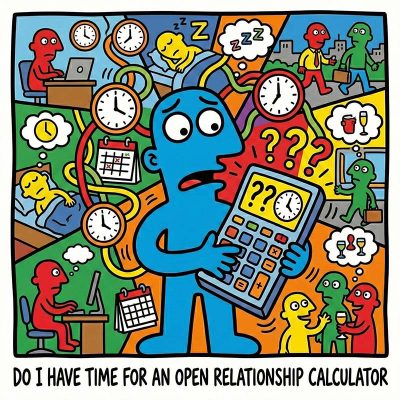
The fantasy is endless romance. The reality? It’s a logistical nightmare. Dating isn't just sex; it’s a second job of swiping, spending, and emotional processing that drains your sanity. Underestimating the "admin" of non-monogamy is the fastest way to turn your relationship into a burnout factory where resentment thrives.
This calculator forces you to confront the brutal math of your time, energy, and wallet. Can you actually afford this lifestyle, or are you just signing up for exhaustion?
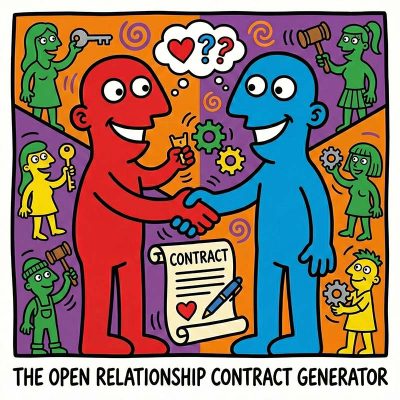
"I thought we agreed" is the sentence that destroys relationships & marriages. Relying on verbal promises when emotions run high is a gamble you cannot afford to lose. Your memory isn't just faulty; it's a liability. Ambiguity is the oxygen that jealousy breathes, turning "freedom" into a minefield of "did I mess up?"
This generator transforms vague permissions into a concrete, signed reality. Stop arguing about what you thought was said and lean on what is written. Secure your boundaries in ink, not hope.
Why unicorn hunting shows up in open contexts
Unicorn hunting often starts in a hopeful space. A couple might long for a third partner who will fit neatly into their dynamic and fill a perceived gap. A single person may hope to be seen as the missing piece that completes a couple. The problem is that fantasy is rarely what reality brings. People are not after a role they can be pushed into. They seek genuine connection a sense of autonomy and a space to show up as themselves. When a hunt becomes a plan that feels like a job interview the energy changes. The person who is being pursued can feel like a prize rather than a person. Pressure builds and fear of losing status grows. The outcome can be a relationship that is unstable because needs were not asked clearly or respected in the first place.
Open contexts thrive when there is transparent conversation and mutual care. The moment the aim becomes to secure a particular person rather than to form a shared relationship people feel manipulated and hurt. The good news is unicorn hunting is preventable. It commonly ends when people slow down decide to learn together and practice honest communication. The goal is not to avoid all risk but to minimize pressure and maximize consent and comfort for everyone involved.
Recognizing signs that unicorn hunting might be happening
Before you proceed with conversations or dating plans look for patterns that can signal a hunt masquerading as a request for companionship. Here are some common red flags to notice early.
- Two people speak for a third person and decide what the third person should like or want without inviting their input.
- Pressure builds around making a yes or a no right away rather than allowing time for genuine reflection.
- Expectations are stated as inevitabilities such as the unicorn must be in a couple with both of them or else the attempt will fail.
- The potential third is asked to fit a rigid template rather than to bring their own preferences to the table.
- Conversations focus on what the unicorn can do for the couple instead of what everyone involved can share and enjoy together.
- Boundary talk is skipped or minimal and consent feels like a one time event rather than an ongoing process.
- There is little space to talk about personal boundaries and about how different people want to balance time energy and emotional space.
If you notice these patterns it is a signal to pause and review how people are approaching the idea of including a new person. It is hard to create a healthy dynamic when the process itself is rushed or treated as a formality rather than a mutual exploration.
Starting from first principles in open contexts
Healthy ENM or open contexts rely on three core ideas. Clarity is about making the aims and boundaries explicit. Consent is about continuous yes and the ability to pause or change direction. Respect is about honoring the other person s right to their own choices even if those choices differ from yours. When you set these as your baseline the conversation about a new connection becomes less about conquest and more about shared discovery.
Clarity
Clarity means that everyone understands what the group is looking for and what is reasonable to expect. You want to describe not only the desired outcome but also the path to that outcome. For example a couple might say we would like to meet someone to share casual dating or to explore a long term triad with a sincere commitment to one another. Clarity reduces guesswork and helps people know what they are signing up for.
Consent
Consent is not a single moment in time. It is a living present practice. It requires asking questions listening for signals of discomfort and being ready to slow down. You want to check in after introductions and after the first few dates. If someone begins to express uncertainty you can slow down or pause the process until all voices feel heard.
Respect
Respect means honoring the other person s autonomy. It means listening to what they want what they do not want and respecting the pace that feels right for them. It also means not pressuring someone into sexual activity or into a level of involvement that would make them uncomfortable. Respect is the glue that holds an open context together when emotions run hot or when external judgments appear.
How to avoid unicorn hunting in real world dating or onboarding a new partner
The following steps create a practical approach that helps you stay away from a unicorn hunting pattern while still pursuing a thriving open context. Each step is designed to be applied in everyday dating and relationship conversations.
Step 1. Name the aim together
Begin with a joint statement about what you hope to build together. This can be two sentences or a short paragraph. The key is to use inclusive language that invites the other person to contribute their view. For example you might say we want to explore building a respectful connection with someone who can share in our shared values and activities while keeping room for your own goals. Invite the other person to add their own goals and concerns so the plan belongs to all three or more people involved.
Step 2. Make space for their voice
Ask open questions and listen for more than a yes or no answer. Questions like what would make this feel balanced for you or what pace feels comfortable help reveal how the other person experiences the situation. If the person senses pressure they may delay or withdraw which undermines trust. If the conversation shows inconsistent signals you can pause and revisit later rather than pushing forward under time pressure.
Step 3. Create a shared consent framework
A framework is a simple living document that outlines boundaries the couple may have as a unit and those that belong to the newly involved person as an individual. It should describe how time will be scheduled how affection will be shared how sexual boundaries will be honored and how conflict will be handled. The framework is not a wall it is a living map that can be updated as needs change.
Step 4. Practice fair inclusive language
When you talk about including someone new use language that reflects a real person not a role. For example instead of saying the unicorn we should find a person who wants to be part of our life in a way that respects their interests and pace. Avoid framing the potential partner as a solution to a problem in the relationship and invite them to declare their own wants and limits.
Step 5. Slow down the introduction pace
Rushing a new connection increases pressure and reduces the chance that the new person will feel safe. Schedule several low pressure meetups over a period of weeks before moving toward anything more intimate. A slow burn helps all parties learn about compatibility and reveals how much emotional energy each person can share.
Step 6. Use specific touchpoints to test compatibility
Rather than only relying on sparks a healthy open context should test compatibility across a few concrete dimensions. For example do you share core values about honesty how you manage jealousy how you handle time together your interest in exploration and your comfort with confusion or conflict. If you find friction on several touchpoints it may be a signal to pause or reconfigure the plan rather than push forward.
Step 7. Have a plan for what happens if feelings change
People grow and sometimes feelings shift. Agree in advance how you will handle changes. Perhaps you will slow down or pause dating with a new person until everyone regains balance. Having a plan reduces drama and protects the people involved from being pushed into a direction they no longer want.
Common scenarios and how to handle them without resorting to unicorn hunting
These scenarios reflect common openings in open contexts and show how to respond in ways that keep consent and mutual respect front and center.
Scenario A a couple seeking a third partner
A couple may feel like they are missing a certain dynamic or level of companionship and invite a potential third to join. To avoid unicorn hunting the couple should share openly what they hope to offer and what the third can expect in return. They should invite the third to express their goals and check in on pace and boundaries. A successful approach is to propose several low pressure meetup options and to make it clear that there is no obligation to join a relationship that does not feel right to the potential partner.
Scenario B a single person considering joining a polycule
A single person may be approached by a couple to become part of their polya network. Before any commitment the couple should describe their current polycule structure and how a new person would fit into it. The potential partner should be allowed to describe their own boundaries and time needs and to ask questions about what it would look like in practice. The most common mistake is assuming a single model fits all and pushing the person to commit quickly. A patient approach respects autonomy and builds trust.
Scenario C a new relationship forming within an open context
When a new relationship is forming inside an open context you want to invite all voices into the conversation early. If the new relationship is not with a unicorn but with a person who wants long term connection you still apply the same rules. Communicate clearly about time energy boundaries and what counts as a shared space. If the new relationship grows into a triad great if not that is okay too because the core priority is consent and comfort for everyone involved.
The freedom of an open relationship sounds incredible, but the logistics can feel like holding a grenade. That spinning "what if" anxiety isn't paranoia, it’s your survival instinct warning you that your bond is exposed. "Just seeing what happens" is the fastest way to turn a fantasy into a breakup.
The Essential Guide replaces chaos with discipline. We give you the blueprints, jealousy protocols, and repair scripts needed to explore the edge without falling off. Don't guess. Secure your foundation first.
The world of non-monogamy is a maze of confusing labels. Trying to be "Polyamorous" when your heart actually needs "Swinging" isn't just a vocabulary error; it’s a recipe for misery.
You can't build a stable home on a foundation that doesn't fit your psychology. This tool analyzes your emotional bandwidth and jealousy triggers to design the exact structure you need. Stop trying to squeeze into a box that doesn't fit. Build a relationship that actually feels like home.
Opening up feels exciting, but if you aren't reading from the same script, you're writing a tragedy. The disconnect between "I want freedom" and "I want safety" is where hearts break. This isn't just a quiz; it’s a synchronization engine.
We identify the silent gaps in your desires—from sleepover rules to emotional bandwidth, before they become unbridgeable chasms. Don't wait until the damage is done to find out you were never on the same page. Align your compasses now.
Theory is sexy. Reality is messy. You agreed you could date others, but how does your stomach drop when he takes her to your anniversary spot? Or when she comes home smelling like someone else?
This simulator drags your abstract rules into the harsh light of day. We force you to confront the visceral, gut-wrenching scenarios that actually destroy relationships, before they happen. Test your nervous system in the simulator so you don't crash the car in real life.
The fantasy is endless romance. The reality? It’s a logistical nightmare. Dating isn't just sex; it’s a second job of swiping, spending, and emotional processing that drains your sanity. Underestimating the "admin" of non-monogamy is the fastest way to turn your relationship into a burnout factory where resentment thrives.
This calculator forces you to confront the brutal math of your time, energy, and wallet. Can you actually afford this lifestyle, or are you just signing up for exhaustion?
"I thought we agreed" is the sentence that destroys relationships & marriages. Relying on verbal promises when emotions run high is a gamble you cannot afford to lose. Your memory isn't just faulty; it's a liability. Ambiguity is the oxygen that jealousy breathes, turning "freedom" into a minefield of "did I mess up?"
This generator transforms vague permissions into a concrete, signed reality. Stop arguing about what you thought was said and lean on what is written. Secure your boundaries in ink, not hope.
Red flags to watch for during onboarding and beyond
Pay attention to signs that the process is drifting toward a negotiation where one voice is dominant or where a hidden agenda is shaping the path forward. Here are red flags to notice and address early.
- One person or one couple seems to control the agenda and shuts down other viewpoints.
- The potential partner is asked to adopt a role rather than share their true preferences.
- There is pressure to keep a timeline even when someone feels uneasy.
- Boundaries are vague or treated as optional rather than as a living map.
- There is an expectation that the new partner will fulfill specific emotional or domestic duties beyond what is agreed.
Practical communication tools you can use today
Clear policies none of us like to admit we need but everyone benefits from having. Here are practical tools to help you keep conversations constructive and welcoming for all involved.
- Open conversation prompts Questions that invite reflection like what would make this feel fair for you what do you fear most about this plan what would you be most excited about.
- Regular check ins A short routine to review how things feel. This can be a weekly or bi weekly moment where everyone shares what is working and what needs to shift.
- Written agreements A concise document that outlines boundaries timelines and consent. It can be revised as needed. Having it in writing helps avoid mis understanding later.
- Emotional weather reporting A simple way to describe current mood without blaming others. For example I feel unsettled when plans shift last minute and I would prefer more notice next time.
- De escalation plan A plan that takes effect if heat rises during a conversation. It may include a break a pause and a reset date to revisit the topic.
What to do when things go off track
No plan survives contact with reality perfectly. When things go off track you want a calm pause confirm you are all still open to talking and then choose a small concrete step you can all agree to. It could be a pause in dating for a week a short check in or a revisit of the shared goals. The important part is to maintain courtesy and protect the emotional safety of everyone involved.
Building healthier polyamorous or open relationships from the start
You can design open contexts that feel good from the ground up. A few simple habits make a big difference.
- Lead with transparency. Share what you seek and ask for honesty in return. Do not rely on assumptions about what others want.
- Invite participation. Let potential partners contribute ideas and help build the plan. If they feel ownership they are more likely to invest in it long term in a positive way.
- Respect autonomy. Do not frame people as solutions to your relationship needs. People join relationships because they want to not because they feel obligated.
- Practice ongoing consent. Check in regularly and adapt to changes in feelings and circumstances. Consent is a living process not a one time event.
- Keep room for growth. The first version of a plan should not have to be the last. Build in space to evolve and to redefine roles as needed.
Realistic scenarios and practical scripts you can use
Scripts help you translate intention into action without sounding pushy or scripted. Adapt these to your voice and your specific context. The goal is to invite a response that reflects the other person s truth.
Intro to a potential new partner who is not yet in a triad
We are exploring an open context and we want to be fair to you and to each other. We love talking about values time together and personal boundaries. If you would like to share your goals and what would make this space feel comfortable we would love to hear it. If this does not feel right for you we understand and we can part as friends with no pressure.
Bringing a potential third into a compatible triad
We want to be clear about what we are hoping for and we want to hear from you about what you want. Here is what we can offer in terms of time energy and emotional space. Here is what would make you feel safe and respected. If this plan aligns with your goals we would love to continue the conversation. If it does not fit we can pause and revisit at another time.
Discussing pace and boundaries with a new partner
Let us set a pace that feels comfortable for all of us. We propose a few low pressure meetings over the next month. We will check in after each step to confirm consent and comfort. We want to know any boundaries you want to set and we will honor them without question.
Realistic expectations versus romantic fantasies
Open contexts can be wonderfully rich when the people involved are honest about what is possible with the time energy and emotional space they have. Do not assume that a unicorn will fix all problems or that a triad will automatically solve loneliness. The right kind of openness comes from people who value consent communication and mutual care as ongoing practices rather than a one time act.
How to talk to friends and family about open context choices
It may come up with friends or family. You can keep it simple and direct. You can say we are exploring a form of love that is built on consent respect and clear communication. We are choosing partners who share those values and we are looking for people who want to join in a way that feels right for them as individuals. You do not owe a full report of private details to everyone. You owe yourself honesty and the people you involve deserve that honesty as well.
Checklist for avoiding unicorn hunting in your space
- Have a clear shared aim with room for change
- Invite the other person to speak their truth early
- Use a living consent framework that you review together
- Keep language inclusive and person centered
- Slow down the process and test for genuine compatibility
- Prepare for shifts with a plan to pause or adjust as needed
- Respect each person s boundaries even when they differ from yours
- Use written agreements to minimize mis reading
Glossary of useful terms and acronyms
- ENM Ethical non monogamy a relationship style built on consent communication and fairness
- Unicorn A person who is imagined to join a couple as a third partner
- Unicorn hunting A pattern where a couple actively searches for a third partner in a way that can pressure the person involved
- Polyamory The practice of having multiple loving relationships with the knowledge and consent of everyone involved
- Polycule The network of partners connected through chosen relationships
- Consent Ongoing permission from all people involved about what will happen next
- Boundary A limit set by a person or group about what is acceptable
- Communication pact An agreement about how partners will talk about needs and concerns
- Fairness Creating space for every voice and avoiding pressure on any one person
Frequently asked questions
The freedom of an open relationship sounds incredible, but the logistics can feel like holding a grenade. That spinning "what if" anxiety isn't paranoia, it’s your survival instinct warning you that your bond is exposed. "Just seeing what happens" is the fastest way to turn a fantasy into a breakup.
The Essential Guide replaces chaos with discipline. We give you the blueprints, jealousy protocols, and repair scripts needed to explore the edge without falling off. Don't guess. Secure your foundation first.
The world of non-monogamy is a maze of confusing labels. Trying to be "Polyamorous" when your heart actually needs "Swinging" isn't just a vocabulary error; it’s a recipe for misery.
You can't build a stable home on a foundation that doesn't fit your psychology. This tool analyzes your emotional bandwidth and jealousy triggers to design the exact structure you need. Stop trying to squeeze into a box that doesn't fit. Build a relationship that actually feels like home.
Opening up feels exciting, but if you aren't reading from the same script, you're writing a tragedy. The disconnect between "I want freedom" and "I want safety" is where hearts break. This isn't just a quiz; it’s a synchronization engine.
We identify the silent gaps in your desires—from sleepover rules to emotional bandwidth, before they become unbridgeable chasms. Don't wait until the damage is done to find out you were never on the same page. Align your compasses now.
Theory is sexy. Reality is messy. You agreed you could date others, but how does your stomach drop when he takes her to your anniversary spot? Or when she comes home smelling like someone else?
This simulator drags your abstract rules into the harsh light of day. We force you to confront the visceral, gut-wrenching scenarios that actually destroy relationships, before they happen. Test your nervous system in the simulator so you don't crash the car in real life.
The fantasy is endless romance. The reality? It’s a logistical nightmare. Dating isn't just sex; it’s a second job of swiping, spending, and emotional processing that drains your sanity. Underestimating the "admin" of non-monogamy is the fastest way to turn your relationship into a burnout factory where resentment thrives.
This calculator forces you to confront the brutal math of your time, energy, and wallet. Can you actually afford this lifestyle, or are you just signing up for exhaustion?
"I thought we agreed" is the sentence that destroys relationships & marriages. Relying on verbal promises when emotions run high is a gamble you cannot afford to lose. Your memory isn't just faulty; it's a liability. Ambiguity is the oxygen that jealousy breathes, turning "freedom" into a minefield of "did I mess up?"
This generator transforms vague permissions into a concrete, signed reality. Stop arguing about what you thought was said and lean on what is written. Secure your boundaries in ink, not hope.
