
Common Mistakes Couples Make When Opening Up

Opening up a relationship is a big step and for many couples it feels like a wild ride through new terrain. In the world of ethically non monogamous relationships also known as ENM you are choosing openness and honesty over a default monogamous script. But even with the best intentions things can go sideways fast. This guide is written in a practical no fluff voice to help you spot the common missteps and learn how to avoid them. We will break down what tends to go wrong in real life examples and offer concrete strategies you can try with your partner. No jargon overload just clear counsel that you can actually use.
Quick Links to Useful Sections
- Understanding ENM and open relationships
- Must know terms you will hear in ENM conversations
- Mistake 1 moving too fast with new connections
- Mistake 2 assuming everyone wants the same level of connection
- Mistake 3 not clarifying boundaries and renegotiating as feelings change
- Mistake 4 unclear communication about rules and expectations
- Mistake 5 fear based decisions driven by jealousy rather than data
- Mistake 6 not planning for safer sex and health transparency
- Mistake 7 neglecting metamour relationships
- Mistake 8 lack of emotional safety checks
- Mistake 9 not including time for the primary bond
- Mistake 10 not making space for realistic expectations
- Realistic scenarios and practical navigation tips
- Practical tips to get started today
- Glossary of useful terms and acronyms
- Frequently asked questions
Understanding ENM and open relationships
Before we dive into the list of mistakes it helps to set a shared baseline. ENM stands for ethically non monogamous. This is a broad umbrella that includes many different relationship styles such as polyamory swinging relationship non exclusive dating and more. The core idea is that all parties involved consent to more than one romantic or sexual connection. ENM is not a free for all it is a deliberate choice that requires ongoing communication boundaries and respect for each other. You are still building a relationship with your partner it just includes additional connections with the consent of everyone involved.
Open relationships are not a cure for issues in a primary partnership. They can amplify what is already there good or bad. The aim is to build trust not to escape problems. When couples go into this space well they protect the primary bond while exploring. The most common mistakes tend to come from miscommunication fear and a lack of planning rather than from the idea of opening up itself. The good news is that most missteps are preventable with clear conversations and practical routines.
Must know terms you will hear in ENM conversations
- ENM ethically non monogamous a broad term for relationships that involve more than two people with consent.
- CNM consensual non monogamy a synonym for ENM used by many people and communities.
- Compersion feeling genuine happiness from your partner s experiences even when you are not involved.
- Jealousy a natural emotional response that signals a boundary or need may be at stake.
- Boundaries agreed rules or guidelines about what is allowed what is not and how to handle difficult situations.
- Metamour a partner s partner or the partner of your partner in the ENM ecosystem.
- Negotiation a process of discussing and adjusting terms to fit everyone s needs.
- Boundaries map a practical document listing what each person is comfortable with in different situations.
- Safe sex practices agreed methods to reduce risk including condoms regular STI testing and honest disclosure of status.
- Primary partner the person who is considered the central relationship or the main commitment in a given dynamic.
The freedom of an open relationship sounds incredible, but the logistics can feel like holding a grenade. That spinning "what if" anxiety isn't paranoia, it’s your survival instinct warning you that your bond is exposed. "Just seeing what happens" is the fastest way to turn a fantasy into a breakup.
The Essential Guide replaces chaos with discipline. We give you the blueprints, jealousy protocols, and repair scripts needed to explore the edge without falling off. Don't guess. Secure your foundation first.
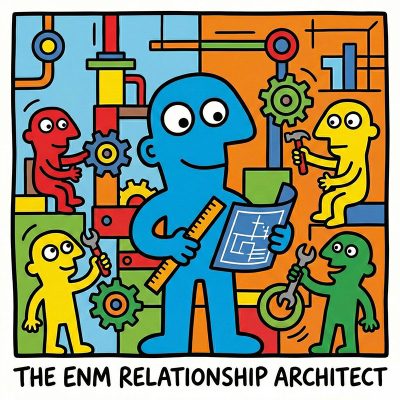
The world of non-monogamy is a maze of confusing labels. Trying to be "Polyamorous" when your heart actually needs "Swinging" isn't just a vocabulary error; it’s a recipe for misery.
You can't build a stable home on a foundation that doesn't fit your psychology. This tool analyzes your emotional bandwidth and jealousy triggers to design the exact structure you need. Stop trying to squeeze into a box that doesn't fit. Build a relationship that actually feels like home.

Opening up feels exciting, but if you aren't reading from the same script, you're writing a tragedy. The disconnect between "I want freedom" and "I want safety" is where hearts break. This isn't just a quiz; it’s a synchronization engine.
We identify the silent gaps in your desires—from sleepover rules to emotional bandwidth, before they become unbridgeable chasms. Don't wait until the damage is done to find out you were never on the same page. Align your compasses now.
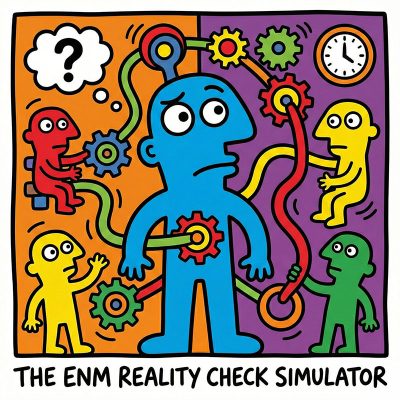
Theory is sexy. Reality is messy. You agreed you could date others, but how does your stomach drop when he takes her to your anniversary spot? Or when she comes home smelling like someone else?
This simulator drags your abstract rules into the harsh light of day. We force you to confront the visceral, gut-wrenching scenarios that actually destroy relationships, before they happen. Test your nervous system in the simulator so you don't crash the car in real life.
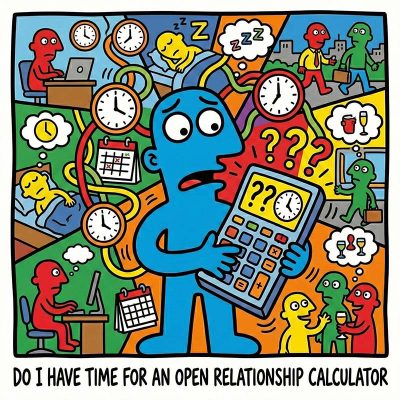
The fantasy is endless romance. The reality? It’s a logistical nightmare. Dating isn't just sex; it’s a second job of swiping, spending, and emotional processing that drains your sanity. Underestimating the "admin" of non-monogamy is the fastest way to turn your relationship into a burnout factory where resentment thrives.
This calculator forces you to confront the brutal math of your time, energy, and wallet. Can you actually afford this lifestyle, or are you just signing up for exhaustion?
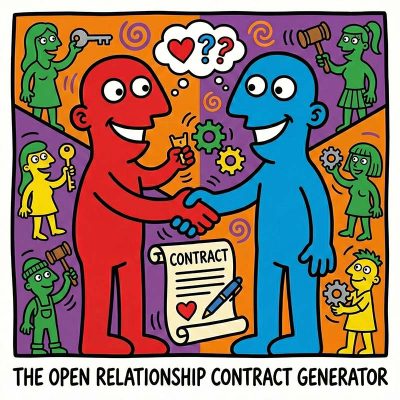
"I thought we agreed" is the sentence that destroys relationships & marriages. Relying on verbal promises when emotions run high is a gamble you cannot afford to lose. Your memory isn't just faulty; it's a liability. Ambiguity is the oxygen that jealousy breathes, turning "freedom" into a minefield of "did I mess up?"
This generator transforms vague permissions into a concrete, signed reality. Stop arguing about what you thought was said and lean on what is written. Secure your boundaries in ink, not hope.
Mistake 1 moving too fast with new connections
One of the most common missteps is trying to accelerate the process. Some couples say we will open the relationship this weekend or we will have our first date with a new person tonight. The romance and adrenaline of new interactions can mask discomfort and hidden issues. When speed becomes the main goal pressure builds and conversations get skipped or skipped again. The result is not a confident open relationship but a brittle setup where rules are made on the fly and flaws are masked by excitement.
Why this backfires
- People feel rushed and let fear slip into decisions rather than real preference.
- Inconsistent boundaries emerge because there was not enough time to think through them.
- Communication becomes transactional rather than ongoing and honest.
What to do instead
- Agree to a slow start a deliberate pace you both own. You can set a limit such as a three month trial period to reassess.
- Treat early experiences as experiments not commitments. Check in after every new interaction to understand what worked and what did not.
- Create a simple time line that you both feel comfortable with pace wise and revisit it regularly.
- Establish a go to rule you can use when you feel uncertain such as a pause point where you slow down or stop and regroup.
Practical prompts to try this week
- Ask your partner what pace feels safe for them and share your own preference in a calm non accusatory way.
- Agree that for the first two new connections you will not discuss every tiny detail in case details leak into the wrong conversations and cause insecurity.
- Set a recurring three week check in where you compare notes about feelings and boundaries not about who did what with whom.
Mistake 2 assuming everyone wants the same level of connection
A big trap in ENM is assuming your level of interest or frequency is what your partner wants as well. You might love seeing a new person weekly while your partner feels happy with monthly check in texts. When you project your own needs into the other person you end up either overstepping or undersatisfying. This mistake is not about selfishness it is about failing to acknowledge that every connection has its own energy and its own pace.
How this shows up
- One partner pushes for a lot of new experiences while the other is comfortable with very little new activity.
- One person feels like they are missing out while the other feels overwhelmed and drained but does not speak up.
How to handle it
- Make a map of desired levels of engagement for each partner including metrics such as frequency of dates communication style and emotional closeness.
- Use a mutual consent framework to renegotiate when a disparity emerges.
- Practice metacommunication meaning talk about how you talk rather than what you talk about every time.
Real world example
Alex loves a steady pace with two or three dates a month and a weekly check in a quick message in between. Jamie desires more variety more often which makes them happy but also stresses Alex at times. They decide to trial a middle ground with a monthly primary check in and optional additional dates only if both feel excited about it. This adjustment reduces friction and keeps both partners engaged without forcing one side to compromise more than needed.
Mistake 3 not clarifying boundaries and renegotiating as feelings change
Boundaries are not a one time box to check off they are living agreements that must evolve as the relationship changes. A common pattern is to set up a list of rules in the first weeks and then never revisit them. Boundaries that are not revisited often become stale or cause drift and resentment. In ENM declining needs or shifting feelings are a normal part of growth and need a safe space to be voiced and heard.
What tends to happen when this goes wrong
- Partners feel unheard because their current needs are not reflected in the rules.
- The dynamics become leaky and old agreements feel outdated which creates friction and secrecy.
- One partner experiences a boundary breach and feels dismissed or punished for speaking out.
Fixes you can try
- Set a boundary review cadence every four to six weeks with a clear agenda such as what is working what is not and what might change.
- Create a boundaries map with explicit examples and decision criteria so there is no guessing about what is allowed in various situations.
- Agree that when a boundary is breached there is a neutral check in rather than a punitive response.
Conversation starters you can use
- How is this boundary working for you right now and what would you change?
- Are there new situations we should prepare for that we have not yet discussed?
- If we discover a boundary does not fit our lives any more what is the best way to adjust it without blame?
Mistake 4 unclear communication about rules and expectations
Clear communication in ENM is not mere talking it is precise and explicit. A lot of confusion comes from using vague language such as we will be safe or we will be respectful without defining what those phrases mean in practice. When couples default to generic statements the specifics vanish and situations get confusing fast. The result is misaligned actions a sense of unfairness and a drift between partners.
Key fixes
- Write down concrete conditions such as how we handle disclosure what must be shared what is not negotiable and how we handle privacy between partners.
- Agree on a standard method to share information perhaps a weekly debrief the same way you would review a project at work.
- Set a policy for friends with benefits or casual dating that keeps the main relationship respected and supported.
Practical tips
- Use a shared note or document that both partners edit. Update it as needed so both feel heard.
- Role play potential scenarios to see how you would react and refine your rules accordingly.
- Schedule time to discuss new terms before they become a live situation so you are prepared not reactive.
Mistake 5 fear based decisions driven by jealousy rather than data
Jealousy is a signal not a verdict. It often shows up as insecurity fear or perceived threat to the primary bond. Some couples try to push past jealousy with tough love or with the idea that jealousy will fade if they just push through. This approach rarely works in the long run and it can erode trust. The healthier move is to treat jealousy as data that needs attention and care.
What to do when jealousy shows up
- Name the feeling and name the trigger. Be specific about what caused the reaction.
- Communicate that you are feeling jealous without blaming your partner for it.
- Collaborate on a practical adjustment that makes the situation safer or more comfortable for both of you.
Techniques you can use
- Timed disclosures share important updates at set intervals and keep less essential details private until trust grows.
- Compersion practice not a cure for jealousy but a way to cultivate happiness for your partner s joy while addressing your own needs.
- Boundary re education where you revise rules to prevent repeated triggers while maintaining the core relationship values.
Real life example
Two partners discover that one of them is jealous of late night conversations with a new partner. They agree that late night messaging will be optional but not a default and set a soft boundary that messages after midnight are limited unless both partners approve. They also schedule a weekly check in to discuss how late night interactions feel and adjust if needed. This approach reduces friction and creates room for growth without forcing a quick full acceptance of all new interactions.
The freedom of an open relationship sounds incredible, but the logistics can feel like holding a grenade. That spinning "what if" anxiety isn't paranoia, it’s your survival instinct warning you that your bond is exposed. "Just seeing what happens" is the fastest way to turn a fantasy into a breakup.
The Essential Guide replaces chaos with discipline. We give you the blueprints, jealousy protocols, and repair scripts needed to explore the edge without falling off. Don't guess. Secure your foundation first.
The world of non-monogamy is a maze of confusing labels. Trying to be "Polyamorous" when your heart actually needs "Swinging" isn't just a vocabulary error; it’s a recipe for misery.
You can't build a stable home on a foundation that doesn't fit your psychology. This tool analyzes your emotional bandwidth and jealousy triggers to design the exact structure you need. Stop trying to squeeze into a box that doesn't fit. Build a relationship that actually feels like home.
Opening up feels exciting, but if you aren't reading from the same script, you're writing a tragedy. The disconnect between "I want freedom" and "I want safety" is where hearts break. This isn't just a quiz; it’s a synchronization engine.
We identify the silent gaps in your desires—from sleepover rules to emotional bandwidth, before they become unbridgeable chasms. Don't wait until the damage is done to find out you were never on the same page. Align your compasses now.
Theory is sexy. Reality is messy. You agreed you could date others, but how does your stomach drop when he takes her to your anniversary spot? Or when she comes home smelling like someone else?
This simulator drags your abstract rules into the harsh light of day. We force you to confront the visceral, gut-wrenching scenarios that actually destroy relationships, before they happen. Test your nervous system in the simulator so you don't crash the car in real life.
The fantasy is endless romance. The reality? It’s a logistical nightmare. Dating isn't just sex; it’s a second job of swiping, spending, and emotional processing that drains your sanity. Underestimating the "admin" of non-monogamy is the fastest way to turn your relationship into a burnout factory where resentment thrives.
This calculator forces you to confront the brutal math of your time, energy, and wallet. Can you actually afford this lifestyle, or are you just signing up for exhaustion?
"I thought we agreed" is the sentence that destroys relationships & marriages. Relying on verbal promises when emotions run high is a gamble you cannot afford to lose. Your memory isn't just faulty; it's a liability. Ambiguity is the oxygen that jealousy breathes, turning "freedom" into a minefield of "did I mess up?"
This generator transforms vague permissions into a concrete, signed reality. Stop arguing about what you thought was said and lean on what is written. Secure your boundaries in ink, not hope.
Mistake 6 not planning for safer sex and health transparency
Health and safety should be an ongoing priority in ENM not a one off checklist. Often couples skip regular STI testing because they think dating multiple people makes testing inconvenient. They assume partners will handle disclosure in the right way or they avoid asking about status to prevent awkward moments. This mindset is a recipe for miscommunication and risk. Safer sex and health transparency build trust and reduce fear.
Best practices you can adopt
- Agree on a testing schedule including how often each partner gets tested and what tests are appropriate for your activities.
- Share results privately in a way that respects privacy but keeps everyone informed about health status.
- Use barrier methods consistently and keep evidence of health updates as part of your shared communication routine.
Practical steps to implement
- Set a calendar reminder for STI testing dates and mark it as a shared task so both parties participate.
- Establish a clear policy for what happens if someone tests positive and how to handle potential exposure to a partner who is not currently involved with a new person.
- Discuss negative or positive results openly without fear of judgment or punishment for requesting safety measures.
Real world scenario
A couple learns that one partner has started dating someone who has a different testing schedule. They agree to align testing windows and share the dates so both feel safe. They decide to communicate openly about any changes in sexual activity with new partners and maintain a feedback loop to adjust practices as necessary. The result is a safer dynamic that reduces anxiety and strengthens trust.
Mistake 7 neglecting metamour relationships
In ENM the network matters. Metamours are the people who are connected through your partners but may not be directly involved with you. If you ignore metamour dynamics you miss a big piece of the ecosystem. Tension between metamours can ripple into the primary partnership. On the flip side a healthy metamour relationship can create a sense of community and support for everyone involved.
What can go wrong
- Rivalries flare up due to miscommunication and perceived competition for attention.
- Unclear boundaries between metamours create repeated awkward moments in social settings or group activities.
- Hidden grievances simmer and spill over into everyday interactions with your partner.
How to approach metamour dynamics
- Initiate gentle dialogue with metamours about shared values and expectations even if you are not dating them directly.
- Practice etiquette such as asking about boundaries in group activities and seeking consent before sharing information that involves others.
- Schedule safe spaces for metamours to talk and build camaraderie rather than rivalry.
Scenario and advice
In a circle night one metamour feels left out as the primary couple spends time with a new partner. Instead of ignoring the feeling the group uses a brief check in to acknowledge everyone s needs. The primary couple assures that no one is being replaced and suggests a rotating schedule that includes all members for group activities. The result is a more cohesive and friendly circle rather than a tense one.
Mistake 8 lack of emotional safety checks
Emotional safety is not a bonus feature it is central. When couples fail to check in on emotional well being they risk bottling up fear anger and disappointment which can explode at the worst moments. Regular emotional safety checks help you catch problems early and keep the relationship resilient even as the dynamic grows more complex.
How to build emotional safety checks
- Schedule a recurring couple s check in to discuss how you feel about current arrangements and any new concerns.
- Ask for feedback from each other in a non blaming way focusing on feelings not accusations.
- Agree on a process to address issues such as time outs a cooling off period and a plan to talk through problems later when both are ready.
Tips for making these checks feel productive
- Use a simple format like what is going well what is not and what could be improved in the next four weeks.
- Keep the tone respectful and curious rather than defensive.
- Put actions in writing so both can refer back to what was agreed and hold each other accountable.
Observers of ENM often notice that the couples who succeed treat emotions as information not as a threat. They listen with openness and adjust their plans not out of fear but out of care for the relationship they value most.
Mistake 9 not including time for the primary bond
One trap is to let the primary relationship fade into the background while chasing new experiences. The best ENM partnerships protect the primary bond while allowing room for other connections. When time for the core relationship shrinks patterns of neglect appear and the sense of security weakens.
Practical steps to protect the primary bond
- Put weekly date time on the calendar even if you add more partners to your life. The point is not to control but to keep your bond visible and nourished.
- Use a shared ritual that is just for the primary partnership such as a walk a meal or a screen free check in. Small rituals reinforce closeness.
- Discuss what you both need to feel seen and supported in the primary relationship and commit to doing those things even when life is busy.
Scenario
One partner starts a new connection that demands more evenings out together. The couple agrees to alternate nights and to reserve at least one full date night a week dedicated to the primary relationship. They also schedule a two week shift where the new partner participates in activities with the group making the primary bond feel inclusive rather than threatened. The result is steady connection plus new experiences without tearing apart the core relationship.
Mistake 10 not making space for realistic expectations
Enthusiasm can blind you to reality. Realistic expectations are about what you can actually handle in terms of time emotion energy and logistics. It is easy to think more is better and end up spread thin. The reality is that ENM requires a steady balance of excitement and sustainability. Without this balance you risk burnout and resentment which can undermine trust and end the experiment prematurely.
Ways to stay realistic
- Set a monthly capacity for new connections that feels comfortable for both of you and adjust if needed.
- Focus on quality of connection over quantity of connections. Deep meaningful interactions hold more value than multiple shallow encounters.
- Keep a shared journal of what works what does not and what you would like to try next. Use it as a living document you both contribute to.
Putting it all together
Opening up an established bond is a complex process that requires ongoing negotiation patience and care. The mistakes above are common but they are not inevitable. The key is to keep talking with your partner in a proactive way. Treat each misstep as a signal for learning what to adjust rather than a reason to give up on ENM. When you approach the plan with curiosity and kindness you can keep the primary relationship strong while building new meaningful connections outside the union you share.
Realistic scenarios and practical navigation tips
Here are several realistic situations you might encounter in ENM and how to navigate them with practical steps rather than reactive emotions.
- Scenario A you are both excited about a new partner but one of you feels overwhelmed after the first date. Tip stick to a two date trial and schedule a check in before moving ahead with more time.
- Scenario B you discover a boundary breach what now. Tip pause revisit the boundary map update it together and decide what immediate steps are needed to repair trust.
- Scenario C you want to include a metamour in a group activity but one partner is anxious about feeling like a third wheel. Tip create a shared plan that includes solo time with each partner and group activities that allow everyone to feel comfortable.
- Scenario D you notice jealousy spikes around intimacy with a new partner. Tip talk about the triggers use a scheduled debrief not an improvised confrontation and work on compersion practices to celebrate your partner s happiness while addressing your own needs.
Practical tips to get started today
- Draft a simple boundaries map together covering what activities are allowed who shares information with whom and how you handle risk areas such as dating with a new partner as a couple.
- Schedule regular check in times for conversation about how things are going and what you want to adjust.
- Keep lines of communication open with affection and honesty and resist the urge to defend or attack when difficult topics arise.
- Practice transparent communication around scheduling including who is dating whom and when you will see other people.
- Foster a community friendly approach to metamours with courteous language and mutual respect.
Glossary of useful terms and acronyms
- ENM ethically non monogamous a broad family of relationship styles that involve more than two people with consent.
- CNM consensual non monogamy another widely used term for ENM.
- Compersion feeling happiness at your partner s joy even if you are not directly involved.
- Jealousy an emotional signal that something in the dynamic needs attention.
- Boundaries map a living document listing rules and what each person wants to keep sacred in the relationship.
- Metamour a partner s partner or the partner of your partner in a non monogamous network.
- Prioritizing the primary bond deliberately placing time and energy into the main relationship even as you explore others.
- Negotiation a collaborative process of discussing needs and boundaries and making adjustments that work for all involved.
Frequently asked questions
What is ENM and how is it different from swinging or polyamory
Ethically non monogamous is a broad umbrella that covers many relationship styles. Swinging usually involves couples who explore sexual experiences with other couples or singles often on a social or recreational level. Polyamory emphasizes emotional connection with multiple partners often at different levels of intimacy. ENM can include elements of all of these but its core is consent open communication and ongoing negotiation.
How long should we date other people before inviting more serious commitments
There is no one size fits all answer. A good approach is to evaluate comfort level and communication clarity. Many couples trial with casual dating before moving into more serious connections. The key is to discuss what would feel right for both of you and to revisit that decision as the dynamic evolves.
What if one partner wants more boundaries than the other
That is a common scenario. The best path is to negotiate a boundary set that protects emotional safety while recognizing differences. You can create a gradient or tiered set of boundaries that allows more flexibility for one partner while providing more stability for the other. Keep it fair and revisited often.
How do we handle difficult conversations without turning them into fights
Plan for tough talks just like you would plan for important meetings. Choose a time when you are calm avoid distractions and agree on a pause if emotions run high. Use I statements focus on your needs and feelings and invite the other person to share their perspective. Rephrase what you hear to demonstrate understanding. End with a practical step you will both take.
Should we involve a therapist
Many couples find it helpful to work with a therapist who has experience with ENM or CNM. A third party can help you navigate sensitive topics and develop healthier communication patterns. If you choose this route ensure the professional is affirming of ethical non monogamy and shares a non judgmental stance.
What if communication breaks down repeatedly
Rebuild the lines of trust with a structured plan. Schedule regular check ins even if things feel stable. Consider using a boundary map a shared accountability approach and a plan to pause and reassess if needed. If breakdowns persist a professional counselor with ENM experience can offer guidance that respects everyone's consent and safety.
The freedom of an open relationship sounds incredible, but the logistics can feel like holding a grenade. That spinning "what if" anxiety isn't paranoia, it’s your survival instinct warning you that your bond is exposed. "Just seeing what happens" is the fastest way to turn a fantasy into a breakup.
The Essential Guide replaces chaos with discipline. We give you the blueprints, jealousy protocols, and repair scripts needed to explore the edge without falling off. Don't guess. Secure your foundation first.
The world of non-monogamy is a maze of confusing labels. Trying to be "Polyamorous" when your heart actually needs "Swinging" isn't just a vocabulary error; it’s a recipe for misery.
You can't build a stable home on a foundation that doesn't fit your psychology. This tool analyzes your emotional bandwidth and jealousy triggers to design the exact structure you need. Stop trying to squeeze into a box that doesn't fit. Build a relationship that actually feels like home.
Opening up feels exciting, but if you aren't reading from the same script, you're writing a tragedy. The disconnect between "I want freedom" and "I want safety" is where hearts break. This isn't just a quiz; it’s a synchronization engine.
We identify the silent gaps in your desires—from sleepover rules to emotional bandwidth, before they become unbridgeable chasms. Don't wait until the damage is done to find out you were never on the same page. Align your compasses now.
Theory is sexy. Reality is messy. You agreed you could date others, but how does your stomach drop when he takes her to your anniversary spot? Or when she comes home smelling like someone else?
This simulator drags your abstract rules into the harsh light of day. We force you to confront the visceral, gut-wrenching scenarios that actually destroy relationships, before they happen. Test your nervous system in the simulator so you don't crash the car in real life.
The fantasy is endless romance. The reality? It’s a logistical nightmare. Dating isn't just sex; it’s a second job of swiping, spending, and emotional processing that drains your sanity. Underestimating the "admin" of non-monogamy is the fastest way to turn your relationship into a burnout factory where resentment thrives.
This calculator forces you to confront the brutal math of your time, energy, and wallet. Can you actually afford this lifestyle, or are you just signing up for exhaustion?
"I thought we agreed" is the sentence that destroys relationships & marriages. Relying on verbal promises when emotions run high is a gamble you cannot afford to lose. Your memory isn't just faulty; it's a liability. Ambiguity is the oxygen that jealousy breathes, turning "freedom" into a minefield of "did I mess up?"
This generator transforms vague permissions into a concrete, signed reality. Stop arguing about what you thought was said and lean on what is written. Secure your boundaries in ink, not hope.
