
Communication Rituals That Prevent Drift

Welcome to a down to earth guide for people exploring ethical non monogamy or open relationships. We are The Monogamy Experiment and we speak plainly about the reality of meeting multiple loves while keeping connection strong. This article breaks down practical rituals you can adopt to prevent drift. Drift is when partners grow apart emotionally or practically due to misaligned expectations, unclear boundaries, or slipping communication. The good news is you can design habits that keep you in sync even when life gets busy or feelings get complicated. We will explain terms as we go so you can follow along without guessing what terminology means. Let us get grounded and playful at the same time.
Quick Links to Useful Sections
- Who this guide is for
- What ENM means and why it matters here
- Understanding drift in open relationships
- Common drift patterns in ENM
- Why rituals help in ethical non monogamy
- Core building blocks for effective rituals
- Daily rituals you can start today
- Morning check in with primary partner
- Evening mood snapshot
- Brief safety and consent pulse
- Weekly rituals that deepen trust
- Weekly alignment conversation
- Shared calendar and schedule review
- Emotional health check in
- Monthly rituals for renegotiation and growth
- Boundary and agreement review
- Relationship scope and priority check
- Well being and safety audit
- Rituals for special occasions and new connections
- New connection debrief
- Post date check in
- Event based realignments
- Practical tools and prompts that support rituals
- Realistic scenarios and how rituals help
- Scenario one a new connection shifts energy
- Scenario two scheduling conflicts escalate
- Scenario three changing boundaries after personal growth
- Do s and don t s for ENM rituals
- A practical template you can adapt
- Glossary of useful terms and acronyms
- Frequently asked questions
Who this guide is for
This guide is for anyone practicing or curious about ethical non monogamy and open relationships. If you have more than one ongoing romantic or sexual connection, you will face moments where schedules change, emotions shift, and boundaries must be revisited. Our aim is to give you practical rituals that fit real life. You might be in a new ENM dynamic or you might be in a long running open relationship. Either way the goal stays the same. Keep your communication clear, kind, and consistent so drift does not surprise you.
What ENM means and why it matters here
ENM stands for ethical non monogamy. Ethical means treating all people with respect and obtaining consent before changing the terms of any relationship. Non monogamy means having romantic or sexual connections with more than one person at the same time. An open relationship is a common form of ENM where partners agree to explore emotional or physical connections beyond the core couple. In this article we focus on communication rituals that work in this context. We will explain terms and acronyms so you can use them confidently without guessing.
The freedom of an open relationship sounds incredible, but the logistics can feel like holding a grenade. That spinning "what if" anxiety isn't paranoia, it’s your survival instinct warning you that your bond is exposed. "Just seeing what happens" is the fastest way to turn a fantasy into a breakup.
The Essential Guide replaces chaos with discipline. We give you the blueprints, jealousy protocols, and repair scripts needed to explore the edge without falling off. Don't guess. Secure your foundation first.
The world of non-monogamy is a maze of confusing labels. Trying to be "Polyamorous" when your heart actually needs "Swinging" isn't just a vocabulary error; it’s a recipe for misery.
You can't build a stable home on a foundation that doesn't fit your psychology. This tool analyzes your emotional bandwidth and jealousy triggers to design the exact structure you need. Stop trying to squeeze into a box that doesn't fit. Build a relationship that actually feels like home.

Opening up feels exciting, but if you aren't reading from the same script, you're writing a tragedy. The disconnect between "I want freedom" and "I want safety" is where hearts break. This isn't just a quiz; it’s a synchronization engine.
We identify the silent gaps in your desires—from sleepover rules to emotional bandwidth, before they become unbridgeable chasms. Don't wait until the damage is done to find out you were never on the same page. Align your compasses now.
Theory is sexy. Reality is messy. You agreed you could date others, but how does your stomach drop when he takes her to your anniversary spot? Or when she comes home smelling like someone else?
This simulator drags your abstract rules into the harsh light of day. We force you to confront the visceral, gut-wrenching scenarios that actually destroy relationships, before they happen. Test your nervous system in the simulator so you don't crash the car in real life.
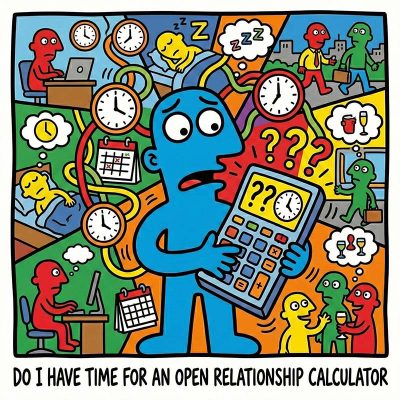
The fantasy is endless romance. The reality? It’s a logistical nightmare. Dating isn't just sex; it’s a second job of swiping, spending, and emotional processing that drains your sanity. Underestimating the "admin" of non-monogamy is the fastest way to turn your relationship into a burnout factory where resentment thrives.
This calculator forces you to confront the brutal math of your time, energy, and wallet. Can you actually afford this lifestyle, or are you just signing up for exhaustion?
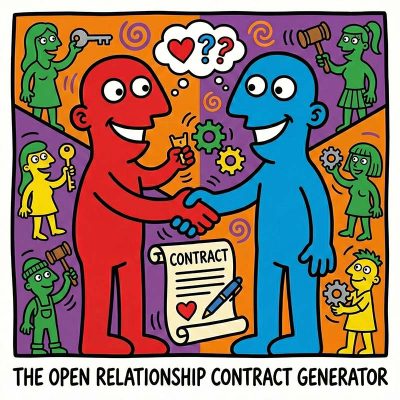
"I thought we agreed" is the sentence that destroys relationships & marriages. Relying on verbal promises when emotions run high is a gamble you cannot afford to lose. Your memory isn't just faulty; it's a liability. Ambiguity is the oxygen that jealousy breathes, turning "freedom" into a minefield of "did I mess up?"
This generator transforms vague permissions into a concrete, signed reality. Stop arguing about what you thought was said and lean on what is written. Secure your boundaries in ink, not hope.
Understanding drift in open relationships
Drift happens when you and your partners gradually grow out of alignment without noticing. It might show up as feeling unseen, misaligned boundaries, unequal time spent with different partners, or differing levels of emotional access. Drift is not about bad intentions it is about changing circumstances. The moment you notice drift you have an opportunity to adjust. The best defense against drift is a proactive rhythm of conversations that happens before a crisis appears.
Common drift patterns in ENM
- Unequal attention across partners leading to jealousy or insecurity.
- Unspoken changes in boundaries that gradually become constraints for one person but not for others.
- Different pace of dating and relationship development among partners causing misalignment.
- Communication gaps where important topics are skipped until they cause a problem.
- Emergence of new concerns about safety, time management, or emotional investment.
Recognizing these patterns is not a verdict on anyone. It is a signal that a ritual or two might be missing from your routine. The goal is steady check ins and renegotiation when needed so drift remains rare or short lived.
Why rituals help in ethical non monogamy
Rituals create predictable moments when people can share honestly. They remove the guesswork that fuels insecurity. Rituals provide space for couples and polyamorous networks to maintain alignment on values, boundaries, time, and safety. They are not shackles they are tools. The tone you choose matters. You want rituals that feel like care not like homework. A good ritual is simple repeatable and inclusive. It should involve all relevant people and be adaptable as relationships evolve.
Core building blocks for effective rituals
- Clarity Shared understanding of what is being discussed and why it matters. This reduces misinterpretation.
- Consent Agreement by all participants on how to proceed or adjust. Consent is ongoing not a one time event.
- Frequency A rhythm that fits your life. Some folks need daily quick check ins others prefer weekly or biweekly deep discussions.
- Safety A sense that you can speak openly without fear of punishment or withdrawal of affection. Psychological safety is essential for honest dialogue.
- Documentation Simple notes or a shared calendar to track agreements and changes. Documentation helps remember what was decided.
Daily rituals you can start today
Daily rituals establish a baseline of connection even on busy days. These are quick practical steps you can integrate into your morning or evening routine without feeling overwhelmed.
Morning check in with primary partner
Start the day with a quick message or a short spoken check in. Ask how the other person is feeling and what their main focus is for the day. A simple exchange like this sets an intention for the hours ahead and helps reduce hidden frustration.
Evening mood snapshot
Before sleep take a moment to reflect on your mood and energy level. Note anything that feels off or if you are feeling especially connected to any partner. A two minute check in at the end of the day can prevent a buildup of small irritations into a bigger problem.
Brief safety and consent pulse
If you practice sexual or intimate openness, a quick daily pulse on safety and consent is useful. A short line such as Are we good for today What feels like a yes or a no can keep everyone aligned before plans change.
Weekly rituals that deepen trust
Weekly rituals are the workhorse of ENM communication. They provide a more relaxed space to discuss what is working and what is not. The key is consistency and a tone that favors curiosity over accusation.
Weekly alignment conversation
Block a dedicated hour to talk about boundaries time with each partner and emotional energy. Begin with a mutual check in piece where everyone shares a highlight and a concern from the previous week. Use this time to adjust schedules discuss new dates and ensure everyone feels seen.
Shared calendar and schedule review
Update a single shared calendar that tracks who is dating whom where and when. This reduces accidental overlaps and helps people plan around each other s needs. The calendar should be accessible to all involved and kept simple.
Emotional health check in
Set aside time to discuss emotional wellbeing. This is not about solving every problem in one sitting but rather validating feelings and deciding if additional support such as a therapist or coach would help.
The freedom of an open relationship sounds incredible, but the logistics can feel like holding a grenade. That spinning "what if" anxiety isn't paranoia, it’s your survival instinct warning you that your bond is exposed. "Just seeing what happens" is the fastest way to turn a fantasy into a breakup.
The Essential Guide replaces chaos with discipline. We give you the blueprints, jealousy protocols, and repair scripts needed to explore the edge without falling off. Don't guess. Secure your foundation first.
The world of non-monogamy is a maze of confusing labels. Trying to be "Polyamorous" when your heart actually needs "Swinging" isn't just a vocabulary error; it’s a recipe for misery.
You can't build a stable home on a foundation that doesn't fit your psychology. This tool analyzes your emotional bandwidth and jealousy triggers to design the exact structure you need. Stop trying to squeeze into a box that doesn't fit. Build a relationship that actually feels like home.
Opening up feels exciting, but if you aren't reading from the same script, you're writing a tragedy. The disconnect between "I want freedom" and "I want safety" is where hearts break. This isn't just a quiz; it’s a synchronization engine.
We identify the silent gaps in your desires—from sleepover rules to emotional bandwidth, before they become unbridgeable chasms. Don't wait until the damage is done to find out you were never on the same page. Align your compasses now.
Theory is sexy. Reality is messy. You agreed you could date others, but how does your stomach drop when he takes her to your anniversary spot? Or when she comes home smelling like someone else?
This simulator drags your abstract rules into the harsh light of day. We force you to confront the visceral, gut-wrenching scenarios that actually destroy relationships, before they happen. Test your nervous system in the simulator so you don't crash the car in real life.
The fantasy is endless romance. The reality? It’s a logistical nightmare. Dating isn't just sex; it’s a second job of swiping, spending, and emotional processing that drains your sanity. Underestimating the "admin" of non-monogamy is the fastest way to turn your relationship into a burnout factory where resentment thrives.
This calculator forces you to confront the brutal math of your time, energy, and wallet. Can you actually afford this lifestyle, or are you just signing up for exhaustion?
"I thought we agreed" is the sentence that destroys relationships & marriages. Relying on verbal promises when emotions run high is a gamble you cannot afford to lose. Your memory isn't just faulty; it's a liability. Ambiguity is the oxygen that jealousy breathes, turning "freedom" into a minefield of "did I mess up?"
This generator transforms vague permissions into a concrete, signed reality. Stop arguing about what you thought was said and lean on what is written. Secure your boundaries in ink, not hope.
Monthly rituals for renegotiation and growth
When relationships evolve a monthly rhythm gives you space to renegotiate without crisis. Monthly rituals should focus on deeper topics that are important to multiple people and can include revisiting core boundaries and agreements.
Boundary and agreement review
Review existing boundaries and agreements to confirm they still reflect everyone s living reality. You may decide to soften or tighten certain rules or add new ones based on experiences and changing needs.
Relationship scope and priority check
Explore how much time and energy each relationship receives and whether the distribution feels fair. This is not a score keeping exercise but an honest reflection on balance and fairness among all connections.
Well being and safety audit
Discuss safety protocols around sex contraception disease prevention and physical boundaries. Update safety plans if a partner starts dating someone new or travels for an extended period.
Rituals for special occasions and new connections
Open relationships often involve new partners and special events. Having rituals for these moments keeps everyone in the loop and reduces uncertainty.
New connection debrief
After meeting a new partner schedule a brief debrief to share impressions concerns and early boundaries. This helps in deciding whether to proceed with deeper dating and how to fit the new connection into existing dynamics.
Post date check in
A short follow up after a date can be a good practice. It gives each person a chance to express what worked what felt risky and what they want next. It also helps align expectations early on with new partners.
Event based realignments
When big life events happen such as travel work changes or family obligations you may need an extra realignment session. A focused discussion can prevent drift by reestablishing how partners will show up across different contexts.
Practical tools and prompts that support rituals
Good rituals rely on simple tools and prompts that keep conversations moving forward rather than stalling. The goal is to create a safe and constructive environment for sharing.
- Conversation prompts Use prompts such as What is working well this week What could make next week easier Are there any boundaries you want to revisit today to help you feel secure.
- Emotion labeling Encourage partners to name emotions clearly such as I feel anxious excited grateful or overwhelmed. Clear labels reduce misinterpretation.
- Energy budgeting Talk about emotional energy the amount you have for each connection and how you want to spend it. This helps prevent overwhelm and ensures fair consideration for all partners.
- Simple reporting Keep notes on agreements and decisions in a shared document or notebook. Short is fine just keep it current.
- Grounding rituals Quick grounding exercises like a five breath pause before a hard conversation can help maintain a calm and respectful tone.
- Repair plan Agree in advance on how to repair when things go off track. This might include a cooling off period or a guided conversation with a neutral facilitator.
Realistic scenarios and how rituals help
Let us walk through a few believable situations and show how rituals prevent drift rather than letting it slip into a full scale problem. Real stories help you see how to apply these ideas in daily life.
Scenario one a new connection shifts energy
Two partners have been close for a while. A new connection emerges and one partner starts spending more time with the new person. Without rituals that make space for this shift tensions rise. A weekly alignment conversation plus a monthly boundary review allows the group to acknowledge the shift discuss time distribution and adjust schedules so everyone feels seen. The result is a smoother transition and fewer resentments.
Scenario two scheduling conflicts escalate
Work travel and family obligations create a busy stretch. Daily check ins and a shared calendar highlight what each partner needs this week and when. If someone cannot meet a planned date the ritual framework encourages quick renegotiation instead of letting disappointment pile up. The outcome is clear expectations and a sense of shared purpose even during chaos.
Scenario three changing boundaries after personal growth
A partner reevaluates what they want in a relationship and decides to adjust a boundary. A monthly boundary and agreement review invites a respectful discussion where all voices are heard. The change is implemented with a clear explanation and appreciation for others needs. The relationship continues with renewed trust rather than secrecy or resentment.
Do s and don t s for ENM rituals
- Do Keep rituals simple and repeatable. They should fit your real life not become a burden.
- Do Use neutral language that avoids blame. Focus on feelings and needs rather than accusations.
- Do Include all relevant people in the rituals. If you have multiple connections make sure everyone who is impacted has a voice.
- Do Schedule rituals at regular times so they become a habit you actually keep.
- Do not Skip important conversations because they feel awkward. Tackle them with care and if needed with a facilitator or therapist.
- Do not Let jealousy run unchecked. Bring it into the ritual with honesty and a plan to address it.
- Do not Use rituals as a weapon or as a way to police others. The intention should be connection and safety.
A practical template you can adapt
Here is a simple but flexible template you can customize for your group. Use it as a starting point for your own ritual routine.
- Daily pulse Quick mood check in with each relevant partner. Share one thing you are grateful for and one thing you need support with.
- Weekly alignment One hour to review calendar changes discuss boundaries and celebrate progress. End with a commitment for the coming week.
- Monthly renegotiation Longer session to review overall balance, safety, and any boundary changes. Update notes and share with the group.
Glossary of useful terms and acronyms
- ENM Ethical non monogamy a broad umbrella term for relationships that involve more than two people with consent and honesty at the center.
- Open relationship A form of ENM where partners allow romantic or sexual connections with other people outside the primary relationship.
- Primary The person or relationship that holds a central place in some ENM arrangements. Not all networks use this term.
- Secondary A relationship that is not the primary focus in some ENM structures. The terms primary and secondary are used differently by different groups.
- NRE New relationship energy a strong sense of excitement and novelty when a new connection begins.
- Boundaries Agreements about what is acceptable and what is not in terms of time, affection, sex, and disclosure.
- Consent Mutual agreement to participate in any activity or change in a relationship. Consent is ongoing and can be withdrawn at any time.
- Jealousy management Practices for recognizing jealousy and expressing it in a way that respects everyone involved.
- Compersion The joy one person feels from another person s happiness often used in polyamory and ENM circles.
- Check in A short conversation or message that invites sharing current feelings and needs.
- Renegotiation Adjusting boundaries or agreements in light of new circumstances or feelings.
Frequently asked questions
What is drift in open relationships and how can I spot it quickly
Drift is when partners gradually grow out of alignment on needs boundaries or expectations. It often shows up as nagging disappointments inconsistent time with partners or a sense that someone feels unseen. Spot drift by noticing recurring concerns during check ins such as a partner feeling underappreciated or a lack of clarity about boundaries. The sooner you name it the easier it is to address.
How do I start a ritual when my partner and I feel distant
Start with a low risk daily check in. Use a simple prompt such as What would support you today What is one thing I could do to help you feel connected. Keep it short and focused. If distance grows you can add a weekly alignment and a monthly renegotiation session to go deeper.
Is it okay to have different thresholds for different partners
Yes it is common to have varying boundaries depending on the relationship. The important part is to communicate clearly about those thresholds and ensure all involved parties understand and consent to the arrangement. Regularly revisit thresholds as relationships evolve.
What if I feel jealous and do not want to burden my partner with it
Acknowledge the feeling honestly and share it in a non blaming way. Use a ritual that invites discussion rather than silence. Jealousy is a signal it helps to talk through where needs are not being met and to adjust plans to restore balance.
How can we include new partners in our rituals without overwhelming everyone
Introduce new partners gradually and with consent from all involved. Start with inclusive but light rituals such as a group check in once a week where everyone shares a short update. As comfort grows you can add deeper conversations and more collaborative planning.
Should we document our rituals or is spoken agreement enough
Documentation helps prevent misunderstandings and acts as a record of agreements. A shared notebook or online document works well. Keep it simple and update it whenever changes are made. The goal is clarity not bureaucracy.
How do we handle a conflict during a ritual
Observe the agreed repair plan. Pause if needed and use a neutral facilitator or a cooling off period. Return to the conversation with the goal of understanding rather than winning. Remember the aim is to maintain connection and safety for everyone involved.
Can rituals replace therapy or coaching
Rituals are a strong foundational tool for healthy ENM dynamics but they do not replace professional help when issues are persistent or deeply painful. If jealousy fear trauma or attachment styles are significantly affecting relationships seeking therapy or coaching can be very helpful.
How long should a monthly renegotiation take
A focused renegotiation session can take from 60 to 90 minutes depending on how many topics you cover. If you have a lot to discuss you can break it into two shorter sessions across the same week but keep the momentum and shared intent intact.
Is it possible to do rituals on a budget
Absolutely. Rituals do not require fancy tools. A shared digital note a free calendar app a calm space for discussion and a little time are enough. The key is consistency and sincerity not expense.
The freedom of an open relationship sounds incredible, but the logistics can feel like holding a grenade. That spinning "what if" anxiety isn't paranoia, it’s your survival instinct warning you that your bond is exposed. "Just seeing what happens" is the fastest way to turn a fantasy into a breakup.
The Essential Guide replaces chaos with discipline. We give you the blueprints, jealousy protocols, and repair scripts needed to explore the edge without falling off. Don't guess. Secure your foundation first.
The world of non-monogamy is a maze of confusing labels. Trying to be "Polyamorous" when your heart actually needs "Swinging" isn't just a vocabulary error; it’s a recipe for misery.
You can't build a stable home on a foundation that doesn't fit your psychology. This tool analyzes your emotional bandwidth and jealousy triggers to design the exact structure you need. Stop trying to squeeze into a box that doesn't fit. Build a relationship that actually feels like home.
Opening up feels exciting, but if you aren't reading from the same script, you're writing a tragedy. The disconnect between "I want freedom" and "I want safety" is where hearts break. This isn't just a quiz; it’s a synchronization engine.
We identify the silent gaps in your desires—from sleepover rules to emotional bandwidth, before they become unbridgeable chasms. Don't wait until the damage is done to find out you were never on the same page. Align your compasses now.
Theory is sexy. Reality is messy. You agreed you could date others, but how does your stomach drop when he takes her to your anniversary spot? Or when she comes home smelling like someone else?
This simulator drags your abstract rules into the harsh light of day. We force you to confront the visceral, gut-wrenching scenarios that actually destroy relationships, before they happen. Test your nervous system in the simulator so you don't crash the car in real life.
The fantasy is endless romance. The reality? It’s a logistical nightmare. Dating isn't just sex; it’s a second job of swiping, spending, and emotional processing that drains your sanity. Underestimating the "admin" of non-monogamy is the fastest way to turn your relationship into a burnout factory where resentment thrives.
This calculator forces you to confront the brutal math of your time, energy, and wallet. Can you actually afford this lifestyle, or are you just signing up for exhaustion?
"I thought we agreed" is the sentence that destroys relationships & marriages. Relying on verbal promises when emotions run high is a gamble you cannot afford to lose. Your memory isn't just faulty; it's a liability. Ambiguity is the oxygen that jealousy breathes, turning "freedom" into a minefield of "did I mess up?"
This generator transforms vague permissions into a concrete, signed reality. Stop arguing about what you thought was said and lean on what is written. Secure your boundaries in ink, not hope.
