
Deal Breakers and Non Negotiables


Welcome to your practical playbook for Ethical Non Monogamy (ENM) and open relationships. If you are reading this you are either curious about what truly matters to you or you are in the middle of a relationship dynamic where the rules feel blurry. Think of this as your friendly experiment with a dash of plain honesty. We will break down non negotiables and deal breakers in a way that is clear, actionable and a little bit funny because relationships deserve some lightness even when things get real.
Quick Links to Useful Sections
- What ENM means and what an open relationship is
- Deal breakers and non negotiables What are they and why they matter
- Common deal breakers in ENM open relationships
- Non negotiables in ENM The big ones that many people place front and center
- How to identify your own non negotiables
- How to communicate your non negotiables effectively
- Negotiation strategies for ENM agreements
- Real world scenarios and scripts
- Scenario 1 A new partner and a non negotiable around disclosure
- Scenario 2 Jealousy and time management
- Scenario 3 Privacy versus openness
- Scenario 4 Health safety and testing
- Scenario 5 No pressure policy
- A practical framework for crafting your own agreements
- When to revise your deal breakers and non negotiables
- Red flags that your agreements are not working
- Common mistakes to avoid when setting deal breakers
- Tools and practices that support healthy ENM boundaries
- Glossary of useful ENM terms and acronyms
- Practical tips for keeping your ENM agreements humane and workable
- Putting it all together
- Frequently asked questions
What ENM means and what an open relationship is
Let us start with the basics so we are all speaking the same language. Ethical Non Monogamy or ENM is a relationship philosophy where people pursue more than one intimate or romantic connection with the knowledge and consent of all involved. An open relationship is one common form of ENM where partners agree that dating or sleeping with other people is allowed within certain boundaries. ENM is not chaos it is consent focused structure. It is about communication honesty and respect more than it is about rules for rule sake.
To keep things simple we will use the term ENM throughout this guide but know that you may also hear CNM which stands for Consensual Non Monogamy. Some communities prefer open relationships while others embrace polyamory or swinging. The important part is that everyone involved understands the expectations and agrees to the terms. If you come from a monogamous background those terms may feel unfamiliar and that is okay. You are here to learn and shape something that fits your life not to imitate someone else s version of a perfect relationship.
Deal breakers and non negotiables What are they and why they matter
Deal breakers are the things that, if they appear in your life repeatedly, end the possibility of continuing a relationship with someone. Non negotiables are a subset of deal breakers. A non negotiable is something you will not compromise on under any circumstances. In ENM these can be about safety health time boundaries privacy or emotional agreements. The difference is subtle but important. A deal breaker could be a habit or behavior you simply cannot tolerate any longer. A non negotiable is a principle you insist on across all your connections no matter what. Both play a crucial role in protecting your well being and ensuring that all partners are on board with the same landscape of expectations.
Here is a practical way to think about them. If a boundary exists in your life you should be able to explain why it matters and how you will enforce it. A non negotiable should be something you are prepared to walk away from if it is violated. In ENM the process of setting these items is not about punishment it is about clarity and care. Clarity helps reduce jealousy and miscommunication which are common enemies in any open dynamic. Care means that you are mindful of your own needs and the needs of others not just chasing personal comfort.
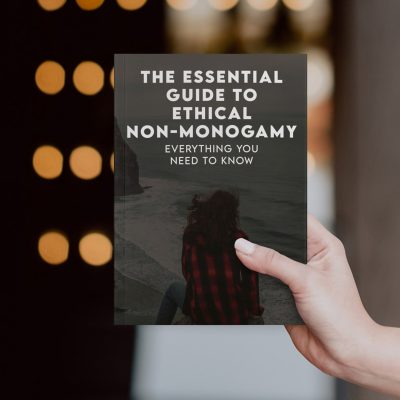
The freedom of an open relationship sounds incredible, but the logistics can feel like holding a grenade. That spinning "what if" anxiety isn't paranoia, it’s your survival instinct warning you that your bond is exposed. "Just seeing what happens" is the fastest way to turn a fantasy into a breakup.
The Essential Guide replaces chaos with discipline. We give you the blueprints, jealousy protocols, and repair scripts needed to explore the edge without falling off. Don't guess. Secure your foundation first.

The world of non-monogamy is a maze of confusing labels. Trying to be "Polyamorous" when your heart actually needs "Swinging" isn't just a vocabulary error; it’s a recipe for misery.
You can't build a stable home on a foundation that doesn't fit your psychology. This tool analyzes your emotional bandwidth and jealousy triggers to design the exact structure you need. Stop trying to squeeze into a box that doesn't fit. Build a relationship that actually feels like home.

Opening up feels exciting, but if you aren't reading from the same script, you're writing a tragedy. The disconnect between "I want freedom" and "I want safety" is where hearts break. This isn't just a quiz; it’s a synchronization engine.
We identify the silent gaps in your desires—from sleepover rules to emotional bandwidth, before they become unbridgeable chasms. Don't wait until the damage is done to find out you were never on the same page. Align your compasses now.
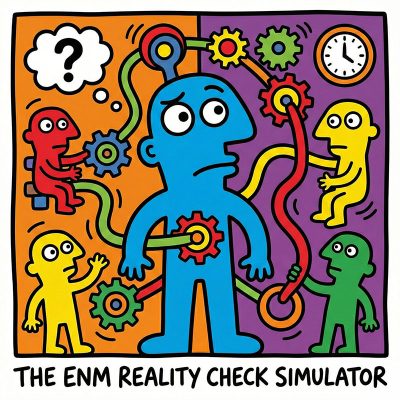
Theory is sexy. Reality is messy. You agreed you could date others, but how does your stomach drop when he takes her to your anniversary spot? Or when she comes home smelling like someone else?
This simulator drags your abstract rules into the harsh light of day. We force you to confront the visceral, gut-wrenching scenarios that actually destroy relationships, before they happen. Test your nervous system in the simulator so you don't crash the car in real life.

The fantasy is endless romance. The reality? It’s a logistical nightmare. Dating isn't just sex; it’s a second job of swiping, spending, and emotional processing that drains your sanity. Underestimating the "admin" of non-monogamy is the fastest way to turn your relationship into a burnout factory where resentment thrives.
This calculator forces you to confront the brutal math of your time, energy, and wallet. Can you actually afford this lifestyle, or are you just signing up for exhaustion?
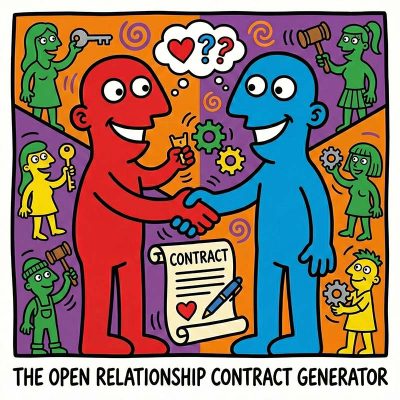
"I thought we agreed" is the sentence that destroys relationships & marriages. Relying on verbal promises when emotions run high is a gamble you cannot afford to lose. Your memory isn't just faulty; it's a liability. Ambiguity is the oxygen that jealousy breathes, turning "freedom" into a minefield of "did I mess up?"
This generator transforms vague permissions into a concrete, signed reality. Stop arguing about what you thought was said and lean on what is written. Secure your boundaries in ink, not hope.
Common deal breakers in ENM open relationships
Every person has a unique map of what they can tolerate and what they cannot. The following list captures patterns that frequently show up as deal breakers in ENM communities. Use this as a starting point and adapt it to your own life. Do not treat this as a one size fits all rulebook. Your life your rules your boundaries.
- Non disclosure or secrecy When someone hides important information about a partner or a previous relationship your trust erodes. Secrets about sexual health visits or new partners are red flags because secrecy undermines consent and safety.
- Breaching agreed boundaries If you say no to casual sex with a particular person and your partner does it anyway you have a deal breaker. Boundary breaches teach you that your voice does not matter in this dynamic.
- Disrespect for time boundaries In ENM time is a resource. If your partner shows up late to dates cancel frequently or cancels plans at the last minute without notice it destroys the reliability you rely on.
- Unaddressed jealousy Jealousy is a normal emotion not a villain to be defeated. The problem occurs when jealousy is ignored dismissed or used to justify controlling behavior.
- Unsafe sexual practices A lack of care around sexual health safety is a deal breaker. This includes failure to use protection when appropriate and neglecting STI testing or disclosure of results.
- Coercion or pressure If someone makes you feel bad about saying no if you fear losing the relationship or if you feel forced into sexual activity this is a boundary crossing that cannot be tolerated.
- Dishonesty or misrepresentation Minimization of risk about who you are seeing or what is happening with another partner erodes trust and makes negotiation impossible.
- Unequal distribution of emotional labor In ENM relationships there is emotional work to be done by everyone. If one person bears the burden of scheduling conversations managing feelings and mentoring new partners while others coast it becomes unsustainable.
- A lack of consent culture If the environment feels punitive or if there is pressure to participate in activities you do not want to do this is a major warning sign.
- Breaching privacy for public shaming Public humiliation or sharing intimate details about a partner without consent is a hard stop for many people.
These are not universal rules. They are patterns you may see in typical ENM unfoldings. The key is to translate patterns into clear agreements that protect your safety and your peace of mind. Remember a deal breaker can be a temporary hiccup but it can also be an indication that the dynamic is simply not a fit for you right now. That is perfectly okay. Your job is to know what you can live with and what you cannot tolerate long term.
Non negotiables in ENM The big ones that many people place front and center
Non negotiables are the core pillars you will not bend on. They are typically tied to safety respect consent and the ability to build trust across multiple connections. Identifying your non negotiables helps you decide who to date who to include in ongoing conversations and how to structure agreements so that everyone feels secure.
- Consent and ongoing agreement You want explicit consent for new activities and ongoing check ins to adjust agreements as life changes. Not asking for consent is not acceptable in an ENM context.
- Honesty and transparent communication Truth telling is non negotiable for many. This means sharing about relationships outside your primary connection not keeping secrets or hiding who you are seeing.
- Sexual health safety Regular STI testing and open discussion of results. Clear expectations about protection and safety practices that everyone agrees to follow.
- Respect for time and boundaries Reliability on schedules and agreed limits around how often people can connect and what kinds of activities are on the table.
- Emotional honesty and responsibility Owning your feelings not blaming others for how you feel. This includes handling jealousy and insecurity with maturity and seeking support when needed.
- Privacy and discretion Clear rules about what can be shared with others and what stays private within the inner circle of your relationships.
- Independent agency for all partners Each person retains autonomy over their choices and does not become a tool for another person to control the life of their partners.
- Boundaries around primary relationship If you have a primary or main relationship there may be rules about priority time or what activities can be shared. Make these explicit rather than assumed.
- Respect for sexual orientation gender identity and relationship style Nobody should have to pretend to be something they are not. Respect and safety for everyone involved is non negotiable.
- Respect for individual pace of involved partners People move at different speeds in ENM. Pushing someone to do more than they are ready for is a red flag.
Non negotiables can be practical such as a requirement to disclose new partners for safety or can be emotional such as a demand for respect and courtesy during conflicts. The important thing is to articulate them clearly and to build a framework around how they will be upheld. You are setting a foundation for honest and respectful connections not building a prison around yourself.
How to identify your own non negotiables
The best way to discover your non negotiables is to look at past experiences when boundaries were crossed or when you felt unsafe. Consider moments when you felt ignored disrespected or pushed beyond what you consider reasonable. Those moments are clues to what you value most. Here is a simple exercise you can run on your own or with a partner to crystallize your non negotiables.
- Make a boundary inventory Write down every situation that would make you uncomfortable or unsafe. Don t censor yourself. Be honest about what triggers you or makes you uneasy.
- Separate needs from preferences Distinguish between needs such as safety privacy and consent and preferences such as color of a partner s hair or preferred date night location. Prioritize needs over preferences.
- Label non negotiables For each item ask yourself if you could tolerate a violation without feeling unsafe or resentful. If the answer is no label it a non negotiable.
- Turn needs into concrete rules Translate each non negotiable into a clear rule or practice. For example if safety is non negotiable you may require STI testing every six months and the use of protection with new partners until the other person agrees to testing.
- Check for alignment with your values Ensure that your non negotiables align with what you want from your life and from your relationships not just what you fear.
- Test them in conversation Bring the list into a calm conversation with a potential partner and explain why each item matters to you. Expect questions and be ready to adapt while protecting what matters most.
Remember that identifying non negotiables is an ongoing process. As you grow and life changes your non negotiables may shift. That is not a flaw it is a sign of healthy self awareness. The goal is not to trap yourself in a rigid set of rules but to create a resilient framework that supports your well being and your relationships.
How to communicate your non negotiables effectively
Communication is the air you breathe in any ENM scene. If you cannot speak your truth in a way that others can hear the pathway to a respectful agreement collapses. Here is a practical playbook to articulate your non negotiables without turning a talk into a fight.
- Lead with self ownership Use statements that start with I or my. For example I need to feel safe when new partners are introduced or I require disclosure when a new dating connection begins. This makes it personal and non accusatory.
- Be specific Vague statements create room for interpretation and drift. Instead of saying we should be open say I need clear communication about who you are dating and when and where you plan to meet them.
- Offer practical examples Show how the non negotiable would work in real life. If live tests require a partner to share a date plan beforehand describe what that looks like for you.
- Invite questions not judgment Allow space for your partner to ask clarifying questions. Answer with patience and care. This builds trust rather than suspicion.
- Propose a trial period If you are unsure about a boundary propose a trial period with a review date. This reflects flexibility while keeping your core non negotiable intact.
- Agree on a renegotiation process Life changes and so do boundaries. Agree on a process to revisit and revise non negotiables after a set period or after major life events.
Communication is not a one time event. It is a rhythm a series of conversations that build trust over time. When you approach these talks as a collaborative exploration you will likely discover new ways to meet both your needs and the needs of your partner(s).
Negotiation strategies for ENM agreements
Negotiation is the art of turning two separate realities into a shared path. ENM discussion often involves discussing time management safety boundaries and the potential for emotional overlap. Here are strategies to make negotiations smoother and more productive.
- Start with the non negotiables Begin with the items you will not bend on. This helps the conversation stay anchored and prevents a spiral into endless minor details.
- Move to the negotiables After you have agreement on the essentials you can discuss softer items such as the frequency of dates with other partners or how much information is shared publicly versus kept private.
- Use real life scenarios Talk through what would happen if someone violated an item. How would you respond what steps would you take what would be the consequences. Scenario planning reduces drama later on.
- Agree on a sign up and away plan If someone feels overwhelmed they should have a clear route to pause or take a break without guilt. This keeps the dynamic healthy rather than explosive.
- Document the agreements Write down the agreements or put them into a digital document. Having something tangible makes accountability real and helps prevent misunderstandings.
- Build in check ins Schedule regular check ins to review how the agreements are working and to adjust for changes in life or feelings.
Negotiation is not about winning it is about building something that works for you and your people. It is about mutual respect possibilities and choosing to live with intention rather than defaulting to old patterns that no longer fit.
The freedom of an open relationship sounds incredible, but the logistics can feel like holding a grenade. That spinning "what if" anxiety isn't paranoia, it’s your survival instinct warning you that your bond is exposed. "Just seeing what happens" is the fastest way to turn a fantasy into a breakup.
The Essential Guide replaces chaos with discipline. We give you the blueprints, jealousy protocols, and repair scripts needed to explore the edge without falling off. Don't guess. Secure your foundation first.
The world of non-monogamy is a maze of confusing labels. Trying to be "Polyamorous" when your heart actually needs "Swinging" isn't just a vocabulary error; it’s a recipe for misery.
You can't build a stable home on a foundation that doesn't fit your psychology. This tool analyzes your emotional bandwidth and jealousy triggers to design the exact structure you need. Stop trying to squeeze into a box that doesn't fit. Build a relationship that actually feels like home.
Opening up feels exciting, but if you aren't reading from the same script, you're writing a tragedy. The disconnect between "I want freedom" and "I want safety" is where hearts break. This isn't just a quiz; it’s a synchronization engine.
We identify the silent gaps in your desires—from sleepover rules to emotional bandwidth, before they become unbridgeable chasms. Don't wait until the damage is done to find out you were never on the same page. Align your compasses now.
Theory is sexy. Reality is messy. You agreed you could date others, but how does your stomach drop when he takes her to your anniversary spot? Or when she comes home smelling like someone else?
This simulator drags your abstract rules into the harsh light of day. We force you to confront the visceral, gut-wrenching scenarios that actually destroy relationships, before they happen. Test your nervous system in the simulator so you don't crash the car in real life.
The fantasy is endless romance. The reality? It’s a logistical nightmare. Dating isn't just sex; it’s a second job of swiping, spending, and emotional processing that drains your sanity. Underestimating the "admin" of non-monogamy is the fastest way to turn your relationship into a burnout factory where resentment thrives.
This calculator forces you to confront the brutal math of your time, energy, and wallet. Can you actually afford this lifestyle, or are you just signing up for exhaustion?
"I thought we agreed" is the sentence that destroys relationships & marriages. Relying on verbal promises when emotions run high is a gamble you cannot afford to lose. Your memory isn't just faulty; it's a liability. Ambiguity is the oxygen that jealousy breathes, turning "freedom" into a minefield of "did I mess up?"
This generator transforms vague permissions into a concrete, signed reality. Stop arguing about what you thought was said and lean on what is written. Secure your boundaries in ink, not hope.
Real world scenarios and scripts
Seeing a few realistic conversations can make a big difference. Here are some examples you can steal and personalize. Remember to adapt these to your own voice and situation. The goal is honesty kindness and clarity not perfection.
Scenario 1 A new partner and a non negotiable around disclosure
Alex is dating Sam who also has a primary partner Jess. Alex wants full transparency about new partners including names and basic details. Sam respects this but wants to keep some details private for safety reasons. They discuss a rule that Sam will share at a minimum the new partner s first name and the date they first met and any safety concerns. They agree to a six week check in to review if this level of disclosure still feels right. They keep the conversation non judgmental and focus on safety and trust.
Scenario 2 Jealousy and time management
Priya feels jealous when her partner Kai spends the first two weekends of the month with another partner. They agree to a non negotiable around scheduled time. Kai commits to giving Priya a two week notice for any new date weekend and agrees to set aside one date night with Priya each week both in person or virtual. They also create a plan for dealing with jealousy which includes a quick daily check in and a plan to pause if emotions become overwhelming. This keeps Priya feeling seen while giving Kai space to enjoy other connections.
Scenario 3 Privacy versus openness
Liam wants to keep some details private from friends and family while his partner Noor wants to be open about the relationships to a wider circle. They decide to negotiate a privacy gradient. For example Noor can share that Liam is seeing someone else but not specific personal details unless both partners agree. They also set a rule that any information shared publicly should avoid naming third parties without consent. This balances Noor s need for openness with Liam s need for privacy.
Scenario 4 Health safety and testing
Two partners agree to a policy that anyone who has sex with someone outside the primary relationship must have an STI test every four months and share results with the group or at least with the relevant partners. They also agree to practice safer sex and to discuss any exposure to potential risks immediately. This non negotiable protects everyone and reduces anxiety across the board.
Scenario 5 No pressure policy
One partner wants to slow things down while the other feels ready to meet new people soon. They create a no pressure policy and a time bound plan to revisit the conversation in four weeks. If either person feels pressured or overwhelmed they can pause activities or slow the pace while maintaining respect and care for each other. This keeps the relationship alive without forcing discomfort onto one partner.
A practical framework for crafting your own agreements
Use this step by step framework to develop your own deal breakers and non negotiables with confidence. It is designed to be flexible and practical not a rigid set of rules you must memorize.
- Identify core values Start from your values such as honesty autonomy safety and respect. Let these values guide the specifics of your agreements.
- List potential pressure points Think about areas like time management sexual health privacy and emotional labor. Note where you would draw the line if things became imbalanced.
- Define non negotiables Pin down things you will not compromise on. Write them in clear direct language with examples of how they will be upheld.
- Turn non negotiables into actions For each non negotiable create concrete steps such as disclosure procedures check in times safety protocols and consequences for violations.
- Draft a shared agreement Build a document that your partner or partners can review. Include sections for scope boundaries safety and communication norms.
- Plan for review and revision Set a regular cadence to revisit the agreements. Life changes and so might your boundaries. Keep it collaborative and kind.
Most importantly remember that agreements are tools for connection not tests to fail. They are living guidelines that help everyone involved to feel safe empowered and excited about the relationship futures they are choosing to build.
When to revise your deal breakers and non negotiables
Life changes jobs moves kids into new schools or even shifts in health can quietly alter what you can tolerate. If you notice ongoing conflict frustration or fatigue related to your agreements it is a signal to pause and reassess. You might find that you can maintain the old boundaries but with new processes or you might decide to soften a boundary you previously treated as a hard line. The key is to keep communication open and to approach any revision as a joint decision rather than a demand.
Things that commonly trigger a review include a major life change such as a new partner a relocation a new family member or a shift in work schedule. It can also be triggered by a feeling of imbalance jealousy that won t go away even with tools or a sense that your needs are changing. When you notice these signals schedule a dedicated conversation to examine the current agreements to see what works and what does not.
Red flags that your agreements are not working
Watch for patterns that indicate trouble in the long term. Here are some warning signs to take seriously:
- One person consistently feels unsafe or unheard
- Violations occur with little consequence or accountability
- Time and energy unfairly fall on one partner while others enjoy more freedom
- Hide or minimize information and slash transparency as a normal pattern
- Biased or punitive enforcement that targets a specific partner or relationship
If you notice these flags consider a facilitated conversation with a therapist or a relationship coach who understands ENM dynamics. A neutral third party can help you identify hidden assumptions and reframe your agreements in a way that honors everyone involved.
Common mistakes to avoid when setting deal breakers
Early missteps can derail your ENM journey. Avoid these pitfalls:
- Waiting too long to set boundaries If you tolerate discomfort for too long you condition yourself to accept a situation that is not sustainable.
- Treating boundaries as punishments Boundaries should protect and support you not be used to punish a partner for their choices.
- Trying to control partners instead of relationships ENM relies on independence and consent. Controlling others undercuts the entire premise.
- Relying on ultimatums Ultimatums often escalate conflicts and destroy trust. Focus on open communication and shared solutions instead.
- Neglecting emotional labor Emotional work is real. If only one person is doing the heavy lifting you will burn out fast.
Tools and practices that support healthy ENM boundaries
Trade secrets for peaceful open relationships are rarely fancy. They are practical tools you can use today. Here are a few that work for many people:
- Relationship agreements A written set of rules around safety communication boundaries time management and permissions. Keep it simple and actionable.
- Regular check ins Short structured conversations every couple of weeks help you catch small issues before they become big problems.
- Jealousy scripts Have ready scripts for talking through jealousy rather than letting it simmer. This reduces defensiveness and speeds healing.
- Processing time Build in quiet time after new information especially if it is emotionally charged. Time apart can help you return with calmer energy.
- Support networks It helps to have trusted friends or a therapist who understand ENM and can offer perspective without drama.
- Educational resources Books podcasts and workshops can give you new tools to handle boundary maintenance and communication with care.
Glossary of useful ENM terms and acronyms
- ENM Ethical Non Monogamy a relationship style that involves more than two people with consent and open communication.
- CNM Consensual Non Monogamy a term often used interchangeably with ENM.
- Open relationship A relationship structure that allows dating or sexual activity outside the primary partnership with agreed boundaries.
- Primary partner The person who holds a central or most important place in a given relationship structure.
- Secondary partner A partner who is not the primary one and may have a different set of agreements.
- Jealousy protocol The defined steps for addressing jealousy when it arises.
- Disclosure The act of sharing information about other relationships with honesty and consent among all involved.
- Binding agreements Formal written or agreed upon boundaries and rules within the ENM dynamic.
- Safe sex practices Practices intended to reduce risk including condom use barrier methods and regular STI testing.
Practical tips for keeping your ENM agreements humane and workable
agreements are not punishment devices they are protection and scaffolding that helps you live your life with integrity. Here are some practical tips to keep them humane and workable.
- Be kind to yourself You are learning a new language of relationships. Allow yourself to make mistakes and to learn from them without harsh self judgement.
- Be explicit not vague When you can you should write your agreements down. Clarity reduces misinterpretation and prevents drifting into resentment.
- Practice compassionate honesty The goal is honest self expression and respectful listening not winning a debate.
- Keep it proactive Regularly review your agreements even if nothing feels off. Preemptive tweaks beat reactive firefighting.
- Celebrate progress Acknowledge when you navigate a difficult moment gracefully. Positive reinforcement keeps energy high for everyone involved.
Putting it all together
Deal breakers and non negotiables are a personal map that helps you decide who you want to share your life with and how. ENM is a journey not a destination. You will learn and adjust as you go and that is exactly how it should be. The important thing is to enter every negotiation with curiosity and with a commitment to consent clarity and care for everyone involved. When you approach this work with honesty and humor you can build meaningful connections that honour your needs and respect the needs of others. So gear up get curious and start mapping your non negotiables today. You have got this.
Frequently asked questions
Below are some common questions people ask about deal breakers and non negotiables in ENM. If you have a question that is not listed here feel free to ask and we will add it to this guide.
- What exactly does non negotiable mean in ENM It means a boundary or requirement that you will not compromise on within this relationship structure. It is about your safety and well being rather than trying to be difficult.
- Can non negotiables change over time Yes life changes and so can your boundaries. It is healthy to revisit and revise non negotiables with open communication and consent from all involved.
- How do I know if a boundary is too strict If you find yourself isolated or your relationships are suffering a lot because of the boundary it may be too strict. It is useful to discuss with a therapist or a trusted friend to help you reassess.
- What is the difference between a rule and a boundary A boundary is a personal limit about what you need. A rule is a directive that governs behavior in a shared space. Both can work together but boundaries tend to be more flexible while rules are more concrete.
- How do I handle a partner who wants different non negotiables Start with questions to understand their view. Look for common ground and identify items that are non negotiable for both of you. If there is no alignment you may need to rethink the relationship or take a break to reassess.
- Should I involve professionals in setting ENM agreements It can be helpful especially if there are unresolved trust issues or past trauma. A therapist with experience in ENM dynamics can offer neutral guidance and practical tools.
- How do I talk about non negotiables with a new partner Begin with your values and explain why these boundaries matter to you. Be open to questions and encourage them to share their boundaries as well. The goal is mutual clarity and consent.
- Is it okay to change non negotiables after a major life event Yes major life events like starting a family or a new job can shift priorities. Revisit and adjust your agreements with care and respect for everyone involved.
- What are red flags in ENM negotiations Red flags include secrecy coercion manipulation unfair blame and ignoring safety concerns. If you notice these walk away or pause the negotiation until trust can be rebuilt.
- How do I support a partner who struggles with jealousy Offer space and validate their feelings while maintaining the agreements. Encourage open conversations and consider a jealousy management plan together.
The freedom of an open relationship sounds incredible, but the logistics can feel like holding a grenade. That spinning "what if" anxiety isn't paranoia, it’s your survival instinct warning you that your bond is exposed. "Just seeing what happens" is the fastest way to turn a fantasy into a breakup.
The Essential Guide replaces chaos with discipline. We give you the blueprints, jealousy protocols, and repair scripts needed to explore the edge without falling off. Don't guess. Secure your foundation first.
The world of non-monogamy is a maze of confusing labels. Trying to be "Polyamorous" when your heart actually needs "Swinging" isn't just a vocabulary error; it’s a recipe for misery.
You can't build a stable home on a foundation that doesn't fit your psychology. This tool analyzes your emotional bandwidth and jealousy triggers to design the exact structure you need. Stop trying to squeeze into a box that doesn't fit. Build a relationship that actually feels like home.
Opening up feels exciting, but if you aren't reading from the same script, you're writing a tragedy. The disconnect between "I want freedom" and "I want safety" is where hearts break. This isn't just a quiz; it’s a synchronization engine.
We identify the silent gaps in your desires—from sleepover rules to emotional bandwidth, before they become unbridgeable chasms. Don't wait until the damage is done to find out you were never on the same page. Align your compasses now.
Theory is sexy. Reality is messy. You agreed you could date others, but how does your stomach drop when he takes her to your anniversary spot? Or when she comes home smelling like someone else?
This simulator drags your abstract rules into the harsh light of day. We force you to confront the visceral, gut-wrenching scenarios that actually destroy relationships, before they happen. Test your nervous system in the simulator so you don't crash the car in real life.
The fantasy is endless romance. The reality? It’s a logistical nightmare. Dating isn't just sex; it’s a second job of swiping, spending, and emotional processing that drains your sanity. Underestimating the "admin" of non-monogamy is the fastest way to turn your relationship into a burnout factory where resentment thrives.
This calculator forces you to confront the brutal math of your time, energy, and wallet. Can you actually afford this lifestyle, or are you just signing up for exhaustion?
"I thought we agreed" is the sentence that destroys relationships & marriages. Relying on verbal promises when emotions run high is a gamble you cannot afford to lose. Your memory isn't just faulty; it's a liability. Ambiguity is the oxygen that jealousy breathes, turning "freedom" into a minefield of "did I mess up?"
This generator transforms vague permissions into a concrete, signed reality. Stop arguing about what you thought was said and lean on what is written. Secure your boundaries in ink, not hope.
