
Deciding Whether an Open Relationship Is Right for You

Open relationships can sound exciting and a little scary at the same time. You want connection and growth not chaos. You want honesty and security not drama and miscommunication. This guide is designed to help you explore the open relationship path with clear language, practical steps, and real world context. We will break down terms so you know what you are saying and what you are agreeing to. We will walk through questions to ask yourself and your partner and we will give you a realistic view of what life can look like when ethical non monogamy or ENM becomes your everyday rhythm.
Quick Links to Useful Sections
- What does open relationship mean and what is ENM
- Is ENM right for you a practical self check
- Foundations you will want to build before you open the door
- Communication as a muscle
- Clear consent and ongoing renegotiation
- Boundaries versus hard limits
- Trust and emotional safety
- Health and safety as a shared practice
- Practical strategies for living with ENM day to day
- Starting the conversation the right way
- Designing a practical framework
- Managing time and energy
- Handling jealousy before it becomes a problem
- Compersion as a real feeling
- Sexual health routines that protect everyone
- Glossary of useful terms and acronyms
- Common challenges you might hit and how to handle them
- Feeling excluded or less special
- Boundary creep and soft limits
- Lack of time together
- Social stigma and judgment
- Communication fatigue
- A practical road map to try open relationships in steps
- Red flags that you might want to pause or rethink ENM
- When ENM is not the right tool for the job
- Keeping a compassionate mindset during the journey
- Final thoughts and next steps
What does open relationship mean and what is ENM
Open relationship is a relationship arrangement where two or more people agree to pursue romantic or sexual connections with people outside their primary relationship or outer circles. The key word here is agreement. There is consent and boundaries and ongoing communication. An open relationship is not a free for all it is a negotiated structure that works for the people involved.
ENM stands for ethical non monogamy. Ethical means that the decisions are made with consideration, consent and honesty. Non monogamy means dating or having intimate connections with more than one person. Some people use the term polyamory to describe loving more than one person at once while others use swinging to describe sexual encounters with others often within the context of a couple. Different people use these terms in slightly different ways so it is best to talk about what you mean and what you want rather than assuming everyone uses the same label.
Open relationship is a form of ENM. Not every ENM relationship looks the same. Some couples prefer hierarchical open relationships with a primary couple focus and additional partners while others choose non hierarchical models where every connection carries equal weight. The important thing is that you and your partner understand your own agreement and how you will renegotiate it as life changes.
Is ENM right for you a practical self check
Getting honest about readiness is the first big step. Below is a practical checklist you can use alone or with your partner. Be compassionate with yourself as you answer and do not rush the process. There is no finish line here you are exploring a possible future not signing a contract you cannot revise easily.
- Are you curious about exploring connections with others or do you feel a strong dislike or fear about that idea
- Do you trust your partner to be honest and to communicate openly about feelings concerns and boundaries
- Are you comfortable talking about sex and dating in a respectful and responsible way
- Do you have a track record of healthy communication in your relationship
- Can you tolerate some level of jealousy and do you know how to handle it without blaming your partner
- Are you willing to renegotiate boundaries as life events occur like changes in schedules health or emotional energy
- Do you understand the importance of sexual health and safe sex practices and are you prepared to stay current with testing
- Is your relationship strong enough to handle potential stress without dissolving into a crisis
- Can you maintain your own sense of identity and independence outside the primary relationship while still feeling connected
- Are you comfortable with the idea that your happiness is not dependent on your partner being the only person in your life
If you answer yes to most of these questions you may be in a good place to start more structured conversations. If some answers are yes but others are no do not panic. You can work through the concerns together slowly or decide that ENM is not for you at this time. The goal is clarity not pressure.
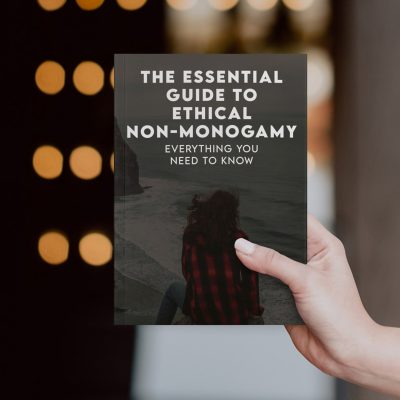
The freedom of an open relationship sounds incredible, but the logistics can feel like holding a grenade. That spinning "what if" anxiety isn't paranoia, it’s your survival instinct warning you that your bond is exposed. "Just seeing what happens" is the fastest way to turn a fantasy into a breakup.
The Essential Guide replaces chaos with discipline. We give you the blueprints, jealousy protocols, and repair scripts needed to explore the edge without falling off. Don't guess. Secure your foundation first.
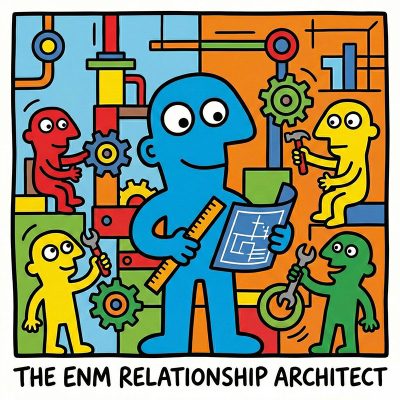
The world of non-monogamy is a maze of confusing labels. Trying to be "Polyamorous" when your heart actually needs "Swinging" isn't just a vocabulary error; it’s a recipe for misery.
You can't build a stable home on a foundation that doesn't fit your psychology. This tool analyzes your emotional bandwidth and jealousy triggers to design the exact structure you need. Stop trying to squeeze into a box that doesn't fit. Build a relationship that actually feels like home.
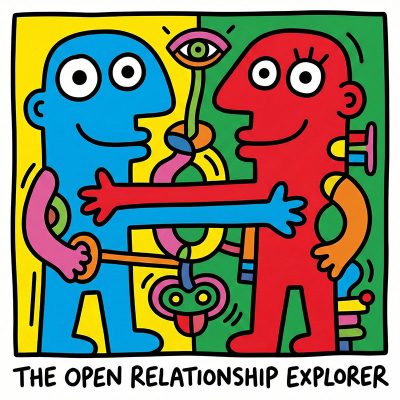
Opening up feels exciting, but if you aren't reading from the same script, you're writing a tragedy. The disconnect between "I want freedom" and "I want safety" is where hearts break. This isn't just a quiz; it’s a synchronization engine.
We identify the silent gaps in your desires—from sleepover rules to emotional bandwidth, before they become unbridgeable chasms. Don't wait until the damage is done to find out you were never on the same page. Align your compasses now.
Theory is sexy. Reality is messy. You agreed you could date others, but how does your stomach drop when he takes her to your anniversary spot? Or when she comes home smelling like someone else?
This simulator drags your abstract rules into the harsh light of day. We force you to confront the visceral, gut-wrenching scenarios that actually destroy relationships, before they happen. Test your nervous system in the simulator so you don't crash the car in real life.
The fantasy is endless romance. The reality? It’s a logistical nightmare. Dating isn't just sex; it’s a second job of swiping, spending, and emotional processing that drains your sanity. Underestimating the "admin" of non-monogamy is the fastest way to turn your relationship into a burnout factory where resentment thrives.
This calculator forces you to confront the brutal math of your time, energy, and wallet. Can you actually afford this lifestyle, or are you just signing up for exhaustion?
"I thought we agreed" is the sentence that destroys relationships & marriages. Relying on verbal promises when emotions run high is a gamble you cannot afford to lose. Your memory isn't just faulty; it's a liability. Ambiguity is the oxygen that jealousy breathes, turning "freedom" into a minefield of "did I mess up?"
This generator transforms vague permissions into a concrete, signed reality. Stop arguing about what you thought was said and lean on what is written. Secure your boundaries in ink, not hope.
Foundations you will want to build before you open the door
Opening a relationship is not about a single conversation it is about building a framework that makes ongoing negotiation possible. Here are the core foundations to focus on before you go deeper.
Communication as a muscle
Open relationships thrive when there is a steady practice of honest conversations. This means checking in not just about logistics but about emotions. It means asking questions like how are you feeling today what do you need from me right now and what would make this experience feel respectful for both of us. Communication is not just words it is listening with intent and acting with care.
Clear consent and ongoing renegotiation
Consent in ENM is not a one time event it is an ongoing process. You will renegotiate rules as feelings shift schedules shift and new connections form. Consent means you both own the decisions you are making and you are comfortable saying yes or no at any time.
Boundaries versus hard limits
Boundaries are flexible guidelines that help protect what matters most. Hard limits are things you will not accept under any circumstances. It is perfectly normal to have a mix of both. They should be explicit and revisited as needed to stay aligned.
Trust and emotional safety
Trust is earned through consistent behavior. When you set a boundary and your partner respects it you build trust. When something feels off you raise it early before it becomes a bigger problem. You want a relationship climate where vulnerability is welcomed not punished.
Health and safety as a shared practice
Sexual health is part of the open relationship conversation. Agree on testing schedules keep records where appropriate and communicate about sexual activity with other partners. If someone changes health circumstances let the other person know and adjust agreements accordingly.
Practical strategies for living with ENM day to day
Real life looks different from a theoretical plan. Here are practical strategies to help you navigate daily life with an open relationship in a way that respects everyone involved.
Starting the conversation the right way
Choose a calm moment and set aside uninterrupted time. Begin with appreciation for the relationship you share and then share the word you are exploring a new possibility. Be specific about what you want to know and invite questions. Avoid blaming language and use “I” statements that describe your experience and feelings.
Designing a practical framework
Draft a simple framework you both can visualize. It could be a monthly check in with a few questions what activities are allowed with whom and what safety norms you want to follow. You do not need a perfect plan you need a workable one that you both trust and can modify later.
Managing time and energy
Open relationships demand time energy and emotional bandwidth. Plan your schedules and create rituals that protect the core primary relationship. This could mean one dedicated date night a week for the two of you plus a couple of nights each month when you have space to explore connections with others if you choose to do so.
Handling jealousy before it becomes a problem
Jealousy is normal and telltale. When you notice jealousy rise up name the feeling calm your body and share it with your partner. Look for the root cause is it insecurity fear trust a boundary a lack of time together. Addressing the root cause often soothes the emotion faster than trying to suppress it.
Compersion as a real feeling
Compersion is the feeling of happiness for your partner when they experience something positive with someone else. It is not mandatory but many people in ENM report that cultivating compersion makes the journey easier. It grows with practice and honest celebration of each other s joy.
Sexual health routines that protect everyone
Agree on testing frequency and safe sex practices. Keep a shared calendar for tests and ensure anyone who becomes sexually active with others has current screening results. Clear communication protects you and your partners and makes people feel seen and respected.
Glossary of useful terms and acronyms
- ENM Ethical non monogamy a relationship style where everyone consents to forming intimate connections with other people.
- Open relationship A relationship arrangement where partners agree to have romantic or sexual connections outside their primary relationship.
- Primary partner The person in a relationship identified as the main or central relationship for planning and emotional reasons.
- Secondary partner Any partner who is not the primary but with whom a person has a meaningful connection.
- Hierarchical ENM A model where the primary relationship holds priority and other relationships exist within defined rules.
- Non hierarchical ENM A model where all relationships are treated as equally important without a strict primary focus.
- Hard limits Boundaries that you will not cross under any circumstances.
- Soft limits Boundaries that may be revised with more information or trust built over time.
- Consent Clear agreement to participate in a behavior or activity after understanding the risks and implications.
- Compersion Feeling of joy from your partner s happiness with someone else.
- Negotiation The process of discussing and adjusting boundaries and agreements as life changes.
- Stigma Social disapproval or negative judgment that can color conversations about non monogamy.
- STI Sexually transmitted infection a disease that can be spread through sexual contact. Regular testing reduces risk.
Common challenges you might hit and how to handle them
Every relationship faces tests and ENM adds a few extra layers. Here are some frequently seen challenges and constructive ways to approach them.
Feeling excluded or less special
It can feel personal when your partner forms a new connection. Ground your reaction in facts not fears. Talk about what makes you feel secure whether that means more time together or a stronger routine of affection and appreciation. You deserve both closeness and freedom to explore in a way that feels safe.
Boundary creep and soft limits
It is common for people to drift into gray areas. To prevent boundary creep set a process for renegotiation and make space for evolving understanding. If a line is crossed you can pause and reassess what happened and adjust the rules accordingly instead of letting resentment build up.
Lack of time together
Open relationships require careful time management. If schedules become tight nudge the pause button and revisit the plan. It is okay to temporarily reduce outside dating or to reframe the pace until life allows more bandwidth for all relationships involved.
Social stigma and judgment
Disapproval from friends family or co workers can sting. Build a small support network of people who respect your choices and stay consistent with your own values. You do not owe explanations to everyone especially people who are not part of the relationship dynamic.
Communication fatigue
Talking openly all the time can be exhausting. Build predictable check ins and create signals that help you communicate without endless discussion. Short but honest daily or weekly touch points can keep you aligned without burning out.
A practical road map to try open relationships in steps
If you decide this is worth exploring here is a simple, scalable plan you can adapt. The goal is to move from a hopeful idea to a tested practice with ongoing learning.
- Have a joint conversation about why you are drawn to ENM and what you hope to gain. List your top three values and your top three non negotiation points.
- Choose a trial period with a clearly defined scope such as one new connection outside the primary relationship and a maximum of two months to observe how it feels.
- Establish a check in cadence after the first month to review what is working and what is not. Be prepared to pause or end the experiment if needed.
- Document the agreements in a simple written note that both partners can reference. Include boundaries rules and expectations for communication and health practices.
- Reassess and renegotiate after the trial period. Treat it as a learning phase rather than a final verdict.
Red flags that you might want to pause or rethink ENM
- Core values feel misaligned when you discuss ENM ideas
- One partner is clearly imposing limits or coercing the other into agreement
- Jealousy or insecurity is creating significant strain with no plan to address it
- There is a consistent pattern of dishonesty or hidden sexual activity
- Health practices become inconsistent risking the well being of everyone involved
When ENM is not the right tool for the job
Open relationships work for some people and they do not work for others. If you or your partner are seeking deep monogamous commitment and you are not feeling ready to explore other connections it may be better to strengthen the primary relationship first. There is no pressure to adopt ENM if it does not align with your values or your needs. You deserve a relationship structure that feels true to you and contributes to your overall happiness and security.
Keeping a compassionate mindset during the journey
Approach this path with curiosity rather than judgement. People in ENM communities often describe a sense of relief when they feel seen heard and respected. You are not alone in this exploration and you do not have to settle for a configuration that drains you. Move at a pace that feels comfortable and honor the relationship you have with your partner as your guiding star.
Final thoughts and next steps
Deciding whether an open relationship is right for you is a process not a verdict. Start with honest conversations set expectations and experiment with small, controlled steps. If you end up choosing ENM you will have built new muscles for communication trust and negotiation that benefit all your relationships. If you decide against ENM that is a valid outcome too. The most important thing is that you choose a path that respects your values and preserves your well being.
The freedom of an open relationship sounds incredible, but the logistics can feel like holding a grenade. That spinning "what if" anxiety isn't paranoia, it’s your survival instinct warning you that your bond is exposed. "Just seeing what happens" is the fastest way to turn a fantasy into a breakup.
The Essential Guide replaces chaos with discipline. We give you the blueprints, jealousy protocols, and repair scripts needed to explore the edge without falling off. Don't guess. Secure your foundation first.
The world of non-monogamy is a maze of confusing labels. Trying to be "Polyamorous" when your heart actually needs "Swinging" isn't just a vocabulary error; it’s a recipe for misery.
You can't build a stable home on a foundation that doesn't fit your psychology. This tool analyzes your emotional bandwidth and jealousy triggers to design the exact structure you need. Stop trying to squeeze into a box that doesn't fit. Build a relationship that actually feels like home.
Opening up feels exciting, but if you aren't reading from the same script, you're writing a tragedy. The disconnect between "I want freedom" and "I want safety" is where hearts break. This isn't just a quiz; it’s a synchronization engine.
We identify the silent gaps in your desires—from sleepover rules to emotional bandwidth, before they become unbridgeable chasms. Don't wait until the damage is done to find out you were never on the same page. Align your compasses now.
Theory is sexy. Reality is messy. You agreed you could date others, but how does your stomach drop when he takes her to your anniversary spot? Or when she comes home smelling like someone else?
This simulator drags your abstract rules into the harsh light of day. We force you to confront the visceral, gut-wrenching scenarios that actually destroy relationships, before they happen. Test your nervous system in the simulator so you don't crash the car in real life.
The fantasy is endless romance. The reality? It’s a logistical nightmare. Dating isn't just sex; it’s a second job of swiping, spending, and emotional processing that drains your sanity. Underestimating the "admin" of non-monogamy is the fastest way to turn your relationship into a burnout factory where resentment thrives.
This calculator forces you to confront the brutal math of your time, energy, and wallet. Can you actually afford this lifestyle, or are you just signing up for exhaustion?
"I thought we agreed" is the sentence that destroys relationships & marriages. Relying on verbal promises when emotions run high is a gamble you cannot afford to lose. Your memory isn't just faulty; it's a liability. Ambiguity is the oxygen that jealousy breathes, turning "freedom" into a minefield of "did I mess up?"
This generator transforms vague permissions into a concrete, signed reality. Stop arguing about what you thought was said and lean on what is written. Secure your boundaries in ink, not hope.
