
Designing an Open Relationship That Matches Your Values


Welcome to a practical playbook for building an open relationship that truly matches what you care about. This guide is built for people exploring Ethical Non Monogamy, or ENM for short. ENM is a broad umbrella that includes open relationships, polyamory and other relationship styles where not all partners are exclusive with each other. Think of ENM as a toolkit for making relationships work in ways that feel honest and freeing rather than restrictive and hidden. If you are curious about how to design an open relationship that aligns with your values, you are in the right place. We will walk through terms, boundaries, communication strategies, common challenges, and real world scenarios with practical templates you can adopt or adapt. No fluff, just clear steps you can actually use.
Quick Links to Useful Sections
- What this guide covers
- Terms you will see and what they mean
- Clarifying your values before you design
- Choosing your open dynamic style
- One partner learns from multiple connections
- Relationship anarchy with flexible connections
- Fully independent polyamory with many mutual connections
- Flexible hierarchy with a soft center
- Boundary design 101
- Boundary versus rule
- Core boundary templates you can customize
- Practical boundary design steps
- Communication strategies that keep things sane
- Regular check ins
- Transparency with boundaries
- Negotiation framework that works
- Handling tough emotions
- Jealousy and New Relationship Energy
- Health and safety in ENM
- Safer sex and testing
- Geographic and logistical health considerations
- Real world scenarios you might relate to
- Scenario one you are a couple exploring outside connections
- Scenario two a new partner sparks jealousy in one person
- Scenario three energy imbalance arises in a trio
- Scenario four life changes a move or new job shifts priorities
- Templates you can fill in today
- Values statement
- Open dynamic boundaries
- Communication plan
- Safety check list
- Common mistakes to avoid
- Glossary of useful terms and acronyms
- Frequently asked questions
What this guide covers
This article will help you through the full design process from discovering your values to implementing a structure that can hold up in real life. You will learn how to articulate what you want, how to negotiate openly with partners, how to handle jealousy and time management, how to stay safe and healthy, and how to adjust as life changes. Expect practical exercises, templates you can fill in, and scenarios you can relate to whether you are dating one person, several people, or navigating a long distance open dynamic. We want you to leave with a concrete plan you can start using this week.
Terms you will see and what they mean
Before we dive in deep, here are some common terms you will encounter. If any words feel unfamiliar, we explain them in simple language so this guide stays useful even if you are new to ENM.
- ENM Ethically Non Monogamous. A broad term for relationship styles that involve consensual non exclusivity. ENM emphasizes consent, communication and respect for boundaries rather than secrecy or default monogamy.
- Open relationship A relationship style where partners allow romantic or sexual connections with people outside the primary relationship under agreed rules and boundaries.
- Open dynamic A situation where sexual or romantic connections with outside partners are included with agreed boundaries that fit the people involved.
- Boundaries Boundaries are rules or guidelines about what is allowed or not allowed in a relationship. They protect both partners and the health of the dynamic.
- Rules Explicit agreements that specify behaviors. A rule is a boundary with a clear consequence if it is broken.
- NRE New Relationship Energy. The excitement and rush you feel at the start of a new connection which can color decisions and priorities.
- Communication plan A structured approach to talking with partners about needs, changes, and conflicts on a regular basis.
- Consent Informed, enthusiastic agreement from all involved. Consent is ongoing and can be withdrawn at any time.
- Safe sex Practices that reduce the risk of sexually transmitted infections or other health concerns. This includes discussing STI status and using protection when needed.
- Relationship anarchy A philosophy that prioritizes autonomy and consent over traditional hierarchies and labels in relationships.
- Monogamy hierarchy A traditional structure where one primary couple has exclusive romance and sex, while other types of non monogamy are treated as second best. We are not fans of hierarchy in this guide unless it fits your values and is clearly agreed upon by everyone involved.
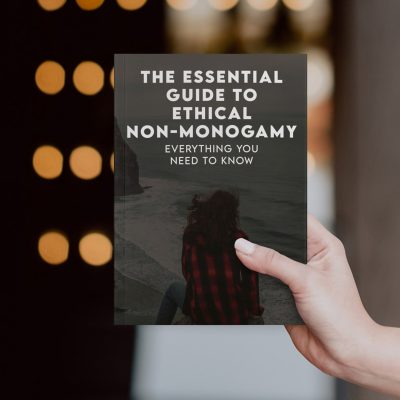
The freedom of an open relationship sounds incredible, but the logistics can feel like holding a grenade. That spinning "what if" anxiety isn't paranoia, it’s your survival instinct warning you that your bond is exposed. "Just seeing what happens" is the fastest way to turn a fantasy into a breakup.
The Essential Guide replaces chaos with discipline. We give you the blueprints, jealousy protocols, and repair scripts needed to explore the edge without falling off. Don't guess. Secure your foundation first.
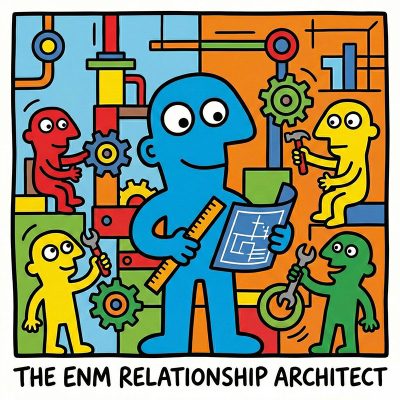
The world of non-monogamy is a maze of confusing labels. Trying to be "Polyamorous" when your heart actually needs "Swinging" isn't just a vocabulary error; it’s a recipe for misery.
You can't build a stable home on a foundation that doesn't fit your psychology. This tool analyzes your emotional bandwidth and jealousy triggers to design the exact structure you need. Stop trying to squeeze into a box that doesn't fit. Build a relationship that actually feels like home.

Opening up feels exciting, but if you aren't reading from the same script, you're writing a tragedy. The disconnect between "I want freedom" and "I want safety" is where hearts break. This isn't just a quiz; it’s a synchronization engine.
We identify the silent gaps in your desires—from sleepover rules to emotional bandwidth, before they become unbridgeable chasms. Don't wait until the damage is done to find out you were never on the same page. Align your compasses now.
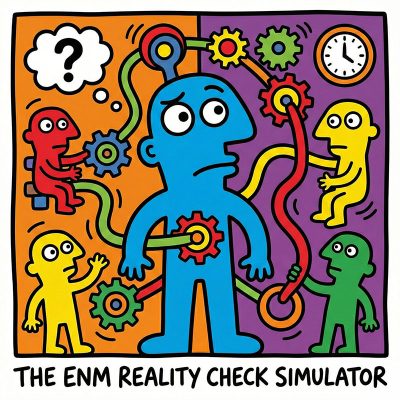
Theory is sexy. Reality is messy. You agreed you could date others, but how does your stomach drop when he takes her to your anniversary spot? Or when she comes home smelling like someone else?
This simulator drags your abstract rules into the harsh light of day. We force you to confront the visceral, gut-wrenching scenarios that actually destroy relationships, before they happen. Test your nervous system in the simulator so you don't crash the car in real life.
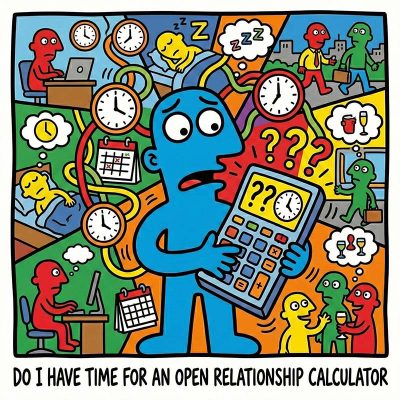
The fantasy is endless romance. The reality? It’s a logistical nightmare. Dating isn't just sex; it’s a second job of swiping, spending, and emotional processing that drains your sanity. Underestimating the "admin" of non-monogamy is the fastest way to turn your relationship into a burnout factory where resentment thrives.
This calculator forces you to confront the brutal math of your time, energy, and wallet. Can you actually afford this lifestyle, or are you just signing up for exhaustion?
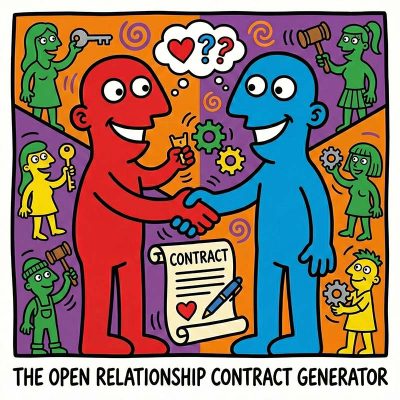
"I thought we agreed" is the sentence that destroys relationships & marriages. Relying on verbal promises when emotions run high is a gamble you cannot afford to lose. Your memory isn't just faulty; it's a liability. Ambiguity is the oxygen that jealousy breathes, turning "freedom" into a minefield of "did I mess up?"
This generator transforms vague permissions into a concrete, signed reality. Stop arguing about what you thought was said and lean on what is written. Secure your boundaries in ink, not hope.
Clarifying your values before you design
Your values are the compass for your open relationship. They tell you what matters most and help you navigate decisions when things get complicated. Values are not rules they are guiding principles. The aim is to create a living agreement that serves the people involved and the health of the relationships. Here is a simple process you can use to crystallize your values.
Step one is a values inventory. Take a few minutes and list the ten values that feel most important to you in relationships. These could include honesty, transparency, autonomy, respect, safety, kindness, growth, reliability, intimacy, fairness, and fun. Do not judge yourself for the order you choose. The goal is honesty about what you genuinely want.
Next ask yourself how these values translate into daily actions. For example if honesty is a core value you might default to telling your partner when you feel attracted to someone else even if it is awkward. If autonomy matters you might insist on space and time for your own personal projects and friendships. Put your values into concrete behaviors you can observe and discuss with partners.
Finally align your values with your current life stage. Values are not static. As life changes the emphasis on different values may shift. If you are a student or a parent or navigating a new job you may want to revisit your list and adjust your agreements accordingly. The process is ongoing and it should feel like a collaborative journey rather than a set of rigid rules.
Choosing your open dynamic style
Open relationships come in many flavors. The right style for you depends on your core values and the agreements you can realistically maintain. Here are a few common styles and how they tend to map onto values.
One partner learns from multiple connections
In this setup one person has primary relationships with others while the other partner maintains more limited involvement outside the core relationship. This style often emphasizes structure, clear boundaries, and predictable scheduling. It is a good fit for people who value clarity, predictability and safety. The tradeoff can be less freedom and slower adaptation if both partners crave high levels of spontaneity or if emotional closeness develops outside the expected range.
Relationship anarchy with flexible connections
Relationship anarchy puts autonomy at the center. There are no fixed hierarchies or labels and decisions are made through ongoing consent and communication. This style can be liberating for people who value freedom and creativity. It requires a very high level of communication and a willingness to renegotiate often as feelings shift.
Fully independent polyamory with many mutual connections
In this design all participants pursue multiple relationships but keep transparency and consent as the baseline. There is no assumed prioritization of one connection over another unless all parties agree. This approach can feel empowering for those who value equal opportunity for connection while also wanting to be honest about time and energy constraints.
Flexible hierarchy with a soft center
This is a blend of structure and freedom. There are primary relationships, but non primary connections are welcomed with clear boundaries about time, emotional labor and safety. The value here is balance between closeness and independence, with explicit conversations that prevent drift into secrecy or resentment.
Boundary design 101
Boundary versus rule
A boundary is a general guideline. A rule is a specific prohibition with a consequence. Start by stating the boundary in plain language and then decide if you want to create a rule to enforce it. For example a boundary might be about being informed when a new connection begins. A rule might specify that you must text within an hour of meeting someone new. The key is readability and fairness for all involved.
Core boundary templates you can customize
- Communication boundary: We will share major emotional developments and changes in the relationship plan on a regular cadence such as a weekly check in with all involved parties.
- Time boundary: Each person commits to a minimum amount of shared time with the core relationship while still allowing space for outside connections. Boundaries should be revisited as schedules shift.
- Sexual boundary: When having sex with someone outside the core relationship, we will practice safer sex and disclose any potential health concerns to partners involved who need to know.
- Emotional boundary: We will be honest about feelings but avoid sharing private information that could harm someone else without consent. If jealousy arises we pause and reevaluate rather than acting impulsively.
- Romantic boundary: We will not introduce any outside partner as a date to family events or intimate gatherings without consent from all involved parties.
Practical boundary design steps
- Start with the values that matter most to you and your partners.
- List the situations that trigger discomfort or fear in you.
- Translate those fears into explicit boundaries and optional rules that you can revisit.
- Write down consequences that are fair and clearly communicated in advance.
- Test the boundaries in real life and adjust as needed with all partners present.
Communication strategies that keep things sane
Communication is the backbone of any open dynamic. Without it you drift into secrecy, resentment and misaligned expectations. Here are practical communication tactics that work in the real world.
Regular check ins
Set a recurring time to talk about how the open dynamic is feeling for everyone involved. A weekly or bi weekly check in can prevent problems from piling up. A good check in starts with each person sharing one win and one challenge from the past week. Then the group discusses adjustments to boundaries or plans as needed. Keep it collaborative and non punitive.
Transparency with boundaries
Share your needs and limits early. If a boundary changes, announce it as soon as you realize it. People respond better to proactive honesty than to late night revelations when emotions are high.
Negotiation framework that works
Use a calm, structured approach to negotiation. State your value based reason for a request, describe the impact on you and your partner, and propose a concrete path forward. Always invite a counter proposal and be willing to iterate until you reach a mutual agreement that feels fair for everyone involved.
Handling tough emotions
NRE, jealousy and fear can be intense. Name emotions without judgment and describe the impact on your behavior and decisions. If you notice yourself becoming controlling or withdrawn, pause and revisit boundaries rather than letting heat guide you. Emotions are signals not commands. Use them to inform a constructive conversation rather than to shut someone out.
Jealousy and New Relationship Energy
Jealousy is a normal part of any close relationship when new people enter the scene. The key is how you respond to the feeling. See jealousy as data that a boundary may need a tweak or that you may need more reassurance or autonomy. Do not treat jealousy as a reason to punish a partner or to cancel a connection. Instead use it as a prompt to talk and adjust collectively.
NRE arrives with the sparkle of a fresh connection. It can distort priorities and blur long term goals. A practical strategy is to agree on a plan for times when NRE is high. This might include shorter dates with new partners initially or more frequent check ins to ensure that primary relationships remain strong. The goal is balance not suppression of desire.
Health and safety in ENM
Open relationships require ongoing attention to health and safety. This is not a taboo topic it is a practical one that protects everyone involved. Honesty about STI status, regular testing, and clear agreements on safer sex practices are essential. Share testing schedules openly and respect privacy when appropriate but keep health at the center of your decision making.
Safer sex and testing
Agree on what safer sex means for your group. This can include using protection with all outside partners, discussing STI testing cadence and sharing results with relevant partners. Decide who has access to test results and how you will handle any positive results in a way that prioritizes care and consent for all involved.
Geographic and logistical health considerations
In long distance open dynamics plan how you will handle sexual health across distances. This includes discussing partner availability, travel plans and how to manage risk when you cannot supervise every encounter. The practical approach is to negotiate expectations in advance and to revisit as circumstances change.
Real world scenarios you might relate to
Looking at real life situations helps translate theory into action. Here are a few common scenarios and how a values based open dynamic could approach them. Use these as templates you can adapt to your own situation.
Scenario one you are a couple exploring outside connections
You and your partner have agreed to allow outside connections but you want to protect the primary bond. You schedule a weekly check in and create a shared calendar of dates and boundaries. You practice open communication about attractions and you keep a shared journal of emotional states related to outside connections. The goal is to stay connected to each other while allowing space for new experiences.
Scenario two a new partner sparks jealousy in one person
Jealousy surge triggers a discussion about whether a boundary needs adjustment. For example if the new partner becomes too central too quickly you may decide to slow down the pace or reallocate emotional energy toward existing primary partners. The important factor is staying curious about your own feelings and maintaining respectful dialogue with your partner and with the new connection.
Scenario three energy imbalance arises in a trio
Someone in a multi person arrangement feels overwhelmed while others are thriving. The group sits down and clarifies who has time for what. It may involve reducing outside dating or renegotiating who handles emotional labor. The aim is to prevent burn out and ensure that everyone feels respected and heard.
Scenario four life changes a move or new job shifts priorities
When life changes you often need to adjust boundaries and agreements. Open dialogues about what is feasible in the new life stage keep relationships healthy. It might mean temporary pauses on dating outside or a renegotiation of how much time you allocate to outside connections.
Templates you can fill in today
Use these ready to customize templates to jump start your open dynamic design. They are written in plain language so you can fill them in quickly without sounding awkward.
Values statement
We value honesty responsibility autonomy and mutual respect. Our goal in our open dynamic is to create space for meaningful connections while protecting the health of our primary relationship. We agree to communicate openly about new connections and to revisit our agreements regularly to ensure they still reflect our values.
Open dynamic boundaries
We agree to share major changes in our outside connections during our weekly check in. We will discuss sexual boundaries including safer sex practices and STI status when relevant. We will respect time boundaries by scheduling time for our primary relationship and by planning outside connections around those commitments. If jealousy arises we will pause and reassess before making any changes to our agreements.
Communication plan
We will have a weekly check in with all involved parties. Each person will share one win and one challenge from the past week. We will discuss any new connections in a calm setting and decide together on any adjustments needed. If a sudden issue arises we will address it within 48 hours unless a longer time is needed and agreed upon by everyone involved.
Safety check list
All outside partners will be asked about STI testing within the last six months. We will use protection when required and disclose relevant health information with consent. We will document testing results in a shared, secure place but we will respect privacy for any sensitive information that should not be widely shared.
Common mistakes to avoid
Designing an open dynamic is a learning process. Here are some frequent missteps to prevent or quickly correct if they crop up.
- Lack of ongoing consent talking around major changes is a big red flag. Always seek clear renewed consent when something shifts in the dynamic.
- Keeping secrets about new connections. Hidden aspects destroy trust and create resentment.
- Rushing into new connections because of NRE rather than taking time to assess compatibility with values and boundaries.
- Letting power imbalances grow without noticing. Ensure that all voices are heard and that no one feels forced into a decision.
- Assuming that being open automatically means everyone has equal energy and time. Be realistic about resources and emotional labor.
Glossary of useful terms and acronyms
- ENM Ethically Non Monogamous a umbrella term for relationship styles that allow non exclusive romantic or sexual connections with consent.
- Open relationship A relationship in which partners are free to pursue outside connections under agreed boundaries.
- NRE New Relationship Energy the excitement that accompanies a new connection which can influence decisions.
- Boundaries Rules that protect emotional safety and comfort for all involved.
- Rules Specific statements that outline what is allowed or not and often include consequences for breaches.
- Consent Active and informed agreement to participate in a specific activity or dynamic and it can be withdrawn at any time.
- Communication plan A structured approach for regular discussions about needs changes and feelings.
- Safe sex Practices that reduce risk including the use of protection and discussing STI status with partners.
- Relationship anarchy A philosophy that emphasizes autonomy and consent over fixed hierarchies and traditional labels.
- Primary relationship The relationship that is central in a given dynamic often where shared life and emotional energy are focused.
- Outside partner A person with whom someone in the dynamic has a romantic or sexual connection that is not their primary partner.
Frequently asked questions
How do I know if an open dynamic is right for me
The best sign is curiosity about how relationships can grow while staying aligned with your values. If you crave more connection openness and honesty in your romantic life it may be a good fit. You should also feel comfortable discussing boundaries and you should believe you can remain emotionally secure even if new connections appear.
What should I discuss first with a potential partner
Start with values and boundaries. Ask about what each person wants from connections outside the primary relationship how much time energy and emotional labor they are willing to devote and how they handle jealousy and NRE. Clear consent and ongoing communication are essential from the start.
How do we handle jealousy in an open dynamic
Jealousy is a signal to pause and reassess rather than a reason to shut things down. Talk about what triggers jealousy and adjust boundaries or the schedule to create safety cushions. Many people find that increasing transparency and time together helps reduce jealousy over time.
Is it okay to change the agreements later
Yes. Relationships evolve and agreements should evolve with them. Schedule regular check ins to revisit boundaries and rules. If someone feels uncomfortable with a change it is essential to listen and adjust until everyone can consent again.
What if someone in the group develops strong feelings for an outside partner
Strong feelings can happen in any relationship style. The group should discuss how to handle shifting emotions without shaming anyone. It might involve pausing sexual activity with that partner or renegotiating the arrangement to protect emotional health for everyone involved.
How long should we give a new connection to prove itself
There is no fixed timeline. A practical approach is to assess early signals of alignment such as clear communication mutual respect and consistent behavior. If the new connection adds positive energy and supports the values of the group it may be worth continuing. If not it may be better to step back and reassess.
What if we have a hard limit we cannot agree on
Take a step back and identify the underlying concern. If there is a hard limit one or more people cannot cross it can be a sign that this dynamic will not work without adjustments. Solutions could include reducing the frequency of outside connections altering boundaries or choosing not to pursue outside relationships at this time.
Should we involve a therapist or coach
A professional can help with communication patterns boundary setting and managing complex emotions. If you choose a therapist ensure they are experienced with ENM or polyamory and that they support your values and goals.
Is there a minimum time for a couple to be together before exploring outside connections
No fixed rule exists. Some couples explore early in their relationship while others wait until they feel secure and aligned. The important factor is that both partners agree and feel confident in the plan and boundaries you set together.
How do we talk about safety without making it feel clinical or punitive
Frame health as care and respect for everyone involved. Use practical language focusing on protections that keep people safe rather than policing bodies. Create an environment where partners can comfortably discuss health without fear of judgment or shame.
The freedom of an open relationship sounds incredible, but the logistics can feel like holding a grenade. That spinning "what if" anxiety isn't paranoia, it’s your survival instinct warning you that your bond is exposed. "Just seeing what happens" is the fastest way to turn a fantasy into a breakup.
The Essential Guide replaces chaos with discipline. We give you the blueprints, jealousy protocols, and repair scripts needed to explore the edge without falling off. Don't guess. Secure your foundation first.
The world of non-monogamy is a maze of confusing labels. Trying to be "Polyamorous" when your heart actually needs "Swinging" isn't just a vocabulary error; it’s a recipe for misery.
You can't build a stable home on a foundation that doesn't fit your psychology. This tool analyzes your emotional bandwidth and jealousy triggers to design the exact structure you need. Stop trying to squeeze into a box that doesn't fit. Build a relationship that actually feels like home.
Opening up feels exciting, but if you aren't reading from the same script, you're writing a tragedy. The disconnect between "I want freedom" and "I want safety" is where hearts break. This isn't just a quiz; it’s a synchronization engine.
We identify the silent gaps in your desires—from sleepover rules to emotional bandwidth, before they become unbridgeable chasms. Don't wait until the damage is done to find out you were never on the same page. Align your compasses now.
Theory is sexy. Reality is messy. You agreed you could date others, but how does your stomach drop when he takes her to your anniversary spot? Or when she comes home smelling like someone else?
This simulator drags your abstract rules into the harsh light of day. We force you to confront the visceral, gut-wrenching scenarios that actually destroy relationships, before they happen. Test your nervous system in the simulator so you don't crash the car in real life.
The fantasy is endless romance. The reality? It’s a logistical nightmare. Dating isn't just sex; it’s a second job of swiping, spending, and emotional processing that drains your sanity. Underestimating the "admin" of non-monogamy is the fastest way to turn your relationship into a burnout factory where resentment thrives.
This calculator forces you to confront the brutal math of your time, energy, and wallet. Can you actually afford this lifestyle, or are you just signing up for exhaustion?
"I thought we agreed" is the sentence that destroys relationships & marriages. Relying on verbal promises when emotions run high is a gamble you cannot afford to lose. Your memory isn't just faulty; it's a liability. Ambiguity is the oxygen that jealousy breathes, turning "freedom" into a minefield of "did I mess up?"
This generator transforms vague permissions into a concrete, signed reality. Stop arguing about what you thought was said and lean on what is written. Secure your boundaries in ink, not hope.
