
Fear of Losing the Relationship

Welcome to a no fluff, straight talk guide about fear in the open relationship space. If you are in an open relationship or exploring ethical non monogamy also known as ENM you might feel fear in different situations. You might fear losing your partner or losing your place in their life. You are not alone. This guide breaks down why fear shows up in ENM dynamic s like open relationships and how you can face it with honesty humor and practical steps. We will explain terms so you can speak the language with confidence and give you real world scenarios you can relate to. Think of this as having a honest chat with a friend who has lived through a few relationship dynamics and learned a few tricks along the way.
Quick Links to Useful Sections
- What ENM means and what an open relationship looks like
- Common terms you will see
- Why fear shows up in ENM and open relationships
- Realistic scenarios where fear can pop up
- Scenario 1 A new partner enters the picture and your partner s attention shifts
- Scenario 2 You notice a change in your partner s communication style
- Scenario 3 You have a fear of losing your own identity within the open dynamic
- Scenario 4 A boundary is crossed or feels violated
- How to tell if fear is turning into a real risk to the relationship
- Strategies to manage fear and protect the relationship in ENM
- Open clear communication with your partner
- Create or renegotiate boundaries together
- Institute regular check ins
- Schedule quality time and maintain emotional closeness
- Make space for personal growth and independence
- Practice jealousy management techniques
- Develop compersion as a practice
- Use practical tools to reduce friction
- Must no s in ENM relationships that protect trust
- Practical rituals to keep the bond strong
- How to talk to your partner about fear without turning it into a fight
- When to seek outside support
- Putting it into practice today
- Glossary of useful ENM terms and acronyms
- Frequently asked questions about fear in open relationships ENM
What ENM means and what an open relationship looks like
ENM stands for ethical non monogamy. That is a fancy way of saying people choose to form intimate connections with more than one partner with consent honesty and clear boundaries. An open relationship is a common form of ENM where the core relationship exists but the couple agrees that dating or having sexual or romantic experiences with others is allowed under negotiated rules. It is not about chaos and it is not about a test of your loyalty. It is about choosing honesty and consent over secrecy and scarcity thinking.
Common terms you will see
- ENM Ethical non monogamy a umbrella term for relationship styles that involve more than two people with everyone s knowledge and consent.
- Open relationship A committed couple who allow dating or sexual involvement with others outside the partnership.
- Monogamish A relationship that leans toward monogamy but with permission to explore occasionally with consent.
- NRE New relationship energy a rush of excitement before deeper attachments settle in.
- Jealousy An emotion that many feel when a partner is emotionally or physically involved with someone else.
- Compersion The joy you feel from seeing your partner happy with someone else.
- Boundaries The lines that define what is acceptable and what is not in your shared arrangement.
- Check in A scheduled moment to talk about feelings needs and boundaries.
Why fear shows up in ENM and open relationships
Fear in open relationships often comes from a blend of past experiences anxiety about change and the basic human need to feel secure. When you open a relationship you shift from a binary yes you belong to me to a world with more possibilities and more potential for misreads. Here are some common roots of fear you may recognize:
- Attachment wounds If you grew up with insecurity or betrayal you might fear losing someone you care about. ENM changes the rules of what counts as loyalty and you might worry you will be left out or replaced.
- Time scarcity Juggling more people often means rebalancing time. The fear here is I will not get enough of their attention or enough quality time together.
- Comparison and inadequacy Seeing your partner connect deeply with someone else can trigger a sense of not measuring up in your partner s eyes.
- Boundaries feel speed bumps If boundaries feel unclear or constantly shifting fear can escalate because you are not sure what is allowed or appreciated.
- Unknowns and uncertainty The more moving parts the more there is to fear. You might worry about what you want versus what your partner wants and how to keep both of you satisfied.
The freedom of an open relationship sounds incredible, but the logistics can feel like holding a grenade. That spinning "what if" anxiety isn't paranoia, it’s your survival instinct warning you that your bond is exposed. "Just seeing what happens" is the fastest way to turn a fantasy into a breakup.
The Essential Guide replaces chaos with discipline. We give you the blueprints, jealousy protocols, and repair scripts needed to explore the edge without falling off. Don't guess. Secure your foundation first.
The world of non-monogamy is a maze of confusing labels. Trying to be "Polyamorous" when your heart actually needs "Swinging" isn't just a vocabulary error; it’s a recipe for misery.
You can't build a stable home on a foundation that doesn't fit your psychology. This tool analyzes your emotional bandwidth and jealousy triggers to design the exact structure you need. Stop trying to squeeze into a box that doesn't fit. Build a relationship that actually feels like home.
Opening up feels exciting, but if you aren't reading from the same script, you're writing a tragedy. The disconnect between "I want freedom" and "I want safety" is where hearts break. This isn't just a quiz; it’s a synchronization engine.
We identify the silent gaps in your desires—from sleepover rules to emotional bandwidth, before they become unbridgeable chasms. Don't wait until the damage is done to find out you were never on the same page. Align your compasses now.
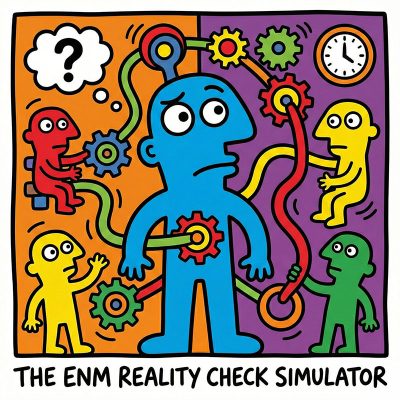
Theory is sexy. Reality is messy. You agreed you could date others, but how does your stomach drop when he takes her to your anniversary spot? Or when she comes home smelling like someone else?
This simulator drags your abstract rules into the harsh light of day. We force you to confront the visceral, gut-wrenching scenarios that actually destroy relationships, before they happen. Test your nervous system in the simulator so you don't crash the car in real life.
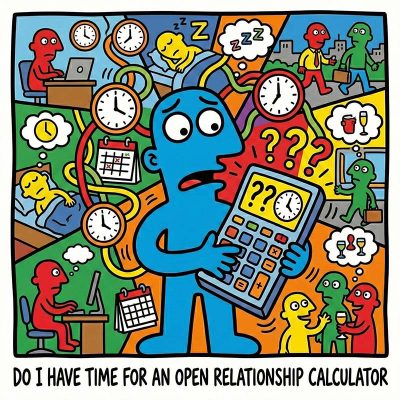
The fantasy is endless romance. The reality? It’s a logistical nightmare. Dating isn't just sex; it’s a second job of swiping, spending, and emotional processing that drains your sanity. Underestimating the "admin" of non-monogamy is the fastest way to turn your relationship into a burnout factory where resentment thrives.
This calculator forces you to confront the brutal math of your time, energy, and wallet. Can you actually afford this lifestyle, or are you just signing up for exhaustion?
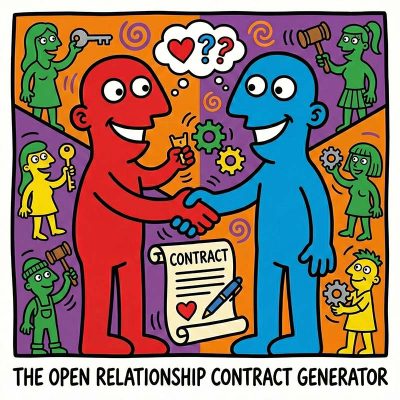
"I thought we agreed" is the sentence that destroys relationships & marriages. Relying on verbal promises when emotions run high is a gamble you cannot afford to lose. Your memory isn't just faulty; it's a liability. Ambiguity is the oxygen that jealousy breathes, turning "freedom" into a minefield of "did I mess up?"
This generator transforms vague permissions into a concrete, signed reality. Stop arguing about what you thought was said and lean on what is written. Secure your boundaries in ink, not hope.
Realistic scenarios where fear can pop up
Scenario 1 A new partner enters the picture and your partner s attention shifts
You loved the way your partner made time for you and suddenly they re spending long evenings with someone new. You feel left behind or like you are playing second fiddle. In this moment fear whispers that your place is slipping away. The reality might be that the new relationship is in a different phase and everyone is learning a new rhythm. The key is to distinguish temporary discomfort from a real mismatch in needs and desires.
Scenario 2 You notice a change in your partner s communication style
Maybe they used to text frequently and now they disappear for long blocks of time with no explanation. You fear that they are withdrawing or replacing you. The telling sign is when this change feels like secrecy rather than a negotiated boundary. Open lines of communication and a check in can determine whether this is a temporary recalibration or a signal that needs renegotiation.
Scenario 3 You have a fear of losing your own identity within the open dynamic
You might worry that your needs desires or values will get lost in the mix. That you will become the partner who always agrees to the other person s plan. This fear is real and common. The cure is to protect your own boundaries and to pursue your own sources of joy while staying connected to the primary relationship.
Scenario 4 A boundary is crossed or feels violated
A boundary may be flexible on some days and rigid on others. If a boundary is crossed it can feel like a breach of trust. The remedy is to revisit the boundary with honesty and a plan to restore trust. It is not about punishment it is about repair and respect.
How to tell if fear is turning into a real risk to the relationship
Not every flutter of fear needs a full stop. You want to know when to pause and when to push forward. Here are some signs fear is becoming a risk you should address with your partner or a professional:
- Your fear intensifies after conversations about dating or after a date with someone else.
- You start to engage in controlling behaviors trying to limit the other person s freedom.
- You notice secrecy silence or avoidance whenever a third party is involved.
- Your boundaries stop feeling negotiated and instead feel like ultimatums.
- You feel you cannot be yourself around your partner or you are pretending to be someone you are not.
Strategies to manage fear and protect the relationship in ENM
Fear can be a signal that something needs attention not a reason to end a relationship. Below are practical steps you can take to navigate fear with care and clarity.
Open clear communication with your partner
Honest conversations are the bedrock of ENM. Pick a calm moment and explain how you feel without blaming. Use specific examples and describe your needs. A sample approach is I have been feeling a bit anxious about our time together when X happens. I would like to try Y for a while and see how it goes. Would you be open to that?
Create or renegotiate boundaries together
Boundaries are not rules to trap each other they are guardrails that keep everyone safe and comfortable. Clarify what is allowed what is not allowed and what would require a discussion first. Document these boundaries so both people know what to expect.
Institute regular check ins
Schedule weekly or bi weekly check ins. Use a simple format focus on what is working what is not and what needs adjusting. Keep the tone collaborative not punitive. A good check in keeps small issues from becoming big problems.
Schedule quality time and maintain emotional closeness
Open relationships do not mean you are constantly sharing the same space or the same person. It does mean you can plan time to nurture the core relationship. Put time on the calendar just for you and your partner. It can be a date night a long walk a movie at home or any activity that strengthens your connection.
Make space for personal growth and independence
Having your own hobbies friends and goals makes you less dependent on a single source of emotional support. It also gives you attractive confidence. When you feel good about yourself you are less likely to turn fear into threats or control.
Practice jealousy management techniques
Jealousy is a normal human emotion. You do not have to pretend you do not feel it. Name it identify its source and respond with a plan. Techniques include journaling breathing exercises cognitive reframing and talking it through with a trusted ally or therapist.
Develop compersion as a practice
Compersion is the feeling of happiness for your partners happiness even when that happiness involves someone else. Cultivating compersion can reduce fear and increase trust. It starts with small steps and honest reflection on what you are genuinely happy to see in your partner s life.
Use practical tools to reduce friction
- Shared calendars to coordinate time together and time with others.
- Consent based planning where all people involved contribute to decisions.
- Written agreements that are revisited every few months.
- Aftercare routines that help you feel connected after a date or encounter.
Must no s in ENM relationships that protect trust
- Do not push your partner to abandon other relationships to prove your worth.
- Avoid shaming blame or guilt trips when discussing open dynamic s. Focus on behavior not character.
- Do not hide important information or lie about what is happening with other partners.
- Avoid entangling new partners without consent check ins and transparency.
- Do not assume that your partner knows what you want. Speak up and name your needs.
Practical rituals to keep the bond strong
Rituals help small things become reliable. Here are a few you can try or adapt:
- Weekly debrief after a date with another partner. Share what felt good and what did not.
- Two to three positive reinforcement statements for your partner at the end of each day. It builds warmth and trust.
- A monthly boundary audit. Review what is working and what needs adjustment and agree together on any changes.
- A personal growth goal you both nurture. It could be a class a workout plan or a shared hobby you both enjoy.
How to talk to your partner about fear without turning it into a fight
Fear rarely goes away if it is ignored. A calm direct talk can reduce tension and create solutions. Here is a gentle framework you can adapt:
- Set a time and place where you both feel safe and unhurried.
- Speak from your experience using I statements. I feel anxious when I see X and it makes me worry that Y could happen.
- Avoid blaming. Focus on behavior and needs rather than character or intentions.
- Invite input. How would you feel about Z or what would help you feel more secure?
- Collaborate on a plan. Create a specific action step with a timeline.
Sample script you can tailor: I have been feeling unsettled lately when we spend a lot of time with someone new. It helps me to talk about it with you rather than letting it fester. Could we try a longer weekly check in and a short boundary review each month to see if we need to adjust anything?
When to seek outside support
Sometimes the fear is not just about the relationship. It can reflect anxiety depression or past trauma. If fear is persistent overwhelming or causing you to isolate or engage in harmful behavior it is time to seek support from a therapist who is experienced with ENM or polyamory friendly therapy. A counselor can offer tools to manage jealousy communication skills and relationship boundaries in a compassionate way.
Putting it into practice today
If you want a simple starting point here is a quick action list you can use this week. Do one of these today and one more in the next two days. Small steps compound into real change.
- Have a calm conversation focusing on your feelings and needs rather than accusations.
- Set up a weekly check in with your partner and commit to keeping it within a consistent time frame.
- Draft a boundary document that lists what is okay what is not okay and how decisions will be made when things are not clear.
- Identify one personal growth goal and share it with your partner so they know what matters to you outside the open space.
- Start a jealousy journal. Note what triggers jealousy what the trigger feels like and what helps calm you down.
Glossary of useful ENM terms and acronyms
- ENM Ethical non monogamy a broad term for relationship styles that involve more than two people with consent.
- Open relationship A primary couple agrees to allow dating or romance with others outside the couple.
- NRE New relationship energy a rush of excitement that can color judgments and emotions early on in a new connection.
- Compersion Joy felt when seeing a partner s happiness with another person.
- Boundaries Agreed limits about what is acceptable in the arrangement and how decisions are made.
- Check in A scheduled time to assess emotions needs and boundary status.
- Boundaries renegotiation Revisiting and adjusting rules as feelings and situations change.
- Aftercare Activities that help partner s transition after a date or encounter and reinforce safety and connection.
- Red flags Signs that a relationship pattern may be harming your wellbeing or the arrangement.
Frequently asked questions about fear in open relationships ENM
What does ENM stand for
Ethical non monogamy a term used to describe relationship styles that involve more than two people with open consent and communication.
Is fear in ENM a sign something is wrong
Not necessarily. Fear often signals where boundaries and communication need strengthening. It can be a map pointing to areas that deserve attention and care.
How can I tell if my fear is healthy
Healthy fear helps you set boundaries communicate clearly and protect your wellbeing while you explore. If fear leads to constructive action it is likely healthy. If it causes repeated distress without any useful outcome it may require support from a therapist or a trusted friend.
What is the difference between jealousy and insecurity
Jealousy is an emotion that can arise from a real or perceived threat to a valued relationship. Insecurity is a broader sense of not feeling good enough or not feeling safe in the relationship. Jealousy can be a doorway to insecurity but they are not the same thing.
How do I bring up fear without causing a fight
Use I statements focus on specific behaviors and describe your needs. Ask for a collaborative solution rather than demanding changes. Keep the tone curious not accusatory.
Should I expect my primary partner to change the arrangement for me
No one should be asked to change the core terms of an ENM arrangement to appease fear. The goal is to renegotiate boundaries in a way that respects all involved and maintains consent.
When is professional help warranted
If fear leads to persistent anxiety depressive symptoms or harming behaviors consider speaking with a therapist who has experience with ENM or non traditional relationships. Therapy can offer tools to improve communication and reduce distress.
Can fear be a positive force in ENM
Yes fear can motivate better communication more honest check ins and clearer boundaries. It can push a couple to deepen trust and create a more secure and resilient relationship.
The freedom of an open relationship sounds incredible, but the logistics can feel like holding a grenade. That spinning "what if" anxiety isn't paranoia, it’s your survival instinct warning you that your bond is exposed. "Just seeing what happens" is the fastest way to turn a fantasy into a breakup.
The Essential Guide replaces chaos with discipline. We give you the blueprints, jealousy protocols, and repair scripts needed to explore the edge without falling off. Don't guess. Secure your foundation first.
The world of non-monogamy is a maze of confusing labels. Trying to be "Polyamorous" when your heart actually needs "Swinging" isn't just a vocabulary error; it’s a recipe for misery.
You can't build a stable home on a foundation that doesn't fit your psychology. This tool analyzes your emotional bandwidth and jealousy triggers to design the exact structure you need. Stop trying to squeeze into a box that doesn't fit. Build a relationship that actually feels like home.
Opening up feels exciting, but if you aren't reading from the same script, you're writing a tragedy. The disconnect between "I want freedom" and "I want safety" is where hearts break. This isn't just a quiz; it’s a synchronization engine.
We identify the silent gaps in your desires—from sleepover rules to emotional bandwidth, before they become unbridgeable chasms. Don't wait until the damage is done to find out you were never on the same page. Align your compasses now.
Theory is sexy. Reality is messy. You agreed you could date others, but how does your stomach drop when he takes her to your anniversary spot? Or when she comes home smelling like someone else?
This simulator drags your abstract rules into the harsh light of day. We force you to confront the visceral, gut-wrenching scenarios that actually destroy relationships, before they happen. Test your nervous system in the simulator so you don't crash the car in real life.
The fantasy is endless romance. The reality? It’s a logistical nightmare. Dating isn't just sex; it’s a second job of swiping, spending, and emotional processing that drains your sanity. Underestimating the "admin" of non-monogamy is the fastest way to turn your relationship into a burnout factory where resentment thrives.
This calculator forces you to confront the brutal math of your time, energy, and wallet. Can you actually afford this lifestyle, or are you just signing up for exhaustion?
"I thought we agreed" is the sentence that destroys relationships & marriages. Relying on verbal promises when emotions run high is a gamble you cannot afford to lose. Your memory isn't just faulty; it's a liability. Ambiguity is the oxygen that jealousy breathes, turning "freedom" into a minefield of "did I mess up?"
This generator transforms vague permissions into a concrete, signed reality. Stop arguing about what you thought was said and lean on what is written. Secure your boundaries in ink, not hope.
