
Gifts Trips and Resource Allocation


Welcome to a no fluff playbook for ethical non monogamy where generosity meets candor. If you are navigating an open relationship dynamic you likely know that gifts trips and resource allocation are not just about money they are about respect time and shared meaning. This guide breaks down how to handle gifts and trips with multiple partners in a way that feels fair and real. We will define terms explain common acronyms and give you practical frameworks you can actually use in the real world.
Quick Links to Useful Sections
- What this guide covers
- Gifts in ENM how to think about giving and receiving
- What counts as a gift in ENM
- Boundaries around gifts
- Gift budgets and currency
- Receiving gifts with grace
- Templates for gift conversations
- Trips in ENM the bigger adventure
- Trip planning basics
- Logistics and safety
- Money and resource allocation for trips
- Trip scenarios and how to handle them
- Resource allocation frameworks for ENM
- Framework 1: Time tokens
- Framework 2: Money and expense sharing
- Framework 3: Energy ledger
- Framework 4: Priority ladder
- How to implement these frameworks in practice
- Real world scenarios that illustrate gifts trips and resource allocation
- Scenario 1: A couple with a long distance partner who wants a birthday trip
- Scenario 2: A triad planning a mutual vacation
- Scenario 3: Long distance overlapping connections with a gifts policy
- Scenario 4: A remote partner needing flexible resource sharing
- Communication tips for successful gifts trips and resource sharing
- Common mistakes to avoid
- Practical tools and templates you can use
- 1. Gift and trip negotiation one pager
- 2. Resource ledger sample
- 3. Trip planning checklist
- Glossary of terms and acronyms
- Notes on terminology
- Frequently asked questions
Before we dive in a quick note on terms. ENM stands for Ethical Non Monogamy a broad umbrella that covers many relationship styles where honesty consent and communication are the core ingredients. A lot of the advice here works whether you are in a duo with open boundaries or in a larger polyamorous network also called a polycule. A primary partner is often the person who has the deepest level of commitment or shared life logistics with you while secondary partners may have different levels of closeness. Meta refers to a partner of a partner or a partner who is connected to more than one person in the network. Compersion is the feeling of happiness when a partner experiences joy with someone else. All of these terms can be new or muddy at first so we explain them clearly as we go.
What this guide covers
This article explores three big areas that regularly show up in open relationships:
- Gifts and tokens of affection including when and how to give them to a partner outside your primary relationship.
- Trips and shared adventures with one or more partners including planning logistics and safety considerations.
- Resource allocation the fair distribution of time money energy and attention across all partners.
We aim to give you practical strategies practical templates and realistic scenarios. Our tone stays down to earth with a dose of humor so you can laugh while you build healthier boundaries and better agreements.
Gifts in ENM how to think about giving and receiving
Gifts are more than material objects. In ENM they can be experiences thoughtfulness tokens time or even help with logistics. The goal is warmth not pressure and to keep things transparent so no one feels taken advantage of. Here is how to frame gifts in a way that respects everyone involved.
What counts as a gift in ENM
A gift is anything given with no expectation of repayment or with an agreed upon reciprocal gesture that is explicit and fair. In ENM a gift can be:
- Experiential gifts such as concert tickets a weekend away or a shared meal at a special place.
- Practical support like helping cover travel costs for a partner who lives far away or taking care of child care while a partner has a date with another person.
- Symbolic tokens such as a thoughtful note a book a piece of art or a keepsake that carries sentiment rather than price tag.
- Financial contributions to shared experiences or to a partner when there is a negotiated plan for how gifts are managed.
Notice that the focus is not necessarily on the biggest or most expensive gift. The value comes from alignment with the person receiving the gift and the context of your agreements. A gift should feel meaningful not like a ritual of debt or obligation.
Boundaries around gifts
Healthy ENM gifts are guided by consent transparency and avoidance of coercion. Key boundaries to consider include:
- Discuss the purpose of the gift and the context in which it is given.
- Avoid gifts that substitute attention or romantic energy that should come through honest communication and time together.
- Be mindful of the recipient's comfort level with public displays or private tokens.
- Establish a budget or cap and stick to it unless everyone agrees to adjust.
- Revisit agreements if a gift creates pressure or shifts the balance in ways that feel unfair.
Gift budgets and currency
Gifts carry more warmth when they fit the recipient's love language and the overall resource plan you have with your partners. In ENM the currency can be money time attention and energy. Try mapping gifts into a simple currency plane to keep the playing field clear.
- Money currency covers tangible items experiences travel or shared services.
- Time currency represents hours spent planning or being present with a partner outside of regular routines.
- Energy currency captures emotional labor and effort invested in maintaining the connection.
One practical approach is to create a monthly or quarterly gift budget that is allocated across your partners with input from everyone involved. The goal is fairness not sameness and the plan should be revisited as relationships evolve.
Receiving gifts with grace
Receiving is as important as giving. Encourage gratitude without guilt and make sure the receiver can express preference or decline without hurting the relationship. Some people need policy statements like I enjoy experiences with you but I cannot accept expensive gifts from you this month. Clear language helps everyone stay on the same page.
Templates for gift conversations
Use these openers to start a healthy gift discussion with a partner or partner group. Adapt them to your voices and the specifics of your network.
- Here is what I would enjoy as a gift this month and here is what I would prefer to skip. How does that sound to you
- Let us set a monthly gift budget and decide how to allocate it among all partners. Would you like to help design the split
- I want to celebrate your accomplishments with a trip. What would make this feel fair and fun for everyone involved
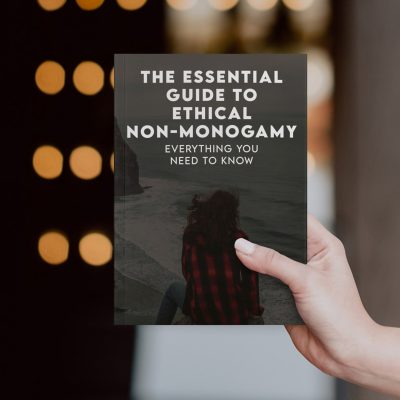
The freedom of an open relationship sounds incredible, but the logistics can feel like holding a grenade. That spinning "what if" anxiety isn't paranoia, it’s your survival instinct warning you that your bond is exposed. "Just seeing what happens" is the fastest way to turn a fantasy into a breakup.
The Essential Guide replaces chaos with discipline. We give you the blueprints, jealousy protocols, and repair scripts needed to explore the edge without falling off. Don't guess. Secure your foundation first.
The world of non-monogamy is a maze of confusing labels. Trying to be "Polyamorous" when your heart actually needs "Swinging" isn't just a vocabulary error; it’s a recipe for misery.
You can't build a stable home on a foundation that doesn't fit your psychology. This tool analyzes your emotional bandwidth and jealousy triggers to design the exact structure you need. Stop trying to squeeze into a box that doesn't fit. Build a relationship that actually feels like home.
Opening up feels exciting, but if you aren't reading from the same script, you're writing a tragedy. The disconnect between "I want freedom" and "I want safety" is where hearts break. This isn't just a quiz; it’s a synchronization engine.
We identify the silent gaps in your desires—from sleepover rules to emotional bandwidth, before they become unbridgeable chasms. Don't wait until the damage is done to find out you were never on the same page. Align your compasses now.
Theory is sexy. Reality is messy. You agreed you could date others, but how does your stomach drop when he takes her to your anniversary spot? Or when she comes home smelling like someone else?
This simulator drags your abstract rules into the harsh light of day. We force you to confront the visceral, gut-wrenching scenarios that actually destroy relationships, before they happen. Test your nervous system in the simulator so you don't crash the car in real life.
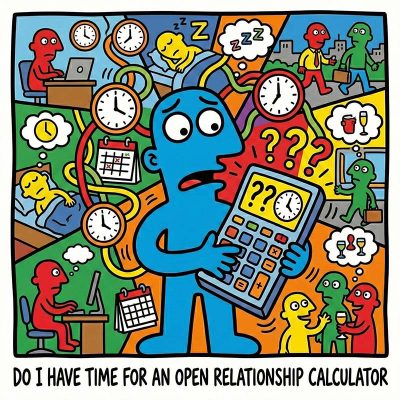
The fantasy is endless romance. The reality? It’s a logistical nightmare. Dating isn't just sex; it’s a second job of swiping, spending, and emotional processing that drains your sanity. Underestimating the "admin" of non-monogamy is the fastest way to turn your relationship into a burnout factory where resentment thrives.
This calculator forces you to confront the brutal math of your time, energy, and wallet. Can you actually afford this lifestyle, or are you just signing up for exhaustion?
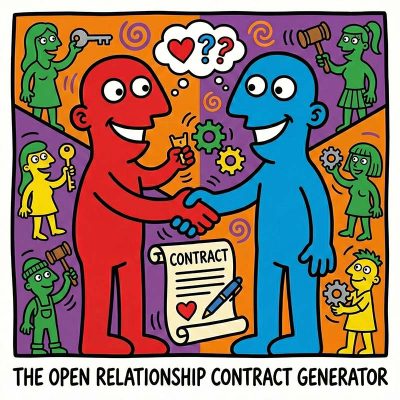
"I thought we agreed" is the sentence that destroys relationships & marriages. Relying on verbal promises when emotions run high is a gamble you cannot afford to lose. Your memory isn't just faulty; it's a liability. Ambiguity is the oxygen that jealousy breathes, turning "freedom" into a minefield of "did I mess up?"
This generator transforms vague permissions into a concrete, signed reality. Stop arguing about what you thought was said and lean on what is written. Secure your boundaries in ink, not hope.
Trips in ENM the bigger adventure
Trips are a powerful way to deepen connections but they can also surface tricky dynamics. Multi partner trips require extra planning and clear communication. Here is how to navigate travel with more than one partner in a way that is enjoyable and respectful for all involved.
Trip planning basics
Start with a joint vision. What kind of trip is this and who is it for
- Purpose alignment whether it is relaxation adventure exploration or a shared milestone.
- Budget boundary that includes transportation accommodation activities and meals.
- Time frame clarity with start and end dates along with backup options if plans shift.
Next map responsibilities. Who books what who handles tickets who coordinates child care or pet care if needed who does the packing and who handles communications during the trip.
Logistics and safety
Safety is not optional even when the vibe is fun. Have clear safety plans that cover consent communication during the trip and emergency contact points. Consider:
- Health and accessibility needs and any medications or special requirements.
- Communication check ins during the trip and how you handle conflicts if they arise far from home.
- Clear boundaries about physical space privacy and public exposure with each partner.
- Travel documentation and insurance especially when flying or visiting new places.
Money and resource allocation for trips
Trips can be expensive when several partners join in. Use a shared budgeting approach that keeps expectations realistic. Consider:
- Split by factor such as who attends what activities who pays for lodging and who covers meals based on involvement.
- Use a pre trip cost sheet that lists each member and contributes proportionally.
- Have a contingency fund for unexpected expenses and discuss who contributes to it.
Trip scenarios and how to handle them
Real world examples help you see the edges of the conversations. Here are three common trip configurations and a sense of how to approach them fairly.
- A couple and a secondary partner planning a weekend getaway. Start with a shared intention a budget and a schedule that includes time together and time apart.
- A triad planning a more extended trip. Agree on roles responsibilities and how to handle moments when one relationship needs extra space or attention.
- Separate trips with overlapping calendars. The solution is a clear calendar that marks which partner is with whom and when and what activities are planned to minimize miscommunication.
Resource allocation frameworks for ENM
Resource allocation in ENM is about making sure time money energy and attention are distributed in a way that honors all relationships while acknowledging that one person cannot be everywhere at once. Below are practical frameworks you can borrow or adapt.
Framework 1: Time tokens
Time tokens are a simple way to quantify how much time a partner can invest with different relationships. For example you might allocate a fixed number of monthly tokens per partner and specify what counts as a token. One token could equal two hours of focused time a phone call or a date night. Tokens can be traded across partners or reserved for events like trips. The key is clarity and consistency.
Framework 2: Money and expense sharing
Money is a common friction point in ENM networks. A practical approach is to create a shared expenses plan with explicit categories and contributions from each partner. You can allocate a base monthly contribution from each person based on income and then adjust for specific events or trips using pre negotiated rules. The focus is transparency not dominance by any single party.
Framework 3: Energy ledger
Emotional energy is real and finite. An energy ledger tracks the emotional effort required to maintain different relationships. If one connection demands more emotional labor during a period you can adjust the level of involvement with that partner or offer additional support elsewhere. The ledger helps prevent burnout and ensures boundaries stay healthy.
Framework 4: Priority ladder
Not every moment can be equal. A priority ladder places primary partnership needs at the top while still allowing meaningful connections with others. The ladder should be revisited periodically especially after life events big or small. The aim is to keep the main relationship robust while allowing growth with others.
How to implement these frameworks in practice
Bring everyone to the table for a negotiation session. Use plain language and share your current calendars budgets and energy expectations. Create a simple one page agreement that lists:
- The primary relationship status and any changes expected in the near term
- Time token rules and how they can be traded
- Point by point how money will be allocated for trips and gifts
- How to handle energy and emotional labor including who can provide support when needed
- Contingencies for conflicts or boundary concerns
Keep the document actionable and revisitable. Do not pretend that a plan will never change because life in ENM loves plot twists and you want to be ready for them with grace.
Real world scenarios that illustrate gifts trips and resource allocation
Scenario 1: A couple with a long distance partner who wants a birthday trip
Ruth and Kai are in a committed relationship and also enthusiastically open to additional connections. Their partner Alex lives in another city and has a birthday coming up. Ruth would like to celebrate with Alex with a weekend trip but Kai has a limited travel budget that month. They sit down and map the situation using the time tokens model. Ruth and Kai decide that Ruth will allocate a set of travel tokens for Alex and Alex will host a weekend visit on a date that aligns with their schedule. Kai contributes financially to cover shared expenses for the weekend while Ruth handles communication planning and activities. The result is a thoughtful gift that respects Kai budget while making Alex feel valued. The open dialogue also reinforces trust that everyone knows the plan and can adjust as needed.
Scenario 2: A triad planning a mutual vacation
Three partners form a triad living in a way where all connections are meaningful though not identical. They want a week long vacation that balances time with each partner and time as a trio. They create a shared budget they all contribute to and assign roles for planning. One partner books flights one picks the hotel and two design a couple friendly daily schedule. They reserve two evenings for group time a couple of evenings for private time for each couple and a morning for a group activity. They agree to a one week trial and promise to reassess after day three if anyone feels overwhelmed. It works because the plan is explicit the roles are clear and everyone has space to opt in or out of activities.
Scenario 3: Long distance overlapping connections with a gifts policy
Two partners live in different cities and one travels often for work. They agree on a gifting policy that emphasizes experiential and meaningful tokens rather than expensive items. They set a monthly cap on gifts and allow the recipient to decide how to allocate the gifts across partners within the cap. When a partner buys a small thoughtful gift for the other distance partner the other partner clocks in a thank you and a note about how the gift enriches the relationship rather than creating obligations. This approach keeps distance intimate and generous without turning gift giving into pressure or debt.
Scenario 4: A remote partner needing flexible resource sharing
A fourth partner is newly integrated into a core circle and signals that their schedule is unpredictable. The group uses the energy ledger and time tokens to accommodate flexibility. They decide that on any given month the remote partner can claim a flexible token pool that can be used for occasional visits or virtual dates depending on what their schedule allows. The other partners commit to flexible planning and open communication about when tokens will be used. This approach keeps everyone included without forcing rigid timelines.
Communication tips for successful gifts trips and resource sharing
Communication is the backbone of open relationships. Here are practical tips to keep conversations constructive and productive.
- Lead with the why. Explain why a gift or trip feels right in the context of your relationship and not as an obligation.
- Use concrete numbers. Budgets and tokens are easier to negotiate than vague promises. Be specific about amounts hours and limits.
- Document agreements. A simple written plan or shared document reduces miscommunication and provides a reference point for future discussions.
- Check in regularly. Situations change and a quarterly or monthly check in helps you stay aligned with each other.
- Recognize and name your emotions. If jealousy or insecurity arises discuss it openly before it spills into actions.
Common mistakes to avoid
Even the best intentions can lead to friction if you fall into predictable traps. Here are some frequent missteps and how to avoid them.
- Assuming sameness. People differ in how they experience and express love. Avoid assuming everyone wants the same kind of gift or trip.
- Over scheduling. Packed itineraries with no space for downtime can burn people out especially in multi partner plans.
- Under communicating boundaries. If a boundary feels violated the right move is to pause and re talk rather than pushing ahead.
- Equating gifts with love. Gifts can be meaningful without being payment for attention. Keep the distinction clear.
- Ignoring power dynamics. If a primary partner expects more than others contributing in a way that creates unfairness address it head on.
Practical tools and templates you can use
We cannot pretend you will remember every detail. Here are simple templates you can copy to your own documents and adapt to your network.
1. Gift and trip negotiation one pager
What it covers
- Participants and relationship roles
- Budget limits including monthly and trip specific caps
- Time tokens and how they can be exchanged
- Proposed gifts or trips with rough cost estimates
- Boundaries consent and safety notes
How to use it
- Share with all partners in advance and invite feedback
- Revise until everyone signs off or agrees to a recurring review schedule
2. Resource ledger sample
Columns to include
- Partner name
- Time tokens available
- Money budget allocated for gifts and trips
- Energy notes for the month
- Upcoming commitments and conflicts
Use this ledger as a live document and update it after major decisions or events. The point is to maintain visibility so no one feels surprised or cut out.
3. Trip planning checklist
Before you go
- Confirm the guest list and trip purpose
- Agree on budget and who pays what
- Lock travel dates and accommodations with a back up plan
- Design a flexible schedule leaving room for privacy and downtime
- Arrange safety plans including check in times and emergency contacts
During the trip
- Hold short daily debriefs to adjust plans if needed
- Respect boundaries and consent in all activities
- Document shared moments that you want to remember without pressuring others to perform for content
Glossary of terms and acronyms
- ENM Ethical Non Monogamy a relationship style built on honesty consent and explicit boundaries
- Gifts Thoughtful tokens or experiences given to partners to show appreciation or celebrate moments
- Primary partner The partner with whom you share the deepest commitments or life logistics
- Secondary partner A partner who is important but not the main focus of daily life or logistics
- Triad A three person relationship where all members are involved with one another
- Polycule The network or web of multiple relationships connected through partners and sometimes friends
- Compersion The act of feeling joy when a partner experiences happiness with someone else
- Energy ledger A practical tool for tracking emotional labor across relationships
- Time tokens A unit of time you allocate and can trade with partners
- Consent An explicit agreement to engage in activities with another person
- Boundary A limit you set around what you are comfortable with in a relationship
Notes on terminology
Terms in this space can shift as people learn and relationships evolve. If you use a term you do not love or which others find confusing take time to explain it and ask for feedback. The goal is clarity and mutual respect not jargon bingo. If a term becomes a source of tension it is a good sign to slow down and have a focused conversation about what it means for your group.
Frequently asked questions
FAQ Q1 How do we decide who gets gifts and how to balance them
Start with transparency create a fair budget and decide how gifts are allocated. A practical approach is to set a monthly gift budget and assign portions to each partner based on involvement in the relationship. The important part is to check in regularly and adjust when needed so no one feels over or under appreciated.
FAQ Q2 How should we handle trips when not all partners can join
Discuss inclusivity and whether a reduced version of the trip is acceptable or if you should plan separate experiences. The goal is to maintain connection without forcing participation. If some partners cannot join you can arrange a different time for a shared experience or a one on one activity that keeps the bond strong.
FAQ Q3 How can we avoid money fights in ENM
Use clear budgets set expectations and document agreements. A shared expenses sheet helps everyone see where money goes and reduces the chance of resentment. Regular reviews the same way you would check a project budget are crucial here.
FAQ Q4 How do we deal with jealousy around gifts or trips
Jealousy is a natural signal to slow down and check in. Acknowledge it name it and explore what it is telling you. Sometimes re balancing resource allocation or sharing more information about plans can relieve the pressure. If jealousy persists you may need to adjust expectations or time commitments until everyone feels secure again.
FAQ Q5 What if someone in the network disagrees with an allocation
Escalate to a calm negotiation session with all impacted parties. Use the frameworks we discussed to re allocate time tokens and budget. The objective is to reach a plan that keeps relationships healthy while remaining true to consent and boundaries.
FAQ Q6 Can we change a plan after it is set
Yes. In ENM plans change as people grow and life circumstances shift. The key is to communicate as soon as you realize a change is needed and revise the plan with consent from all involved.
FAQ Q7 Should I include a primary partner in every decision
Not every decision requires a veto or full consensus. However major shifts such as a long term commitment a large expense or a trip that alters the dynamic should involve the primary partner and any other partners who will be impacted. Base your governance on your agreements and what works best for your network.
FAQ Q8 What is the best way to document agreements
A simple shared document or a private wiki works well. Include sections for goals the current plan the budgets the time tokens and an agreed review schedule. Keep it accessible but secure and update it when you reach new agreements.
The freedom of an open relationship sounds incredible, but the logistics can feel like holding a grenade. That spinning "what if" anxiety isn't paranoia, it’s your survival instinct warning you that your bond is exposed. "Just seeing what happens" is the fastest way to turn a fantasy into a breakup.
The Essential Guide replaces chaos with discipline. We give you the blueprints, jealousy protocols, and repair scripts needed to explore the edge without falling off. Don't guess. Secure your foundation first.
The world of non-monogamy is a maze of confusing labels. Trying to be "Polyamorous" when your heart actually needs "Swinging" isn't just a vocabulary error; it’s a recipe for misery.
You can't build a stable home on a foundation that doesn't fit your psychology. This tool analyzes your emotional bandwidth and jealousy triggers to design the exact structure you need. Stop trying to squeeze into a box that doesn't fit. Build a relationship that actually feels like home.
Opening up feels exciting, but if you aren't reading from the same script, you're writing a tragedy. The disconnect between "I want freedom" and "I want safety" is where hearts break. This isn't just a quiz; it’s a synchronization engine.
We identify the silent gaps in your desires—from sleepover rules to emotional bandwidth, before they become unbridgeable chasms. Don't wait until the damage is done to find out you were never on the same page. Align your compasses now.
Theory is sexy. Reality is messy. You agreed you could date others, but how does your stomach drop when he takes her to your anniversary spot? Or when she comes home smelling like someone else?
This simulator drags your abstract rules into the harsh light of day. We force you to confront the visceral, gut-wrenching scenarios that actually destroy relationships, before they happen. Test your nervous system in the simulator so you don't crash the car in real life.
The fantasy is endless romance. The reality? It’s a logistical nightmare. Dating isn't just sex; it’s a second job of swiping, spending, and emotional processing that drains your sanity. Underestimating the "admin" of non-monogamy is the fastest way to turn your relationship into a burnout factory where resentment thrives.
This calculator forces you to confront the brutal math of your time, energy, and wallet. Can you actually afford this lifestyle, or are you just signing up for exhaustion?
"I thought we agreed" is the sentence that destroys relationships & marriages. Relying on verbal promises when emotions run high is a gamble you cannot afford to lose. Your memory isn't just faulty; it's a liability. Ambiguity is the oxygen that jealousy breathes, turning "freedom" into a minefield of "did I mess up?"
This generator transforms vague permissions into a concrete, signed reality. Stop arguing about what you thought was said and lean on what is written. Secure your boundaries in ink, not hope.
