
Handling Conflicts About Disclosure

Open relationships and ethical non monogamy or ENM as it is often called come with big questions about honesty transparency and what to share and with whom. When two people agree to explore non monogamy conflicts can still spark over disclosure. The goal of this guide is to give you practical tools to navigate those conflicts with humor honesty and a focus on real world outcomes. We will explain terms and acronyms we use so you can follow along even if you are new to ENM. Think of this as a friendly playbook from someone who wants you to feel confident handling tricky conversations without wrecking the connection you value.
Quick Links to Useful Sections
- What disclosure means in ENM
- Key terms you need to know
- Common conflicts around disclosure
- Principles for ethical disclosure
- Strategies for resolving disclosure conflicts
- Communication techniques for ENM disclosure
- Disclosing to different audiences
- Practical tools
- Workable scenarios
- Scenario 1: A partner wants full disclosure about every date and detail
- Scenario 2: A new partner wants to meet family and disclose affects family plans
- Scenario 3: Health concerns require timely disclosure
- Scenario 4: Family stigma creates tension around disclosure
- Scenario 5: A new partner requires disclosure to a partner with a history of anxiety
- Roadmap for disclosure conversations
- Boundaries and privacy
- Safety considerations
- Why disclosure matters in ENM
- Practical templates and checklists
- Glossary of useful terms and acronyms
What disclosure means in ENM
Disclosure in the open relationships world refers to sharing information about intimate dating experiences with your primary partner and sometimes with other partners or close confidants. It is not about turning your entire dating life into a public diary. It is about transparency in a way that respects safety consent and the health of the relationship. For some people disclosure feels essential to trust and safety while for others partial disclosure feels more comfortable. The key is to align on what is appropriate for your unique agreement and to check in as those agreements evolve.
Key terms you need to know
- ENM Ethical non monogamy a framework that emphasizes consent honesty and fair treatment as people explore relationships outside the primary bond.
- Open relationship An arrangement where partners agree that seeing others is allowed under certain boundaries.
- Polyamory A style of ENM where people may have multiple deep romantic relationships at once with consent from everyone involved.
- Disclose Share information about relationship activities with the appropriate people in a respectful and timely way.
- Disclosure plan A written or mental map that helps you decide what to share who to share with when and how.
- Privacy boundaries Limits about what information you keep private and what you chose to share in different situations.
- Consent A clear agreement from all involved that a particular action or disclosure is acceptable.
- Red flags Behaviors or signals that point to potential harm discomfort or risk in the disclosure process.
The freedom of an open relationship sounds incredible, but the logistics can feel like holding a grenade. That spinning "what if" anxiety isn't paranoia, it’s your survival instinct warning you that your bond is exposed. "Just seeing what happens" is the fastest way to turn a fantasy into a breakup.
The Essential Guide replaces chaos with discipline. We give you the blueprints, jealousy protocols, and repair scripts needed to explore the edge without falling off. Don't guess. Secure your foundation first.
The world of non-monogamy is a maze of confusing labels. Trying to be "Polyamorous" when your heart actually needs "Swinging" isn't just a vocabulary error; it’s a recipe for misery.
You can't build a stable home on a foundation that doesn't fit your psychology. This tool analyzes your emotional bandwidth and jealousy triggers to design the exact structure you need. Stop trying to squeeze into a box that doesn't fit. Build a relationship that actually feels like home.
Opening up feels exciting, but if you aren't reading from the same script, you're writing a tragedy. The disconnect between "I want freedom" and "I want safety" is where hearts break. This isn't just a quiz; it’s a synchronization engine.
We identify the silent gaps in your desires—from sleepover rules to emotional bandwidth, before they become unbridgeable chasms. Don't wait until the damage is done to find out you were never on the same page. Align your compasses now.
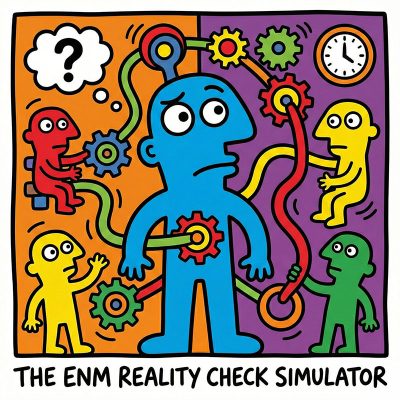
Theory is sexy. Reality is messy. You agreed you could date others, but how does your stomach drop when he takes her to your anniversary spot? Or when she comes home smelling like someone else?
This simulator drags your abstract rules into the harsh light of day. We force you to confront the visceral, gut-wrenching scenarios that actually destroy relationships, before they happen. Test your nervous system in the simulator so you don't crash the car in real life.
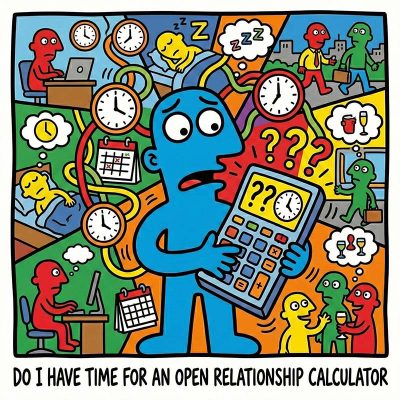
The fantasy is endless romance. The reality? It’s a logistical nightmare. Dating isn't just sex; it’s a second job of swiping, spending, and emotional processing that drains your sanity. Underestimating the "admin" of non-monogamy is the fastest way to turn your relationship into a burnout factory where resentment thrives.
This calculator forces you to confront the brutal math of your time, energy, and wallet. Can you actually afford this lifestyle, or are you just signing up for exhaustion?
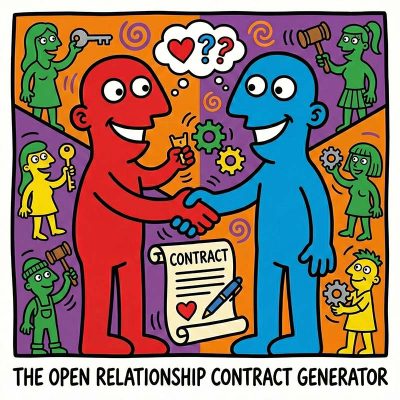
"I thought we agreed" is the sentence that destroys relationships & marriages. Relying on verbal promises when emotions run high is a gamble you cannot afford to lose. Your memory isn't just faulty; it's a liability. Ambiguity is the oxygen that jealousy breathes, turning "freedom" into a minefield of "did I mess up?"
This generator transforms vague permissions into a concrete, signed reality. Stop arguing about what you thought was said and lean on what is written. Secure your boundaries in ink, not hope.
Common conflicts around disclosure
Disclosures in ENM can trigger a mix of fear pride embarrassment curiosity and guilt. Here are the big conflict zones we see most often in open relationships.
- Fear of jeopardizing the relationship if the other partner disapproves of the dating life being disclosed.
- Concern about privacy and who needs to know what details. Some people want to keep things private while others want full transparency.
- Uneven expectations about disclosure. One partner may want to tell every detail while the other seeks minimal information for peace of mind.
- Impact on family friends or children and how much they should know about adult dating life.
- Safety concerns about health including STD status and the timing of STI tests and results.
- Trust and jealousy dynamics that flare when new partners enter the picture.
- Pressure from external networks social stigma or workplace norms that make disclosure feel risky or wrong.
- Boundary conflicts where one person wants openness while the other craves secrecy in certain areas.
- Misunderstandings about what counts as disclosure and what counts as gossip or bragging.
Principles for ethical disclosure
When we talk about ethical disclosure in ENM there are some guiding ideas that keep conversations productive rather than punitive. These are not rules carved in stone but a framework you can adapt to your relationship.
- Consent and agreement Decide together what kinds of information will be shared and with whom. Update agreements as often as needed.
- Safety first Share health related information in a way that protects everyone involved. Do not ignore risk signals or bypass medical guidance.
- Respect for autonomy Each partner gets to set their own boundaries about what they want to know and when. Respect those boundaries even when they differ from yours.
- Clarity and context Give enough context to understand why disclosure matters without turning every date into a soap opera.
- Timing matters Some information is best shared in person at a calm moment rather than during a heated argument or in a crowded space online after a long day.
- Compassion and warmth Approach disclosure as a practice of care not a tool to win a dispute. A genuine tone reduces defensiveness and opens space for dialogue.
Strategies for resolving disclosure conflicts
When conflicts arise the quickest way to move forward is to slow down and use a structured approach. Here is a practical playbook you can apply in your next disclosure conversation.
- Clarify the goal Begin by naming what you both need from the conversation. Is it reassurance clarity a plan for next steps or a boundary adjustment?
- Choose the right time Find a moment when both of you are calm and not multitasking. A good time is after a long day when you can sit and talk with focus.
- Use I statements Frame what you feel and need using statements that start with I. For example I feel anxious about sharing intimate details and I would like to discuss a plan that feels safer for both of us.
- Validate before redirecting Acknowledge your partner's feelings even if you disagree. Reflection like That sounds really hard for you helps reduce defensiveness.
- Offer a concrete plan Propose a disclosure plan with what will be shared with whom and when. A plan creates predictability which lowers anxiety.
- Agree on a trial period If you are unsure try a limited period with agreed checks and a review date. Be ready to adjust.
- Follow up Schedule a second talk to assess how the plan is working and what changes are needed.
Communication techniques for ENM disclosure
Communication is the backbone of healthy disclosure. The following techniques keep conversations constructive and compassionate.
- Active listening Give your partner your full attention and repeat back what you heard to confirm understanding.
- Non violent communication Focus on observations feelings needs and requests rather than judgments or accusations.
- Emotion labeling Name the emotion you notice in yourself and invite your partner to name theirs. This reduces misinterpretation.
- I statements Speak from your own experience rather than making statements about the other person. This reduces defensiveness.
- Pause and breathe Slow breathing communicates calm and helps prevent reactive responses.
- Summarize and reflect End the conversation with a short recap of what was decided and what the next steps are.
Disclosing to different audiences
Disclosure needs vary by audience. The rules you use with a partner are not the same as the rules you apply when talking with a family member or a close friend. Here are some quick guidelines for common audiences in ENM life.
- Primary partner This is the person you share the deepest bond with. Aim for honesty and alignment on what counts as essential information.
- Secondary partners Communicate with respect and routine check ins about limits and expectations. Some details may be shared while others stay private.
- Friends Real friends can be trusted with context not every date needs to be a full narrative. Share enough to preserve trust while protecting privacy.
- Family Disclosure to family often requires more careful framing. Lead with values and boundaries and avoid unnecessary intimate specifics unless asked.
- Colleagues or workplace Personal dating life is usually off limits. If you must share something about your relationship status discuss only what pertains to professional boundaries.
The freedom of an open relationship sounds incredible, but the logistics can feel like holding a grenade. That spinning "what if" anxiety isn't paranoia, it’s your survival instinct warning you that your bond is exposed. "Just seeing what happens" is the fastest way to turn a fantasy into a breakup.
The Essential Guide replaces chaos with discipline. We give you the blueprints, jealousy protocols, and repair scripts needed to explore the edge without falling off. Don't guess. Secure your foundation first.
The world of non-monogamy is a maze of confusing labels. Trying to be "Polyamorous" when your heart actually needs "Swinging" isn't just a vocabulary error; it’s a recipe for misery.
You can't build a stable home on a foundation that doesn't fit your psychology. This tool analyzes your emotional bandwidth and jealousy triggers to design the exact structure you need. Stop trying to squeeze into a box that doesn't fit. Build a relationship that actually feels like home.
Opening up feels exciting, but if you aren't reading from the same script, you're writing a tragedy. The disconnect between "I want freedom" and "I want safety" is where hearts break. This isn't just a quiz; it’s a synchronization engine.
We identify the silent gaps in your desires—from sleepover rules to emotional bandwidth, before they become unbridgeable chasms. Don't wait until the damage is done to find out you were never on the same page. Align your compasses now.
Theory is sexy. Reality is messy. You agreed you could date others, but how does your stomach drop when he takes her to your anniversary spot? Or when she comes home smelling like someone else?
This simulator drags your abstract rules into the harsh light of day. We force you to confront the visceral, gut-wrenching scenarios that actually destroy relationships, before they happen. Test your nervous system in the simulator so you don't crash the car in real life.
The fantasy is endless romance. The reality? It’s a logistical nightmare. Dating isn't just sex; it’s a second job of swiping, spending, and emotional processing that drains your sanity. Underestimating the "admin" of non-monogamy is the fastest way to turn your relationship into a burnout factory where resentment thrives.
This calculator forces you to confront the brutal math of your time, energy, and wallet. Can you actually afford this lifestyle, or are you just signing up for exhaustion?
"I thought we agreed" is the sentence that destroys relationships & marriages. Relying on verbal promises when emotions run high is a gamble you cannot afford to lose. Your memory isn't just faulty; it's a liability. Ambiguity is the oxygen that jealousy breathes, turning "freedom" into a minefield of "did I mess up?"
This generator transforms vague permissions into a concrete, signed reality. Stop arguing about what you thought was said and lean on what is written. Secure your boundaries in ink, not hope.
Practical tools
Use these practical tools to keep disclosure processes smooth and fair.
- Disclosure plan Create a simple plan that lists what information you may disclose to which people and under what circumstances. Review and update it as needed.
- Disclosure scripts Prepare short scripts for common situations so you do not get stuck in the moment. A script helps you stay focused on your goals.
- Check in rituals Build regular check ins into your schedule to discuss how disclosure feels and what is changing in your relationships.
- Privacy controls Decide together which details stay private and which can be shared in what contexts. Privacy is not secrecy it is a boundary that protects well being.
- Health safety plan Align on STI testing timelines disclosure of results and safe sex practices. Health comes first and it is hard to negotiate in a vacuum.
Workable scenarios
Seeing how disclosure plays out in real life can make a big difference. Here are several realistic scenarios with dialogue style examples to illustrate how you might navigate each situation. These are not one size fits all but they demonstrate practical patterns you can adapt.
Scenario 1: A partner wants full disclosure about every date and detail
Alex wants all the details about every date Jenna has with other people. Jenna feels that dumping every minor encounter into the conversation creates unnecessary drama and erodes trust. The talk goes like this.
Alex says I want to know everything about every date. It makes me feel more secure when I hear every detail. Jenna responds I hear you and I want to be honest but I also want to protect our space. Let us agree on what counts as essential disclosure such as who with what happened and any safety concerns. From there we can share updates at a cadence that works for both of us. Can we try a weekly check in where we share the high level what happened and any health concerns and save the rest for when it matters to our relationship?
Scenario 2: A new partner wants to meet family and disclose affects family plans
River has started seeing someone new and wants to introduce them to their partner Zed and possibly to family soon. Zed worries about family reactions and the potential impact on arranging family events. They discuss a plan.
River says I want to introduce my partner to my family and I want to be transparent about our ENM arrangement. Zed replies I appreciate that and I also want to protect our family time and not risk misunderstandings. Let us set a boundary that family introductions happen after we have a stable routine for our own relationship and after we have discussed what to share and what not to share with family. We can create a short explanation to give when asked by family and keep personal details private unless we choose to share more.
Scenario 3: Health concerns require timely disclosure
Kai discovers a health issue or an STI diagnosis and is worried about how to disclose this to their partner and others. The pair discuss a plan that prioritizes safety and care.
Kai says I need to tell you something important about my health and it requires careful timing. I want to share it with you first and then we can talk about how to share with others. The partner replies I value safety above all else and I want to support you. Let us set a plan for how to disclose to your other partners and what information you want to share. We can also arrange for medical guidance and testing where appropriate. Together we will handle this with care and honesty.
Scenario 4: Family stigma creates tension around disclosure
Alex faces pressure from family who do not approve of ENM. The conflict centers on privacy and protecting family relationships while staying true to personal values.
Alex says I love you and I want to be honest about my relationship choices. My family has concerns and I want to respect them while staying true to who I am. Our plan will be to share only essential information and to avoid details that could trigger conflict. If family asks for more information we can gently explain that our relationship choices are personal and involve ongoing consent from all involved. We will keep boundaries clear and not discuss private aspects that are not needed for family interactions.
Scenario 5: A new partner requires disclosure to a partner with a history of anxiety
Nina has a partner with anxiety about ENM. Nina and her new partner agree to disclose in a supportive manner while honoring boundaries.
Nina says I want to disclose my new partner and explain our arrangement. My partner answers I appreciate that and I want to feel secure. Let us set a plan to share only what is necessary and to invite questions in a non pushy way. We can offer space for this partner to set their own pace and to ask for more information later if they feel ready. We will check in after a week to see how the conversation landed and adjust as needed.
Roadmap for disclosure conversations
Here is a concise step by step approach you can print out and use anytime you need to have a disclosure talk. It keeps you grounded and helps you avoid the trap of turning a conversation into a debate you cannot win.
- Set a clear intention Know what you want to achieve by the end of the talk. Is it alignment on boundaries is it reassurance or maybe a plan for future disclosure?
- Find the right moment Choose a calm time when you both can focus. Avoid moments of stress or pressure when emotions run high.
- Lead with values Start with your shared values. For example we value honesty and safety and we want this to be doable for both of us.
- Share the plan Outline what you will disclose who will receive it when you plan to discuss it again and how you will handle questions.
- Invite questions Encourage your partner to ask clarifying questions and to share concerns. Do not push for immediate agreement rather invite collaboration.
- Agree on a next step Decide on a concrete next step such as a follow up talk a trial period or a health check in.
- Document the agreement If helpful put the plan in writing or store it in a shared note so both partners can review it later.
Boundaries and privacy
Boundaries are the fences that keep your relationship healthy while you explore ENM. They help you decide what information is essential to disclose and what information should remain private. Boundaries can be flexible and should be revisited as life changes. Common boundary questions include who needs to know about dating activity what level of detail is okay to share and how often you revisit the plan. Boundaries are not punishment they are scaffolding that supports care and trust.
Safety considerations
Health and safety are non negotiables in ENM disclosure. Normalizing routine STI testing talking openly about health and ensuring consent for sharing health information are fundamental. You should agree on a safe sex plan including disclosure of STI status testing timelines and the boundaries around sharing those results. When in doubt consult medical professionals for guidance and consider partnering with a health service that supports ENM communities. Safety also includes emotional safety. If a disclosure feels risky for your mental health you can pause the conversation and seek support from a therapist trusted friend or community advisor.
Why disclosure matters in ENM
Disclosure builds trust reduces misunderstandings and protects all involved. It is not about policing each other it is about creating a shared framework so everyone can participate with consent and clarity. Ethical disclosure can foster a sense of compersion which is the positive feeling you get when a partner is happy with the dating life of another partner. However compersion does not magically appear it grows out of consistent respectful communication and reliable boundaries.
Practical templates and checklists
Templates and checklists reduce the cognitive load in a tense moment. They help you move from emotion to action without losing compassion.
- Disclosure plan template A one page plan that covers what information will be disclosed to which people and when. Review quarterly or after major life events such as starting with a new partner or changing a boundary.
- Health disclosure checklist A short list of what to share what to ask about and how to document testing results while respecting privacy and consent.
- Conversation starter script A few ready to use lines you can tailor to your voice and situation. Keep it short and focused on safety and care.
- Follow up protocol A simple plan for checking in after a disclosure to assess how people feel and to adjust plans if needed.
Glossary of useful terms and acronyms
- ENM Ethical non monogamy a framework where people pursue intimate connections beyond a single partner with consent and respect.
- Open relationship A relationship in which partners agree to see others while maintaining a primary bond.
- Disclosure Sharing information about dating life including encounters and relationships with the appropriate people.
- Health disclosure Sharing information about health matters including STI status and testing results with necessary partners.
- Consent An active yes given freely and informed by all involved before any action or disclosure.
- Privacy boundary A limit about how much information is shared and with whom to protect emotional safety.
- Red flags Behaviors or signals that indicate a disclosure plan may be unsafe or unhelpful and may require reassessment.
- Compersion A feeling of joy you experience when your partner experiences happiness with someone else in a healthy way.
The freedom of an open relationship sounds incredible, but the logistics can feel like holding a grenade. That spinning "what if" anxiety isn't paranoia, it’s your survival instinct warning you that your bond is exposed. "Just seeing what happens" is the fastest way to turn a fantasy into a breakup.
The Essential Guide replaces chaos with discipline. We give you the blueprints, jealousy protocols, and repair scripts needed to explore the edge without falling off. Don't guess. Secure your foundation first.
The world of non-monogamy is a maze of confusing labels. Trying to be "Polyamorous" when your heart actually needs "Swinging" isn't just a vocabulary error; it’s a recipe for misery.
You can't build a stable home on a foundation that doesn't fit your psychology. This tool analyzes your emotional bandwidth and jealousy triggers to design the exact structure you need. Stop trying to squeeze into a box that doesn't fit. Build a relationship that actually feels like home.
Opening up feels exciting, but if you aren't reading from the same script, you're writing a tragedy. The disconnect between "I want freedom" and "I want safety" is where hearts break. This isn't just a quiz; it’s a synchronization engine.
We identify the silent gaps in your desires—from sleepover rules to emotional bandwidth, before they become unbridgeable chasms. Don't wait until the damage is done to find out you were never on the same page. Align your compasses now.
Theory is sexy. Reality is messy. You agreed you could date others, but how does your stomach drop when he takes her to your anniversary spot? Or when she comes home smelling like someone else?
This simulator drags your abstract rules into the harsh light of day. We force you to confront the visceral, gut-wrenching scenarios that actually destroy relationships, before they happen. Test your nervous system in the simulator so you don't crash the car in real life.
The fantasy is endless romance. The reality? It’s a logistical nightmare. Dating isn't just sex; it’s a second job of swiping, spending, and emotional processing that drains your sanity. Underestimating the "admin" of non-monogamy is the fastest way to turn your relationship into a burnout factory where resentment thrives.
This calculator forces you to confront the brutal math of your time, energy, and wallet. Can you actually afford this lifestyle, or are you just signing up for exhaustion?
"I thought we agreed" is the sentence that destroys relationships & marriages. Relying on verbal promises when emotions run high is a gamble you cannot afford to lose. Your memory isn't just faulty; it's a liability. Ambiguity is the oxygen that jealousy breathes, turning "freedom" into a minefield of "did I mess up?"
This generator transforms vague permissions into a concrete, signed reality. Stop arguing about what you thought was said and lean on what is written. Secure your boundaries in ink, not hope.
