
How Often to Revisit Agreements

Open relationships and other ethical non monogamy dynamics thrive on clear communication and ongoing consent. Re visiting agreements is not a betrayal of trust it is a healthy practice that keeps everyone aligned as life changes. In this deep dive we break down when to revisit and how to make those conversations feel constructive rather than tense. We will explain the terms and acronyms in plain language and give you practical scripts and templates you can adapt to your own setup. Think of this as your friendly experiments lab where you test what works and adjust with empathy and honesty.
Quick Links to Useful Sections
- Understanding ENM and open relationships
- What ENM means
- Open relationship versus polyamory
- Key terms and acronyms you might hear
- Why revisiting agreements matters in ENM
- How often should you revisit agreements
- What to revisit during a renegotiation
- How to prepare for a revisit discussion
- Conversation structure that tends to work
- Templates you can use to start a renegotiation
- Real world scenarios and cadence decisions
- Scenario 1: A new partner enters the orbit
- Scenario 2: A major life event changes time structure
- Scenario 3: Health or safety concerns emerge
- Scenario 4: A long term partner wants more openness or less openness
- Common pitfalls and must nots
- Documentation and keeping track
- Practical tips for healthy renegotiation sessions
- Glossary of useful terms and acronyms
- Frequently asked questions
Understanding ENM and open relationships
What ENM means
ENM stands for ethical non monogamy. This is a broad umbrella that covers any relationship style where people have non exclusive romantic or sexual connections with the knowledge and consent of everyone involved. ENM is not a single template it is a mindset about consent communication and ongoing negotiation. It is about honesty curiosity and respect for everyone s boundaries.
Open relationship versus polyamory
An open relationship usually means partners agree to have sexual experiences with people outside the primary relationship without emotional entanglements beyond what has been agreed. Polyamory tends to involve emotional connections with one or more partners in addition to a primary relationship. In the real world people often blend elements of both open and polyamorous practices. The important part is that all parties know what is allowed and what is not and that boundaries are revisited as needed.
Key terms and acronyms you might hear
- ENM Ethical non monogamy the broad umbrella for non monogamous relationships conducted with consent.
- Open relationship A relationship style where partners allow dating or sexual connections outside the primary partnership with agreed boundaries.
- Polyamory Relationships where emotional bonds and relationships with multiple people are pursued with consent.
- Boundaries Guidelines about what is allowed and what is not in a relationship. Boundaries can be soft or hard depending on how flexible they are.
- Soft limits Boundaries that are negotiable or open to discussion with care and consent.
- Hard limits Boundaries that are non negotiable and non negotiable under most circumstances.
- Renegotiation The process of revisiting and adjusting agreements to reflect new realities.
- Jealousy management Practices that help reduce resentment and support emotional wellbeing during open dynamics.
- Compersion Feeling joy from a partner s happiness even when it does not involve you directly.
- Consent Ongoing agreement given freely by all involved parties for any activity or boundary change.
- Safety protocols Rules and practices that protect physical and emotional health including sexual health.
Why revisiting agreements matters in ENM
Revisiting agreements is a sign of maturity not a problem. Life changes in small and big ways and those changes often require shifts in what you and your partner consider acceptable. Reasons to revisit include a new partner entering the picture, shifts in time availability, changes in health and safety needs, relocation, the desire to explore new activities or emotional connections, or the end of a previous arrangement that no longer fits. Regular check ins prevent drift and help people avoid secret resentments that quietly build up. When you revisit agreements you show respect for each other and you make space for growth without sacrificing trust.

The freedom of an open relationship sounds incredible, but the logistics can feel like holding a grenade. That spinning "what if" anxiety isn't paranoia, it’s your survival instinct warning you that your bond is exposed. "Just seeing what happens" is the fastest way to turn a fantasy into a breakup.
The Essential Guide replaces chaos with discipline. We give you the blueprints, jealousy protocols, and repair scripts needed to explore the edge without falling off. Don't guess. Secure your foundation first.

The world of non-monogamy is a maze of confusing labels. Trying to be "Polyamorous" when your heart actually needs "Swinging" isn't just a vocabulary error; it’s a recipe for misery.
You can't build a stable home on a foundation that doesn't fit your psychology. This tool analyzes your emotional bandwidth and jealousy triggers to design the exact structure you need. Stop trying to squeeze into a box that doesn't fit. Build a relationship that actually feels like home.

Opening up feels exciting, but if you aren't reading from the same script, you're writing a tragedy. The disconnect between "I want freedom" and "I want safety" is where hearts break. This isn't just a quiz; it’s a synchronization engine.
We identify the silent gaps in your desires—from sleepover rules to emotional bandwidth, before they become unbridgeable chasms. Don't wait until the damage is done to find out you were never on the same page. Align your compasses now.

Theory is sexy. Reality is messy. You agreed you could date others, but how does your stomach drop when he takes her to your anniversary spot? Or when she comes home smelling like someone else?
This simulator drags your abstract rules into the harsh light of day. We force you to confront the visceral, gut-wrenching scenarios that actually destroy relationships, before they happen. Test your nervous system in the simulator so you don't crash the car in real life.

The fantasy is endless romance. The reality? It’s a logistical nightmare. Dating isn't just sex; it’s a second job of swiping, spending, and emotional processing that drains your sanity. Underestimating the "admin" of non-monogamy is the fastest way to turn your relationship into a burnout factory where resentment thrives.
This calculator forces you to confront the brutal math of your time, energy, and wallet. Can you actually afford this lifestyle, or are you just signing up for exhaustion?
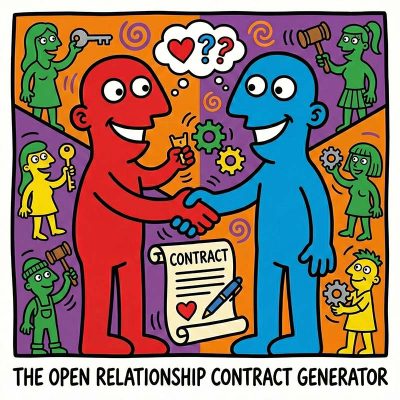
"I thought we agreed" is the sentence that destroys relationships & marriages. Relying on verbal promises when emotions run high is a gamble you cannot afford to lose. Your memory isn't just faulty; it's a liability. Ambiguity is the oxygen that jealousy breathes, turning "freedom" into a minefield of "did I mess up?"
This generator transforms vague permissions into a concrete, signed reality. Stop arguing about what you thought was said and lean on what is written. Secure your boundaries in ink, not hope.
How often should you revisit agreements
There is no one size fits all rule for every couple. The right cadence depends on how long you have been practicing ENM how stable your routine is and how much change is happening in your lives. Here is a practical framework you can adapt:
- New ENM setups In the first month or two after a new arrangement starts set a weekly check in to see how everyone feels and what is working. Frequency can be weekly for the first four weeks then move to bi weekly once things settle.
- Stable open dynamics For couples who have established agreements for several months or more a quarterly review is a solid baseline. You can add a mid quarter check in if a potential change arises.
- Major life changes If you are welcoming a new partner moving to a new city starting a family or changing jobs schedule changes or health concerns revisit sooner than the usual cadence. Even a mid point check in can prevent bigger misalignments later.
- After a renegotiation If you renegotiate a boundary or add a new limit plan a follow up after a couple of weeks to ensure the new rules feel fair and workable for everyone.
- Long distance or complex dynamics Open relationships with long distance or multiple partners often benefit from shorter regular check ins such as every six to eight weeks to stay connected and clear about expectations.
What to revisit during a renegotiation
Not every revisit needs to overhaul every detail. You can focus on the areas that most impact safety and emotional health. Typical topics include:
- Time management and scheduling for assortments of partners.
- Emotional commitments and how you support each other s emotional needs.
- Sexual activity with others and any changes in boundaries around it.
- Sexual health practices and STI testing routines and boundaries around disclosure and testing cadence.
- Jealousy triggers and strategies for handling them respectfully.
- Communication channels and preferred methods for updates or concerns.
- Consent procedures and how quickly someone can pause or stop an activity if needed.
- Impact on a primary relationship or co parenting arrangements if they apply.
How to prepare for a revisit discussion
Preparation helps keep conversations constructive and reduces the chance of rehashing old conflicts. Here is a simple prep plan you can use before any revisit:
- Set a clear goal Decide what you want to achieve in the talk. It could be clarifying a boundary clarifying a schedule or addressing a new dynamic.
- Do personal reflection Spend a few minutes journaling how you feel about the current setup what is working what feels off and what you would like to try next.
- Invite input in advance Ask your partner or partners to think about topics they want to discuss so you both come prepared.
- Choose the right time and place Pick a quiet space free from distractions and avoid times of high stress or fatigue.
- Decide on a structure Use a simple agenda such as what has been good what is not working what would you like to change and how you will implement the change.
- Agree on a pause rule If the conversation becomes too heated decide to pause and resume later. Pauses are not a failure they are a tool for care.
Conversation structure that tends to work
Having a predictable structure can keep a renegotiation focused and fair. Here is a practical template you can use or adapt:
- Open with care Start with a quick check in about each person s current mood and energy. A simple I want to make sure we are all feeling heard today goes a long way.
- Share personal experience Each person describes what has been working well and what has not. Use specific examples without blaming language.
- Propose changes Suggest one or two concrete adjustments rather than a long list. This keeps the conversation manageable and reduces overwhelm.
- Invite feedback Ask the other person to reflect on your proposal and offer their perspective. Listen actively and repeat back what you hear to confirm understanding.
- Agree on next steps Decide on a trial period for any changes and schedule a follow up to review results. Document the agreed changes in writing if possible.
Templates you can use to start a renegotiation
Use these fill in the blank prompts to jump start the conversation. Personalize them to your dynamic and keep the language clear and kind.
- Short opening I want to talk about how our open relationship is working for us right now and whether we want to adjust any boundaries to keep us safe and happy.
- Boundary adjustment prompt I would feel more confident if we changed the boundary around ___ from ___ to ___. How does that feel for you?
- Time management prompt Our current schedule wants to add more time with ___ and we need to figure out how to fit this without making the other relationships or the main partnership feel neglected.
- Safety and health prompt I think we should update our safety practices to include ___ and ___ and agree on how we will implement these changes.
Real world scenarios and cadence decisions
Seeing how cadence plays out in real life helps. Here are common situations and how couples often choose to handle cadence adjustments.
Scenario 1: A new partner enters the orbit
When a new person is introduced into the circle it is common to schedule a check in within the first two weeks to ensure the boundaries feel fair and practical. After the initial phase you might move to a monthly or quarterly cadence depending on how things settle. If the new partner grows into a lasting connection you may want to formalize a long term plan for time and emotional space to prevent any hidden tension.
Scenario 2: A major life event changes time structure
Marriage birth of a child relocation new job or a shift in work schedule can rapidly alter available time. In these cases a rapid re evaluation is prudent. A two month review after the change is a common practice followed by a longer cadence once the new routine feels stable.
Scenario 3: Health or safety concerns emerge
If there are changes in sexual health or mental health or any safety concerns it is wise to revisit immediately. The aim is to protect everyone and maintain trust. After the immediate concerns are addressed you can decide on a follow up cadence that feels comfortable for all involved.
Scenario 4: A long term partner wants more openness or less openness
Shifts in desire can happen slowly or suddenly. The important thing is to acknowledge the shift and explore its impact with empathy. You can set a short trial period for new boundaries and then review the impact as a group. It is not a personal attack to adjust together.
Common pitfalls and must nots
- Avoid secrecy Do not hide changes or drag your feet on renegotiation. Secrets corrode trust faster than most arguments.
- Do not punish honesty If your partner talks about discomfort or jealousy do not respond with blame. Validate their feelings and work together on solutions.
- Avoid pressure tactics Pressure to accept a change can cause resentment. Take time to reflect and revisit if needed.
- Do not rush decisions Rushing can lead to regrettable compromises. Small steps and a clear pause can help.
- Do not confuse renegotiation with rejection It is about adapting to life together not ending what you have.
Documentation and keeping track
Writing things down helps everyone stay on the same page. A simple written record of agreed changes can reduce confusion and serve as a reference. You can use a shared document a private journal or a checklist in a notes app. Key items to document include the date of the change the specific changes agreed upon and any trial period notes. Plan to revisit the written version at the next cadence and update as needed.
Practical tips for healthy renegotiation sessions
- Choose inclusivity Make sure every person who is part of the agreement has a voice in the discussion. No one should be talked over or sidelined.
- Use neutral language Frame requests as needs rather than accusations. For example say I would feel safer if we tried ___ rather than You always ___.
- Separate emotions from decisions Emotions are real and should be acknowledged but decisions should be based on fair boundaries and safety.
- Leave room for testing Treat changes as experiments with a defined trial period. Agree on how you will measure success and what counts as success.
- Celebrate progress When you reach a positive adjustment celebrate what works. Positive reinforcement strengthens trust.
Glossary of useful terms and acronyms
- ENM Ethical non monogamy the umbrella term for relationship styles that involve more than two people with consent.
- Open relationship A configuration in which partners allow sexual or romantic encounters outside the primary bond within set boundaries.
- Polyamory Having multiple loving relationships with the knowledge and consent of everyone involved.
- Boundaries Rules about what is allowed and what is off limits in a relationship.
- Soft limit A boundary that can be negotiated with care but is not absolute.
- Hard limit A boundary that is not negotiable in most circumstances.
- Renegotiation The act of revisiting and updating agreements in response to life changes or new dynamics.
- Consent Ongoing agreement and willingness by all involved to engage in activities and make changes.
- Safety protocol Practices that protect physical health and emotional wellbeing including sexual health measures.
- Cadence The rhythm or frequency of check ins and renegotiations in a relationship.
Frequently asked questions
Is there a best time to start revisiting agreements after a new partner joins
Start with a gentle check in within the first two weeks. Use this as a chance to observe how things feel and to address any edge cases or concerns. After that you can decide on a regular cadence that works for your group.
What if one person feels unsure about changes while others are eager
Honor the concern and slow down. You can propose a staged approach where the change is implemented on a trial basis with a clear end date and a follow up to decide on next steps. This keeps the door open while respecting worries.
Should we have the same cadence for all topics
Not necessarily. Some topics like safety and health are best revisited more often. Personal boundaries and emotional needs may need a different cadence for different people. Find a cadence that feels fair and flexible for your group.
How do we handle persistent jealousy during a renegotiation
Acknowledge jealousy as a real signal and not an attack. Use it as a trigger to revisit boundaries and ensure emotional support exists. Consider adding structured check ins after particular events that tend to trigger jealousy before emotions run high.
Can we renegotiate without hurting trust
Yes. Approach renegotiation with transparency and a collaborative mindset. Focus on shared goals and reaffirm your care for each other. Keep language calm and use evidence from recent experiences to explain why a change feels necessary.
What about writing down the changes
Document the changes or keep a living document that you both update. Written notes help prevent misinterpretations and provide a reference for future conversations.
How long should a renegotiation take
Most renegotiations can be completed in one focused session lasting about an hour. If more remains to refine you can schedule a follow up two weeks later. The key is to avoid rushing and to leave room for reflection.
What if we disagree strongly
Strong disagreements happen in open dynamics. Pause the conversation offer space to think and reconvene with the intention to listen first. If needed bring in a neutral third party such as a relationship coach who respects all involved boundaries.
Is it okay to renegotiate more often than quarterly
Absolutely. If changes are frequent or life feels unsettled you may opt for monthly check ins for a period. The goal is to stay connected and proactive rather than letting drift accumulate.
The freedom of an open relationship sounds incredible, but the logistics can feel like holding a grenade. That spinning "what if" anxiety isn't paranoia, it’s your survival instinct warning you that your bond is exposed. "Just seeing what happens" is the fastest way to turn a fantasy into a breakup.
The Essential Guide replaces chaos with discipline. We give you the blueprints, jealousy protocols, and repair scripts needed to explore the edge without falling off. Don't guess. Secure your foundation first.
The world of non-monogamy is a maze of confusing labels. Trying to be "Polyamorous" when your heart actually needs "Swinging" isn't just a vocabulary error; it’s a recipe for misery.
You can't build a stable home on a foundation that doesn't fit your psychology. This tool analyzes your emotional bandwidth and jealousy triggers to design the exact structure you need. Stop trying to squeeze into a box that doesn't fit. Build a relationship that actually feels like home.
Opening up feels exciting, but if you aren't reading from the same script, you're writing a tragedy. The disconnect between "I want freedom" and "I want safety" is where hearts break. This isn't just a quiz; it’s a synchronization engine.
We identify the silent gaps in your desires—from sleepover rules to emotional bandwidth, before they become unbridgeable chasms. Don't wait until the damage is done to find out you were never on the same page. Align your compasses now.
Theory is sexy. Reality is messy. You agreed you could date others, but how does your stomach drop when he takes her to your anniversary spot? Or when she comes home smelling like someone else?
This simulator drags your abstract rules into the harsh light of day. We force you to confront the visceral, gut-wrenching scenarios that actually destroy relationships, before they happen. Test your nervous system in the simulator so you don't crash the car in real life.
The fantasy is endless romance. The reality? It’s a logistical nightmare. Dating isn't just sex; it’s a second job of swiping, spending, and emotional processing that drains your sanity. Underestimating the "admin" of non-monogamy is the fastest way to turn your relationship into a burnout factory where resentment thrives.
This calculator forces you to confront the brutal math of your time, energy, and wallet. Can you actually afford this lifestyle, or are you just signing up for exhaustion?
"I thought we agreed" is the sentence that destroys relationships & marriages. Relying on verbal promises when emotions run high is a gamble you cannot afford to lose. Your memory isn't just faulty; it's a liability. Ambiguity is the oxygen that jealousy breathes, turning "freedom" into a minefield of "did I mess up?"
This generator transforms vague permissions into a concrete, signed reality. Stop arguing about what you thought was said and lean on what is written. Secure your boundaries in ink, not hope.
