
How to Start the Conversation About Opening Up

Opening a relationship is a big move and choosing to talk about it with your partner requires care, honesty and a sense of curiosity. This guide is written in a friendly practical voice. It explains what ethical non monogamy means our terms and acronyms we use and the real world steps you can take to have this conversation without turning it into a clash. It is about approaching a potential change with respect for your partner and for your relationship while keeping room for both of you to grow. We speak plainly so you can listen clearly and decide what makes sense for your life story.
Quick Links to Useful Sections
- What opening up means in ethical non monogamy
- Are you ready to open up your relationship
- Getting ready to talk with your partner
- Clarify your own goals
- Think about the boundaries you would feel comfortable with
- Decide on a plan for the talk
- Prepare to listen as well as to share
- Conversation playbook you can use today
- Open with a shared base
- Share your interest with care
- Discuss what openness could look like in your life
- Propose a trial period
- Invite questions and acknowledge fears
- End with a shared next step
- Sample scripts you can adapt
- Script for a partner who is curious but unsure
- Script for a partner who is hesitant or anxious
- Script for a partner who is confident and curious about ENM
- Script for a partner who says no or needs more time
- Boundaries and agreements that help safety and trust
- Jealousy and emotional management
- Realistic scenarios you might face
- Scenario one a long term monogamous couple explores openness
- Scenario two partners with busy careers
- Scenario three partners with existing friendships outside the relationship
- Scenario four couples with children
- Practical tips for success
- Checklist before you step into the conversation
- Frequently asked questions
- Glossary of useful terms and acronyms
What opening up means in ethical non monogamy
Open relationships are a form of ethical non monogamy sometimes shortened to ENM. The word ethical matters because it signals a focus on consent honesty and ongoing communication. An open relationship describes a couple who allows for romantic or sexual connections outside the primary partnership while maintaining a connection between the partners themselves. This can look very different from one couple to the next. Some couples pursue separate dating while others explore polyamory which means emotional connections with more than one person. Still others choose swinging which sometimes emphasizes physical intimacy rather than emotional bonds with outside people. The labels are less important than the agreements a couple makes and the care they take to protect the primary relationship.
Key terms and acronyms you may hear include the following. We explain them so you can use them with confidence.
- ENM Ethical non monogamy the umbrella term for relationships that involve more than two people with consent and clear rules.
- Open relationship A relationship in which partners freely have connections with people outside the couple while keeping the primary bond intact.
- Polyamory The practice of having more than one emotional connection at the same time with the knowledge and consent of everyone involved.
- Boundaries Agreements about what is okay and what is not both emotionally and physically.
- Negotiation The process of discussing desires rules and limits to reach a shared plan.
- Consent A clear yes given freely and without pressure for any act that is discussed or pursued.
- Compersion Feeling joy when a partner experiences happiness with someone else rather than jealousy or envy.
- Jealousy management The ways to recognize and handle feelings that arise when a partner forms outside connections.
- Safer sex practices Agreements about protection testing and honesty to maintain health and trust.
Understanding these terms helps you speak a common language with your partner and remove some of the fear that sticks to conversations about change. The goal is not to win a debate but to explore possibilities and decide together what could work for you both.
Are you ready to open up your relationship
readiness means more than curiosity. It means you can tolerate some uncertainty and you can commit to a process of ongoing dialogue. Here are some signs you might be ready to explore the idea seriously.
- You both feel connected and curious about growing together rather than fearing a breakup.
- You can imagine a future that includes other meaningful connections without feeling ownership over someone else s experiences.
- You have a track record of honest conversations about difficult topics and you have built a base of trust.
- You have common values that support fair treatment of each other and of any outside people who join your lives.
- You have discussed boundaries before in other contexts and you know how to revisit rules when needed.
- You are prepared to slow down if emotions grow intense and you can pause for a check in when needed.
If you find yourself thinking about what could go wrong more than what could go right you are not alone. The reality is many couples feel a spike of fear when they first consider this path. The antidote is a plan a safe space to talk and time to practice listening rather than winning an argument.
The freedom of an open relationship sounds incredible, but the logistics can feel like holding a grenade. That spinning "what if" anxiety isn't paranoia, it’s your survival instinct warning you that your bond is exposed. "Just seeing what happens" is the fastest way to turn a fantasy into a breakup.
The Essential Guide replaces chaos with discipline. We give you the blueprints, jealousy protocols, and repair scripts needed to explore the edge without falling off. Don't guess. Secure your foundation first.

The world of non-monogamy is a maze of confusing labels. Trying to be "Polyamorous" when your heart actually needs "Swinging" isn't just a vocabulary error; it’s a recipe for misery.
You can't build a stable home on a foundation that doesn't fit your psychology. This tool analyzes your emotional bandwidth and jealousy triggers to design the exact structure you need. Stop trying to squeeze into a box that doesn't fit. Build a relationship that actually feels like home.

Opening up feels exciting, but if you aren't reading from the same script, you're writing a tragedy. The disconnect between "I want freedom" and "I want safety" is where hearts break. This isn't just a quiz; it’s a synchronization engine.
We identify the silent gaps in your desires—from sleepover rules to emotional bandwidth, before they become unbridgeable chasms. Don't wait until the damage is done to find out you were never on the same page. Align your compasses now.

Theory is sexy. Reality is messy. You agreed you could date others, but how does your stomach drop when he takes her to your anniversary spot? Or when she comes home smelling like someone else?
This simulator drags your abstract rules into the harsh light of day. We force you to confront the visceral, gut-wrenching scenarios that actually destroy relationships, before they happen. Test your nervous system in the simulator so you don't crash the car in real life.

The fantasy is endless romance. The reality? It’s a logistical nightmare. Dating isn't just sex; it’s a second job of swiping, spending, and emotional processing that drains your sanity. Underestimating the "admin" of non-monogamy is the fastest way to turn your relationship into a burnout factory where resentment thrives.
This calculator forces you to confront the brutal math of your time, energy, and wallet. Can you actually afford this lifestyle, or are you just signing up for exhaustion?
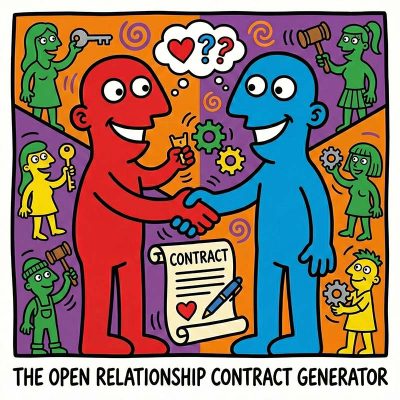
"I thought we agreed" is the sentence that destroys relationships & marriages. Relying on verbal promises when emotions run high is a gamble you cannot afford to lose. Your memory isn't just faulty; it's a liability. Ambiguity is the oxygen that jealousy breathes, turning "freedom" into a minefield of "did I mess up?"
This generator transforms vague permissions into a concrete, signed reality. Stop arguing about what you thought was said and lean on what is written. Secure your boundaries in ink, not hope.
Getting ready to talk with your partner
Preparation reduces nerves and increases the chance of a productive conversation. Here is a practical plan you can follow.
Clarify your own goals
Ask yourself what you want and why. Do you crave more variety inside the relationship or do you want space to pursue a specific connection that excites you? Do you want this to be a slow exploration or a quick test run? Notice your own motivations and write them down in a few clear sentences. When you know your reasons you can explain them without blaming your partner.
Think about the boundaries you would feel comfortable with
Boundaries are not about controlling the other person but about creating safety. List a few non negotiables at least one safety guideline and one emotional boundary. Examples include agreements about condoms and testing frequency or about times when you want privacy and days when you want check ins. The point is not to lock things in place forever but to establish a starting point you can adjust later.
Decide on a plan for the talk
Choose a time and place where you both can be present free from distractions. Make sure you have enough time to talk without rushing to a next obligation. Tell your partner that you want to discuss something important and that you want to hear their thoughts without judgment. Framing the talk as a collaborative process sets the right tone from the start.
Prepare to listen as well as to share
One of the biggest challenges in this conversation is hearing things you might not like. Make a promise to yourself to listen carefully and to reflect what your partner is saying. You can paraphrase what you hear back to them to show you understand and to invite further clarity. Listening builds trust and makes it easier to navigate the tougher parts of the talk.
Conversation playbook you can use today
Use this step by step approach to begin the discussion. It is designed to feel respectful and practical rather than dramatic or pressuring.
Open with a shared base
Start by celebrating what you already have together. A sentence like I love our relationship and I value the way we communicate seems simple but it sets a positive stage. You want to be seen as a partner who cares about the bond you already share rather than someone who wants to run a test on the relationship.
Share your interest with care
Use statements that begin with I to express your feelings. For example I have been thinking about whether exploring outside connections could strengthen our bond. I want your input and I am willing to pause if you feel unsure. The key is to avoid telling your partner what to do. You are inviting a conversation not issuing an order.
Discuss what openness could look like in your life
Describe potential patterns for outside connections. This could involve one date per month with someone new or it might be about more frequent conversations with a source of outside support. Focus on how the plan would affect time together and time apart. Be clear about how you would maintain the primary relationship and how you would handle scheduling conflicts or emergencies.
Propose a trial period
Suggest a limited time frame to test the idea. For example we could try this for six weeks and then review how we both feel. A trial period reduces risk and gives both of you a defined moment to pause and reassess. It also signals that you do not expect everything to be permanent without checking in.
Invite questions and acknowledge fears
Ask your partner what concerns they have and listen carefully. common fears include hurt over losing closeness a sense of betrayal or worries about health and safety. Acknowledge these fears and propose practical steps to address them. You can agree to adjust the plan as needed while staying committed to open dialogue.
End with a shared next step
Finish the conversation with a concrete next step. It could be a schedule for a follow up talk or a revised outline of boundaries and scenarios to discuss. A clear next step keeps momentum while respecting the need for thoughtful consideration.
Sample scripts you can adapt
Scripts help you rehearse and make the talk feel natural. Use them as a starting point and edit to fit your voice and your relationship dynamic. The goal is honest invitation not a pressure filled monologue.
Script for a partner who is curious but unsure
Hi I have been thinking about us and about our future together. I love how connected we are and I want to explore how outside connections could fit into our bond without weakening what we have. I am hoping we can talk about what openness would look like for us. I want to hear how you feel and what would make this feel safe for you. If you are open to exploring this I would like to set a trial period so we can see how it goes and adjust as needed. What are your initial thoughts?
Script for a partner who is hesitant or anxious
Thank you for listening. I know this idea can feel scary and I respect your feelings. I am not asking you to agree right now. I want us to discuss what would make this safe for you. Could we start by outlining boundaries and a minimal test plan maybe one date a month and a check in every two weeks. If at any point you feel uncomfortable we can pause and revisit the plan. Your comfort matters more than anything else and I want us to move forward together if this feels right for you.
Script for a partner who is confident and curious about ENM
I feel hopeful about what openness could bring to us. I want to explore connections in a way that protects our primary relationship and honors both our needs. I would like to talk through boundaries and safety so we both feel secure. Let us design a trial plan that respects time together and space for outside connections. If it works we can keep building on it and if not we step back and regroup. Your thoughts are essential to this process.
Script for a partner who says no or needs more time
I hear you and I appreciate your honesty. This is not a decision we should rush. If now is not right I would like to keep the conversation going with no pressure. We can revisit after we have both had time to reflect. I am willing to work on our connection and to explore ways to grow that do not involve outside partners if that is what you prefer. Thank you for being open with me.
Boundaries and agreements that help safety and trust
Boundaries are the foundation of any healthy ENM conversation. They define what is acceptable and what is not while giving both partners a sense of security. Here are common categories you may discuss along with practical examples.
- When and how outside connections occur Decide whether to limit outside encounters to certain days or limit to specific contexts such as events with friends rather than casual meetups.
- Emotional boundaries Determine how much emotional sharing outside the primary relationship is comfortable and what kind of emotional transparency you expect from each other.
- Sexual boundaries Clarify the kinds of sexual activity allowed outside the relationship whether it includes kissing caressing or sexual contact and whether condoms and testing are required.
- Time management Agree on how to balance time spent with outside partners and time devoted to the primary partner. Include check ins and a plan to adjust as needed.
- Health and safety Establish a plan for STI testing regular testing and communication about health status before pursuing outside connections.
- Communication norms Decide how and when you will share experiences with each other and how you will handle privacy concerns and privacy boundaries.
Remember that boundaries can evolve. The key is regular review and a willingness to adjust as life changes. Boundaries are not a test of loyalty they are a system to keep trust intact while you explore new territory.
Jealousy and emotional management
Jealousy is a natural part of human emotion and it can signal important needs. Acknowledge jealousy when it arises and describe what is happening for you. For example you might say I feel a sting of insecurity when you tell me about your date and I want to understand what I need to feel safe. Then talk about concrete steps that can help like more frequent check ins or a pause in certain activities. Compersion the feeling of joy when your partner experiences happiness with someone else is a goal for many couples and it can be cultivated by celebrating each other s connections and reminding yourselves of your shared history.
Practical techniques to manage jealousy include slowing things down using agreed pauses during the trial period and bringing curiosity to your partner s experiences rather than letting fear drive the conversation. It helps to remind yourself that this is about improving the quality of your relationship not about replacing it.
Realistic scenarios you might face
Every relationship is unique and the day to day reality matters more than any theoretical plan. Here are some realistic scenarios and how you might navigate them with care and respect.
Scenario one a long term monogamous couple explores openness
You have been together for several years and you have built a strong bond. One partner feels drawn to a person who shares a similar lifestyle and values. You open up a conversation by revisiting your shared goals and the everyday routines you want to preserve. You decide to test the waters with a low risk connection and focus on communication during the early stages. You set check ins every two weeks and you agree to pause if the couple experiences strain.
Scenario two partners with busy careers
Time is limited and both partners want to maintain a high level of commitment. You agree to a slow rollout with clear boundaries about how much time is devoted to outside connections and how much time is devoted to you. You prioritize calendars and weekly planning sessions to avoid scheduling conflicts. You also decide on a shared safety plan for outside encounters and you establish a simple code word to pause if one partner needs a moment to process.
Scenario three partners with existing friendships outside the relationship
You already have social circles that include other people. You discuss how to keep friendship boundaries healthy and how to protect your shared dynamic. You might decide to engage outside connections in group settings rather than one on one dates. You also agree to share essential information when a new person enters the circle so everyone remains aligned and informed.
Scenario four couples with children
You want to preserve family life while exploring new connections. You talk about scheduling around family routines and you establish ground rules that the primary relationship stays the central focus and that child care and household responsibilities are not disrupted. You consider how to explain the dynamic to children if it becomes relevant and you decide how you will handle introductions with outside partners in a way that feels safe and age appropriate.
Practical tips for success
Turn the conversation into a process rather than a single moment. Use these practical tips to keep things moving in a positive direction.
- Go slowly and respect the pace your partner sets. Rushing can lead to fear and resistance.
- Keep communication clear and frequent. Short check ins can help you notice changes before they become problems.
- Protect your primary relationship with rituals that reinforce closeness such as regular date nights or shared activities.
- Document agreements in writing so both partners can refer back to them if a memory fades or emotions run high.
- Be prepared to scale back or pause the exploration if the relationship shows signs of strain.
- Seek outside support if needed. A therapist experienced in ethical non monogamy can offer guidance tailored to your situation.
Checklist before you step into the conversation
- Know your goals and be ready to share them calmly
- Have one or two boundaries ready to discuss
- Choose a good time and a private space
- Agree on a trial plan with a clear end point
- Plan to listen first and speak with care
- Prepare health and safety guidelines to discuss
- Decide on how you will revisit the topic and adjust the plan
Frequently asked questions
How do I bring up opening our relationship without pressuring my partner
Lead with care and curiosity. Express that you value the relationship and want to explore possibilities together. Use I statements and invite their thoughts before presenting any specifics. Propose a trial period so nothing feels permanent right away.
What if my partner says no
A no is information not a failure. Thank them for their honesty and ask if you can revisit the topic in some time or if there are changes that would make openness possible in the future. Consider addressing their concerns and perhaps adjusting the plan or pausing for now while keeping the door open for future conversations.
How can we start the conversation if we have not discussed outside connections before
Start with a simple conversation about values and the future you want to build together. Acknowledge that this is new for both of you and that you want to approach it as a joint project. Focus on sharing feelings rather than stating demands and invite your partner to share their thoughts with patience.
What if jealousy shows up early in the process
Jealousy emerges in many couples during the first attempts at openness. Meet the feeling with curiosity rather than judgment. Talk about what it means to you and what would help you feel secure. Often more check in time and more transparency about plans with outside partners reduce the shadow of jealousy over time.
Should we consult a professional to help us talk about ENM
If you feel stuck or if past hurts are making the conversation hard a therapist who specializes in ethical non monogamy can provide tools and guidance. A neutral professional can help you communicate more clearly and design a plan that respects both partners.
What does a healthy ENM plan look like on paper
A healthy plan outlines purpose a clear trial period a specific set of boundaries and a process for reviewing progress. It notes how you will address health safety and how you will handle day to day life such as scheduling time together and with outside partners. It is a living document that you both revise as needed and it remains focused on mutual respect and growth.
Glossary of useful terms and acronyms
- ENM Ethical non monogamy a framework for relationships that involve more than two people with consent and clear agreements.
- Open relationship A relationship structure where partners allow outside connections while keeping the primary bond intact.
- Polyamory The practice of forming multiple emotional romantic bonds with the knowledge and consent of everyone involved.
- Boundaries Agreements about what is acceptable and how partners will protect the relationship.
- Negotiation A collaborative process to create arrangements that work for both partners.
- Consent An enthusiastic yes given freely for any new interaction within the relationship.
- Safer sex practices Agreements about protection testing and honesty to protect health and well being.
- Compersion The feeling of happiness when a partner experiences joy with someone else.
Opening a relationship is a journey not a single event. It takes patience practice and a shared commitment to continue talking even when the topic gets heavy. This guide gives you practical steps scripts and ideas to help you start the conversation in a way that feels respectful and constructive. You deserve a relationship that grows with you and that can include new people and new experiences while keeping the core bond strong.
The freedom of an open relationship sounds incredible, but the logistics can feel like holding a grenade. That spinning "what if" anxiety isn't paranoia, it’s your survival instinct warning you that your bond is exposed. "Just seeing what happens" is the fastest way to turn a fantasy into a breakup.
The Essential Guide replaces chaos with discipline. We give you the blueprints, jealousy protocols, and repair scripts needed to explore the edge without falling off. Don't guess. Secure your foundation first.
The world of non-monogamy is a maze of confusing labels. Trying to be "Polyamorous" when your heart actually needs "Swinging" isn't just a vocabulary error; it’s a recipe for misery.
You can't build a stable home on a foundation that doesn't fit your psychology. This tool analyzes your emotional bandwidth and jealousy triggers to design the exact structure you need. Stop trying to squeeze into a box that doesn't fit. Build a relationship that actually feels like home.
Opening up feels exciting, but if you aren't reading from the same script, you're writing a tragedy. The disconnect between "I want freedom" and "I want safety" is where hearts break. This isn't just a quiz; it’s a synchronization engine.
We identify the silent gaps in your desires—from sleepover rules to emotional bandwidth, before they become unbridgeable chasms. Don't wait until the damage is done to find out you were never on the same page. Align your compasses now.
Theory is sexy. Reality is messy. You agreed you could date others, but how does your stomach drop when he takes her to your anniversary spot? Or when she comes home smelling like someone else?
This simulator drags your abstract rules into the harsh light of day. We force you to confront the visceral, gut-wrenching scenarios that actually destroy relationships, before they happen. Test your nervous system in the simulator so you don't crash the car in real life.
The fantasy is endless romance. The reality? It’s a logistical nightmare. Dating isn't just sex; it’s a second job of swiping, spending, and emotional processing that drains your sanity. Underestimating the "admin" of non-monogamy is the fastest way to turn your relationship into a burnout factory where resentment thrives.
This calculator forces you to confront the brutal math of your time, energy, and wallet. Can you actually afford this lifestyle, or are you just signing up for exhaustion?
"I thought we agreed" is the sentence that destroys relationships & marriages. Relying on verbal promises when emotions run high is a gamble you cannot afford to lose. Your memory isn't just faulty; it's a liability. Ambiguity is the oxygen that jealousy breathes, turning "freedom" into a minefield of "did I mess up?"
This generator transforms vague permissions into a concrete, signed reality. Stop arguing about what you thought was said and lean on what is written. Secure your boundaries in ink, not hope.
