
How to Treat Outside Partners Ethically


Welcome to a practical guide grounded in open relationships and ethical non monogamy. If you are exploring or practicing ENM you want to show respect for everyone involved and you want the dynamic to feel good, not messy or winged by drama. This guide keeps things clear and actionable. We break down concepts, share realistic scenarios and give you tools to handle outside partners with care. Think of this as a playbook from a friend who tells it straight while keeping everyone safe and valued.
Quick Links to Useful Sections
- What ENM and Open Relationships really mean
- Core ethical principles you can apply across all outside partnerships
- How to start with clear and workable negotiated agreements
- The conversation toolkit you will want in your pocket
- Communication strategies that reduce drama and build trust
- Compersion jealousy and emotional skills you will want to develop
- Respecting safety boundaries and safer sex practices
- Time management and scheduling across multiple partners
- Navigating social circles and family dynamics
- Privacy and digital boundaries in ENM
- Common mistakes and how to avoid them
- Practical rituals that support ethical ENM practice
- Realistic scenarios and how to handle them ethically
- Scenario 1: A new partner is introduced to your core relationship gradually
- Scenario 2: Jealousy appears during a busy period
- Scenario 3: Safe sex concerns arise due to a new partner s health status
- Scenario 4: A boundary is crossed even with good intentions
- Scenario 5: Family or friend circles create tension around ENM disclosures
- A practical glossary of terms and acronyms
- Putting it into practice
- Frequently asked questions
What ENM and Open Relationships really mean
ETHICAL NON MONOGAMY is a broad set of relationship styles where people choose to have romantic or sexual connections with more than one partner at a time with consent and honesty. An open relationship is a common form of ENM where the primary connection stays central while additional connections exist outside that core bond. ENM emphasizes consent, communication and ongoing negotiation rather than rigid rules. It is not about chaos or harm it is about choosing to share love and connection in a way that aligns with everyone involved.
Key terms you will hear include open relationships which describes a broad approach where partners are allowed to connect outside the primary relationship. Polyamory is a form of ENM that involves having multiple loving relationships with the knowledge and consent of all parties. A hierarchical arrangement places a primary partner in a central position while secondary partners exist on the outskirts. A non hierarchical arrangement treats all partners as equally important. Understanding these terms helps you articulate what you want and what you are ready to offer.
In this guide we will explain terms as we use them so you can follow along without guesswork. If you ever see a term that is unclear to you just pause and check the explanation. We explain openly so you never have to guess what someone means.
Core ethical principles you can apply across all outside partnerships
- Consent is ongoing Consent is not a one time checkbox. It is a conversation that continues as feelings and situations change. Revisit agreements when life changes or when someone’s comfort level shifts.
- Respect is non negotiable Treat every person with dignity even when a situation becomes uncomfortable. Respect means listening more than defending a position and prioritizing the wellbeing of everyone involved.
- Honesty builds trust Be transparent about what you want what you do and who you are seeing. When you withhold information trust can quickly erode.
- Transparency reduces fear Share your boundaries and your boundaries in action. When people understand what is allowed and why they feel safer even in uncertain moments.
- Safety is a shared responsibility Both physical safety and emotional safety matter. This includes safe sex practices as well as emotional safety such as how you handle jealousy and hurt feelings.
- Privacy and discretion matter Decide what to share and with whom. Respect others privacy and protect personal information unless all parties agree to share.
- Boundaries are practical tools Boundaries help people know what is comfortable and what is off limits. Boundaries evolve and should be revisited regularly.
- Accountability keeps relationships healthy When a boundary is crossed acknowledge it apologize if needed and take steps to repair trust.
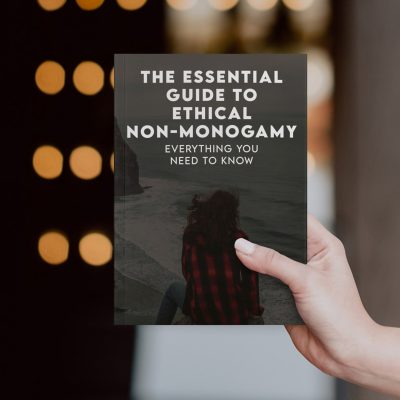
The freedom of an open relationship sounds incredible, but the logistics can feel like holding a grenade. That spinning "what if" anxiety isn't paranoia, it’s your survival instinct warning you that your bond is exposed. "Just seeing what happens" is the fastest way to turn a fantasy into a breakup.
The Essential Guide replaces chaos with discipline. We give you the blueprints, jealousy protocols, and repair scripts needed to explore the edge without falling off. Don't guess. Secure your foundation first.
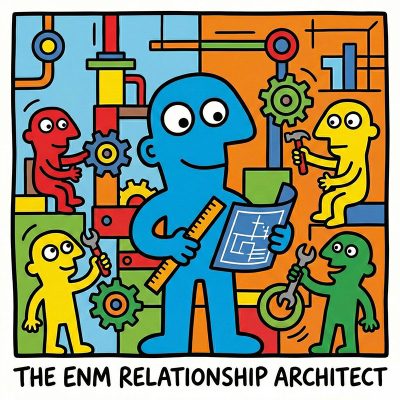
The world of non-monogamy is a maze of confusing labels. Trying to be "Polyamorous" when your heart actually needs "Swinging" isn't just a vocabulary error; it’s a recipe for misery.
You can't build a stable home on a foundation that doesn't fit your psychology. This tool analyzes your emotional bandwidth and jealousy triggers to design the exact structure you need. Stop trying to squeeze into a box that doesn't fit. Build a relationship that actually feels like home.

Opening up feels exciting, but if you aren't reading from the same script, you're writing a tragedy. The disconnect between "I want freedom" and "I want safety" is where hearts break. This isn't just a quiz; it’s a synchronization engine.
We identify the silent gaps in your desires—from sleepover rules to emotional bandwidth, before they become unbridgeable chasms. Don't wait until the damage is done to find out you were never on the same page. Align your compasses now.
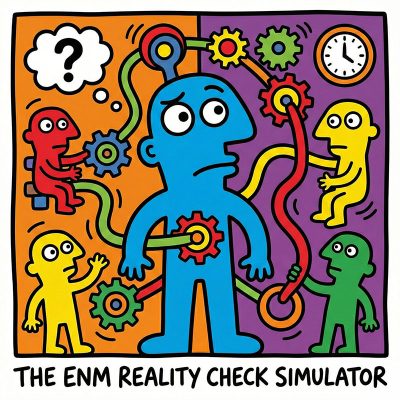
Theory is sexy. Reality is messy. You agreed you could date others, but how does your stomach drop when he takes her to your anniversary spot? Or when she comes home smelling like someone else?
This simulator drags your abstract rules into the harsh light of day. We force you to confront the visceral, gut-wrenching scenarios that actually destroy relationships, before they happen. Test your nervous system in the simulator so you don't crash the car in real life.

The fantasy is endless romance. The reality? It’s a logistical nightmare. Dating isn't just sex; it’s a second job of swiping, spending, and emotional processing that drains your sanity. Underestimating the "admin" of non-monogamy is the fastest way to turn your relationship into a burnout factory where resentment thrives.
This calculator forces you to confront the brutal math of your time, energy, and wallet. Can you actually afford this lifestyle, or are you just signing up for exhaustion?
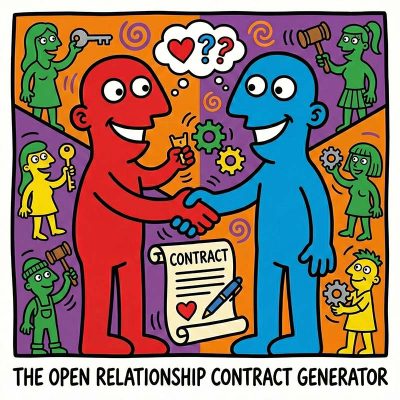
"I thought we agreed" is the sentence that destroys relationships & marriages. Relying on verbal promises when emotions run high is a gamble you cannot afford to lose. Your memory isn't just faulty; it's a liability. Ambiguity is the oxygen that jealousy breathes, turning "freedom" into a minefield of "did I mess up?"
This generator transforms vague permissions into a concrete, signed reality. Stop arguing about what you thought was said and lean on what is written. Secure your boundaries in ink, not hope.
How to start with clear and workable negotiated agreements
The first step is to be honest about what you want and what you are ready to handle. Start with a simple dialogue with your partner or partners about boundaries and expectations. You do not have to agree on everything right away. The goal is to reach a shared understanding that can be revisited as feelings and circumstances change.
Negotiated agreements are living documents. They can be written down or kept as talking points for regular check ins. The important thing is that everyone involved knows what has been agreed and why. Here are some practical approaches to create agreements that work:
- Identify your core boundaries What is absolutely off limits and what is flexible with some caveats. Write these down and review them together.
- Define time boundaries Decide how much time you are comfortable allocating to outside connections and how you balance it with primary relationship needs.
- Agree on safety practices Talk about safer sex routines medical testing boundaries and how to handle potential exposures.
- Set honesty and disclosure expectations Decide what information will be shared who will be told about new partners and how to share news of major changes.
- Plan for conflict resolution Agree on a process to handle disagreements. That can include timeouts mediated conversations or involving a neutral third party like a therapist or a trusted friend.
- Document and revisit Keep notes on what you agreed to and set a reminder to revisit agreements after a set period or after major life changes.
The conversation toolkit you will want in your pocket
Conversations about outside partners can be awkward and emotionally charged. A practical toolkit helps you navigate with respect and clarity. Here is a set of methods you can rely on in almost any discussion about ENM dynamics.
- Active listening Focus on understanding what the other person is saying before you respond. Reflect back what you heard to confirm accuracy.
- I statements Use statements that describe your feelings and needs rather than making accusations. For example I feel anxious when I do not know timelines and I would like more communication about scheduling.
- Specific requests Ask for concrete actions rather than vague hopes. For example I would appreciate a quick text when a plan changes rather than waiting for a big update at the last minute.
- Non violent communication Phrase concerns in a way that avoids blame. Focus on the impact and your needs rather than on the character of others involved.
- Check ins are regular Schedule short recurring conversations to review how things are going. These checks can prevent small issues from piling up into big problems.
Communication strategies that reduce drama and build trust
Clear concise communication is the engine of ethical ENM. When you talk about outside partners you want to be honest but also tactful. Here are practical strategies to keep conversations productive and kind.
- Schedule time for important talks Do not have serious conversations during a moment of stress or distraction. Create a calm space for the talk and turn off competing noises.
- Share feelings not accusations Focus on your inner experience rather than labeling others. Statements like I am feeling overwhelmed help keep dialogue constructive.
- Make space for fear and insecurity Acknowledge your fears and invite others to share theirs. This creates mutual support rather than defensiveness.
- Be consistent with disclosures If you choose a standard for what to share keep it consistent across all partners so no one feels singled out or left out.
- Respect boundaries even when they are painful If someone sets a boundary that affects you you still honor it and look for a way to adjust without blame.
Compersion jealousy and emotional skills you will want to develop
Jealousy is a natural signal not a failing. The goal is not to eliminate jealousy but to understand and manage it so it does not derail connection. Compersion is the feeling of happiness when a partner finds joy with someone else alongside you. It takes practice to grow this feeling. You can cultivate compersion by celebrating wins for your partner and by sharing in the positive energy they experience. When jealousy surfaces try these steps:
- Name the feeling Identify what is triggering the emotion. Is it time, safety, proximity or fear of losing closeness?
- Share the impact Explain how it affects you rather than blaming the other person or the partner involved.
- Ask for what you need Propose concrete actions that can help you feel secure such as more transparency or less scheduling friction for a period of time.
- Practice self care Invest in your own activities and social supports outside the ENM arrangement. This helps you maintain a stable sense of self outside the relationship.
- Reframe with empathy Try to understand what the other person is experiencing. This mindset shift can soften tension and open doors to solutions.
Respecting safety boundaries and safer sex practices
Safety is essential in ENM and it is a shared responsibility. Have clear agreements about sexual health and safety to protect everyone involved. Here are practical steps to keep people safe without turning relationships clinical or cold.
- Regular STI testing Partnered adults should consider routine testing and share results as agreed. Timing and frequency can vary but transparency helps you plan safer practices.
- Contraception and barriers Talk about contraception if pregnancy is a consideration and about barrier methods to reduce risks where pregnancy is not desired.
- SERV safe sex boundaries Agree on what acts are allowed with whom and under what conditions. This includes discussing kissing oral sex vaginal sex and any specific activities that need additional precautions.
- Substance use considerations Substance use can affect consent and judgment. Creators of ENM dynamics often set rules around how substances influence decisions and boundaries.
- Hygiene practices Sharing details about HIV or other infections is not always necessary but if a partner has a health condition that requires caution you should have a plan that keeps everyone comfortable.
The freedom of an open relationship sounds incredible, but the logistics can feel like holding a grenade. That spinning "what if" anxiety isn't paranoia, it’s your survival instinct warning you that your bond is exposed. "Just seeing what happens" is the fastest way to turn a fantasy into a breakup.
The Essential Guide replaces chaos with discipline. We give you the blueprints, jealousy protocols, and repair scripts needed to explore the edge without falling off. Don't guess. Secure your foundation first.
The world of non-monogamy is a maze of confusing labels. Trying to be "Polyamorous" when your heart actually needs "Swinging" isn't just a vocabulary error; it’s a recipe for misery.
You can't build a stable home on a foundation that doesn't fit your psychology. This tool analyzes your emotional bandwidth and jealousy triggers to design the exact structure you need. Stop trying to squeeze into a box that doesn't fit. Build a relationship that actually feels like home.
Opening up feels exciting, but if you aren't reading from the same script, you're writing a tragedy. The disconnect between "I want freedom" and "I want safety" is where hearts break. This isn't just a quiz; it’s a synchronization engine.
We identify the silent gaps in your desires—from sleepover rules to emotional bandwidth, before they become unbridgeable chasms. Don't wait until the damage is done to find out you were never on the same page. Align your compasses now.
Theory is sexy. Reality is messy. You agreed you could date others, but how does your stomach drop when he takes her to your anniversary spot? Or when she comes home smelling like someone else?
This simulator drags your abstract rules into the harsh light of day. We force you to confront the visceral, gut-wrenching scenarios that actually destroy relationships, before they happen. Test your nervous system in the simulator so you don't crash the car in real life.
The fantasy is endless romance. The reality? It’s a logistical nightmare. Dating isn't just sex; it’s a second job of swiping, spending, and emotional processing that drains your sanity. Underestimating the "admin" of non-monogamy is the fastest way to turn your relationship into a burnout factory where resentment thrives.
This calculator forces you to confront the brutal math of your time, energy, and wallet. Can you actually afford this lifestyle, or are you just signing up for exhaustion?
"I thought we agreed" is the sentence that destroys relationships & marriages. Relying on verbal promises when emotions run high is a gamble you cannot afford to lose. Your memory isn't just faulty; it's a liability. Ambiguity is the oxygen that jealousy breathes, turning "freedom" into a minefield of "did I mess up?"
This generator transforms vague permissions into a concrete, signed reality. Stop arguing about what you thought was said and lean on what is written. Secure your boundaries in ink, not hope.
Time management and scheduling across multiple partners
One practical challenge in ENM is fitting time for everyone while maintaining emotional energy for your primary relationship. Here is how to approach scheduling without creating a sense of imbalance.
- Set regular blocks of time Reserve certain days or evenings for specific connections. This predictability helps all involved and reduces last minute chaos.
- Communicate in advance about changes When plans shift share the new information as early as possible so others can adjust their own schedules.
- Use shared calendars when appropriate For non intimate but important updates use calendars or planning apps so changes are visible to everyone who needs to know.
- Balance primary relationship needs first Your core connection often sets the tone for other relationships. Make space for that center before expanding outward.
- Quality over quantity It is better to invest a meaningful date with a partner than to manage many rushed interactions that leave everyone drained.
Navigating social circles and family dynamics
Outside relationships can intersect with circles of friends and family. Honesty and discretion are the two guiding stars here. Decide what feels comfortable to share and with whom. You can talk about ENM in broad terms with close friends who support your growth, while keeping specific partner details private if that is what you decide. When conversations come up in mixed spaces consider these approaches:
- Share only what is appropriate If someone asks for details you can offer a general explanation and steer toward the bigger picture of values safety and consent.
- Respect others boundaries If a friend or family member does not want to hear more about your dating life honor that boundary and pivot to a different topic.
- Prepare talking points Have a simple explanation ready for curious listeners. This helps you avoid getting drawn into defense or debate in mixed company.
Privacy and digital boundaries in ENM
In open relationships privacy matters. You may want to protect certain details while being open about others. Decide together with your partners how much you share publicly about your ENM life and how you manage digital boundaries including social media posts messages and photos. Here are practical tips to maintain respectful privacy while staying authentic.
- Limit oversharing Be mindful of what you post that might reveal details about others who are not present or consent to public exposure.
- Secure communications Use secure channels and be cautious about sharing intimate content. Respect everyone s boundaries around what is allowed to be shared.
- Respect partner privacy Do not reveal what a partner does or does not want publicly without their explicit consent.
Common mistakes and how to avoid them
Ethical ENM is a practice not a slogan. It requires ongoing attention and care. Here are common mistakes and simple ways to prevent them from derailing connection.
- Assuming consent Do not assume that something is okay just because you and a partner previously agreed to a similar scenario. Check in and confirm when situations change.
- Withholding information Hidden details almost always backfire. Share information that affects decisions or safety in a timely way.
- Letting jealousy go unaddressed Do not pretend jealousy is not present. Name it and work through it with your partner and if needed with support from a trusted third party like a therapist.
- Letting a primary relationship fade When you manage multiple partners do not neglect your primary bond. Regular quality time is essential to keep the main relationship strong.
- Moving too quickly Rushing into new connections can create risk and stress for everyone involved. Slow down and build trust gradually.
Practical rituals that support ethical ENM practice
Rituals help you stay aligned with your values. They can be simple or elaborate depending on what feels right for your crew. Here are some rituals you can adopt or adapt.
- Weekly check in A brief conversation to touch base about feelings, boundaries and plans for the upcoming week.
- Jealousy journaling Each person keeps a small note about what triggers jealousy and what helped ease it. Share insights in a calm moment.
- Gratitude rounds Acknowledge and celebrate what is going well in each connection. It helps shift focus toward appreciation rather than fear.
- Consent reminders Use a simple phrase or ritual to remind everyone that consent is ongoing and valued every step of the way.
- Boundary refresh sessions Schedule a time to review boundaries and adjust them as life changes. The goal is clarity not rigidity.
Realistic scenarios and how to handle them ethically
Here are some common situations you may face in an ENM dynamic and practical ways to respond with consideration and fairness. These are framed to demonstrate how to apply the principles covered above in daily life.
Scenario 1: A new partner is introduced to your core relationship gradually
Two partners are open to meeting a new person but you want to ensure everyone feels safe. Start with a joint conversation about expectations. Discuss boundaries around time together and limits on what is shared publicly. Plan a first meeting that is low pressure. After any interaction debrief with your partner to share impressions and address any concerns. If someone feels uncomfortable adjust the pace or pause the introduction until everyone is ready.
Scenario 2: Jealousy appears during a busy period
One partner notices a surge of insecurity when more outside connections become active. Acknowledge the emotion and set a short pause to talk. Revisit the core agreement and adjust temporarily if needed. For example you might agree on a temporary reduction in outside activity while you both invest in the primary relationship. The key is to maintain open lines of communication and avoid blaming the partner involved in the outside connection.
Scenario 3: Safe sex concerns arise due to a new partner s health status
When a partner discloses a health concern or a potential exposure the response should be calm and practical. Review existing safety agreements and discuss testing timelines. If necessary slow down new introductions until clear consent and safety steps are in place. This approach protects everyone while maintaining trust and respect.
Scenario 4: A boundary is crossed even with good intentions
Boundaries can be breached inadvertently. If this happens take responsibility openly and without excuses. Apologize clearly and discuss how you will prevent a repeat. Update your agreements to reflect what was learned in the moment. This kind of repair work strengthens trust rather than weakening it.
Scenario 5: Family or friend circles create tension around ENM disclosures
Decide in advance how much you will share in social settings. If a person presses for details that you are not comfortable sharing you can politely redirect the conversation or set firmer boundaries about what you are willing to discuss. The goal is to protect everyone involved and maintain healthier relationships with the people who are not part of the ENM dynamic.
A practical glossary of terms and acronyms
- ENM Ethical Non Monogamy a broad approach to relationships that involve more than one consensual partner.
- Open relationships A form of ENM where partners allow external connections while maintaining a central bond.
- Polyamory A form of ENM that emphasizes multiple loving relationships with knowledge and consent of all involved.
- Hierarchical A structure in which one partner is considered primary and has a higher priority in decisions and commitments.
- Non hierarchical A structure where all partners have equal standing and influence in decisions and commitments.
- Primary partner The partner who holds central importance in a given arrangement, often with additional expectations about time and priority.
- Secondary partner A partner who is outside the primary relationship but still important to someone involved in ENM.
- NRE New Relationship Energy a surge of excitement and energy that can occur when a new connection begins.
- Compersion The feeling of joy when a partner experiences happiness with someone else.
- Safer sex Practices and behaviors designed to reduce sexual health risks for all involved.
- STI Sexually Transmitted Infection a health condition that can be spread through sexual contact.
- Testing Medical screening for sexually transmitted infections conducted at intervals appropriate for the people involved.
- Boundary A line that defines what is acceptable and what is off limits in a relationship.
- Consent An ongoing agreement to participate in a specific activity with awareness and freedom to opt out at any time.
Putting it into practice
The best way to learn how to treat outside partners ethically is to practice what you preach. Start with small steps and build up to larger ones as you gain confidence. The core idea is simple. Treat every person with respect and ensure that each connection is built on consent clear communication and mutual care. When in doubt return to the core principles for ENM and ask what would be fair and kind to all involved. You will thank yourself later for choosing clarity over confusion.
Frequently asked questions
Below are common questions people ask when they start exploring ENM and open relationships. The answers are practical and grounded in real life situations.
What does ethical non monogamy really mean in practice
It means deciding to have meaningful connections with more than one person while prioritizing consent honesty and respect. It is not about careless conduct or ignoring boundaries. It is about transparent agreements that protect feelings and safety for everyone involved.
How do I know if I am ready for ENM
Ask yourself if you are prepared to communicate openly commit to ongoing consent and manage emotions like jealousy. If you can handle discomfort without harming others and you want to learn how to navigate complexity you may be ready to explore ENM with care.
Can a relationship stay healthy if one person wants ENM and the other does not
Healthy relationships require mutual consent. If one person does not want ENM the relationship can still be healthy if both partners discuss boundaries and decide whether to seek a compromise or redefine the relationship. In some cases professional guidance helps. Honesty about needs is essential here.
What is the best approach to introduce ENM to a partner
Choose a calm moment start with your own perspective and feelings and invite open dialogue. Avoid pressuring and be ready to answer questions. Share practical boundaries and reassure that you care about the primary relationship as well as any additional connections.
How do I handle a breach of boundaries
Acknowledge the breach take responsibility and apologize if needed. Discuss what happened learn from the mistake and update the agreements to prevent a recurrence. This is how trust grows rather than how it falls apart.
Is it okay to keep ENM private from casual social circles
Privacy can be a healthy choice especially if sharing could cause harm or discomfort for those not involved. Decide with your partners what is appropriate to share and respect those boundaries. You can be open with some people and private with others depending on the situation.
How do we handle NRE and maintain honesty
New Relationship Energy is intense and can skew judgments. A practical approach is to discuss feelings early and often. Create space for your partner to talk about what is happening while you also share your own experiences. Keep commitments and check in about safety boundaries to keep momentum moving in a healthy direction.
What should we do about safety and STI testing
Agree on testing timelines and what actions are required if a risk is identified. Use consistent safer sex practices and ensure all parties understand what to do if exposure occurs. Regular communication about health helps you maintain trust and reduce anxiety.
The freedom of an open relationship sounds incredible, but the logistics can feel like holding a grenade. That spinning "what if" anxiety isn't paranoia, it’s your survival instinct warning you that your bond is exposed. "Just seeing what happens" is the fastest way to turn a fantasy into a breakup.
The Essential Guide replaces chaos with discipline. We give you the blueprints, jealousy protocols, and repair scripts needed to explore the edge without falling off. Don't guess. Secure your foundation first.
The world of non-monogamy is a maze of confusing labels. Trying to be "Polyamorous" when your heart actually needs "Swinging" isn't just a vocabulary error; it’s a recipe for misery.
You can't build a stable home on a foundation that doesn't fit your psychology. This tool analyzes your emotional bandwidth and jealousy triggers to design the exact structure you need. Stop trying to squeeze into a box that doesn't fit. Build a relationship that actually feels like home.
Opening up feels exciting, but if you aren't reading from the same script, you're writing a tragedy. The disconnect between "I want freedom" and "I want safety" is where hearts break. This isn't just a quiz; it’s a synchronization engine.
We identify the silent gaps in your desires—from sleepover rules to emotional bandwidth, before they become unbridgeable chasms. Don't wait until the damage is done to find out you were never on the same page. Align your compasses now.
Theory is sexy. Reality is messy. You agreed you could date others, but how does your stomach drop when he takes her to your anniversary spot? Or when she comes home smelling like someone else?
This simulator drags your abstract rules into the harsh light of day. We force you to confront the visceral, gut-wrenching scenarios that actually destroy relationships, before they happen. Test your nervous system in the simulator so you don't crash the car in real life.
The fantasy is endless romance. The reality? It’s a logistical nightmare. Dating isn't just sex; it’s a second job of swiping, spending, and emotional processing that drains your sanity. Underestimating the "admin" of non-monogamy is the fastest way to turn your relationship into a burnout factory where resentment thrives.
This calculator forces you to confront the brutal math of your time, energy, and wallet. Can you actually afford this lifestyle, or are you just signing up for exhaustion?
"I thought we agreed" is the sentence that destroys relationships & marriages. Relying on verbal promises when emotions run high is a gamble you cannot afford to lose. Your memory isn't just faulty; it's a liability. Ambiguity is the oxygen that jealousy breathes, turning "freedom" into a minefield of "did I mess up?"
This generator transforms vague permissions into a concrete, signed reality. Stop arguing about what you thought was said and lean on what is written. Secure your boundaries in ink, not hope.
