
Insecurity and Comparison Traps

Welcome to the open lanes of ethical non monogamy where the scenery can be stunning and the speed bumps a little rough. In this guide we are going to break down insecurity and the sneaky comparison traps that tend to show up when you are navigating an open relationship. We will keep things practical and grounded while explaining key terms so you can read this without a glossary in hand. Think of this as talking through your relationship playlist with a friend who is a little nerdy about emotional health and a lot real about how chaotic dating can feel in the open world. We will cover what insecurity looks like in ENM and how to catch those comparison traps before they derail your progress. We will also offer concrete strategies you can actually use in real life.
Quick Links to Useful Sections
- What insecurity really is in an ENM setting
- Understanding comparison traps in ENM
- Root causes of insecurity in ENM and how to address them
- Attachment style and its impact
- Internalized scripts and cultural narratives
- Communication patterns and how they fuel or ease insecurity
- Self esteem and self care as antidotes
- Practical tools to reduce insecurity and stop comparison traps
- 1. Name it before you react
- 2. Create a jealousy journal
- 3. Practice transparent communication with your partners
- 4. Use time boxing for relationship energy
- 5. Normalize curious exploration without pressure
- 6. Build a robust boundary framework together
- 7. Invest in your own wellbeing and passions
- 8. Practice compersion as a skill set
- 9. Use reflective distance during conversations
- 10. Seek outside support when needed
- Real life scenarios and sample dialogue
- Scenario one I feel left out when my partner dates someone new
- Scenario two I keep comparing myself to my metamour
- Scenario three we need to renegotiate boundaries after a new partner joins
- Common mistakes to avoid in dealing with insecurity in ENM
- Glossary of useful terms and acronyms
- How to negotiate boundaries that reduce insecurity
- Case studies a practical look at insecurity in ENM
- Case study A a couple navigates a new partner
- Case study B metamour communication improves the vibe
- Tips for cultivating a healthier ENM mindset
- The bottom line for insecurity and comparison in ENM
- Frequently asked questions
Before we dive in here is a quick reminder of a few terms you will see a lot in this space. Ethical non monogamy or ENM is a relationship philosophy that focuses on consent, communication and honesty when forming connections with more than one person. An open relationship is a common form of ENM where partners agree that they may pursue romantic or sexual connections outside the primary partnership. A metamour is the partner of your partner and not your direct partner in the current configuration. Compersion is the warm and joyful feeling you experience when you see your partner happy with someone else. Jealousy is an emotional response to perceived threat to your own relationship or attachment. Boundaries are agreed lines that help people feel safe and respected. Time management in ENM means coordinating schedules to balance multiple relationships without neglecting your own wellbeing. If you see a term here you do not know you will find a glossary later in this guide with full explanations.
What insecurity really is in an ENM setting
Insecurity in the open relationship world shows up in many shapes. It can be a whisper in your head about your own value or a loud alarm when you feel you are not getting the attention you deserve. Insecurity is not a personal failing. It is a signal that something in your needs or boundaries may not be fully acknowledged or met. The trick is to listen without letting the signal turn into a full on power outage in your brain. When we think about insecurity in ENM the usual suspects are time and attention, emotional energy, and sexual availability. But the root causes often live deeper in beliefs about self worth, past relationship experiences and cultural scripts about what relationships should look like.
Insecurity does not come with a user manual. It evolves with your experiences. The important thing is to learn to recognize it early, name it clearly and address it with your partners in a way that strengthens trust rather than erodes it. Here is a compact map of how insecurity tends to present in ENM dynamics.
- Fear of replacement You worry that your partner will grow closer to someone else and you will be left behind.
- Scarcity mindset You believe there is a limited pool of love and time and that your share will shrink as others join in.
- Comparison drift You measure your value against someone else such as a metamour or a new partner and feel deficient.
- Visibility anxiety You are anxious about how much your partner talks about other partners or how much others know about your relationship.
- Boundary uncertainty You fear a boundary will be crossed or a preference will be ignored which triggers a reaction in you.
Understanding comparison traps in ENM
Comparison traps are the sneaky cousins of insecurity. They look harmless but they quietly distort your view of reality. In ENM the temptation to compare comes from several sources. You might compare your own relationship history to someone else’s or you may compare your partner's attention across multiple partners. You may also compare dates and sexual experiences which can feel like a scoreboard. It is easy to fall into this trap because social media, friend circles and community narratives can keep throwing people’s “best moments” in your face. It is not that you are failing or defective. It is that your brain is prioritizing speed over nuance. Let us break down how comparison shows up and why it matters in ENM.
- Validation disparity You feel more validated by one partner and less by another which leads to envy.
- Timeline pressure You start mapping your life to someone else’s pace and feel behind even when your own path is meaningful.
- Body and desire comparisons You compare looks or sexual energy which can erode confidence or lead to self critical thinking.
- Experience yardsticks You gauge your own experiences against a metamour's experiences and judge yourself by someone else’s metrics.
Recognizing that comparison traps are a natural byproduct of open dynamics helps shift the approach from blame to strategy. It is not about pretending these feelings do not exist. It is about implementing practices that reduce the harm caused by comparisons and foster healthier self talk and safer communication with partners.
The freedom of an open relationship sounds incredible, but the logistics can feel like holding a grenade. That spinning "what if" anxiety isn't paranoia, it’s your survival instinct warning you that your bond is exposed. "Just seeing what happens" is the fastest way to turn a fantasy into a breakup.
The Essential Guide replaces chaos with discipline. We give you the blueprints, jealousy protocols, and repair scripts needed to explore the edge without falling off. Don't guess. Secure your foundation first.

The world of non-monogamy is a maze of confusing labels. Trying to be "Polyamorous" when your heart actually needs "Swinging" isn't just a vocabulary error; it’s a recipe for misery.
You can't build a stable home on a foundation that doesn't fit your psychology. This tool analyzes your emotional bandwidth and jealousy triggers to design the exact structure you need. Stop trying to squeeze into a box that doesn't fit. Build a relationship that actually feels like home.

Opening up feels exciting, but if you aren't reading from the same script, you're writing a tragedy. The disconnect between "I want freedom" and "I want safety" is where hearts break. This isn't just a quiz; it’s a synchronization engine.
We identify the silent gaps in your desires—from sleepover rules to emotional bandwidth, before they become unbridgeable chasms. Don't wait until the damage is done to find out you were never on the same page. Align your compasses now.
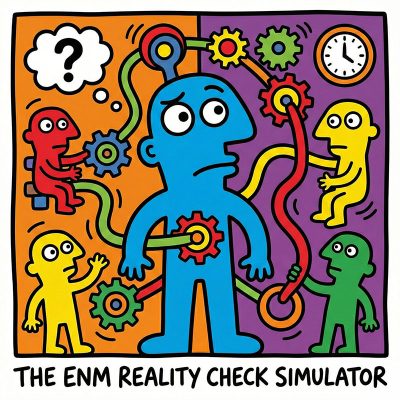
Theory is sexy. Reality is messy. You agreed you could date others, but how does your stomach drop when he takes her to your anniversary spot? Or when she comes home smelling like someone else?
This simulator drags your abstract rules into the harsh light of day. We force you to confront the visceral, gut-wrenching scenarios that actually destroy relationships, before they happen. Test your nervous system in the simulator so you don't crash the car in real life.
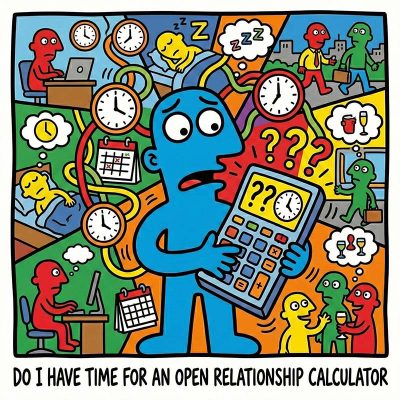
The fantasy is endless romance. The reality? It’s a logistical nightmare. Dating isn't just sex; it’s a second job of swiping, spending, and emotional processing that drains your sanity. Underestimating the "admin" of non-monogamy is the fastest way to turn your relationship into a burnout factory where resentment thrives.
This calculator forces you to confront the brutal math of your time, energy, and wallet. Can you actually afford this lifestyle, or are you just signing up for exhaustion?
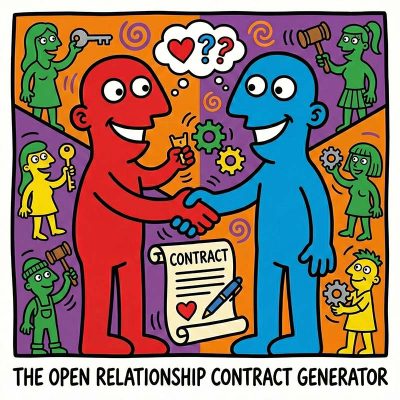
"I thought we agreed" is the sentence that destroys relationships & marriages. Relying on verbal promises when emotions run high is a gamble you cannot afford to lose. Your memory isn't just faulty; it's a liability. Ambiguity is the oxygen that jealousy breathes, turning "freedom" into a minefield of "did I mess up?"
This generator transforms vague permissions into a concrete, signed reality. Stop arguing about what you thought was said and lean on what is written. Secure your boundaries in ink, not hope.
Root causes of insecurity in ENM and how to address them
Some roots are universal and some are unique to ENM. The common roots are attachment styles, past relationship scripts, and the way we were raised to think romance should look. In ENM we also have to manage the added layer of multiple relationships where the information flow is more complex. Here is a closer look at the sources and practical ways to address them.
Attachment style and its impact
Attachment style describes how people tend to connect emotionally with others. People with anxious attachment might crave constant reassurance and fear abandonment more readily. Those with avoidant attachment may withdraw when jealousy or insecurity arises. Secure attachment tends to produce healthier reactions and more flexible boundaries. In ENM it helps to know your own attachment style and discuss it with your partners. The goal is not to change your style overnight but to build routines that meet your needs and give your partners clear consent and predictable space to honor their commitments.
Internalized scripts and cultural narratives
We grow up with stories about monogamy and romance that can feel rigid. When we adopt the idea that every relationship must mirror a flawless romance movie we set ourselves up for frustration in ENM. Rewriting those scripts into flexible, real life expectations is a powerful way to reduce insecurity. This can involve acknowledging that not every feeling has to be resolved immediately and that some discomfort can coexist with healthy relationships.
Communication patterns and how they fuel or ease insecurity
Poor communication or miscommunication is a major amplifier of insecurity. In ENM it is essential to practice open and explicit conversations about boundaries, needs and timelines. This includes how you want to handle talk about other partners, how you want to receive feedback, and what kind of check in cadence you prefer. A lot of insecurity disappears once partners adopt a habit of regular honest dialogue with practical structure.
Self esteem and self care as antidotes
Strong self esteem and consistent self care routines reduce the emotional chaos that insecurity thrives on. Exercise, sleep, nutrition and meaningful solo time all contribute to a more resilient mindset. When you feel solid in your own wellbeing you are less likely to fall into obsessive comparison or fear driven decisions. Self trust grows and that makes it easier to negotiate boundaries with confidence.
Practical tools to reduce insecurity and stop comparison traps
Now we get to the practical side of this. Here are a set of tools you can use in real life to soften insecurity and stop the comparison trap from spiraling. The goal is not perfection but progress and more days where you feel secure and understood.
1. Name it before you react
When you notice a surge of emotion name it out loud or in a journal. Examples include I feel anxious about my place in this relationship or I feel a sting of jealousy when I hear about that date. Naming makes the feeling concrete and easier to discuss. Then take a pause before you respond. A three minute pause can be enough to choose a thoughtful response rather than a reactive one.
2. Create a jealousy journal
Keep a small notebook or digital note where you record when insecurity hits and what triggered it. Include what happened, how you felt and how you responded. At the end of the day or week review entries to identify patterns. This helps you see progress and prevents the emotional momentum from running away with you.
3. Practice transparent communication with your partners
Use a simple structure for conversations about insecurity. Start with a statement of your need or boundary and then invite feedback. For example I am feeling a bit insecure about the amount of time you spend with your new partner. I would like to maintain weekly check ins that include both of us. Is that doable for you? This approach reduces misunderstandings and invites collaborative problem solving rather than blaming.
4. Use time boxing for relationship energy
Time boxing means scheduling dedicated, distraction free time with each partner. It helps prevent one relationship from monopolizing all the emotional energy in your life. A predictable rhythm reduces uncertainty and gives you tangible milestones to celebrate.
5. Normalize curious exploration without pressure
Make room for curiosity about other people without turning it into a competition. You can say things like I am curious about what drew you to that person and what you learned from the experience. That keeps the focus on growth rather than comparison and gives your partner a chance to share without feeling judged.
6. Build a robust boundary framework together
Boundaries are not walls to keep people out but agreements that help everyone feel safe. Discuss what boundaries feel essential for you and be open to revisiting them as the relationship evolves. A flexible boundary framework reduces insecurity because it clarifies expectations and reduces ambiguity.
7. Invest in your own wellbeing and passions
Develop your own circles, hobbies and friendships outside of the romantic sphere. This is not a distraction from your primary relationship. It is a source of energy, confidence and happiness that you bring back into your partnerships. When you are thriving on your own you attract healthier dynamics and you feel less dependent on your partner for emotional validation.
8. Practice compersion as a skill set
Compersion is the ability to feel happiness for a partner's joys and successes even when they involve someone else. It is a muscle that gets stronger with practice. Start small by acknowledging small wins for your partner and celebrate them. Over time compersion becomes a natural response rather than a rare achievement.
9. Use reflective distance during conversations
If a topic is triggering, pause and take a breath before replying. Reflective distance means asking yourself what would be the kindest and most accurate response you can offer. It also means avoiding hot takes that escalate tension and lead to regret later.
10. Seek outside support when needed
Sometimes insecurity sits in deeper places that need a professional perspective. A therapist who understands ENM or polyamory friendly therapy can offer tools to navigate complex emotions and relationship dynamics. There is no shame in asking for help when the load feels heavy.
Real life scenarios and sample dialogue
Examples help. Here are three commonly faced situations with practical scripts you can adapt. Remember these are templates to start a conversation; you should personalize them to reflect your own voice and experiences.
Scenario one I feel left out when my partner dates someone new
Situation description You notice your partner spends a lot of time with a new partner and you feel sidelined even though you know this is allowed by your agreement. You worry about losing time with your partner's attention and you fear you are not a priority anymore.
Starter dialogue Hi I want to check in about how you feel about our new arrangement. I am happy that you are exploring and I also want to make sure I am not feeling left out. Could we set a weekly check in where we talk about both of our updates and decide how to balance time together? I love this partnership and I want us both to feel secure and supported.
What to listen for When your partner responds listen for a willingness to adjust and a reassurance that the relationship with you remains a priority. If that reassurance is missing you can discuss specific changes and timelines to restore balance.
Scenario two I keep comparing myself to my metamour
Situation description You catch yourself thinking about the other person and you start to measure your own worth by their experiences. This can lead to negative self talk and a sense of inadequacy.
Starter dialogue I notice I have been comparing myself to my metamour and that is making me feel less confident. I know we both care about this relationship and I want to work on this with you. Can we talk about ways to celebrate what I bring to our dynamic and also acknowledge what I enjoy about our connection?
What to listen for Look for a partner who validates your feelings while steering the conversation toward collaboration. A good partner will acknowledge your experience and help you craft ways to reinforce your value outside of comparison.
Scenario three we need to renegotiate boundaries after a new partner joins
Situation description Boundaries were set earlier and now a new partner has joined your network. You feel the original boundaries have not been respected and insecurity flares up.
Starter dialogue I want to revisit our boundaries and talk about what has shifted for us with this new connection. I respect your autonomy and I want the boundaries to reflect our current needs. Can we review the language together and update the agreement in a way that keeps us both safe and happy?
What to listen for Look for a collaborative tone and practical updates. The goal is to arrive at an updated agreement that is clear, fair and doable for both partners rather than a victory of one side over the other.
Common mistakes to avoid in dealing with insecurity in ENM
- Blaming your partner for your emotions Emotional honesty matters but blaming can shut down conversation. Focus on describing your needs and inviting collaboration rather than accusing.
- Trying to control others You cannot control another person’s choices. You can control how you react and how you communicate.
- Withholding communication hoping things improve on their own In ENM regular check ins are part of the structure that keeps everyone aligned.
- Equating jealousy with unworthiness Jealousy is a signal not a verdict on your character. Treat it as information to be explored.
- Ignoring your own needs in favor of keeping the peace It is possible to maintain harmony and still advocate for your boundaries and wellbeing.
- Rushing into drama or making rapid decisions Patience with the process helps you stay grounded and make wiser choices.
Glossary of useful terms and acronyms
- ENM Ethical Non Monogamy a relationship approach based on consent honesty and ongoing communication when more than one romantic or sexual connection exists.
- Open relationship A form of ENM where both partners agree that dating or forming connections with others is allowed outside the primary partnership.
- Monogamy A relationship structure where two people commit exclusively to each other. We include it here to contrast with ENM.
- Primary partner The person who has the strongest commitment level or the central place in the relationship structure.
- Metamour The partner of your partner. They are not your direct partner but they affect the relationship atmosphere.
- Compersion The joyful feeling you experience when your partner has happiness with another person.
- Jealousy An emotional response to a potential or actual loss of attention or attachment. It can be a warning signal but it is not a fixed verdict on you or your relationships.
- Boundaries Agreed rules that help people feel safe and respected within ENM dynamics.
- Visibility How much information about your relationships is shared with others including friends and social networks.
- Time boxing A technique to allocate specific time blocks for different relationships to ensure balanced energy and focus.
How to negotiate boundaries that reduce insecurity
Boundaries are the backbone of a healthy ENM arrangement. They should be clear, revisited regularly, and agreed upon by all involved. Here are some practical steps for boundary negotiation that reduce insecurity and avoid power struggles.
- Start with your needs Write down what would make you feel safer calmer and more respected. Be specific about what you want to see and hear.
- Invite your partner to respond Ask open questions that invite collaboration such as What would help you feel more secure or What boundaries could we adjust to honor both of our needs?
- Document the agreement Put the updated boundaries in writing so there is no confusion later. It can be a shared document a note in your calendar or a simple text message that you both can reference.
- Check in regularly Schedule momentum checks every few weeks or after a major shift in your dating life. These quick conversations keep trust high and misunderstandings low.
- Be ready to revisit Boundaries are not set in stone. They should evolve as relationships grow and life changes.
Case studies a practical look at insecurity in ENM
Real life examples help translate theory into actionable steps. Here are two anonymized case studies that illustrate how insecurity and comparison traps can unfold and what effective responses look like.
Case study A a couple navigates a new partner
In this scenario a couple practicing ENM experienced an increase in insecurity after one partner started seeing a new person. They used a structured approach to address their feelings. They began with a private reflective exercise to name their insecurity then scheduled a calm joint conversation. During the talk they focused on concrete requests rather than accusations. They agreed on a weekly triage meeting where both partners could voice concerns and celebrate wins. They also modernized boundaries to include a visible time plan that ensured neither person felt neglected. After two weeks the couple reported feeling more connected and less reactive.
Case study B metamour communication improves the vibe
In this scenario a person realized they were projecting insecurity onto a metamour. They started with a direct but respectful conversation to clarify intentions and shared boundaries. They asked questions about the metamour's experience and acknowledged the value the metamour added to their partner s life. The metamour responded with warmth and a desire to contribute positively to the overall dynamic. The result was less rumor driven stress inside the community and a more confident stance in the original relationship.
Tips for cultivating a healthier ENM mindset
- Shift from scarcity to abundance thinking. Remind yourself that multiple meaningful connections can exist without devaluing any one relationship.
- Use transparent communication as a daily habit not a crisis response. Regular check ins keep insecurities from becoming storms.
- Celebrate your own strengths. Make a list of what you bring to the table and remind yourself of those points often.
- Develop a robust self care routine. Sleep move social time personal hobbies and mindfulness all contribute to emotional balance.
- Practice ethical disclosure about your own feelings to avoid spreading rumors or misinterpreting actions as intentional harm.
The bottom line for insecurity and comparison in ENM
Insecurity and comparison are not villains they are signals that invite you to adjust boundaries recalibrate expectations or invest in your own wellbeing. By recognizing patterns using practical tools and engaging in honest compassionate dialogue you can transform anxiety into clarity and care. ENM is dynamic and that means growth is ongoing not a destination. With the right approach you can build a resilient open relationship that nourishes you both and reduces the noise of insecurity.
Frequently asked questions
What exactly is compersion in ENM and how can I cultivate it
Compersion is the joy you feel when your partner experiences happiness with someone else. It is a skill that grows with time. Start by acknowledging small moments of happiness in your partner s life and celebrate them. Talk about what you appreciate about your partner s other relationships and how those experiences enrich your bond.
How do I tell my partner I feel insecure without starting a fight
Use a calm preface and a non accusatory tone. For example I am feeling insecure and I want to work on it with you. Could we talk about what would help me feel more secure and connected without making it about blame?
Is jealousy always a bad thing in ENM
Jealousy is a natural signal that something matters to you. It is not inherently bad. The goal is to understand what is behind the feeling and address it in a constructive way rather than letting it control your actions.
What is the difference between insecurity and a true boundary violation
Insecurity is an emotional response to perceived risk or threat. A boundary violation is an action that crosses an agreed line. If a line is crossed you should address it directly and adjust the boundary with your partner.
How can I avoid constantly comparing myself to others in ENM
Work on your own internal narrative and remind yourself that every person s journey is different. Keep a running list of your own wins and what you bring to your relationships. Discuss with your partner how you can celebrate your unique connection rather than compare it to others.
How often should we check in about insecurities or boundaries
A regular cadence is best. A short weekly check in plus ad hoc talks when a major change happens keeps communication healthy. The exact frequency depends on your dynamics but aim for consistency rather than crisis driven conversations.
What if I feel insecure when my partner is sharing intimate details with a metamour
Share your feelings without judgment and ask for context. You can say I notice you talk more with your metamour about intimate topics. I feel unsettled by that and would like to understand why and whether we should adjust those conversations.
Are there signs of a healthy ENM dynamic
Yes. Signs include open transparent communication regular boundary review collaborative problem solving mutual respect and steady attention to each partner s wellbeing. When jealousy arises it is acknowledged and addressed rather than hidden or ignored.
How can I protect my mental health while navigating ENM
Prioritize sleep nourishment exercise and solo time. Seek therapy if needed and lean on trusted friends who understand your situation. A strong internal sense of self makes ENM easier to manage and more enjoyable.
The freedom of an open relationship sounds incredible, but the logistics can feel like holding a grenade. That spinning "what if" anxiety isn't paranoia, it’s your survival instinct warning you that your bond is exposed. "Just seeing what happens" is the fastest way to turn a fantasy into a breakup.
The Essential Guide replaces chaos with discipline. We give you the blueprints, jealousy protocols, and repair scripts needed to explore the edge without falling off. Don't guess. Secure your foundation first.
The world of non-monogamy is a maze of confusing labels. Trying to be "Polyamorous" when your heart actually needs "Swinging" isn't just a vocabulary error; it’s a recipe for misery.
You can't build a stable home on a foundation that doesn't fit your psychology. This tool analyzes your emotional bandwidth and jealousy triggers to design the exact structure you need. Stop trying to squeeze into a box that doesn't fit. Build a relationship that actually feels like home.
Opening up feels exciting, but if you aren't reading from the same script, you're writing a tragedy. The disconnect between "I want freedom" and "I want safety" is where hearts break. This isn't just a quiz; it’s a synchronization engine.
We identify the silent gaps in your desires—from sleepover rules to emotional bandwidth, before they become unbridgeable chasms. Don't wait until the damage is done to find out you were never on the same page. Align your compasses now.
Theory is sexy. Reality is messy. You agreed you could date others, but how does your stomach drop when he takes her to your anniversary spot? Or when she comes home smelling like someone else?
This simulator drags your abstract rules into the harsh light of day. We force you to confront the visceral, gut-wrenching scenarios that actually destroy relationships, before they happen. Test your nervous system in the simulator so you don't crash the car in real life.
The fantasy is endless romance. The reality? It’s a logistical nightmare. Dating isn't just sex; it’s a second job of swiping, spending, and emotional processing that drains your sanity. Underestimating the "admin" of non-monogamy is the fastest way to turn your relationship into a burnout factory where resentment thrives.
This calculator forces you to confront the brutal math of your time, energy, and wallet. Can you actually afford this lifestyle, or are you just signing up for exhaustion?
"I thought we agreed" is the sentence that destroys relationships & marriages. Relying on verbal promises when emotions run high is a gamble you cannot afford to lose. Your memory isn't just faulty; it's a liability. Ambiguity is the oxygen that jealousy breathes, turning "freedom" into a minefield of "did I mess up?"
This generator transforms vague permissions into a concrete, signed reality. Stop arguing about what you thought was said and lean on what is written. Secure your boundaries in ink, not hope.
