
Jealousy in Open Relationships


Jealousy is a universal human feeling not a failure of character. In open relationships the stakes can feel higher because love and time are not limited to one person. In this guide we break down jealousy in the open relationship world and give you workable tools to handle it with honesty and humor. We will explain terms and acronyms so everyone can follow along without blank looks. We will give real world scenarios and friendly templates you can steal and adapt. If you are curious about ENM dynamics or you live them every day this guide is for you.
Quick Links to Useful Sections
- Who this guide is for
- What is jealousy
- Jealousy in open relationships and ENM dynamics
- Common triggers and patterns
- Practical strategies to manage jealousy in ENM
- First steps when jealousy arises
- Communication frameworks that help
- Boundaries and negotiated agreements
- Time management and prioritizing connection
- Compersion and reframing jealousy
- Self care and emotional regulation tools
- Practical scripts you can adapt
- When jealousy signals possible boundary drift or consent concerns
- Realistic expectations about jealousy
- Safety and consent in ENM contexts
- Self reflection exercises
- Glossary of useful terms and acronyms
- Frequently asked questions
- Putting it into practice in your open relationship
- Templates you can customize
- Final thoughts on jealousy in ENM
- Accessibility note
Who this guide is for
This guide is for people who are exploring or living in ethical non monogamy changes with open relationships. It is for partners who notice jealousy show up and for people who want to learn how to navigate those feelings so they can stay connected with their primary partner and any other people in their life. It is for folks who want practical steps rather than vague pep talks. If you have never heard of ENM you will still find clear explanations of terms and concepts that show you how to approach jealousy in a constructive way.
What is jealousy
Jealousy is the emotional response that can show up when you feel a threat to what you value. In relationships that fatigue or fear can trigger jealousy. The threat can be real or imagined. Jealousy often comes with a story about what could happen or what someone else has that you want. In an open relationship the threat might be about time attention or sexual energy moving away from you. It might be about fear that a partner will leave or that you are not enough. Jealousy is a signal not a verdict. It tells you something matters and you can learn from it if you listen with care.
Some common terms you may encounter include these explanations which we will expand on as we go. ENM stands for ethical non monogamy. It describes relationship styles that involve more than two consenting adults. Compersion is a positive reaction to a partner s happiness with someone else. It can feel like genuine joy for their good fortune even when you yourself are not directly involved. Boundaries are agreements about what you will and will not do in the relationship. Safer sex practices are agreed upon methods to reduce risk of sexually transmitted infections. Negotiation is the process of discussing needs and reaching a plan that works for all involved.

The freedom of an open relationship sounds incredible, but the logistics can feel like holding a grenade. That spinning "what if" anxiety isn't paranoia, it’s your survival instinct warning you that your bond is exposed. "Just seeing what happens" is the fastest way to turn a fantasy into a breakup.
The Essential Guide replaces chaos with discipline. We give you the blueprints, jealousy protocols, and repair scripts needed to explore the edge without falling off. Don't guess. Secure your foundation first.

The world of non-monogamy is a maze of confusing labels. Trying to be "Polyamorous" when your heart actually needs "Swinging" isn't just a vocabulary error; it’s a recipe for misery.
You can't build a stable home on a foundation that doesn't fit your psychology. This tool analyzes your emotional bandwidth and jealousy triggers to design the exact structure you need. Stop trying to squeeze into a box that doesn't fit. Build a relationship that actually feels like home.

Opening up feels exciting, but if you aren't reading from the same script, you're writing a tragedy. The disconnect between "I want freedom" and "I want safety" is where hearts break. This isn't just a quiz; it’s a synchronization engine.
We identify the silent gaps in your desires—from sleepover rules to emotional bandwidth, before they become unbridgeable chasms. Don't wait until the damage is done to find out you were never on the same page. Align your compasses now.

Theory is sexy. Reality is messy. You agreed you could date others, but how does your stomach drop when he takes her to your anniversary spot? Or when she comes home smelling like someone else?
This simulator drags your abstract rules into the harsh light of day. We force you to confront the visceral, gut-wrenching scenarios that actually destroy relationships, before they happen. Test your nervous system in the simulator so you don't crash the car in real life.
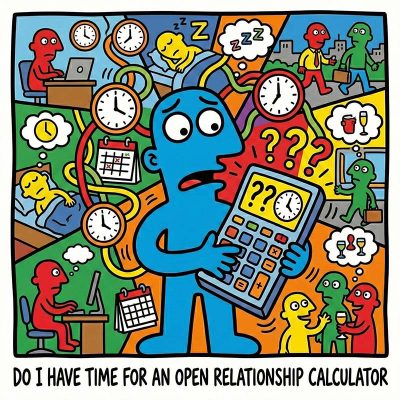
The fantasy is endless romance. The reality? It’s a logistical nightmare. Dating isn't just sex; it’s a second job of swiping, spending, and emotional processing that drains your sanity. Underestimating the "admin" of non-monogamy is the fastest way to turn your relationship into a burnout factory where resentment thrives.
This calculator forces you to confront the brutal math of your time, energy, and wallet. Can you actually afford this lifestyle, or are you just signing up for exhaustion?
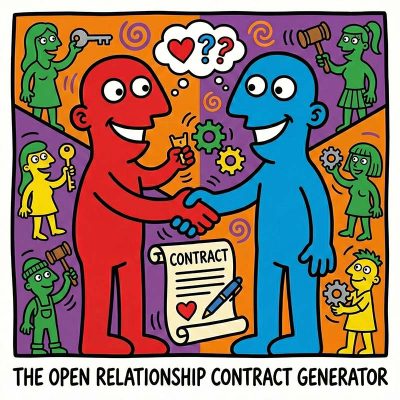
"I thought we agreed" is the sentence that destroys relationships & marriages. Relying on verbal promises when emotions run high is a gamble you cannot afford to lose. Your memory isn't just faulty; it's a liability. Ambiguity is the oxygen that jealousy breathes, turning "freedom" into a minefield of "did I mess up?"
This generator transforms vague permissions into a concrete, signed reality. Stop arguing about what you thought was said and lean on what is written. Secure your boundaries in ink, not hope.
Jealousy in open relationships and ENM dynamics
Open relationships operate on a web of agreements consent and communication. Jealousy can surface when someone feels left out looks at the calendar and wonders where they fit in. The structure of an ENM dynamic is meant to be flexible but it also creates a canvas for complicated emotions. The important thing is to acknowledge jealousy when it appears and to respond with curiosity rather than punishment. Jealousy does not determine who you are it describes a moment you might want to reframe or respond to in a new way. In ENM the people involved frequently use direct conversations to decide what changes would help. It is a shared learning process rather than a fixed rule book.
Common triggers and patterns
There are recurring patterns that tend to show up when jealousy is present in open relationships. Recognizing these triggers can help you intervene early and reduce damage. Some common triggers include a mismatch in time availability. When one partner has less access to time and attention jealousy often grows. Another trigger is unequal emotional energy. If one person feels that their partner is emotionally more connected to someone else jealousy can flare up. A third trigger is a boundary drift. Agreements can become unclear over time and that drift creates insecurity. Third events such as new partner introductions or shifts in sexual or romantic priority can also spark jealousy. The key is to notice these patterns early and to address them with care rather than letting them spin out of control.
Practical strategies to manage jealousy in ENM
First steps when jealousy arises
When jealousy shows up the first move is to acknowledge the feeling without judgment. Name the emotion. For example you might say I notice a tangle of worry and longing right now. Naming the emotion creates distance from the story you might be telling yourself and opens space for a constructive response. The next move is to check reality. Ask yourself what is really happening what do I know for sure and what am I assuming. This checking process helps you avoid acting on fear alone. Finally decide what you want to do next. Do you want to talk to your partner about scheduling or boundaries do you want to journal or practice a grounding exercise or do you want to seek a friend s perspective?
Communication frameworks that help
Clear communication is the backbone of successful ENM. A widely used approach is the I statements method. It starts with I feel followed by a specific impact and then a request. For example I feel anxious when I do not hear from you during a week of dates with others. It makes me worry that I am not important. I would like us to set a check in time each day or every other day so I know where we stand. This approach removes blame and makes needs explicit. You can adapt it to a conversation with your partner or with a group if your dynamics involve more than two people.
Another helpful approach is the DEAR method which stands for Describe Express Acknowledge and Request. Describe what happened and how it affected you. Express how you feel about it. Acknowledge that your partner has their own experience and perspective. Then make a concrete request that would help you move forward. This structure keeps conversations grounded and productive even when heat is high.
Boundaries and negotiated agreements
Boundaries are flexible guardrails that protect emotional safety. They are not punishments they are mutual agreements about what feels doable. In ENM you may use terms like soft limits and hard limits. A soft limit is a boundary you would like to explore with caution for example a desire to slow down dating or to limit certain activities at certain times. A hard limit is non negotiable for example a boundary that a person will not cross such as a specific sexual activity or a location you do not want to visit with a partner. Negotiation means revisiting boundaries as feelings shift and new information becomes available. The goal is to keep trust intact while allowing growth and exploration.
Time management and prioritizing connection
A common trigger is not feeling seen or prioritized. One practical method is to set regular check in times that are scheduled and protected. These check ins can help you align expectations and catch issues early. You can also design a system for prioritizing time with a primary partner and time with other partners without creating a sense of scarcity or competition. For example you might establish a weekly anchor that remains constant and then add flexible dates around that anchor. The key is consistency and transparency about how time is divided.
Compersion and reframing jealousy
Compersion is the experience of joy when your partner enjoys a connection with someone else. Cultivating compersion is a practice that grows with time. One way to invite compersion is to actively notice and celebrate your partner s growth and happiness. Another is to practice imagining their enjoyment rather than fearing its loss. It is not about forcing a feeling but about shifting attention from fear to curiosity and generosity. You can ask yourself what would make my partner happiest and how can I be part of that happiness in a healthy way.
Self care and emotional regulation tools
Jealousy can be intense and exhausting. Self care strategies help you weather the storm. Grounding techniques such as naming five things you can see hear feel and smell in the moment help when emotions run high. A simple breathing exercise such as inhaling for four counts exhale for six counts can calm the nervous system. Journaling after a difficult event can reveal patterns and help you learn from them. Practicing self compassion means telling yourself that it is okay to feel jealousy and that you can handle it with time and care.
Practical scripts you can adapt
Below are a few short scripts you can customize for conversations. They are designed to be direct yet kind and they assume ongoing consent and mutual respect. Script one focuses on scheduling and reassurance. Script two centers on boundaries. Script three expands the conversation to include a new partner. Use these as starting points and tailor them to your relationship details.
Script one for scheduling and reassurance
Hey I want to talk about how we are managing time with other people. I love what we have together and I want to make sure you feel seen every week. Can we set a recurring check in so we can adjust if either of us feels left out? I want to hear how you feel and I will share how I feel too.
Script two about boundaries
I noticed I feel unsettled when we go beyond a certain kind of date with someone else. I would like to discuss soft limits that could help me feel more secure. Could we agree to slow down on introductions to new people or to keep some topics off limits for a while? I want this to be fair and respectful to both of us.
Script three including a new partner
We are considering bringing a new person into the mix. I want to approach this carefully and with honesty. How would you feel about a short trial period with clear boundaries and a plan to revisit the arrangement after a few dates? I want to make sure you are comfortable and that our connection does not get overshadowed by this new dynamic.
When jealousy signals possible boundary drift or consent concerns
Jealousy can indicate that a boundary needs refining or that consent is no longer aligned with the current reality. If you notice persistent jealousy despite talks and adjustments it may be time to revisit the core agreements. It is possible that emotional energy needs have shifted or that one partner is feeling overwhelmed. In such cases do not ignore the feeling. Revisit the agreements discuss what has changed and negotiate new terms that respect both people s needs. Open conversation and a willingness to adjust are the heart of ENM ethics.
Realistic expectations about jealousy
Jealousy does not disappear overnight. It is a signal that you can work with rather than a verdict about your relationships. Some jealousy will fade as you build safety routines and trust. Other times jealousy recurs as new situations arise. The goal is not elimination but manageable coexistence that preserves connection and respect. In ENM the process of learning how to handle jealousy becomes a shared project. It gives you more tools for the next challenge and it builds resilience as a couple or as a polycule a term used for a network of emotionally or romantically connected people.
Safety and consent in ENM contexts
Safety in open relationships is more than physical safety it also means emotional safety. Consent is not a one time checkbox it is ongoing. People need to feel free to pause the arrangements if they change their minds. Regular consent check ins ensure that all parties remain comfortable with the evolving dynamic. Communication should be honest and direct about desires boundaries and risk factors. If STI prevention becomes a concern you should discuss testing frequency safer sex practices and how to disclose new partners or changes in sexual behavior. Respect for consent is essential in all ENM configurations.
Self reflection exercises
Daily or weekly reflection can slow down the heat of jealousy and help you see patterns. A simple exercise is to write a short entry answering these questions. What event triggered jealousy this week. What story did I tell myself about the trigger. What evidence supports or contradicts that story. What adjustment could I propose to reduce similar feelings next time. What do I need from my partner to feel secure. These prompts keep you proactive rather than reactive and they create a record you can review with your partner.
Glossary of useful terms and acronyms
- ENM Ethical non monogamy a term used for relationship styles that involve more than two consenting adults.
- Open relationships A general term for relationship patterns where more than two people have romantic or sexual relationships that are acknowledged by all involved.
- Compersion A positive feeling of joy when a partner enjoys someone else s company or experiences happiness with another person.
- Boundaries Agreements about what is allowed and what is not in a relationship to protect emotional safety.
- Soft limits Boundaries that you are open to exploring with limits that can be adjusted as needed.
- Hard limits Boundaries that you are not willing to cross under any circumstances.
- Negotiation The process of discussing needs and creating a plan that works for all involved.
- Check in A scheduled time to talk about how things are going and whether adjustments are needed.
- Consent Ongoing agreement to engage in a specific activity with clear awareness of who is involved and what is happening.
- Risk reduction Practices designed to minimize physical risk such as sexually transmitted infections including mutual testing and safer sex strategies.
Frequently asked questions
Is jealousy in ENM normal
Yes jealousy is a common experience in ENM for most people at some point. It does not mean that your relationship is broken. It means there is a need to adjust or explore new boundaries or practices. With open conversations and thoughtful negotiation jealousy can become a signal that helps you grow together.
How do I tell my partner that I am jealous without accusing them
Speak from your experience using I statements. Focus on your feelings and the impact rather than accusing the other person. For example I feel anxious when I do not hear from you for several days and I worry about our connection. I would like us to establish a brief daily check in so I know where we stand.
What is compersion and can I feel it while I am jealous
Compersion is the genuine happiness you feel for your partner s good fortune with someone else. It is possible to experience compersion even when jealousy arises. It can grow through practice and by actively acknowledging your partner s joy and by joining in when appropriate or celebrating their growth without pressure.
What if my jealousy is about a new partner becoming more important than me
This feeling can be a sign that you need to revisit priorities and boundaries. Schedule a dedicated conversation to discuss how you both want to structure time and attention. Consider adding more structured check ins or re balancing time to ensure all partners feel valued. It is not about competition but about maintaining a fair and honest arrangement that respects everyone involved.
How do I build trust to reduce jealousy over time
Trust grows when people show up consistently with clear communication. This means timely responses honesty about feelings and following through on commitments. Regularly revisiting boundaries and agreements as life changes also helps. Seeing that your partner acts with care and respect over time strengthens trust and improves how you cope with jealousy.
When should I seek outside help
If jealousy becomes frequent intense and persistent it can be helpful to talk with a therapist who understands ENM. A therapist can provide neutral guidance and help you develop strategies that fit your unique dynamic. It can also be useful to engage with a couples or polyamory friendly counselor who has experience with ENM dynamics.
Putting it into practice in your open relationship
Try this practical three step plan the next time jealousy shows up. Step one name what you feel without judgment. Step two check the facts and separate fears from observable events. Step three schedule a conversation with your partner about adjustments you would welcome. In a moment of calm you can also discuss the possibility of trying a short term experiment for example a pause on new dating for a month or a trial of more frequent check ins. Keep in mind that experiments should be agreed on by all parties and treated as learning opportunities rather than tests of loyalty.
Templates you can customize
Template A about a check in
Hi I want to talk about how we are managing our time with other people. I love what we have and I want to make sure you feel seen every week. Could we set a regular check in time to review how things are going and adjust if needed? I want to hear how you feel and I will share how I feel too.
Template B about a boundary update
I have been thinking about our current boundaries and I would like to adjust them in a small way. I feel anxious when we see others for long periods without contact with me. Could we experiment with short dates followed by a longer check in time or a brief message exchange during the week? I want us to stay connected and respectful to all involved.
Template C about compersion mindset
When you have a great time with someone else I feel a bit of envy at first. I would like to practice noticing your happiness for you and eventually celebrating it with you. Could we choose a moment to acknowledge your joy and then plan a time to connect afterward so I can feel included?
Final thoughts on jealousy in ENM
Jealousy is not something to fear in open relationships. It is a natural signal that can point to areas where trust or communication can improve. By naming emotions listening openly to each other engaging in practical negotiations and building routines that protect emotional safety you can turn jealousy into a catalyst for growth. ENM dynamics are not about removing all discomfort they are about learning to navigate discomfort together with honesty humor and care. With time you can learn to respond with curiosity and to respond with care for your own needs and the needs of the people who matter to you.
Accessibility note
If any of the terms in this guide feel unfamiliar or confusing you can return to the glossary for quick definitions. We believe in clear plain language and real world examples so that every reader can apply these ideas in their life without feeling overwhelmed.
The freedom of an open relationship sounds incredible, but the logistics can feel like holding a grenade. That spinning "what if" anxiety isn't paranoia, it’s your survival instinct warning you that your bond is exposed. "Just seeing what happens" is the fastest way to turn a fantasy into a breakup.
The Essential Guide replaces chaos with discipline. We give you the blueprints, jealousy protocols, and repair scripts needed to explore the edge without falling off. Don't guess. Secure your foundation first.
The world of non-monogamy is a maze of confusing labels. Trying to be "Polyamorous" when your heart actually needs "Swinging" isn't just a vocabulary error; it’s a recipe for misery.
You can't build a stable home on a foundation that doesn't fit your psychology. This tool analyzes your emotional bandwidth and jealousy triggers to design the exact structure you need. Stop trying to squeeze into a box that doesn't fit. Build a relationship that actually feels like home.
Opening up feels exciting, but if you aren't reading from the same script, you're writing a tragedy. The disconnect between "I want freedom" and "I want safety" is where hearts break. This isn't just a quiz; it’s a synchronization engine.
We identify the silent gaps in your desires—from sleepover rules to emotional bandwidth, before they become unbridgeable chasms. Don't wait until the damage is done to find out you were never on the same page. Align your compasses now.
Theory is sexy. Reality is messy. You agreed you could date others, but how does your stomach drop when he takes her to your anniversary spot? Or when she comes home smelling like someone else?
This simulator drags your abstract rules into the harsh light of day. We force you to confront the visceral, gut-wrenching scenarios that actually destroy relationships, before they happen. Test your nervous system in the simulator so you don't crash the car in real life.
The fantasy is endless romance. The reality? It’s a logistical nightmare. Dating isn't just sex; it’s a second job of swiping, spending, and emotional processing that drains your sanity. Underestimating the "admin" of non-monogamy is the fastest way to turn your relationship into a burnout factory where resentment thrives.
This calculator forces you to confront the brutal math of your time, energy, and wallet. Can you actually afford this lifestyle, or are you just signing up for exhaustion?
"I thought we agreed" is the sentence that destroys relationships & marriages. Relying on verbal promises when emotions run high is a gamble you cannot afford to lose. Your memory isn't just faulty; it's a liability. Ambiguity is the oxygen that jealousy breathes, turning "freedom" into a minefield of "did I mess up?"
This generator transforms vague permissions into a concrete, signed reality. Stop arguing about what you thought was said and lean on what is written. Secure your boundaries in ink, not hope.
