
Not Using People as Relationship Tools

Welcome to a blunt and loving guide about ethical nonmonogamy in the open relationships space. This is not about creating more drama or turning people into props. It is about treating every person as a person with consent and autonomy while building honest, respectful connections. We will break down what it means to avoid using people as tools and how to keep your relationships healthy when you are exploring nonmonogamous dynamics. The goal is clear living with intention rather than chasing novelty at the expense of others.
Quick Links to Useful Sections
- What this article covers and why it matters
- Key terms and acronyms you will see
- Why the not using people as relationship tools matters
- What using people as tools looks like in practice
- Healthy foundations for ethical nonmonogamy in the open dynamic
- Consent as an ongoing practice
- Communication strategies that keep people at the center
- Boundaries that protect everyone involved
- Accountability and responsibility
- Real world scenarios with practical responses
- Scenario one a primary partnership with a new connection
- Scenario two a date with a new partner who has a third person involved
- Scenario three a person uses outside connections to resolve relationship conflicts
- Scenario four a partner uses outside connections to boost social status
- Scenario five a newcomer enters the dynamic and feels used
- Practical steps you can take to avoid treating people as tools
- How to talk about not using people as tools with your partner
- Self care and ongoing growth in ethical nonmonogamy
- A practical toolkit for ethical nonmonogamy
- Gaining clarity through reflection
- Glossary of useful terms and acronyms
- Frequently asked questions
- Final notes from your open relationship guide
- Checklist before you step into a new connection
- Would you like more practical templates
What this article covers and why it matters
Open relationships live within the broad umbrella of ethical nonmonogamy or ENM. The idea is that adults can consent to relationships with more than one person at the same time or at different times without hiding behind deceit or manipulation. ENM includes a range of practices from occasional dating while in a primary relationship to more complex arrangements that involve multiple partners. A core value in ENM is respect for the autonomy and feelings of every person involved. When people are treated as tools in a relationship plan the trust becomes local to the plan and not to the people. The result is harm and a cycle of miscommunication. This article focuses on not using people as tools and on building open relationships that respect boundaries, consent, and genuine connection.
Key terms and acronyms you will see
- ENM stands for ethical nonmonogamy. This is an umbrella term for relationship styles that involve more than one romantic or sexual partner with consent and transparency.
- Open relationships are arrangements where partners agree to have sexual and sometimes emotional connections with other people outside their primary relationship.
- Open dynamic is another way to describe an ENM setup where rules are negotiated and kept in focus by all involved.
- NRE stands for new relationship energy. This is a rush of excitement you feel when you start a new connection.
- Compersion is the feeling of joy from a partner's happiness or successes with someone else. It is the opposite of jealousy for many people.
- Boundary is a limit or guideline that protects your own wellbeing and helps others know what you are comfortable with.
- Consent means every person involved agrees to a specific arrangement or activity and can change their mind at any time.
- Agreement is a documented understanding among partners about rules and expectations. An agreement is not a vote or a requirement for someone else to behave in a certain way outside of consent.
- Relationship tool is a term used here to describe when a person is treated as a means to a goal rather than as a person with agency and feelings.
The freedom of an open relationship sounds incredible, but the logistics can feel like holding a grenade. That spinning "what if" anxiety isn't paranoia, it’s your survival instinct warning you that your bond is exposed. "Just seeing what happens" is the fastest way to turn a fantasy into a breakup.
The Essential Guide replaces chaos with discipline. We give you the blueprints, jealousy protocols, and repair scripts needed to explore the edge without falling off. Don't guess. Secure your foundation first.
The world of non-monogamy is a maze of confusing labels. Trying to be "Polyamorous" when your heart actually needs "Swinging" isn't just a vocabulary error; it’s a recipe for misery.
You can't build a stable home on a foundation that doesn't fit your psychology. This tool analyzes your emotional bandwidth and jealousy triggers to design the exact structure you need. Stop trying to squeeze into a box that doesn't fit. Build a relationship that actually feels like home.
Opening up feels exciting, but if you aren't reading from the same script, you're writing a tragedy. The disconnect between "I want freedom" and "I want safety" is where hearts break. This isn't just a quiz; it’s a synchronization engine.
We identify the silent gaps in your desires—from sleepover rules to emotional bandwidth, before they become unbridgeable chasms. Don't wait until the damage is done to find out you were never on the same page. Align your compasses now.
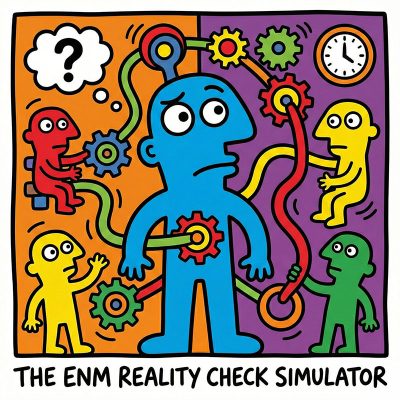
Theory is sexy. Reality is messy. You agreed you could date others, but how does your stomach drop when he takes her to your anniversary spot? Or when she comes home smelling like someone else?
This simulator drags your abstract rules into the harsh light of day. We force you to confront the visceral, gut-wrenching scenarios that actually destroy relationships, before they happen. Test your nervous system in the simulator so you don't crash the car in real life.
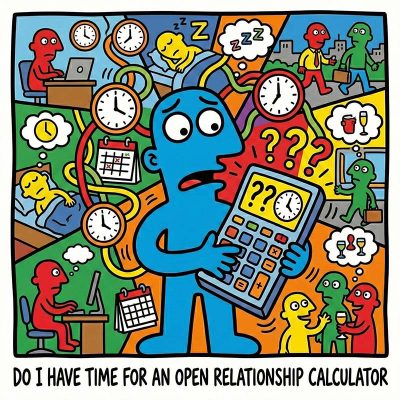
The fantasy is endless romance. The reality? It’s a logistical nightmare. Dating isn't just sex; it’s a second job of swiping, spending, and emotional processing that drains your sanity. Underestimating the "admin" of non-monogamy is the fastest way to turn your relationship into a burnout factory where resentment thrives.
This calculator forces you to confront the brutal math of your time, energy, and wallet. Can you actually afford this lifestyle, or are you just signing up for exhaustion?
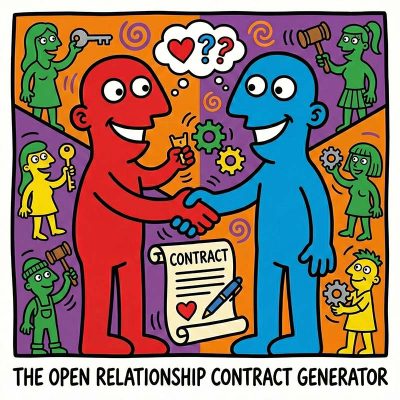
"I thought we agreed" is the sentence that destroys relationships & marriages. Relying on verbal promises when emotions run high is a gamble you cannot afford to lose. Your memory isn't just faulty; it's a liability. Ambiguity is the oxygen that jealousy breathes, turning "freedom" into a minefield of "did I mess up?"
This generator transforms vague permissions into a concrete, signed reality. Stop arguing about what you thought was said and lean on what is written. Secure your boundaries in ink, not hope.
Why the not using people as relationship tools matters
In open relationships the people involved deserve consideration and respect. When someone is used as a tool for another person s needs or for the sake of a plan that does not include their own wellbeing, trust erodes. You might hear phrases like I need more validation from her to feel secure or I am using this arrangement to fill a void. Those patterns can hurt. The people in ENM relationships deserve to be seen as complete humans with boundaries, needs, and desires of their own. The goal is not to minimize someone s feelings or to treat their time as a resource that can be drained. The goal is to create agreements that work for everyone and to approach each connection as a real and meaningful relationship whenever possible.
What using people as tools looks like in practice
- A partner is asked to date someone mainly to fill a sense of rivalry or insecurity rather than to pursue a mutual connection with that person.
- One person uses a dating situation to overrule another partner s boundaries or to bypass honest conversation about needs.
- A person navigates multiple partners to boost social status or to prove a point rather than to explore genuine connection.
- Dating becomes a checklist of tasks that must be completed to satisfy a plan rather than a set of experiences shared with real people.
Healthy foundations for ethical nonmonogamy in the open dynamic
Building a healthy ENM open dynamic starts with a few core practices. The first is consent. The second is clear and ongoing communication. The third is consideration for the emotional and physical safety of all involved. The fourth is a commitment to not treat partners as tools even when the plan seems to demand results. A good open dynamic is not a set of rigid steps. It is a living agreement that grows with time and experience. It is about honoring autonomy and recognizing that each person brings value beyond the role they play in the relationship map.
Consent as an ongoing practice
Consent is not a one time checkbox. It is an ongoing, evolving conversation that happens before an activity and during it if things shift. If someone changes their mind the change should be welcomed and the plan adjusted. The purpose of consent is to ensure that all parties feel safe and respected. This includes discussing sexual activities, emotional boundaries, and time commitments. It also means recognizing that consent can be renegotiated at any time. A person may say yes to a date today and a no to that same activity next week. That is valid and should be honored.
Communication strategies that keep people at the center
Good communication means speaking plainly and listening with care. In ENM open dynamics it helps to have structured conversations. Before you start a new connection discuss your goals and expectations with your primary partner. Check in after a date to see how your feelings are evolving. Use specific language to describe emotions rather than general statements. For example say I feel unsettled when X happens because Y instead of you are being unfair. This makes it easier to address the real issue and to adjust the plan if needed.
Boundaries that protect everyone involved
Boundaries are not fences designed to trap people. They are guides that help people feel safe while exploring. Common boundaries include how much time is spent with others, whether touch or romance is allowed in certain contexts, whether dating apps can be used in a shared space and how information is shared with each other. Boundaries should be negotiable. It is okay to revise them as a relationship grows or as new people enter the fold. Always communicate changes before they take effect to avoid surprises that might feel like a breach of trust.
Accountability and responsibility
Being in an ENM open dynamic means taking responsibility for your actions. If a choice hurts a partner, own up to it and work to repair the harm. If you realize you have breached a boundary the immediate step is to acknowledge the breach and to talk with the affected partner about what happened and how to prevent a repeat. Accountability is about showing up for your people even when it is uncomfortable or inconvenient.
Real world scenarios with practical responses
The following scenarios illustrate how to handle common tensions without treating people as tools. Each scenario ends with a practical response plan you can adapt to your own life. Remember that every open dynamic is unique. The aim is to keep people safe and respected while exploring together.
Scenario one a primary partnership with a new connection
In this scenario a couple with a strong primary bond decides to explore an outside connection. One partner begins to feel pressure to progress the outside relationship quickly in order to prove something to the other partner. The goal for both partners is openness with respect. Let us see how to respond well.
First the couple pauses the current plan to discuss their motivations. The partner who feels pressure to move quickly expresses the concern without blame. The other partner acknowledges the pressure and clarifies that the plan is not a race but a shared exploration. They renegotiate the pace together deciding on a more flexible schedule and on a rule that while the outside connection may develop emotional bonds the primary relationship remains the focus and is prioritized in terms of time and emotional energy.
Next they set check in times to talk about how things feel after each new step. They agree that if the outside connection begins to overshadow the primary bond they will pause and re evaluate. The essence is to keep the outside relationship from becoming a tool to validate insecurity or to force a change in the primary relationship.
Scenario two a date with a new partner who has a third person involved
A pair or trio enters a date with a potential third partner. The two primary partners want to be honest about their hopes while ensuring the third person is invited into the dynamic on their own terms. The plan centers on consent and mutual respect. Before the date the group clarifies what is on the table public flirting what is off limits and how they will handle any unforeseen emotional shifts. After the date they discuss what went well and what did not and adjust any boundaries accordingly. The process keeps everyone involved as a full participant rather than as a means to fill a gap in someone else's life.
Scenario three a person uses outside connections to resolve relationship conflicts
Here someone tries to use a date as a substitute for addressing conflict within the primary relationship. The response is to pause and address the core issue text or call a meeting with both partners. The outside connection is not treated as a fix it tool. Instead it becomes a part of a broader conversation about needs boundaries and mutual growth. If the conflict cannot be resolved the outside relationship is paused or terminated with clear communication about the reasons and the path forward for everyone involved.
Scenario four a partner uses outside connections to boost social status
In this scenario a person uses dating to pressure others or to broadcast success rather than to pursue genuine connection. The response is to set explicit boundaries about what is acceptable in terms of time with others how information is shared about others and how much influence the outside relationship has on the primary relationship. If the behavior continues after clear discussion it may be necessary to revisit the overall agreement or even to pause nonmonogamy until trust can be rebuilt.
Scenario five a newcomer enters the dynamic and feels used
A new partner joins and begins to feel like a tool for experienced partners. The group responds by listening to the newcomer s perspective ensuring they are heard and respected. They explain the rules and re state that consent applies to everyone. The group checks in on the newcomer's comfort level and offers space to renegotiate boundaries or to slow things down if needed. In this scenario the newcomers wellbeing is a priority and the relationship is not exploited to service the needs of others.
Practical steps you can take to avoid treating people as tools
- Build agreements around every new connection including how to handle timing emotional obligations and privacy.
- Treat each person as a person with their own boundaries needs and emotions not as a component of a plan.
- Always confirm consent before taking any action especially when it involves someone outside the primary relationship.
- Institute regular check ins with all involved to catch misalignments early before they become a problem.
- Practice humility and accountability. When things go wrong address them with honesty and a plan to repair the harm.
- Prioritize the primary relationship while recognizing the value of external connections. Do not let fears or insecurities eclipse respect for all partners.
- Educate yourself about consent and integrity in ENM. Read books listen to experts and join supportive communities if you can.
How to talk about not using people as tools with your partner
Clear conversations are essential. Start with a straightforward ask and a space free from interruptions. You might say I want to talk about how we can explore nonmonogamy in a way that respects everyone involved. I want us to share our boundaries and check in about how we feel with each step we take. I value your autonomy and mine and I want to make sure we never treat others as means to an end. Does this sound good to you
Move into specifics from there. Share what you need and invite your partner to share theirs. Validate their feelings and reflect back what you hear. If disagreements arise agree to take a break and revisit the conversation when you both feel calmer. The goal is to keep respect at the center of every decision.
Self care and ongoing growth in ethical nonmonogamy
Self care matters in ENM open relationships. Not using people as tools involves knowing your own needs and maintaining your emotional health. Practice introspection and journaling about your feelings. Seek support from trusted friends or counselors who understand ENM dynamics. If you notice patterns like making others responsible for your emotional state or always needing external validation it may be time to slow down and reassess. Self awareness keeps you from using people as tools and helps you stay connected to authentic relationships.
A practical toolkit for ethical nonmonogamy
- Clear written agreements that are reviewed regularly
- Regular honest conversations about feelings and needs
- A plan for renegotiation when life changes such as new jobs or moves
- Open dialogues about what counts as a healthy boundary for you
- Structured check ins after dates or new connections
- Access to emotional support resources including friends and therapists who understand ENM
- Respect for the autonomy and dignity of everyone involved
Gaining clarity through reflection
Set aside quiet time to think about what you want from an ENM open dynamic and how you want to show up for others. Ask yourself questions such as Am I seeking new connections to grow or to fill a personal void Am I treating my partners as whole people or as pieces of a plan Do I feel supported and heard in the current arrangement If you find that you are leaning toward the tool mindset you can pause the new connection and have a boundary focused talk with your partners. Growth in ENM happens when you remain curious about your own needs while honoring the needs of others.
Glossary of useful terms and acronyms
- ENM Ethical nonmonogamy a framework for relationship choices that involve more than one romantic or sexual connection with consent.
- Open relationships Arrangements that allow partners to form relationships outside their primary partnership with consent.
- NRE New relationship energy the excited phase when new connections form.
- Compersion Joy experienced when a partner is happy with someone else.
- Consent Ongoing voluntary agreement to engage in activities with awareness and freedom to say no at any time.
- Boundary A limit set by a person about what they are willing to do or not do in a relationship.
- Agreement Documented expectations among partners about how the open dynamic will operate.
- Relationship tool A person who is treated as a means to an end rather than a full participant with own agency.
Frequently asked questions
What does it mean to not use people as tools in ENM
It means recognizing that every person is a full human with their own needs and boundaries. You engage with them openly and honestly and you ensure that your actions respect their consent and autonomy. It means decisions are made with all involved voices in the room not with an agenda to advance your own plan at the expense of others.
How do I know if I am crossing a line and starting to treat someone as a tool
You may notice a pattern where someone appears only as a means to fulfill your own needs and you rarely consider their feelings or consent. If you find yourself ignoring boundaries or pressuring someone to fit your plan that is a warning sign. Stop and have a clear conversation about what is happening. Revisit your agreements and make changes to ensure all parties are respected.
What is the best way to handle jealousy in open relationships
Jealousy is a normal feeling in ENM. Acknowledge the emotion without judgment and explore its source. Talk with your partner about what would help you feel secure and supported. Often turning jealousy into a conversation about needs and boundaries is the quickest path to relief. Practicing compersion and focusing on the strength of your primary relationship can also help.
How do I discuss boundaries without triggering conflict
Approach the conversation with curiosity rather than accusation. Use specific examples and describe what you need rather than what you do not want. Ask your partner to share their perspective and listen actively. If tensions rise consider taking a short break and returning to the discussion when both of you feel calm.
Should I tell my new partner about existing relationships before meeting
Yes transparency usually leads to better outcomes. Share essential details about your current agreements what is open and what is off limits. Give space for the new person to express their own boundaries and ask questions. This sets a respectful tone from the start.
What should I do if someone feels like a tool in the dynamic
Take their feelings seriously. Have an open talk with the person who feels used and listen without defensiveness. Acknowledge any harm caused and adjust the plan to protect the person s wellbeing. If needed pause the outside connection until trust is restored.
Is it possible to maintain a healthy ENM dynamic long term
Yes it is possible with ongoing commitment to consent boundaries communication and mutual respect. People evolve and so do relationships. Regular check ins renegotiations and a willingness to adapt are essential to long term health in ENM open dynamics.
Final notes from your open relationship guide
Open relationships are a journey of mutual respect and deliberate choice. They are not a mechanism for using people as tools. The most successful ENM dynamics center on consent honest communication and a shared belief that every person involved deserves care and autonomy. When you approach relationships this way you end up with richer connections and a safer space for everyone to grow.
Checklist before you step into a new connection
- Clarify the purpose of the new connection and how it fits with your existing agreements.
- Confirm consent from all involved and announce boundaries clearly.
- Plan regular check ins to assess how everyone feels and whether any changes are needed.
- Be prepared to pause or renegotiate if someone feels uncomfortable or if a boundary is crossed.
- Respect all partners autonomy and avoid treating any person as a tool in a plan.
Would you like more practical templates
We can provide sample conversation scripts and templates for boundaries and agreements that you can tailor to your situation. These resources are designed to help you communicate clearly and respectfully while staying aligned with ethical nonmonogamy principles.
The freedom of an open relationship sounds incredible, but the logistics can feel like holding a grenade. That spinning "what if" anxiety isn't paranoia, it’s your survival instinct warning you that your bond is exposed. "Just seeing what happens" is the fastest way to turn a fantasy into a breakup.
The Essential Guide replaces chaos with discipline. We give you the blueprints, jealousy protocols, and repair scripts needed to explore the edge without falling off. Don't guess. Secure your foundation first.
The world of non-monogamy is a maze of confusing labels. Trying to be "Polyamorous" when your heart actually needs "Swinging" isn't just a vocabulary error; it’s a recipe for misery.
You can't build a stable home on a foundation that doesn't fit your psychology. This tool analyzes your emotional bandwidth and jealousy triggers to design the exact structure you need. Stop trying to squeeze into a box that doesn't fit. Build a relationship that actually feels like home.
Opening up feels exciting, but if you aren't reading from the same script, you're writing a tragedy. The disconnect between "I want freedom" and "I want safety" is where hearts break. This isn't just a quiz; it’s a synchronization engine.
We identify the silent gaps in your desires—from sleepover rules to emotional bandwidth, before they become unbridgeable chasms. Don't wait until the damage is done to find out you were never on the same page. Align your compasses now.
Theory is sexy. Reality is messy. You agreed you could date others, but how does your stomach drop when he takes her to your anniversary spot? Or when she comes home smelling like someone else?
This simulator drags your abstract rules into the harsh light of day. We force you to confront the visceral, gut-wrenching scenarios that actually destroy relationships, before they happen. Test your nervous system in the simulator so you don't crash the car in real life.
The fantasy is endless romance. The reality? It’s a logistical nightmare. Dating isn't just sex; it’s a second job of swiping, spending, and emotional processing that drains your sanity. Underestimating the "admin" of non-monogamy is the fastest way to turn your relationship into a burnout factory where resentment thrives.
This calculator forces you to confront the brutal math of your time, energy, and wallet. Can you actually afford this lifestyle, or are you just signing up for exhaustion?
"I thought we agreed" is the sentence that destroys relationships & marriages. Relying on verbal promises when emotions run high is a gamble you cannot afford to lose. Your memory isn't just faulty; it's a liability. Ambiguity is the oxygen that jealousy breathes, turning "freedom" into a minefield of "did I mess up?"
This generator transforms vague permissions into a concrete, signed reality. Stop arguing about what you thought was said and lean on what is written. Secure your boundaries in ink, not hope.
