
One Sided Openness and Its Ethics


Welcome to a straight talking deep dive into one sided openness. If you have ever wondered what happens when one partner wants to explore outside the relationship while the other prefers a tighter boundary you are not alone. We will break down what this dynamic looks like in ethical non monogamy also called ENM and we will map out practical ethics that protect everyone involved. Think of this as your friendly experimenter guide who will tell you what to expect what to watch for and how to steer conversations so they stay constructive not combative.
Quick Links to Useful Sections
- What is one sided openness
- A quick definition you can keep handy
- Common patterns you might see
- Why people end up in a one sided openness setup
- Personal growth and curiosity
- Desire for variety without breaking the bond
- Fear of missing out and stagnation
- External pressures and life stages
- The ethics of one sided openness
- Core ethical principles you will want to anchor to
- Consent and capacity
- Transparency and information sharing
- Impact on the primary relationship
- Safety health and risk management
- Terms and acronyms you should know
- Negotiating a healthy one sided openness
- Step one talk about the why not just the rules
- Step two listen with intent
- Step three establish core boundaries together
- Step four draft a transparent disclosure plan
- Step five set a renegotiation schedule
- Step six implement a trial period with a clear exit path
- Real world dynamics and ethical challenges
- Scenario one the open partner feels freedom while the mono partner feels left behind
- Scenario two the mono partner wants to stop openness but fears losing their partner
- Scenario three the outside connections create new emotional dynamics
- Scenario four disagreements turn into arguments
- Practical tips for making one sided openness work
- Real life scenarios and learning to adapt
- Scenario five a scheduled check in reveals a need to pause
- Scenario six discovering a breach of agreement
- Scenario seven evolving needs
- Tools for ongoing ethical practice
- Must know do nots and do not do
- Glossary of useful terms
- Frequently asked questions
What is one sided openness
One sided openness is a relationship dynamic where one partner desires or engages in sexual or romantic exploration outside the primary relationship while the other partner remains monogamous or less open to outside connections. This is not a random rule that you apply and forget. It is a negotiated pattern that sits within the larger umbrella of ethical non monogamy and it relies on clear communication informed consent mutual respect and ongoing renegotiation as life changes.
A quick definition you can keep handy
One sided openness describes a situation where one person in a couple together a triad or a quad seeks outside connections while their partner or partners prefer to limit or avoid such outside connections. The key piece is consent because consent is not a one time thing it is an ongoing process that belongs to everyone involved.
Common patterns you might see
- The open partner pursues casual dating while the other partner stays mostly monogamous with limited exceptions such as occasional emotional connection but no sexual activity outside the relationship.
- One partner may be exploring a new identity or sexuality and the other partner agrees to support but without joining those outside connections themselves.
- There can be a safe space to talk about feelings including jealousy and insecurity with established boundaries that are revisited regularly.
Why people end up in a one sided openness setup
People choose this dynamic for a mix of reasons. It is rarely about mere novelty or rebellion. It is usually about meeting different emotional or physical needs while trying to preserve a core connection. Below are some common drivers explained in plain language.
Personal growth and curiosity
One partner may feel drawn to explore different sexual experiences or relationships to learn more about themselves. They might worry that staying within strict boundaries will keep them from growing or discovering new parts of their identity. Openness can feel like a way to expand the emotional and erotic map they carry into the relationship.
Desire for variety without breaking the bond
A craving for variety can show up as a desire to date or connect with others while still cherishing the main relationship. The challenge is to balance that craving with the commitments and routines that keep the primary bond strong.
Fear of missing out and stagnation
Sometimes the fear that the relationship might become predictable or stale pushes a person toward exploring outside connections. The hope is to reclaim energy or excitement while keeping the official partnership intact.
External pressures and life stages
Different life stages such as education career motherhood or shifts in social circles can influence how people experience openness. External factors often shape how much risk is acceptable and how much privacy is required for both partners to feel safe.
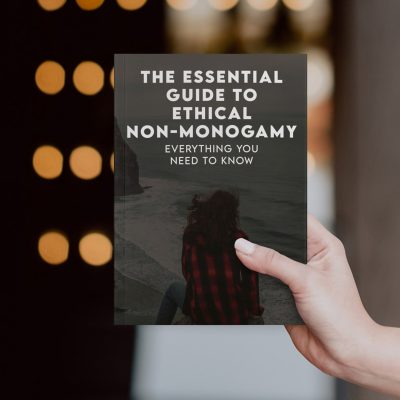
The freedom of an open relationship sounds incredible, but the logistics can feel like holding a grenade. That spinning "what if" anxiety isn't paranoia, it’s your survival instinct warning you that your bond is exposed. "Just seeing what happens" is the fastest way to turn a fantasy into a breakup.
The Essential Guide replaces chaos with discipline. We give you the blueprints, jealousy protocols, and repair scripts needed to explore the edge without falling off. Don't guess. Secure your foundation first.

The world of non-monogamy is a maze of confusing labels. Trying to be "Polyamorous" when your heart actually needs "Swinging" isn't just a vocabulary error; it’s a recipe for misery.
You can't build a stable home on a foundation that doesn't fit your psychology. This tool analyzes your emotional bandwidth and jealousy triggers to design the exact structure you need. Stop trying to squeeze into a box that doesn't fit. Build a relationship that actually feels like home.

Opening up feels exciting, but if you aren't reading from the same script, you're writing a tragedy. The disconnect between "I want freedom" and "I want safety" is where hearts break. This isn't just a quiz; it’s a synchronization engine.
We identify the silent gaps in your desires—from sleepover rules to emotional bandwidth, before they become unbridgeable chasms. Don't wait until the damage is done to find out you were never on the same page. Align your compasses now.
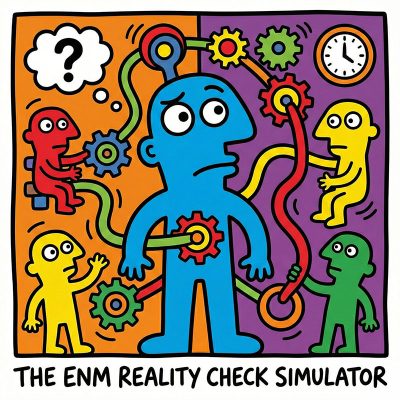
Theory is sexy. Reality is messy. You agreed you could date others, but how does your stomach drop when he takes her to your anniversary spot? Or when she comes home smelling like someone else?
This simulator drags your abstract rules into the harsh light of day. We force you to confront the visceral, gut-wrenching scenarios that actually destroy relationships, before they happen. Test your nervous system in the simulator so you don't crash the car in real life.
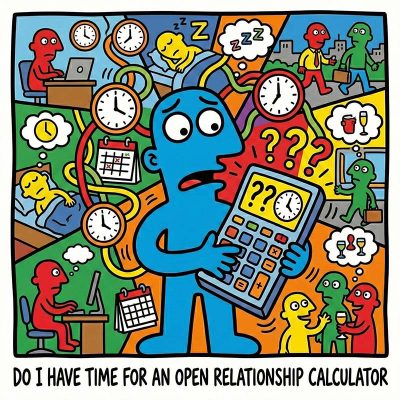
The fantasy is endless romance. The reality? It’s a logistical nightmare. Dating isn't just sex; it’s a second job of swiping, spending, and emotional processing that drains your sanity. Underestimating the "admin" of non-monogamy is the fastest way to turn your relationship into a burnout factory where resentment thrives.
This calculator forces you to confront the brutal math of your time, energy, and wallet. Can you actually afford this lifestyle, or are you just signing up for exhaustion?
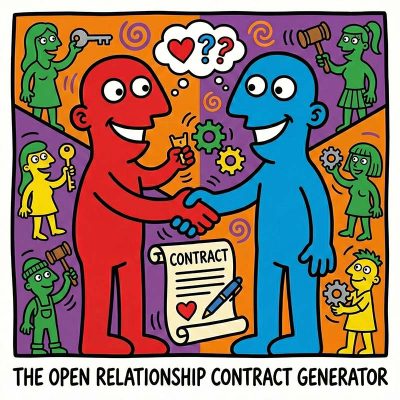
"I thought we agreed" is the sentence that destroys relationships & marriages. Relying on verbal promises when emotions run high is a gamble you cannot afford to lose. Your memory isn't just faulty; it's a liability. Ambiguity is the oxygen that jealousy breathes, turning "freedom" into a minefield of "did I mess up?"
This generator transforms vague permissions into a concrete, signed reality. Stop arguing about what you thought was said and lean on what is written. Secure your boundaries in ink, not hope.
The ethics of one sided openness
Ethics are the backbone of any ENM conversation. When one partner seeks outside connections the ethical questions become practical and personal fast. The aim is to protect the feelings and autonomy of everyone involved while allowing honest exploration. Here is a framework you can use to think through the major ethical issues.
Core ethical principles you will want to anchor to
- Consent must be informed and ongoing. No one should be forced into opening up or staying closed against their will.
- Communication should be honest clear and compassionate. Hard truths should be spoken with care and followed by listening.
- Mutual respect means taking the other person seriously including their boundaries fears and values.
- Fairness means working together to find agreements that recognize both partners needs not just the desires of the person seeking outside connection.
- Health and safety matter. Open relationship practice includes honest conversations about sexual health testing boundaries and risk management.
Consent and capacity
Consent is more than saying yes or no once. It is about checking in choosing together and revisiting choices as the relationship evolves. Some people may feel pressure to approve openness because they fear losing the partner. The ethical move is to slow down talk through concerns and extend the timeline for decision making if that helps both people feel secure.
Transparency and information sharing
Transparency does not mean sharing every detail of every date. It means sharing what matters for trust and safety. Examples include whether safe sex is being practiced what tests have been completed what rules exist around disclosure and what types of interactions will be allowed or disallowed. Some couples choose to share more while others prefer to keep specifics private to protect privacy. The honest approach respects both needs.
Impact on the primary relationship
The main relationship bears the most weight in this dynamic. It benefits from regular check ins about emotional capacity boundaries and expectations. The risk is that the open partner may drift emotionally toward others or devalue the core bond. The ethical path is to keep the primary relationship nourished with rituals rituals such as date nights shared conversations and emotional checking so that the outside connections feel like add ons not replacements.
Safety health and risk management
Before opening up you want to agree on clear health practices including STI testing frequency safer sex discussions and boundaries that reduce the chance of miscommunication about risk. Align on what constitutes acceptable behavior and how you will handle any incident that arises including breakups or renegotiations.
Terms and acronyms you should know
We explain terms so you can talk about this without jargon in a way that makes sense to both partners. Here are the key terms used in open relationships with one sided openness specifically in the realm of ethical non monogamy.
- ENM Ethical non monogamy a broad umbrella term for relationships that involve ethical consented non exclusive partnerships.
- One sided openness A dynamic in which one partner seeks outside connections while the other does not or remains less open.
- Monogamy A relationship form where partners agree to have no romantic or sexual relationships with others outside the couple.
- DTR Define the relationship a conversation to sort out what each person wants and expects moving forward.
- NRE New relationship energy the excitement infatuation and novelty that can accompany new connections.
- Jealousy and compersion Jealousy is a feeling of insecurity or envy in relation to another person. Compersion is the feeling of joy when a partner experiences positive feelings with someone else.
- Boundaries Agreed limits around what is allowed what is not and how information will be shared.
- Disclosure The act of sharing information about outside relationships with the primary partner in a timely and considerate way.
- Riskiest behavior and risk management A set of practices to reduce harm including conversations about safety testing and condom use where appropriate.
Negotiating a healthy one sided openness
Negotiation is not a one off talk it is an ongoing process. You need a structured approach that gives both partners a sense of safety and a plan you can actually follow. Here is a practical six step plan you can adapt to fit your life and your values.
Step one talk about the why not just the rules
Start by explaining the deeper reasons behind the desire for outside connections. Focus on needs not on blame. For example you might say I want to explore dating outside because I am curious about different emotional styles and I want to understand a part of myself better. Use I statements to keep the conversation focused and non accusatory.
Step two listen with intent
This step is about hearing what your partner feels and fears. Do not interrupt. Reflect back what you hear and ask clarifying questions. The goal is empathy not victory.
Step three establish core boundaries together
Agree on a set of boundaries that protect the primary relationship. Boundaries can include what kinds of outside interactions are allowed how much detail is shared and when to pause or renegotiate. Boundaries are not punishments they are guardrails that help both of you feel safe enough to experiment.
Step four draft a transparent disclosure plan
Decide how and when information about outside connections will be shared. For some couples a brief update after a date is enough for others a more detailed discussion is required regularly. The goal is honesty without turning every date into a public performance in your living room.
Step five set a renegotiation schedule
Agree on a cadence for rechecking how the arrangement feels. Life changes and feelings shift. A monthly check in can be perfect for some and a quarterly one for others. Commit to adjusting the plan if things start to feel out of alignment.
Step six implement a trial period with a clear exit path
Give the arrangement a finite trial period. A few months often works. If either partner feels overwhelmed you should have a pre agreed exit strategy or a clear path to pause the open dynamic. The point is not to trap anyone but to learn and adjust together.
Real world dynamics and ethical challenges
No two couples are the same and the path through one sided openness looks different in every relationship. Here are some common situations and ethical considerations that tend to pop up in real life. We will present practical approaches to handle them while staying true to ethical principles.
Scenario one the open partner feels freedom while the mono partner feels left behind
The open partner experiences new energy and freedom while the mono partner feels a sense of isolation or fear of losing their partner. The ethical response is to slow down re carve daily rituals and increase supportive communication. Create shared activities that reinforce the primary bond and schedule dedicated time that is just for the two of you. Consider revisiting boundaries to ensure they protect both partners needs not just the momentary desires of the open partner.
Scenario two the mono partner wants to stop openness but fears losing their partner
Here the risk is coercive tactics disguised as compromise. The ethical path is to acknowledge the fear and validate it while offering time to reflect. Explore if there are ways to reduce risk such as limiting who outside connections can be with or extending stricter boundaries for a defined period. Keep the focus on preserving the core relationship rather than pushing for a quick fix.
Scenario three the outside connections create new emotional dynamics
New relationships can ripple into the primary bond in unexpected ways. It helps to maintain clear disclosure guidelines and ensure emotional boundaries are respected. Make space for all voices in the conversation and never assume that what felt okay in the beginning will stay okay forever without check ins.
Scenario four disagreements turn into arguments
Conflict is normal in any meaningful negotiation. The ethical choice is to pause when emotions run hot and to revisit boundaries when everyone feels calmer. If necessary bring in a neutral mediator a trusted friend or a couples therapist who understands ethical non monogamy and can help you restore a constructive conversation space.
Practical tips for making one sided openness work
Here are actionable tips designed to help you implement this dynamic with less drama and more clarity. Use these tips as a check list that you adapt over time to fit your life and your relationship style.
- Put conversations on the calendar. Do not rely on chance conversations to resolve complex topics. Regular talks protect the relationship from drift and misunderstanding.
- Use a shared document or notebook to track boundaries agreements and feelings. Having a written reference reduces miscommunication after a long day or a fight.
- Practice compassionate communication. When you share a concern speak from your experience and avoid blaming language. Phrase it as I feel this when this happens rather than you always or you never.
- Keep an eye on emotional health. Jealousy is not a failure it is a signal. Treat it as information and address it with care rather than turning it into a weapon.
- Protect your health. Agree on STI testing frequency safe sex practices and honesty about sexual partners when appropriate. Health first keeps relationships honest and safe.
- Respect privacy and boundaries around information you discuss or reveal. Privacy can be a form of respect especially when personal details are sensitive or painful to share.
- Leave room for safety first. If a date seems risky or emotionally heavy consider pausing or renegotiating the arrangement until you both feel secure again.
Real life scenarios and learning to adapt
Let us walk through a few more concrete stories to help you picture how one sided openness could play out in real life. These are not scripts but realistic templates you can adapt to your own lives. The focus is always on consent honesty and kindness.
Scenario five a scheduled check in reveals a need to pause
After six months the couple recognizes that the emotional load is heavier for the mono partner than anticipated. They decide to pause the open aspect for a month or two while maintaining the strong bond they share. During the pause they rebuild daily rituals share feelings more openly and reaffirm their commitment. The pause is a tool not a punishment and both partners agree to revisit the arrangement when ready.
Scenario six discovering a breach of agreement
In this scenario a partner discloses that a boundary was tested without prior discussion. The couple sits down to talk through what happened what emotions were triggered and how to prevent a repeat. They revise the boundary by adding a more explicit rule or adjusting the disclosure expectations. The goal is accountability not guilt and to restore trust through transparent and consistent behavior.
Scenario seven evolving needs
One partner begins to crave deeper connection with outside partners rather than casual encounters. The couple revisits the overall structure noting that the original one sided openness may no longer fit their life. They enter a renegotiation period exploring new boundaries and possibly pivoting toward a more equal openness or returning to a more monogamous stance until new agreements are formed.
Tools for ongoing ethical practice
Ethics in one sided openness is not a box to check it is a living practice. Here are practical tools that help you stay aligned with your values while you navigate outside connections.
- Regular emotional audits where each person shares what feels good what feels challenging and what could be adjusted.
- Partner supported journaling. Keeping a shared journal of feelings can help both partners understand shifts without turning conversations into blame sessions.
- Boundary refresh moments. Every few months revisit the boundaries to see what still serves you both and what should change.
- External relationship boundary map. This is a simple outline listing what kinds of relationships are permissible with who and under what circumstances for safety and fairness.
- Celebrate the primary bond. Build rituals that reinforce your connection a weekly date night a shared hobby a small daily check in can make the difference.
Must know do nots and do not do
These quick reminders help you navigate common traps that break trust or create harm in one sided openness. Keep these in mind as you talk think and negotiate.
- Do not weaponize honesty. Share information with care and focus on your feelings and needs rather than accusations or blame.
- Do not pressure a partner into openness more than they are comfortable with. Coercion is not ethical and it damages trust.
- Do not share intimate details about outside connections if your partner has not agreed to that level of disclosure.
- Do not neglect safety health or respect in the rush to pursue outside connections. Health and respect should guide every decision.
- Do not expect perfection. Jealousy and insecurity are normal human experiences that require patience work and time to resolve.
Glossary of useful terms
- Ethical non monogamy a framework where all people involved consent to non exclusive relationships and talk openly about boundaries.
- One sided openness a dynamic in which one partner is open to outside connections while the other remains more closed or closed entirely.
- Monogamy a relationship norm where partners commit to not pursuing sexual or romantic connections outside the primary relationship.
- Define the relationship a conversation to clearly state what each person expects and how the relationship should proceed.
- New relationship energy a burst of excitement when new outside connections begin which can influence emotions and decisions.
- Jealousy a natural feeling of insecurity or fear about losing someone to another person.
- Compersion the feeling of joy when your partner experiences happiness or pleasure with someone else.
- Boundaries agreed limits about what is allowed what is not and how information is shared.
- Disclosure transparency about the existence of outside connections and some details as agreed by all involved.
- Safer sex practices strategies that reduce the risk of sexually transmitted infections and unwanted pregnancies.
- renegotiation the process of revisiting and potentially changing the terms of the arrangement as life changes.
Frequently asked questions
What exactly counts as one sided openness
One sided openness means one partner seeks outside connections while the other partner holds a more monogamous stance or has stricter boundaries. It is defined by mutual consent and ongoing renegotiation rather than a fixed rule set.
How do we start the conversation about one sided openness
Begin with a calm honest statement about your curiosity or need. Use I statements and avoid blaming language. Give your partner time to respond and listen without interrupting. Set a plan for follow up conversations and possible trial periods where you can test the arrangement safely.
What if my partner is not interested in openness
Respect their position and avoid pressure. If the relationship matters to both of you it may be worth exploring a compromise such as delayed openness a more limited scope or a different kind of non monogamy that feels better suited to both people. If there is a mismatch you may want to seek support from a couples therapist who understands ethical non monogamy.
How much should we share about outside connections
That depends on your agreed plan. Some couples prefer to share only high level information after a date while others want a detailed debrief. The key is that the level of disclosure does not undermine trust and is manageable for everyone involved.
How do we handle jealousy in a one sided setup
Jealousy is a signal not a verdict. Acknowledge the feeling name it describe the trigger and discuss how to reduce the risk of it recurring. Use empathy empathy check ins and practical changes to boundaries or timing to help the feeling pass.
Is one sided openness ethical if it hurts the mono partner
Ethics require balancing needs. If the arrangement hurts the mono partner in a persistent way the ethical choice is to pause renegotiate or consider returning to monogamy until both people feel safe again. Ethics are not about winning they are about care and respect for everyone involved.
Can openness be completely fair for both partners
Fairness is a moving target in practice. It often means ongoing conversation about what each person wants and how the couple can accommodate those needs without coercion. It may involve adjusting boundaries or redefining what openness means in your life.
The freedom of an open relationship sounds incredible, but the logistics can feel like holding a grenade. That spinning "what if" anxiety isn't paranoia, it’s your survival instinct warning you that your bond is exposed. "Just seeing what happens" is the fastest way to turn a fantasy into a breakup.
The Essential Guide replaces chaos with discipline. We give you the blueprints, jealousy protocols, and repair scripts needed to explore the edge without falling off. Don't guess. Secure your foundation first.
The world of non-monogamy is a maze of confusing labels. Trying to be "Polyamorous" when your heart actually needs "Swinging" isn't just a vocabulary error; it’s a recipe for misery.
You can't build a stable home on a foundation that doesn't fit your psychology. This tool analyzes your emotional bandwidth and jealousy triggers to design the exact structure you need. Stop trying to squeeze into a box that doesn't fit. Build a relationship that actually feels like home.
Opening up feels exciting, but if you aren't reading from the same script, you're writing a tragedy. The disconnect between "I want freedom" and "I want safety" is where hearts break. This isn't just a quiz; it’s a synchronization engine.
We identify the silent gaps in your desires—from sleepover rules to emotional bandwidth, before they become unbridgeable chasms. Don't wait until the damage is done to find out you were never on the same page. Align your compasses now.
Theory is sexy. Reality is messy. You agreed you could date others, but how does your stomach drop when he takes her to your anniversary spot? Or when she comes home smelling like someone else?
This simulator drags your abstract rules into the harsh light of day. We force you to confront the visceral, gut-wrenching scenarios that actually destroy relationships, before they happen. Test your nervous system in the simulator so you don't crash the car in real life.
The fantasy is endless romance. The reality? It’s a logistical nightmare. Dating isn't just sex; it’s a second job of swiping, spending, and emotional processing that drains your sanity. Underestimating the "admin" of non-monogamy is the fastest way to turn your relationship into a burnout factory where resentment thrives.
This calculator forces you to confront the brutal math of your time, energy, and wallet. Can you actually afford this lifestyle, or are you just signing up for exhaustion?
"I thought we agreed" is the sentence that destroys relationships & marriages. Relying on verbal promises when emotions run high is a gamble you cannot afford to lose. Your memory isn't just faulty; it's a liability. Ambiguity is the oxygen that jealousy breathes, turning "freedom" into a minefield of "did I mess up?"
This generator transforms vague permissions into a concrete, signed reality. Stop arguing about what you thought was said and lean on what is written. Secure your boundaries in ink, not hope.
