
Open Relationships Versus Monogamish Arrangements

Welcome to a straight talking guide from your experimental friend at The Monogamy Experiment. If you have ever wondered how open relationships stack up against monogamish arrangements in the world of ethical non monogamy or ENM, you are in the right place. We keep it real, break down the jargon, and give you practical steps you can actually use without turning dating into a full time job. Let us walk you through what these terms mean, how the dynamics differ in practice, and how you can decide what fits you and your partner or partners best.
Quick Links to Useful Sections
- What this guide covers
- Key terms explained
- Open relationships and monogamish arrangements defined
- Open relationship at a glance
- Monogamish at a glance
- Core differences between open relationships and monogamish setups
- Relationship scope and non exclusivity
- Communication patterns and decision making
- Boundaries and rules
- Jealousy and compersion management
- Time management and energy budgeting
- Realistic scenarios you might encounter
- Scenario 1 What happens when the primary couple wants to explore together
- Scenario 2 Solo exploration as part of an open relationship
- Scenario 3 Monogamish with occasional non exclusive experiences
- Scenario 4 Handling friction when a new partner creates tension
- Pros and cons at a glance
- Open relationship advantages
- Open relationship challenges
- Monogamish layout advantages
- Monogamish layout challenges
- Which path fits you
- Practical steps to start
- Steps to discuss with your partner or partners
- Negotiation tips you can actually use
- Practical safety and health considerations
- Common myths about open relationships and monogamish arrangements
- Glossary of useful terms and acronyms
- Frequently asked questions
- Case studies you can relate to
- Case Study A Open relationship with strong communication
- Case Study B Monogamish with a controlled scope
- Case Study C A switch from open to monogamish after a life change
- Checklist before you step into a new dynamic
- Final notes from The Monogamy Experiment
What this guide covers
This deep dive explains two popular ENM models open relationships and monogamish arrangements. We cover definitions, core differences, boundary work, communication strategies, common pitfalls, realistic scenarios, safety practices, and actionable steps to get started. You will find clear explanations of terms and acronyms so you can follow the conversation even if you are new to ethical non monogamy. We also include practical checklists to help you decide and to plan your first conversations with your partner or partners. Our aim is to give you a toolkit you can use in real life without glamorizing what can be messy in practice.
Key terms explained
Before we go deeper let us define the central terms you will see in this guide. If a term is unfamiliar to you think of it as a shortcut that helps you describe a relationship situation quickly. We explain each one in plain language so you do not need to guess what anyone means.
- Open relationship A relationship in which one or both partners allow sexual or romantic relationships with other people outside the primary partnership. The openness is expected to be negotiated and ongoing. It is not chaos it is a structured agreement.
- Monogamish A term used to describe a relationship that is primarily monogamous but allows limited non monogamous experiences under agreed rules. The emphasis is on the primary couple with gaps for non exclusive experiences.
- ENM Abbreviation for ethical non monogamy. The idea is to obtain consent, honesty and clear communication when exploring non monogamous arrangements. ENM is a broad umbrella that includes many models including open relationships and monogamish setups.
- Polyamory A broader term for having multiple intimate or romantic relationships with the knowledge and consent of everyone involved. Polyamory often involves more than two people and can be long term or short term.
- Swinging A form of non monogamy that typically focuses on sexual activity with other couples or singles in social settings. It is usually not about forming ongoing romantic relationships with the new partners.
- Boundaries Rules and limits agreed by all partners about what is permitted or not in the relationship. Boundaries can cover sex, romance, time, privacy and disclosure to others.
- Consent A clear and enthusiastic agreement to engage in any activity. Consent is ongoing and can be withdrawn at any time.
- Jealousy A natural emotion that can show up when someone feels they are at risk of losing something they value. It is a signal to check in and renegotiate if needed.
- Compersion The feeling of joy from seeing a partner experience happiness with someone else. It is the opposite of jealousy in practice and a hallmark for some ENM communities.
- Primary partner The person in a relationship who holds a central or dominant role in terms of emotional or logistical priority. The term is often used in open or monogamish setups to distinguish from secondary partners.
- Secondary partner A partner who is not the primary or main focus of the relationship. The level of commitment and time might be different from the primary partnership.
- New partner friction The conflicts that can arise when someone new enters a relationship space. It often involves time, attention, and emotional energy balances.
The freedom of an open relationship sounds incredible, but the logistics can feel like holding a grenade. That spinning "what if" anxiety isn't paranoia, it’s your survival instinct warning you that your bond is exposed. "Just seeing what happens" is the fastest way to turn a fantasy into a breakup.
The Essential Guide replaces chaos with discipline. We give you the blueprints, jealousy protocols, and repair scripts needed to explore the edge without falling off. Don't guess. Secure your foundation first.
The world of non-monogamy is a maze of confusing labels. Trying to be "Polyamorous" when your heart actually needs "Swinging" isn't just a vocabulary error; it’s a recipe for misery.
You can't build a stable home on a foundation that doesn't fit your psychology. This tool analyzes your emotional bandwidth and jealousy triggers to design the exact structure you need. Stop trying to squeeze into a box that doesn't fit. Build a relationship that actually feels like home.
Opening up feels exciting, but if you aren't reading from the same script, you're writing a tragedy. The disconnect between "I want freedom" and "I want safety" is where hearts break. This isn't just a quiz; it’s a synchronization engine.
We identify the silent gaps in your desires—from sleepover rules to emotional bandwidth, before they become unbridgeable chasms. Don't wait until the damage is done to find out you were never on the same page. Align your compasses now.
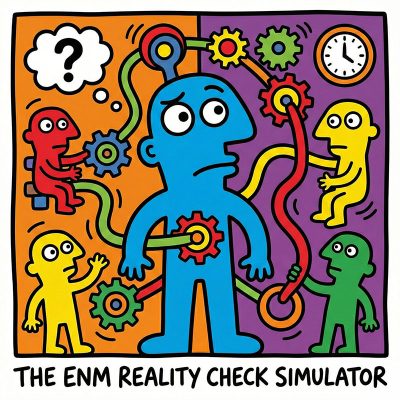
Theory is sexy. Reality is messy. You agreed you could date others, but how does your stomach drop when he takes her to your anniversary spot? Or when she comes home smelling like someone else?
This simulator drags your abstract rules into the harsh light of day. We force you to confront the visceral, gut-wrenching scenarios that actually destroy relationships, before they happen. Test your nervous system in the simulator so you don't crash the car in real life.
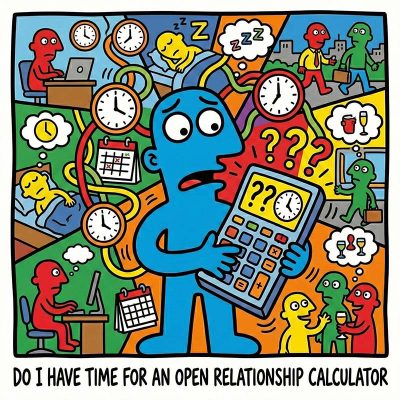
The fantasy is endless romance. The reality? It’s a logistical nightmare. Dating isn't just sex; it’s a second job of swiping, spending, and emotional processing that drains your sanity. Underestimating the "admin" of non-monogamy is the fastest way to turn your relationship into a burnout factory where resentment thrives.
This calculator forces you to confront the brutal math of your time, energy, and wallet. Can you actually afford this lifestyle, or are you just signing up for exhaustion?
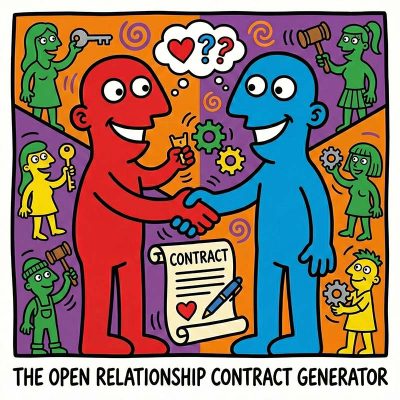
"I thought we agreed" is the sentence that destroys relationships & marriages. Relying on verbal promises when emotions run high is a gamble you cannot afford to lose. Your memory isn't just faulty; it's a liability. Ambiguity is the oxygen that jealousy breathes, turning "freedom" into a minefield of "did I mess up?"
This generator transforms vague permissions into a concrete, signed reality. Stop arguing about what you thought was said and lean on what is written. Secure your boundaries in ink, not hope.
Open relationships and monogamish arrangements defined
Open relationship at a glance
An open relationship is built on explicit consent to seek sexual or romantic connections outside the primary pairing. The structure is defined by agreements that specify what is allowed, who can participate, where activities take place, and how information is shared between partners. Open relationships can be highly flexible or quite structured depending on the people involved. The key feature is that you do not restrict your relational life to a single person, as long as all participants are aware and on board with the nature of the arrangements.
Monogamish at a glance
Monogamish designs the relationship around a core couple who are the main focus. The terms allow for non exclusive experiences with others under agreed rules and boundaries. The emphasis is on maintaining a strong primary bond while permitting select forms of non exclusivity. Monogamish arrangements can fade into full open practice for some couples and remain strictly monogamous for others depending on preferences and circumstances.
Core differences between open relationships and monogamish setups
Relationship scope and non exclusivity
Open relationships are generally built around ongoing access to outside partners in a way that can affect both emotional and sexual life equally. Monogamish setups keep the primary relationship as the default mode of partnership while allowing careful forays outside that core bond. In practice you may find that open relationships tilt toward more outside connections while monogamish systems emphasize the primary couple with occasional outside experiences rather than a broad outside network.
Communication patterns and decision making
Both models demand robust communication but the focus differs. In open relationships you typically negotiate multiple connections with the potential for each to have its own dynamic. In monogamish setups the conversations often revolve around how much non exclusive activity is acceptable while protecting the well being of the primary bond. Either way you want to establish a clear routine for check ins and renegotiation as life changes occur.
Boundaries and rules
Boundaries are the backbone of both models. In open relationships boundaries might include disclosure requirements about sexual partners, safe sex practices, and how much information about other partners is shared. In monogamish models boundaries often specify the limits on outside sexual experiences or the kinds of activities that are allowed with external partners. The exact rules are personal and must be revisited as feelings and circumstances evolve.
Jealousy and compersion management
Jealousy is a common companion in any relationship dynamic. Open relationships can trigger more frequent jealousy if outside connections threaten time attention or emotional closeness. Monogamish arrangements can mitigate some jealousy risk by keeping the primary relationship strong and predictable while offering controlled opportunities for outside experiences. Practicing compersion can help shift the focus from insecurity to shared partner happiness when the dynamic is healthy and well managed.
Time management and energy budgeting
One practical difference is how couples allocate time energy and attention. Open relationships often require more meticulous scheduling to accommodate multiple relationships or dates. Monogamish setups can be easier to manage for some couples because the outside encounters are limited and designed not to overwhelm the main partnership. Either way a good system for calendar management and communication reduces friction and protects the primary bond.
Realistic scenarios you might encounter
Scenario 1 What happens when the primary couple wants to explore together
In this setup both partners agree to explore outside connections in a coordinated way. You might set a rule that external experiences occur at the same time as a shared date night or after a scheduled check in. The upside is mutual support and shared excitement. The risk is misalignment if one person feels left out or the nature of the outside connection shifts unexpectedly. Regular discussions and a commitment to inclusivity help keep the balance.
Scenario 2 Solo exploration as part of an open relationship
A participant in an open relationship may choose to date independently. This can be freeing and empowering but it also raises questions about communication and boundaries. Keeping transparent logs of conversations with outside partners and establishing aftercare routines can help avoid misunderstandings. It is common to agree on how much information to share with the other primary partner while respecting privacy boundaries.
Scenario 3 Monogamish with occasional non exclusive experiences
In this scenario the primary couple agrees that they may see others but within strict boundaries. The couple might set rules such as only meeting in certain contexts or not pursuing romantic connections outside the primary bond. This approach can protect emotional safety while offering a taste of non exclusivity. The key to success here is ongoing negotiation and a shared sense of security with the primary relationship as the anchor.
Scenario 4 Handling friction when a new partner creates tension
New partners can trigger jealousy or fear of replacement. In open relationships or monogamish arrangements you need a plan to address this friction quickly. Effective strategies include explicit communication of boundaries with the new partner the use of check in points with your primary partner and a commitment to reassurance and transparency. Over time friction tends to decrease as comfort levels rise and routines stabilize.
Pros and cons at a glance
Open relationship advantages
- Greater range of sexual and romantic experiences which can broaden self understanding
- Potential for personal growth through exposure to different relational styles
- Often a more flexible approach to dating which can align with modern lifestyles
- Opportunity to build a diverse support network beyond a single partner
Open relationship challenges
- Increased complexity in scheduling and emotional management
- Higher risk of jealousy or insecurity without strong boundaries
- Potential for miscommunication if rules are vague or poorly understood
- More people involved which can complicate consent and safety discussions
Monogamish layout advantages
- Stronger emphasis on the primary bond which can feel safer for some people
- Usually simpler to coordinate and manage day to day
- Clear boundaries can reduce anxiety for partners who prefer routine
- Allows exploration without dissolving core commitment
Monogamish layout challenges
- Rules can sometimes lead to secrecy or resentment if expectations shift
- Limited outside experiences may leave some people feeling under stimulated
- Discomfort if one partner experiences stronger desires for non exclusivity than the other
- Potential for subtle power imbalances if negotiation is uneven
Which path fits you
Choosing between open relationships and monogamish arrangements depends on a few practical questions. Start with your values and your core relationship priorities. Consider these prompts:
- What is your baseline level of emotional intimacy with your partner and with other people
- How comfortable are you with the idea of your partner dating or forming connections with others
- Do you want your primary relationship to be the sole romantic focus or are you open to new connections that could become significant
- How strong is your communication system and your ability to renegotiate when life changes occur
- Are safety and consent the top priority for both of you and does your partner share this stance
Practical steps to start
Steps to discuss with your partner or partners
Have a focused conversation about where you stand and what you want to explore. Do this in a calm setting free from distractions. Start by sharing your own feelings openly using descriptive statements rather than accusations. For example talk about how you feel rather than what your partner did or did not do. Frame the discussion around curiosity rather than judgment. Outline your boundaries as clearly as possible and invite your partner to add theirs. Then compare notes and look for a common path or a compromise that respects both people involved.
Negotiation tips you can actually use
- Document your agreements in writing so there is a reference point for future discussions
- Set a trial period to test the arrangement and schedule a formal renegotiation point
- Use a regular cadence for check ins about emotions and health and safety
- Keep the lines open for honest feedback and acknowledge when something is not working
- Be explicit about what is off limits and what would require a new discussion
Practical safety and health considerations
Safety including sexual health and emotional safety should be non negotiable. Agree on regular STI testing for all sexual partners involved in any outside activity. Use barrier methods where appropriate and openly discuss sexual history in a non judgmental way. Establish emotional safety practices such as aftercare routines after dates and transparent communication channels for reassuring each other during times of insecurity.
Common myths about open relationships and monogamish arrangements
- Myth 1 A couple must be open or they are failing the relationship
- Myth 2 If you are truly in love you do not want other people in your life
- Myth 3 Open relationships always lead to cheating or deception
- Myth 4 Monogamish means you are not really committed
- Myth 5 You cannot be happy in a monogamish relationship long term
Reality check. ENM is not a one size fits all approach. The best relationships of any type come from intentional conversation, mature boundaries, shared respect and a willingness to adapt to new life stages. Open relationships and monogamish arrangements offer different paths to achieving intimacy happiness and personal growth. The right choice for you is the one that aligns with your values your needs and the reality of your current life.
Glossary of useful terms and acronyms
- ENM Ethical non monogamy a philosophy and practice of consensual non monogamy across multiple relationships.
- Open relationship A relationship which includes ongoing relationships outside the primary pair with clear consent and boundaries.
- Monogamish A primarily monogamous arrangement that allows limited outside experiences under agreed rules.
- Primary partner The main or first bond in a relationship that often receives the most emotional time and energy.
- Boundary An explicit limit set by partners about what is allowed and what is not in the relationship.
- Consent A voluntary and informed agreement to participate in any activity.
- Jealousy An emotional response to perceived threat to a valued relationship or asset.
- Compersion A feeling of joy when a partner experiences happiness with someone else it is the opposite of jealousy in practice.
- New partner friction Tension that arises when a person new to the dynamic raises concerns about time attention or emotional energy.
- Aftercare Care and reassurance given after a date or emotionally intense interaction to support the emotional needs of all involved.
Frequently asked questions
What is the difference between an open relationship and a monogamish arrangement?
An open relationship allows ongoing relationships with outside partners with a broad level of freedom. A monogamish arrangement centers on the primary partnership while permitting limited outside experiences under agreed rules. Both require consent clear communication and renegotiation as life changes occur.
How do I decide which path is right for us?
Start with your core values and check in about what you want emotionally physically and logistically. Consider how you handle jealousy how often you would like to date outside or whether you want to share every detail with your partner. Try a structured trial period with explicit boundaries and a clear renegotiation plan.
How do we handle jealousy in open relationships or monogamish setups?
Address jealousy as a signal to pause and reassess boundaries or communication. Use empathy talk to understand what the other person needs and adjust arrangements. Compersion can be cultivated by celebrating your partner s happiness with others and reframing the situation as a shared growth opportunity.
What about safety and health concerns
Agree on STI testing intervals set boundaries for safer sex and communicate any health concerns promptly. Maintain transparency about sexual history where appropriate and practice informed consent for all activities. Aftercare and emotional support are essential so no one feels left out after a date or encounter.
Can a relationship change from monogamish to open or vice versa
Yes. The dynamic can evolve with time and changing life circumstances. The key is to renegotiate with honesty and patience and to keep the primary bond at the center of all discussions. A trial period with defined endpoints can help both partners assess fit before making a permanent shift.
Are there quick wins to try if we are unsure about this path
Yes two easy starting points are to schedule a dedicated conversation about boundaries and to set up a single trial date outside the primary bond while maintaining a strong date night rhythm for the couple. Take notes about what works what feels uncomfortable and what feels like a potential deal breaker. Use that data to guide the next steps.
Case studies you can relate to
Note these are anonymized and simplified to illustrate real life dynamics. Your experience may differ but common patterns tend to emerge across different relationships.
Case Study A Open relationship with strong communication
A couple in their early thirties decided to explore outside relationships after five years together. They established weekly check ins and a shared calendar to coordinate dates. They agreed on safety protocols and explicit disclosure about outside partners. Over three months they learned to celebrate each partner s independent experiences while maintaining a rich emotional bond at home. The relationship grew stronger as they learned to navigate honesty and vulnerability together.
Case Study B Monogamish with a controlled scope
In another example a couple chose a monogamish model with agreed limits. They allowed outside experiences but only with a specific friend group and only after both partners felt secure about their own relationship and their communication routines. They held monthly reviews to adjust boundaries and to ensure the primary relationship stayed vibrant. The arrangement provided novelty without destabilizing trust.
Case Study C A switch from open to monogamish after a life change
One couple found that an open arrangement became too demanding after adding a child. They shifted to a monogamish model focusing on the primary bond and keeping outside experiences minimal. The transition required honest conversations about energy resources and the new priorities that come with parenting. It was challenging but ultimately brought a clearer sense of partnership for both.
Checklist before you step into a new dynamic
- Clarify your core values and what you want most from a relationship
- Discuss boundaries and consent with your partner in a calm environment
- Agree on a trial period and set measurable goals for the experiment
- Establish a safety plan including STI testing and safe sex practices
- Decide how you will handle disclosure what information will be shared and what stays private
- Plan regular check ins to reassess the arrangement and to adjust rules as needed
Final notes from The Monogamy Experiment
Open relationships and monogamish arrangements are not certificates of maturity or proof that you are failing to commit. They are different paths that can lead to deeper understanding of yourself and your partnerships when approached with care and consent. If you are curious try a deliberate structured experiment with a strong emphasis on the primary relationship. The goal is growth connection and honesty not drama or fear. If you treat yourselves with kindness and respect you can create a dynamic that feels exciting and secure at the same time.
The freedom of an open relationship sounds incredible, but the logistics can feel like holding a grenade. That spinning "what if" anxiety isn't paranoia, it’s your survival instinct warning you that your bond is exposed. "Just seeing what happens" is the fastest way to turn a fantasy into a breakup.
The Essential Guide replaces chaos with discipline. We give you the blueprints, jealousy protocols, and repair scripts needed to explore the edge without falling off. Don't guess. Secure your foundation first.
The world of non-monogamy is a maze of confusing labels. Trying to be "Polyamorous" when your heart actually needs "Swinging" isn't just a vocabulary error; it’s a recipe for misery.
You can't build a stable home on a foundation that doesn't fit your psychology. This tool analyzes your emotional bandwidth and jealousy triggers to design the exact structure you need. Stop trying to squeeze into a box that doesn't fit. Build a relationship that actually feels like home.
Opening up feels exciting, but if you aren't reading from the same script, you're writing a tragedy. The disconnect between "I want freedom" and "I want safety" is where hearts break. This isn't just a quiz; it’s a synchronization engine.
We identify the silent gaps in your desires—from sleepover rules to emotional bandwidth, before they become unbridgeable chasms. Don't wait until the damage is done to find out you were never on the same page. Align your compasses now.
Theory is sexy. Reality is messy. You agreed you could date others, but how does your stomach drop when he takes her to your anniversary spot? Or when she comes home smelling like someone else?
This simulator drags your abstract rules into the harsh light of day. We force you to confront the visceral, gut-wrenching scenarios that actually destroy relationships, before they happen. Test your nervous system in the simulator so you don't crash the car in real life.
The fantasy is endless romance. The reality? It’s a logistical nightmare. Dating isn't just sex; it’s a second job of swiping, spending, and emotional processing that drains your sanity. Underestimating the "admin" of non-monogamy is the fastest way to turn your relationship into a burnout factory where resentment thrives.
This calculator forces you to confront the brutal math of your time, energy, and wallet. Can you actually afford this lifestyle, or are you just signing up for exhaustion?
"I thought we agreed" is the sentence that destroys relationships & marriages. Relying on verbal promises when emotions run high is a gamble you cannot afford to lose. Your memory isn't just faulty; it's a liability. Ambiguity is the oxygen that jealousy breathes, turning "freedom" into a minefield of "did I mess up?"
This generator transforms vague permissions into a concrete, signed reality. Stop arguing about what you thought was said and lean on what is written. Secure your boundaries in ink, not hope.
