
Open Relationships Versus Polyamory

If you have ever wondered how open relationships and polyamory fit under the umbrella of ethically non monogamous life styles you are not alone. In the world of ethical non monogamy ENM two broad paths often get talked about open relationships and polyamory. They share a common commitment to consent honesty and growth but they also offer different ways of organizing love time and energy. In this guide we break down the terms explain how each dynamic tends to work in real life and give practical tips for negotiating boundaries communication and emotional work. Think of this as a friendly experiment in relationship design written in a way that is easy to understand and ready to apply.
Quick Links to Useful Sections
- What ENM means and why it matters
- Understanding open relationships
- Why open relationships work for some people
- Understanding polyamory
- Benefits that polyamory can offer
- Open relationships versus polyamory how they differ in practice
- Structure and prioritization
- Emotional landscape
- Time management and scheduling
- Must dos and must nots for open relationships and polyamory
- Must dos
- Must nots
- Communication strategies that actually work
- Jealousy and emotional work
- Realistic scenarios you might encounter
- Scenario one open relationship with a primary couple
- Scenario two non hierarchical polyamory
- Scenario three hierarchical polyamory with a primary focus
- Scenario four a new relationship energy and learning
- Getting started with open relationships or polyamory
- 1. Do a personal inventory
- 2. Have a conversation with your partner
- 3. Establish clear agreements
- 4. Build safety nets
- 5. Practice ongoing communication
- Safety consent and consent culture
- Community and social considerations
- Glossary of useful terms and acronyms
- Frequently asked questions
What ENM means and why it matters
ENM stands for ethically non monogamous. That is a label for relationship styles that involve more than two people in romantic or sexual partnerships while keeping consent and respect at the center. The ethical part means that all the adults involved talk openly about expectations and boundaries and revisit them as life changes. The non monogamous part means you are not limited to a single romantic or sexual partner. ENM is not a one size fits all system. It is a flexible set of practices that people adapt to their values and lives.
To get a clear sense of the terrain let us define two common paths inside ENM open relationships and polyamory. Both emphasize communication consent and ongoing negotiation. They differ in structure the emphasis on how many loves are involved and the way partners prioritize time and emotional labor.
Understanding open relationships
An open relationship is a relationship in which a couple or a primary couple agrees that outside partners may be involved in romantic or sexual activity. There are many flavors of open relationships and you will find structures that feel right for different couples. Some of the most common patterns include:
- Open primary with outside partners The core couple maintains primary status and agrees that each person can pursue outside partners under agreed rules. The focus is often on preserving the couple and the family while allowing outside connections.
- Outside partners with boundaries Each person in the primary couple may have specific boundaries around what is allowed for outside relationships whether that means no overnight stays or no involvement with certain close friends.
- Serial dating within a framework Partners may date one outside person at a time or follow a simple rotation while still keeping the primary partnership stable.
Key features of open relationships include explicit negotiation of boundaries a clear understanding of consent and regular check ins. Some couples prefer simple rules while others build a more elaborate set of guidelines. The core idea is that the relationship is not closed it invites external connections while still protecting the safety and well being of everyone involved.
Why open relationships work for some people
- They provide space for sexual variety while preserving the emotional bond central to the primary relationship.
- They can reduce the pressure to meet every need through one partner by embracing multiple connections.
- They allow personal growth through experiences with different people and different dynamics.
Potential challenges include dealing with jealousy communication fatigue managing schedules and maintaining trust. When done well open relationships can feel expansive and human. When not done well they can become draining or destabilizing. The key is honest conversation upfront and ongoing commitment to adjust as needed.
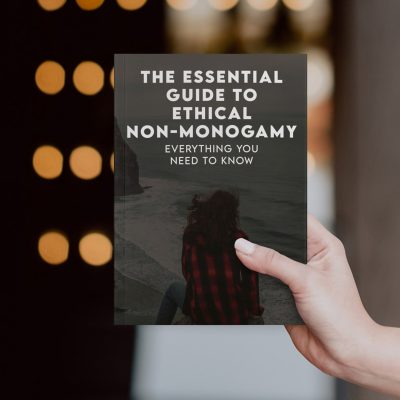
The freedom of an open relationship sounds incredible, but the logistics can feel like holding a grenade. That spinning "what if" anxiety isn't paranoia, it’s your survival instinct warning you that your bond is exposed. "Just seeing what happens" is the fastest way to turn a fantasy into a breakup.
The Essential Guide replaces chaos with discipline. We give you the blueprints, jealousy protocols, and repair scripts needed to explore the edge without falling off. Don't guess. Secure your foundation first.
The world of non-monogamy is a maze of confusing labels. Trying to be "Polyamorous" when your heart actually needs "Swinging" isn't just a vocabulary error; it’s a recipe for misery.
You can't build a stable home on a foundation that doesn't fit your psychology. This tool analyzes your emotional bandwidth and jealousy triggers to design the exact structure you need. Stop trying to squeeze into a box that doesn't fit. Build a relationship that actually feels like home.
Opening up feels exciting, but if you aren't reading from the same script, you're writing a tragedy. The disconnect between "I want freedom" and "I want safety" is where hearts break. This isn't just a quiz; it’s a synchronization engine.
We identify the silent gaps in your desires—from sleepover rules to emotional bandwidth, before they become unbridgeable chasms. Don't wait until the damage is done to find out you were never on the same page. Align your compasses now.
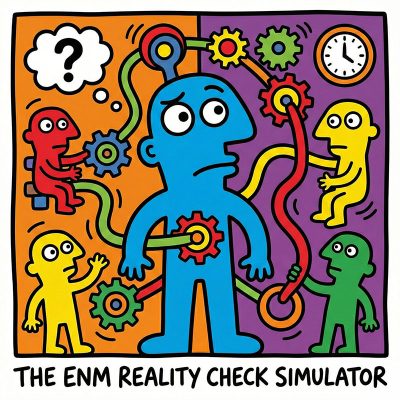
Theory is sexy. Reality is messy. You agreed you could date others, but how does your stomach drop when he takes her to your anniversary spot? Or when she comes home smelling like someone else?
This simulator drags your abstract rules into the harsh light of day. We force you to confront the visceral, gut-wrenching scenarios that actually destroy relationships, before they happen. Test your nervous system in the simulator so you don't crash the car in real life.
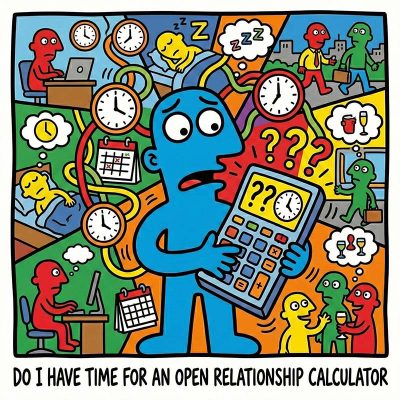
The fantasy is endless romance. The reality? It’s a logistical nightmare. Dating isn't just sex; it’s a second job of swiping, spending, and emotional processing that drains your sanity. Underestimating the "admin" of non-monogamy is the fastest way to turn your relationship into a burnout factory where resentment thrives.
This calculator forces you to confront the brutal math of your time, energy, and wallet. Can you actually afford this lifestyle, or are you just signing up for exhaustion?
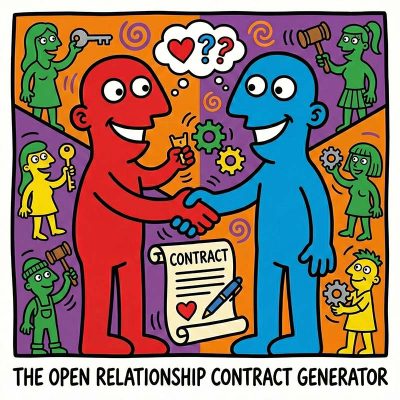
"I thought we agreed" is the sentence that destroys relationships & marriages. Relying on verbal promises when emotions run high is a gamble you cannot afford to lose. Your memory isn't just faulty; it's a liability. Ambiguity is the oxygen that jealousy breathes, turning "freedom" into a minefield of "did I mess up?"
This generator transforms vague permissions into a concrete, signed reality. Stop arguing about what you thought was said and lean on what is written. Secure your boundaries in ink, not hope.
Understanding polyamory
Polyamory is a form of ENM that usually means loving more than one person at the same time with all partners aware of each other. Some people practice polyamory in a non hierarchical way where no single relationship is treated as more important than another. Others prefer a hierarchy where a primary relationship sets a home base while other connections exist outside of that central bond. There is a wide spectrum here and each person can map out what feels right for their life.
There are several commonly discussed patterns within polyamory:
- Non hierarchical polyamory Multiple relationships of roughly equal importance where there is no single primary partner. Each relationship is valued on its own terms.
- Hierarchical polyamory A core primary relationship with additional partners who have secondary status. The primary connection often governs time and decisions that affect the household.
- Polyfidelity A closed loop where a group agrees to form romantic and sexual relationships only within the group itself.
In polyamory the emphasis is on the possibility of deeply meaningful relationships with multiple people at once. People who choose this path often report experiences of generosity openness and a sense of community. The emotional landscape can be complex because there may be strong feelings involved with more than one partner. The skill set needed includes high level communication emotional regulation and clear boundaries.
Benefits that polyamory can offer
- Deep connections with more than one partner and a broader emotional support network.
- Opportunities for personal growth through exposure to different relationship styles and personalities.
- Greater freedom to pursue love and companionship without feeling limited by a single partner.
Common challenges include managing time among multiple partners balancing emotional needs and navigating complex family dynamics. It is not a free for all. It is a careful blend of honesty consent and negotiated expectations.
Open relationships versus polyamory how they differ in practice
Open relationships and polyamory overlap and yet they often diverge in how love energy and time are distributed. The practical differences tend to show up in a few key areas:
Structure and prioritization
- Open relationships often center on a primary pair with agreed outside connections. The primary relationship remains the anchor and many decisions revolve around maintaining that bond.
- Polyamory emphasizes multiple loving connections sometimes without a central anchor. When there is a hierarchy the primary bond still influences decisions but all partners are considered legitimate parts of the love life.
Emotional landscape
- In open relationships jealousy can be managed by clearly defined rules and frequent check ins. The outside connections are typically transactional in nature such as dating or sex with boundaries rather than developing deep emotional ties with outside partners.
- In polyamory emotional complexity is often a core feature with the possibility of deep love with multiple people. The focus is on building honest and secure attachments across relationships.
Time management and scheduling
- Open relationships require careful planning to ensure the primary relationship receives enough time and attention.
- Polyamory demands robust planning as multiple relationships may require more calendar space for dates conversations and emotional work.
Both paths require negotiation and ongoing communication. The choices that feel right come from self understanding and honest dialogue with partners.
Must dos and must nots for open relationships and polyamory
These are practical guidelines to help you design a healthy ENM life. They are not rules carved in stone but reliable practices that tend to reduce harm and increase clarity.
Must dos
- Ask for consent Before starting any outside connection have a clear conversation with all involved about what is allowed and what is not.
- Communicate openly Regular and honest communication is essential. Discuss feelings concerns boundaries and changes in life circumstances.
- Check in often Schedule regular conversations about how things are going for each person and for the relationships as a whole.
- Respect boundaries If a boundary exists it is there for a reason. Respect it even if it feels inconvenient.
- Practice safe sex and health communication Get regular STI testing where appropriate and talk about sexual health with all partners.
- Be transparent with honesty Share important information that could affect others including changes in relationship status or emotional needs.
Must nots
- Do not secret away information Hiding outside relationships or important details damages trust and can cause major harm.
- Do not weaponize jealousy Using jealousy to manipulate or pressure a partner is not acceptable.
- Do not confuse special rules with fairness Rules should come from consent and mutual respect not from fear or control.
- Do not overshare private information Respect privacy boundaries and avoid sharing intimate details about partners without permission.
Communication strategies that actually work
The backbone of any ENM practice is communication. These techniques help keep the conversation constructive even when things feel tense.
- Use a negotiation framework Start with an open question about needs then present possible options. Work toward a mutual agreement that feels fair.
- Practice active listening Reflect back what you heard and ask clarifying questions. This helps ensure you truly understand the other person.
- Normalize difficult topics Make it a routine to talk about fears jealousy and boundaries. The more normal it feels the less charged it becomes.
- End discussions with clear outcomes Determine what changes will be made when and how you will reassess.
- Document agreements Write down the rules and boundaries so everyone has a shared reference point.
Jealousy and emotional work
Jealousy is a natural human response even in the most carefully constructed ENM life. It does not have to derail a relationship. The aim is to recognize jealousy name it and address it. Some practical steps include:
- Identify what triggers jealousy and whether it is about intimacy time or comparison.
- Revisit agreements and adjust them if needed.
- Practice self soothing techniques such as deep breathing or journaling.
- Seek reassurance from partners in a way that is respectful and non controlling.
Realistic scenarios you might encounter
To bring this to life let us walk through a few everyday situations and how people might handle them. These aren t case studies of perfect lives but practical snapshots you might relate to.
Scenario one open relationship with a primary couple
A couple has a long standing relationship and a strong bond. They decide that outside connections are allowed with some rules. They prefer not to have overnight stays and they require that all outside relationships be first discussed with both partners. They schedule time for date nights with each other and set up a monthly check in to discuss what is working and what is not. Their approach keeps the main partnership central while permitting outside experiences that enrich their lives.
Scenario two non hierarchical polyamory
A person loves two partners deeply and treats both relationships as equally important. The calendar becomes a shared tool where all partners coordinate time and activities. Communication is frequent and transparent about emotional needs. Each relationship remains autonomous with little interference from any central authority. The emotional work is distributed but heavy because each bond requires care and attention.
Scenario three hierarchical polyamory with a primary focus
A couple in a primary relationship builds a home base and is mindful of time spent with a secondary partner. The boundary is clear and the primary bond dictates major decisions such as relocation or change in life plans. The secondary relationship is valued but seen as supplementary to the primary life together. The energy remains balanced if everyone is honest and respectful.
Scenario four a new relationship energy and learning
Two partners enter the ENM world together exploring outside connections for the first time. They keep a monthly debrief where they discuss what they learned about themselves and each other. They celebrate small wins such as successfully communicating a difficult boundary and they address friction without blame. This scenario highlights the learning aspect of ENM and the patience required to grow together.
Getting started with open relationships or polyamory
If you are curious about trying an open relationship or polyamory here are practical steps to begin a thoughtful and respectful exploration.
1. Do a personal inventory
- Explore your own desires boundaries and fears. Ask what you want from love time and energy and what would be a deal breaker.
- Consider your life context including work family and health. Ensure that exploring ENM fits with your responsibilities.
2. Have a conversation with your partner
- Choose a calm time to talk without distractions. Share your motivations and listen to theirs.
- Discuss what type of ENM appeals to you and what would be off limits.
- Agree to a trial period during which you can revisit and adjust the plan.
3. Establish clear agreements
- Define how much time outside connections will receive and when.
- Set rules around safety privacy and communication style.
- Plan how to handle emergencies or changes in feelings.
4. Build safety nets
- Get tested regularly for sexually transmitted infections and agree on when to disclose results.
- Establish a process for privacy respect and consent that feels fair to all involved.
5. Practice ongoing communication
- Schedule frequent check ins and be prepared to adjust agreements as life evolves.
- Celebrate the positive aspects and learn from the challenges without blame.
Safety consent and consent culture
Safety is not only about physical health it also covers emotional safety and consent. A healthy ENM dynamic prioritizes consent as an ongoing practice rather than a one time checkbox. This means asking before initiating any new connection sharing enough information to allow informed choice and respecting decisions even if they disappoint you. A consent oriented approach creates trust and reduces harm when feelings shift or someone changes their mind.
Community and social considerations
Open relationships and polyamory can affect how you interact with family friends and colleagues. Some people are supportive others are curious or skeptical. It helps to have a plan for talking about your life in a concise and respectful way. Protect the privacy of partners who do not want to be named in social conversations while still being willing to share what matters for your safety and wellbeing.
Glossary of useful terms and acronyms
- ENM Ethically non monogamous a broad term for relationship styles that involve more than two people with consent and honesty at the core.
- Open relationship A relationship in which the core couple allows outside partners under defined rules.
- Polyamory The practice of loving more than one person at the same time with knowledge and consent of all involved.
- Non hierarchical A polyamory approach where no single relationship is prioritized above others.
- Hierarchical A polyamory approach with a primary relationship that shapes major decisions and time allocation.
- Primary partner The person who is considered central in an ENM arrangement whether by life plans or emotional closeness.
- Secondary partner A partner who may have a significant relationship but is not the central anchor in a hierarchical arrangement.
- Compersion A feeling of joy or happiness from someone else s joy particularly when a partner is happy with another connection.
- Boundaries Agreements about what is allowed and what is not within a relationship.
- Negotiation The process of discussing and agreeing on rules and expectations.
- Disclosure Sharing information about relationships with all involved parties in a respectful and appropriate way.
- Disclosure practice The habit of informing partners about new connections before they happen or as changes arise.
Frequently asked questions
What is the difference between an open relationship and polyamory
An open relationship typically centers on a primary couple with permission for outside connections under defined rules. Polyamory focuses on loving more than one person often with multiple meaningful relationships sometimes without a central anchor.
Is one approach better than the other
There is no universal answer. It depends on values life goals and what feels sustainable for you and your partners. Some people thrive in open arrangements while others prefer the non hierarchical nature of polyamory.
How do I know if I should explore ENM with my partner
Start with a conversation about why you are curious what you hope to gain and what concerns you have. If one or both partners feel excited about exploring this life it could be worth continuing the discussion with boundaries and a trial period. If you feel fear control or coercion this is a red flag to slow down or reconsider.
What about jealousy how is it handled
Jealousy is normal. The goal is to acknowledge it name it and address it through communication and adjustments to agreements. Some people find it helpful to schedule regular check ins or to seek support from a therapist or community mentor who understands ENM.
How do you navigate dating when you already have a partner
Clear expectations are essential. Decide how much time you will dedicate to outside connections how you will discuss new partners and how you will protect your existing relationship. Make sure both you and your partner feel heard and supported.
Can ENM work in families with children
Yes it can. The key is keeping the children s best interests at the center and maintaining a stable family routine. Be mindful about privacy and disclose information about your life in age appropriate ways. Consistency and love matter more than labeling.
What should I do if my partner changes their mind
Respect the change and revisit the agreements. It may mean dialing back or redefining the connection. If both partners want to continue the journey they can adjust and move forward with clear consent. If not it may be time to pause or re evaluate the relationship.
Open relationships and polyamory are not about chaos or endless sex. They are about choosing love in a way that reflects who you are and how you want to live. They are about honest conversation clear agreements and compassionate action. The more you practice the better you get at shaping your life with generosity curiosity and respect for everyone involved.
The freedom of an open relationship sounds incredible, but the logistics can feel like holding a grenade. That spinning "what if" anxiety isn't paranoia, it’s your survival instinct warning you that your bond is exposed. "Just seeing what happens" is the fastest way to turn a fantasy into a breakup.
The Essential Guide replaces chaos with discipline. We give you the blueprints, jealousy protocols, and repair scripts needed to explore the edge without falling off. Don't guess. Secure your foundation first.
The world of non-monogamy is a maze of confusing labels. Trying to be "Polyamorous" when your heart actually needs "Swinging" isn't just a vocabulary error; it’s a recipe for misery.
You can't build a stable home on a foundation that doesn't fit your psychology. This tool analyzes your emotional bandwidth and jealousy triggers to design the exact structure you need. Stop trying to squeeze into a box that doesn't fit. Build a relationship that actually feels like home.
Opening up feels exciting, but if you aren't reading from the same script, you're writing a tragedy. The disconnect between "I want freedom" and "I want safety" is where hearts break. This isn't just a quiz; it’s a synchronization engine.
We identify the silent gaps in your desires—from sleepover rules to emotional bandwidth, before they become unbridgeable chasms. Don't wait until the damage is done to find out you were never on the same page. Align your compasses now.
Theory is sexy. Reality is messy. You agreed you could date others, but how does your stomach drop when he takes her to your anniversary spot? Or when she comes home smelling like someone else?
This simulator drags your abstract rules into the harsh light of day. We force you to confront the visceral, gut-wrenching scenarios that actually destroy relationships, before they happen. Test your nervous system in the simulator so you don't crash the car in real life.
The fantasy is endless romance. The reality? It’s a logistical nightmare. Dating isn't just sex; it’s a second job of swiping, spending, and emotional processing that drains your sanity. Underestimating the "admin" of non-monogamy is the fastest way to turn your relationship into a burnout factory where resentment thrives.
This calculator forces you to confront the brutal math of your time, energy, and wallet. Can you actually afford this lifestyle, or are you just signing up for exhaustion?
"I thought we agreed" is the sentence that destroys relationships & marriages. Relying on verbal promises when emotions run high is a gamble you cannot afford to lose. Your memory isn't just faulty; it's a liability. Ambiguity is the oxygen that jealousy breathes, turning "freedom" into a minefield of "did I mess up?"
This generator transforms vague permissions into a concrete, signed reality. Stop arguing about what you thought was said and lean on what is written. Secure your boundaries in ink, not hope.
