
Open Relationships Versus Swinging

If you have ever wondered what the difference is between an open relationship and swinging you are not alone. People mix up these terms all the time and assumptions creep in. This guide is a friendly tour through ethically non monogamous dynamics or ENM for short. ENM means ethically non monogamous a way of forming relationships that allows multiple intimate connections with the consent and awareness of everyone involved. We will break down the jargon explain the common myths and share practical tips you can use in the real world. Think of this as a clear map written in plain language that helps you decide what fits your life and your values while keeping humor and humanity intact.
Quick Links to Useful Sections
- What ENM means and how the term works
- Open relationships versus swinging what is the core difference
- Key differences at a glance
- Common myths debunked
- Real life scenarios and what they look like in practice
- Boundaries and agreements why they matter
- Communication that actually works for ENM
- Jealousy and compersion how to handle the emotional landscape
- Safety health and consent in ENM spaces
- How to decide which path fits you
- Practical steps to get started
- Common mistakes to avoid
- Practical tools and resources
- Glossary of useful terms and acronyms
What ENM means and how the term works
ENM stands for ethically non monogamous. That is a mouthful so here is the blunt version. ENM is a broad umbrella for relationship styles that include more than two people who know about each other. The key idea is consent honesty and ongoing communication. ENM is not a single model it is a family of models and you get to pick the ones that fit you. In this guide we focus on two popular forms open relationships and swinging. We will also touch on related terms so you have a complete glossary in your pocket.
Glossary quick peek
- Open relationship A relationship in which partners allow each other to have emotional or sexual connections outside the primary couple. The rule set is flexible and often emphasizes ongoing communication and negotiated boundaries.
- Swinging A form of ENM where committed partners engage in sexual activity with other couples or individuals typically in a social setting. Swinging tends to emphasize sexual experiences with others rather than deep emotional bonds with new partners.
- Compersion The feeling of joy or happiness when a partner experiences pleasure with someone else. The opposite of jealousy in many open minded scenarios.
- Boundaries The agreed lines that define what is acceptable and what is not in a relationship or arrangement.
- Agreements The explicit rules and guidelines that partners set to govern their ENM dynamic.
Open relationships versus swinging what is the core difference
The simplest way to tell them apart is to look at where emotions are expected to go and how sexual experiences are organized. In an open relationship the emphasis is often on maintaining emotional closeness with the primary partner while allowing other connections to exist. The other relationships may be emotional or sexual in nature but the primary bond remains the center. In swinging the emphasis typically sits on sexual encounters outside the primary relationship as a shared activity often happening with other couples. The emotional ties to new partners in swinging are usually lighter and more focused on the fun experience rather than deep ongoing emotional involvement with the individuals outside the couple.
That distinction matters because it shapes how you structure time safety disclosures and boundaries. Open relationships tend to require ongoing check ins about feelings plans and life changes because emotional commitments play a larger role. Swinging tends to require strong communication skills around consent safety and mutual excitement about shared experiences. Neither approach is superior to the other. They simply fit different wants needs and life stages. It is common for people to try one approach and then shift to another or to blend elements from both into a hybrid style. The important part is that every step is taken with consent transparency and care.
Key differences at a glance
- Emotional focus Open relationships center on ongoing emotional connections with more than one person while swinging tends to emphasize sexual experiences and shared activities with others.
- Structure Open relationships often involve formal agreements that specify emotional boundaries time management and disclosure practices. Swinging agreements focus more on sexual safety location boundaries and mutual consent for group sex scenarios.
- Time management In open relationships you may divide time between partners and coordinate schedules to preserve your main relationship. In swinging time is commonly arranged around social events or swing parties where partners meet and engage with others in a social sexual context.
- Communication requirements Open relationships typically require frank conversations about emotions jealousy compersion and long term goals. Swinging requires precise consent clear boundaries and ongoing dialogue about comfort levels during activities.
The freedom of an open relationship sounds incredible, but the logistics can feel like holding a grenade. That spinning "what if" anxiety isn't paranoia, it’s your survival instinct warning you that your bond is exposed. "Just seeing what happens" is the fastest way to turn a fantasy into a breakup.
The Essential Guide replaces chaos with discipline. We give you the blueprints, jealousy protocols, and repair scripts needed to explore the edge without falling off. Don't guess. Secure your foundation first.
The world of non-monogamy is a maze of confusing labels. Trying to be "Polyamorous" when your heart actually needs "Swinging" isn't just a vocabulary error; it’s a recipe for misery.
You can't build a stable home on a foundation that doesn't fit your psychology. This tool analyzes your emotional bandwidth and jealousy triggers to design the exact structure you need. Stop trying to squeeze into a box that doesn't fit. Build a relationship that actually feels like home.
Opening up feels exciting, but if you aren't reading from the same script, you're writing a tragedy. The disconnect between "I want freedom" and "I want safety" is where hearts break. This isn't just a quiz; it’s a synchronization engine.
We identify the silent gaps in your desires—from sleepover rules to emotional bandwidth, before they become unbridgeable chasms. Don't wait until the damage is done to find out you were never on the same page. Align your compasses now.
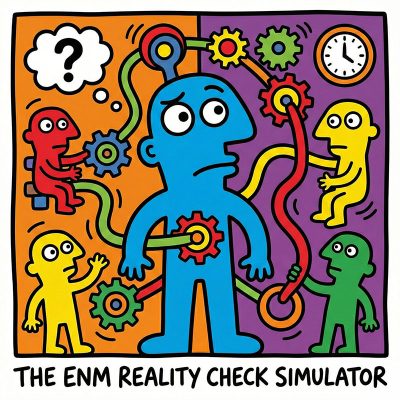
Theory is sexy. Reality is messy. You agreed you could date others, but how does your stomach drop when he takes her to your anniversary spot? Or when she comes home smelling like someone else?
This simulator drags your abstract rules into the harsh light of day. We force you to confront the visceral, gut-wrenching scenarios that actually destroy relationships, before they happen. Test your nervous system in the simulator so you don't crash the car in real life.
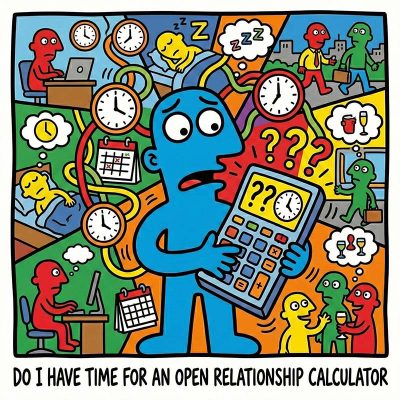
The fantasy is endless romance. The reality? It’s a logistical nightmare. Dating isn't just sex; it’s a second job of swiping, spending, and emotional processing that drains your sanity. Underestimating the "admin" of non-monogamy is the fastest way to turn your relationship into a burnout factory where resentment thrives.
This calculator forces you to confront the brutal math of your time, energy, and wallet. Can you actually afford this lifestyle, or are you just signing up for exhaustion?
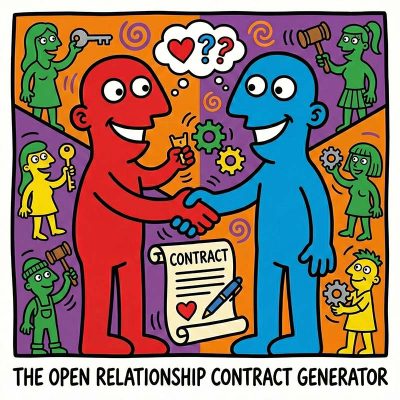
"I thought we agreed" is the sentence that destroys relationships & marriages. Relying on verbal promises when emotions run high is a gamble you cannot afford to lose. Your memory isn't just faulty; it's a liability. Ambiguity is the oxygen that jealousy breathes, turning "freedom" into a minefield of "did I mess up?"
This generator transforms vague permissions into a concrete, signed reality. Stop arguing about what you thought was said and lean on what is written. Secure your boundaries in ink, not hope.
Common myths debunked
Myth one Open relationships are about swapping partners all the time. Reality is that many open relationships involve boundaries that keep contact with others rare or focused on specific activities and topics. You have agency to decide the pace and scope.
Myth two Swinging is about sex without feelings. Some people who swing do experience meaningful connections while others keep sexual experiences as strictly physical. There is no single rule that applies to everyone involved.
Myth three ENM means you do not value monogamy. ENM is a choice that fits certain values and life goals. It can mean expanding trust or redefining what intimacy looks like while staying aligned with what you and your partner want.
Myth four ENM means inviting chaos. The truth is ENM works best when there are strong communication practices agreed upon boundaries and a framework for safety both emotional and physical. Chaos tends to be a signal that something in the agreement is not working and needs revision.
Real life scenarios and what they look like in practice
Scenario A A couple explores an open relationship with a focus on emotional intimacy with a care oriented approach. They set a weekly check in meeting a clear boundary about involving external partners in day to day life and they use a simple rule about time management. They do not hide things they share information and they practice compersion celebrating their partners happiness. They recognize that feelings can shift and they renegotiate together when needed. The result is a sense of safety openness and sustained trust. Their main relationship remains strong while outside connections add color to life.
Scenario B A couple decides to try swinging with another couple during a social event. They prepare a pre event talk about what is on and off limits they agree to set a safer sex plan and they designate signals if one partner wants to pause. During the event they communicate clearly about consent and they check in with each other after the encounter. They experience a high energy night that feels exciting and responsible. They still come home to their primary relationship and process the experience together. The key is explicit consent and emotional safety for both partners.
Scenario C A single person enters a non monogamous space with a primary partner who wants to keep emotional depth in their relationship while the single person explores multiple connections. They practice honest disclosure about dating boundaries and they build a support network to handle loneliness or jealousy. They realize that non monogamy is a journey not a one off experiment. They adjust the rules as life evolves and they maintain open channels for feedback.
Boundaries and agreements why they matter
Boundaries are the invisible lines that keep everyone feeling safe and respected. Agreements are the written or verbal rules that describe how those boundaries are enforced. In open relationships the boundaries often address emotional disclosure with the primary partner how often to check in how romantic feelings are navigated and how time is divided. In swinging the agreements might emphasize consent reliable communication about upcoming encounters the use of protection guest policies and safe spaces for the sexual experiences to happen.
Strong agreements address several practical areas. They cover who can be involved how often partners see outside connections what kinds of activities are allowed what is off limits where meetings will take place how information is shared and how health and safety are protected. A good rule is that agreements are living documents. They change as people grow and as life circumstances shift. The moment you notice discomfort or a new longing is a moment to revisit the agreement with your partner in a calm and compassionate way.
Communication that actually works for ENM
Communication sits at the heart of ENM. It is more than a set of sentences it is a habit a way of living that makes space for vulnerability and honesty. Here are some practical tips you can start using today.
- Schedule regular check ins set a recurring time to discuss feelings concerns and what is working well. Treat this like a date for your relationship not a complaint session.
- Lead with feelings use language that identifies your needs and emotions before giving instructions. For example I feel anxious when timelines shift and I want to understand how we can prevent that next time.
- Share context not blame explain why a decision matters rather than accusing a partner. Focus on the impact of actions rather than attacking character.
- Practice active listening repeat back what you heard to confirm understanding. Ask questions to clarify rather than assuming intent.
- Write things down use written agreements and keep a shared note of changes and decisions. This creates a reference point for both partners.
Jealousy and compersion how to handle the emotional landscape
Jealousy is a natural human signal that something matters to you. In ENM settings jealousy can point to a boundary that needs tightening or a need for more reassurance. Compersion is the opposite experience a sense of happiness when your partner experiences joy with someone else. Cultivating compersion often involves reframing your perspective noticing the shared joy and adding your own personal boundaries to feel safe. It is not about suppressing feelings it is about transforming them into a form of care for your partner and for yourself.
Practical jealousy handling steps
- Notice the feeling name it and name the need behind it
- Pause before reacting to avoid saying something hurtful
- Share the feeling with the partner without blaming them
- Negotiate a gentle adjustment to the agreements if necessary
- Engage in self care activities to restore balance and reduce focus on fear
Safety health and consent in ENM spaces
Safety matters in all forms of non monogamy. This includes sexual health and emotional safety. Here are essential practices to keep everyone protected and comfortable.
- Safer sex use barrier methods when appropriate and get regular STI testing if you have external sexual partners. Discuss testing plans with your partners.
- Clear consent ensure enthusiastic consent at every step. Consent is ongoing and can be withdrawn at any time.
- Secure communication keep private information private unless all parties agree to share. Respect boundaries about what can be discussed in social settings or in public.
- Privacy boundaries agree what details can be shared with friends family or social circles. Not everyone wants their experiences talked about widely.
How to decide which path fits you
Choosing between open relationships and swinging is a personal decision that depends on your needs values and life situation. Here is a simple decision framework to help you think clearly without burning the whole ship down in a single afternoon.
- Reflect on your emotional goals do you want to preserve deep emotional connections with more than one person or are you primarily seeking shared sexual experiences with others in a social setting?
- Assess your time and energy open relationships often require more time management especially around emotions and communication. Swinging may fit better if you want to keep time investment focused on sexual experiences with clear boundaries.
- Consider your safety preferences if you value a strong emphasis on physical health safety swinging may be appealing. If you want to cultivate emotional transparency open relationships may match your style.
- Evaluate relationship stage couples in the early stages may prefer swinging as a way to test compatibility while long term partnerships may benefit from structured open relationship agreements.
If you are curious explore gradually. Start with a low risk experiment such as attending a social event with others or having a single conversation about boundaries. You can always pause and renegotiate at any time. The point is to stay aligned with your core values while respecting your partner's values as well.
Practical steps to get started
Here is a concrete starter kit you can use when you are ready to move from curiosity to action.
- Define core values write down what matters most to you in a relationship integrity trust respect and kindness top the list.
- Create a listening environment choose a calm moment new coffee and plenty of time to talk. No rush no interruptions.
- Choose a model to test pick either an open relationship or swinging and craft a simple first version of an agreement focused on safety and consent.
- Draft the initial agreements include boundaries health check ins and a plan for renegotiation if feelings shift.
- Practice open dialogue commit to sharing honest updates about how you feel even when it is uncomfortable.
- Revisit and revise schedule a monthly or quarterly review to adjust as life changes.
Common mistakes to avoid
Avoid assumptions assumptions are a common trap in ENM dynamics. Do not assume that your partner wants the same level of emotional connection with others as you do. Do not assume that being non monogamous means you do not need boundaries or safe sex practices. Do not push your partner into a path they are not excited about. ENM works best when both partners have a voice and a willingness to adapt with care.
Practical tools and resources
To keep things practical consider using shared calendars for scheduling time with partners and a simple digital notebook for keeping track of agreements and feelings. Many couples find it helpful to designate a weekly check in time with a clear agenda. If you prefer a more structured approach there are coaches and communities that specialize in ENM. The key is to stay connected to your own needs and your partner s needs while approaching the journey with respect and humor.
Glossary of useful terms and acronyms
- ENM Ethical non monogamy a term that describes relationship styles that involve more than two people with consent and honesty at the center.
- Open relationship A relationship structure that allows partners to have emotional or sexual connections with others while maintaining a primary bond.
- Swinging A form of ENM focusing on shared sexual experiences with others usually in social settings or group contexts.
- Primary partner The person who holds a central place in your life and often in your emotional life.
- Compersion A positive feeling of happiness for a partner s joy with someone else.
- Jealousy An emotional response that signals a personal boundary or need for reassurance.
- Boundaries Personal limits about what is okay and what is not in your relationship.
- Agreements The negotiated rules that guide how ENM works for a couple or group.
- Consent A clear enthusiastic yes given freely for any activity and ongoing as circumstances change.
- Testing protocol A health and safety plan including STI testing and safer sex practices.
The freedom of an open relationship sounds incredible, but the logistics can feel like holding a grenade. That spinning "what if" anxiety isn't paranoia, it’s your survival instinct warning you that your bond is exposed. "Just seeing what happens" is the fastest way to turn a fantasy into a breakup.
The Essential Guide replaces chaos with discipline. We give you the blueprints, jealousy protocols, and repair scripts needed to explore the edge without falling off. Don't guess. Secure your foundation first.
The world of non-monogamy is a maze of confusing labels. Trying to be "Polyamorous" when your heart actually needs "Swinging" isn't just a vocabulary error; it’s a recipe for misery.
You can't build a stable home on a foundation that doesn't fit your psychology. This tool analyzes your emotional bandwidth and jealousy triggers to design the exact structure you need. Stop trying to squeeze into a box that doesn't fit. Build a relationship that actually feels like home.
Opening up feels exciting, but if you aren't reading from the same script, you're writing a tragedy. The disconnect between "I want freedom" and "I want safety" is where hearts break. This isn't just a quiz; it’s a synchronization engine.
We identify the silent gaps in your desires—from sleepover rules to emotional bandwidth, before they become unbridgeable chasms. Don't wait until the damage is done to find out you were never on the same page. Align your compasses now.
Theory is sexy. Reality is messy. You agreed you could date others, but how does your stomach drop when he takes her to your anniversary spot? Or when she comes home smelling like someone else?
This simulator drags your abstract rules into the harsh light of day. We force you to confront the visceral, gut-wrenching scenarios that actually destroy relationships, before they happen. Test your nervous system in the simulator so you don't crash the car in real life.
The fantasy is endless romance. The reality? It’s a logistical nightmare. Dating isn't just sex; it’s a second job of swiping, spending, and emotional processing that drains your sanity. Underestimating the "admin" of non-monogamy is the fastest way to turn your relationship into a burnout factory where resentment thrives.
This calculator forces you to confront the brutal math of your time, energy, and wallet. Can you actually afford this lifestyle, or are you just signing up for exhaustion?
"I thought we agreed" is the sentence that destroys relationships & marriages. Relying on verbal promises when emotions run high is a gamble you cannot afford to lose. Your memory isn't just faulty; it's a liability. Ambiguity is the oxygen that jealousy breathes, turning "freedom" into a minefield of "did I mess up?"
This generator transforms vague permissions into a concrete, signed reality. Stop arguing about what you thought was said and lean on what is written. Secure your boundaries in ink, not hope.
