
Opening Up Again Later in Life


The Monogamy Experiment is a place for real talk about relationships of all kinds. If you are reading this you might be curious about opening up after years of commitment or you might be supporting a partner who wants to explore. Either way you deserve honest information that helps you decide what is right for you. This deep dive explains the open relationships dynamic known as ethical non monogamy or ENM and it focuses on what opening up can look like when life is lived in the later chapters. We will break down terms explain common acronyms and give you practical steps that feel doable not intimidating. This is not about chasing a fantasy it is about exploring what works for you with care and consent. Let us walk through real world realities and practical tools you can use today.
Quick Links to Useful Sections
- What does opening up again mean in later life
- Why people consider opening up later in life
- How to start the conversation with your partner
- Terms and acronyms you are likely to encounter
- Boundaries that actually work in later life ENM
- Realistic scenarios you might encounter
- Scenario one A long time married couple considers opening up after retirement
- Scenario two One partner has a new partner while the other is hesitant
- Scenario three A couple navigates non hierarchical non primary models
- Scenario four Later life dating in a health context
- Challenges unique to opening up later in life
- Safety and sexual health considerations
- Self work and relationship work that helps
- Practical steps you can take this month
- The Monogamy Experiment approach to ENM later in life
- Common myths and realities about ENM for older adults
- Checklist for a first outside connection in later life
- Common sense do not rush do not pressure
- What to do if you realize ENM is not for you
- Glossary of useful terms and acronyms
- Frequently asked questions
What does opening up again mean in later life
Opening up again means creating space for romantic or sexual connections outside of a primary couple arrangement while maintaining clear agreements and open communication. The goal is not to cause harm but to expand connection in a way that respects both people. In later life the dynamics can feel different. You may have more life experience less impatience or more understanding of boundaries. You might also be juggling health concerns caregiving responsibilities or family expectations. All of those factors can influence how open relationships are navigated. ENM stands for ethical non monogamy. The term is used for a broad family of relationship styles where honesty consent and communication are central. That can include open relationships polyamory which means having multiple loving relationships and swinging which often focuses on sexual exploration with other couples or individuals. We will explain these terms as we go so you have a clear map of what you are exploring.
Why people consider opening up later in life
There are many reasons someone might consider opening up in their sixties seventies or beyond. Health changes can shift desire or energy levels. A long term relationship can reach a plateau or a new chapter can feel suddenly possible. Some people experience divorce or widowhood later in life and choose to rebuild life with new partners. For others the idea is less about replacing a partner and more about adding friendships and connections that bring joy. Those who grew up with a more monogamous culture may worry about stigma or disapproval from family or friends. You should know that modern dating and relationship culture has evolved a lot. There are many stories of people who found companionship and even romance after retirement or after years of monogamy. The main requirement is honest communication and a plan that respects everyone involved. If you decide to pursue ENM later in life you are not chasing youth you are seeking meaningful connection at the stage of life you are in now.
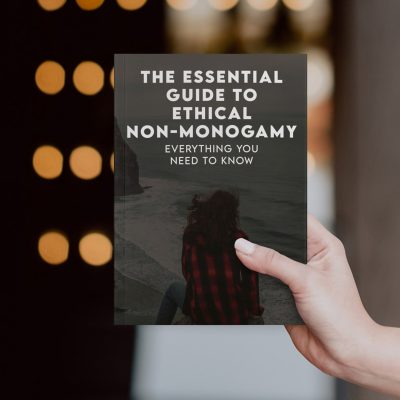
The freedom of an open relationship sounds incredible, but the logistics can feel like holding a grenade. That spinning "what if" anxiety isn't paranoia, it’s your survival instinct warning you that your bond is exposed. "Just seeing what happens" is the fastest way to turn a fantasy into a breakup.
The Essential Guide replaces chaos with discipline. We give you the blueprints, jealousy protocols, and repair scripts needed to explore the edge without falling off. Don't guess. Secure your foundation first.
The world of non-monogamy is a maze of confusing labels. Trying to be "Polyamorous" when your heart actually needs "Swinging" isn't just a vocabulary error; it’s a recipe for misery.
You can't build a stable home on a foundation that doesn't fit your psychology. This tool analyzes your emotional bandwidth and jealousy triggers to design the exact structure you need. Stop trying to squeeze into a box that doesn't fit. Build a relationship that actually feels like home.
Opening up feels exciting, but if you aren't reading from the same script, you're writing a tragedy. The disconnect between "I want freedom" and "I want safety" is where hearts break. This isn't just a quiz; it’s a synchronization engine.
We identify the silent gaps in your desires—from sleepover rules to emotional bandwidth, before they become unbridgeable chasms. Don't wait until the damage is done to find out you were never on the same page. Align your compasses now.
Theory is sexy. Reality is messy. You agreed you could date others, but how does your stomach drop when he takes her to your anniversary spot? Or when she comes home smelling like someone else?
This simulator drags your abstract rules into the harsh light of day. We force you to confront the visceral, gut-wrenching scenarios that actually destroy relationships, before they happen. Test your nervous system in the simulator so you don't crash the car in real life.
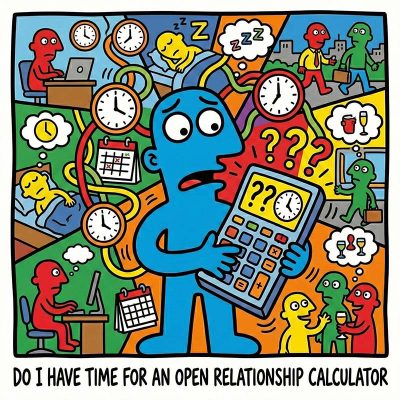
The fantasy is endless romance. The reality? It’s a logistical nightmare. Dating isn't just sex; it’s a second job of swiping, spending, and emotional processing that drains your sanity. Underestimating the "admin" of non-monogamy is the fastest way to turn your relationship into a burnout factory where resentment thrives.
This calculator forces you to confront the brutal math of your time, energy, and wallet. Can you actually afford this lifestyle, or are you just signing up for exhaustion?
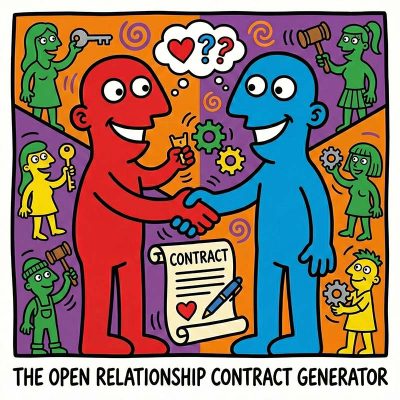
"I thought we agreed" is the sentence that destroys relationships & marriages. Relying on verbal promises when emotions run high is a gamble you cannot afford to lose. Your memory isn't just faulty; it's a liability. Ambiguity is the oxygen that jealousy breathes, turning "freedom" into a minefield of "did I mess up?"
This generator transforms vague permissions into a concrete, signed reality. Stop arguing about what you thought was said and lean on what is written. Secure your boundaries in ink, not hope.
How to start the conversation with your partner
Starting a conversation about opening up can feel daunting especially if you have been living inside a monogamous frame for a long time. The key is to approach the conversation with honesty curiosity and respect. Here is a practical approach you can use.
- Choose the right moment Pick a calm time when you both are not distracted by work health issues or urgent family matters. A relaxed setting helps the talk go smoother.
- Own your feelings Use sentences that start with I feel or I would like to explore. Name your emotions without blaming your partner. This is about your needs not about accusations.
- Share your values first Talk about what matters to you in a relationship honesty trust companionship and safety. Ground the conversation in your shared history and your mutual respect.
- Explain what ENM means to you Explain the term ethical non monogamy and how it differs from casual dating or hookups. Clarify that you want consent boundaries and ongoing communication.
- Invite input Ask your partner how they feel and what their fears or hopes are. Make it a two way exchange not a monologue.
- Suggest a pause to think If either of you feels overwhelmed it is okay to pause for a few days to reflect. A cooling off period can prevent hurtful reactions.
When you bring this up for the first time you are dropping a seed. You might get reactions that range from curiosity to worry. Give your partner time to process. You can offer to read together learn together and attend a session with a relationship therapist who specializes in ENM. The goal is to move forward only if both partners feel safe and respected. This is not a path you must take it is a path you might consider exploring together.
Terms and acronyms you are likely to encounter
- ENM Ethical non monogamy. An umbrella term for relationship styles where all adults consent to forming relationships outside the primary couple.
- Open relationship A setup where partners allow dating or sexual activity outside the primary relationship with agreed boundaries.
- Polyamory The practice of having more than one loving relationship at the same time with the knowledge and consent of everyone involved.
- Primary partner The person who holds the main place in the relationship structure which could be a dating partner or spouse.
- Secondary partner A partner who is not the primary but who has a meaningful connection and involvement.
- Solo poly A form of polyamory where a person prioritizes independence and does not seek a single primary partnership.
- Compersion The feeling of joy when a partner experiences happiness with someone else. The opposite of jealousy in ENM terms.
- Hierarchy The arrangement of relationships as in who is primary or secondary. Some ENM setups avoid hierarchy and pursue non hierarchical models.
- Boundaries Rules agreed to by all parties about what is and is not allowed in the relationships.
- Consent An enthusiastic yes given without pressure. Ongoing process in ENM that can be renegotiated over time.
Boundaries that actually work in later life ENM
Boundaries are the tools that make ENM possible at any age. In later life you may have different energy levels health concerns or caregiving duties that shape what is safe and practical. Here is a practical boundary framework you can adapt.
- Communication boundary Agree how often you will check in with each other about feelings and experiences. Set a schedule that feels comfortable for both partners.
- Emotional boundary Decide how to handle intense emotions like jealousy or insecurity. Agree on steps you will take when emotions run high including stepping back to reflect or seeking support from a therapist.
- Time boundary Determine how much time you want to spend with other partners and how you will balance that with time for your primary relationship and other obligations.
- Health boundary Make plans for sexual health safety including STI testing contraception and discussing medical conditions that could impact sexual activity.
- Privacy boundary Decide how much information you want to share with family friends or children and what you want kept private.
- Relationship boundary Clarify whether outside connections can evolve into new primary relationships or stay at a casual level. Define what that means for you both.
Boundaries should be revisited as life changes. You might need to widen or tighten them as health status or caregiving duties shift. Writing them down in plain language helps you both remember and commit to them. It is not about control it is about clarity and safety.
Realistic scenarios you might encounter
Every couple will find themselves in different situations when reopening later in life. Here are some common scenarios with practical approaches that have worked for real people.
Scenario one A long time married couple considers opening up after retirement
Both partners have known each other for decades. They enjoy companionship but one person feels a spark for a new connection. They begin with a slow careful approach. They have a single outside connection first and set a time limit for revisiting discussions. They keep a shared journal where they reflect on what works what does not and what they want next. They celebrate small successes like staying connected after a date or sharing a reassuring message with the partner who is staying home. They check in weekly and adjust boundaries as needed. This approach protects the core bond while allowing growth.
Scenario two One partner has a new partner while the other is hesitant
In this case communication is essential. The hesitant partner asks for a slow rollout a clear plan and visible proof that their needs will still be met. The couple agrees on practical steps such as a set number of dates with the outside person a shared calendar a rule about time spent together and a commitment to maintain daily contact in the primary relationship. The partner who is excited remains mindful of the hesitancy and agrees to pause if the other person experiences discomfort. It is a process not a rush.
Scenario three A couple navigates non hierarchical non primary models
The couple agrees there is no single primary contract rather all connections are seen as equally valid. They set boundaries around how they share information about new relationships and what kind of commitments are meaningful. They avoid power struggles by choosing to err on the side of open dialogue and weekly check ins. They also prepare for the possibility that not all connections will flourish and that is okay. The goal is not to fill a vacuum but to cultivate genuine connections that add value to life.
Scenario four Later life dating in a health context
Health conditions can influence energy a desire for intimacy and the kinds of sexual activity that are comfortable. In this scenario the couple focuses on consent communication and safety. They use longer lead times for decisions and invest in plan B options if medical needs reduce activity. They explore non sexual forms of closeness such as emotional sharing and mutual support. The emphasis stays on care respect and autonomy for each person involved.
Challenges unique to opening up later in life
Opening up later in life can bring extra layers of complexity. There may be family opinions or cultural expectations to contend with. You might face concerns about who will care for aging parents or how dating looks in a community with long standing norms. Age can also impact how potential partners view health status and energy levels. It is important to approach these challenges with honesty and a clear plan. Seek trusted counsel from a therapist or a community group that supports ENM. You are not alone and there are many people who find meaningful fulfilling connections as they age.
The freedom of an open relationship sounds incredible, but the logistics can feel like holding a grenade. That spinning "what if" anxiety isn't paranoia, it’s your survival instinct warning you that your bond is exposed. "Just seeing what happens" is the fastest way to turn a fantasy into a breakup.
The Essential Guide replaces chaos with discipline. We give you the blueprints, jealousy protocols, and repair scripts needed to explore the edge without falling off. Don't guess. Secure your foundation first.
The world of non-monogamy is a maze of confusing labels. Trying to be "Polyamorous" when your heart actually needs "Swinging" isn't just a vocabulary error; it’s a recipe for misery.
You can't build a stable home on a foundation that doesn't fit your psychology. This tool analyzes your emotional bandwidth and jealousy triggers to design the exact structure you need. Stop trying to squeeze into a box that doesn't fit. Build a relationship that actually feels like home.
Opening up feels exciting, but if you aren't reading from the same script, you're writing a tragedy. The disconnect between "I want freedom" and "I want safety" is where hearts break. This isn't just a quiz; it’s a synchronization engine.
We identify the silent gaps in your desires—from sleepover rules to emotional bandwidth, before they become unbridgeable chasms. Don't wait until the damage is done to find out you were never on the same page. Align your compasses now.
Theory is sexy. Reality is messy. You agreed you could date others, but how does your stomach drop when he takes her to your anniversary spot? Or when she comes home smelling like someone else?
This simulator drags your abstract rules into the harsh light of day. We force you to confront the visceral, gut-wrenching scenarios that actually destroy relationships, before they happen. Test your nervous system in the simulator so you don't crash the car in real life.
The fantasy is endless romance. The reality? It’s a logistical nightmare. Dating isn't just sex; it’s a second job of swiping, spending, and emotional processing that drains your sanity. Underestimating the "admin" of non-monogamy is the fastest way to turn your relationship into a burnout factory where resentment thrives.
This calculator forces you to confront the brutal math of your time, energy, and wallet. Can you actually afford this lifestyle, or are you just signing up for exhaustion?
"I thought we agreed" is the sentence that destroys relationships & marriages. Relying on verbal promises when emotions run high is a gamble you cannot afford to lose. Your memory isn't just faulty; it's a liability. Ambiguity is the oxygen that jealousy breathes, turning "freedom" into a minefield of "did I mess up?"
This generator transforms vague permissions into a concrete, signed reality. Stop arguing about what you thought was said and lean on what is written. Secure your boundaries in ink, not hope.
Safety and sexual health considerations
Sexual health becomes especially important when multiple partners are involved. Older bodies may have different risks and different protective strategies. Here are practical health oriented tips to consider as you open up later in life.
- Regular health checks Keep up to date with medical appointments and discuss sexual health openly with your doctor as needed.
- STI testing Regular screening is a prudent practice when you have multiple partners especially during new encounters.
- Contraception Depending on sexual activity you may want to consider contraception or pregnancy prevention options if relevant to your situation.
- PrEP and other protections If you are at risk for HIV discuss PrEP with a healthcare provider as a preventive option. Use condoms or other barrier methods for protection against other infections when appropriate.
- Boundaries for safety Align on safe sex practices with all partners including what a positive test means and how you will handle changes in status.
Setting up a basic health plan helps reduce anxiety about safety. Make sure all parties feel respect and safety are priorities. Regular health conversations can become a natural part of ENM rather than a scary topic. The aim is to stay connected while protecting physical and emotional well being.
Self work and relationship work that helps
Opening up later in life is not just about new dates it is about growth. Many people benefit from therapy relationship coaching and community support. Here are some practical ideas to keep you moving in a healthy direction.
- Therapy with a partner Look for a therapist who understands ENM and who can guide conversations that may be challenging. A good therapist can help you stay connected and calm during difficult moments.
- Couple coaching Short term coaching can give you tools for effective communication boundary setting and conflict resolution in this new space.
- Support groups Find groups for older adults exploring ENM or general relationship discussions. You will likely hear stories that reassure you you are not alone.
- Personal journaling Keeping a private journal about feelings fears and wins can accelerate learning and help you articulate needs more clearly.
- Education Read books take workshops and listen to podcasts about ethical non monogamy to build a shared vocabulary with your partner and your future partners.
Take care of yourself first and then start building out the practical steps. Your willingness to grow is one of the strongest signs that you are ready to explore this path in a healthy way.
Practical steps you can take this month
If you are ready to test the waters here is a simple month by month plan that keeps things manageable and kind.
Have a deep conversation with your partner about desires boundaries and what you hope to gain from ENM. Document your agreements in writing to avoid later confusion. Try a single outside connection with clear boundaries and a defined end point. Debrief after each encounter focusing on feelings and what you learned. Review how both of you feel the connection benefits and the level of emotional energy required. Make adjustments to boundaries or to the pace if needed. Decide whether to expand the network include a new relationship or to take a longer pause to reflect and recharge.
Consistency matters. It is not about chasing a certain number of partners it is about staying aligned with your values and maintaining care for each other through every step you take.
The Monogamy Experiment approach to ENM later in life
We believe in a practical compassionate approach. Here is how we handle ENM and later life in a way that respects both people and adds clarity rather than drama. We emphasize consent clear boundaries honest communication and ongoing education. We also acknowledge that each couple may walk a different path and that is a good thing. Some couples choose a slow glide into the world of ENM others prefer short experiments that stay within a well defined boundary. No two stories are the same and that is exactly the point. You deserve a plan that fits the life you are living today and that honours the person you are becoming tomorrow.
Common myths and realities about ENM for older adults
- Myth ENM is only for younger people. Reality ENM is practiced by people of all ages including senior adults who prioritize consent and connection over possessiveness.
- Myth Opening up always means a lot of sexual activity. Reality It can mean emotional connections and companionship or sexual experiences that enhance life without overwhelming a primary relationship.
- Myth You must have a large social circle. Reality You can start with one trusted partner and build from there when you feel ready.
- Myth ENM is about control. Reality ENM is about consent communication and safety managed with care and respect for everyone involved.
- Myth Family will never accept it. Reality Families can adapt especially when adults model responsible open behavior and maintain family connection in other ways.
Checklist for a first outside connection in later life
- Agree on the goal Decide what this first meeting is about is it social connection a date a potential ongoing relationship.
- Set boundaries Confirm what you will and will not do and where the line is drawn.
- Share health plans Talk about testing expectations contraception and any health considerations.
- Be honest about time Clarify how much time you plan to spend with other people and how you will balance it with your primary relationship.
- Keep safety as a priority Use respectful dating practices ensure consent and respect privacy for everyone involved.
Common sense do not rush do not pressure
Entering the world of ENM later in life is a serious choice. You can take your time and you should. Do not pressure your partner into a path that makes them uncomfortable and do not rush into a plan that does not respect both sides. Listening is as important as speaking. Compassionable boundaries keep you safe and honest and a steady pace keeps the relationship strong while you explore new experiences.
What to do if you realize ENM is not for you
That is a perfectly valid outcome. You might decide that the path you explored is not right for you right now and that is okay. The important part is to communicate this clearly with your partner and to renegotiate your boundaries in a respectful manner. You can choose to slow down or end outside connections while preserving your primary relationship. You always have agency and can shape your life to fit your values at any age.
Glossary of useful terms and acronyms
- Ethical non monogamy A family of relationship styles where all partners consent to relationships outside the primary one.
- Open relationship A relationship arrangement where outside dating or sexual activity is allowed with agreed rules.
- Polyamory The practice of having more than one loving relationship simultaneously with consent and honesty.
- Primary partner The partner who holds the most central place in the relationship structure.
- Secondary partner A partner who has a meaningful connection but is not the main relationship.
- Compersion The feeling of happiness when a partner experiences another positive relationship.
- Non hierarchical An approach that avoids ranking relationships as better or worse and treats all connections with respect.
- Consent A voluntary and informed agreement to participate in a given activity with ongoing affirmation over time.
- Boundaries Agreed rules about what is allowed what is off limits and how decisions will be made.
Frequently asked questions
What does ENM mean
ENM stands for ethical non monogamy. It refers to relationship styles in which all adults consent to forming relationships outside the core partnership. The emphasis is on honesty communication consent and safety. ENM is not a single approach it is a family of approaches that people choose based on their values and circumstances.
How do I know if ENM is right for us later in life
The best way to know is to have a thorough honest conversation with your partner. Talk about what you want what you fear and what you are willing to risk. If both sides feel safe respected and heard you can try a small step and reassess. If you feel pressure fear or resentment you likely need to slow down and revisit the conversation or seek guidance from a professional who understands ENM.
Can we pursue ENM after a long monogamous history
Yes it is possible. The shift can feel daunting but the main principles remain the same. You need mutual consent clear boundaries honest communication and ongoing care for each other. Start with small steps and build a plan that fits your energy and health needs. It is not about returning to youth it is about living fully at the stage of life you are in now.
What if one partner feels jealousy
Jealousy is a common response in ENM and it can be managed. The best approach is to talk about what triggers jealousy and why. Use compersion as a goal and practice strategies like pausing to breathe reframing the fear and seeking reassurance from your partner. Therapy can offer tools to move through jealousy and grow trust.
Should we tell family about ENM
That depends on your situation. Some people choose to be open with close family other people keep these aspects private. Consider the potential impacts on immediate family and the level of privacy you want to preserve. You should never feel pressured to disclose more than you are comfortable sharing.
How do we handle safety and health in ENM later in life
Prioritize open conversations about sexual health testing and health conditions. Set expectations about protection consider PrEP if appropriate and maintain regular testing with all partners. Create a plan for what happens if a partner experiences a health change. The emphasis is on care and responsibility for all involved.
What if we decide ENM is not right for us even after trying
That is okay. You can shift back to monogamy or find other ways to meet emotional and relational needs. The key is to communicate clearly and to avoid hitting each other with guilt. You can renegotiate boundaries or consider a different form of connection that suits both people better.
The freedom of an open relationship sounds incredible, but the logistics can feel like holding a grenade. That spinning "what if" anxiety isn't paranoia, it’s your survival instinct warning you that your bond is exposed. "Just seeing what happens" is the fastest way to turn a fantasy into a breakup.
The Essential Guide replaces chaos with discipline. We give you the blueprints, jealousy protocols, and repair scripts needed to explore the edge without falling off. Don't guess. Secure your foundation first.
The world of non-monogamy is a maze of confusing labels. Trying to be "Polyamorous" when your heart actually needs "Swinging" isn't just a vocabulary error; it’s a recipe for misery.
You can't build a stable home on a foundation that doesn't fit your psychology. This tool analyzes your emotional bandwidth and jealousy triggers to design the exact structure you need. Stop trying to squeeze into a box that doesn't fit. Build a relationship that actually feels like home.
Opening up feels exciting, but if you aren't reading from the same script, you're writing a tragedy. The disconnect between "I want freedom" and "I want safety" is where hearts break. This isn't just a quiz; it’s a synchronization engine.
We identify the silent gaps in your desires—from sleepover rules to emotional bandwidth, before they become unbridgeable chasms. Don't wait until the damage is done to find out you were never on the same page. Align your compasses now.
Theory is sexy. Reality is messy. You agreed you could date others, but how does your stomach drop when he takes her to your anniversary spot? Or when she comes home smelling like someone else?
This simulator drags your abstract rules into the harsh light of day. We force you to confront the visceral, gut-wrenching scenarios that actually destroy relationships, before they happen. Test your nervous system in the simulator so you don't crash the car in real life.
The fantasy is endless romance. The reality? It’s a logistical nightmare. Dating isn't just sex; it’s a second job of swiping, spending, and emotional processing that drains your sanity. Underestimating the "admin" of non-monogamy is the fastest way to turn your relationship into a burnout factory where resentment thrives.
This calculator forces you to confront the brutal math of your time, energy, and wallet. Can you actually afford this lifestyle, or are you just signing up for exhaustion?
"I thought we agreed" is the sentence that destroys relationships & marriages. Relying on verbal promises when emotions run high is a gamble you cannot afford to lose. Your memory isn't just faulty; it's a liability. Ambiguity is the oxygen that jealousy breathes, turning "freedom" into a minefield of "did I mess up?"
This generator transforms vague permissions into a concrete, signed reality. Stop arguing about what you thought was said and lean on what is written. Secure your boundaries in ink, not hope.
