
Opening Up Slowly Versus Jumping In


Opening up a relationship can feel like choosing a path through a crowded city. You can stroll and take in the sights at a gentle pace or you can sprint to reach a destination fast. In the world of ethical non monogamy we call this the open relationship dynamic. ENM stands for ethical non monogamy a label that covers a spectrum from casual polyamory to structured open relationships. Our goal here is to give you practical clarity so you can decide which approach fits your values and your relationship. No drama just straight talk you can actually use.
Quick Links to Useful Sections
- What does ENM mean and what is an open relationship
- Why some people prefer opening up slowly
- Why some people jump in quickly
- Practical framework to decide between slow and quick starts
- Ground rules for a slow opening
- Example check in questions for slow openings
- Ground rules for a fast start or a quick jump in
- Real life scenarios you can relate to
- Scenario one a couple tests the waters slowly
- Scenario two a couple jumps in with a clear plan
- Scenario three a couple encounters a rough patch and uses a hybrid approach
- Common mistakes to avoid
- Tools and practices that help
- Glossary of useful terms and acronyms
- Practical phrases you can use in conversations
- Frequently asked questions
We all come to ENM with different pasts and different hopes. Some people want to ease into new connections with careful checks in place. Others feel a strong pull to dive in quickly and see what happens. Either path can work when you stay focused on communication consent and emotional safety. This guide breaks down the differences provides concrete steps and shares real world scenarios to help you navigate the opening process.
What does ENM mean and what is an open relationship
ENM is short for ethical non monogamy a term used to describe relationship styles that allow more than one romantic or sexual connection with the knowledge and consent of everyone involved. That means all the adults involved discuss play rules and boundaries and agree on how to handle emotions jealousy time and energy. An open relationship is a common form of ENM where partners agree to have sexual relationships with others outside the core couple while maintaining a primary bond or a set of shared commitments.
Important terms you might see as you explore include the following. We will explain each so you know what people are talking about.
- Open relationship A relationship structure that allows dating or sexual activity with others outside the primary partner or partners with consent.
- Ethical non monogamy ENM a framework that emphasizes consent transparency and honesty when pursuing relationships outside the primary bond.
- Non monogamy The practice of having romantic or sexual relationships with more than one person at a time with consent from all involved.
- Primary partner The person who holds a central or committe based role in a relationship especially in polyamorous setups.
- Secondary partner A connection that may not have the same level of commitment or time as a primary but is still important.
- New relationship energy NRE a rush of excitement and novelty that can color perception of a new connection.
- Boundaries Lines that define what is acceptable or off limits in a relationship or scenario.
- Safe sex practices Methods used to protect partners from sexually transmitted infections during sexual activity.
- Jealousy management The set of ideas and actions used to handle worries about losing a partner or about a partner’s new relationship.
- Grey areas Situations where rules are not clearly defined leaving room for interpretation.
Why some people prefer opening up slowly
Taking a slow route lets you test the waters before you dive in. It gives you time to observe how you and your partner handle jealousy jealousy rituals and time management when other people are in the mix. A slow approach tends to reduce stress emotional overload and miscommunication. It also helps you build a shared language a set of rituals and a framework that can scale as more people join the dynamic. Slow opening is about pacing and consent not about fear or avoidance.
Key benefits of a slow approach include:
- Clearer boundaries that both partners understand and can defend in the moment.
- More time for self reflection and honest conversation without pressure.
- Opportunities to test practical issues like scheduling child care finances or house rules.
- Lower risk of burnout when juggling multiple emotional connections.
- Strongest possible foundation if someone wants to add more connections later.
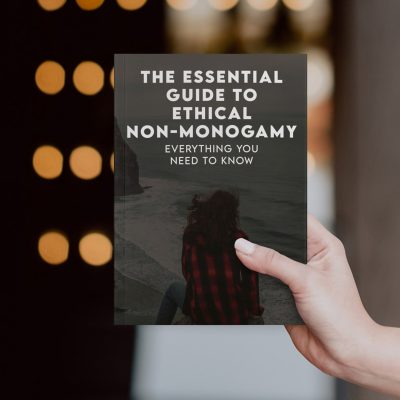
The freedom of an open relationship sounds incredible, but the logistics can feel like holding a grenade. That spinning "what if" anxiety isn't paranoia, it’s your survival instinct warning you that your bond is exposed. "Just seeing what happens" is the fastest way to turn a fantasy into a breakup.
The Essential Guide replaces chaos with discipline. We give you the blueprints, jealousy protocols, and repair scripts needed to explore the edge without falling off. Don't guess. Secure your foundation first.

The world of non-monogamy is a maze of confusing labels. Trying to be "Polyamorous" when your heart actually needs "Swinging" isn't just a vocabulary error; it’s a recipe for misery.
You can't build a stable home on a foundation that doesn't fit your psychology. This tool analyzes your emotional bandwidth and jealousy triggers to design the exact structure you need. Stop trying to squeeze into a box that doesn't fit. Build a relationship that actually feels like home.

Opening up feels exciting, but if you aren't reading from the same script, you're writing a tragedy. The disconnect between "I want freedom" and "I want safety" is where hearts break. This isn't just a quiz; it’s a synchronization engine.
We identify the silent gaps in your desires—from sleepover rules to emotional bandwidth, before they become unbridgeable chasms. Don't wait until the damage is done to find out you were never on the same page. Align your compasses now.

Theory is sexy. Reality is messy. You agreed you could date others, but how does your stomach drop when he takes her to your anniversary spot? Or when she comes home smelling like someone else?
This simulator drags your abstract rules into the harsh light of day. We force you to confront the visceral, gut-wrenching scenarios that actually destroy relationships, before they happen. Test your nervous system in the simulator so you don't crash the car in real life.

The fantasy is endless romance. The reality? It’s a logistical nightmare. Dating isn't just sex; it’s a second job of swiping, spending, and emotional processing that drains your sanity. Underestimating the "admin" of non-monogamy is the fastest way to turn your relationship into a burnout factory where resentment thrives.
This calculator forces you to confront the brutal math of your time, energy, and wallet. Can you actually afford this lifestyle, or are you just signing up for exhaustion?
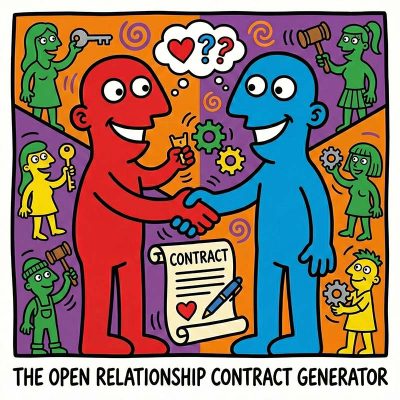
"I thought we agreed" is the sentence that destroys relationships & marriages. Relying on verbal promises when emotions run high is a gamble you cannot afford to lose. Your memory isn't just faulty; it's a liability. Ambiguity is the oxygen that jealousy breathes, turning "freedom" into a minefield of "did I mess up?"
This generator transforms vague permissions into a concrete, signed reality. Stop arguing about what you thought was said and lean on what is written. Secure your boundaries in ink, not hope.
Why some people jump in quickly
Jumping in quickly can feel exhilarating and efficient. Some couples discover rapid chemistry with a versatile partner who seems like a great fit for everyone. In other cases people worry that a slow approach looks like hesitation or fear. The quick path can accelerate the discovery of compatibility and create a sense of momentum that keeps partners committed to the journey. Jumping in can work well when both people share a unified vision for the open relationship and when they have a robust safety net in place.
Key benefits of a quick start include:
- Faster determination of what works and what does not in practice.
- Opportunity to normalize multiple relationships within the same calendar and social circle.
- Clear proof of compatibility early on which can be reassuring for some partners.
- Momentum can help reduce lingering doubts that hold a relationship back.
Practical framework to decide between slow and quick starts
Here is a practical framework you can use to decide which path fits you and your partner. Answer each question honestly and look for alignment or gaps that need to be addressed before you proceed.
- What are our core relationship values are we prioritizing trust communication autonomy or connection with others?
- What past experiences shape our tolerance for ambiguity and change?
- How comfortable are we with discussing feelings jealousy and boundaries in real time?
- Do we need a safety net such as a therapist or a coach to help us navigate this journey?
- Are we prepared to pause or adjust if the process becomes overwhelming for either person?
- Do we want to test with one new connection first or are we open to multiple connections at the same time?
Be ready for honest conversations and be willing to revisit decisions. A plan should be flexible not rigid because people change and relationships evolve. The goal is steady growth not perfection.
Ground rules for a slow opening
If you decide to open up slowly here is a concrete plan you can adapt. The focus is on transparency and gentle progress rather than rapid expansion.
- Define a shared intention Start with a clear statement of why you are opening the relationship and what you are hoping to gain. This helps align your actions with your values.
- Set a safe time frame Agree on a trial period during which you will test new boundaries and check in with each other regularly.
- Clarify boundaries Decide what is allowed who is allowed where and when. Boundaries may evolve but they should be explicit at the start.
- Choose a single entry point Start with one new connection rather than multiple to minimize complexity and stress.
- Agree on communication norms Establish how you will talk about jealousy what words trigger concerns and how you will celebrate wins together.
- Make time for check ins Schedule weekly or bi weekly conversations to review how things are going and adjust rules if needed.
- Protect emotional health Consider therapy or coaching if you feel stuck or overwhelmed. External support can be a game changer.
- Practice good self care Ensure you both have energy time and space to nurture your own well being outside the relationship too.
Example check in questions for slow openings
Use these prompts during your weekly or bi weekly check ins to stay aligned and calm.
- What is working well since the last check in
- What felt harder or confusing and why
- Have jealousy triggers changed or shifted
- Are boundaries still clear or do they need adjustment
- Are we still enjoying the process or is it starting to feel heavy
Ground rules for a fast start or a quick jump in
If you lean toward rapid exploration here are practical steps to keep things healthy and balanced without losing the thrill.
- Get explicit consent before each new connection Consent is ongoing and can be withdrawn at any time. Check in and confirm.
- Limit the number of new connections at first Start with one new person and assess impact before expanding.
- Establish hard boundaries around time Decide how much time you will dedicate to each relationship including date nights texting and emotional energy.
- Treat each connection as a separate story Respect the unique needs of each person and avoid cross project comparisons.
- Prioritize honesty even when it hurts Share worries early to prevent bigger problems later.
- Practice jealousy management in real time Use techniques like labeling the emotion and re framing to keep emotions from spiraling.
- Document agreements Keep a simple written record of boundaries rules and what is allowed to avoid confusion later.
- Make room for de escalation If tension rises schedule a pause to let things settle before continuing the conversation.
Real life scenarios you can relate to
Let us walk through three common situations. Each scenario shows how slow and quick paths can play out in real life. Use these as templates to plan your own conversation and decisions.
Scenario one a couple tests the waters slowly
Alex and Sam are a committed couple exploring ENM. They decide to start by inviting a single partner for casual dates. They spend weeks talking about their expectations and set a weekly check in. They share boundaries about how far the new person can influence their couple dynamics and how they will handle time management. After two months they decide to raise the level of involvement with a second connection only if the first is going smoothly. The process strengthens their trust and helps them learn how to navigate discomfort without creating stress for the other person.
Scenario two a couple jumps in with a clear plan
Jordan and Casey choose a fast start. They agree to a trial period of three months with one new partner who is fully aware of their existing relationship. They set explicit boundaries about communication and time and they use weekly emotional check ins. Their energy is high and they are cautious about maintaining their primary bond. At the end of the trial period they re evaluate and decide whether to continue with more connections or pause for a period of reflection. The approach works for them because they already had strong communication habits and a shared desire for novelty.
Scenario three a couple encounters a rough patch and uses a hybrid approach
Priya and Marco begin with a slow approach but after a few months Priya becomes open to a second connection sooner than planned. They pause to revisit boundaries and how they want to handle jealousy and time. They end up making a flexible rule that allows Priya to date a single partner while Marco remains focused on deepening their relationship. Later they revisit the boundary and adjust it again to fit both people’s evolving needs. This hybrid method protects their core bond while still offering room for growth.
Common mistakes to avoid
Even with the best intentions it is easy to slip up when opening a relationship. Here are common traps and how to sidestep them.
- Assuming consent is permanent Consent can change. Re check in regularly and expect that boundaries might shift as relationships change.
- Equating NRE with long term compatibility New relationship energy is intense and can obscure less attractive patterns. Stay focused on core values and compatible life goals.
- Ignoring practical logistics People forget about time energy and money. Talk about schedules finances and childcare when relevant.
- Trying to please everyone at once You cannot satisfy every person involved. Focus on integrity clarity and caring for the core relationship.
- Using silence to avoid hard conversations Silence hides problems. Address concerns early with patience and respect.
Tools and practices that help
Communication is the fuel for ENM. Build a toolbox of practices you can rely on when things get busy or tense.
- Regular check ins A consistent space to talk about feelings boundaries and needs keeps a connection strong.
- Transparent calendars Shared calendars help manage time and avoid conflicts about who is free when.
- Boundaries document A living document that lists what is acceptable what is not and what to do if someone crosses a line.
- Jealousy management techniques Name the emotion label the trigger and reframe thoughts to separate emotion from fact.
- Sexual health plan Clear agreements about STI testing condom use and safety practices are essential for all involved.
Glossary of useful terms and acronyms
- ENM Ethical non monogamy a relationship style that welcomes relationships beyond a single partner with consent.
- Open relationship A set up in which partners agree to let each other pursue relationships outside the primary bond.
- NRE New relationship energy a peak of excitement when a new connection begins.
- Boundaries Agreements about what is acceptable and what is not in and around the relationship.
- Primary partner The partner who holds a central role in a relationship possibly with shared life commitments.
- Secondary partner A connection that holds importance but may not have equal emphasis to a primary.
- Jealousy management Techniques and practices used to understand and reduce reactive emotions when boundaries are tested.
- Consent A clear and voluntary agreement to engage in a specific activity expressed freely at the time of the activity.
- Safe sex practices Procedures used to protect all partners from sexually transmitted infections.
Practical phrases you can use in conversations
These lines help open doors to honest dialogue without making the other person feel pressured. You can tailor them to fit your voice and your relationship.
- I want to check in about how we feel with opening up. Are you comfortable talking about this now
- Let us take this slow and see what works for both of us
- What boundaries feel essential to you as we experiment in ENM
- How can we support each other if jealousy pops up
- Would you be open to a weekly check in to review what is going well and what needs adjusting
Frequently asked questions
How do we know if a slow start is right for us
A slow start is right when you want strong boundaries clear communication and time for emotions to settle. If either partner feels overwhelmed by the prospect of multiple relationships a slow start is usually best.
What if one partner wants to jump in but the other does not
That can be a tough situation. The priority is open dialogue and a commitment to not pressuring the other person. You may agree to a longer trial a different form of connection or a pause until both feel ready. Never force a path that creates coercion or resentment.
Is it okay to redefine the relationship after opening up
Yes. ENM is dynamic. Relationships grow or shift. The important thing is to revisit the core agreements and make sure both people still feel safe and respected.
How do we handle jealousy in ENM
Name the feeling acknowledge its source and talk about what would make it feel manageable. Reframe thoughts to separate feelings from facts and use check ins to maintain trust.
Should we tell new partners about our existing relationship
Most couples choose to disclose their open arrangement to new partners. The level of disclosure varies by couple. The important part is honesty and consent between all involved.
What about safer sex and health
Agree on a health plan that includes regular STI testing condoms or other barrier methods where appropriate and open discussion about sexual health with all partners.
How do we document our agreements
Keep a simple written document that lists boundaries time frames and steps for reevaluation. Update it as needed and refer to it during difficult conversations.
The freedom of an open relationship sounds incredible, but the logistics can feel like holding a grenade. That spinning "what if" anxiety isn't paranoia, it’s your survival instinct warning you that your bond is exposed. "Just seeing what happens" is the fastest way to turn a fantasy into a breakup.
The Essential Guide replaces chaos with discipline. We give you the blueprints, jealousy protocols, and repair scripts needed to explore the edge without falling off. Don't guess. Secure your foundation first.
The world of non-monogamy is a maze of confusing labels. Trying to be "Polyamorous" when your heart actually needs "Swinging" isn't just a vocabulary error; it’s a recipe for misery.
You can't build a stable home on a foundation that doesn't fit your psychology. This tool analyzes your emotional bandwidth and jealousy triggers to design the exact structure you need. Stop trying to squeeze into a box that doesn't fit. Build a relationship that actually feels like home.
Opening up feels exciting, but if you aren't reading from the same script, you're writing a tragedy. The disconnect between "I want freedom" and "I want safety" is where hearts break. This isn't just a quiz; it’s a synchronization engine.
We identify the silent gaps in your desires—from sleepover rules to emotional bandwidth, before they become unbridgeable chasms. Don't wait until the damage is done to find out you were never on the same page. Align your compasses now.
Theory is sexy. Reality is messy. You agreed you could date others, but how does your stomach drop when he takes her to your anniversary spot? Or when she comes home smelling like someone else?
This simulator drags your abstract rules into the harsh light of day. We force you to confront the visceral, gut-wrenching scenarios that actually destroy relationships, before they happen. Test your nervous system in the simulator so you don't crash the car in real life.
The fantasy is endless romance. The reality? It’s a logistical nightmare. Dating isn't just sex; it’s a second job of swiping, spending, and emotional processing that drains your sanity. Underestimating the "admin" of non-monogamy is the fastest way to turn your relationship into a burnout factory where resentment thrives.
This calculator forces you to confront the brutal math of your time, energy, and wallet. Can you actually afford this lifestyle, or are you just signing up for exhaustion?
"I thought we agreed" is the sentence that destroys relationships & marriages. Relying on verbal promises when emotions run high is a gamble you cannot afford to lose. Your memory isn't just faulty; it's a liability. Ambiguity is the oxygen that jealousy breathes, turning "freedom" into a minefield of "did I mess up?"
This generator transforms vague permissions into a concrete, signed reality. Stop arguing about what you thought was said and lean on what is written. Secure your boundaries in ink, not hope.
