
Public Versus Private Openness

Welcome to a practical, no fluff guide about how to handle openness in ethical non monogamy. If you are exploring an open relationship or you live in one already you know that openness is not a one size fits all thing. The same rule applies no matter where you live or who you are dating. What works for one couple might not work for another. The big decision is how public or private your openness should be. This guide breaks down the concepts, walks you through decision making, and gives real world examples to help you set up agreements you can actually keep.
Quick Links to Useful Sections
- What openness means in ethical non monogamy
- The case for public openness
- Why people choose public openness
- Potential challenges of public openness
- The case for private openness
- Why people choose private openness
- Potential challenges of private openness
- How to decide between public and private openness
- Step one clarify your core values
- Step two map out boundaries for each approach
- Step three test with small experiments
- Step four keep a regular check in
- Step five build a shared language
- Real world scenarios
- Scenario one a date with someone new and a planned disclosure
- Scenario two a partner wants to update a larger social circle
- Scenario three a boundary conflict about shared information
- Scenario four a shift toward more public openness
- Communicating about openness with clarity and care
- Safety and wellbeing within openness
- Boundaries and everyday life
- Glossary of useful terms and acronyms
- Frequently asked questions
Before we dive in a quick note on terms so we are all on the same page. ENM stands for Ethical Non Monogamy a broad umbrella term for relationships that involve more than two people with consent and transparency. Open relationships are one form of ENM. Polyamory is another approach that often emphasizes ongoing emotional connections with multiple partners. Swinging is another style sometimes focusing on sexual experiences with others typically in a social or couple oriented context. This article uses plain language and explains terms as we go so nothing feels esoteric.
Our brand is about giving you clear information that helps you think differently without making it messy. We will cover what public openness means what private openness means how to choose between them and how to build agreements that fit your life. There will be practical tips for conversations boundaries and safety plus common mistakes to avoid.
What openness means in ethical non monogamy
Openness in ENM is about how much you share with others outside your primary relationship and how you handle information about your dating life. It is not just about how many people you date. It is also about what you reveal how you reveal it to whom and under what conditions. You might share everything with everyone or you might keep many details private. The key idea is consent transparency and respect for all people involved.
People often think about openness in two dimensions a spectrum one axis is emotional disclosure and the other is sexual sharing. Some couples pursue a high degree of emotional openness sharing feelings hopes and relationship growth with multiple partners. Others focus on sexual openness keeping emotional details within a smaller circle. Some couples blend both in a balanced way while others choose a more discreet approach in certain areas while staying open in others.
Here are some terms you may encounter as you think through openness options. ENM Ethical Non Monogamy a practice where all parties agree to non exclusive or non traditional relationship formats. Open relationship a relationship structure where partners may date or have sexual experiences with others outside the primary relationship while maintaining a commitment to each other. Polyamory a form of ENM where people have multiple ongoing loving relationships. Swinging a style of ENM often centered on sexual experiences with other couples or individuals in social settings. Boundaries rules and agreements a set of understandings partners create to guide what is allowed and what is not. Communication a continuous process of sharing feelings information and decisions with care and honesty. Consent a mutual agreement to participate that is informed and voluntary.
The case for public openness
Public openness means sharing more about your dating life with a wider circle including friends family and sometimes social networks. It can involve posting about dates on social media sharing experiences with trusted friends or speaking openly in communities that welcome ENM discussion. Public openness is not the same as flaunting every detail. It is about transparency with consent from all involved and respecting privacy boundaries when necessary.
Why people choose public openness
- Accountability building trust with partners and friends who care about you.
- Community support making it easier to navigate the quirks of ENM with people who understand the dynamic.
- Clear boundaries fewer hidden updates or misinterpretations which can reduce jealousy believers and miscommunication scars.
- Validation and normalization by sharing experiences with a broader audience which can reduce stigma.
- Safety factors including sharing information that might help others avoid risky situations or unsafe dynamics.
Potential challenges of public openness
- Privacy tradeoffs that can feel invasive or uncomfortable especially if you are private by nature.
- Jealousy triggers when stories about partners left parts of your life exposed beyond your control.
- Social friction with people who do not understand ENM or who misunderstand your reasons for openness.
- Pressure to perform or curate moments for public consumption which can skew authentic experiences.
The freedom of an open relationship sounds incredible, but the logistics can feel like holding a grenade. That spinning "what if" anxiety isn't paranoia, it’s your survival instinct warning you that your bond is exposed. "Just seeing what happens" is the fastest way to turn a fantasy into a breakup.
The Essential Guide replaces chaos with discipline. We give you the blueprints, jealousy protocols, and repair scripts needed to explore the edge without falling off. Don't guess. Secure your foundation first.

The world of non-monogamy is a maze of confusing labels. Trying to be "Polyamorous" when your heart actually needs "Swinging" isn't just a vocabulary error; it’s a recipe for misery.
You can't build a stable home on a foundation that doesn't fit your psychology. This tool analyzes your emotional bandwidth and jealousy triggers to design the exact structure you need. Stop trying to squeeze into a box that doesn't fit. Build a relationship that actually feels like home.
Opening up feels exciting, but if you aren't reading from the same script, you're writing a tragedy. The disconnect between "I want freedom" and "I want safety" is where hearts break. This isn't just a quiz; it’s a synchronization engine.
We identify the silent gaps in your desires—from sleepover rules to emotional bandwidth, before they become unbridgeable chasms. Don't wait until the damage is done to find out you were never on the same page. Align your compasses now.
Theory is sexy. Reality is messy. You agreed you could date others, but how does your stomach drop when he takes her to your anniversary spot? Or when she comes home smelling like someone else?
This simulator drags your abstract rules into the harsh light of day. We force you to confront the visceral, gut-wrenching scenarios that actually destroy relationships, before they happen. Test your nervous system in the simulator so you don't crash the car in real life.
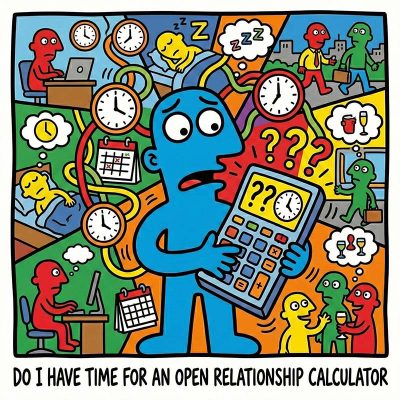
The fantasy is endless romance. The reality? It’s a logistical nightmare. Dating isn't just sex; it’s a second job of swiping, spending, and emotional processing that drains your sanity. Underestimating the "admin" of non-monogamy is the fastest way to turn your relationship into a burnout factory where resentment thrives.
This calculator forces you to confront the brutal math of your time, energy, and wallet. Can you actually afford this lifestyle, or are you just signing up for exhaustion?
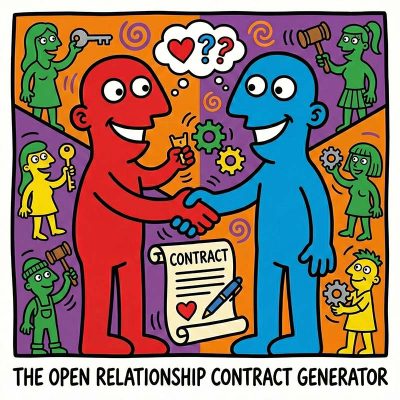
"I thought we agreed" is the sentence that destroys relationships & marriages. Relying on verbal promises when emotions run high is a gamble you cannot afford to lose. Your memory isn't just faulty; it's a liability. Ambiguity is the oxygen that jealousy breathes, turning "freedom" into a minefield of "did I mess up?"
This generator transforms vague permissions into a concrete, signed reality. Stop arguing about what you thought was said and lean on what is written. Secure your boundaries in ink, not hope.
The case for private openness
Private openness focuses on sharing your open relationship experiences with a smaller circle such as your partner couple or a small group of trusted friends. The aim is honesty and clarity without broadcasting every detail to the world. This approach preserves privacy while maintaining a clear channel of communication within the people who matter most to you.
Why people choose private openness
- Control over who knows what keeps your personal life more secure and private.
- Less risk of misinterpretation or gossip that can damage relationships.
- Better focus on the quality of your main relationship without external noise.
- Less pressure to perform or craft a public image which feels more authentic and sustainable for many people.
Potential challenges of private openness
- Limited outside perspective which can make problems feel bigger or smaller than they are.
- Expectations about sharing may become strained if a partner wants more openness than the other person is comfortable with.
- Potential for creeping secrecy if one partner shares with selective friends and not others leading to trust concerns.
How to decide between public and private openness
Choosing between public and private openness is rarely a one time decision. It is a process that can evolve with time and experience. Here are practical steps to help you decide what fits you and your partner or partners best.
Step one clarify your core values
Start with the basics. What matters most to you in a relationship and in openness. Common values include honesty trust respect autonomy safety and kindness. Write down a personal list of values and then compare how a public or private approach aligns with each item.
Step two map out boundaries for each approach
Boundaries are the guardrails that keep your agreements safe. For public openness you may set boundaries about what details you share with whom and how soon after a date you share. For private openness boundaries might focus on which topics stay within the inner circle and which topics can be discussed with trusted outside friends with permission.
Step three test with small experiments
Try a light public approach for a month then pull back if it does not feel right. Or begin with private openness and gradually expand to a broader circle if comfort grows. The key is to monitor your own feelings and the health of your relationships not to chase external feedback alone.
Step four keep a regular check in
Set a recurring time for check ins with your partner or partners to discuss what is working what is not and what needs to change. These conversations can be as short as 20 minutes and can prevent small issues from becoming serious breaches of trust.
Step five build a shared language
Agree on the language you will use to discuss openness. Having clear words for topics like risk boundaries disclosure frequency and potential changes helps everyone communicate more effectively.
Real world scenarios
Imagine you and your partner have decided to experiment with private openness initially and you are weighing the idea of moving toward a more public approach in the future. Here are a few realistic scenarios you might encounter and how different openness choices could play out.
Scenario one a date with someone new and a planned disclosure
You and your partner consent to a new dating scenario. You decide to share basic information with a small trusted circle rather than posting broadly. You describe the date in general terms and set a limit on what you will reveal publicly before the initial check in with your partner. If jealousy emerges or if boundaries feel uncertain you pause and revisit the plan.
Scenario two a partner wants to update a larger social circle
A partner receives a message from a friend group asking for details. The couple discusses what information is appropriate to share publicly. They decide to keep specific details private while sharing a high level update that respects everyone s boundaries. If a conflict arises they revert to the agreed plan and adjust the boundary set as needed.
Scenario three a boundary conflict about shared information
One partner wants to reveal a past dating experience while the other would prefer to keep it private. The couple uses their boundary language to explain why the information is sensitive and agrees on a compromise perhaps sharing only lessons learned rather than explicit details. They schedule a follow up to reexamine the boundary after a cooling off period.
Scenario four a shift toward more public openness
After several successful months of private openness one partner expresses readiness to be more public. The couple revisits their values boundaries and consent. They choose a gradual approach starting with social media posts limited to a few approved updates and expanding only if both feel comfortable. They continue to hold weekly check ins to keep the line of communication open.
Communicating about openness with clarity and care
Communication is the engine that makes openness work. Here is a practical approach you can use to keep conversations productive even when emotions run high.
- Start with a shared goal. Begin the conversation by stating what you both want to achieve through openness whether it is more honesty more connection or safety.
- Offer specifics not spin. Be concrete about what you want share with whom and when. Vague requests often lead to confusion and frustration.
- Listen before you defend. Focus on understanding your partner s perspective before trying to justify your own boundaries or desires.
- Pause when needed. If the conversation becomes heated take a break and revisit later with fresh energy.
- Document agreements. Write down boundaries rules and expectations so you have a reference point for future discussions.
- Plan for renegotiation. Make it clear that openness agreements are not fixed forever. They can be updated as life changes occur.
Safety and wellbeing within openness
Safety is not just about sex it is about emotional safety as well. When you map out openness you should also map out risk management and care for all people involved. Here are practical safety tips for both public and private openness.
- Sexual health first. Regular STI testing communicate your status with partners and use barrier methods when appropriate. Keep up to date records of health checks where you feel comfortable sharing them.
- Consent at every step. Even if you have an ongoing agreement always seek explicit consent for new activities or disclosures. Consent can be withdrawn at any time.
- Privacy respect. Do not share information about another person s life without their explicit consent even if you think it is harmless.
- Emotional check ins. Jealousy and insecurity can appear even with strong agreements. Address these feelings quickly with compassionate communication.
- Support networks. Having a trusted friend or therapist who understands ENM can help you process complex emotions and boundaries.
Boundaries and everyday life
Your agreements are only useful if they fit your daily life. Here are some practical boundary ideas you can adapt whether you lean toward public or private openness.
- What is shared with whom. Decide if you will share dates stories or photos with friends family or social networks. Set a rule about what counts as a shared update.
- When to disclose. Define a timeframe for sharing new experiences. Some couples prefer to wait a day two or a week before discussing details with others.
- What stays private. Determine topics such as intimate details a person s identity or past relationships that should remain inside the inner circle.
- How public you go. If you choose public openness decide which aspects are safe to share in public spaces raise a flag and pause if someone feels uncomfortable.
- How to handle emergencies. Create a plan for how to respond when a partner is uncomfortable or when a disclose causes pain to someone else.
Glossary of useful terms and acronyms
- ENM Ethical Non Monogamy a framework that emphasizes consent and transparency when more than two people are involved in relationships.
- Open relationship A relationship where partners may engage in dating or sexual experiences with others outside the primary pairing while maintaining commitment.
- Polyamory A form of ENM where people have multiple ongoing intimate relationships with the knowledge and consent of everyone involved.
- Swinging A style of ENM focusing on sexual experiences with other individuals or couples often in social settings.
- Boundaries Agreed limits about what is allowed what is not and how information is shared.
- Consent Informed voluntary agreement to participate in an activity with others.
- Transparency Openness about feelings needs and actions that matter to the relationship.
- Primary relationship The main or most central relationship in a given ENM setup often referred to as the anchor relationship.
- Disclosure The act of sharing information about dating life with others.
Frequently asked questions
How do I know if public openness is right for us
Start with a conversation about values safety and comfort. Ask yourselves what you hope to gain from openness and what could harm the relationship. If both partners feel uneasy about sharing details widely you might start with private openness and move toward public as trust grows.
What steps can we take to make private openness work
Develop a small circle of trusted individuals who understand ENM and your boundaries. Document what you share with whom and when. Schedule regular check ins to adjust boundaries as needed. Maintain privacy for topics that feel too sensitive to discuss widely.
How can we transition from private to public openness
Take a staged approach. Begin with a few safe public updates that do not reveal sensitive information. Gauge reactions and comfort levels. If all goes well gradually expand what you share while continuing to protect the core boundaries you both value.
How do we deal with jealousy in an open dynamic
Jealousy is a normal signal that something needs attention. Validate feelings name them and discuss what would make you feel more secure. Adjust boundaries or add rituals such as more time together or shared experiences to reinforce trust. Consider talking to a therapist who understands ENM dynamics for additional support.
What should we do if someone crosses a boundary
Address it calmly and promptly. Revisit the boundary together and decide on consequences or adjustments. It can be helpful to have a predefined process for boundary breaches including a cool down period and a follow up conversation to prevent escalation.
Can we share health information publicly
Health information is sensitive. Only share what all partners consent to and only in ways that keep everyone safe and respected. When in doubt pause and revisit the topic with the entire circle involved.
How often should we revisit openness agreements
Make this a regular practice. A monthly quick check in is a good starting point. If life changes such as new partners new schedules or relocation happen you may want to revisit sooner. The goal is to keep agreements aligned with reality.
The freedom of an open relationship sounds incredible, but the logistics can feel like holding a grenade. That spinning "what if" anxiety isn't paranoia, it’s your survival instinct warning you that your bond is exposed. "Just seeing what happens" is the fastest way to turn a fantasy into a breakup.
The Essential Guide replaces chaos with discipline. We give you the blueprints, jealousy protocols, and repair scripts needed to explore the edge without falling off. Don't guess. Secure your foundation first.
The world of non-monogamy is a maze of confusing labels. Trying to be "Polyamorous" when your heart actually needs "Swinging" isn't just a vocabulary error; it’s a recipe for misery.
You can't build a stable home on a foundation that doesn't fit your psychology. This tool analyzes your emotional bandwidth and jealousy triggers to design the exact structure you need. Stop trying to squeeze into a box that doesn't fit. Build a relationship that actually feels like home.
Opening up feels exciting, but if you aren't reading from the same script, you're writing a tragedy. The disconnect between "I want freedom" and "I want safety" is where hearts break. This isn't just a quiz; it’s a synchronization engine.
We identify the silent gaps in your desires—from sleepover rules to emotional bandwidth, before they become unbridgeable chasms. Don't wait until the damage is done to find out you were never on the same page. Align your compasses now.
Theory is sexy. Reality is messy. You agreed you could date others, but how does your stomach drop when he takes her to your anniversary spot? Or when she comes home smelling like someone else?
This simulator drags your abstract rules into the harsh light of day. We force you to confront the visceral, gut-wrenching scenarios that actually destroy relationships, before they happen. Test your nervous system in the simulator so you don't crash the car in real life.
The fantasy is endless romance. The reality? It’s a logistical nightmare. Dating isn't just sex; it’s a second job of swiping, spending, and emotional processing that drains your sanity. Underestimating the "admin" of non-monogamy is the fastest way to turn your relationship into a burnout factory where resentment thrives.
This calculator forces you to confront the brutal math of your time, energy, and wallet. Can you actually afford this lifestyle, or are you just signing up for exhaustion?
"I thought we agreed" is the sentence that destroys relationships & marriages. Relying on verbal promises when emotions run high is a gamble you cannot afford to lose. Your memory isn't just faulty; it's a liability. Ambiguity is the oxygen that jealousy breathes, turning "freedom" into a minefield of "did I mess up?"
This generator transforms vague permissions into a concrete, signed reality. Stop arguing about what you thought was said and lean on what is written. Secure your boundaries in ink, not hope.
