
Re Aligning When Goals Diverge


Open relationships can be wonderfully expansive and incredibly confusing at the same time. When two people decide to explore ethically non monogamous connections or other open relationship structures, the goal is usually shared freedom paired with honest communication. But human beings change. Priorities shift. The world around us shifts. When this happens in an ENM dynamic the gap between what you want and what your partner wants can feel like a canyon. This guide is your practical playbook for recognizing when goals diverge and getting back into alignment without losing the care, respect, or the spark you started with. We break down the terms, the high level ideas, the real world conversations, and the step by step renegotiation process so you can move forward with clarity and confidence.
Quick Links to Useful Sections
- What the ENM dynamic means and what an open relationship looks like in practice
- Common goals in ENM and why they can diverge
- Signs that your goals are diverging
- A practical framework to re align when goals diverge
- Step 1. Create a safe space to name the divergence
- Step 2. Lead with your own truth
- Step 3. Clarify what matters most to you
- Step 4. Invite your partner to share their core needs
- Step 5. Map out renegotiated agreements
- Step 6. Plan practical experiments
- Step 7. Schedule regular check ins
- Step 8. Have a plan for difficult emotions
- Step 9. Decide when to pause or pause safely
- Step 10. Decide if a long term restructuring makes sense
- Conversation scripts you can steal and adapt
- Opening the space
- Speaking your needs
- Inviting collaboration
- Handling fear or jealousy in the moment
- Real world scenarios and how to handle them
- Scenario A: One partner wants a deeper emotional connection with a new partner while the other is seeking more independence
- Scenario B: Busy life means less time for open dating and more time for the primary relationship
- Scenario C: A partner wants to slow things down while the other wants to speed up
- Scenario D: Introducing a new partner during a time of stress
- Tools and exercises that support realignment
- Common mistakes and how to avoid them
- Self care and mental health while renegotiating
- Glossary of useful terms and acronyms
- Frequently asked questions
What the ENM dynamic means and what an open relationship looks like in practice
ENM stands for ethically non monogamous. In plain speak that means a relationship setup where all involved parties agree that romantic or sexual connections outside the primary partnership are allowed under defined rules and a shared code of ethics. This is not chaos with a hall pass. It is a conscious, negotiated arrangement where boundaries exist, communication is continuous, and consent is ongoing. An open relationship can take many forms. You might have a primary partner and explicit agreements about dating others. You could have a more fluid structure where multiple partners are involved without a strict hierarchy. You could even experiment with polyamory as a broader umbrella term. The key is consent, transparency, and a shared understanding of what counts as success in the relationship for all people involved.
People often come into ENM with one set of goals and leave with a different one. That is normal. Humans grow. Priorities change. Children arrive. Careers shift. Long distance becomes a reality. All these changes can push you toward a moment where what you want and what your partner wants no longer overlap in a meaningful way. The goal of this guide is to give you a map for navigating those moments with compassion, honesty, and practicality.
Common goals in ENM and why they can diverge
Before you can realign you need to name what you are actually aiming for. Here are some of the big buckets people use to measure success in ENM relationships. Not every bucket will apply to every couple, and that is okay. The trick is to identify which ones matter to you and your partner and then check in regularly to see if they are still aligned.
- Emotional intimacy How much closeness, emotional depth, and daily connection you want with non primary partners and with your primary partner. This is often the biggest source of tension when one person craves deep emotional bonds with new partners while the other values a lighter balance.
- Sexual variety and frequency The appetite for physical intimacy with others and how often you are comfortable or excited about that experience. This includes comfort with different sexual activities and the presence of risk sensitive boundaries.
- Time and energy The actual hours you can invest in dating, meeting new people, and nurturing the relationship. Time is a finite resource and conflicts often show up here first.
- Relationship hierarchy Whether the primary partner is the center of the world or if all partners hold equal weight. Some people want a clear hierarchy while others want a more egalitarian vibe.
- Communication style and frequency How often you talk about the relationship, how you talk about it, and how you handle difficult topics. Some people prefer daily check ins, others do well with a weekly sit down.
- Boundaries and risk management Boundaries around sex acts, safe sex, dating with partners who have other partners, and what types of disclosures are required. Boundaries are not rules to trap people they are a living agreement to keep everyone safe and respected.
- Life stage and practical realities Things like career demands housing costs child care and health challenges can change what is feasible or desirable in a given moment.
- Values and ethics Core beliefs about honesty consent respect and care. When values shift a renegotiation is not a detour it is a re alignment.
In an ENM setup the goal is not to avoid conflict entirely but to handle it in a way that maintains trust. Divergence in goals is not a sign that your relationship is failing it is a sign you are surviving and evolving as a couple. The moment you spot divergence you have an opportunity to reassess and adjust in a way that serves you both better.

The freedom of an open relationship sounds incredible, but the logistics can feel like holding a grenade. That spinning "what if" anxiety isn't paranoia, it’s your survival instinct warning you that your bond is exposed. "Just seeing what happens" is the fastest way to turn a fantasy into a breakup.
The Essential Guide replaces chaos with discipline. We give you the blueprints, jealousy protocols, and repair scripts needed to explore the edge without falling off. Don't guess. Secure your foundation first.

The world of non-monogamy is a maze of confusing labels. Trying to be "Polyamorous" when your heart actually needs "Swinging" isn't just a vocabulary error; it’s a recipe for misery.
You can't build a stable home on a foundation that doesn't fit your psychology. This tool analyzes your emotional bandwidth and jealousy triggers to design the exact structure you need. Stop trying to squeeze into a box that doesn't fit. Build a relationship that actually feels like home.

Opening up feels exciting, but if you aren't reading from the same script, you're writing a tragedy. The disconnect between "I want freedom" and "I want safety" is where hearts break. This isn't just a quiz; it’s a synchronization engine.
We identify the silent gaps in your desires—from sleepover rules to emotional bandwidth, before they become unbridgeable chasms. Don't wait until the damage is done to find out you were never on the same page. Align your compasses now.
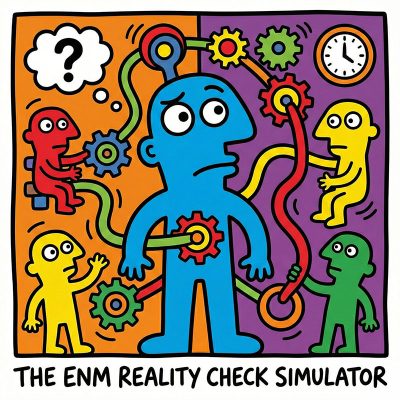
Theory is sexy. Reality is messy. You agreed you could date others, but how does your stomach drop when he takes her to your anniversary spot? Or when she comes home smelling like someone else?
This simulator drags your abstract rules into the harsh light of day. We force you to confront the visceral, gut-wrenching scenarios that actually destroy relationships, before they happen. Test your nervous system in the simulator so you don't crash the car in real life.
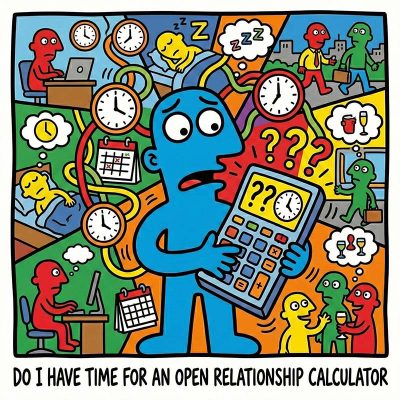
The fantasy is endless romance. The reality? It’s a logistical nightmare. Dating isn't just sex; it’s a second job of swiping, spending, and emotional processing that drains your sanity. Underestimating the "admin" of non-monogamy is the fastest way to turn your relationship into a burnout factory where resentment thrives.
This calculator forces you to confront the brutal math of your time, energy, and wallet. Can you actually afford this lifestyle, or are you just signing up for exhaustion?
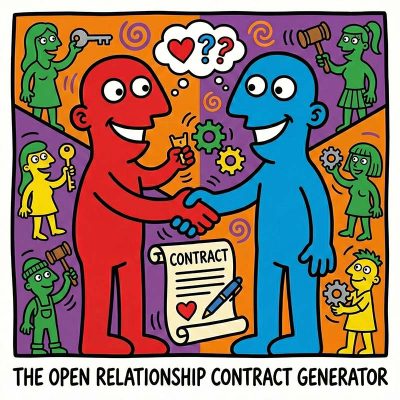
"I thought we agreed" is the sentence that destroys relationships & marriages. Relying on verbal promises when emotions run high is a gamble you cannot afford to lose. Your memory isn't just faulty; it's a liability. Ambiguity is the oxygen that jealousy breathes, turning "freedom" into a minefield of "did I mess up?"
This generator transforms vague permissions into a concrete, signed reality. Stop arguing about what you thought was said and lean on what is written. Secure your boundaries in ink, not hope.
Signs that your goals are diverging
Not every mismatch is a full blown crisis. Some are subtle nudges that a re alignment is due. Here are telltale signs that your goals might be diverging and deserve a careful conversation sooner rather than later.
- You feel stuck or resentful You find yourself resenting your partner for choices they are making or for behaviors you once found acceptable that no longer feel good.
- You experience a drift in intimacy levels Maybe you are suddenly craving more alone time or craving more connection with other partners than with your primary partner.
- Time spent with others is shifting priorities Your calendar starts to tilt away from the things you both agreed were important and you notice one or both of you feeling deprioritized.
- Jealousy or insecurity becomes a more frequent companion Jealous feelings do not mean the relationship is broken but they do signal that needs are not being met in a way that feels safe and respectful.
- Communication feels reactive not proactive Conversations about the relationship become tense because you are both responding to problems rather than setting up proactive plans.
- Boundaries feel tested or ignored When you notice boundary creep or when one person feels their personal limits are not being honored.
- Life changes demand adjustments A new job a move a health issue or a family event can force you to re evaluate what is possible and desirable in the moment.
If you notice one or more of these signs over a period of weeks or months you are not a failure you are a living system that needs tuning. The longer you wait the louder the misalignment voice becomes. The good news is you can course correct with intention and care. The following steps provide a practical framework you can apply.
A practical framework to re align when goals diverge
Renegotiation is a teamwork process that requires honesty vulnerability and a lot of listening. Here is a step by step approach you can apply when you sense divergence is setting in.
Step 1. Create a safe space to name the divergence
Start with a calm plan not a heated argument. Schedule a dedicated time to talk without interruptions. Begin with a shared intention such as we want to understand each other and find a path that feels good for both of us. Use language that centers care rather than blame. For example ask a question like What parts of our ENM setup feel truly working for you and where do you feel stretched? This signals curiosity not accusation.
Step 2. Lead with your own truth
Speak from your own experience using statements that start with I. Things like I feel I am needing more time with you or I notice my energy is lower when the current pattern continues. Personalizing your statements reduces defensiveness and invites the other person to hear your experience rather than become a defensive counter argument.
Step 3. Clarify what matters most to you
Make a concise list of three to five core needs that must be honored for you to feel safe and satisfied in the relationship. These are not flexible wish lists they are essential pillars. Examples include emotional availability sexual safety time with you preference for transparency in dating or a commitment to regular check ins regardless of what else is happening in life.
Step 4. Invite your partner to share their core needs
Give your partner the same space to name their essential pillars. Listen actively without offering fixes or counter arguments. Reflect back what you heard to demonstrate understanding. This is where the real work happens building empathy for the path the other person wants to walk.
Step 5. Map out renegotiated agreements
Once you both have clarity on core needs you can begin turning those into concrete agreements. You may not get everything you want but you should aim to protect the essential elements. Write down who will do what where when and how you will handle unexpected changes. Create a simple instrument like a living document that you both can adjust as needed. The key is to keep it specific to avoid vague rules that quickly become unenforceable.
Step 6. Plan practical experiments
Agree on small safe experiments to test the renegotiation. For example you might try a two month trial where you increase weekly check ins or you create a fixed date night for the two of you with no external partners. Treat experiments as collaborative tests not ultimatums and be ready to pause or adjust based on what you learn.
Step 7. Schedule regular check ins
Mark a recurring calendar event such as a monthly review where you discuss what is working what is not and what is shifting in life. Don t wait for a crisis to begin this dialogue. Consistent check ins build trust and keep the lines open so you can catch drift before conflict escalates.
Step 8. Have a plan for difficult emotions
Jealousy fear and insecurity are normal in ENM. Build a toolkit for handling these emotions when they arise. This could include taking a walk before a tough talk practicing breathing exercises during tense moments or reaching out to a trusted friend or therapist for support. Never weaponize emotions or blame your partner for feeling a certain way. Emotions are information not verdicts about your worth or your partner s intentions.
Step 9. Decide when to pause or pause safely
There are moments when pausing nonmonogamy is the healthiest option. If injuries run deep or if someone is not ready to renegotiate in good faith you can agree to pause certain structures while you heal or reassess. A pause is a choice not a punishment and it should be time bounded with clear criteria for re evaluation.
Step 10. Decide if a long term restructuring makes sense
Sometimes the divergence is bigger than a renegotiation can handle. In those cases you may decide to adjust the relationship model entirely. That could mean adding more structure a new kind of partnership arrangement or even ending a nonmonogamous pattern while preserving a friendship or co parenting relationship. Re alignment does not always mean staying under the same roof it means choosing the arrangement that allows both people to thrive with honesty and safety.
Conversation scripts you can steal and adapt
Here are a few ready to personalize dialogue starters. Use them as templates and tailor them to your voice and your relationship history. The goal is to invite clarity not to win an argument.
Opening the space
I want to talk about how our ENM setup is feeling for me lately. I am hoping we can be honest with each other and figure out a path that respects both of our needs. I care about you and I want us to stay close while also feeling hopeful about our future together.
Speaking your needs
From my side I am noticing I need more emotional connection with you on a regular basis and I need to feel secure about the time we spend together. I would like us to renegotiate how we balance time with other partners and time with each other. What would be important for you to have in this renegotiation?
Inviting collaboration
Let us design a plan together. Could we set a schedule for check ins and test one or two concrete changes over the next eight weeks? If it goes well we can keep it if not we can adjust again or pause certain aspects of nonmonogamy until we both feel ready.
Handling fear or jealousy in the moment
When these feelings show up I want us to pause and take a breath. I do not want to shame you for feeling that way and I hope you will not shame me either. Let us name the emotion then discuss what we each need to feel safe and supported right now.
Real world scenarios and how to handle them
Seeing real life examples helps translate theory into practice. Here are several representative situations you might encounter in an ENM open relationship dynamic. Use them to guide your own talks and to anticipate the kinds of compromises that a healthy renegotiation might require.
Scenario A: One partner wants a deeper emotional connection with a new partner while the other is seeking more independence
What you can do: Begin with a joint check in to name the shift in emotional appetite. Clarify what each of you means by emotional connection and define what counts as adequate emotional availability in each relationship. Consider a time bound trial period for deeper connection with a new partner followed by a review. If the desire for connection remains high for one person and not the other you may choose to adjust the structure or re allocate personal energy in a way that keeps both people feeling valued.
Scenario B: Busy life means less time for open dating and more time for the primary relationship
What you can do: Recommit to a baseline of time together that feels safe for both. Create a weekly non negotiable couple night even if it is a low effort activity. Consider simplifying other dating commitments temporarily to protect the primary bond. Revisit the renegotiation after a set period to decide whether you keep the current balance or adjust again based on life changes.
Scenario C: A partner wants to slow things down while the other wants to speed up
What you can do: Explore what speed means in practice. It could be faster emotional integration or more frequent dating outside. Agree on a clear target for each area and set review points. If slowed dating creates safety or trust issues for one person you can replace some dating with more intimate interactions within your primary bond to help bridge the gap.
Scenario D: Introducing a new partner during a time of stress
What you can do: Prioritize foundational trust first. Run a mini renegotiation focused on safety disclosures and consent with the new person. Consider delaying more intimate or complicated arrangements until the stress passes and you both feel more resilient. Be transparent with all parties about the current emotional weather and the plan for handling it.
Tools and exercises that support realignment
Using practical tools helps translate talk into tangible behavior. Here are a few you can try right away.
- Feeling wheel A tool to name the exact emotion you are feeling so you can address it directly rather than letting it simmer into resentment.
- Time blocking Create a weekly calendar that reserves space for partner time and for dating with others. Visible blocks make expectations clear and easier to honor.
- Boundary map Draw a simple map of boundaries with your partner. Include what is allowed with whom and under what conditions. Refer back to the map during check ins to stay aligned.
- Renegotiation one pager A concise document listing the updated agreements including who what where when how and how you will handle changes. Keep it in a place both partners can access.
- Check in prompts Prepare a short list of questions to guide your monthly review. Examples include What is working well for you this month What would you change if you could change one thing today
Common mistakes and how to avoid them
Renegotiation that goes wrong often follows a few predictable patterns. Watch for these missteps and steer away early.
- Coercive tactics If one partner uses guilt or fear to push the other into a limit they do not truly agree with that is a red flag. Keep discussions voluntary and respectful.
- Withholding information Hiding desires or fears creates a hidden agenda which erodes trust. Practice radical honesty even when it is uncomfortable.
- Black or white thinking Believing there is only one correct path is a trap. ENM is a spectrum and it is perfectly okay to keep experimenting with different structures.
- Punishing responses to boundaries If a partner asserts a boundary and the other responds with anger or withdrawal that signals a need for a slower more careful approach to renegotiation.
- Expectations that never change Rigid rules that refuse to bend in the face of life changes will eventually break trust. Rules should be living documents.
Self care and mental health while renegotiating
Open relationship renegotiations can trigger a wave of emotions. You are allowed to seek help from a therapist who understands ENM or nonmonogamy. It is healthy to talk through expectations with someone who can stay neutral and provide concrete strategies. Self care matters too. Go for walks breathe deeply practice a hobby and keep the lines of communication with your partner open even when topics feel heavy. You are not alone in this you are navigating a shared future with someone you care about and that is worth tending to.
Glossary of useful terms and acronyms
- ENM Ethically non monogamous a relationship framework in which people consent to nonmonogamous connections under agreed rules.
- Open relationship A relationship arrangement where romantic or sexual connections outside the primary partnership are allowed with consent and boundaries.
- Primary partner The partner who holds a central or long term role in a nonmonogamous arrangement for many people.
- Renegotiation The process of revisiting and revising relationship agreements to reflect new needs and life circumstances.
- Boundary A guideline that protects comfort and safety within relationships. Boundaries are discussed and agreed upon by all involved parties.
- Check in A scheduled conversation to assess how the relationship is feeling and what might need changing.
- Monogamy spectrum The range of relationship structures from exclusive partnerships to nonmonogamous arrangements including polyamory and open relationships.
- Jealousy An emotion that can indicate unmet needs or insecurities rather than a personal failing. It is a signal to pause and listen.
- Consent An ongoing agreement to participate in any activity. Consent can be withdrawn at any time and must be respected by all parties.
Frequently asked questions
Below are quick answers to questions people often have when goals diverge in an ENM open relationship. Use these as a starter and then use your own experiences to tailor the answers to your situation.
How do I know we are diverging in our goals
Look for shifts in emotional needs time management and satisfaction with the current structure. If you notice persistent frustration or disconnect it is a strong signal to pause and re explore what both of you want.
What is the best first step to renegotiate
Set a time to talk in a calm setting. Start with describing your own needs using I statements and invite your partner to share theirs. Agree to a small test period with a clear stop rule if either person feels unsafe or unhappy.
What if my partner does not agree with my renegotiation request
Consent is about mutual willingness. If your partner cannot consent to any change you can choose to pause certain aspects of ENM or restructure the relationship so that both of you feel respected and safe. If needed seek mediation or counseling with a professional who understands ENM dynamics.
How often should we renegotiate
Regular check ins are a smart practice. Monthly or every six weeks is a good rhythm. If big life events occur schedule a sooner review to stay aligned and avoid drift.
Can we renegotiate without hurting the relationship
Yes. The goal is to strengthen trust not to punish. Open transparent communication honest listening and a willingness to adapt are your best tools. Remember you are both on the same team even when you are negotiating tough changes.
What if jealousy becomes overwhelming
Recognize jealousy as a signal not a verdict about you or your partner. Step back breathe and name the underlying need you are trying to meet. It could be reassurance time together or safety with boundaries. Seek support from your partner and if needed a therapist who can help you process these feelings in healthy ways.
Is it ever okay to pause ENM entirely
Yes if continuing is causing harm or severe distress to one or both of you. A pause is a deliberate choice with a time frame and defined criteria for resuming. It is a practical way to protect the relationship when the emotional weather is too rough to navigate safely.
How do we handle new partners during renegotiation
Be clear about any new partner disclosures needs and boundaries. Decide on a temporary hold on certain activities if it helps you both feel safe. Transparency with all involved parties protects trust and prevents miscommunication.
Should we involve a therapist
Therapy can be a strong support for a renegotiation particularly if conversations become heated or if there is a history of patterns that keep repeating. A therapist who understands ENM dynamics can offer tools and frameworks to help you communicate more effectively and rebuild trust.
The freedom of an open relationship sounds incredible, but the logistics can feel like holding a grenade. That spinning "what if" anxiety isn't paranoia, it’s your survival instinct warning you that your bond is exposed. "Just seeing what happens" is the fastest way to turn a fantasy into a breakup.
The Essential Guide replaces chaos with discipline. We give you the blueprints, jealousy protocols, and repair scripts needed to explore the edge without falling off. Don't guess. Secure your foundation first.
The world of non-monogamy is a maze of confusing labels. Trying to be "Polyamorous" when your heart actually needs "Swinging" isn't just a vocabulary error; it’s a recipe for misery.
You can't build a stable home on a foundation that doesn't fit your psychology. This tool analyzes your emotional bandwidth and jealousy triggers to design the exact structure you need. Stop trying to squeeze into a box that doesn't fit. Build a relationship that actually feels like home.
Opening up feels exciting, but if you aren't reading from the same script, you're writing a tragedy. The disconnect between "I want freedom" and "I want safety" is where hearts break. This isn't just a quiz; it’s a synchronization engine.
We identify the silent gaps in your desires—from sleepover rules to emotional bandwidth, before they become unbridgeable chasms. Don't wait until the damage is done to find out you were never on the same page. Align your compasses now.
Theory is sexy. Reality is messy. You agreed you could date others, but how does your stomach drop when he takes her to your anniversary spot? Or when she comes home smelling like someone else?
This simulator drags your abstract rules into the harsh light of day. We force you to confront the visceral, gut-wrenching scenarios that actually destroy relationships, before they happen. Test your nervous system in the simulator so you don't crash the car in real life.
The fantasy is endless romance. The reality? It’s a logistical nightmare. Dating isn't just sex; it’s a second job of swiping, spending, and emotional processing that drains your sanity. Underestimating the "admin" of non-monogamy is the fastest way to turn your relationship into a burnout factory where resentment thrives.
This calculator forces you to confront the brutal math of your time, energy, and wallet. Can you actually afford this lifestyle, or are you just signing up for exhaustion?
"I thought we agreed" is the sentence that destroys relationships & marriages. Relying on verbal promises when emotions run high is a gamble you cannot afford to lose. Your memory isn't just faulty; it's a liability. Ambiguity is the oxygen that jealousy breathes, turning "freedom" into a minefield of "did I mess up?"
This generator transforms vague permissions into a concrete, signed reality. Stop arguing about what you thought was said and lean on what is written. Secure your boundaries in ink, not hope.
