
Redefining Cheating in Open Relationships

Welcome to a no fluff guide for the open relationship world. If you are here you already know the old script does not fit every relationship. This article is here to help you rewrite the idea of cheating within the Ethically Non Monogamous space or ENM as it is commonly shortened. ENM is a broad umbrella that covers many relationship styles from swinging to polyamory to relationship anarchy. The key thread is consent honesty and ongoing communication. We are not here to shame anyone we are here to help you build healthier boundaries that work for you and your partners. Consider this a practical playbook written in plain language with real world examples and useful tips.
Quick Links to Useful Sections
- What open relationships are and are not
- Cheating versus boundary violation in ENM
- Why redefining cheating matters in open relationships
- The four big boundary categories in ENM
- Sexual boundaries
- Emotional boundaries
- Time and energy boundaries
- Privacy and information boundaries
- The role of consent and negotiation in redefining cheating
- Practical tools to prevent boundary breaches
- Explicit written agreements
- Regular check ins
- Transparency rituals
- Jealousy management strategies
- Clear disclosure habits
- Safety first practices
- Realistic scenarios you might encounter
- Scenario A: A partner dates someone new without informing the primary partner
- Scenario B: A partner kisses a new person on a spontaneous date
- Scenario C: An outside partner forms a stronger emotional bond with a member of the ENM group
- Scenario D: A partner hides important information about an STI risk
- Common myths about cheating in ENM
- Common mistakes to avoid in redefining cheating
- Steps to redefine cheating in your open relationship
- Jealousy and emotional work in ENM
- Glossary of useful terms and acronyms
- Practical tips for talking about cheating redefine with your partners
- Is there a one size fits all in ENM boundaries
- Putting it all together your binding open relationship playbook
- Checklist before you step into a new conversation
- Closing thoughts for the curious open relationship explorer
- Frequently asked questions
What open relationships are and are not
When people hear the term open relationship they often imagine chaos and a lack of boundaries. The truth is that an open relationship is a deliberate arrangement. It is about consent transparent communication and agreed boundaries that all parties understand and honor. An open relationship does not mean anything goes. It means that two or more people agree to explore connections beyond the primary couple or the core unit in a way that respects everyone involved. In ENM the emphasis is on ethical behavior honesty and ongoing negotiation rather than secrecy and surprise.
There is a big difference between a partner who chooses to connect with someone else with your explicit knowledge and agreement and a situation where details are hidden. The first is a living example of trust and shared responsibility. The second is how many people experience what they call cheating. In ENM reality cheating is not a universal label it is a breach of agreed boundaries. That distinction changes the entire game plan.
Cheating versus boundary violation in ENM
In monogamous culture cheating is frequently seen as any secretive romantic or sexual act outside the couple. In ENM the moral and practical questions shift. Cheating becomes a boundary violation specifically if the act happens in a way that violates an agreement rather than simply outside the original relationship structure. There can be moments of overlap where a behavior feels wrong in one couple while being acceptable in another. The core tool in ENM is to name what you are comfortable with and write that down as a boundary. When someone crosses that boundary the behavior is a violation even if it would be acceptable in a different configuration. This is not about policing other people’s desires it is about protecting trust and emotional safety for everyone involved.
The freedom of an open relationship sounds incredible, but the logistics can feel like holding a grenade. That spinning "what if" anxiety isn't paranoia, it’s your survival instinct warning you that your bond is exposed. "Just seeing what happens" is the fastest way to turn a fantasy into a breakup.
The Essential Guide replaces chaos with discipline. We give you the blueprints, jealousy protocols, and repair scripts needed to explore the edge without falling off. Don't guess. Secure your foundation first.
The world of non-monogamy is a maze of confusing labels. Trying to be "Polyamorous" when your heart actually needs "Swinging" isn't just a vocabulary error; it’s a recipe for misery.
You can't build a stable home on a foundation that doesn't fit your psychology. This tool analyzes your emotional bandwidth and jealousy triggers to design the exact structure you need. Stop trying to squeeze into a box that doesn't fit. Build a relationship that actually feels like home.
Opening up feels exciting, but if you aren't reading from the same script, you're writing a tragedy. The disconnect between "I want freedom" and "I want safety" is where hearts break. This isn't just a quiz; it’s a synchronization engine.
We identify the silent gaps in your desires—from sleepover rules to emotional bandwidth, before they become unbridgeable chasms. Don't wait until the damage is done to find out you were never on the same page. Align your compasses now.
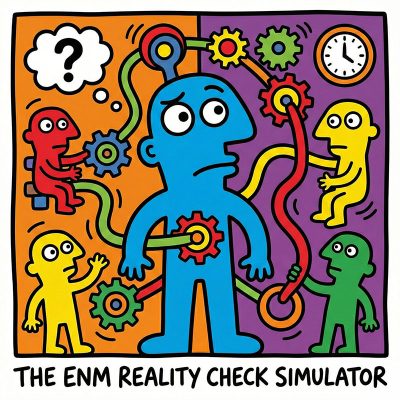
Theory is sexy. Reality is messy. You agreed you could date others, but how does your stomach drop when he takes her to your anniversary spot? Or when she comes home smelling like someone else?
This simulator drags your abstract rules into the harsh light of day. We force you to confront the visceral, gut-wrenching scenarios that actually destroy relationships, before they happen. Test your nervous system in the simulator so you don't crash the car in real life.
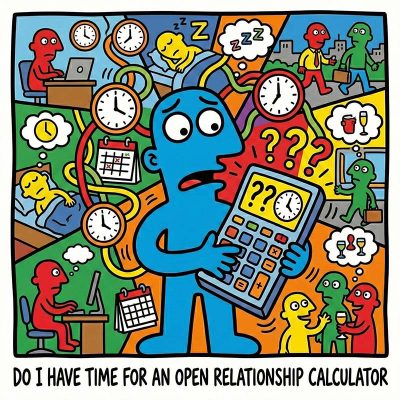
The fantasy is endless romance. The reality? It’s a logistical nightmare. Dating isn't just sex; it’s a second job of swiping, spending, and emotional processing that drains your sanity. Underestimating the "admin" of non-monogamy is the fastest way to turn your relationship into a burnout factory where resentment thrives.
This calculator forces you to confront the brutal math of your time, energy, and wallet. Can you actually afford this lifestyle, or are you just signing up for exhaustion?
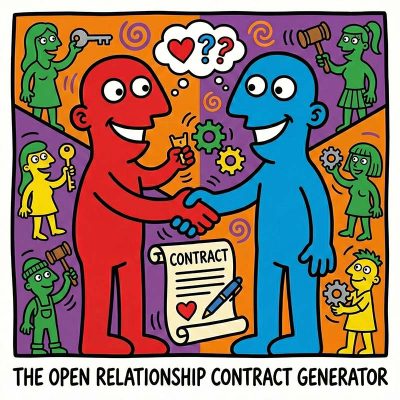
"I thought we agreed" is the sentence that destroys relationships & marriages. Relying on verbal promises when emotions run high is a gamble you cannot afford to lose. Your memory isn't just faulty; it's a liability. Ambiguity is the oxygen that jealousy breathes, turning "freedom" into a minefield of "did I mess up?"
This generator transforms vague permissions into a concrete, signed reality. Stop arguing about what you thought was said and lean on what is written. Secure your boundaries in ink, not hope.
Why redefining cheating matters in open relationships
redefining cheating matters because it moves the discussion from judgement to navigation. It helps partners avoid the default secret relationship trap and instead engage in a conscious process of consent negotiation and accountability. When cheating is redefined around the specific boundaries of a couple or a polycule it becomes a signal that a boundary was unknown or not respected rather than a character flaw. This shift makes it possible to repair trust and to continue the relationship in a healthier way.
The four big boundary categories in ENM
Boundaries in open relationships typically fall into four broad categories. Each category covers a different aspect of what counts as crossing a line and where the line should be drawn in your arrangement. You can mix and match these categories based on what your group wants and needs.
Sexual boundaries
Sexual boundaries include what kinds of sexual activity are allowed with whom and under what conditions. Some people in ENM want no sexual activity with anyone who is in their own social circle while others are comfortable with casual hookups outside the circle after appropriate testing and safety practices. It is critical to discuss STI testing frequency condom use and the specifics of how you handle sexual encounters with outside partners. Sexual boundaries also cover how you handle one night stands and the potential for overlapping sexual networks. Written agreements can help but ongoing conversations are essential because sexual feelings and circumstances change.
Emotional boundaries
Emotional boundaries determine how much emotional closeness is appropriate with other partners. For some people emotional connection is a non negotiable while for others it is more flexible. This category covers topics like forming romantic attachments with others how much time you devote to each relationship and whether emotional disclosures are shared with primary partners before or after they occur. The point of emotional boundaries is not to suppress feelings but to ensure all partners are aware of the emotional stakes and consent to the level of involvement.
Time and energy boundaries
Time boundaries manage scheduling access to your attention and energy. In ENM the question is often not if you have time for others but how you distribute time without neglecting your existing commitments. This can include how often you see a new partner how you balance date nights with your core relationship and how you handle spontaneous invitations. Clear time boundaries reduce the likelihood of accidental neglect and reduce the pressure to disclose every plan.
Privacy and information boundaries
Privacy boundaries govern what you share who you tell and how much detail you provide about your outside connections. Some people want complete transparency others prefer a level of privacy around specifics. Decide who is told what in what detail and how you handle public information or confidences. These boundaries protect trust especially when other people outside the core group are involved.
The role of consent and negotiation in redefining cheating
Consent is the bedrock of ENM. It means all people involved knowingly agree to a plan before actions take place. Negotiation is the ongoing process of refining that plan as feelings evolve new people enter the picture or life changes occur. A healthy ENM agreement is not a one time document it is a living set of guidelines that gets updated with regular check ins. When everyone agrees to the boundaries and later one person pushes beyond them that is not personal judgment it is a boundary violation and it requires a conversation and a possible repair plan.
Consent in ENM is not just a single moment it is a continuous practice. It involves asking for permission listening to concerns and adjusting expectations when needed. It also means that if a boundary turns out to be unworkable for one person everyone involved should be able to sit down and renegotiate. The aim is not to win a debate it is to keep relationships healthy and evolving in a way that feels fair.
Practical tools to prevent boundary breaches
There is no magic wand for a perfect ENM arrangement but there are practical tools that help you steer clear of miscommunication and secrecy. Here are a few you can start using today.
Explicit written agreements
A written agreement clarifies what each person wants and expects. It does not have to be long it can be a simple list of do gots and dont s. Include sections on safety health dating frequency communication style and how you will handle feelings of jealousy. Revisit and revise the agreement as needed to reflect new circumstances.
Regular check ins
Schedule regular check ins with your partner or partners to talk about what is working what is not and what might need adjustment. These conversations can be weekly bi weekly or monthly depending on how active your ENM life is. The goal is to stay proactive not reactive.
Transparency rituals
Transparency means sharing relevant information even when it is uncomfortable. Create rituals that feel appropriate for your people. That might mean announcing a new partner to the group or sharing experiences after a date. The important part is that everyone understands what will be shared and how much detail is appropriate.
Jealousy management strategies
Jealousy is normal in ENM. The goal is not to eliminate it but to manage it constructively. Common strategies include naming the emotion with a simple statement like I feel jealous when I see them together and exploring what fear or need is behind the feeling. Some people find it helpful to schedule extra time with the partner who triggers jealousy to reassure them while others benefit from boundaries that reduce the risk of triggering jealousy. There is no one size fits all approach.
Clear disclosure habits
Decide in advance how much information you will disclose about outside connections. Some people want to share every date detail the good and the bad while others prefer to share only the important milestones or big moments that affect the relationship. Clear disclosure helps reduce rumors and misinterpretations which in turn protects trust.
Safety first practices
Online dating safety STI testing and safe sex practices are essential in ENM. Agree on testing frequency use of protection and the steps you will take if a risk exposure occurs. Safety is part of the ethical framework you build together and it should be treated as non negotiable.
Realistic scenarios you might encounter
Let us walk through a few common ENM situations and how cheating becomes a boundary issue rather than a moral failure. These examples show how a couple might navigate challenges in practical terms.
Scenario A: A partner dates someone new without informing the primary partner
The boundary here was explicit about disclosure before acting. If one partner connects with someone new and fails to tell the other person the second partner may feel blindsided and betrayed. In ENM this breach can be addressed by revisiting the disclosure boundary and confirming why the rule exists. The repair might involve a sincere apology plus a plan for future transparency and perhaps a brief check in if new boundaries are introduced.
Scenario B: A partner kisses a new person on a spontaneous date
Spontaneity is part of ENM but many groups require a heads up and sometimes even a group discussion when someone new becomes a potential ongoing connection. If the kiss happened without prior consent the boundary was not honored. A practical response includes a honest conversation about why spontaneity works in the relationship and how to handle similar moments going forward.
Scenario C: An outside partner forms a stronger emotional bond with a member of the ENM group
Emotional connections can complicate boundaries quickly. The couple can reassess emotional boundaries share concerns about potential changes in the primary relationship and decide how much emotional involvement is appropriate. It may involve creating a more explicit emotional boundary or redefining what each person needs to feel secure.
Scenario D: A partner hides important information about an STI risk
Safety and honesty rule this scenario. Hidden risk is a boundary violation that can have serious health consequences. The immediate steps include urgent communication an STI test for all involved and a clear plan to prevent recurrence. The long term step is agreeing to stricter disclosure norms and safety protocols.
The freedom of an open relationship sounds incredible, but the logistics can feel like holding a grenade. That spinning "what if" anxiety isn't paranoia, it’s your survival instinct warning you that your bond is exposed. "Just seeing what happens" is the fastest way to turn a fantasy into a breakup.
The Essential Guide replaces chaos with discipline. We give you the blueprints, jealousy protocols, and repair scripts needed to explore the edge without falling off. Don't guess. Secure your foundation first.
The world of non-monogamy is a maze of confusing labels. Trying to be "Polyamorous" when your heart actually needs "Swinging" isn't just a vocabulary error; it’s a recipe for misery.
You can't build a stable home on a foundation that doesn't fit your psychology. This tool analyzes your emotional bandwidth and jealousy triggers to design the exact structure you need. Stop trying to squeeze into a box that doesn't fit. Build a relationship that actually feels like home.
Opening up feels exciting, but if you aren't reading from the same script, you're writing a tragedy. The disconnect between "I want freedom" and "I want safety" is where hearts break. This isn't just a quiz; it’s a synchronization engine.
We identify the silent gaps in your desires—from sleepover rules to emotional bandwidth, before they become unbridgeable chasms. Don't wait until the damage is done to find out you were never on the same page. Align your compasses now.
Theory is sexy. Reality is messy. You agreed you could date others, but how does your stomach drop when he takes her to your anniversary spot? Or when she comes home smelling like someone else?
This simulator drags your abstract rules into the harsh light of day. We force you to confront the visceral, gut-wrenching scenarios that actually destroy relationships, before they happen. Test your nervous system in the simulator so you don't crash the car in real life.
The fantasy is endless romance. The reality? It’s a logistical nightmare. Dating isn't just sex; it’s a second job of swiping, spending, and emotional processing that drains your sanity. Underestimating the "admin" of non-monogamy is the fastest way to turn your relationship into a burnout factory where resentment thrives.
This calculator forces you to confront the brutal math of your time, energy, and wallet. Can you actually afford this lifestyle, or are you just signing up for exhaustion?
"I thought we agreed" is the sentence that destroys relationships & marriages. Relying on verbal promises when emotions run high is a gamble you cannot afford to lose. Your memory isn't just faulty; it's a liability. Ambiguity is the oxygen that jealousy breathes, turning "freedom" into a minefield of "did I mess up?"
This generator transforms vague permissions into a concrete, signed reality. Stop arguing about what you thought was said and lean on what is written. Secure your boundaries in ink, not hope.
Common myths about cheating in ENM
Myths often drive people toward secrecy and fear. Let us debunk a few of the most common myths in clear terms.
- Myth 1: ENM means there are no rules. Truth: ENM thrives on clear rules consent and ongoing renegotiation. Boundaries are essential.
- Myth 2: Cheating happens only in monogamy. Truth: Cheating in ENM is any violation of agreed boundaries not a moral failing by default.
- Myth 3: Jealousy means the relationship is broken. Truth: Jealousy can be a sign the boundary needs adjustment or the emotional need behind it needs attention.
- Myth 4: If you love someone you will not feel jealousy. Truth: Love exists alongside a range of emotions including jealousy and fear. Learning to manage them is part of a healthy ENM practice.
Common mistakes to avoid in redefining cheating
A few patterns can derail good ENM plans. Steering clear of these can save energy and protect relationships.
- Mistake 1: Assuming what your partner wants without asking. Always ask and clarify before assuming.
- Mistake 2: Keeping secrets as a way to avoid conflict. Secrets become time bombs that explode later. Mental note honesty is better than clever hiding.
- Mistake 3: Treating boundary renegotiation as a failure. Boundaries evolve and so should your agreements. View renegotiation as growth not defeat.
- Mistake 4: Ignoring safety and health. Safety is non negotiable in ENM. STI testing and protected sex stay on the table just like any other boundary.
Steps to redefine cheating in your open relationship
Here is a simple five step process you can adapt to your situation. Use it as a practical framework rather than a rigid plan.
- Clarify your relationship goals. Take time to define what you want from your ENM life. The more precise you are the easier it is to set boundaries that work for everyone involved.
- Document your boundaries. Write down sexual emotional time and privacy boundaries. Include examples to make the expectations concrete.
- Agree on safety and health protocols. Decide how you will handle STI testing safe sex practices and what to do if exposure occurs.
- Establish a check in cadence. Schedule regular conversations to review how boundaries are working and what needs to change.
- Repair and recommit when boundaries are crossed. When a boundary is violated approach it with curiosity and a plan to repair trust rather than blame.
Jealousy and emotional work in ENM
Jealousy is a common companion in ENM. The goal is not to banish jealousy but to understand it and use it as a signal for needed changes. A practical approach is to name the emotion and then identify what you fear you are lacking. Sometimes the solution is more one on one time with a partner sometimes it is redefining a boundary or adjusting your own expectations. This work is ongoing and it is normal for it to take time.
Glossary of useful terms and acronyms
- ENM Ethically Non Monogamous a term used to describe relationship styles that involve openness with consent and honesty.
- Ethical non monogamy A framework that centers ethical behavior clear communication and consent when pursuing connections outside the primary relationship.
- Boundaries Personal limits about what is acceptable or not in the relationship.
- Consent Ongoing agreement between all parties about a behavior or arrangement.
- Disclosure Sharing information about outside connections with partners in a transparent manner.
- Check in A scheduled conversation to review feelings boundaries and logistics.
- Repair plan Steps taken to rebuild trust after a boundary violation.
- Primary relationship The central relationship in an ENM arrangement often considered the home base.
- Boundary violation Crossing a boundary that was previously agreed upon.
- Jealousy management Techniques used to understand and cope with jealousy in a healthy way.
Practical tips for talking about cheating redefine with your partners
Dialogue is the engine that keeps ENM moving. Here are practical tips to help you have productive conversations about cheating and boundaries.
- Use I statements to express your feelings without blaming others. For example I feel anxious when I do not know who you are seeing next.
- Ask open ended questions to invite honest responses. What would make you feel more secure in this arrangement?
- Schedule conversations at a calm time not in the middle of a heated moment.
- Keep notes from your conversations to track progress and adjustments.
- Respect the pace of your partner while still showing you are engaged and serious about the relationship.
Is there a one size fits all in ENM boundaries
Nope. A one size fits all approach does not work in ENM. People and relationships are different. The most effective boundaries are those that reflect the values desires and safety needs of everyone involved. A boundary that works for a couple may be too restrictive or too lax for a different setup. The beauty of ENM is your ability to tailor the framework so it fits your life.
Putting it all together your binding open relationship playbook
Redefining cheating in an ENM context is less about condemning certain acts and more about building a living agreement that respects autonomy while protecting trust. It is a practical process that requires regular attention and a willingness to renegotiate as needed. The aim is to create a space where desire is explored with consent while emotional safety and health remain at the center. If you take nothing else from this guide carry this idea forward: cheating is not a cruel verdict it is a boundary signal and a call to renegotiate with care.
Checklist before you step into a new conversation
- Review your current boundaries and any recent changes you have discussed.
- Prepare a few concrete examples of what you consider boundary violations.
- Choose a calm time and place to talk.
- Bring a notebook to write notes and a plan for next steps.
- Agree on a follow up date to check in after the discussion.
Closing thoughts for the curious open relationship explorer
Open relationships are about choosing an intentional path that respects consent transparency and mutual care. Cheating in this space is not a universal act it is a boundary breach defined by the agreements you make with your partners. The more clearly you name those boundaries the more you protect trust and reduce the emotional cost of miscommunication. Keep it simple keep it honest and keep the conversation going. The path to healthier ENM relationships is paved with ongoing negotiation and compassionate curiosity about each other.
Frequently asked questions
What counts as cheating in an open relationship
Cheating in an ENM arrangement is best understood as a boundary violation that occurs when someone acts outside of the agreed rules with knowledge of those rules and with no consent to ignore them. It is not a universal label but a specific breach within your agreement.
How do we decide which boundaries to set
Start with a conversation about your goals and fears. Each person should share what they need to feel secure and what is non negotiable. Write those items down and test them in real life. Be prepared to adjust as you learn what works and what does not.
How often should we review our ENM agreement
Schedule regular reviews every one to three months depending on how active your dating life is. If a major life change occurs like moving in together a growing family or a new partner you should renegotiate promptly.
What if someone feels jealous or uncomfortable
Jealousy is a signal and a normal part of ENM not a failure. Name the feeling and identify the underlying need. Consider adjusting boundaries or increasing check ins and time together to ease the discomfort. If jealousy becomes persistent talk to a therapist or a trusted counselor who understands ENM.
Is there a risk of power imbalances in ENM
Yes power imbalances can emerge. It is essential to have ongoing consent assurances and to monitor for coercion and manipulation. If you notice any pressure tactics slow down and revisit boundaries.
Should I have a formal written contract
A written contract can be very helpful especially in new arrangements. It should be a collaborative document that is revisited and revised as needed. The contract is a tool a compass not a prison.
How do we start this conversation if we have never discussed ENM before
Choose a calm moment and propose a basic exploration. You might start with why you are curious what you hope to gain and how you hope to grow together. Make it clear this is a mutual experiment not a demand.
The freedom of an open relationship sounds incredible, but the logistics can feel like holding a grenade. That spinning "what if" anxiety isn't paranoia, it’s your survival instinct warning you that your bond is exposed. "Just seeing what happens" is the fastest way to turn a fantasy into a breakup.
The Essential Guide replaces chaos with discipline. We give you the blueprints, jealousy protocols, and repair scripts needed to explore the edge without falling off. Don't guess. Secure your foundation first.
The world of non-monogamy is a maze of confusing labels. Trying to be "Polyamorous" when your heart actually needs "Swinging" isn't just a vocabulary error; it’s a recipe for misery.
You can't build a stable home on a foundation that doesn't fit your psychology. This tool analyzes your emotional bandwidth and jealousy triggers to design the exact structure you need. Stop trying to squeeze into a box that doesn't fit. Build a relationship that actually feels like home.
Opening up feels exciting, but if you aren't reading from the same script, you're writing a tragedy. The disconnect between "I want freedom" and "I want safety" is where hearts break. This isn't just a quiz; it’s a synchronization engine.
We identify the silent gaps in your desires—from sleepover rules to emotional bandwidth, before they become unbridgeable chasms. Don't wait until the damage is done to find out you were never on the same page. Align your compasses now.
Theory is sexy. Reality is messy. You agreed you could date others, but how does your stomach drop when he takes her to your anniversary spot? Or when she comes home smelling like someone else?
This simulator drags your abstract rules into the harsh light of day. We force you to confront the visceral, gut-wrenching scenarios that actually destroy relationships, before they happen. Test your nervous system in the simulator so you don't crash the car in real life.
The fantasy is endless romance. The reality? It’s a logistical nightmare. Dating isn't just sex; it’s a second job of swiping, spending, and emotional processing that drains your sanity. Underestimating the "admin" of non-monogamy is the fastest way to turn your relationship into a burnout factory where resentment thrives.
This calculator forces you to confront the brutal math of your time, energy, and wallet. Can you actually afford this lifestyle, or are you just signing up for exhaustion?
"I thought we agreed" is the sentence that destroys relationships & marriages. Relying on verbal promises when emotions run high is a gamble you cannot afford to lose. Your memory isn't just faulty; it's a liability. Ambiguity is the oxygen that jealousy breathes, turning "freedom" into a minefield of "did I mess up?"
This generator transforms vague permissions into a concrete, signed reality. Stop arguing about what you thought was said and lean on what is written. Secure your boundaries in ink, not hope.
