
Repair After Betrayal While Staying Open

Open relationships can be thrilling and freeing yet they also come with unique risks. Betrayal is not a monopoly of monogamy. In ENM or ethical non monogamy structures you might run into situations that test trust in new ways. This guide gives you a frank, practical path to repair after a betrayal while staying open. It is written for people who want to keep exploring openness with respect, consent and clear communication. We will unpack what betrayal looks like in ENM and how to rebuild trust without throwing away the relationship or erasing your boundaries. Expect real world tips, simple language and actionable steps that actually work.
Quick Links to Useful Sections
- What is ENM and what does open mean in this context
- Betrayal in ENM and why it hurts differently
- First steps after betrayal
- Decide whether to stay open or to pause or close
- A practical repair framework that works in ENM
- Communication playbook for repair conversations
- Conversation with your partner who caused the betrayal
- Conversation with a new partner when trust has been breached
- Conversation with yourself
- Boundaries and agreements you might renegotiate
- Jealousy management and emotional labor
- Self care and the role of therapy
- Realistic scenarios you might encounter
- Scenario A: A disclosure that arrived late
- Scenario B: Boundary violation with a new partner
- Must do and must not do in the repair process
- Glossary of useful terms and acronyms
- Practical takeaways you can use this week
- Checklists you can print and use
- Post betrayal repair quick start
- Renegotiation planner
- Frequently asked questions
- Final thoughts and next steps
What is ENM and what does open mean in this context
ENM stands for ethical non monogamy. Ethical means that all people involved know what is going on and consent to it. Non monogamy means having romantic or sexual connections with more than one person at the same time. An open relationship is a common form of ENM where couples agree to allow dating or sex with others outside the primary couple. There are many flavors of ENM. Some relationships are hierarchical with a primary couple and secondary partners. Others are non hierarchical where all connections are valued equally. The key is consent and ongoing communication. If you are new to this world a quick glossary helps you speak the same language.
- Ethical non monogamy A relationship style where all people involved know about each other and consent to the arrangements. It emphasizes honesty and respect over secrecy.
- Open relationship A relationship in which the partners agree that one or both may form romantic or sexual connections with others outside the couple.
- Consent A clear and voluntary agreement to participate in specific activities. Consent can be withdrawn at any time and must be respected.
- Jealousy A natural emotion that shows up when we feel our value or position is threatened. In ENM it is common and manageable with tools that we will discuss.
- Compersion The feeling of joy from seeing a partner connected with someone else. It is the opposite of jealousy for many people and a goal in healthy ENM work.
Betrayal in ENM and why it hurts differently
Betrayal in an ENM setup can show up in many ways. A partner might fail to disclose a new relationship or a sexual encounter. They might break agreed boundaries or lie about a date with a new partner. Betrayal hits where you are most vulnerable, which is trust, safety and emotional security. In ENM the emotional web is more complex because there are more moving parts such as time management, emotional labor and negotiated boundaries. The sting can come from secrecy, a broken boundary or a misalignment in what was promised. It is not automatically a deal breaker. It can be a signal that a renegotiation is needed, or it can be the moment when you decide that openness is not right for you at this time. Either choice is valid if guided by consent and care for all people involved.

The freedom of an open relationship sounds incredible, but the logistics can feel like holding a grenade. That spinning "what if" anxiety isn't paranoia, it’s your survival instinct warning you that your bond is exposed. "Just seeing what happens" is the fastest way to turn a fantasy into a breakup.
The Essential Guide replaces chaos with discipline. We give you the blueprints, jealousy protocols, and repair scripts needed to explore the edge without falling off. Don't guess. Secure your foundation first.

The world of non-monogamy is a maze of confusing labels. Trying to be "Polyamorous" when your heart actually needs "Swinging" isn't just a vocabulary error; it’s a recipe for misery.
You can't build a stable home on a foundation that doesn't fit your psychology. This tool analyzes your emotional bandwidth and jealousy triggers to design the exact structure you need. Stop trying to squeeze into a box that doesn't fit. Build a relationship that actually feels like home.

Opening up feels exciting, but if you aren't reading from the same script, you're writing a tragedy. The disconnect between "I want freedom" and "I want safety" is where hearts break. This isn't just a quiz; it’s a synchronization engine.
We identify the silent gaps in your desires—from sleepover rules to emotional bandwidth, before they become unbridgeable chasms. Don't wait until the damage is done to find out you were never on the same page. Align your compasses now.

Theory is sexy. Reality is messy. You agreed you could date others, but how does your stomach drop when he takes her to your anniversary spot? Or when she comes home smelling like someone else?
This simulator drags your abstract rules into the harsh light of day. We force you to confront the visceral, gut-wrenching scenarios that actually destroy relationships, before they happen. Test your nervous system in the simulator so you don't crash the car in real life.
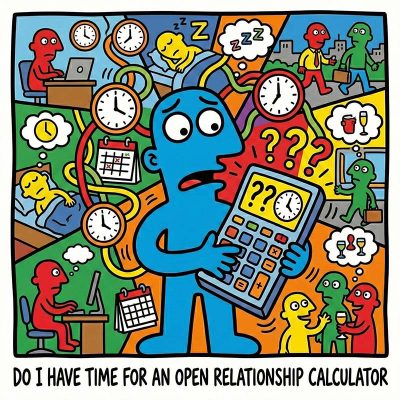
The fantasy is endless romance. The reality? It’s a logistical nightmare. Dating isn't just sex; it’s a second job of swiping, spending, and emotional processing that drains your sanity. Underestimating the "admin" of non-monogamy is the fastest way to turn your relationship into a burnout factory where resentment thrives.
This calculator forces you to confront the brutal math of your time, energy, and wallet. Can you actually afford this lifestyle, or are you just signing up for exhaustion?
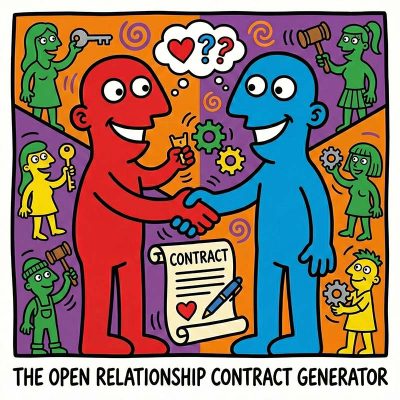
"I thought we agreed" is the sentence that destroys relationships & marriages. Relying on verbal promises when emotions run high is a gamble you cannot afford to lose. Your memory isn't just faulty; it's a liability. Ambiguity is the oxygen that jealousy breathes, turning "freedom" into a minefield of "did I mess up?"
This generator transforms vague permissions into a concrete, signed reality. Stop arguing about what you thought was said and lean on what is written. Secure your boundaries in ink, not hope.
First steps after betrayal
When betrayal happens the natural impulse is to retaliate or withdraw. The healthier path in ENM is to pause, assess and plan. Here is a practical starter framework you can use in the first 24 to 72 hours after you learn of the breach.
- Create immediate safety The goal is emotional safety. If you feel unsafe or overwhelmed, separate for a short time to cool down. Use a calm message to your partner that you need space and will return to the conversation soon.
- Define what needs to be heard You may need a full disclosure or a summary. Decide what you need to hear to feel properly informed. This is not about punishment it is about understanding what happened and why it happened.
- Establish boundaries for the immediate moment This might include a temporary pause on new sexual activity with others or a temporary limit on how partners interact with others while you process. Boundaries are not punishments they are a form of safety while you decide what comes next.
- Ground your emotions Name what you are feeling and give yourself permission to feel it. Anger sadness fear relief these feelings are part of the repair process. Do not judge yourself for what you feel.
- Decide on a repair path Options include a renegotiation of agreements staying with the current open structure or choosing to pause or close the relationship. You do not have to decide in the moment but you do need to begin the conversation.
Decide whether to stay open or to pause or close
Staying open is possible when you both commit to rebuilding trust and there is a plan that makes sense for all involved. Pausing or closing can also be the healthiest choice if the trust cannot be repaired or if the emotional toll is too high. Here are some questions to guide the decision process.
- Do both partners still want to be in the same open relationship and feel capable of rebuilding trust?
- Are there unaddressed insecurities or trauma that would interfere with a healthy open dynamic?
- Can boundaries and consent be renegotiated in a way that makes all parties feel safe?
- Is there a support system such as a therapist or mentor who can help navigate the repair?
- What steps are needed to protect the primary relationship while addressing the breach?
There is no one right answer. The healthiest path is the one that respects consent and emotional safety for everyone involved. If you decide to stay open the work does not stop at a single talk. It becomes a continuous practice of communication, check ins and renegotiation.
A practical repair framework that works in ENM
Repair is a process not a single act. A reliable frame helps couples and throuples move forward with intention. Here is a five part framework you can adapt to your situation.
- Ownership and accountability The person who caused the breach owns their part. Own the how and the why behind the breach. Avoid excuses and focus on impact and learning.
- Transparent disclosure The disclosure should be honest and concrete. Avoid vague language. Share what happened who was involved what was disclosed and what you know about the consequences.
- Direct apology and restitution A real apology acknowledges harm and expresses genuine remorse. If possible offer restitution that reduces harm such as more time, more attention or explicit changes in behavior.
- Boundaries and renegotiation Define clear boundaries that have measurable consequences if violated. Update agreements about time with partners communication patterns and expectations around others.
- Ongoing check ins and accountability Schedule regular conversations to review how things are going. Use a simple framework such as what is working what is not and what needs adjustments.
Boundaries in ENM are not punishments. They are living tools to protect everyone and to ensure that consent remains informed and enthusiastic. When you renegotiate you may decide on things like how often primary partners meet new partners how much time is spent with others and what kind of disclosures are expected after an encounter.
Communication playbook for repair conversations
Clear honest communication is the backbone of any repair effort in ENM. The way you speak matters almost as much as what you say. Here are practical conversation templates and tips you can adapt to your situation.
Conversation with your partner who caused the betrayal
Start with ownership and a calm voice. Then share impact. Invite questions and propose next steps.
Example starter
Hi I have been thinking a lot about what happened. I want to be honest about how this affected me. I felt betrayed when I learned that you did not disclose your time with another person. For me disclosure is a core part of consent and trust. I want us to work through this together but I also need to know you are willing to make changes. What would you propose as a plan for rebuilding trust and updating our boundaries?
Tips for this talk
- Use I statements to own your feelings
- Avoid blaming language as much as possible
- Ask open questions to understand their perspective
- Set a follow up plan and a clear timeline
Conversation with a new partner when trust has been breached
If a new partner is involved and trust in the open structure has been broken the talk with them should be direct and respectful. Explain boundaries and what you expect from all parties moving forward.
Example starter
I value transparency and respectful boundaries. A recent breach in our arrangement has changed how I see the situation. While I do not want to end connections with you I need a clear plan that protects everyone involved. What steps can we take to ensure honest communication and consent moving forward?
Conversation with yourself
Self reflection is essential. Be honest about your needs and your boundaries. Journal your emotions and create a personal recovery plan that fits your needs. This helps prevent resentment from sabotaging conversations later.
Self reflection prompts
- What do I truly need to feel safe while staying open?
- Which boundaries feel essential and non negotiable?
- What support do I need from my partner or a therapist?
Boundaries and agreements you might renegotiate
Every ENM setup is different. Here are some common boundaries that often come up after a betrayal. You can adapt them to fit your relationship style.
- Disclosure expectations Decide how soon and how fully partners must disclose new connections or encounters.
- Time management Set a realistic schedule for time with primary partners versus time with other partners. Consider weekly planning sessions.
- Sexual safety Define condom use testing and safer sex practices. Agree on contraception and health check expectations where relevant.
- Communication frequency Determine how often you will check in with each other and with other partners about feelings and boundaries.
- Digital boundaries Agree on privacy levels for messages and social media with other partners. Clarify what is acceptable to share publicly or privately.
- Escalation process Create a clear path for when a boundary is crossed or when someone feels unsafe. Decide who talks first and how to pause again if needed.
The freedom of an open relationship sounds incredible, but the logistics can feel like holding a grenade. That spinning "what if" anxiety isn't paranoia, it’s your survival instinct warning you that your bond is exposed. "Just seeing what happens" is the fastest way to turn a fantasy into a breakup.
The Essential Guide replaces chaos with discipline. We give you the blueprints, jealousy protocols, and repair scripts needed to explore the edge without falling off. Don't guess. Secure your foundation first.
The world of non-monogamy is a maze of confusing labels. Trying to be "Polyamorous" when your heart actually needs "Swinging" isn't just a vocabulary error; it’s a recipe for misery.
You can't build a stable home on a foundation that doesn't fit your psychology. This tool analyzes your emotional bandwidth and jealousy triggers to design the exact structure you need. Stop trying to squeeze into a box that doesn't fit. Build a relationship that actually feels like home.
Opening up feels exciting, but if you aren't reading from the same script, you're writing a tragedy. The disconnect between "I want freedom" and "I want safety" is where hearts break. This isn't just a quiz; it’s a synchronization engine.
We identify the silent gaps in your desires—from sleepover rules to emotional bandwidth, before they become unbridgeable chasms. Don't wait until the damage is done to find out you were never on the same page. Align your compasses now.
Theory is sexy. Reality is messy. You agreed you could date others, but how does your stomach drop when he takes her to your anniversary spot? Or when she comes home smelling like someone else?
This simulator drags your abstract rules into the harsh light of day. We force you to confront the visceral, gut-wrenching scenarios that actually destroy relationships, before they happen. Test your nervous system in the simulator so you don't crash the car in real life.
The fantasy is endless romance. The reality? It’s a logistical nightmare. Dating isn't just sex; it’s a second job of swiping, spending, and emotional processing that drains your sanity. Underestimating the "admin" of non-monogamy is the fastest way to turn your relationship into a burnout factory where resentment thrives.
This calculator forces you to confront the brutal math of your time, energy, and wallet. Can you actually afford this lifestyle, or are you just signing up for exhaustion?
"I thought we agreed" is the sentence that destroys relationships & marriages. Relying on verbal promises when emotions run high is a gamble you cannot afford to lose. Your memory isn't just faulty; it's a liability. Ambiguity is the oxygen that jealousy breathes, turning "freedom" into a minefield of "did I mess up?"
This generator transforms vague permissions into a concrete, signed reality. Stop arguing about what you thought was said and lean on what is written. Secure your boundaries in ink, not hope.
Jealousy management and emotional labor
Jealousy is a signal not a failure. In ENM it can appear often and in many forms. The trick is to acknowledge it and act with compassion both for yourself and your partner. A few practical tools can help:
- Naming the feeling Say I feel jealous or I feel insecure in the moment. Labels reduce overwhelm.
- Using the pause technique Step back for a moment to breathe and choose a calm response rather than reacting in the moment.
- Creating compersion moments Practice celebrating when your partner feels happy with someone else, even if you are not fully there yet emotionally.
- Seeking support Therapy or coaching specializing in ENM can provide tools to navigate jealousy and boundary setting.
Self care and the role of therapy
Repairing betrayal while staying open is emotionally demanding. You deserve support. Consider individual therapy to address trust injuries, and couples or group therapy to practice new communication patterns. A therapist with ENM experience can help you explore your needs without pathologizing your choices. Don’t view therapy as a sign that something is broken. See it as investment in healthier relationships and better decision making.
Realistic scenarios you might encounter
Here are two common but very differential scenarios in ENM to illustrate how repair can look in practice. The goal is not to predict every outcome but to show how a thoughtful approach can shift the dynamic back toward trust and openness.
Scenario A: A disclosure that arrived late
A partner begins a new relationship and only later communicates details about a date. The delay creates hurt because it feels like concealment even though the act was allowed by prior agreement. The repair path would include immediate disclosure followed by a renegotiation of disclosure timelines and commitment to immediate transparency in future encounters. The couple uses a structured check in weekly to discuss feelings and adjust boundaries as needed. Over time trust rebuilds as transparency becomes the norm rather than the exception.
Scenario B: Boundary violation with a new partner
A partner pushes past a boundary by engaging in a sexual activity that was explicitly not allowed with a particular partner. The repair path here would involve a formal apology acknowledging harm and a potential temporary pause with open relationship activities until a renegotiated agreement is in place. Both partners participate in a joint session with a poly friendly therapist to rebuild shared understanding. The key is accountability and a concrete plan to prevent repetition.
Must do and must not do in the repair process
There are some universal truths that guide healthy ENM repair. These are not rules carved in stone but practical guardrails.
- Must do Practice honesty even when it feels uncomfortable. Consistency in words and actions rebuilds trust faster than words alone.
- Must do Honor each partner's boundaries even when you want to push them for speed or relief. Respect creates safety and safety is essential for openness.
- Must do Seek support from qualified professionals when needed. ENM is nuanced and professional guidance helps you avoid common pitfalls.
- Must not do Blame shift or minimize. Do not deny impact or justify breach with flimsy excuses.
- Must not do Gossip about your partners' other relationships. Conflicts should stay within the agreed group and handled with care.
- Must not do Push your partner to stay open at all costs. If open is not viable for either person the choice to pause or close is valid and healthy.
Glossary of useful terms and acronyms
- ENM Ethical Non Monogamy a relationship style that involves openness and consent among all parties.
- Open relationship A relationship that allows connections with others outside the primary partnership.
- Primary partner The person who holds the central place in a relationship structure for most people this is the partner or partners they spend the most time with emotionally or practically.
- Compersion The joy from seeing a partner experience happiness with someone else.
- Jealousy An emotional response to perceived threat to a valued relationship or position.
- Boundaries Agreed rules about what is allowed what is off limits and how people will behave in various situations.
- Transparency The practice of sharing relevant information openly with partners about feelings plans and actions that affect the relationship.
- Renegotiation The process of revisiting and revising agreements and boundaries after new information or experiences.
Practical takeaways you can use this week
- Schedule a calm check in with your partner to discuss the breach and next steps. Do it in a no blame no shame framework.
- Create a short written plan for renegotiated boundaries with measurable consequences if violated. Keep it simple and clear.
- Establish a regular time for checking in about feelings and needs. Consistency matters in rebuilding trust.
- Find a safe space outside the relationship to process emotions whether that is therapy a support group or a trusted friend who can listen without judgment.
- Practice self care activities that help you stay grounded during difficult conversations. Breathing exercises journaling or exercise can help.
Checklists you can print and use
Post betrayal repair quick start
- Pause and create emotional safety
- Ask for a full disclosure with clear specifics
- Name the impact and share your boundary needs
- Agree on a renegotiation plan with a timeline
- Schedule regular check ins to monitor progress
Renegotiation planner
- What changed and why
- New or revised boundaries
- Time management with all partners
- Disclosures after new connections
- Accountability steps and who will hold the line
Frequently asked questions
How do I repair after betrayal while staying open
Start with honest ownership and a clear plan. Build back trust through consistent behavior over time. Renegotiate boundaries let go of secrecy and use open lines of communication to prevent future breaches.
What counts as betrayal in an ENM setup
Betrayal is any behavior that violates the explicit consent and boundaries that have been agreed on. It can be concealment a lie or an action that crosses an agreed line even if the act would be allowed under different circumstances. The key is consent clarity and transparency.
How long does repair take
Repair is a process not a one time event. Some repairs occur within weeks others take months. The timeline depends on the severity of the breach the willingness of all parties to participate and the effectiveness of the renegotiation and ongoing communication.
Should we stay open after betrayal
That decision should come from the people involved based on feelings safety and the practical ability to rebuild trust. A pause or a temporary close can be a healthy step if the emotional toll is too high to continue openly at that moment.
How do we handle jealousy during repair
Acknowledge jealousy as a signal and use it as a prompt for conversation. Practice compassionate communication and use jealousy as a trigger to deepen understanding rather than a weapon to blame.
Do we need therapy
Therapy can be very helpful for ENM repair. A therapist experienced with ENM or non monogamy can provide tools normalize feelings and guide you through renegotiation processes that feel fair to everyone involved.
What about new partners during repair
New connections can be part of an ENM repair but they require extra transparency and explicit consent. Consider delaying new introductions until the core relationship is on solid ground or set strict boundaries around new partner involvement during the repair phase.
Is it ever okay to disclose everything to everyone
Full disclosure is often ideal but it must be balanced with privacy and consent. Share information that affects all parties and that everyone has a right to know. Avoid gory details that do not serve the repair process.
Final thoughts and next steps
Repair in an open relationship is a demanding but possible journey. With honest ownership clear boundaries compassionate communication and steady follow through you can rebuild trust and move toward a relationship that feels more honest and more alive. There is no one size fits all path in ENM. The best map you can follow is the one you and your partners actively create together and continually revise. Take small steps and keep the conversations ongoing. The goal is to arrive at a place where openness feels safe exciting and worth the effort for everyone involved.
The freedom of an open relationship sounds incredible, but the logistics can feel like holding a grenade. That spinning "what if" anxiety isn't paranoia, it’s your survival instinct warning you that your bond is exposed. "Just seeing what happens" is the fastest way to turn a fantasy into a breakup.
The Essential Guide replaces chaos with discipline. We give you the blueprints, jealousy protocols, and repair scripts needed to explore the edge without falling off. Don't guess. Secure your foundation first.
The world of non-monogamy is a maze of confusing labels. Trying to be "Polyamorous" when your heart actually needs "Swinging" isn't just a vocabulary error; it’s a recipe for misery.
You can't build a stable home on a foundation that doesn't fit your psychology. This tool analyzes your emotional bandwidth and jealousy triggers to design the exact structure you need. Stop trying to squeeze into a box that doesn't fit. Build a relationship that actually feels like home.
Opening up feels exciting, but if you aren't reading from the same script, you're writing a tragedy. The disconnect between "I want freedom" and "I want safety" is where hearts break. This isn't just a quiz; it’s a synchronization engine.
We identify the silent gaps in your desires—from sleepover rules to emotional bandwidth, before they become unbridgeable chasms. Don't wait until the damage is done to find out you were never on the same page. Align your compasses now.
Theory is sexy. Reality is messy. You agreed you could date others, but how does your stomach drop when he takes her to your anniversary spot? Or when she comes home smelling like someone else?
This simulator drags your abstract rules into the harsh light of day. We force you to confront the visceral, gut-wrenching scenarios that actually destroy relationships, before they happen. Test your nervous system in the simulator so you don't crash the car in real life.
The fantasy is endless romance. The reality? It’s a logistical nightmare. Dating isn't just sex; it’s a second job of swiping, spending, and emotional processing that drains your sanity. Underestimating the "admin" of non-monogamy is the fastest way to turn your relationship into a burnout factory where resentment thrives.
This calculator forces you to confront the brutal math of your time, energy, and wallet. Can you actually afford this lifestyle, or are you just signing up for exhaustion?
"I thought we agreed" is the sentence that destroys relationships & marriages. Relying on verbal promises when emotions run high is a gamble you cannot afford to lose. Your memory isn't just faulty; it's a liability. Ambiguity is the oxygen that jealousy breathes, turning "freedom" into a minefield of "did I mess up?"
This generator transforms vague permissions into a concrete, signed reality. Stop arguing about what you thought was said and lean on what is written. Secure your boundaries in ink, not hope.
